
No, your ordinary clothing is not arc rated by default; arc rated fabric requires documented electric-arc testing that establishes its thermal performance. If you develop workwear for electrical hazards, you need evidence tied to the specified material and its intended use.
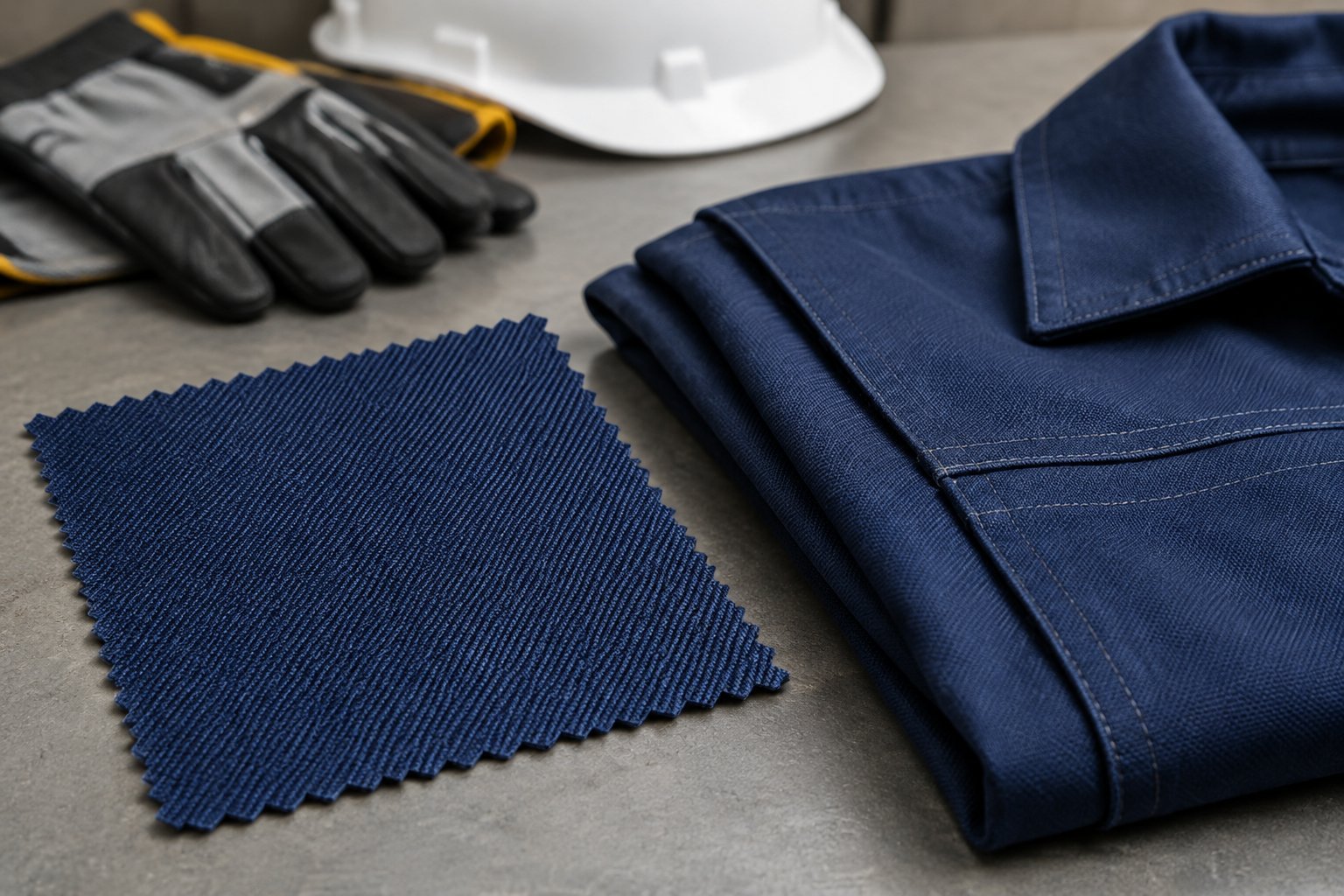
Your purchasing specification should connect the fabric construction to an identifiable test report and the finished garment’s requirements. A familiar fiber blend, heavy fabric weight, or flame-resistant description gives you useful material information, but each arc-protection claim still needs its own supporting documentation.
Is Most Fabric in Modern Clothing Arc Rated?
You should treat everyday clothing as unrated unless you have applicable arc-test evidence. Casual apparel specifications prioritize ordinary wear, and appearance gives you no reliable indication of electric-arc thermal performance.
What Does an Arc Rating Actually Measure?
You use an arc rating to evaluate a material’s thermal response under controlled electric-arc exposure. Testing measures transmitted heat and observes material behavior, including breakopen, to establish a performance value expressed in calories per square centimeter (cal/cm²).
Your arc rating addresses the thermal component of an arc-flash hazard. It provides no voltage rating or electrical-insulation classification, and it does not establish protection against electric shock or arc-blast pressure.
You also need to distinguish a tested fabric property from finished-garment protection. Coverage, closures, and garment condition influence the protection available during use.
Ordinary Clothing vs. FR vs. Verified Arc-Rated Fabric
You can separate the categories by the evidence supporting their intended protective function. The difference between AR and FR clothing begins with whether the flame-resistant material also has documented electric-arc thermal performance.
| Evidence or property | Ordinary clothing | FR-only material | Verified arc-rated fabric |
|---|---|---|---|
| Intended specification | Everyday wear | Flame resistance | Arc-flash thermal performance |
| Flame-resistance evidence | No default assurance | Applicable flame tests | Required FR performance |
| Documented arc rating | No default rating | Unestablished by FR claim | Tested value in cal/cm² |
| Purchasing evidence | Apparel specification | FR reports | Arc report and material traceability |
Your flame-resistance documentation should identify the test method and applicable acceptance requirements. When you assess flame-retardant properties in fabrics, a vertical flame result addresses burning behavior; an arc rating requires the relevant electric-arc test.
How Does Testing Establish Thermal Performance?
You obtain a defensible thermal-performance value by testing identified specimens under a recognized electric-arc method. Your report should document exposure conditions, specimen preparation, and the result for the tested material or assembly.
What Do Ratings in cal/cm² Mean?
You read cal/cm² as energy per unit area. In arc-flash assessment, incident energy describes thermal energy reaching a surface at a specified working distance; a material’s arc rating describes its response under the applicable laboratory method.
You compare these values within the appropriate workplace selection process. A rating is neither a temperature tolerance nor a position on a fixed scoring scale.
Your chosen value must also retain its test context. Single-layer fabric results and multilayer assembly results describe different specimens, even when some component materials are identical.
How Do ATPV and EBT Differ?
You will encounter two principal endpoints in open-arc reporting: Arc Thermal Performance Value (ATPV) and Energy Breakopen Threshold (EBT).
- ATPV: You interpret this as the incident energy associated with a 50% probability that heat transfer through the specimen reaches the Stoll criterion for the predicted onset of a second-degree burn.
- EBT: You interpret this as the incident energy associated with a 50% probability of breakopen under the test method’s defined criterion.
For your report review, breakopen means hole formation that meets the method’s specified opening-size criterion. Visible discoloration or superficial damage alone does not establish that endpoint.
The applicable limiting endpoint determines your reported arc rating. An EBT-based rating identifies breakopen as the limiting behavior; it does not automatically indicate inferior material quality. Neither endpoint promises injury-free exposure at the stated energy.
Why Must Layered Systems Be Tested Together?
You need a tested assembly whenever your protection claim relies on the combined performance of multiple layers. Fabric interactions and insulating air spaces affect heat transfer through the system.
You cannot establish the assembly rating by adding individual garment ratings. Your documentation should identify the layer order, each component’s construction, and the configuration used during testing.
If you change an undershirt, lining, or outer shell, confirm whether the existing evidence covers that substitution. Keep your approved layering specification tied to the tested combination.
Which Standards Govern Testing, Products, and Workplace Use?
You need separate evidence for the test method, product requirements, and workplace selection process. Your specification should identify the applicable editions because requirements and reporting provisions change through revisions.
ASTM F1959 and IEC 61482-1-1: Open-Arc Test Methods
You use ASTM F1959/F1959M to determine the arc rating of materials or material combinations through controlled open-arc exposure. Thermal sensors measure energy transmitted through specimens while the test evaluates relevant material responses.
Under IEC 61482-1-1, you also encounter open-arc methods for determining specified thermal-performance parameters. Check which parameters the report provides and which procedures support them.
Your review should record the exact method designation and edition. A report referencing one method should support only the results and scope it establishes; acceptance under another specification requires a separate compatibility check.
IEC 61482-1-2: Box Testing and Its Classification Limits
You use IEC 61482-1-2 results to evaluate performance under a directed, constrained electric arc in a test box. The method addresses material and garment behavior within defined exposure conditions.
Your box-test classification belongs to that test arrangement. It has no direct arithmetic conversion into an open-arc rating in cal/cm².
If your procurement specification requires ATPV or EBT, request the corresponding open-arc evidence. A box-test class alone does not supply either value, and you should preserve that distinction in technical sheets and garment-development records.
ASTM F1506 and IEC 61482-2: Product Requirements
You use product standards to evaluate requirements extending beyond the arc-exposure test itself. ASTM F1506 addresses arc rating, flame resistance, mechanical durability, garment construction, and labeling.
For your IEC-based specification, IEC 61482-2 establishes requirements for protective clothing against the thermal hazards of an electric arc. Applicable testing supports compliance with its material and clothing provisions.
Your protective-fabric certification review should distinguish a test report from a declaration of conformity or third-party certificate. Verify the document’s scope and the precise product it covers before carrying a claim into your purchasing specification.
NFPA 70E: Workplace Safety Rather Than Fabric Certification
You use NFPA 70E to structure electrical safety practices, risk assessment, and PPE selection. It does not issue fabric certifications.
Your selection starts with the equipment and task, including the applicable incident-energy analysis or PPE-category method. Clothing belongs within the required protective ensemble, alongside the other PPE identified for the exposure.
Your complete arc-flash PPE selection requires a workplace-specific assessment. A supplier’s fabric report supplies one input to that process; it does not establish that an entire work activity is safe.
How Can Buyers Verify Supplier Claims?
You verify an arc-rated claim by tracing the offered material to a complete, relevant test record. Your approval process should also address production consistency and finished-garment construction.
Match Reports to the Exact Fabric Construction and Tested System
You should request an identifiable laboratory report that describes the specimen sufficiently to connect it to your order. A marketing sheet stating “arc protection” gives you too little detail for technical approval.
Build your evidence checklist around:
- The report number, laboratory identity, test date, method, and edition.
- The fabric reference, fiber composition, construction, mass per unit area, and finish.
- The reported arc rating and whether ATPV or EBT governs.
- Specimen preparation and laundering preconditioning.
- Every component and its order in a tested multilayer system.
- Traceability between the tested reference and supplied production.
Your fabric quality requirements should address changes after approval. Ask how the supplier controls substitutions and determines whether a construction or finishing change requires renewed evaluation.
If you develop garments, send your exact fabric requirements and required arc-test documentation to Charlie@levitex.com at Levitex. Include the intended construction and any proposed layering system so your inquiry defines the evidence needed for review.
Check Laundering Preconditioning, Labels, and Garment Assembly
You need to know which specimens were tested after laundering and which performance checks those specimens underwent. ASTM F1506-22 includes flammability requirements after 25 washes or dry-cleaning cycles; that figure does not establish unlimited service life or represent every test’s preconditioning.
Your FR fabric laundering instructions should remain consistent with the manufacturer’s approved care process. Record detergent restrictions and inspect for contamination, damage, or shrinkage that compromises fit.
For your finished garment, verify the labeling requirements under the claimed product standard. Review sewing thread, closures, pocket arrangements, and added components. Reflective tape requires appropriate evaluation when included in your design; an arc-rating claim does not make it compulsory.
Compare Materials Without Assuming Protection From Fiber Content
You should compare candidate materials through their documented performance and suitability for the garment. Cotton content, an aramid name, or the presence of nylon does not independently establish an arc rating.
Your review of arc-flash clothing materials should stay focused on tested construction. Fabric weight and finishing influence performance, so composition alone gives you an incomplete comparison.
When you specify flame-retardant fabric treatment, request evidence for the finished material offered. After confirming the required protection, compare shrinkage, tear performance, comfort, and compatibility with your intended care process.
Frequently Asked Questions
You can resolve common label and purchasing questions by checking the scope of the supporting evidence. Keep your conclusions tied to the material or garment identified in that documentation.
Is ordinary cotton clothing arc rated?
No, your ordinary cotton clothing has no arc rating by default. Even if your cotton garment avoids melting, it still requires applicable flame-resistance and arc-test evidence before you specify it as arc-rated protection.
Does an FR-only label prove an arc rating?
No, your FR-only label does not establish a tested arc rating. Request an identifiable result in cal/cm² and verify that its report covers the material used in your garment.
What evidence should a supplier provide for an arc-rated claim?
You should receive an identifiable arc-test report tied to the offered fabric or layered assembly, with the test method and reported endpoint. Your approval package should also connect the supplied material to that report and address applicable product requirements, labeling, and care instructions.
Does a 4 cal coverall over a 4 cal shirt provide 8 cal protection?
You cannot claim 8 cal/cm² protection by adding those two individual ratings. You need a tested system result covering the coverall and shirt combination in the specified layer order.
Does an arc rating also prove welding, flash-fire, or chemical protection?
No, your arc rating alone does not establish welding, flash-fire, or chemical protection. Require separate evidence for each claimed hazard, and distinguish chemical-liquid repellency from chemical permeation resistance when specifying multifunctional workwear.