LEVITEX manufactures cotton/nylon FR fabric for protective workwear. Share your garment application, preferred blend, target weight, color, and laundering requirements so we can help you compare constructions and review product-specific test documentation before bulk ordering.
Ask your supplier for the exact fiber percentage and any added conductive fiber before you place a bulk order. Some cotton/nylon fabrics in a product line include an antistatic component, while others do not, so the blend ratio and any added fiber must be confirmed for the specific roll you intend to buy, not just the product family. A fabric listed as cotton/nylon can carry different nylon shares, and that share affects hand, strength, and how the flame retardant fabric treatment performs on the finished goods.
What Composition and Finished-Fabric Evidence Should You Request?
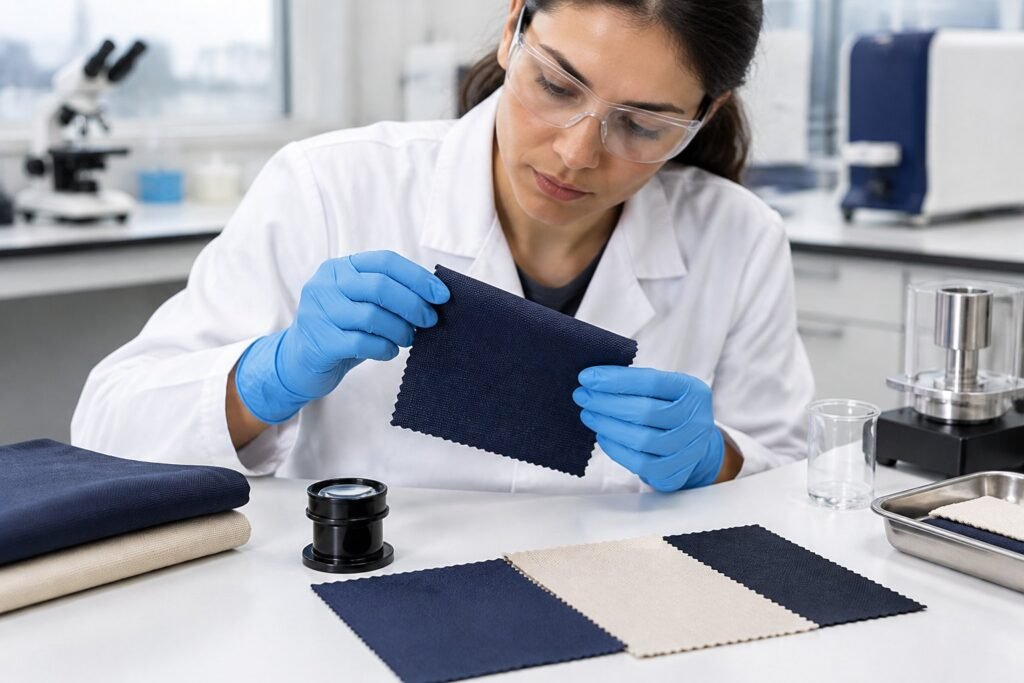
Request a written fiber content statement along with finished-fabric flame test data, not a fiber-level claim alone. Treatment is applied to the finished fabric, so test results must come from that same construction and weight.
Fiber content breakdown: Ask for the exact cotton/nylon ratio and whether an antistatic yarn or filament is present.
Finished-fabric test data: Request flame resistance results run on the actual fabric you plan to order, not on a generic blend sample.
Dye and finish batch match: Confirm the sample tested matches the dye lot and finish batch intended for production.
Documentation format: Ask whether results come as a lab report, a mill certificate, or both, so your records match your compliance needs.
Compare Construction, Not Just Weight
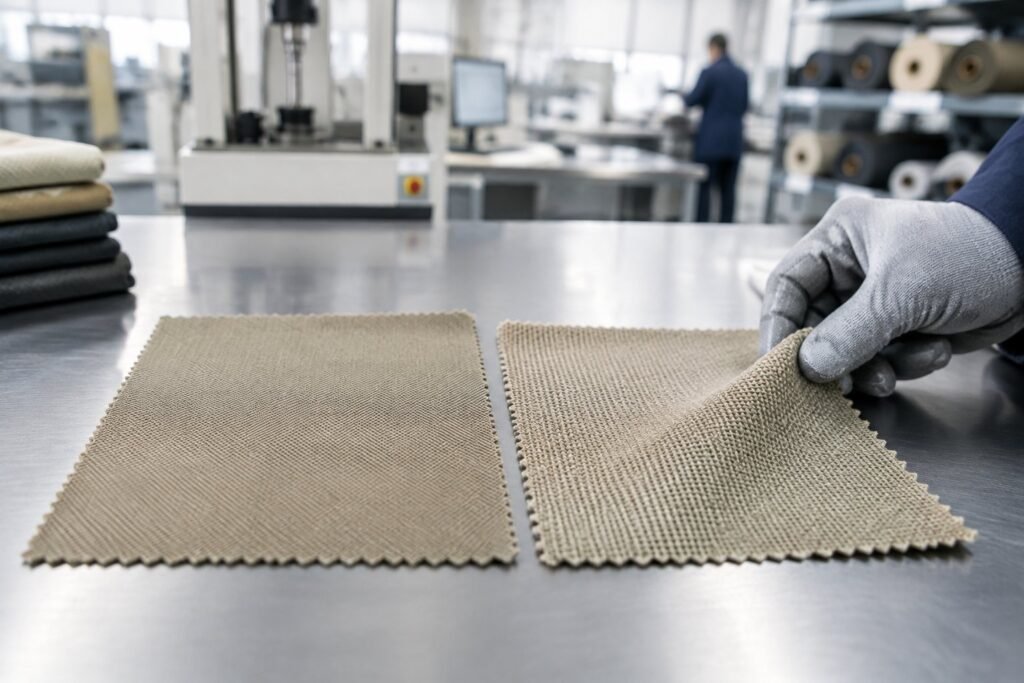
Weave and finish shape how a fabric performs in protective clothing, so weight alone will not tell you how two cotton/nylon fabrics will behave on the job. A twill and a plain weave at the same gsm can differ in abrasion resistance, drape, and tear strength. Buyers should compare these properties side by side and ask which test method produced each figure, since tensile and tear results depend heavily on the test standard used. Match the weave to the garment type first, then check the strength data behind it.
Fabric quality control: Mills that document fabric quality control steps can usually supply this construction data on request, which helps you compare rolls from different runs.
Match Test Reports to Your Hazard
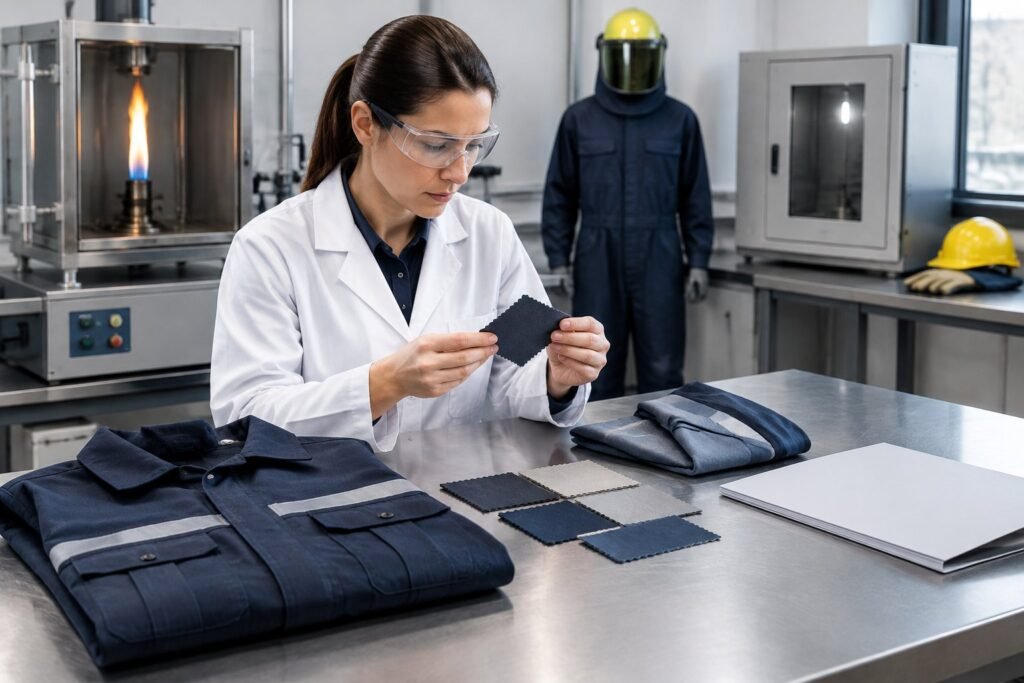
Flame resistance and arc performance are separate measurements, and a fabric needs documented evidence for the specific hazard it will face. An fr fabric that passes a vertical flame test has not automatically been tested for arc exposure, and the reverse is also true. Buyers working around electrical hazards need arc test data, while buyers facing flash fire or general ignition risks need flame resistance data matched to that specific use.
FR vs. arc-rated: Understanding the difference between FR and arc-rated clothing helps you determine which document you need before committing to a bulk quantity.
Verify Performance After Laundering
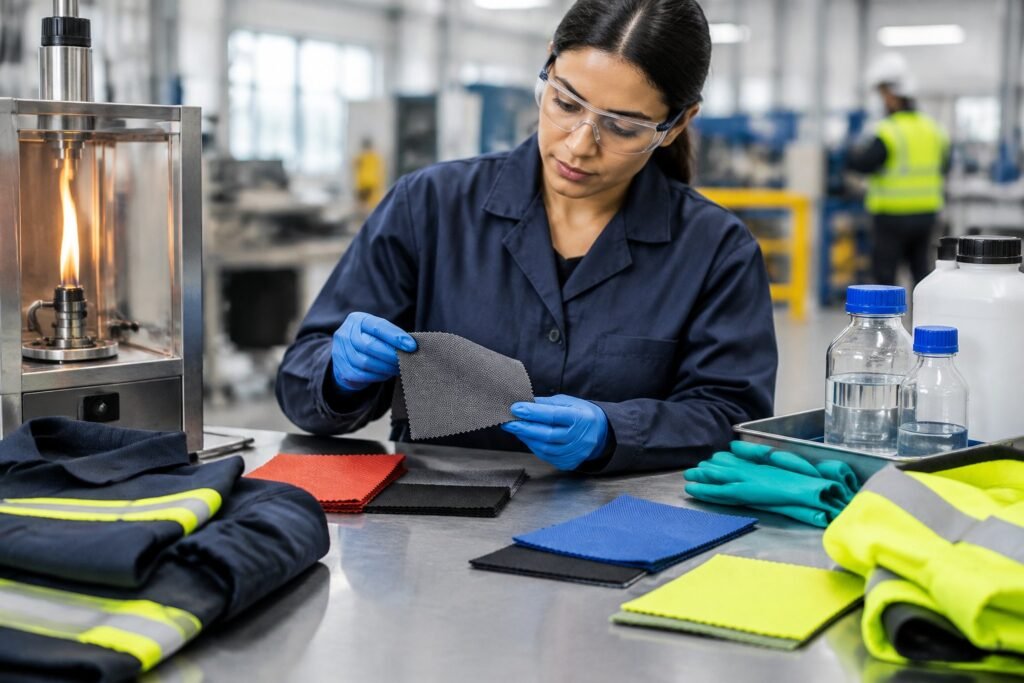
Laundering changes how a flame retardant fabric performs, so buyers should ask for results tested under a defined wash procedure, not an unwashed sample alone. Home laundering and industrial laundering use different cycle counts, temperatures, and chemistry, and each can affect flame resistance differently. A fabric that performs well straight off the roll needs separate evidence showing how it holds up after the wash process your end users will actually follow.
About Care instructions, checking FR clothing care requirements alongside the test data helps confirm the garment will be cared for in a way that matches how it was tested.
Approve Samples Before Bulk Production
A signed-off pre-production sample, tested under your intended wash and dry cycle, protects a bulk cotton/nylon FR order from costly rework. Dimensional change in warp and weft, shade consistency, and width or weight tolerance all need to be checked and recorded before cutting starts, not discovered after a full shipment arrives.
What Specifications and Approvals Should Your Bulk Order Record?
Lock these details in writing before bulk production begins.
Dimensional change: Request warp and weft shrinkage results tested under the exact wash and dry procedure planned for the finished garment. Reviewing fabric shrinkage behavior helps set a realistic tolerance.
Shade and tolerance: Agree on acceptable shade variation plus width and weight tolerance in writing.
Sample sign-off: Keep a dated, signed sample as the reference standard for the full order.
Lot traceability: Confirm each roll can be traced back to its dye lot and production batch.
Buyers preparing a cotton/nylon FR order can send the garment application, blend, weight, usable width, color, quantity, laundry process, and required documentation to Charlie Luo at Charlie@levitex.com.