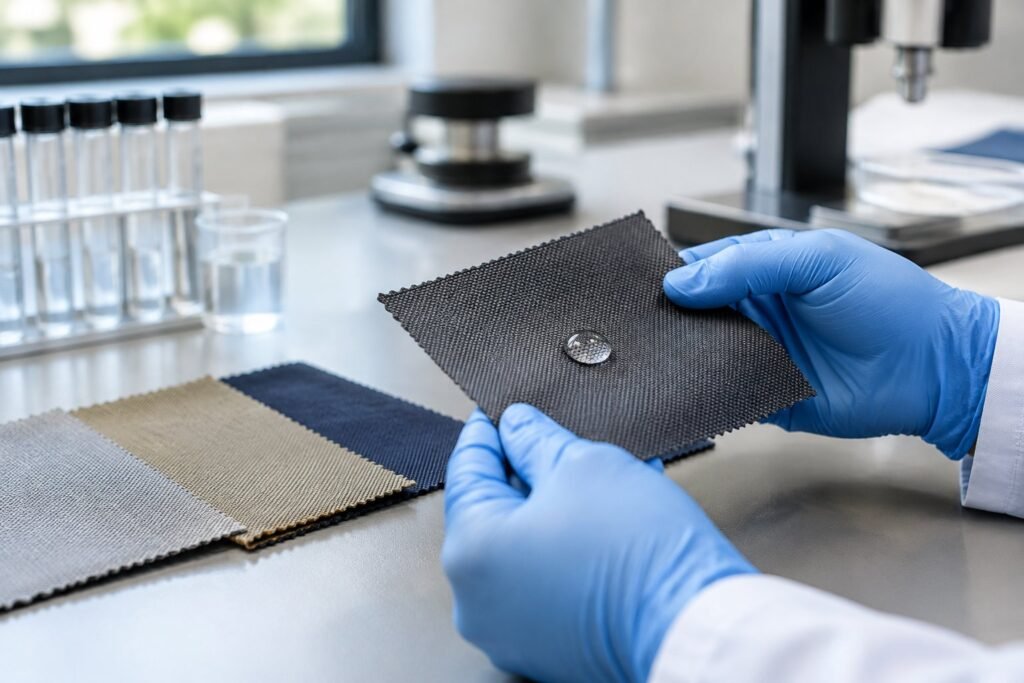
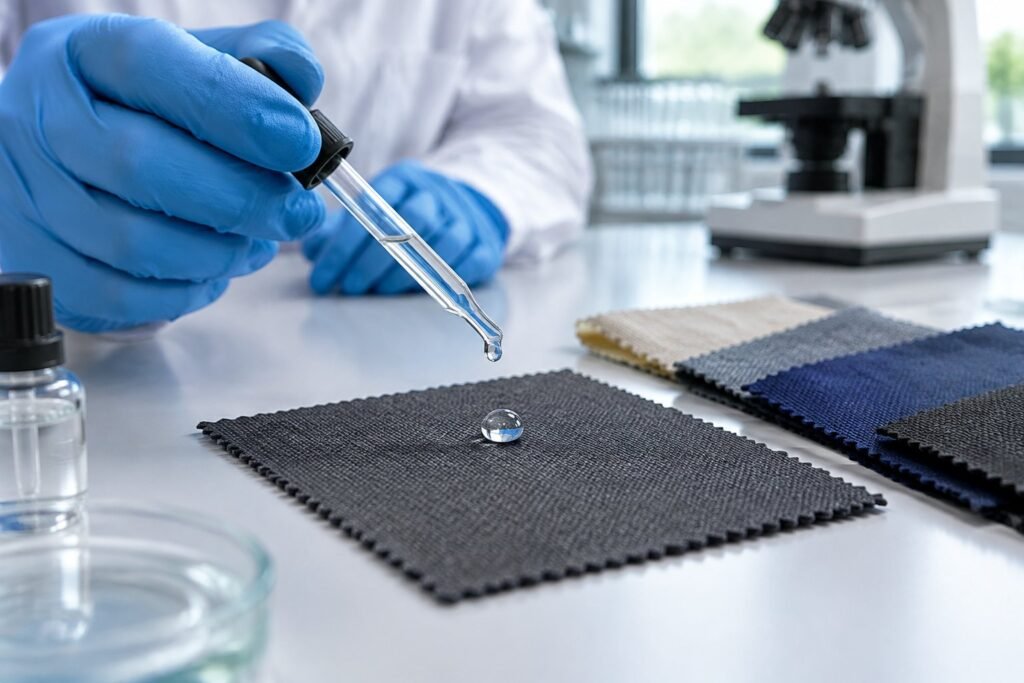
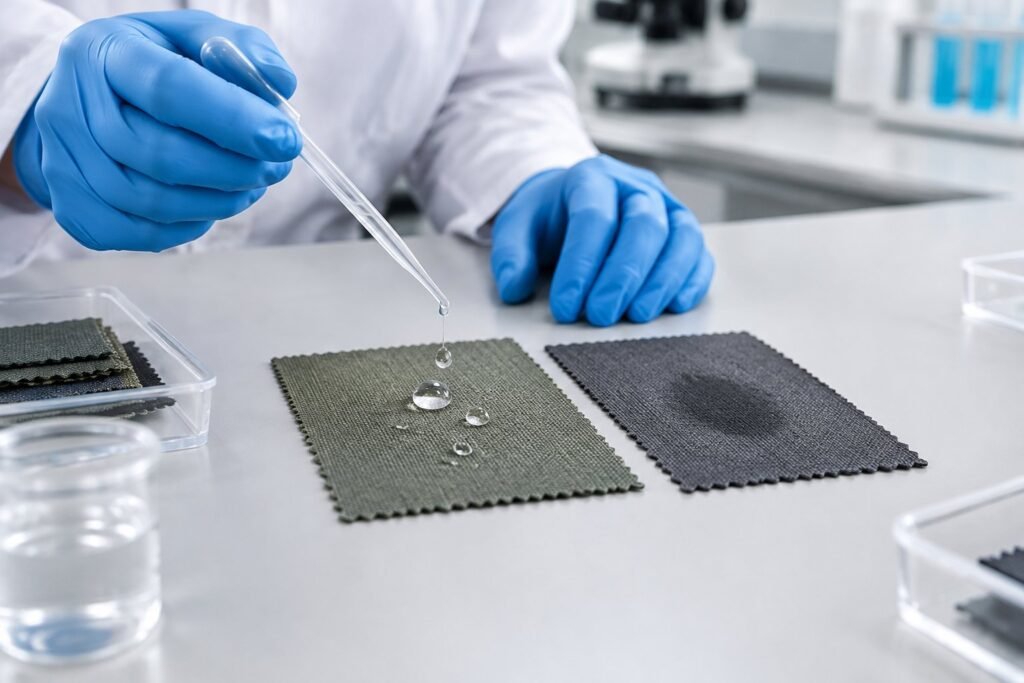
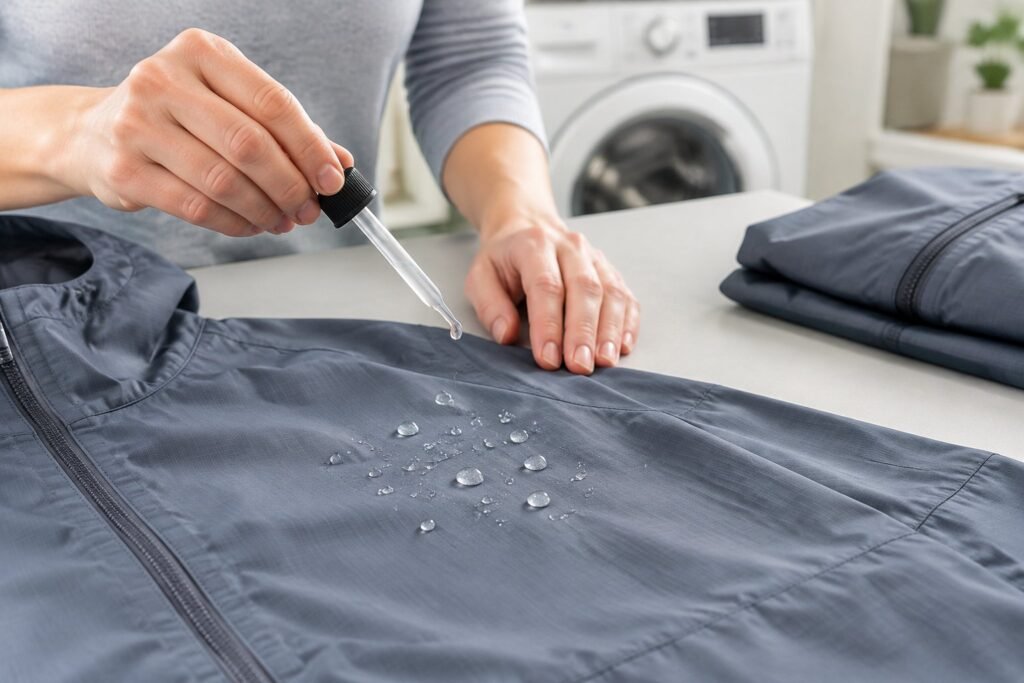
LEVITEX offers chemical-repellent finishing on cotton, C/N and CVC workwear fabrics. Share your garment application, chemical exposure and laundering requirements to discuss suitable fabric options, samples and testing needs. Liquid repellency is not equivalent to chemical-barrier protection.
Choose the Base Fabric for Your Chemical Repellent Workwear
Your base substrate sets the ceiling for comfort, durability, and finish uptake before any chemical-repellent treatment gets applied. LEVITEX applies post-treatment finishing to cotton, cotton/nylon (C/N), and cotton/polyester (CVC) base fabrics, each carrying different absorbency and wear characteristics worth checking against whether cotton is resistant to oil or chemicals on its own before a finish is added.
Cotton breathes well and takes finishes evenly, but it absorbs liquids faster than blended constructions. Cotton/nylon adds abrasion resistance for rugged tasks, while cotton/polyester (CVC) balances comfort with better dimensional recovery. Match the composition to your garment’s daily wear pattern and expected contact frequency.
Specify the Chemical-Repellent Finish
State the finish chemistry and performance target upfront, since repellency comes from post-treatment finishing applied to the base fabric’s surface, not from the fiber itself. Buyers should review fabric finishes options and ask directly whether a given finish relies on PFAS or other forever chemicals, since this affects both performance and regulatory handling.
Tell the supplier your target liquid types, expected contact duration, and any chemical restrictions your buyer enforces. Specify whether a fluorinated or non-fluorinated finish is acceptable. Supply this detail before sampling starts to avoid reworking swatches later.
Match Test Evidence to the Exposure
Request test data that matches your actual chemical and contact scenario, since liquid repellency, penetration resistance, and permeation protection are three different measurements. Chemical-repellent fabric is not the same as chemical resistant fabric built on barrier-based chemical resistance, and the two should never be substituted for each other in a safety decision.
Ask what test method produced the repellency rating and under what chemical, concentration, and exposure time. A rating for brief splash contact says nothing about sustained saturation. Confirm the evidence covers your specific use case before approving a fabric.
Check Performance After Laundering
Verify post-wash chemical repellency separately from dimensional stability, since laundering affects each property through different mechanisms. Fabric shrinkage is a distinct property from repellency performance and should be checked on its own terms using guidance like our fabric shrinkage resource, not assumed from a repellency pass.
Run repellency checks after your actual wash and dry cycle, not a single lab rinse. Measure shrinkage and garment fit separately from liquid-beading results. Both findings need documentation tied to your specified wash process before approval.
Prepare Your Fabric Sourcing Request
A complete sourcing request speeds up sampling and keeps test results relevant to your garment. Buyers comparing broader options can review workwear fabric choices alongside chemical-repellent specifications.
Share fabric composition, weight, color, and quantity alongside the intended garment use. Add the chemical identity and concentration involved, expected exposure conditions, laundering routine, and required test standards. Send these fabric specifications and testing requirements to Charlie@levitex.com to start a sourcing review.
FAQ
What chemical-repellent fabrics does LEVITEX offer?
LEVITEX offers chemical-repellent finishing on cotton, cotton/nylon (C/N), and cotton/polyester (CVC) base fabrics for workwear applications. Selection depends on your fabric requirements and the performance evidence needed for the intended exposure.
Are LEVITEX chemical-repellent fabrics the same as chemical-resistant barrier materials?
No. Our chemical-repellent fabrics use a post-treatment finish designed to promote liquid shedding; they should not be treated as equivalent to barrier materials intended to resist chemical penetration or permeation.
Does the chemical repellency come from the base fabric or the finish?
In LEVITEX’s chemical-repellent range, this function comes from post-treatment finishing, not from the cotton, C/N or CVC composition alone. The finished fabric must be evaluated against the specific chemical-liquid exposure.
How can I choose the right LEVITEX base fabric for my workwear?
Share your priorities for comfort, durability, fabric weight, garment use and laundering. These requirements help guide the choice between cotton, C/N and CVC, while chemical-repellent performance must be verified separately for the proposed finished fabric.
How do I assess whether a LEVITEX fabric suits my chemical exposure?
Provide the chemical names, concentrations, temperatures and expected contact conditions when enquiring. Suitability must be assessed against applicable product-specific test evidence and your workplace risk assessment, not the category name alone.
What test information should I check when sourcing from LEVITEX?
Ask which reports are available for the proposed fabric and finishing specification. Check the tested liquids, concentrations, methods, laundering pretreatment and results, remembering that repellency results do not establish permeation resistance.
Can I specify chemical repellency alongside FR or antistatic requirements?
Include all required functions in your enquiry to LEVITEX so the proposed fabric can be assessed against the complete specification. FR, antistatic and chemical-repellent performance each require supporting evidence for that finished fabric.
How should I evaluate wash durability before ordering?
Tell us your intended laundering process and ask what care instructions and wash-performance evidence apply to the proposed finish. Do not assume that FR durability also proves chemical repellency after washing.
What should I include in a quotation or custom-finishing enquiry?
Send your preferred base fabric, composition, weight, construction, colour, quantity and required functions, together with chemical-exposure and testing requirements. LEVITEX provides fabric manufacturing and custom dyeing services alongside chemical-repellent finishing.
What should I confirm with LEVITEX before approving a bulk order?
Confirm the product reference, finishing specification, sample requirements, applicable test documentation and approved care instructions. Also clarify whether chemical-repellent finishing is included in the quoted fabric or must be specified separately.