LEVITEX manufactures cotton-rich cotton/polyester FR fabrics for protective workwear. Share your garment application, preferred blend, target weight, color, laundering process, and required standards so we can help you compare constructions and review product-specific test documentation before bulk ordering.
Confirm the exact fiber ratio before you commit to a CVC FR fabric, since cotton-rich blends behave differently from each other depending on polyester share and finishing route. Ask for the composition in writing, the finishing process used, and test data tied to the actual finished fabric roll, not a generic datasheet. Flame retardant fabric performance comes from the finish and base cloth working together, and protective fabric claims only hold up when the evidence matches the specific lot you plan to order. Read our guide to industrial FR treatment for background on finishing methods, then request documentation for your selected blend.
Not every CVC FR fabric in a catalog listing carries an antistatic fiber. Some variants add a conductive thread for static-control workwear, while standard blends do not. Confirm this detail per listing before sampling, since antistatic performance depends on yarn layout and cannot be assumed from the FR finish alone.
Choose Construction for Your Workwear Program
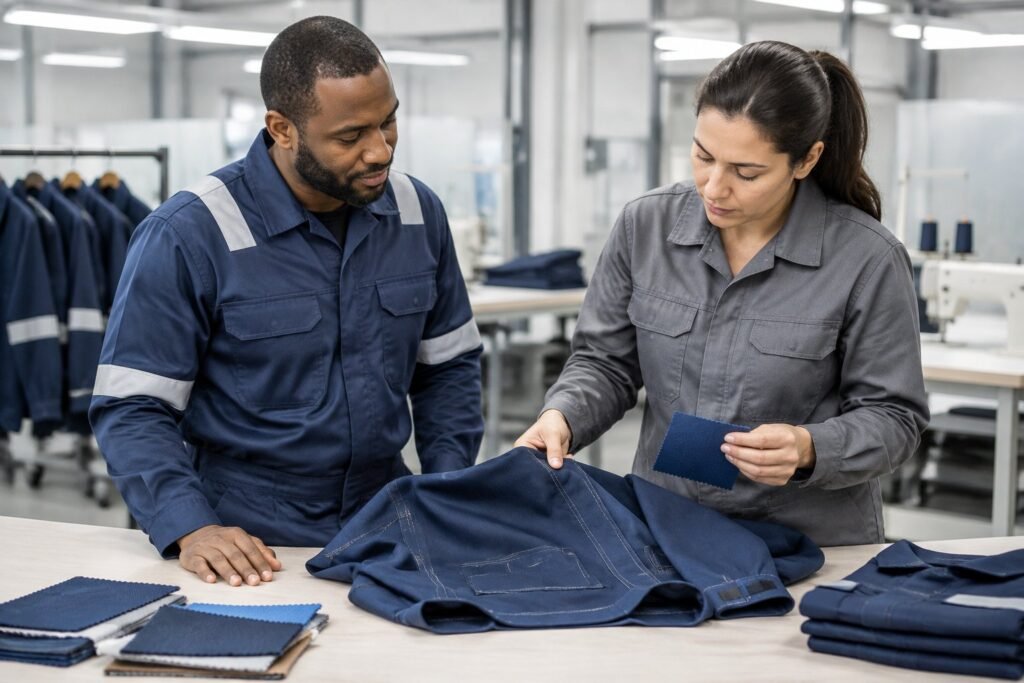
Match fabric weight and weave to the job, not just the FR label. A lighter, cotton-heavy construction suits daily comfort in warm shops, while a heavier, polyester-leaning weave holds shape and resists abrasion better across long shifts. CVC FR fabric is not automatically stronger or more protective than pure cotton; each construction trades comfort, tensile strength, tear strength, and abrasion resistance differently depending on yarn and weight. Review fabric specifications and performance checks before locking in a weight or weave for protective clothing.
Match Test Evidence to the Workplace Hazard
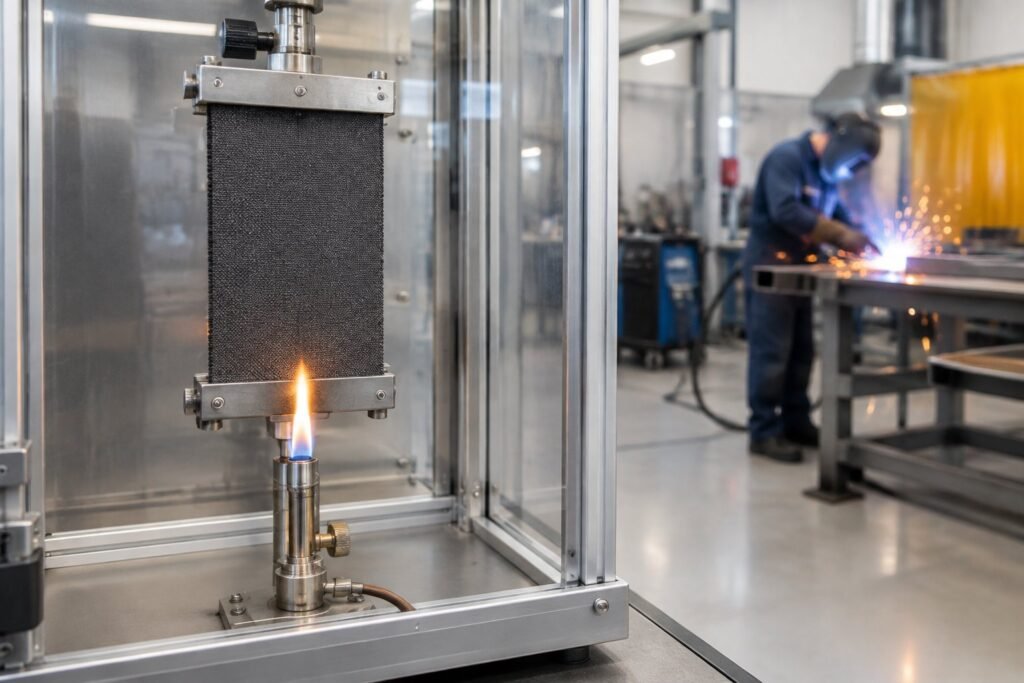
Ask which standard the fabric was tested against, and whether that evidence covers the fabric alone or the finished garment. Standards like ISO 11612, ASTM F1506, EN 61482-1-2, IEC 61482-1-2, and ANSI 107 apply to different hazards, from flash fire to electrical utilities work, and a fabric passing one does not automatically satisfy another.
Flame resistance and arc rating are separate claims with separate tests. Review the difference between FR and arc-rated protection before assuming a CVC FR fabric covers an arc flash hazard, since fabric-level flame data does not substitute for a documented arc rating.
Verify Laundering Performance and Dimensional Stability
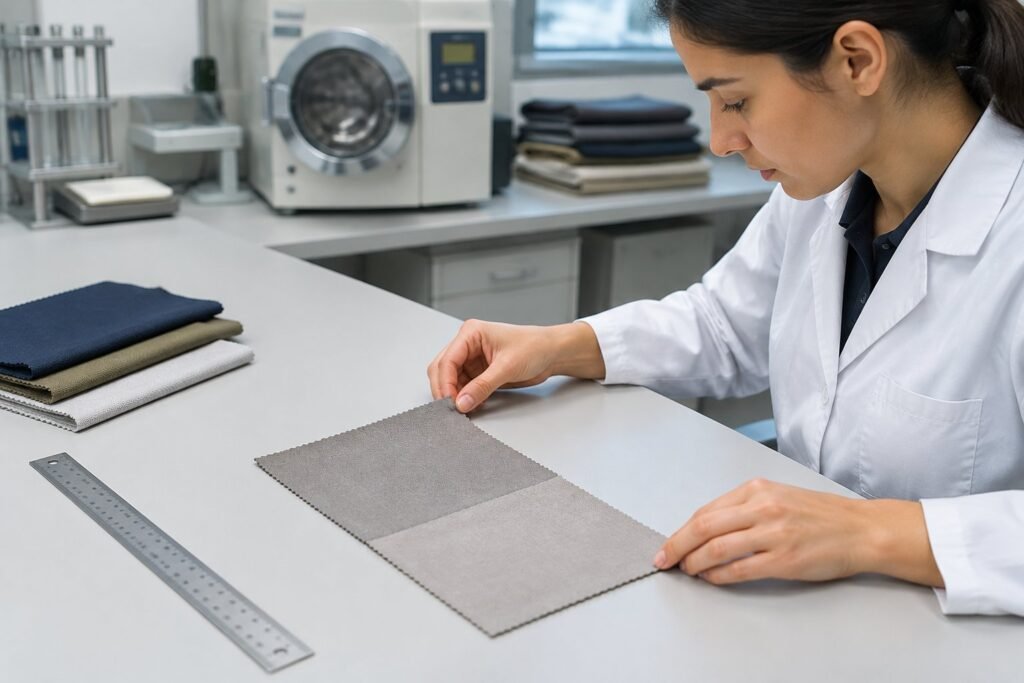
Ask for the exact laundering procedure and cycle count behind any retained-performance claim. A fabric rated after 20 home washes tells a different story than one tested through 50 industrial cycles, and dimensional stability and color fastness results should list warp and weft shrinkage separately rather than one combined figure. Review FR workwear care requirements and fabric shrinkage and dimensional stability data before bulk commitment, since a uniform program depends on repeat performance, not a single pass.
Request the retained flame performance, shrinkage, and color fastness results tied to the specific wash count claimed, not just an “after laundering” summary. Ask whether figures came from fabric-level or garment-level testing, since the two are not interchangeable.
Agree on Samples Before Bulk Production
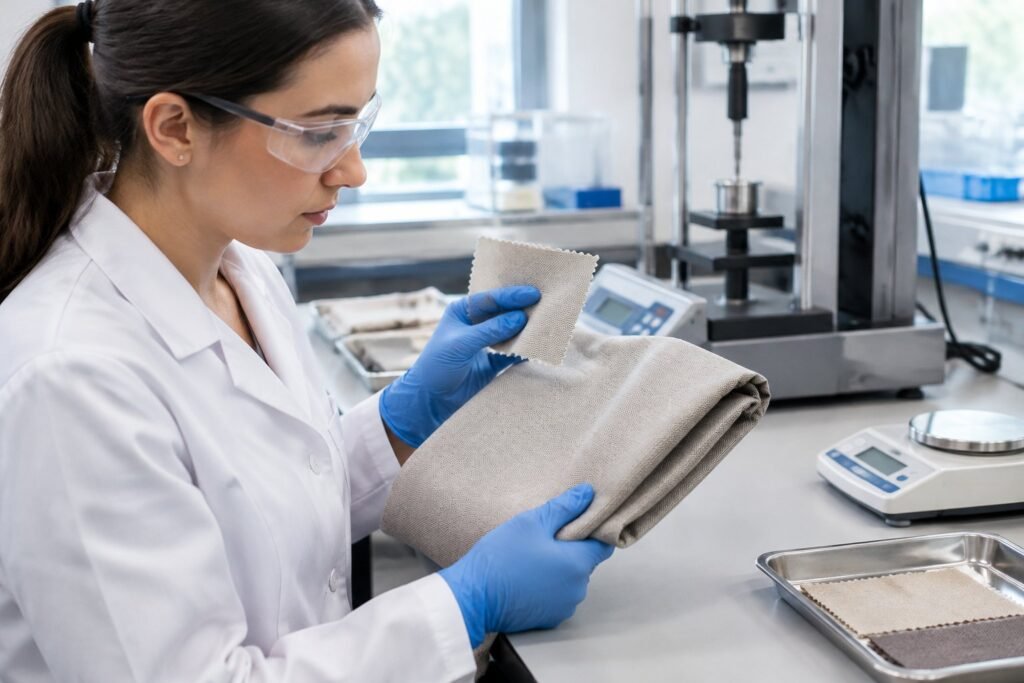
Request a physical swatch and, where possible, a pre-production sample cut from the roll intended for your order before approving bulk quantities. Confirm composition, weight, usable width, and color against your written specification rather than a photo. Levitex supports sample development alongside fabric inspection and quality control so buyers can compare the approved reference against first-roll output before full production runs.
Put composition, weight, usable width, color, and quantity into a written specification before the bulk run starts, along with the laundering process and test documentation required for your protective fabric program. A signed acceptance sheet gives both sides a shared reference if a roll drifts from the approved sample.
To start that process, send your garment application, required composition, construction, target weight, usable width, color, quantity, laundering process, and required test documentation to Charlie@levitex.com.