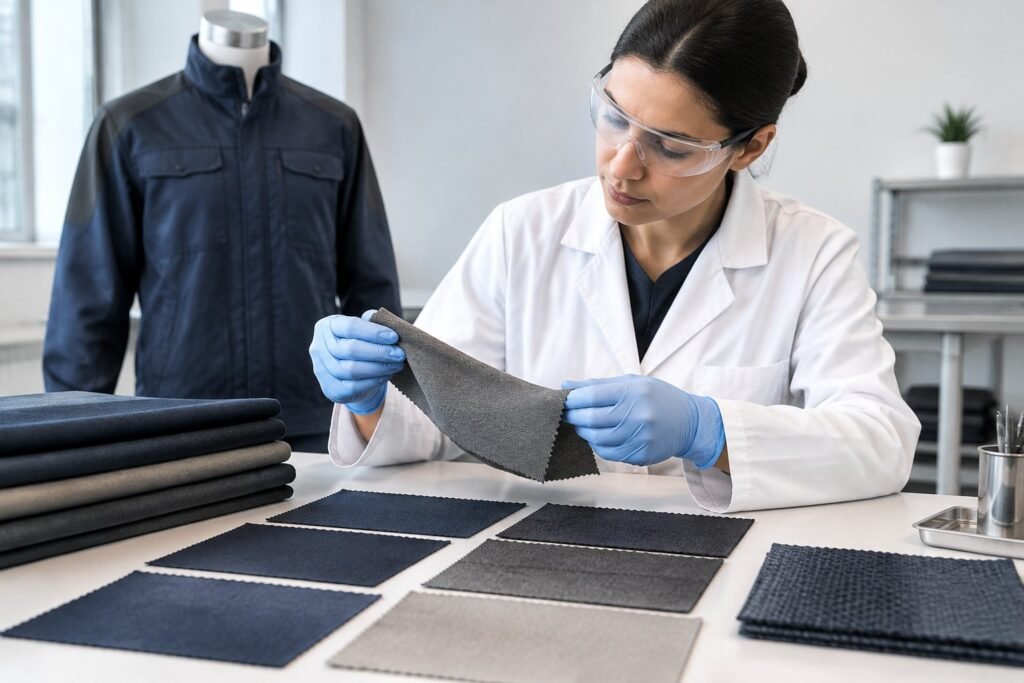
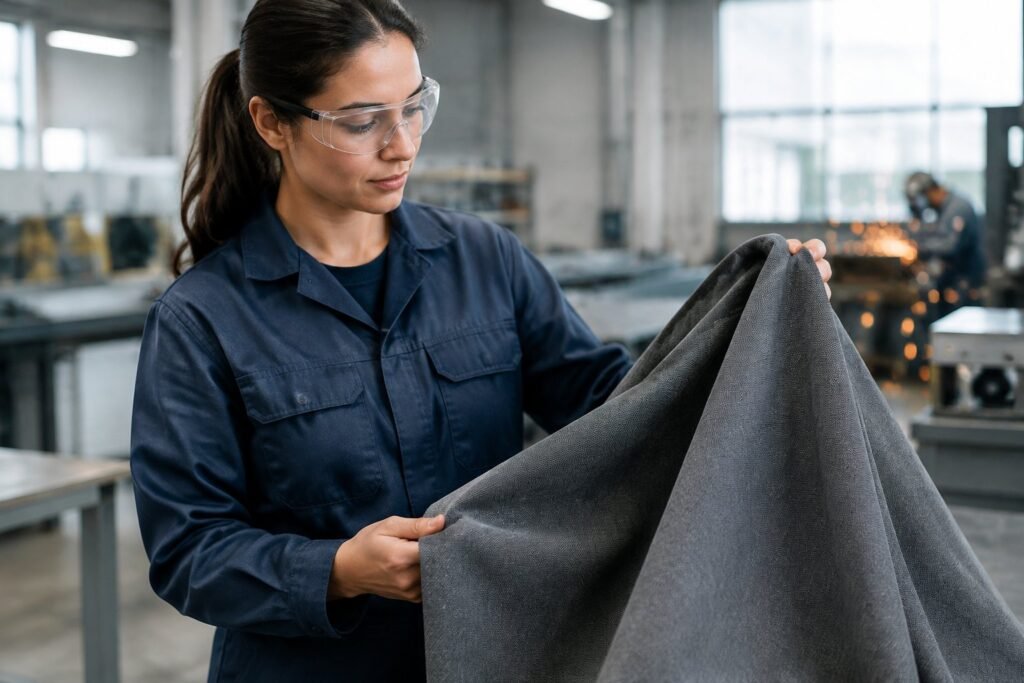
Source inherently flame-resistant fabrics for protective workwear. Share your garment application, preferred composition, fabric weight, and required testing with LEVITEX to discuss suitable options and sampling requirements.
The right inherent FR blend depends on actual fiber composition, fabric construction, and the garment’s end use, not the fiber name alone. IFR aramid blends and aramid/FR-viscose fabrics carry flame resistance built into the fiber itself, which supports long-term protective workwear use across varied duty cycles. Aramid content affects strength and heat stability, while FR-viscose content affects softness and moisture handling, so the ratio matters as much as the fiber type. Weave and weight also shape how a fabric performs in cutting, sewing, and daily wear. For a closer look at how fiber-level flame resistance compares with chemical treatments, our breakdown of inherent and treated FR fabric options covers the mechanics behind each approach.
Match Protection to the Workplace Hazard
Matching fabric to a workplace hazard requires evidence specific to that hazard, since flame resistance and arc-rated performance are not the same claim. A fabric that resists ignition has not automatically been tested or rated for arc flash exposure, flash fire conditions, or welding sparks. Buyers should request the exact standard and test report tied to the fabric under review before assuming it fits a given job site. Our guide on the difference between AR and FR clothing explains why those labels serve separate purposes. Fabric-level results also stop short of certifying a finished garment, since seams, trims, and layering affect outcomes; our notes on test and certification scope walk through what fabric documentation does and does not confirm.
Verify Test and Certification Scope
Verifying test scope means confirming the report covers the exact fabric construction and weight you plan to order, not a similar product from the same fiber family. Ask for the fiber content, weight, and finish listed on the report, and compare those figures line by line against the fabric sample in hand. A passing result on one construction does not transfer to a different weight or blend ratio from the same supplier. Treat fabric-level data as one input among several, since garment design, stitching, and closures also factor into finished-product performance.
Balance Comfort, Weight and Strength
Comfort, airflow, tear strength, and abrasion resistance need their own test evidence, since fiber name and fabric weight alone do not establish how a fabric feels or holds up in use. Two fabrics with the same aramid content and the same gram weight can still differ in hand feel, stretch, and breathability depending on weave and finishing. Requesting exact-construction samples lets a buyer check drape, weight, and surface texture against the intended garment pattern before committing to an order. To review how flame-resistant options stack up against general industrial workwear needs, our page on workwear fabric requirements sets out the comparison points worth checking.
Confirm Performance After Laundering
Confirming post-laundering performance means asking for the permitted laundry process and the number of wash cycles behind any test data submitted for the fabric. Inherent FR fibers carry flame resistance in the fiber structure, but that property does not remove separate concerns around contamination buildup, general wear, fit retention, or care routines over a garment’s working life. A buyer should request results tested after the specific laundering method planned for the garment program, since untested cycle counts leave a gap in the evidence. Our FR fabric washing and care guidance outlines practical handling steps worth reviewing alongside any supplier test data.
Define Your Bulk Fabric Requirements
A complete purchase specification should state composition, weight, usable width, shade, required test methods, an approved sample reference, lot identification, and acceptance limits before production begins.
Each of these details gives both buyer and manufacturer a fixed point of comparison once bulk rolls arrive. Samples and production lots should be checked against the same approved reference fabric, with agreed tolerances for shade variation and weight so no single roll gets judged by a shifting standard. Our page on FR fabric quality control covers how lot checks typically fit into a sourcing timeline.
To move toward sampling, send your garment application, composition preference, fabric weight, intended laundering route, required tests, and order quantity to Charlie@levitex.com so the LEVITEX team can discuss fabric selection and next steps.