
Fabric finishes are mechanical processes or chemical treatments you use to improve a textile’s appearance, hand (feel), and functionality. For workwear, the right finish helps you control shrinkage, improve comfort, or achieve a defined protective property on a suitable base fabric.
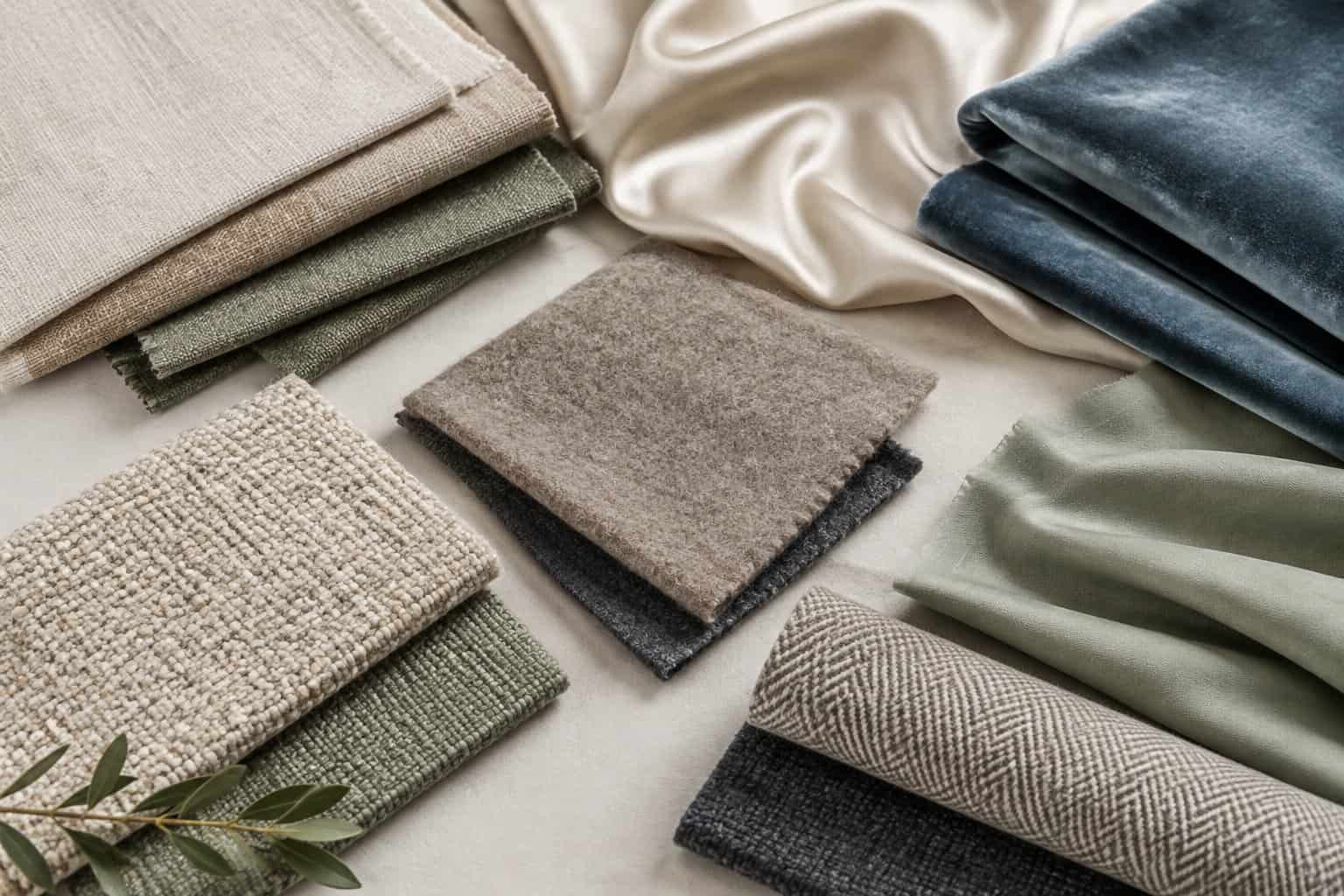
Your purchasing specification needs to connect each desired effect to measurable performance. A soft swatch tells you about initial handle; laundering and performance tests tell you whether that material meets your requirements through service.
How Are Textile Finishing Methods Classified?
You classify textile finishing by how a treatment works and, separately, by what it achieves. Mechanical and chemical describe processes; aesthetic and functional describe purposes.
Mechanical Processes That Change Surface and Texture
You use mechanical finishing to change fabric through physical action, sometimes with heat or moisture. Sanding abrades the surface, brushing raises fibers, and calendering compresses cloth between rollers to produce a smoother appearance.
For dimensional control, you use processes such as compressive preshrinking or compacting. Your specification should identify the intended effect because “mechanically finished” alone says little about softness, surface texture, or residual shrinkage.
Chemical Treatments That Modify Fabric Properties
With chemical finishing, you introduce substances that modify fibers or their surfaces. Examples include softeners, easy-care resins, water-repellent agents, and suitable flame-retardant treatments.
Your mill selects an application route such as padding, exhaustion, spraying, or coating, followed by the required drying or curing stages. When you specify FR fabric finishing, the chemistry and processing conditions must suit the substrate and the required protective performance.
Why Appearance and Performance Are Purpose-Based Categories
You use appearance categories for outcomes such as sheen or a peach-like hand, while functional categories describe outcomes such as flame resistance or liquid repellency. A single process belongs to either purpose category when its effects support that use.
Your finished textile also gains functionality from its construction. Performance comes from a combination of chemical and mechanical treatments and fabric characteristics, so your evaluation should include yarn type and fabric structure alongside the finish.
Which Treatments Improve Appearance, Feel, and Dimensional Stability?
You improve surface character with treatments such as sanding and glazing, while washing and preshrinking help establish handle and dimensional behavior. Your selection should reflect the garment’s expected wear and care conditions.
Comparing Representative Treatments and Their Effects
You get a useful comparison by separating each treatment’s mechanism from its intended result. Use the checks below to turn a finish name into a practical sample-approval requirement.
| Treatment | Main process | Intended effect | Your approval check |
|---|---|---|---|
| Sanding or sueding | Controlled surface abrasion | Soft, short raised surface | Pilling and abrasion behavior |
| Washing | Wet processing with controlled action | Adjusted handle and relaxed fabric | Shade and dimensional change |
| Compressive preshrinking | Mechanical compression | Reduced residual shrinkage | Measurements after laundering |
| Mercerizing | Controlled chemical treatment of cotton | Improved luster and dye affinity | Shade, strength, and hand |
| Glazing | Calendering, sometimes with finishing agents | Polished surface sheen | Sheen retention after care |
| Burnout | Selective chemical fiber removal | Patterned, partly transparent areas | Local strength and coverage |
Your approval sample should represent the intended production sequence. Changing the order of dyeing, surface treatment, and functional finishing changes the final result.
Sanding and Sueding for a Softer Surface
You create a soft, peach-like surface through controlled abrasion with sanding or sueding equipment. The process develops short surface fibers; complete removal of surface fuzz is a different objective.
For workwear, assess the softened face against abrasion and pilling requirements. You should inspect pocket edges and other high-contact areas after wear simulation because an attractive initial hand does not establish service durability.
Washing and Preshrinking for Handle and Dimensional Control
You use washing to remove processing residues, relax manufacturing stresses, and develop a specified handle. Sand-washing is one particular treatment description; it does not describe every fabric-washing process.
Preshrinking addresses dimensional change through a defined mechanical or relaxation process. You still need to measure fabric shrinkage after your intended laundering cycle, including drying, because a “preshrunk” description does not establish zero shrinkage or wrinkle-free performance.
Mercerizing Cotton for Luster and Dye Affinity
You obtain mercerized cotton through treatment with sodium hydroxide under controlled conditions. Treatment under tension promotes luster, while changes within the cotton fiber improve dye affinity and influence strength.
Your supplier should manage the complete treatment and washing sequence. For purchasing, specify the required shade and appearance, then verify strength and dimensional properties on the finished material.
Glazing for Surface Sheen and Burnout for Pattern Effects
You obtain a glazed appearance through calendering, sometimes combined with starches, resins, or other finishing agents. The durability of that sheen follows the treatment system, so inspect a laundered sample before approving a polished uniform fabric.
With burnout, you selectively remove one fiber component from a suitable blend to create a pattern. For protective workwear, evaluate the resulting thinner areas for coverage and strength before considering the effect acceptable.
Which Functional Treatments Matter for Workwear?
Your workwear finish should address the documented exposure or maintenance requirement, such as flame exposure, liquid splash, or difficult soil removal. Each claim needs its own evidence and a compatible base fabric.
Flame-Retardant Treatments for Suitable Base Fabrics
You use a suitable flame-retardant treatment to reduce ignition and flame propagation on compatible textiles. With treated cotton, the chemistry changes how cellulose behaves during burning; the resulting fabric still requires testing against the intended application.
Specify flame-retardant fabric treatment together with fabric composition, construction, and laundering requirements. Your approval must distinguish flame-test results from arc ratings or garment-level flash-fire performance, because each addresses a different aspect of protection.
Water and Chemical Repellency vs. Barrier Coatings
You use liquid-repellent finishes to reduce surface wetting by specified liquids. When comparing waterproof, water-resistant, and water-repellent fabrics, match the claim to the exposure pressure and duration.
A coating or membrane introduces a layer whose barrier properties depend on its material and continuity. Your chemical-protective selection requires separate consideration of penetration, permeation, and degradation under the relevant exposure conditions.
With Levitex, you have chemical-repellent options produced through post-treatment finishing on cotton, cotton/nylon (C/N), and cotton/polyester (CVC) base fabrics. When you assess chemical-resistant fabric requirements, treat these repellent fabrics as a distinct protection category; their repellency does not establish a permeation-resistant barrier or equivalent protective-clothing performance.
Soil-Release and Easy-Care Treatments
You use soil-release finishes to help certain soils leave the fabric during laundering. Repellency addresses initial wetting, while soil release addresses cleaning after contamination has occurred.
For easy-care workwear, resin-based treatments improve crease recovery and reduce wrinkling in suitable cellulosic fabrics. Your approval should include retained strength and cleaning performance because resin chemistry and curing conditions affect the finished textile.
Antimicrobial Treatments and Their Claim Limitations
You should define an antimicrobial finish by the organism tested, the method used, and the measured effect. A bacterial reduction result supports a narrowly described claim under those test conditions.
For US workwear, check the intended claim and applicable EPA requirements before approving labeling. You need separate evidence for antiviral activity, mold resistance, insect repellency, or health-protection claims, and you should request retention results after the specified laundering sequence.
What Affects Performance and Wash Durability?
Your finish performs as part of a fabric system shaped by fiber chemistry, construction, processing, and care. Approval should address the finished material after realistic maintenance.
Compatibility with Cotton, Cotton/Nylon, and Cotton/Polyester
You need different processing considerations for cotton and its blends. Cotton’s cellulose responds to treatments such as mercerization, while nylon and polyester introduce different chemical and thermal constraints.
When you evaluate the chemical properties of cotton fabric, connect them to the proposed treatment and exposure. For C/N or CVC, ask your supplier to identify the exact blend ratio and confirm compatibility with curing temperature, dyeing conditions, and subsequent finishes.
A treatment suited to one composition does not establish performance across an entire blend family. Your test report should identify the same composition and construction you intend to purchase.
Tradeoffs in Breathability, Strength, Comfort, and Appearance
You should evaluate each added property alongside its effect on everyday wear. A continuous coating changes air permeability; an easy-care resin system influences hand and retained strength.
Mechanical treatments also involve tradeoffs. Sanding changes the fabric surface, while heavy calendering changes surface smoothness and pore geometry.
Your sample assessment should therefore cover relevant comfort and durability properties. Include air permeability or moisture-vapor testing when your garment specification requires them, along with tear strength and abrasion resistance.
Laundering Conditions, Treatment Retention, and Reapplication
You preserve finished-fabric performance by following a validated care procedure. Detergent chemistry, wash temperature, mechanical action, drying, and contamination all affect the condition of the textile.
For protective workwear, specify how to launder flame-retardant fabric before you approve the material. Your maintenance instructions should address prohibited additives and the removal of flammable contamination.
Certain repellent systems allow manufacturer-approved heat reactivation or reapplication. You should obtain written instructions for the exact system and avoid applying aftermarket treatments to protective clothing without compatibility approval.
How Should Buyers Specify and Verify a Finish?
You should specify a finish through intended use, measurable acceptance criteria, and an agreed verification plan. A named treatment alone leaves important purchasing requirements undefined.
Define the Intended Use and Required Performance
Start your specification with the job and its exposure conditions. Identify whether your garment serves routine uniform use or requires protection against a defined hazard.
Then record the substrate, fabric weight, construction, usable width, and required color. Add the expected service life and care process so your supplier understands the conditions under which performance must be retained.
For electrical hazards, your selection of arc-flash clothing materials requires an appropriate arc rating supported by testing. A flame-retardant finish description alone does not establish that rating.
Select Relevant Test Methods and Acceptance Criteria
You turn performance language into an enforceable requirement by naming the test method, edition, and pass criteria. To make sure fabrics meet quality standards, agree on the laboratory and reporting requirements before production.
Your test plan might include:
- Surface water repellency: AATCC TM22, with a specified minimum spray rating.
- Oil repellency: AATCC TM118, with a defined acceptance grade.
- Soil release: AATCC TM130, using the agreed staining and laundering procedure.
- Dimensional change: AATCC TM135 for fabrics, with limits in both length and width.
- Flame behavior: ASTM D6413/D6413M where required by the applicable specification.
- Chemical permeation: ASTM F739 when your hazard assessment requires barrier-performance evaluation.
You should treat these as examples of different measurement purposes. A spray rating measures surface wetting behavior, while chemical permeation testing addresses molecular transport through a material.
Approve Samples and Check Performance After Laundering
You should approve samples produced with the intended substrate and complete finishing sequence. Retain a signed reference sample and record the associated laboratory report, shade standard, and finish specification.
Request initial results and results after the agreed number of care cycles. Your laundering protocol should match the intended home or industrial process closely enough to support the purchasing claim.
For bulk production, define sampling frequency and lot traceability. Require written approval for changes to chemistry, substrate, or processing conditions that affect the agreed performance.
Match the Finish to the Workwear Requirement
You achieve a suitable workwear specification by pairing the desired effect with a compatible substrate and verifying retained performance after laundering. Appearance and handle checks belong alongside the relevant protection tests.
Keep your purchase documents specific about composition, finish, care procedure, and acceptance limits. Retain approved samples so your production checks have a consistent reference.
To discuss your requirements with Levitex, email Charlie@levitex.com with your desired finish, substrate, laundering conditions, and required performance tests. Ask Charlie to confirm the suitable options and supporting verification for your application.
Frequently Asked Questions
You can resolve common finishing questions by checking the treatment’s mechanism and its documented performance on the specified fabric.
Can one fabric have both mechanical and chemical finishes?
Yes, you can specify both mechanical and chemical finishes on one fabric, such as preshrinking followed by a compatible functional treatment. You should approve the complete processing sequence because interactions between treatments affect the final result.
What are examples of temporary fabric finishes?
You encounter temporary finishes in starching, some sizing treatments, and certain softeners that diminish during laundering. To assess their influence, compare your original swatch with one washed under the intended care conditions.
Can 100% cotton fabric be made flame-retardant?
Yes, you can obtain 100% cotton fabric made flame-retardant through a suitable treatment. Your supplier should provide application-relevant performance results and evidence of retention after the specified laundering procedure.
Does washing a finished fabric remove its protective properties?
Washing affects your fabric according to the treatment chemistry and care conditions; durable finishes are engineered for repeated laundering within specified limits. You should follow the validated care instructions and use after-laundering test results to establish retained protection.
Is chemical-repellent fabric the same as chemical-resistant protective clothing?
You should treat chemical-repellent fabric and chemical-resistant protective clothing as distinct categories with different verification requirements. Repellency describes resistance to surface wetting by specified liquids; protective-clothing selection also requires assessment of the chemical exposure, material performance, and garment construction.