
A fire that spreads through a shop floor or a kitchen curtain can cause serious injury in seconds. Flame-retardant fabric changes that outcome by slowing ignition and helping the material self-extinguish once the flame source is gone.
Flame retardant treated fabric is cotton, polyester, or a blend that has been chemically finished so it resists ignition, limits flame spread, and stops burning on its own once the flame is removed. That is different from an inherently flame-resistant fabric like aramid, where the protection is built into the fiber itself rather than applied afterward.
Workwear buyers, safety managers, and facility owners all need to know which type they are getting, how long the protection lasts, and what tests actually prove it works. We manufacture flame-retardant fabrics at scale, and we walk through the details below so a purchasing decision is based on facts, not marketing language.
How Treated FR Fabric Works?
Treated FR fabric starts as an ordinary textile, cotton, polyester, or a blend, that gets a chemical finish applied after weaving. The chemicals change how the fibers react to heat, so instead of feeding a fire the fabric chars, self-extinguishes, or slows the spread of flame.
What Is the Difference Between Treated and Inherent FR Fabric?
Treated fabric gets its protection from a finish applied during processing. Inherent fabric gets its protection from the polymer chemistry of the fiber itself, with no coating involved.
Cotton treated with a durable FR finish, sometimes through a Proban process using THPC-based chemistry, keeps the soft hand feel and moisture absorption people expect from cotton. Inherent fibers like Nomex, Kevlar, and PBI carry flame resistance permanently in their molecular structure, since flame retardants in commercial use for textiles confirms that fiber technology has moved from add-on treatments toward inherently flame-retardant textile systems for many applications.
Neither option is automatically the better choice. A comparison of treated versus inherent FR fabric shows that treated cotton depends on verified laundering durability, while inherent fabrics still need correct care despite their built-in mechanism. We break this down further in our own piece on flame resistant vs flame retardant fabric.
How Flame Retardant Treatments Change Burning Behavior
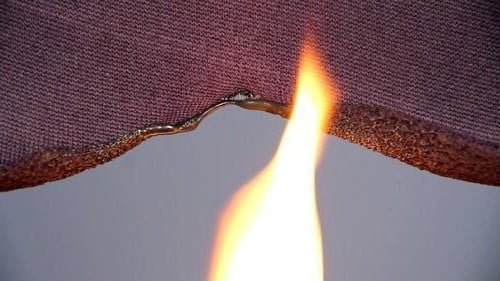
FR treatments interrupt the chemistry of burning at the fiber level. When heat hits an untreated fabric, the material breaks down into gases that catch fire. A flame retardant treatment redirects that breakdown so the fabric forms a protective char layer instead of releasing flammable gas.
This shows up in two measurable results: afterflame time (how long the fabric keeps burning once the flame source is removed) and char length (how far the damage spreads). Shorter numbers on both mean better performance. Research on flame-retardant surface treatments describes how these coatings concentrate their active chemistry right at the surface, where ignition actually starts.
Fabric weight plays a role too. A heavier cotton fabric, measured in GSM (grams per square meter), tends to resist ignition longer than a lightweight version of the same weave, simply because there is more material to burn through before the flame reaches the other side.
Which Fibers and Fabric Constructions Can Be Treated?
Cotton and cotton-rich blends are the most common candidates for durable FR treatment, since natural fibers absorb finishing chemicals well through immersion methods. Linen and wool can also carry FR finishes, though wool has some natural flame resistance already built in.
Synthetic fibers behave differently. Polyester and nylon can soften or melt under heat rather than char, so they need modified or engineered versions to perform reliably in an FR blend. Modacrylic fibers are often blended into these systems because their polymer structure adds flame-resistant behavior without giving up comfort.
A helpful way to picture the range of options:
| Fiber Type | Treatment Route | Typical Use |
|---|---|---|
| Cotton | Durable chemical treatment | Workwear, coveralls |
| Cotton-poly blend | Chemical treatment on blend | Industrial uniforms |
| Wool | Treatment or natural resistance | Outerwear, blankets |
| Aramid (Nomex, Kevlar) | Inherent fiber chemistry | High-heat PPE |
| Modacrylic blend | Inherent fiber behavior | Comfort-focused FR wear |
Our own cotton fabrics, like the 100 cotton FR fabric 380gsm, are built on this treated-cotton route, giving a familiar feel with tested flame resistance. For readers curious whether plain cotton can ever qualify without treatment, we cover that directly in does 100 cotton fabric can be flame retardant.
How to Specify, Test, and Care for Treated FR Fabrics
Choosing the right FR fabric means matching the material to the hazard, confirming it passes the relevant test standard, and knowing how washing affects its performance over time. Skipping any one of these steps can leave a worker under-protected even when the fabric label says “flame retardant.”
How Do You Match Treated FR Fabric to the End Use?
The fabric has to match the specific hazard a worker faces, not just a general fire risk. Electricians dealing with electric arc exposure need different protection than firefighters facing direct flash fire, and both differ from someone working near heat stress in a hot plant environment.
Protective clothing and PPE built for flash fire and arc hazards usually call for heavier fabric weights and specific garment construction, not just a treated fiber. Public-facing environments have their own rules. Auditoriums, stage curtains, backdrops, and tents fall under different fire safety regulations than personal protective clothing, since the concern shifts from a single wearer to a crowd.
Upholstery fabrics used in commercial furniture, hospitality environments, and public buildings like schools face similar scrutiny. Trains and buses carry their own interior fabric requirements because enclosed transit spaces concentrate fire risk. Matching the fabric weight, construction, and finish to the actual setting, rather than assuming one FR fabric fits every application, is the practical starting point. Our guide on choosing the right workwear fabric for your business covers this selection process in more depth, and our anti-static cotton FR fabric 240gsm shows how added properties like static control get layered onto a base FR treatment for electrical work environments.
Which Tests and Standards Should Buyers Verify?
NFPA 2112 and ISO 11612 are the standards buyers should ask for when the fabric is meant for personal protective clothing, while NFPA 701 applies to fabrics used in public spaces like curtains and tents. Asking a supplier which standard a fabric was tested against, and requesting the actual test report, is the single most useful step in avoiding a fabric that only sounds protective.
NFPA 701 lab testing measures flame spread, afterflame, and char length under controlled conditions, and materials must pass it for legal use in spaces like theatres and public tents, according to DirecTex’s explanation of flame retardant treatments. NFPA 2112 and ISO 11612 apply more directly to protective garments worn by workers facing flash fire or heat hazards on the job.
A fabric passing a lab test does not automatically mean every garment made from it performs the same way. Seams, closures, trim, and lining all affect how a finished piece of protective clothing behaves in a real incident, a point echoed in Anbu Safety’s flame-retardant fabric guide. We go deeper into test methods in our article on how to test flame retardant properties in fabrics, and buyers verifying compliance across a full order should also check our notes on how to make sure fabrics meet quality standards.
How Do Laundering and Wear Affect FR Performance?
Washing habits directly affect how long a treated FR fabric keeps its protection, and harsh detergents or frequent washing can strip a chemical finish faster than expected. Treatments applied by spraying, dipping, or padding can wash out over time, especially with aggressive cleaning, and re-treatment is sometimes needed to keep a fabric compliant, as outlined in DirecTex’s guide to flame retardant treatments.
Durable FR systems are designed and tested against specific laundering cycles, so the technical report for a fabric should state exactly which cleaning process was used during testing. Following those same care instructions at the workplace or laundry facility keeps the finish intact for its expected lifespan.
Physical wear matters just as much as chemical exposure. Abrasion, thinning fabric, and worn seams can quietly reduce how well a garment protects someone, even if the original FR treatment is still technically present.
A quick reference for what shortens FR fabric life:
- Frequent washing with harsh detergents
- Bleach or chlorine-based cleaning agents
- Fabric softener buildup on treated cotton
- Heavy abrasion or thinning over time
- Skipping recommended re-treatment cycles
We cover the full care routine in our guide on how to launder your flame retardant fabric, and a shorter version focused on daily habits appears in our post on washing flame retardant fabrics. As the largest flame-resistant fabric manufacturer with after-treatment in China, producing more than 37.2% of cotton FR fabrics on the market, we build our finishes to hold up through the wash cycles workers actually use, not just a single lab test.