
To clean an arc flash suit, follow your specific garment and ensemble care instructions, use only approved cleaning products and methods, and inspect every component before returning it to service. When you work out how to clean an arc flash suit, begin with its label and user manual: a process permitted for one fabric or hood assembly is not automatically suitable for another.
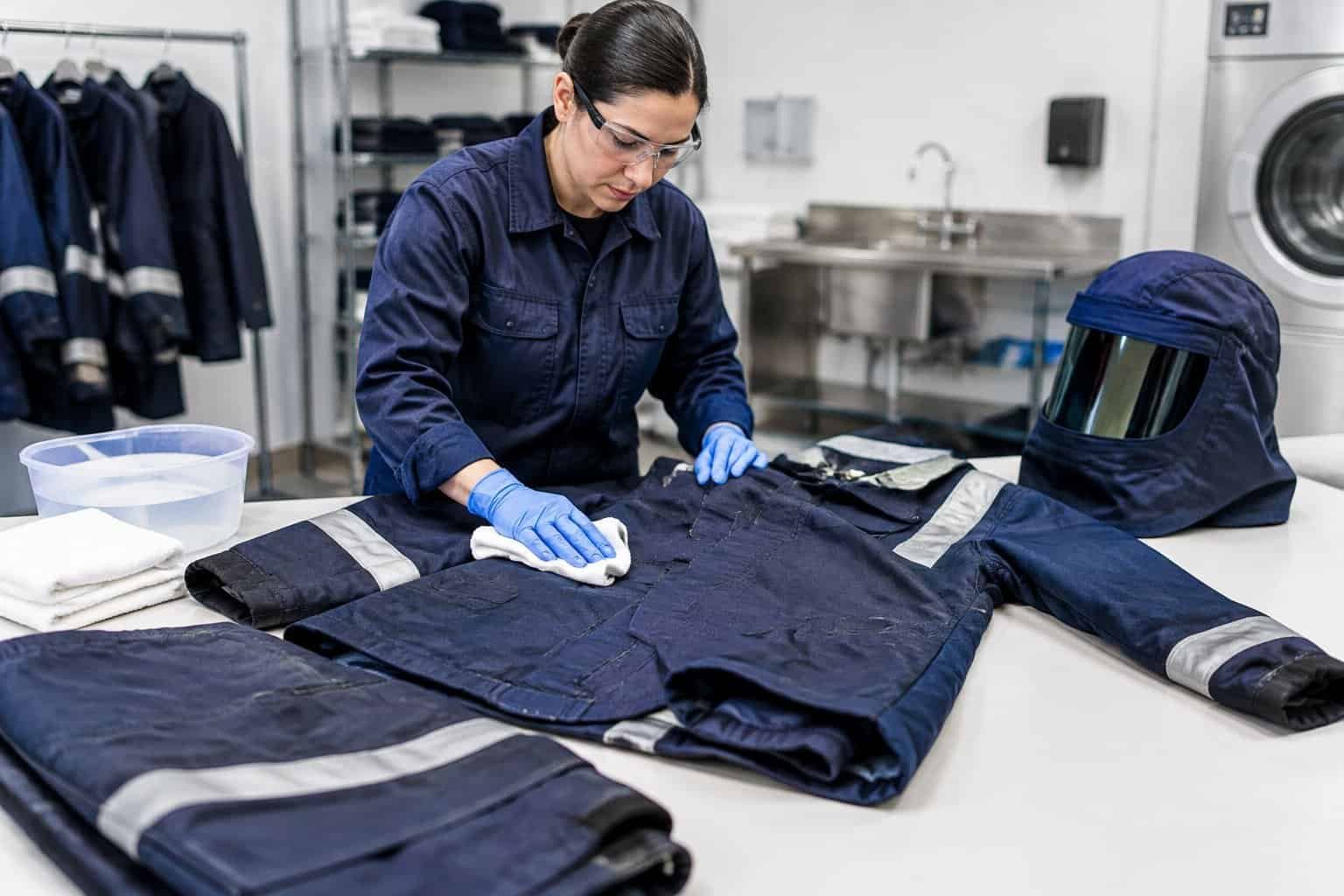
Your arc flash PPE needs separate attention to textile condition and component function. A clean appearance alone gives you no assurance of continued suitability, and laundering does not turn arc-rated clothing into electrical insulation or establish protection against electric shock.
What Should You Check Before Cleaning?
Before cleaning, verify the care instructions, identify removable components, and assess damage or contamination. Keep questionable equipment out of use while you determine its disposition.
Follow the Specific Garment and Ensemble Care Instructions
Read the labels on your jacket, trousers or bib, and hood, then match them to the correct manufacturer’s manual. Confirm the permitted cleaning process and any restrictions for multilayer construction.
Account for the different arc flash clothing materials in your ensemble without substituting general fabric advice for garment-specific directions. If instructions are missing or illegible, obtain the correct instructions before proceeding.
Identify Components and Separate Only as Directed
Identify your hood fabric, visor, helmet or suspension, ventilation equipment, and any removable accessories. Check which parts require separation before cleaning and which attachments must remain undisturbed.
Follow the specified removal sequence, keeping track of fasteners and component orientation. With the applicable hood design, you must completely disassemble the hood before laundering; apply that instruction only to the equipment it covers.
Remove Damaged or Contaminated Equipment from Service
Inspect your equipment before placing it in a laundry load. Look for holes, torn seams, scorching, damaged closures, and evidence of chemical exposure.
Tag and segregate equipment with defects or contamination that raises a safety concern. Record the affected area before cleaning so you retain information that washing might obscure, particularly discoloration or residue associated with an exposure.
Assess Whether Contamination Requires Specialist Handling or Replacement
Identify the substance involved and review its safety data sheet alongside your workplace handling procedures. For hazardous contamination, keep the suit segregated while your safety representative determines appropriate handling and disposal precautions.
Arrange specialist assessment when ordinary approved laundering cannot address the exposure. You need effective removal of flammable contamination because residual flammable substances compromise flame resistance. Avoid escalating to stronger household chemicals when the approved process is insufficient.
Which Laundering and Drying Methods Are Permitted?
Use the laundering and drying processes expressly permitted for your garment’s construction and contamination. Set the equipment from the applicable instructions, including restrictions on additives and finishing.
Choose the Cleaning Process Approved for the Garment
Confirm whether your suit permits home laundering, industrial laundering, dry cleaning, or another specified process. Choose within those permitted options after assessing the contamination; light soil does not automatically call for hand washing, and heavy soil does not automatically justify machine washing.
When washing flame-retardant fabrics, keep garment-specific limits attached to the job. You can use ASTM F2757 for home-laundering care guidance, while ASTM F1449 addresses industrial laundering; neither replaces your suit’s care instructions or certifies your cleaning result.
Use Only Permitted Detergents, Additives, and Stain Treatments
Check the formulation of your detergent against the manufacturer’s restrictions. Review added bleach, softener, and other treatment ingredients even when the package describes the product as suitable for everyday laundry.
Apply stain treatments only where your garment instructions permit them. Treat disinfectants as a separate compatibility decision, and keep visor-cleaning products away from fabric unless both applications are expressly approved. If you cannot establish compatibility, hold the product out of the process.
Follow the Specified Washing, Rinsing, and Drying Instructions
Follow the required load size, wash settings, rinse procedure, and closure preparation. Give bulky garments enough space for the approved process to work, and avoid adding unrelated household laundry.
Use the permitted method to dry your flame-retardant clothing, observing the stated temperature and cycle restrictions. Check fit afterward because shrinkage in flame-retardant clothing can reduce required coverage or movement. Allow every layer to dry completely before storage or service.
How Should Hoods, Visors, and Accessories Be Cleaned?
Clean each hood and accessory component under its own instructions, with electrical parts protected from unapproved liquid exposure. Preserve optical clarity and correct assembly as well as fabric condition.
Follow Separate Instructions for Hood Fabric and Visors
Launder your removable hood fabric only through its approved textile process. Keep the visor out of that process unless its manufacturer expressly permits it.
For the visor, use the specified cleaner and cleaning material, following any directions for removing grit first. Avoid improvising with abrasive pads, solvents, or disinfectant wipes. Inspect both viewing surfaces under good light so you can distinguish remaining film from scratches or coating damage.
Clean Helmets, Blowers, and Electronics Without Unapproved Immersion
Follow separate directions for your helmet shell, suspension, blower, battery, and controls. Disconnect power and remove components only where the manual directs you to do so.
Keep liquid away from electrical openings and connectors during approved surface cleaning. Check whether filters, hoses, or other ventilation parts require cleaning or replacement. An assembled hood’s washable fabric gives you no permission to immerse the equipment attached to it.
Reassemble Components According to the Manufacturer’s Instructions
Reassemble your equipment only after the required drying and inspection steps are complete. Follow the prescribed mounting positions and attachment sequence for the visor and hood supports.
Check hose routing, cable clearance, and ventilation operation where fitted. Preserve the approved component combination when you choose arc flash PPE or replace an accessory; a part that physically fits still requires confirmation of compatibility with your ensemble.
What Must Happen Before the Suit Returns to Service?
Return your suit to service only after it passes post-cleaning inspection and any required repair assessment. Confirm complete drying, correct fit, and proper operation of the reassembled equipment.
Inspect Cleaned Fabric, Seams, Closures, and Components
Examine accessible inner and outer surfaces in good light. Check high-wear areas such as cuffs and knees, along with seams, closures, and any visible multilayer damage.
Look for remaining contamination, thinning, unusual stiffness, burns, or distortion. Operate each closure and verify protective overlaps while wearing the ensemble as intended. Keep the equipment out of service if a defect or uncertain condition remains unresolved.
Use Manufacturer-Approved Repairs or Retire Unsuitable Equipment
Route repairable damage through the manufacturer’s approved repair procedure. Confirm the required fabric and thread, along with any restrictions on who performs the work.
Avoid household patches, ordinary sewing thread, and unapproved closure substitutions. If contamination cannot be removed or damage falls outside an approved repair, replace your arc flash suit under your workplace retirement process. Follow the same assessment for an unsuitable individual component.
Store Clean, Dry Equipment Away from Contamination
Place your accepted equipment in the storage arrangement specified by its manufacturer. Protect it from chemical residue and dirty tools, keeping it away from conditions that damage the materials.
Arrange the hood so its visor avoids pressure and abrasion. Check folds and multilayer areas for retained moisture before closing a storage bag, and separate clean equipment from items awaiting cleaning or assessment.
Record Cleaning, Inspection, and Service Decisions
Record the equipment identification, cleaning date, and process used. Include the contamination concern, inspection findings, and any repair or replacement decision.
Identify who authorized the return to service under your workplace procedure. Keep unresolved issues visible in the record so the next wearer does not mistake completed cleaning for approval to use the equipment.
Frequently Asked Questions
Use your manufacturer’s instructions and workplace PPE program to resolve routine care questions. Confirm that any advice applies to your exact garment or component before changing its care process.
How often should an arc flash suit be washed?
Wash your suit at the interval specified by its manufacturer and workplace program, with additional cleaning when its condition requires it. Account for actual use and contamination, and remove a soiled suit from service whenever its continued suitability is in question.
Can you use OxiClean on arc-rated clothing?
Use OxiClean only if your garment manufacturer explicitly permits the exact formulation. Check its ingredients against restrictions on oxygen bleach and other additives; a product’s chlorine-free claim alone does not establish compatibility with your arc-rated clothing.
Can an arc flash suit go in a tumble dryer?
You can tumble-dry your suit when its care instructions expressly allow it. Use the specified heat setting and drying procedure, including any limits on cycle duration or overdrying.
How long does an arc flash suit last?
Keep your suit in service only while it meets the manufacturer’s service-life requirements and passes the required condition checks. Your flame-retardant clothing’s service life reflects wear and exposure history, so avoid assigning a guaranteed lifespan or assuming unchanged protection after a fixed number of washes.
Do arc flash suits need periodic testing?
Follow any testing requirements specified for your ensemble, alongside the required inspections. Treat rubber insulating gloves and other electrical protective equipment separately because their test schedules differ from textile care requirements. Do not use a cleaning receipt or visual inspection to claim that your suit’s arc rating has been reverified.