
Replace your arc flash suit when you reach its manufacturer’s retirement limit, when damage cannot be corrected through authorized repair, or when you can no longer verify that it meets your task’s protection requirements. If you find suspect damage or contamination, remove the equipment from service while you arrange a competent assessment.
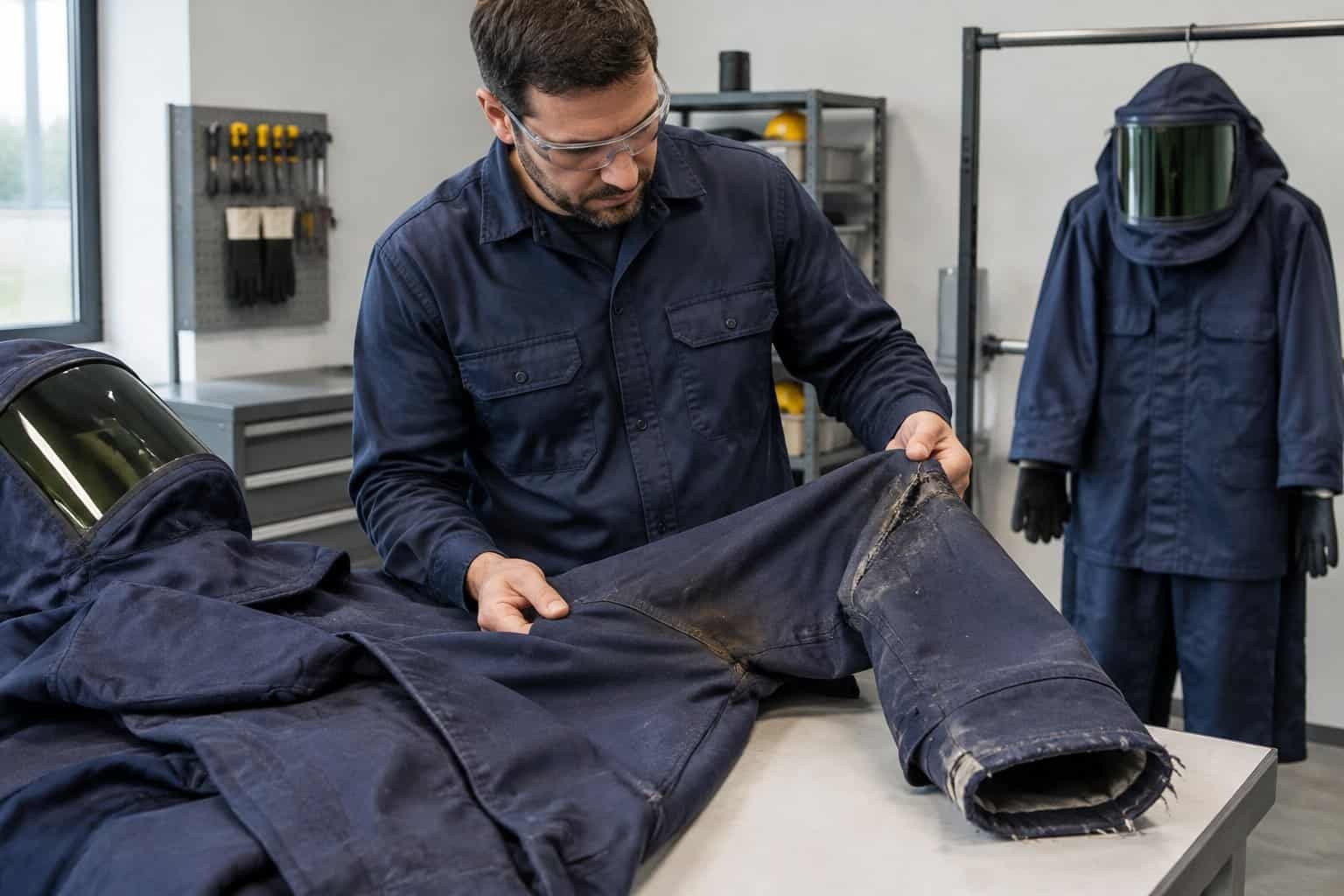
Your decision about when to replace an arc flash suit requires more than its purchase date. You need its inspection findings and care history, along with the manufacturer’s instructions and your employer’s electrical safety program. A clean appearance alone gives you insufficient evidence of continued suitability.
What Determines Whether a Suit Remains Fit for Service?
You should keep a suit in service only while its documented condition and protective capability satisfy the manufacturer’s requirements and your workplace hazards. An unused suit still requires inspection and traceable identification.
Manufacturer Service-Life Limits and Documented Condition
Check the instructions for your exact model, including separate requirements for its hood and visor. Follow any stated retirement date, service-life limit, or cleaning-cycle restriction, and record the dates needed to apply those limits.
Your replacement assessment should account for age, frequency of use, laundering care, and storage environment. When evaluating how long flame-resistant clothing lasts, keep flame resistance separate from the condition of the finished garment: worn seams or failed closures still require action.
How Exposure, Use Conditions, and Care History Affect Suitability
Review abrasion, sunlight exposure, heat, and contact with chemicals or combustible deposits. Frequent kneeling and contact with rough equipment deserve attention at the knees and other high-wear areas.
Confirm how you have cleaned and stored the suit. Your arc flash clothing materials determine the applicable care instructions; use only the processes approved for that garment. If you cannot establish its identity or exposure history, quarantine it until your employer and manufacturer determine an appropriate disposition.
What Should You Check Before Each Use?
Before each use, inspect your complete ensemble for damage, contamination, and proper operation. Add documented inspections at the intervals established by your employer’s program and manufacturer’s instructions.
| Inspection area | What you should examine | When you should stop use |
|---|---|---|
| Fabric | Outer surfaces, accessible inner layers, high-wear areas | Holes, thinning, burns, or suspect contamination |
| Seams | Stitching and joined panels | Open seams or broken stitching |
| Fasteners | Zippers, snaps, hook-and-loop closures | Closures that fail to secure required coverage |
| Coverage and fit | Overlaps and coverage during movement | Exposed skin or restricted task movement |
| Labels | Identification, arc rating, care information | Unverifiable identity or protection level |
| Hood and visor | Lens, attachment points, suspension, accessories | Cracks, impaired visibility, or insecure components |
Fabric, Seams, and Fasteners
Inspect your garment under good lighting, opening closures to examine concealed areas. Check beneath pocket flaps and along cuffs, where wear or contamination is easy to miss.
Operate every closure through its full travel. Check whether your zipper closes completely and whether its protective flap stays secured. Avoid pulling damaged areas apart to assess their strength; isolate the garment for evaluation.
Coverage, Fit, and Label Legibility
Check your fit while reaching, bending, and assuming the working positions required for your task. Confirm that your jacket and trousers maintain the specified overlap and that cuffs remain positioned correctly with your gloves and footwear.
Read your labels before relying on the suit’s protection. If the rating or model information is illegible, use traceable manufacturer records to resolve identification before returning it to service. Avoid assigning a rating from fabric color or a similar-looking garment.
Hood, Visor, and Associated Components
Inspect your visor for cracking, cloudiness, distortion, and scratches that impair visibility. Examine the hood fabric around its viewing window and check the mounting hardware and suspension.
If your hood includes ventilation or lighting, follow its specific inspection instructions. Check the operation and attachment of those accessories without modifying the hood. Keep shock-protective equipment checks separate, including the applicable inspection and electrical testing requirements for rubber insulating gloves.
How Should Failed or Suspect Equipment Be Handled?
Remove failed or suspect equipment from service immediately and identify it clearly so nobody reissues it. Your assessment should lead to an approved return to service, an authorized repair, or permanent retirement.
Stop-Use Triggers After Arc Exposure, Heat Damage, or Contamination
After an arc flash event, withdraw every exposed component from use and preserve its identification for incident review. Follow the manufacturer’s post-exposure requirements and your employer’s disposition process, including retirement where required.
Treat scorching, melted areas, embrittlement, and unexplained thermal discoloration as stop-use conditions. Remove equipment carrying oil, grease, or other combustible contamination until you complete the prescribed assessment and cleaning process.
When you clean an arc flash suit, follow its approved method. A successful wash does not establish that heat-damaged material has recovered its protective properties; persistent contamination requires further disposition.
When Manufacturer-Authorized Repairs May Be Permitted
Use repair only when your manufacturer permits it for the specific defect and your employer authorizes the process. Obtain requirements for the repair method and replacement materials, including thread and closures.
Avoid DIY patches, ordinary sewing thread, and alterations that change the garment’s construction. Even an arc-rated patch needs approval for its use in that garment. Before reissue, document the repair and complete the required inspection.
Permanent Retirement, Component Compatibility, and Disposition Records
Permanently retire equipment that reaches a mandatory limit or fails the applicable acceptance criteria without an approved remedy. Follow the manufacturer’s decision for arc-exposed or heat-damaged items and for equipment whose identity remains untraceable.
If you replace one component, verify its compatibility with the retained ensemble. Record the affected item, defect, assessment, and final disposition. Mark retired equipment clearly and control disposal so it cannot return to the PPE inventory.
What Must Be Verified Before a Replacement Enters Service?
Before issuing a replacement, verify that its complete configuration meets your current hazard assessment and manufacturer’s instructions. A new garment still requires an acceptance inspection and correct selection.
Current Hazard Assessment and Required Protection
Confirm the task and equipment conditions before you choose arc flash PPE. With an incident-energy analysis, verify that the selected arc rating meets or exceeds the assessed exposure at the applicable working distance; with a permitted PPE-category method, follow its conditions and ensemble requirements.
Keep hazard controls central to your decision. You must identify, assess, and mitigate arc flash hazards, including evaluating how to establish an electrically safe work condition. Your suit addresses thermal exposure, while other hazards require their own controls and equipment.
Complete System Evidence and Component Compatibility
Verify evidence for the garment or tested clothing system you intend to use. Your arc-rated fabric verification supports material identification, but you also need finished-garment information and the required ensemble configuration.
Check applicable standard references, such as ASTM F1506 for arc-rated textile-based apparel and ASTM F2178 for face protective products. When reviewing flame-resistant certification, confirm what hazard the documentation addresses; flash-fire certification alone does not establish an arc rating.
Match your hood and garments to the documented configuration. Never add individual layer ratings together unless testing supports that specific combination.
Replacement Checklist, Records, and Worker Training
Use an acceptance checklist before releasing your replacement:
- Confirm the current hazard assessment and required protection.
- Verify the model, size, arc rating, and applicable documentation.
- Inspect every supplied component for defects.
- Check coverage while wearing the intended underlying clothing and accessories.
- Confirm approved component combinations and replacement parts.
- Record identification, issue date, inspection findings, and applicable retirement limits.
- Provide the care instructions and explain stop-use reporting.
Keep these records within your employer’s OSHA compliance responsibilities and electrical safety program. Before your first task in the replacement, practice donning and removing it, operating the closures, and checking visibility and movement.
Frequently Asked Questions
You should resolve age, washing, and inspection questions using your exact product instructions and employer’s program. Apply separate requirements to accessories when their limits differ from the garment’s.
Does an arc flash suit need replacing after five years?
You do not have a universal five-year replacement requirement for every arc flash suit. Apply any manufacturer-specific limit and retire equipment earlier when its condition or exposure history requires it.
Is there a maximum wash count for an arc flash suit?
You must follow a maximum wash count when your manufacturer specifies one for your garment and cleaning process. Keep laundering records where required, and avoid applying another product’s wash limit to your suit.
Does fading mean an arc flash suit is unsafe?
You cannot determine safety from fading alone. Assess the color change alongside fabric condition and exposure history, and remove the garment from use if you suspect damaging heat or chemical exposure.
Can a damaged arc flash suit be repaired instead of replaced?
You may use a repair when your manufacturer authorizes it for the specific damage and you complete the required acceptance process. Replace the affected equipment when repair is prohibited or continued protective suitability cannot be established.
How often does an arc flash suit need inspection or testing?
You should inspect your arc-rated apparel before each use and follow additional documented inspection requirements in your employer’s program. Keep garment inspection separate from electrical retesting schedules for insulating equipment, and use any manufacturer-required evaluation after repair or suspect exposure.