Buyers verify camouflage flame resistant fabric by checking the printed, finished textile against an approved reference and matching it to relevant flame-test evidence for that specification. Appearance approval and flame-performance approval require separate records, connected through a traceable sample or product identifier.
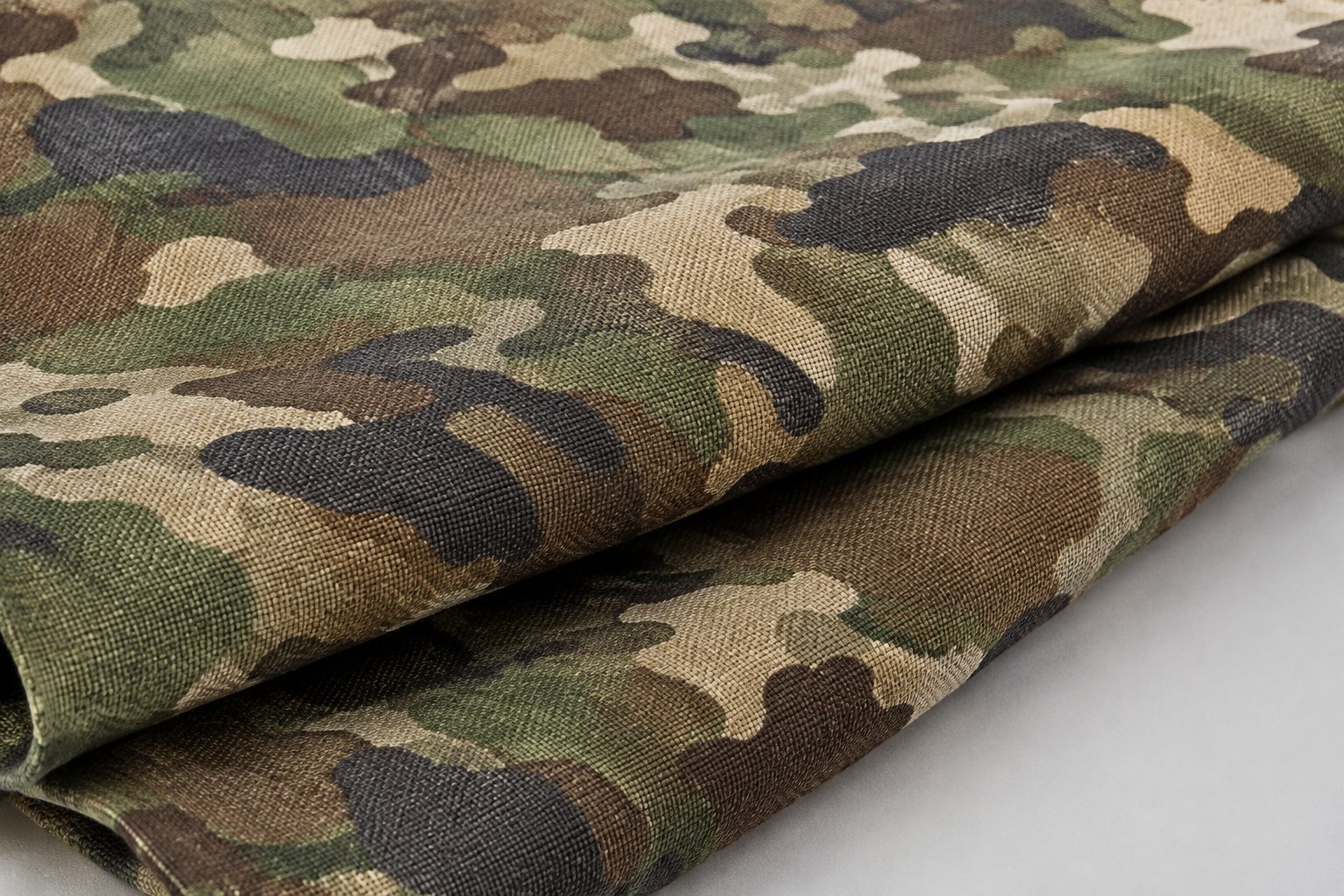
Levitex manufactures FR camouflage textiles for industrial-production and protective-workwear applications. Its custom printing and flame-retardant fabric manufacturing services support specification-led sourcing, where the approved print and supporting reports must describe the material being purchased.
A useful approval package connects the physical sample with its base cloth, print revision, finishing requirements, and test documentation. That connection gives purchasing and quality teams a concrete basis for accepting bulk fabric.
What Must You Verify on the Printed, Finished Textile?
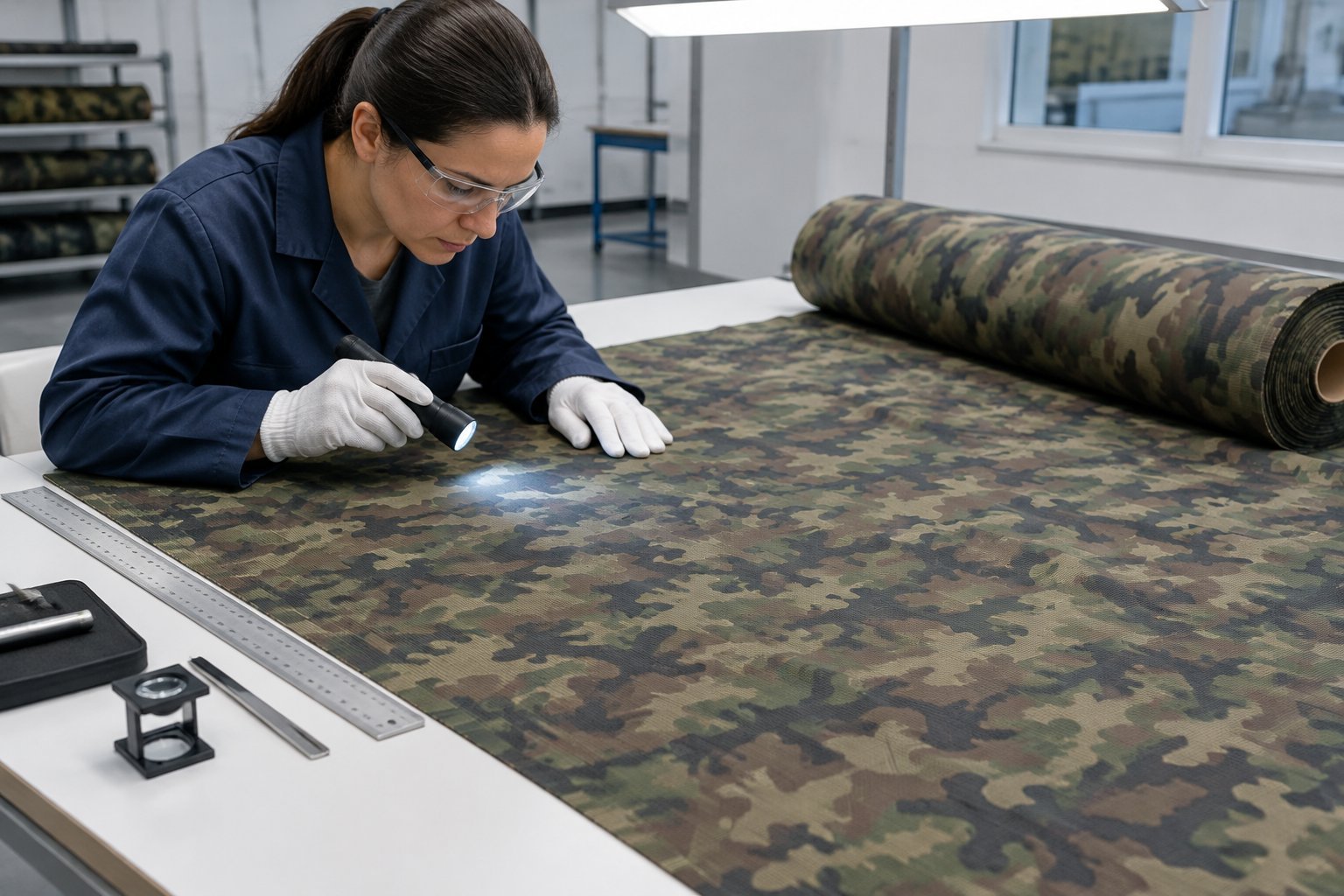
Verification requires separate acceptance of the visible camouflage pattern and the finished textile’s documented flame performance. Any spectral concealment requirement needs its own specification and evidence.
Check the Visible Camouflage Pattern Against the Approved Reference
The approved reference should establish artwork revision, repeat dimensions, orientation, and color placement. A retained physical sample gives inspectors a practical reference for evaluating print scale and the relationship between adjacent colors.
Inspection should cover the full usable width and multiple positions along the roll. A small swatch provides limited evidence of repeat distortion, edge-to-center variation, or intermittent printing defects.
Verify Flame Performance Separately From Appearance
A visually acceptable print establishes appearance acceptance. Flame approval requires a report with a relevant method and results tied to the finished textile specification.
The buyer’s hazard assessment determines the required evidence. An attractive sample, an FR label, or a supplier’s general statement provides insufficient detail for a protective-workwear purchasing decision.
Distinguish Visible Concealment From NIR Reflectance Control
Visible camouflage concerns appearance within the visible spectrum. Near-infrared (NIR) reflectance control concerns spectral behavior beyond visible color evaluation and requires specified measurement conditions and acceptance limits.
Levitex does not offer NIR reflectance control. Its FR camouflage supply discussions should therefore address visible printing and documented flame performance without implying NIR protection or military qualification.
How Does Base Fabric Choice Affect Verification?
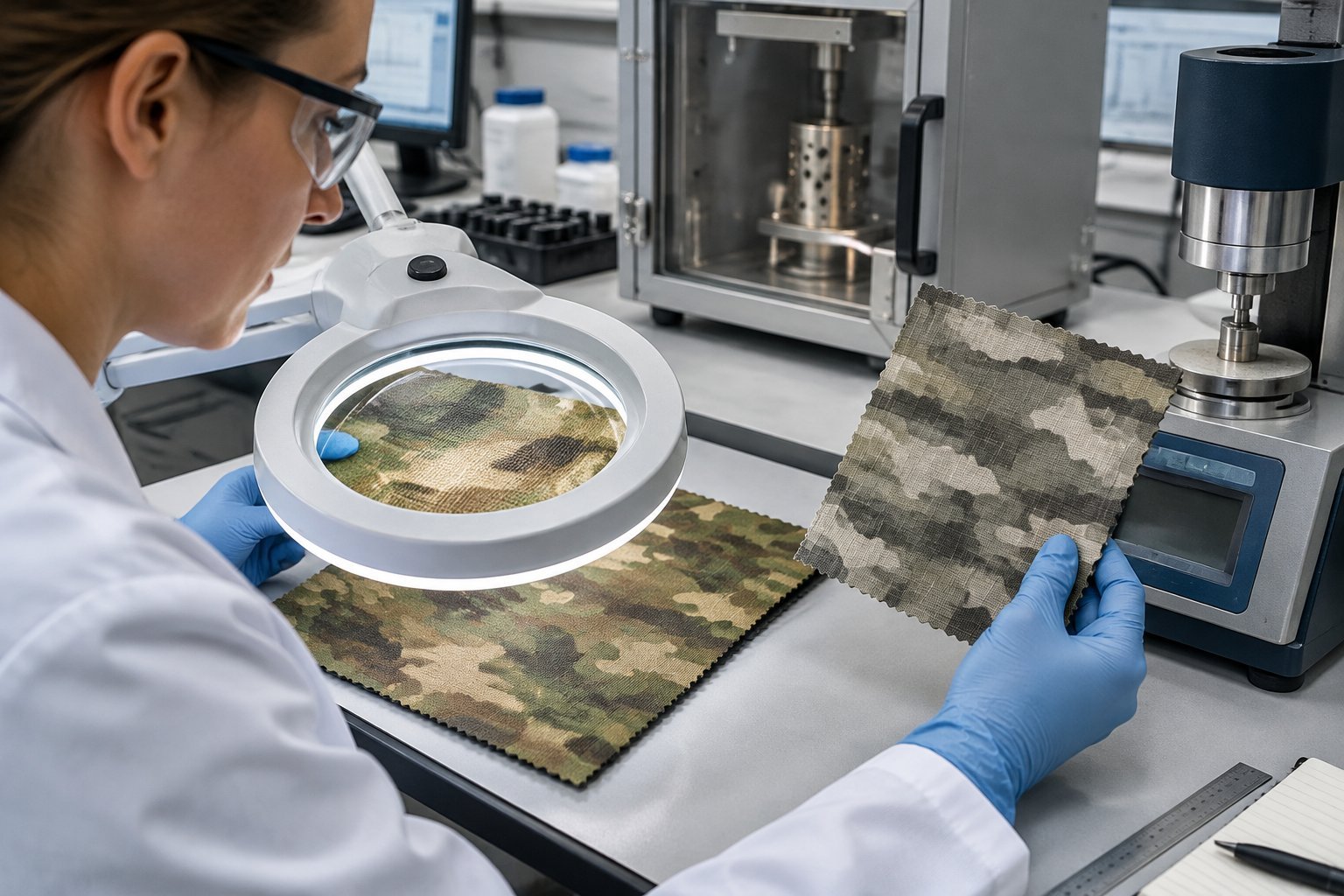
Base fabric choice establishes the material identity that printing, finishing, and testing records must follow. Composition alone leaves important construction and processing differences unresolved.
Confirm Whether the Base Is Cotton, Cotton/Nylon, or CVC
Levitex’s main base-fabric families are 100% cotton, cotton/nylon (C/N), and cotton-rich cotton/polyester (CVC). The purchase specification should state the exact fiber percentages for the selected product.
A C/N label leaves the blend ratio unspecified, while CVC identifies a cotton-rich family. Relevant cotton/nylon blend properties help explain material selection, but each order still requires its own composition declaration.
Record Construction, Weight, and Usable Width
The specification should identify whether the fabric is woven or knitted and describe its structure. Levitex manufactures both constructions within its stated composition families.
Finished weight and usable width need agreed tolerances and measurement conditions. Usable width should exclude selvages or defective edge areas, since those areas affect cutting yield and delivered value.
Why Composition and Weight Cannot Establish Flame Performance
Flame behavior reflects the complete textile, including its treatment and subsequent processing. Two fabrics with matching fiber percentages and weight still require evidence covering their respective finished specifications.
For example, 100% cotton requires suitable treatment to achieve FR performance. Increasing fabric weight establishes neither a particular protection level nor suitability for a named hazard.
How Can Printing and Finishing Change the Approved Fabric?
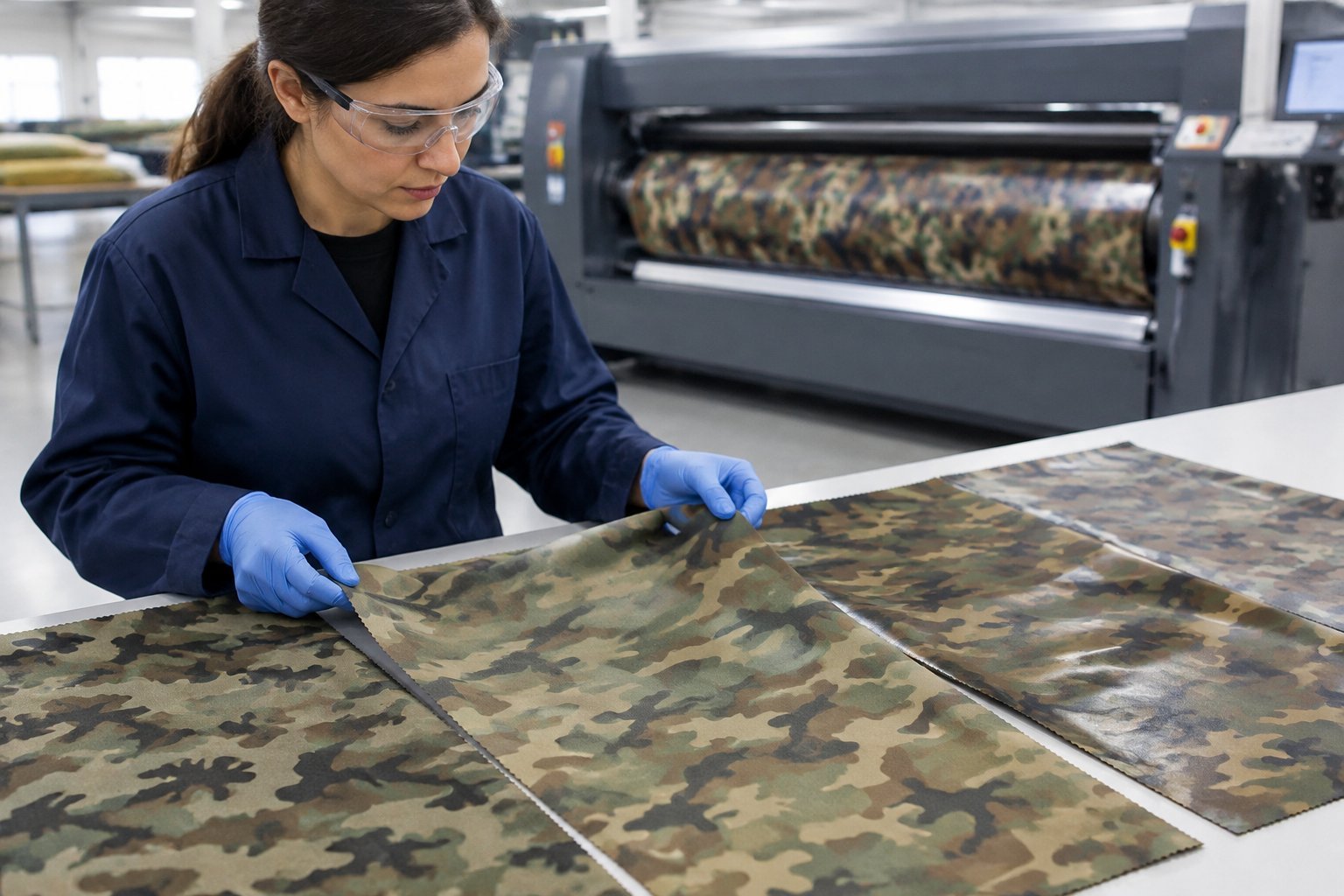
Printing and finishing alter the textile submitted for approval, so acceptance must cover the final processed combination. A change to an approved process requires a documented assessment of the affected properties.
Assess Print Coverage, Definition, and Shade Consistency
Inspection should assess registration between colors, edge definition, repeat continuity, and unintended gaps. Dense color areas deserve attention because uneven deposition is sometimes easier to detect there.
Shade checks should compare edge, center, and opposite edge under agreed lighting. Buyers should also specify how roll-to-roll differences will be assessed and whether approved shade groupings are acceptable.
Evaluate the Finished Combination of Print and FR Treatment
Print chemistry, binders, and curing conditions form part of the manufacturing specification. Their compatibility with the selected flame-retardant fabric treatment requires technical review.
The approval sample should represent the intended production sequence. A sample collected before the last finishing stage leaves later processing outside the evidence represented by that sample.
Review Added Water- or Oil-Repellent Finishes
Levitex offers FR plus water-repellent and FR plus oil-repellent finishing on 100% cotton, C/N, and CVC base fabrics. Those options require product-specific agreement on the requested function and supporting evidence.
Multi-functional FR finishing compatibility should be assessed for the complete finish package. Water repellency describes resistance to surface wetting; any waterproof or liquid-barrier claim requires additional evidence appropriate to that claim.
Identify Changes That Require Further Testing
Changes to the fiber blend, construction, print formulation, FR treatment, or added finishes should trigger a technical review. A revised curing condition or processing route also deserves assessment when it affects the approved textile.
That review should determine whether existing evidence still covers the revision or further testing is required. Any changed water-repellent FR finishing should receive explicit attention in the revised approval record.
Does the Test Report Match the Fabric You Are Buying?
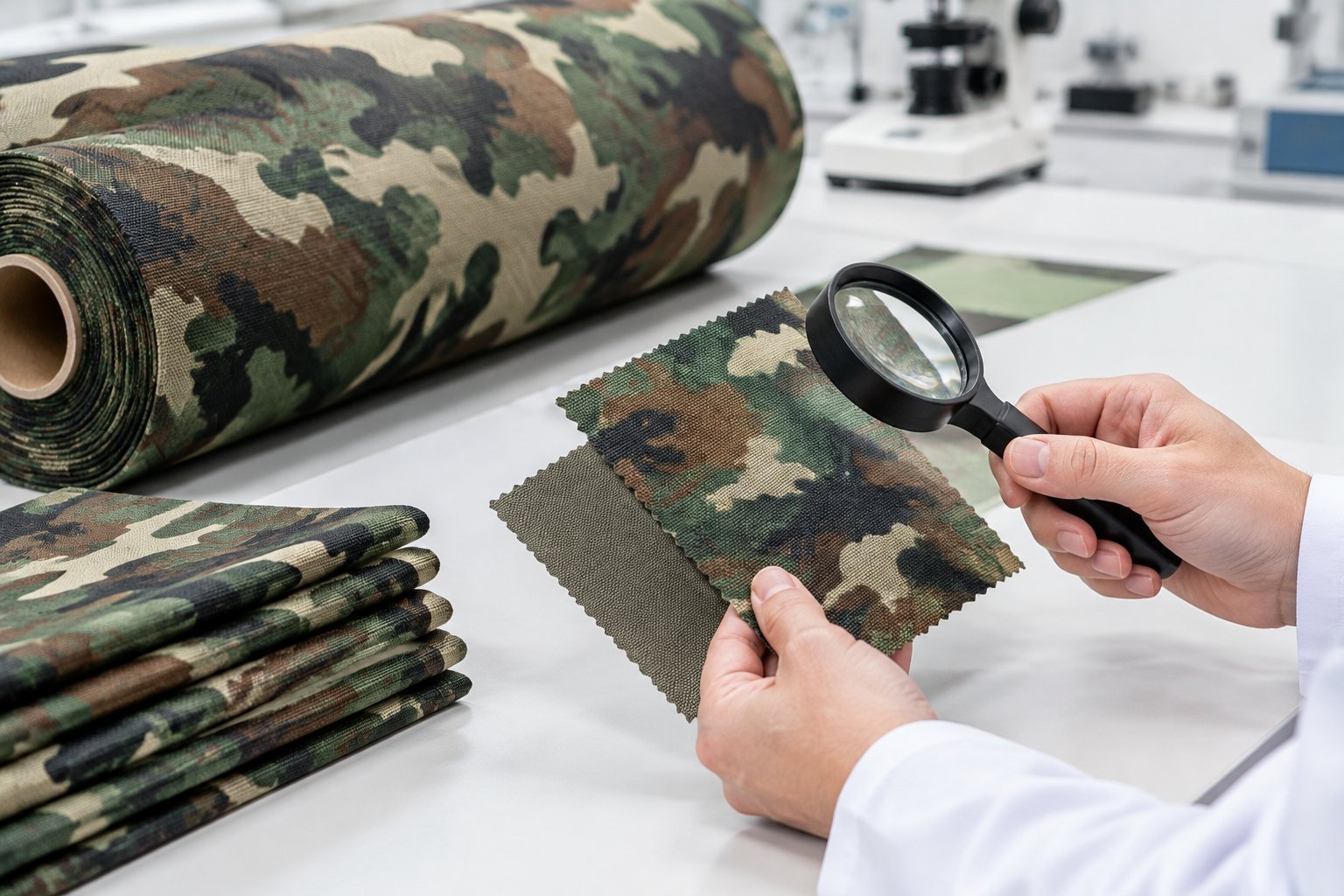
A useful report identifies a specimen that can be traced to the purchased printed specification. Its method and preparation conditions must also fit the buyer’s intended claim.
Match Sample Identification to the Printed Specification and Production Lot
The report identifier should connect to a supplier product code and specification revision. Supporting records should establish the sampled print version, base cloth, finishing package, and production or development lot.
Development testing and bulk-lot verification serve different purposes. Where a report covers a development sample, the supplier should explain how bulk production is controlled against that approved specification.
Check the Test Method, Results, and Pretreatment Conditions
A report should state the method and edition, specimen preparation, conditioning, and measured results. Depending on the method, reported observations include afterflame, afterglow, damaged length, or flaming debris.
The testing of flame-retardant properties must be interpreted within that method’s scope. Buyers should check the stated laundering or other pretreatment conditions before accepting any durability claim.
Separate Textile Evidence From Finished-Garment Requirements
A fabric report provides evidence about the tested textile. Garment assessment introduces additional factors, including seams, closures, coverage, and other incorporated materials.
Levitex supplies textiles and does not provide finished uniforms or garment-design and assembly solutions. The garment manufacturer and responsible approval parties must establish the finished product’s applicable requirements.
Recognize What General FR Reports Do Not Establish
A general FR report leaves dedicated arc performance, molten-metal splash protection, and NIR reflectance outside its scope unless those properties were specifically tested. A military application claim also requires evidence relevant to the stated procurement requirement.
Flame-retardant certification documentation needs a scope check against the exact product and claim. Levitex provides product test reports; buyers should request the relevant report and review its stated coverage before approval.
What Should Your Textile Approval Checklist Include?
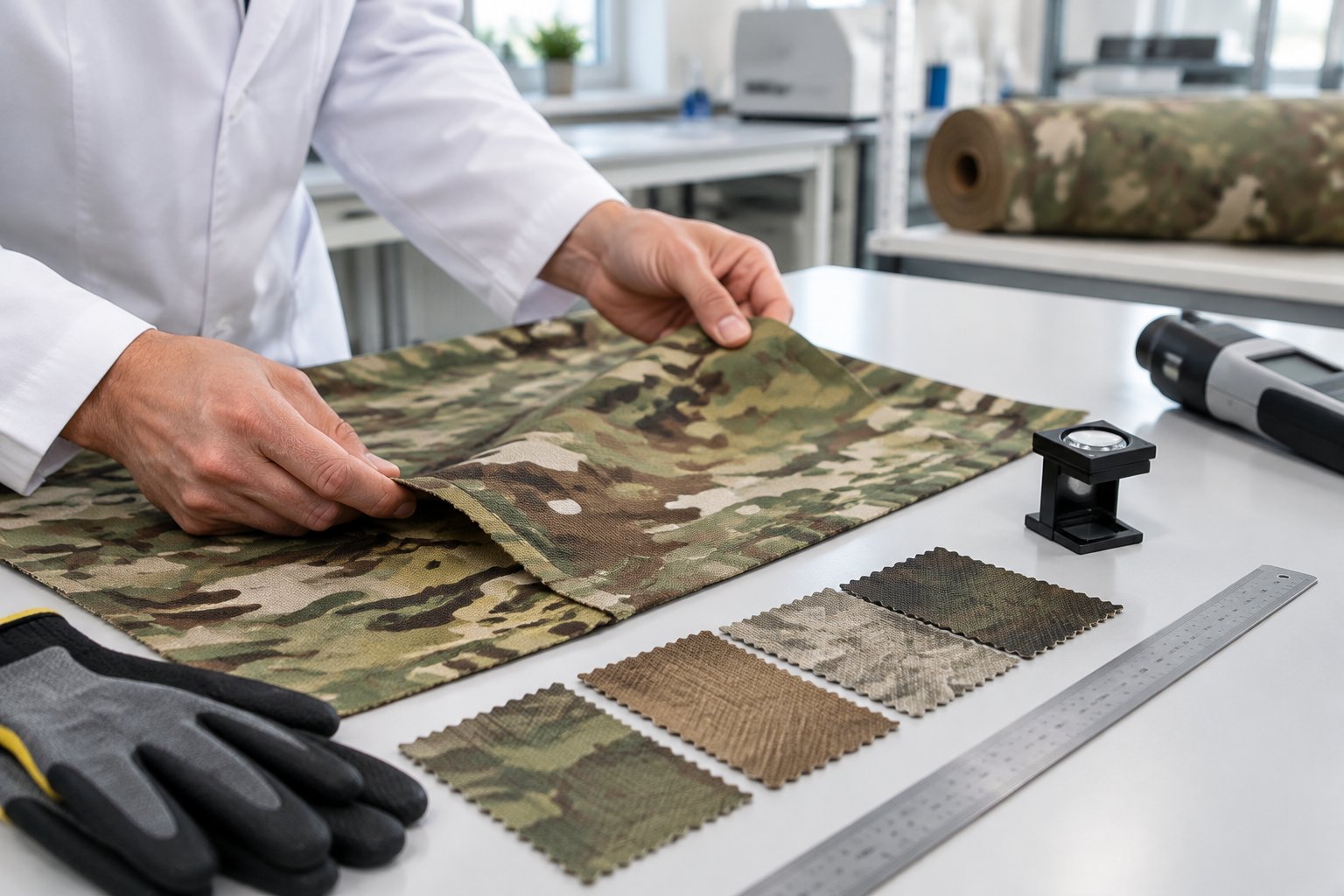
The approval checklist should connect appearance criteria with material identity and supporting flame evidence. It should also define how changes and bulk-production differences will be handled.
Agree on Artwork, Color References, and Shade Acceptance Criteria
The approval record should identify the artwork file and revision, repeat size, orientation, and approved color references. Agreed lighting conditions help purchasing teams and inspectors make consistent shade decisions.
Where instrumental color assessment is required, the parties should define the measurement method and acceptance limits. A physical master sample should have an approval date and controlled storage conditions.
Connect Approved Samples, Specifications, and Reports
Each retained sample should carry a unique identifier linked to the specification and relevant report. An unlabeled cutting becomes difficult to use once several print revisions or finishing trials exist.
The approval file should contain:
- The signed or otherwise formally approved printed sample.
- Exact composition and construction details.
- Finished weight, usable width, and agreed tolerances.
- Print and finishing revision identifiers.
- Relevant test reports and their stated scope.
- Agreed care instructions and durability evidence.
Any laundering requirements for FR textiles should align with the conditions supported by the selected product’s documentation.
Define Change Notifications and Bulk Acceptance Checks
The purchase agreement should require notification before changes affecting the approved material. It should assign responsibility for reviewing those changes and authorizing production release.
Bulk FR fabric quality-control checks should address roll identification, print defects, shade consistency, dimensions, and traceability. The parties should agree on inspection sampling and the treatment of nonconforming rolls before shipment.
Confirm Levitex’s FR Camouflage Supply Scope Before Ordering
Levitex supplies durable flame-resistant camouflage fabric and supports custom printing and customized FR textile production. Its manufacturing history dates to 1951, with 1.5 million meters per month dedicated to flame-retardant fabrics.
A scope review should establish the proposed base cloth and requested finish combination, alongside the evidence needed for approval. NIR control, finished uniforms, and garment-design services remain outside Levitex’s offering.
Buyers evaluating an FR fabric manufacturer’s capabilities should connect production discussions to the specific textile under consideration. Project inquiries to Charlie@levitex.com should include the print reference, proposed base cloth, quantity, and required flame evidence.
Approve the Printed Fabric With Traceable Flame Evidence
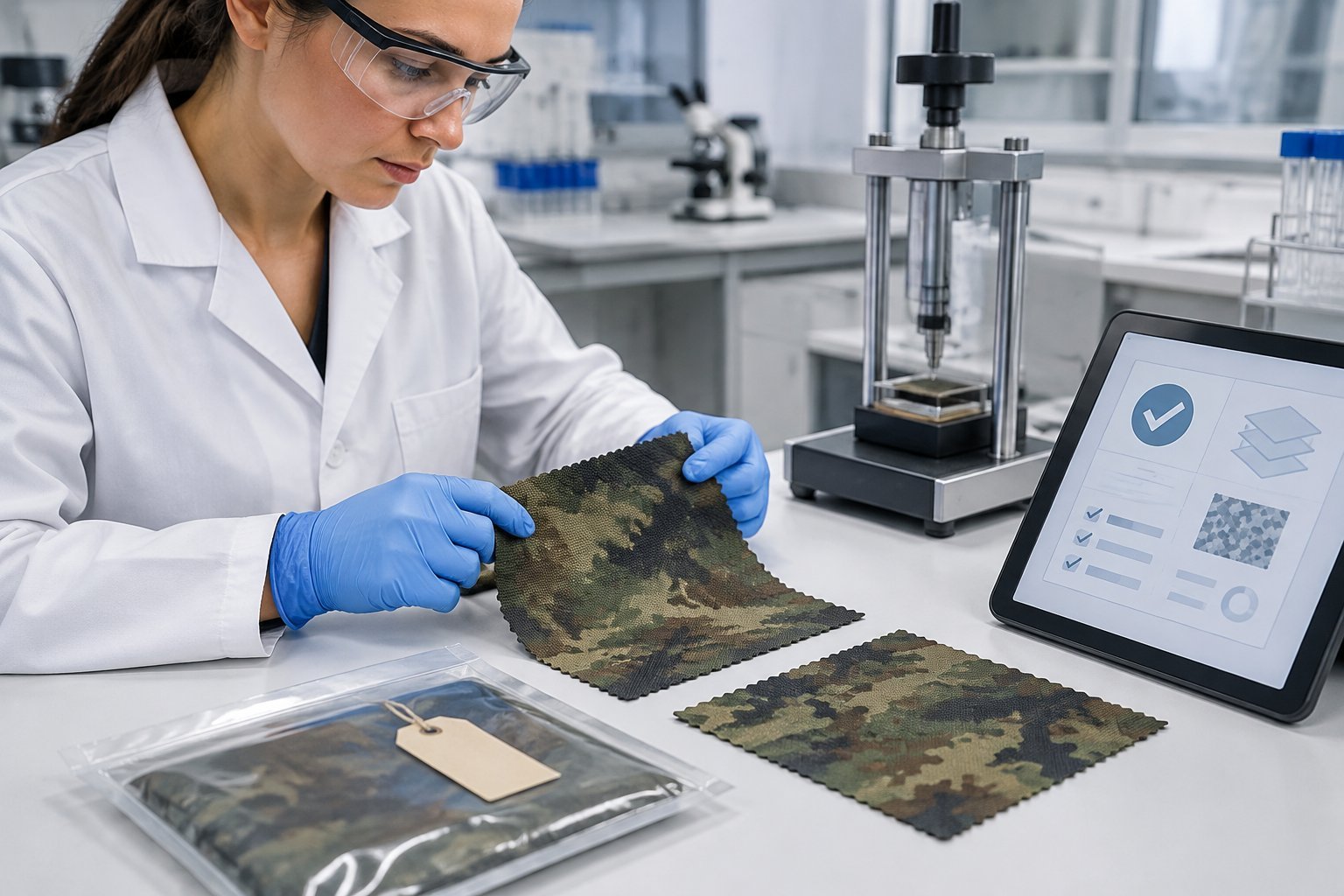
Approval should cover the printed, finished fabric through a documented connection between the retained sample and relevant flame-test evidence. The appearance record should establish the accepted pattern and shade, while the technical record identifies the base cloth and finishing specification.
Before bulk release, the buyer should confirm that the purchase order references the approved revision and defines change notification. Levitex’s textile proposal should be assessed against those same records, with any additional performance claim supported separately.
Frequently Asked Questions
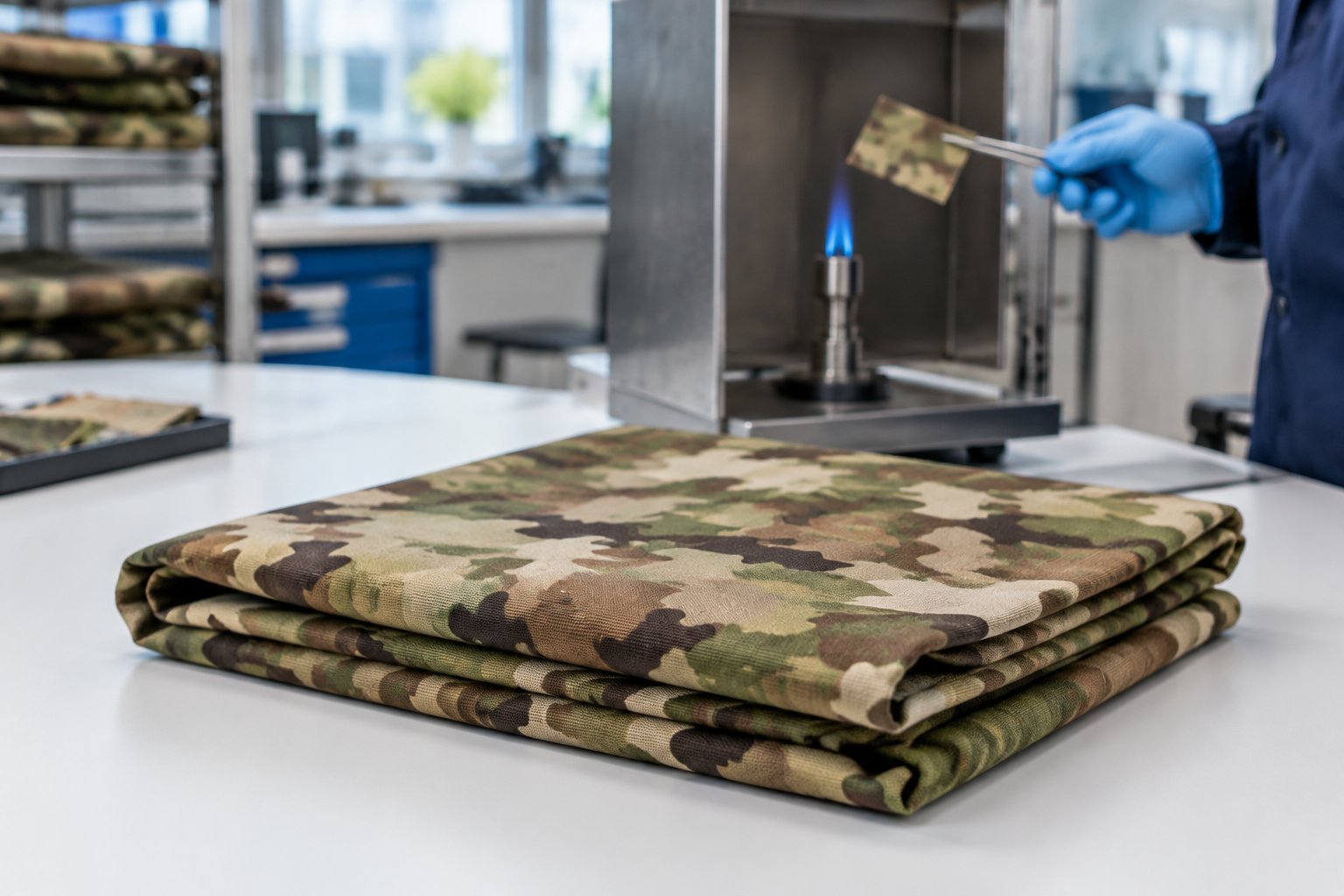
Camouflage appearance, flame performance, and specialized protection claims each require evidence matched to their intended use.
Are all camouflage military uniforms flame resistant?
Flame resistance requires evidence for the particular uniform and its materials. A camouflage pattern or military-style appearance alone establishes no flame-performance level.
Is flame-resistant camouflage fabric completely fireproof?
Flame-resistant camouflage fabric offers performance within specified test conditions and exposure limits. Severe or prolonged heat exposure still presents burn risks, and the tested material’s report defines the evidence available for selection.
Does a camouflage pattern prove near-infrared protection?
A visible camouflage pattern establishes no NIR reflectance performance. NIR requirements need separate spectral specifications and testing; Levitex does not offer NIR reflectance control.
Can a report for unprinted FR fabric verify the printed version?
A report covering only unprinted FR fabric is insufficient by itself to verify the printed version. The supplier must establish that the evidence covers the finished print specification or arrange appropriate additional evaluation and testing.
Can Levitex customize FR camouflage fabric to a buyer’s specification?
Levitex supports customized FR camouflage textile production, including custom printing and base-fabric requirements within its manufacturing scope. Buyers should provide the print reference, base cloth, quantity, and required flame evidence for technical review; Levitex supplies fabric without NIR control or finished-uniform services.