Buyers check multi-functional FR fabric finishing compatibility by testing the complete finish package on the specified fabric, both before and after the required laundering and conditioning. Approval should connect every requested function to the same finished specification, with documented processing conditions and acceptance criteria.
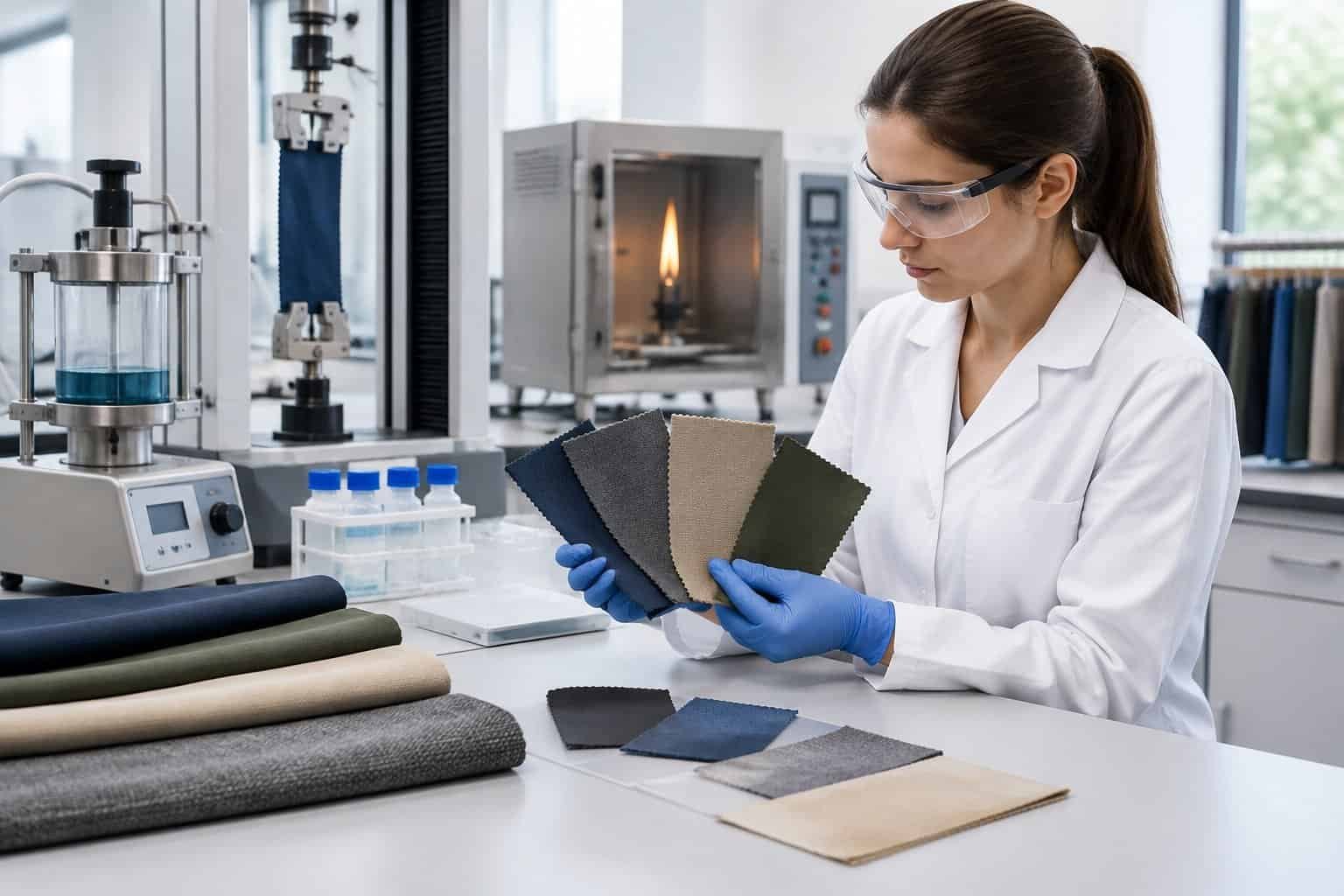
For protective-workwear procurement, the goal is a fabric that retains its required performance through production and service. Levitex manufactures flame retardant textiles on 100% cotton, cotton/nylon (C/N), and cotton-rich cotton/polyester (CVC) bases, including FR plus water-repellent and FR plus oil-repellent options.
Flame retardant finishing interacts with the substrate and subsequent treatments. A useful compatibility review therefore establishes which combinations have supporting evidence, where processing limits apply, and which changes trigger further testing.
Which Finish Combinations Need Shared Evidence?
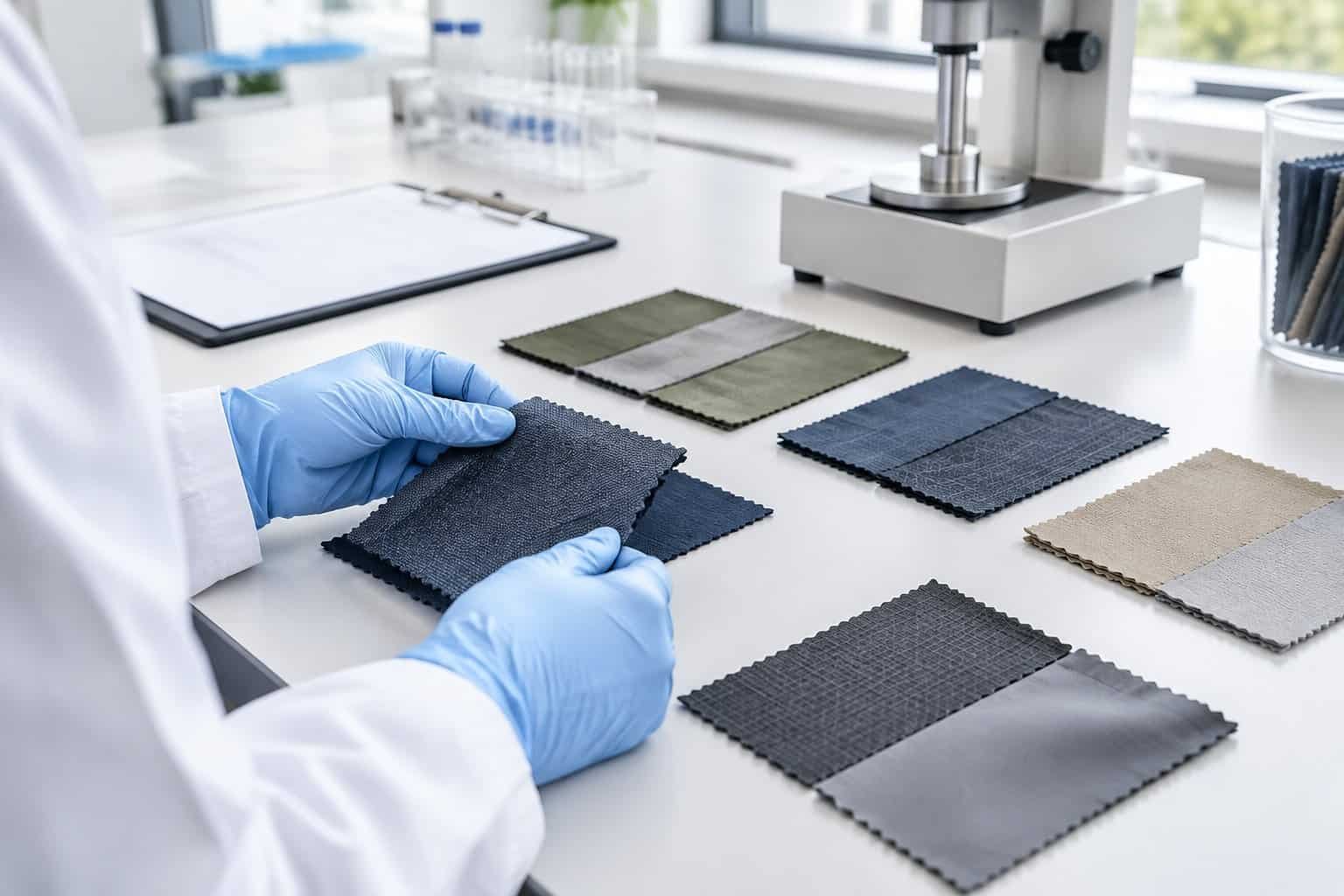
Every requested combination needs evidence representing the complete finished fabric. The evidence must cover flame retardancy alongside the additional functions under their specified conditioning requirements.
A Combination Matrix for FR, Anti-Static, Repellency, Fluorescence and UV
A combination matrix connects each request to its interaction risks and approval evidence. Each row represents a verification task; inclusion in the matrix establishes no product certification.
| Requested combination | Interaction requiring review | Shared evidence needed |
|---|---|---|
| FR + anti-static | Conductive network continuity or topical-treatment behavior after finishing | FR results and applicable electrostatic results for the finished construction |
| FR + water repellency | Surface wetting, finish distribution, and heat-treatment compatibility | FR and water-repellency results after agreed conditioning |
| FR + oil repellency | Repellent formulation, application uniformity, and laundering response | FR and oil-repellency results on the specified finished fabric |
| FR + fluorescent dyeing | Dye selection, curing exposure, and shade stability | FR results plus required color and luminance measurements |
| FR + UV protection | Fabric coverage, shade, UV absorber, and dimensional changes | FR and UV-transmission results under the specified sample conditions |
| FR + several additional functions | Cumulative processing effects and interactions between treatments | Results covering every requested function on the complete package |
For water-repellent FR finishing, the specification should identify the required surface-repellency method. Waterproofness requires separate evidence addressing water penetration.
What Each Matrix Entry Must Show: Substrate, Process and Evidence
Each entry should identify fiber percentages, construction, finished weight, shade, and the complete treatment sequence. Its evidence record should name the test method and edition, specimen conditioning, laundering procedure, acceptance limits, and sample identity.
Anti-static entries also need the technology identified. Levitex’s anti-static fabric options require specification-level review; the category URL supplies no evidence of an arc rating.
Why Separate Finish Reports Do Not Prove Combined Performance
Separate reports establish results for their respective specimens. An FR report for one construction and a repellency report for another leave the proposed combination untested.
Even matching fabric names require closer inspection. If the FR specimen preceded repellent application, its report does not describe the final surface treatment. Approval requires traceability between the tested specimens and the proposed production specification.
How Do the Base Fabric and Chemistry Affect Compatibility?
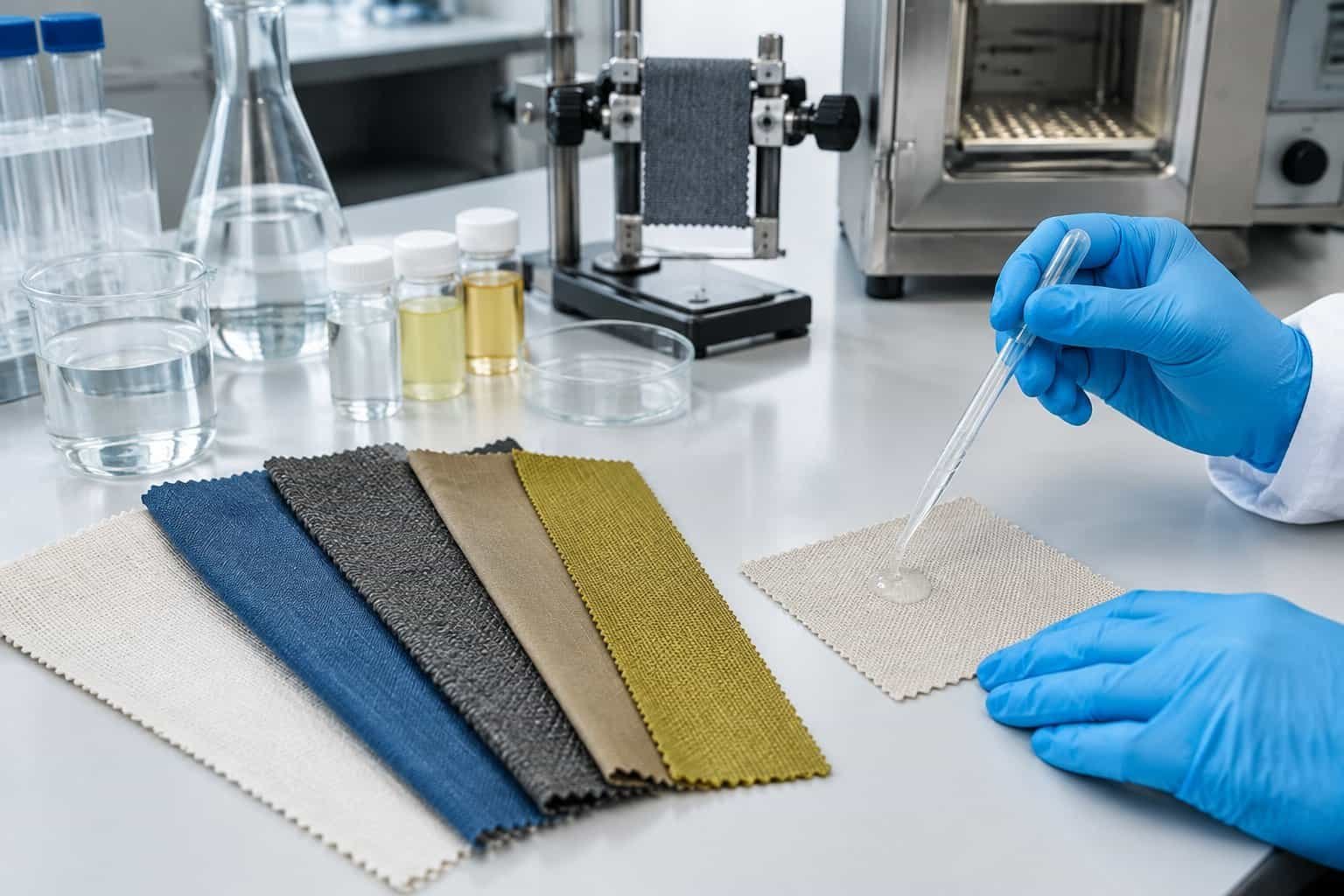
The substrate determines how finishing chemicals attach, distribute, and behave during heating. Compatibility evidence therefore belongs to a defined fabric construction and treatment system.
Cotton, C/N and CVC Require Substrate-Specific Validation
Cotton fabrics contain reactive cellulose groups that support certain durable finishing chemistries. C/N introduces nylon, while CVC introduces polyester; both changes affect the material’s response to finishing and thermal exposure.
Known cotton/nylon blend properties help define a trial, but composition alone establishes no combined-performance result. Fiber ratio, yarn construction, and fabric density should remain traceable throughout validation.
A change from woven to knitted construction also requires review. The composition family remains the same, while stretch and dimensional behavior change the finished fabric’s characteristics.
How Char Formation and Surface Chemistry Can Interact
Some phosphorus-containing flame retardants promote cellulose dehydration and char formation during heating. The resulting char reduces the release of combustible decomposition products and influences heat transfer.
Additional finishes alter the fiber surface. Their binders or auxiliaries affect wetting and chemical distribution; under unsuitable conditions, they also interfere with treatment fixation.
The chemical properties of cotton fabric explain why pH and curing exposure deserve control. A formulation that promotes char still needs evaluation for strength retention and compatibility with subsequent finishing.
Why Polyester and Lyocell Research Cannot Validate Another Substrate
Research on polyester fabrics addresses a thermoplastic substrate with different decomposition and melting behavior from cotton. Results from a particular polyester fabric cannot establish performance for cotton-rich CVC.
Lyocell fabric is cellulosic, but its structure and processing behavior differ from cotton fabric. Research involving lyocell provides useful mechanisms and trial ideas; commercial approval still requires specimens representing the intended substrate and production route.
Which Process Variables Can Change the Result?

Application sequence and processing conditions determine how the finish package develops on the fabric. A successful laboratory recipe needs a controlled production process with defined operating limits.
Finish Sequence, Bath Compatibility and Curing Conditions
A combined bath requires checks for precipitation, separation, and changes in viscosity or pickup. Chemical stability in the bath is only an initial screening result; the dried and cured fabric still needs performance testing.
During a pad-dry-cure process, wet pickup determines how much treatment reaches the fabric. Drying controls moisture removal, while curing establishes the conditions needed for the selected chemistry.
Sequential fabric finishes require their own compatibility review. A later heat treatment or washing stage changes the exposure history of finishes already applied. The approved sequence should follow the validated recipe.
Add-On, Coverage and the Trade-Offs in Strength and Handle
Add-on describes the amount of material deposited relative to the fabric’s starting mass. Its acceptable range belongs to a particular formulation and construction; there is no universal ceiling for multifunctional FR fabrics.
A higher deposited mass creates potential trade-offs in stiffness, air permeability, and mechanical performance. The review should compare measured add-on with function-specific results and physical testing.
Coverage also deserves attention. An acceptable average conceals local variation unless sampling represents the width and length of the production run.
Where Coatings and Emerging Deposition Methods Need Separate Validation
Flame-retardant coatings introduce adhesion and coverage requirements alongside flame performance. Their validation should address flexing or abrasion where those exposures represent the intended use.
Layer-by-layer self-assembly and the sol-gel process offer other routes for depositing functional materials. Published laboratory success does not establish production-scale uniformity or industrial wash durability.
Chitosan and other materials have been investigated alongside antibacterial agents for multifunctional textiles. Any claim for antibacterial properties needs its own efficacy method, conditioning requirements, and applicable regulatory review.
What Testing Shows That the Complete Package Still Works?
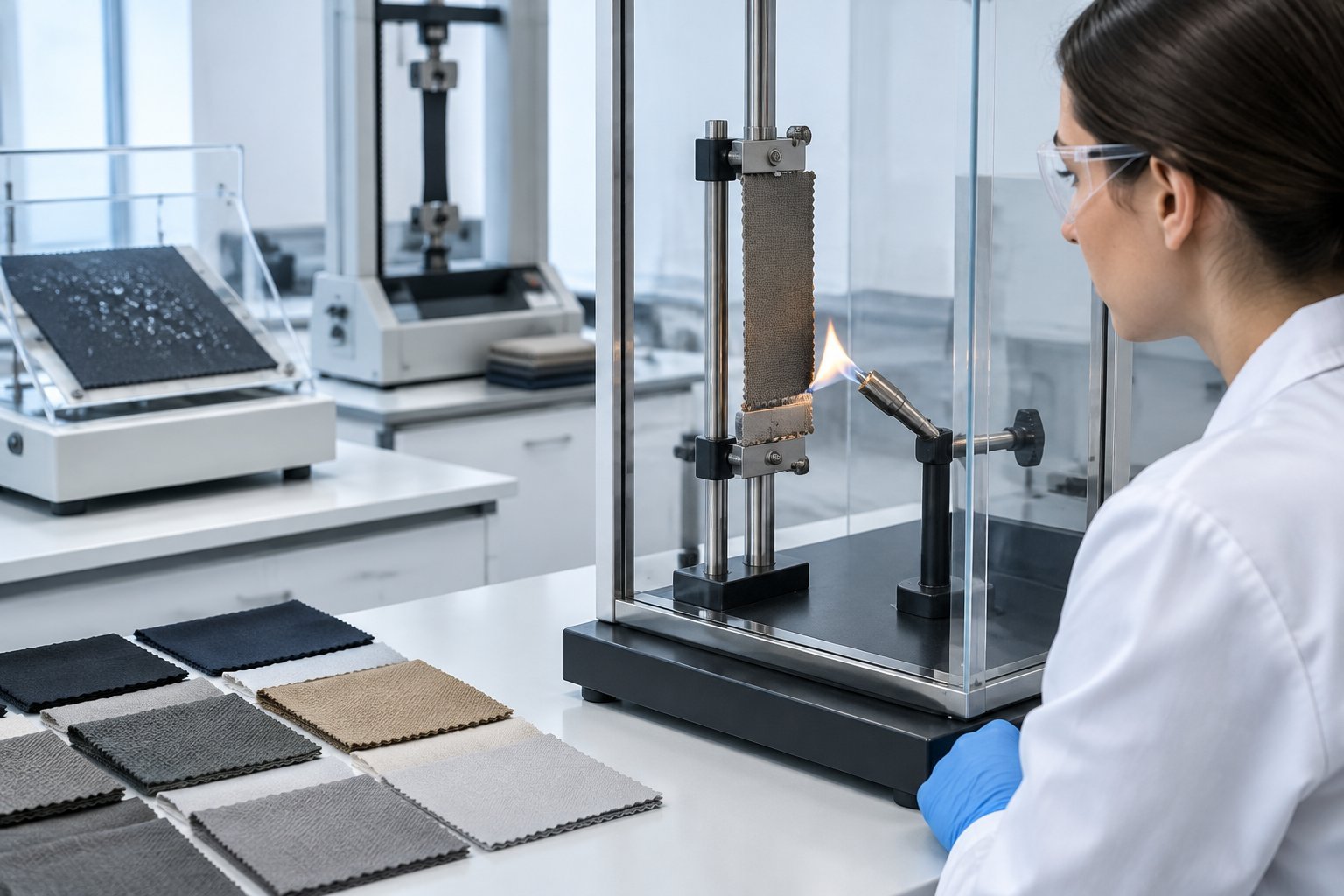
Testing establishes compatibility when every required function meets its acceptance criteria on specimens representing the complete finished specification. Laundering and other conditioning must match the approval plan.
Match Samples and Reports to the Actual Finished Specification
Sample records should connect the laboratory specimen to a fabric code, production lot, shade, and finishing revision. Reports should also identify whether the specimen received every finishing and reapplication step included in the commercial offer.
A practical approval record includes:
- Exact substrate composition and construction.
- Finished weight and agreed tolerances.
- Dyeing and finishing revision.
- Relevant test methods and acceptance limits.
- Conditioning and laundering details.
- Traceable sample and report identifiers.
When laboratories test flame-retardant properties in fabrics, the selected method must suit the intended requirement. A flame-spread result establishes only the characteristics measured by that method.
Evaluate FR and Requested Functions After Representative Laundering
Wash durability requires a defined procedure covering detergent, temperature, mechanical action, drying, and any permitted finish reactivation. A cycle count without those conditions gives an incomplete description.
The test plan should evaluate retained FR performance and each requested function after the specified conditioning. It should also account for changes in dimensions and strength where those properties affect acceptance.
Different tests require separate specimens. Those specimens should come from a traceable sample set with the same finishing history.
Separate Material Results, Garment Requirements and Arc Claims
Material testing supports decisions about fabric suitability. Finished protective clothing has additional requirements involving its construction and components, which remain the responsibility of the relevant garment supplier and conformity process.
For US electrical-workwear specifications, ASTM F1506 addresses flame-resistant and electric arc-rated protective clothing materials and associated requirements. A limited-flame test alone supplies no measured arc rating.
An arc-rated fabric claim requires applicable arc-test evidence. Levitex does not supply or claim dedicated arc-test reports, and its general product reports establish no dedicated molten-metal splash performance.
When Must a Finish Combination Be Revalidated?
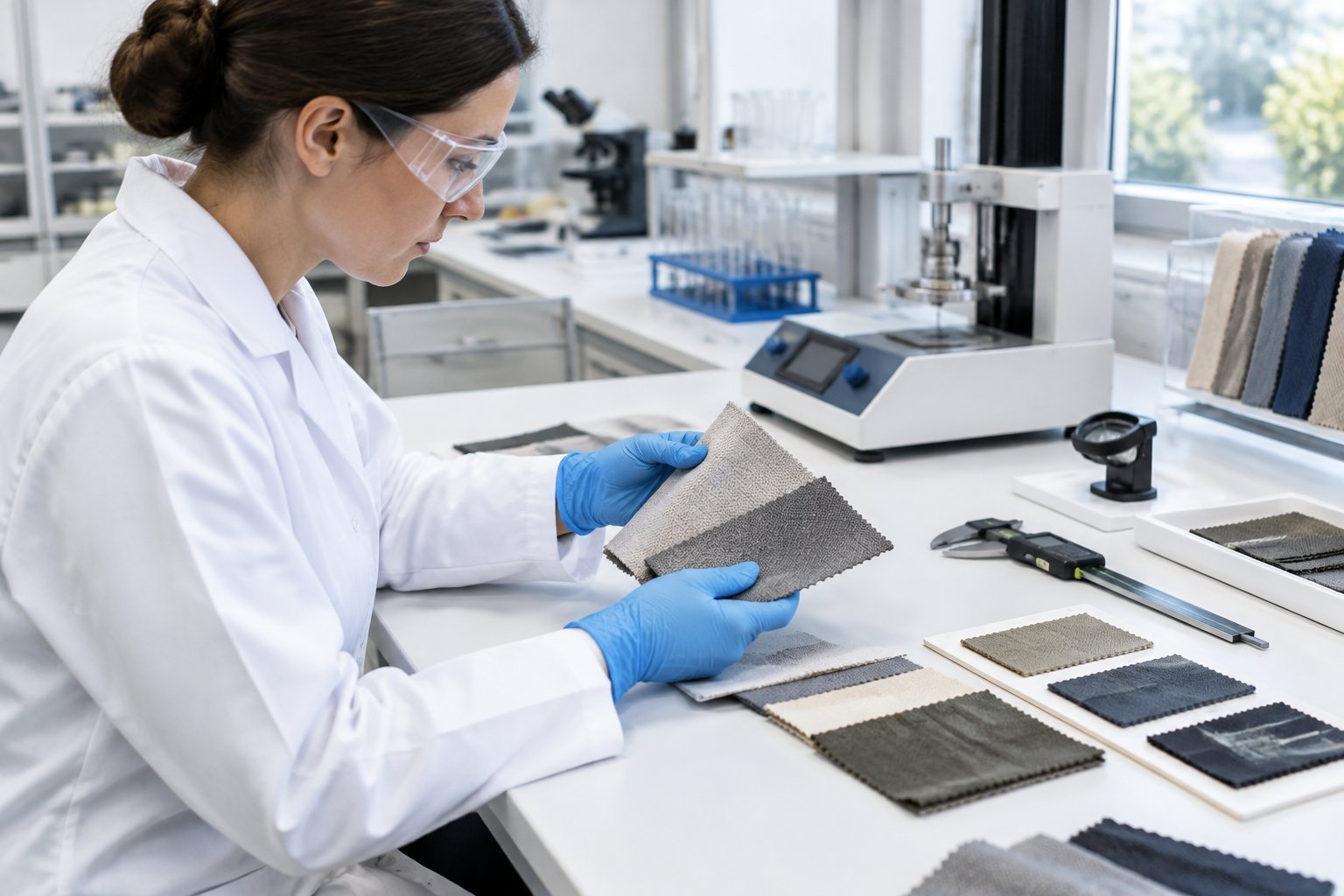
Revalidation is required when a change falls outside the documented approval boundaries or creates a performance risk requiring additional evidence. The decision should follow recorded change control.
Changes to Formulation, Shade, Substrate or Production Conditions
A compatibility review should flag changes in chemical supplier, formulation, concentration, fiber ratio, construction, and finished weight. Shade changes also deserve review because they involve different dyes or auxiliaries and affect fluorescent or UV-related performance.
Production changes include altered sequence, pickup, drying conditions, and curing exposure. Equipment changes require assessment when they affect treatment uniformity or fixation.
Effective FR fabric quality control connects these variables to approved limits. The technical review then defines the affected tests and the scope of revalidation.
Laundry Changes and Reapplication of Repellent Finishes
A different detergent or industrial laundry program changes the fabric’s chemical and mechanical exposure. New drying conditions also affect finishes that rely on a specified thermal reactivation step.
Repellent reapplication introduces another treatment to the approved package. Its chemistry, application amount, and drying procedure should be specified before renewed performance claims are accepted.
The validation plan must address retained flame retardant finishing performance alongside repellency. No universal number of acceptable reapplications applies across fabric systems.
Documenting Approval Boundaries and Retesting Decisions
The approval record should state which combinations of substrate, shade, chemistry, and process conditions it covers. It should also identify permitted laundering instructions and any authorized reapplication procedure.
Each change decision needs a recorded rationale, responsible reviewer, and disposition. Supporting evidence should explain why existing results remain applicable or identify the testing required before release.
How Can Levitex Support a Combination Review?

Levitex supports combination reviews through its FR fabric manufacturing and custom finishing options. Its role covers textile production for industrial protective-workwear applications.
Start With Available Cotton, C/N and CVC FR and Repellent Options
Levitex offers FR plus water-repellent and FR plus oil-repellent finishing on all three base families: 100% cotton, C/N, and CVC. These available options provide a starting point for specification review.
The relevant product-specific evidence must establish performance ratings and wash durability. For an oil-repellent request, oil-repellency testing should match the buyer’s required method and conditioning.
Levitex also produces chemical-repellent fabrics through post-treatment finishing. Chemical liquid repellency has a different protective scope from barrier-based chemical resistance.
Review Fluorescent, Anti-Static and UV Requests Against Specific Evidence
Fluorescent dyeing is available from Levitex. High-visibility approval requires the applicable color and luminance evidence, with finished-garment requirements assessed externally.
Anti-static requests require the specified test method and performance criteria for the proposed construction. Conductive behavior supplies no substitute for dedicated arc evidence.
UV protection requests need a separate evidence review. Suitable UPF fabric testing identifies the sample condition and measured UV transmission; shade or fabric weight alone establishes no UPF classification.
Agree on Samples, Acceptance Criteria and Unverified Requirements
A combination review should conclude with an agreed sample specification and test plan. Requirements awaiting evidence should remain explicitly unapproved until the relevant results are accepted.
Buyers should prioritize mandatory fabric functions and send the applicable standards, conditioning requirements, composition, weight, construction, shade, quantity, and other specifications to Charlie Luo at Charlie@levitex.com. Those details support a focused review of available options and the evidence required for the proposed package.
Approve the Finish Package, Not Just Its Ingredients
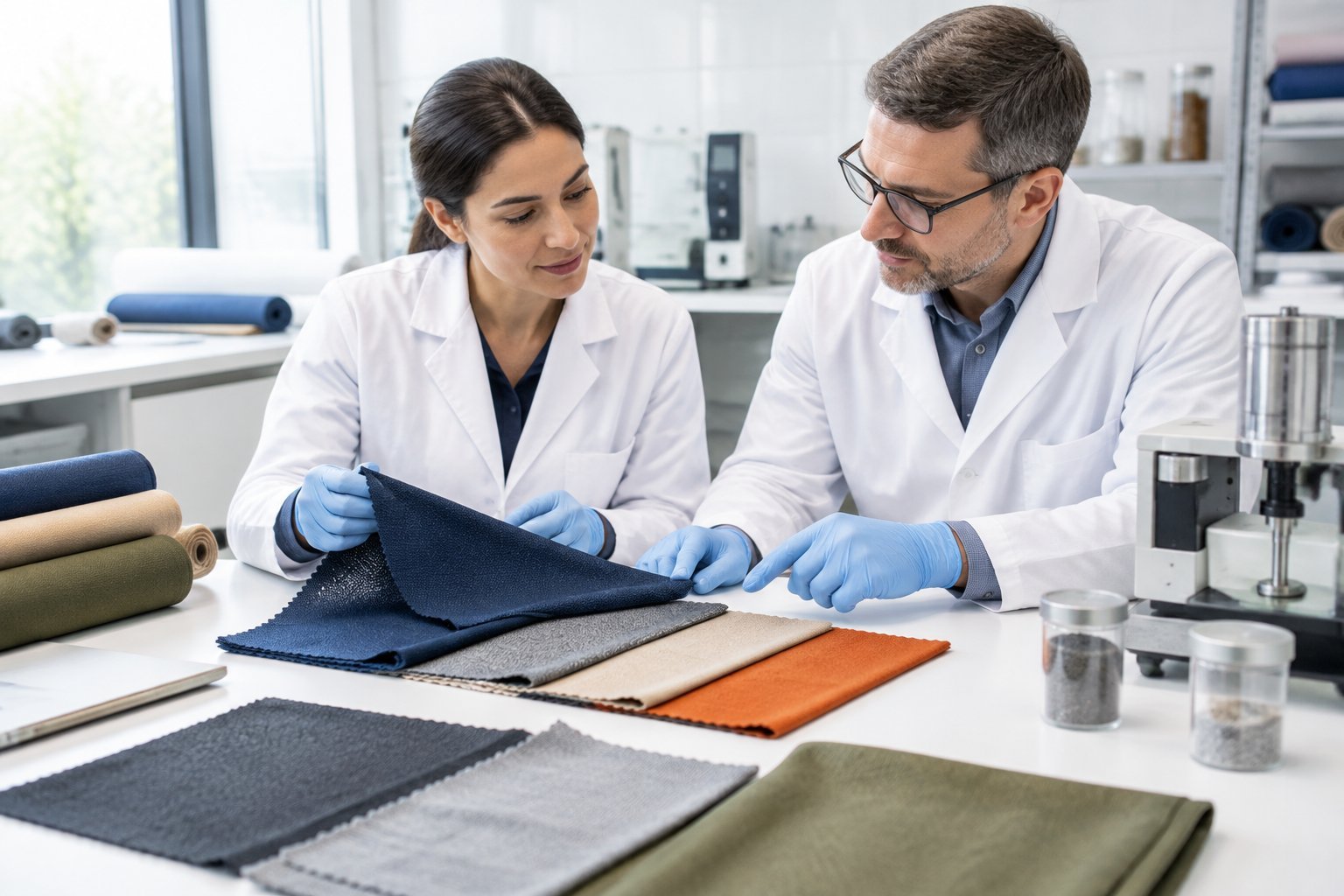
Approval should cover the complete finished fabric within documented production and care limits. The supporting record must connect flame retardancy and every additional function to the same controlled specification.
A purchasing team should retain the combination matrix, traceable reports, and change-control record with the approved sample. Wash durability claims should identify the laundering procedure and any required reactivation or reapplication conditions.
Frequently Asked Questions
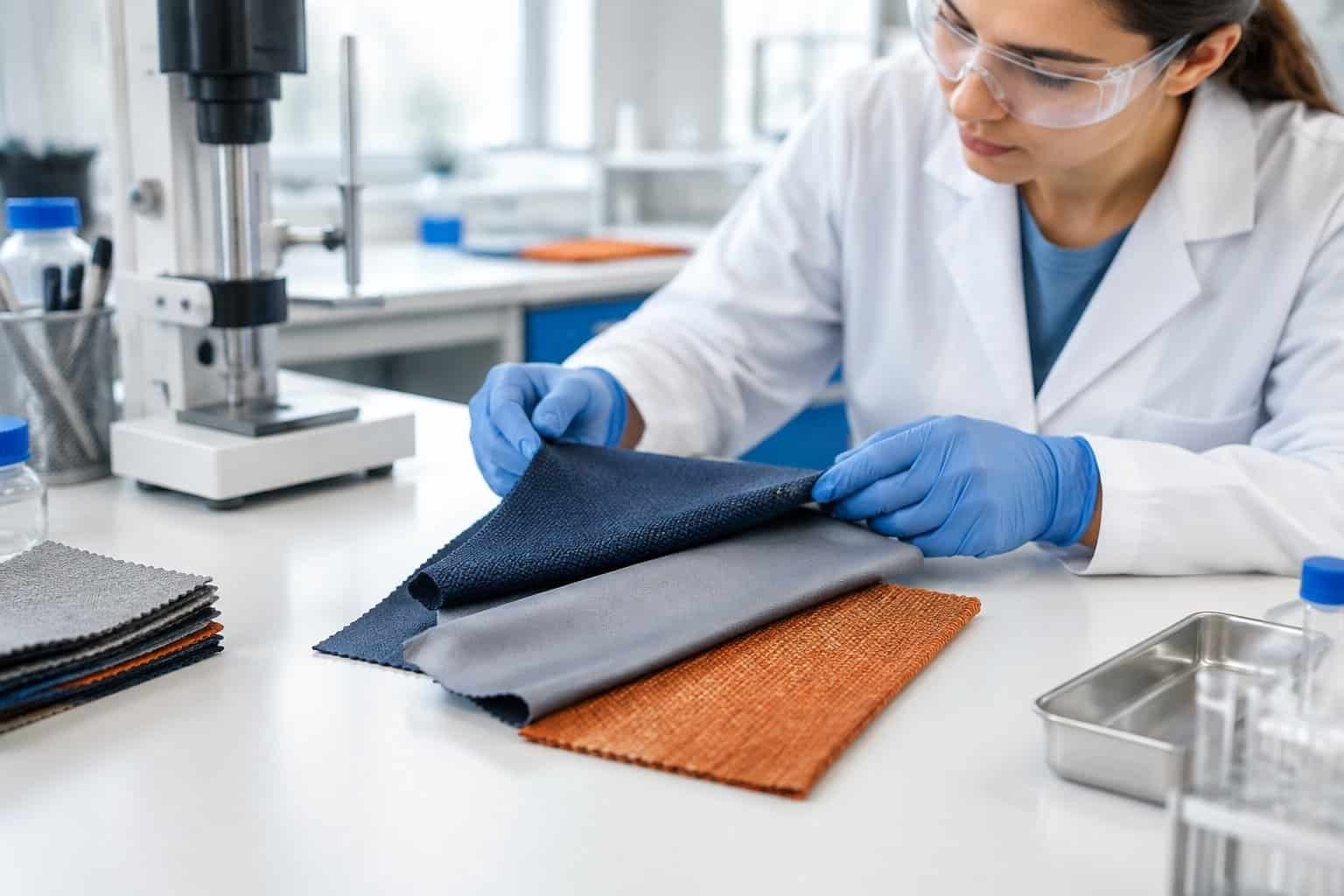
The following answers clarify the approval scope for multifunctional FR fabrics.
What does FR mean when specifying a multifunctional fabric?
FR means flame resistant or flame retardant, depending on the specification’s terminology. Procurement documents should define the required standard, test methods, and conditioning so the abbreviation has a measurable acceptance basis.
Can water and oil repellency be added without reducing flame resistance?
Compatible formulations and controlled processes support combined FR and repellent performance. Levitex offers these options on cotton, C/N, and CVC bases; approval requires results for the specified complete package.
Does fluorescent dyeing prove that an FR fabric meets high-visibility requirements?
Fluorescent dyeing alone provides insufficient evidence of high-visibility conformity. Applicable color and luminance measurements are required, while garment classification also addresses visible areas and design requirements.
Can antibacterial and UV finishes be combined with FR treatment?
Some treatment systems combine flame retardant treatment with antibacterial properties or UV protection. Each proposed package requires substrate-specific validation, and those possibilities establish no particular Levitex product claim.
Do separate finish reports prove that the complete combination works?
Separate reports support combined approval only when they demonstrably represent the same complete finished specification and required conditioning. Reports for different constructions or finishing stages leave an evidence gap.
When does changing a finish require new testing?
New testing is required when a change exceeds approved limits or its performance effects lack adequate supporting evidence. The technical review should record the affected functions and the tests required before production release.