EN ISO 11612 codes identify limited flame spread (A), convective heat (B), radiant heat (C), molten aluminium splash (D), molten iron splash (E), and contact heat (F). For industrial textile buyers, these letters connect a protective-workwear specification to the particular heat exposures evaluated by testing.
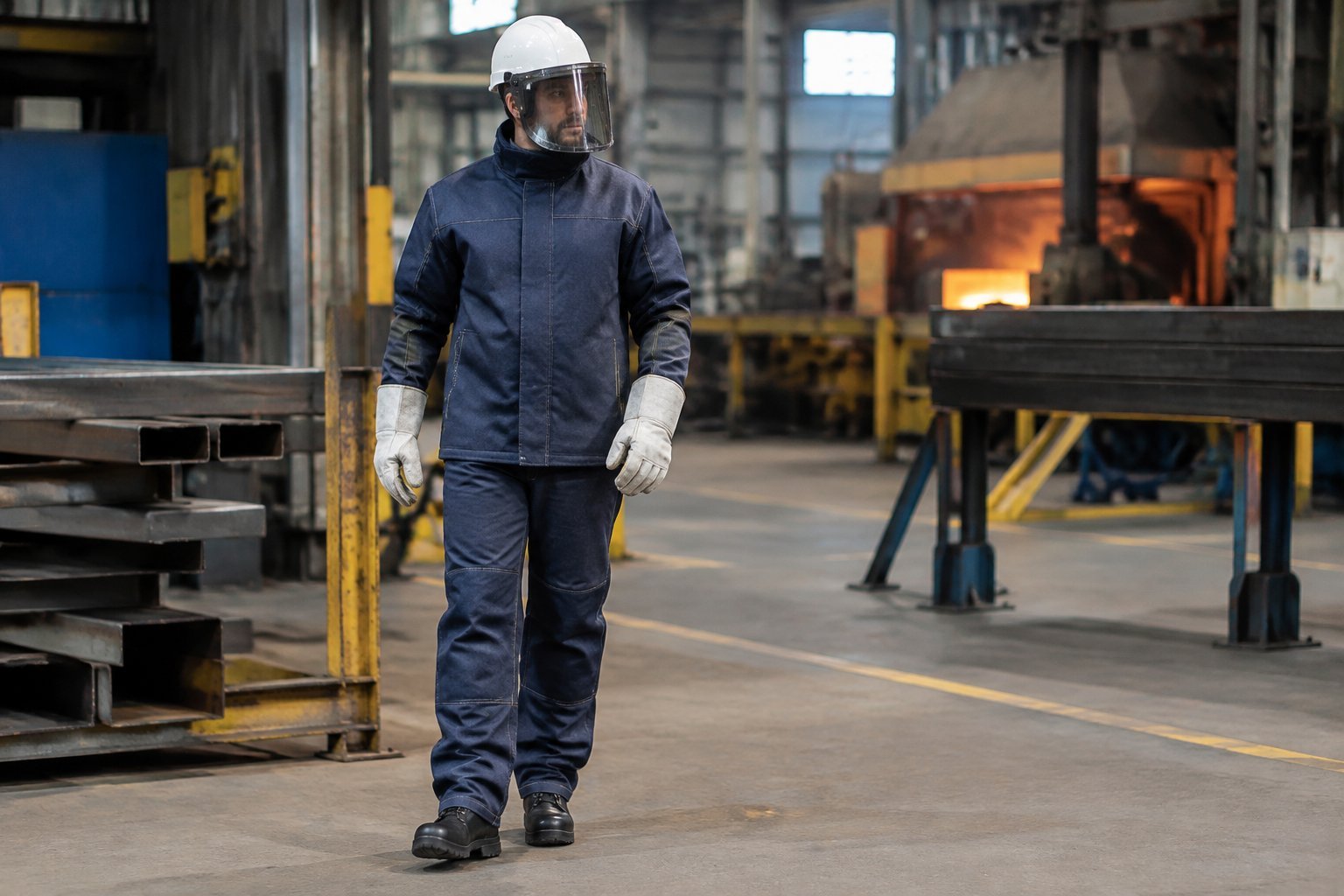
Levitex manufactures flame-resistant textiles for industrial protective-workwear applications. Its role in material selection starts with identifying the required heat codes and connecting the proposed fabric to relevant product-specific evidence.
EN ISO 11612 addresses protective clothing against heat and flame. Its marking expresses separate performance results: two garments bearing the same standard number can have different approved applications.
How Do You Read the Letters and Numbers on a Label?
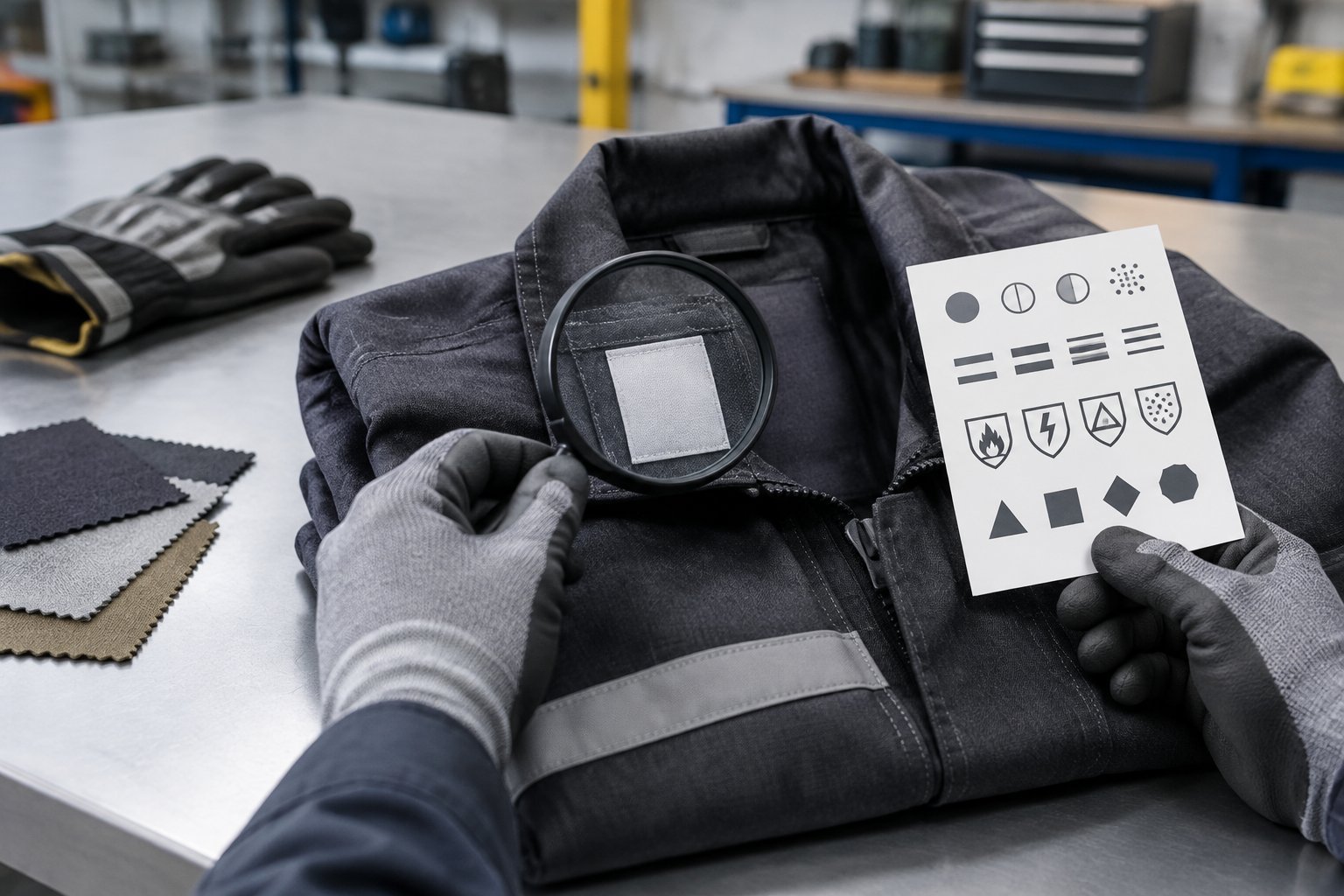
Each letter identifies a test category; the following digit identifies either an ignition procedure for A or a performance level for B through F. The interpretation below follows EN ISO 11612:2015, so procurement documents should retain the exact edition stated on the supporting evidence.
A Quick Reference Table for Codes A to F
The label combines the standard designation with the applicable performance codes. A flame pictogram alone provides insufficient detail for selecting flame-resistant clothing for a particular thermal hazard.
| Code | Evaluated property | Test method | Meaning of the digit |
|---|---|---|---|
| A1 | Limited flame spread, surface ignition | ISO 15025, Procedure A | Ignition procedure |
| A2 | Limited flame spread, edge ignition | ISO 15025, Procedure B | Ignition procedure |
| B1–B3 | Convective heat transmission | ISO 9151 | Increasing performance within B |
| C1–C4 | Radiant heat transmission | ISO 6942 | Increasing performance within C |
| D1–D3 | Molten aluminium splash | ISO 9185 | Increasing performance within D |
| E1–E3 | Molten iron splash | ISO 9185 | Increasing performance within E |
| F1–F3 | Contact heat transmission | ISO 12127-1 | Increasing performance within F |
Code A accompanies at least one thermal code from B through F. The standard also includes requirements beyond these headline codes, including material properties and garment design.
What Does A1 B1 C1 E2 F1 Mean?
The marking A1 B1 C1 E2 F1 records the following combination:
- A1: Limited flame spread following surface ignition.
- B1: Convective heat performance at level 1.
- C1: Radiant heat performance at level 1.
- E2: Molten iron splash performance at level 2.
- F1: Contact heat performance at level 1.
The missing D leaves molten aluminium splash outside the demonstrated scope of that marking. Likewise, A1 alone supplies no evidence of the edge-ignition procedure identified by A2.
Why Missing Codes and Higher Numbers Need Careful Interpretation
An omitted code establishes no claimed performance for that category. The supporting documents clarify whether testing was omitted or the applicable minimum performance was not achieved.
Higher numbers indicate higher classified performance only within the same letter. B3 and C3 describe different exposures and cannot be ranked against each other; a longer code string also requires assessment against the intended workplace hazards.
What Is the Difference Between A1 and A2?
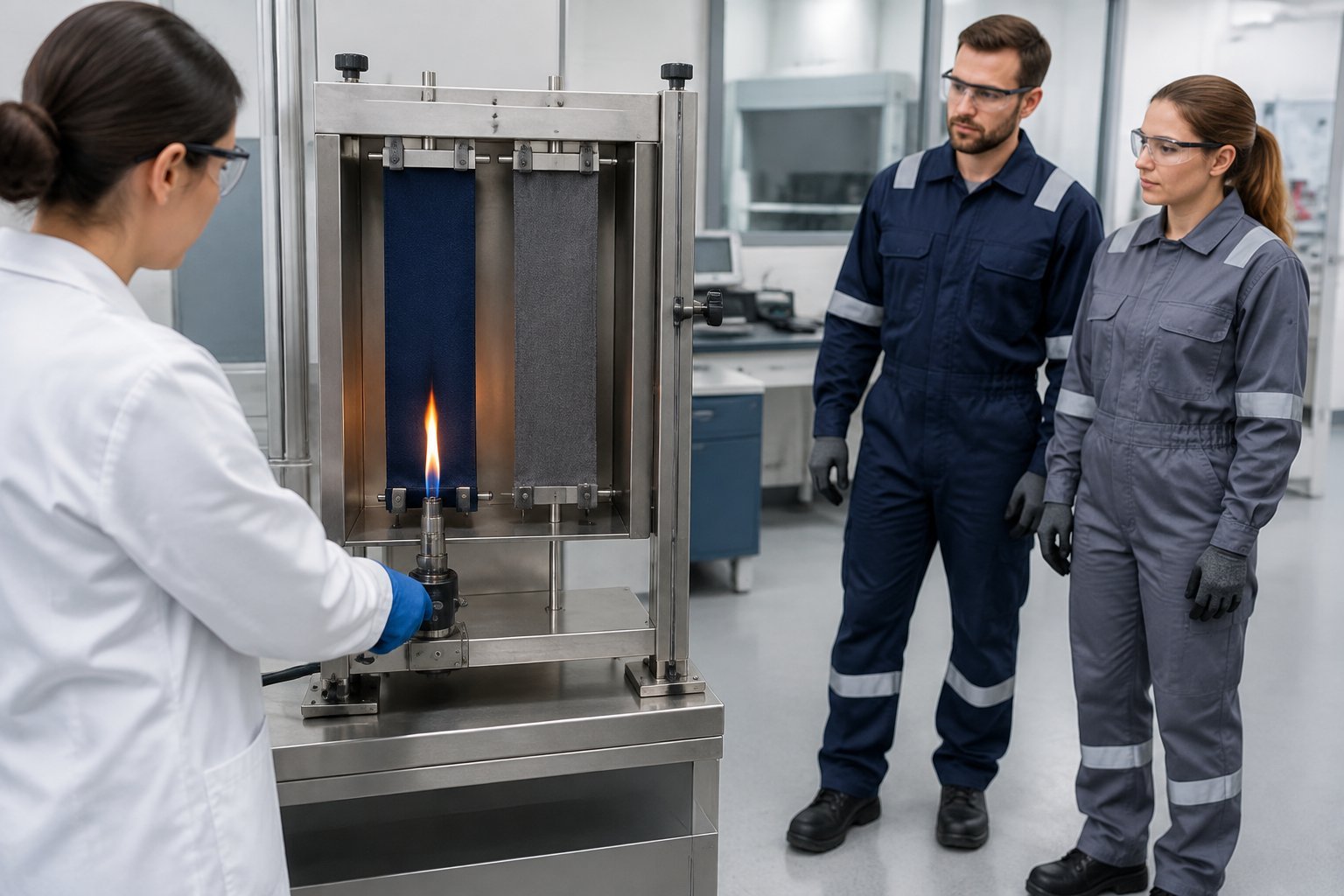
A1 identifies surface ignition, while A2 identifies edge ignition under ISO 15025. Both evaluate limited flame spread, with the flame applied at different locations on the specimen.
Surface Ignition vs. Edge Ignition Under ISO 15025
For A1, the test flame is applied to the specimen’s surface. For A2, it is applied at the lower edge using the specified test arrangement.
The prescribed flame application lasts 10 seconds. A marking containing both A1 and A2 records compliance with both procedures, subject to the material or assembly identified in the evidence.
What Limited Flame Spread Testing Evaluates
Limited flame spread testing evaluates how the specimen behaves during and after controlled flame application. Observations include flame reaching specified boundaries, afterflame, afterglow, and flaming debris; applicable hole-formation requirements also receive assessment.
The procedure and specimen construction determine how the results are interpreted. A useful fabric flame-retardancy test report identifies the tested face, pretreatment, specimen details, and individual observations.
Why Code A Must Accompany at Least One Thermal Code
EN ISO 11612 combines limited flame spread performance with resistance to at least one defined thermal exposure. A qualifying claim therefore requires A1, A2, or both, together with a result from B through F.
This combination addresses two separate questions: how the material behaves when exposed to a small flame and how it performs against the selected heat-transfer or splash hazard. Code A by itself supplies no B–F classification.
How Do B, C and F Distinguish Different Heat Exposures?
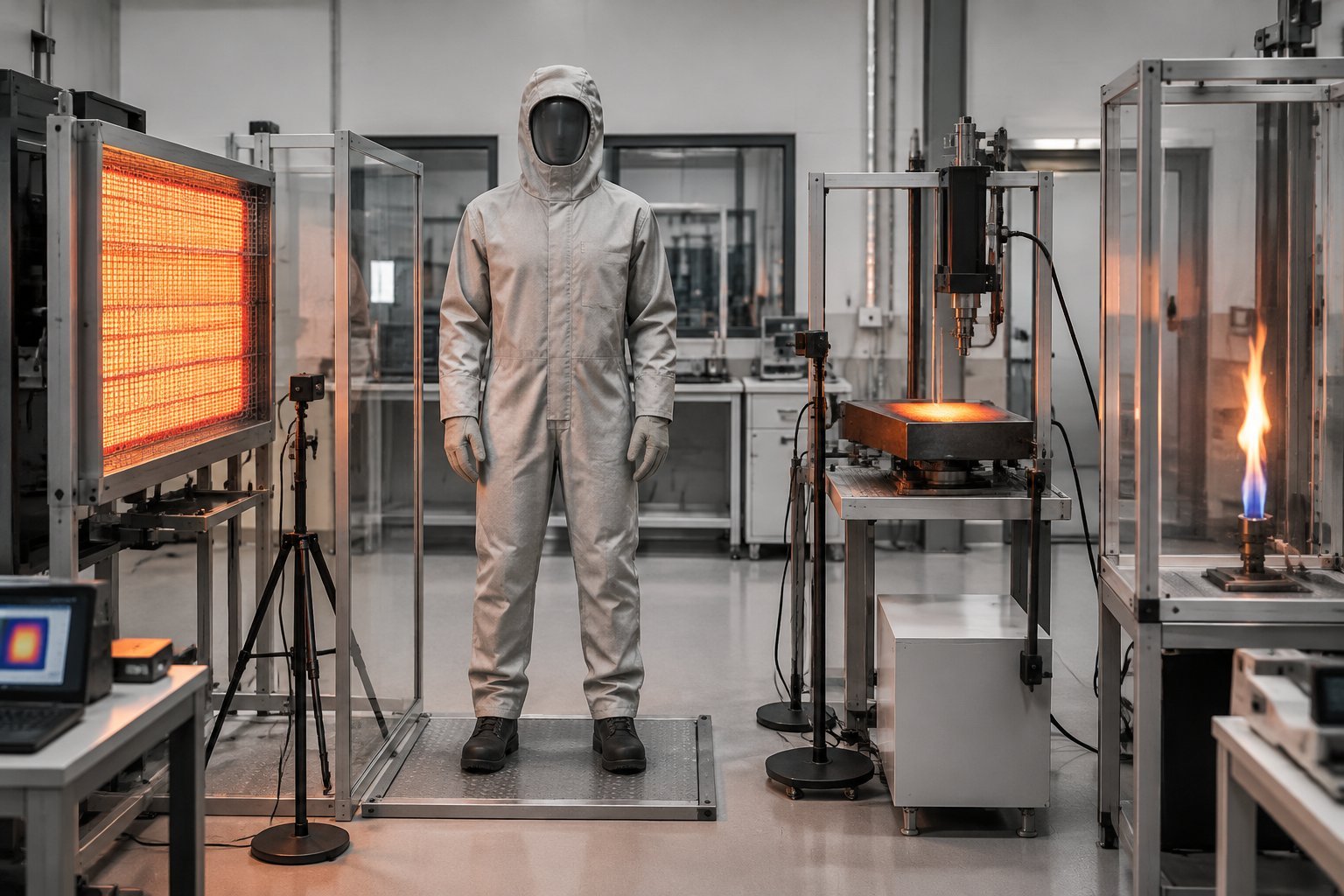
B evaluates heat transmitted during flame exposure, C evaluates radiant heat, and F evaluates heat transferred through contact with a hot surface. Each method uses its own apparatus and endpoint.
B1 to B3: Convective Heat Under ISO 9151
ISO 9151 exposes a specimen to a defined flame and measures heat transmission using a calorimeter. Classification uses the heat transmission index for a 24°C calorimeter temperature rise, designated HTI24.
Under EN ISO 11612:2015, the performance bands are:
- B1: 4 to less than 10 seconds.
- B2: 10 to less than 20 seconds.
- B3: At least 20 seconds.
The result belongs to the tested specimen or multilayer assembly. Changing the layer combination requires assessment against the scope of the existing evidence.
C1 to C4: Radiant Heat Under ISO 6942
Radiant heat reaches a material from a hot source without requiring direct contact. ISO 6942 measures heat transmission under a specified radiant exposure; EN ISO 11612 classification uses testing at 20 kW/m².
The RHTI24 performance bands are:
- C1: 7 to less than 20 seconds.
- C2: 20 to less than 50 seconds.
- C3: 50 to less than 95 seconds.
- C4: At least 95 seconds.
These values describe the time to a 24°C calorimeter temperature rise. A C classification establishes performance at the prescribed test conditions, without defining protection at every possible furnace intensity or working distance.
F1 to F3: Contact Heat Under ISO 12127-1
ISO 12127-1 evaluates heat transmission while the specimen contacts a heated cylinder. For EN ISO 11612 classification, testing uses a contact temperature of 250°C, approximately 482°F.
The threshold time corresponds to a 10°C rise in the calorimeter:
- F1: 5 to less than 10 seconds.
- F2: 10 to less than 15 seconds.
- F3: At least 15 seconds.
These figures are expressed in seconds. They describe the tested clothing material or assembly; protective gloves require their own applicable assessment.
Why Laboratory Results Are Not Safe Exposure Times
Laboratory times measure defined instrument responses under controlled conditions. They provide a classification basis, without granting permission for a worker to remain exposed for the stated duration.
Workplace exposure introduces different heat fluxes, body positions, and garment fit. Moisture and compressed air gaps also change heat transfer, so selection requires a task-specific risk assessment and the manufacturer’s use instructions.
Why Are Molten Aluminium and Iron Assigned Separate Codes?
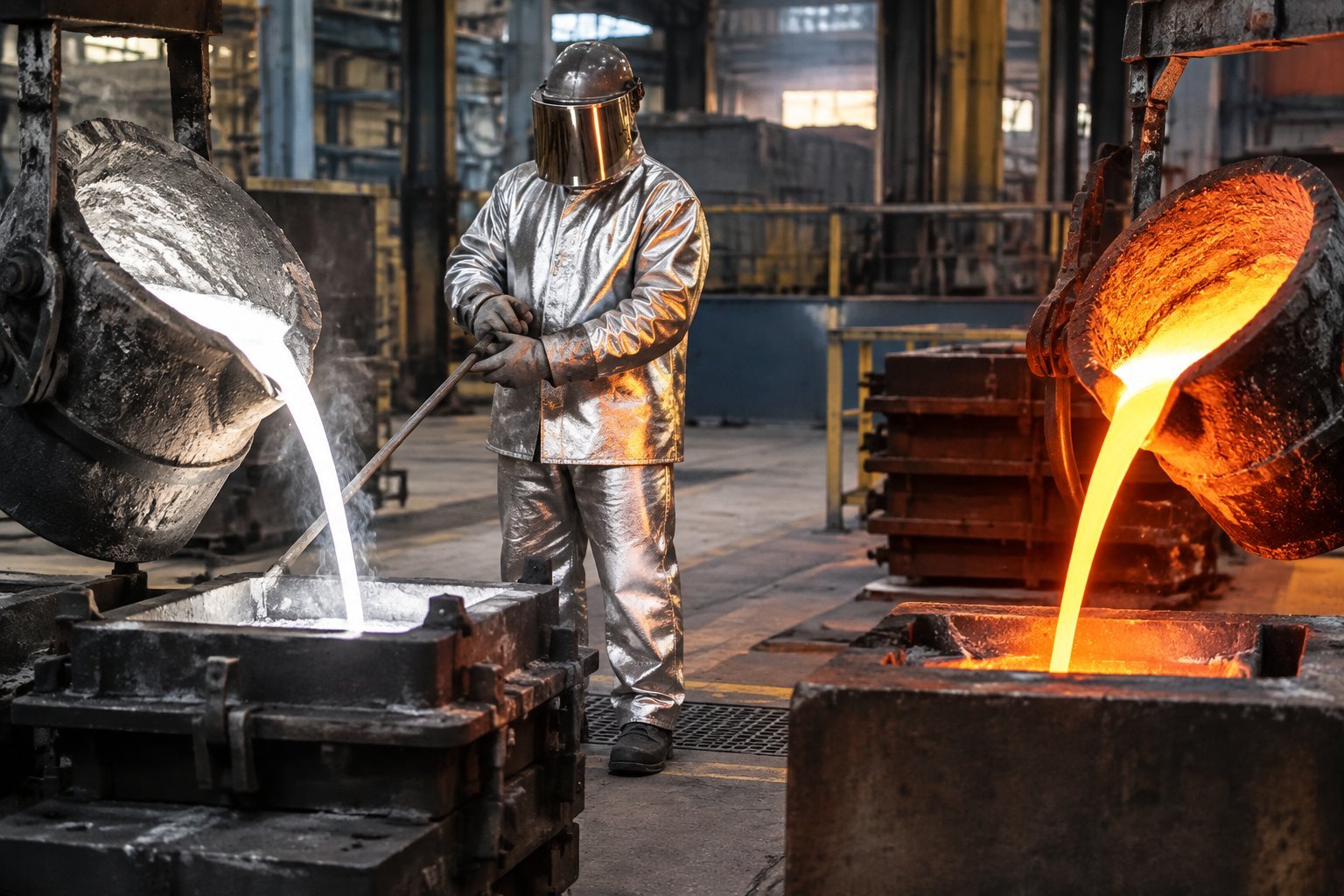
Molten aluminium and molten iron receive separate codes because their interactions with protective materials differ. Adhesion and shedding behavior affect the heat transferred through a specimen, alongside the metal’s temperature and pouring conditions.
D1 to D3: Molten Aluminium Splash
Code D evaluates molten aluminium splash under ISO 9185. The EN ISO 11612:2015 classification bands use the assessed metal mass:
- D1: 100 to less than 200 grams.
- D2: 200 to less than 350 grams.
- D3: At least 350 grams.
Aluminium adhering to a textile extends heat transfer at the affected location. A material’s general flame-resistant description supplies no D classification; the evidence must identify the relevant splash test.
E1 to E3: Molten Iron Splash
Code E evaluates molten iron splash using ISO 9185. Its classification bands differ from those for aluminium:
- E1: 60 to less than 120 grams.
- E2: 120 to less than 200 grams.
- E3: At least 200 grams.
E3 remains an iron-splash classification and supplies no D result. Foundry procurement specifications should identify the process metal or alloy so that the suitability assessment addresses the actual splash exposure.
What ISO 9185 Results Do and Do Not Establish
ISO 9185 pours controlled quantities of molten metal over an inclined specimen and assesses damage to a heat-sensitive film beneath it. The result reflects performance under the specified metal temperature and test geometry.
The mass bands provide laboratory classification criteria. They establish neither acceptable splash quantities on a person nor universal protection against other molten substances.
Garment construction also affects performance. Open pockets, folds, and exposed closures create locations where hot metal collects, making the approved clothing design part of the selection decision.
What Evidence Connects a Fabric Result to Protective Clothing?
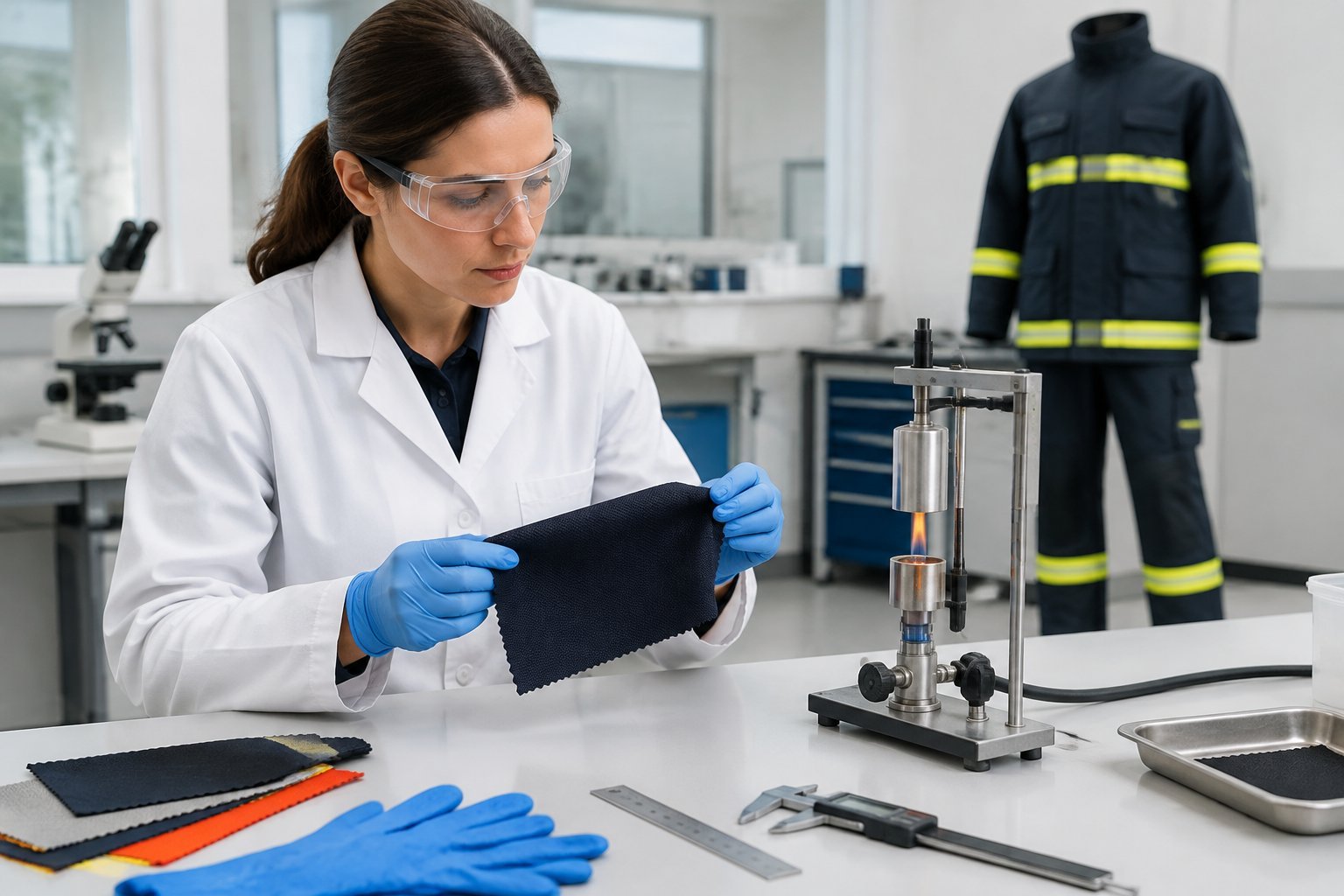
Traceable documentation connects a tested fabric or assembly to the exact protective garment being supplied. The evidence must identify both the material configuration and the garment’s approved construction.
Why Fibre Composition and Fabric Weight Cannot Establish a Code
Aramid and modacrylic describe fiber families with flame-resistant properties. Finished cotton and cotton-blend textiles achieve flame resistance through appropriate processing, but every proposed material still requires evidence for the claimed heat codes.
Fabric weight also supplies only part of the specification. Yarn structure, finish, and the tested layer arrangement influence performance, so selecting a workwear fabric requires more detail than composition and grams per square meter.
How Test Conditions, Laundering and Contamination Affect Interpretation
Reports should state conditioning and pretreatment, including the cleaning method and any specified number of cycles. Results from one cleaning regime do not establish equivalent performance after a different industrial-laundry process.
The manufacturer’s FR clothing laundering instructions define permitted care. Flammable contamination introduces additional fuel, while physical wear changes the condition of the protective assembly.
Service-life decisions require inspection and the supplied retirement criteria. A tested cleaning history alone cannot determine how long flame-retardant clothing lasts in every workplace.
Tracing Reports to the Exact Fabric, Assembly and Garment
A procurement review should connect the fabric reference and report number to the approved garment model. The documents should identify the relevant construction, finish, color where applicable, and any required lining or underlayer.
For products placed on the EU market, the conformity route falls under Regulation (EU) 2016/425. Clothing intended for high-temperature environments with effects comparable to air temperatures of at least 100°C falls within PPE Category III, requiring EU type examination and ongoing notified-body production oversight.
A complete review of flame-retardant certification distinguishes the laboratory report, EU type-examination certificate, and EU declaration of conformity. European standard publication and harmonization status require separate checks; the standard number alone establishes no presumption of conformity.
Where Levitex’s Textile Supply Ends and Garment Conformity Begins
Levitex supplies textiles for industrial protective-workwear applications. Its base-fabric families include 100% cotton, cotton/nylon (C/N), and cotton-rich cotton/polyester (CVC), with custom dyeing and printing available.
Levitex’s textile offering excludes finished-garment manufacturing and garment-design or assembly solutions. Product-specific fabric reports support material assessment; the garment manufacturer remains responsible for the finished clothing’s conformity.
Levitex makes no claim of dedicated molten-metal splash or dedicated arc test reports. General product reports therefore establish neither D/E performance nor an arc rating.
When Are Additional Protective Clothing Standards Needed?
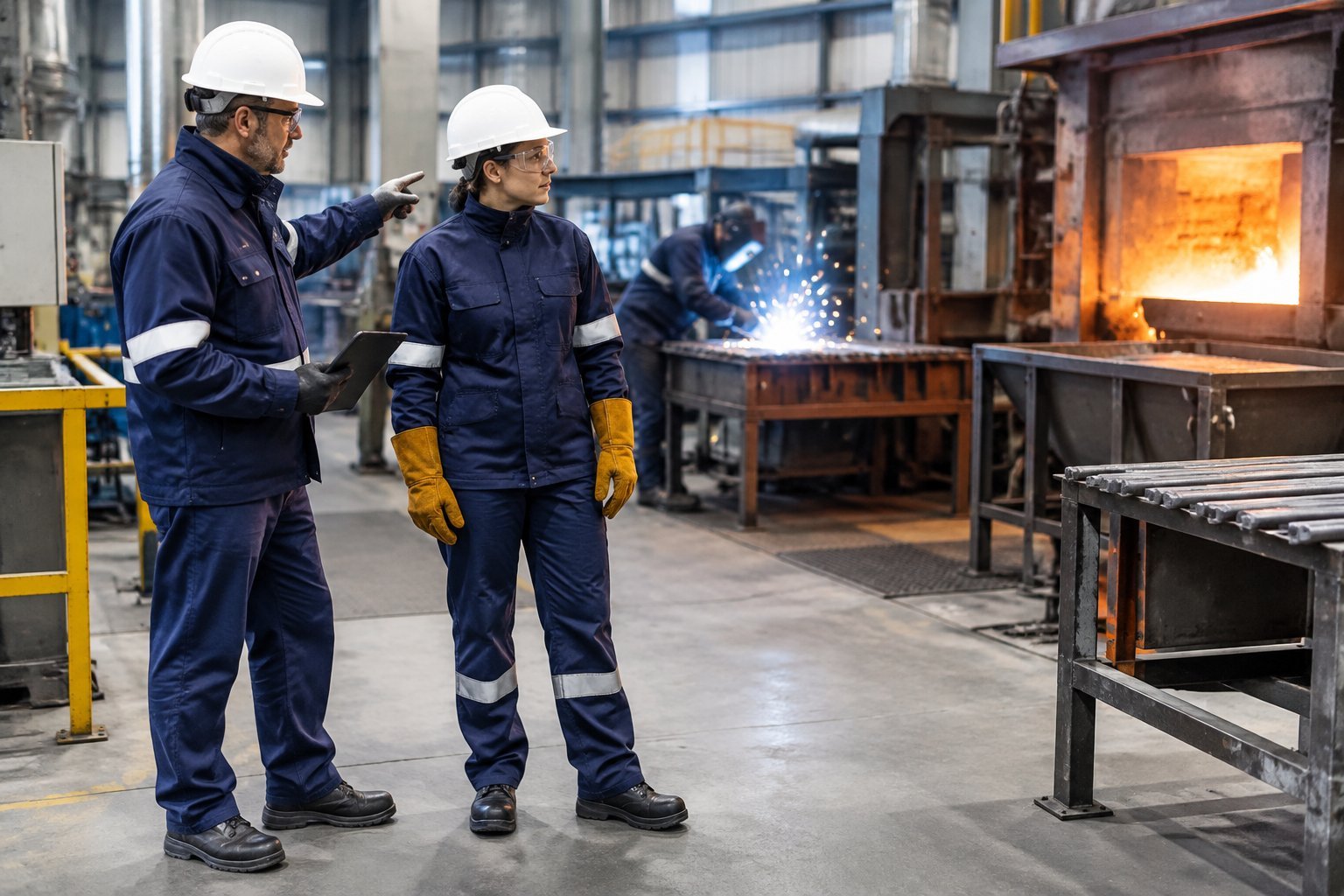
Additional standards are needed when the workplace includes hazards beyond the EN ISO 11612 claim. A multi-hazard specification assigns each exposure to the relevant performance requirements and checks their compatibility in the finished clothing.
EN ISO 11611 and EN ISO 14116: Different Scopes, Not Equivalent Codes
EN ISO 11611 addresses welding and allied processes, including relevant spatter and thermal exposures. Its Class 1 and Class 2 classifications follow welding-specific requirements.
EN ISO 14116 addresses limited flame spread materials, assemblies, and clothing for specified applications. Its index system has its own requirements and supplies no direct conversion to the thermal codes of EN ISO 11612.
A welding specification therefore requires an assessment of the welding process and working conditions. A general heat-and-flame marking leaves the welding-specific suitability question unresolved.
IEC 61482-2 and EN 469: Arc and Firefighting Protection
IEC 61482-2 addresses clothing against the thermal hazards of an electric arc. Arc-rated fabric requires relevant arc-test evidence; B and C levels provide no mathematical conversion to an arc rating.
EN 469 addresses protective clothing for firefighting activities within its scope. Structural firefighting introduces garment-system requirements beyond an industrial EN ISO 11612 marking.
EN 1149-5 and EN 13034: Separate Electrostatic and Chemical Requirements
EN 1149-5 addresses electrostatic dissipative protective clothing used as part of an appropriately earthed system. Its claim requires the relevant material performance and garment design, together with suitable use conditions.
EN 13034 addresses limited protection against liquid chemicals. The distinction between liquid repellency and barrier protection remains central to assessing chemical protective clothing levels.
Levitex offers chemical-repellent finishing on cotton, C/N, and CVC base fabrics. These textiles provide liquid repellency; their product-specific evidence must establish the applicable performance and use limitations.
NFPA 2112 and Instrumented Manikin Tests: No Direct Code Conversion
NFPA 2112 addresses flame-resistant clothing for short-duration thermal exposures from fire. US purchasers should assess its relevance to their workplace requirements independently of an EN ISO 11612 marking.
ASTM F1930 and ISO 13506 describe instrumented manikin testing used to evaluate protective clothing under specified flame exposures. Their predicted burn-injury results depend on the test conditions and complete clothing configuration.
An A1 B1 C1 marking supplies no direct NFPA 2112 equivalence or manikin-test result. Procurement acceptance requires evidence against each specified framework.
Match Each Hazard to a Code and Verified Evidence
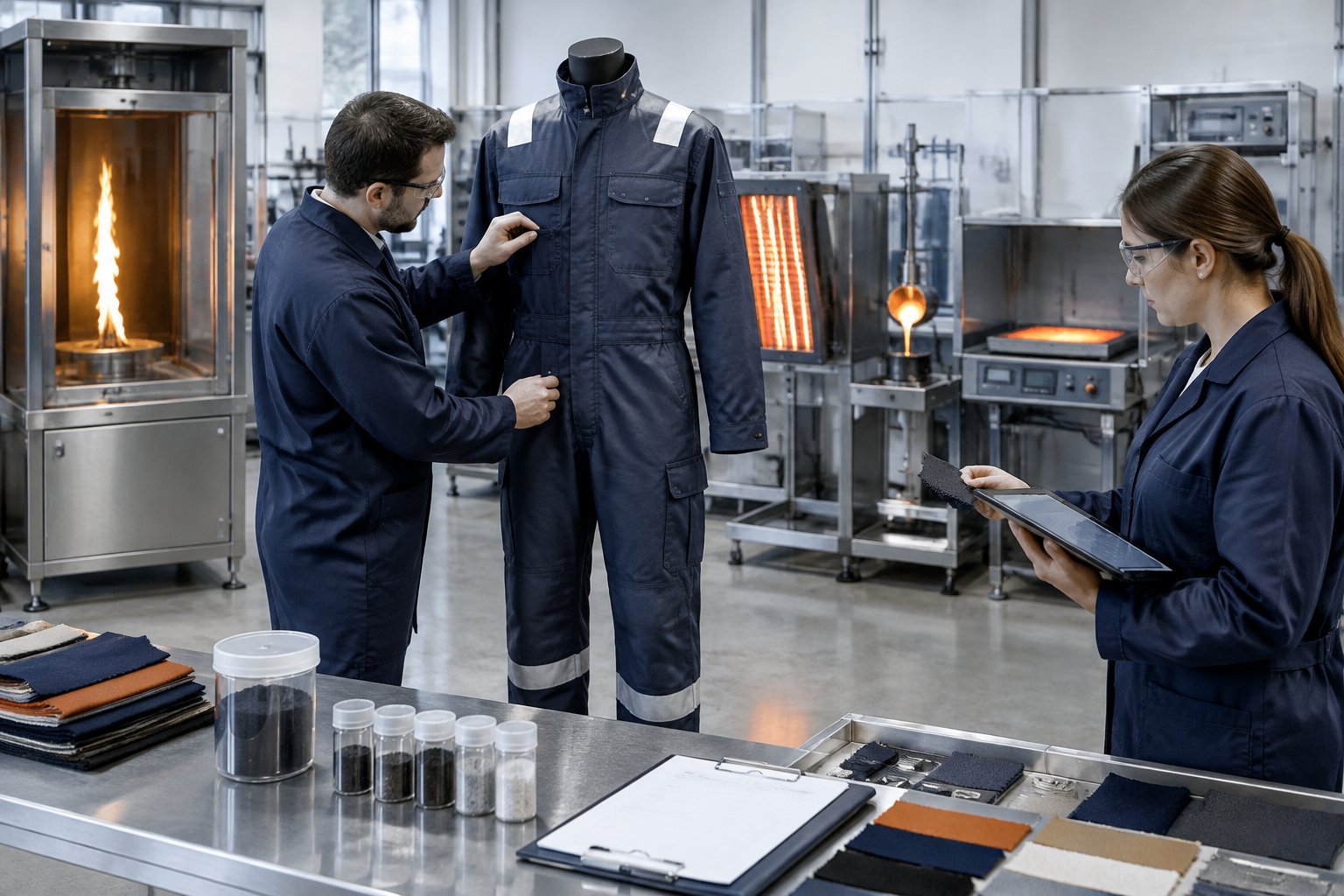
The appropriate EN ISO 11612 specification pairs each identified heat hazard with its required code and traceable evidence. A records limited flame spread, while B through F identify separate thermal or molten-metal performance categories.
Buyers should retain the exact standard edition and verify the tested assembly against the supplied material and finished clothing. Cleaning conditions and garment construction belong in that review alongside the code string.
For textile sourcing, buyers can send the required heat codes, intended use, and conditioning or laundering requirements to Levitex at Charlie@levitex.com. Levitex can then discuss fabric options and the relevant product-specific documentation within its textile-supply scope.
Frequently Asked Questions
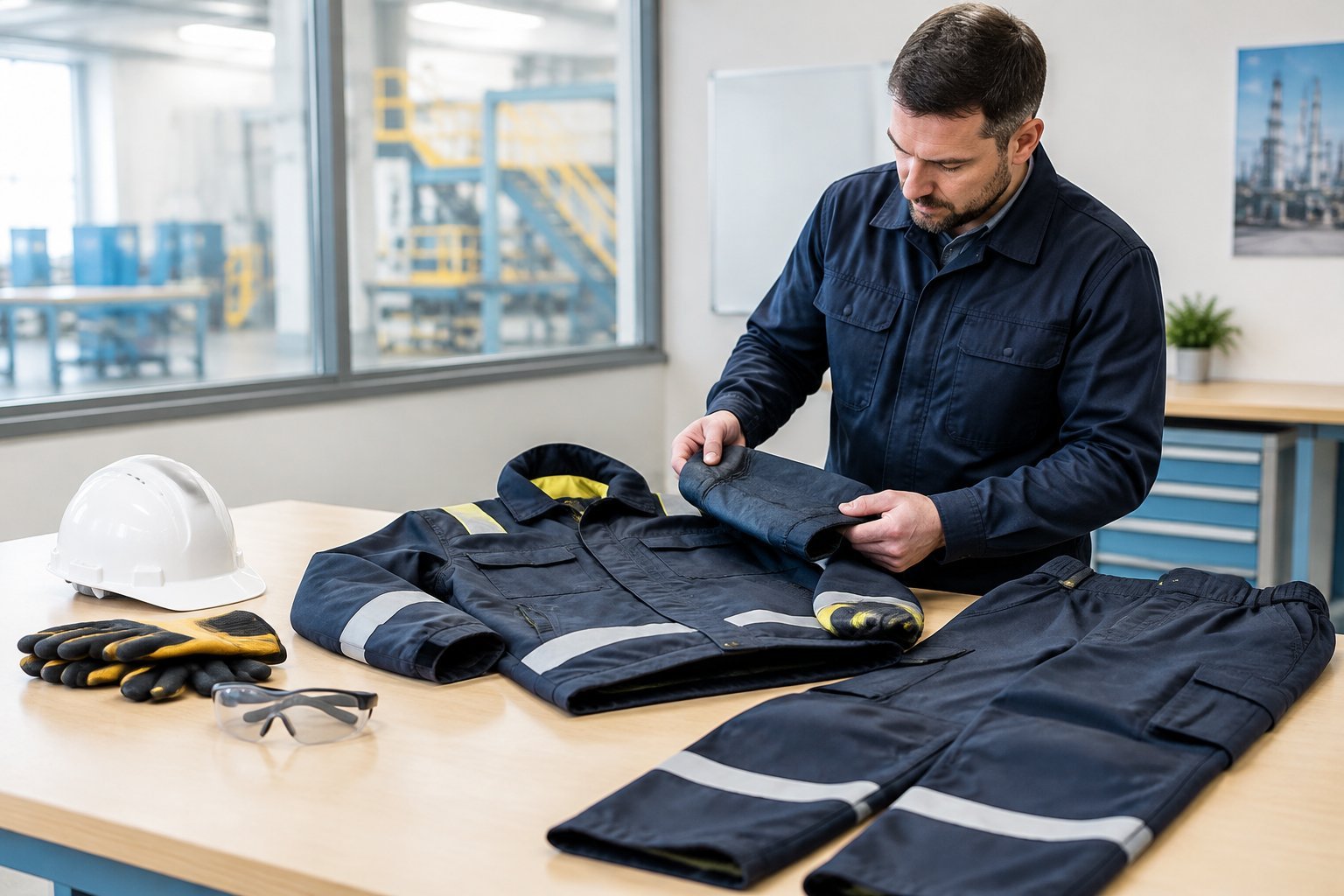
Each label claim requires interpretation against its named test and supporting product documents. The following answers address common purchasing checks.
Is A2 a higher protection level than A1?
A2 identifies edge ignition, while A1 identifies surface ignition. Their digits distinguish ISO 15025 procedures; a claim covering both procedures displays both codes.
Does A1 B1 C1 cover molten metal splash?
A1 B1 C1 establishes limited flame spread plus level-1 convective and radiant heat performance. Molten aluminium and molten iron splash require the applicable D or E classification.
Does EN ISO 11612 certification also cover welding?
An EN ISO 11612 claim alone establishes no EN ISO 11611 welding classification. Welding applications require evidence appropriate to the process, including the relevant EN ISO 11611 claim where specified.
How can buyers verify an EN ISO 11612 claim?
Buyers should match the supplied garment reference to its label, manufacturer’s instructions, and applicable conformity documents. The review should trace the claimed codes to reports for the exact material or assembly and retain the stated standard edition.
Where can I obtain the official EN ISO 11612 standard?
The official text is available through national standards bodies and authorized standards distributors. Purchasers should confirm the required edition and whether the contract calls for ISO 11612 or its European adoption, EN ISO 11612.