
Fabric tear strength is tested by propagating a prepared cut under a specified method, then comparing the resulting tear force only across matching test conditions and calculations. For industrial textiles, this measurement helps buyers assess how readily localized damage will spread during service.
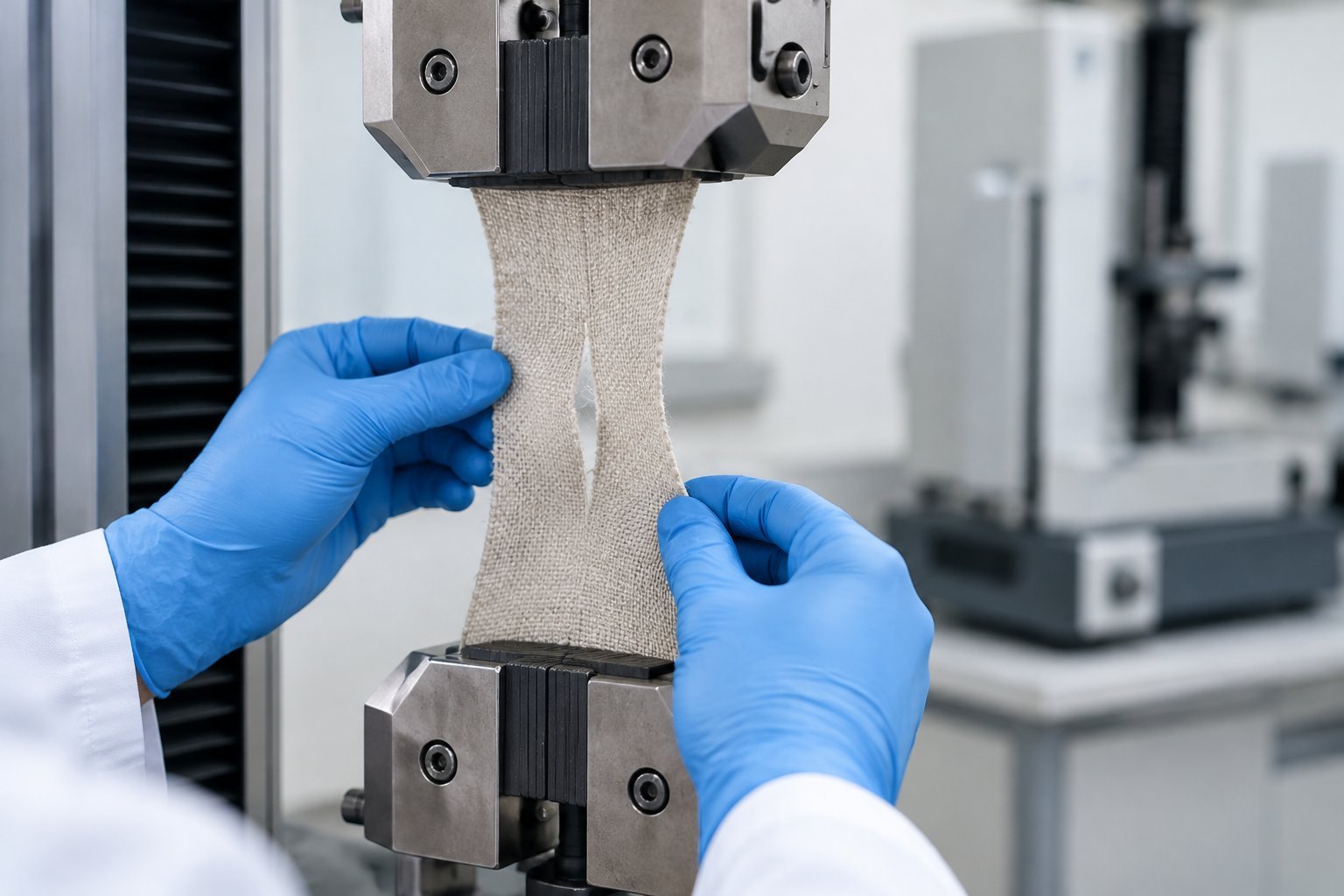
A high number becomes useful when the report identifies the method and tested direction. Differences in specimen geometry or calculation prevent direct comparison between otherwise similar-looking results.
Levitex manufactures flame-resistant textiles for protective-workwear applications. Selecting suitable workwear fabrics requires mechanical-performance evidence alongside the protective properties specified for the job.
What Does a Tear Test Actually Measure?
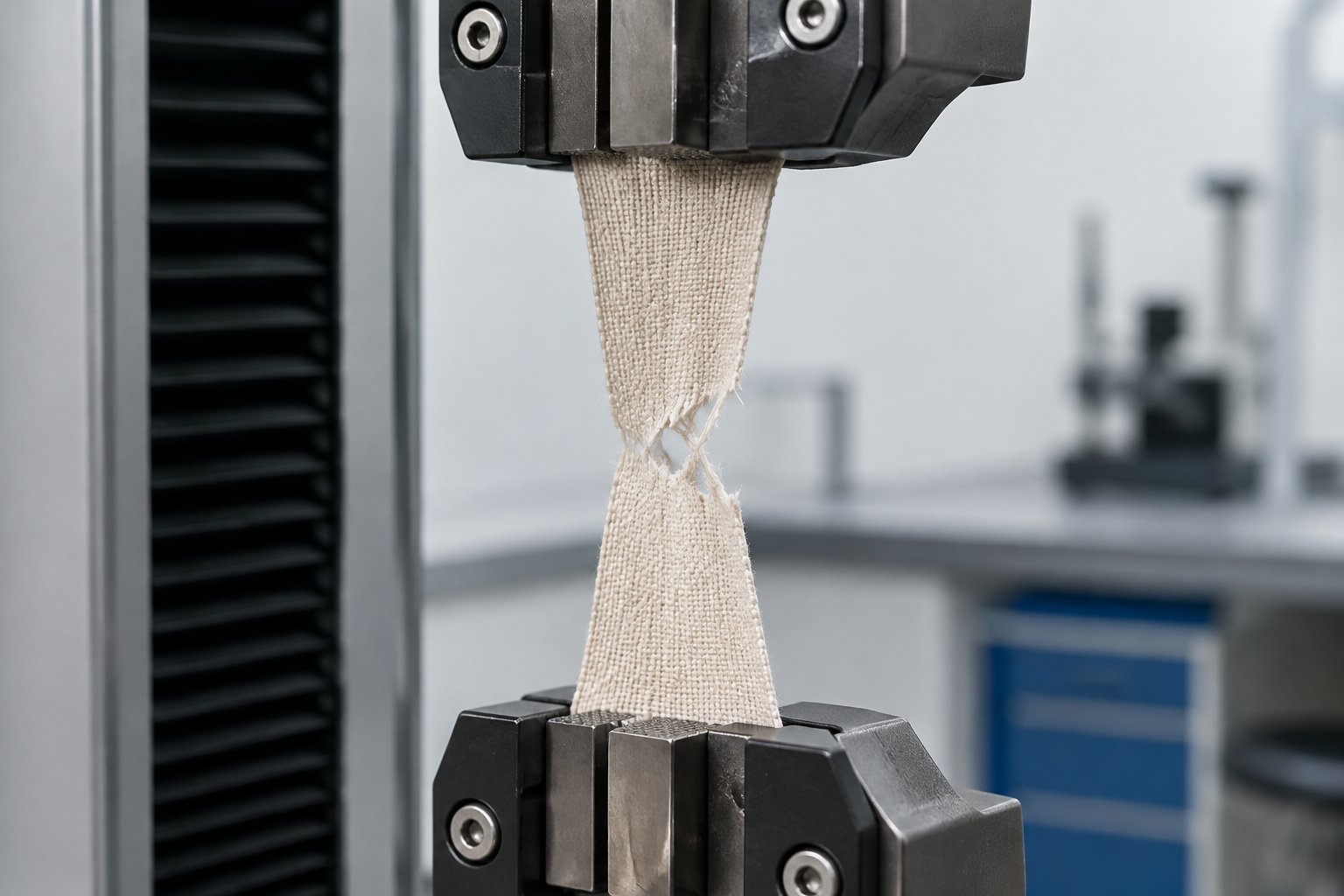
A tear test measures resistance to localized damage spreading through a specimen under controlled loading. For the methods discussed here, a prepared slit establishes the starting point.
Tear Initiation vs. Propagation From an Existing Cut
Tear initiation concerns the damage needed to start a rip in intact material. Propagation describes the continuation of an existing cut as successive yarns or structural connections fail.
Elmendorf, tongue, and trouser procedures evaluate propagation from a prepared cut. Their reported tear force provides evidence about damage growth; puncture resistance or resistance to the first snag requires separate evaluation. Slit preparation must follow the chosen standard because an inconsistent starting cut changes the test conditions.
Why Tear Resistance and Fabric Tensile Strength Are Different
Tensile testing loads an initially uncut specimen across a prescribed gripping arrangement until failure. Tear testing concentrates force near the advancing tip of a cut, where a smaller group of yarns carries the load.
Consequently, fabric tensile strength and tear resistance describe different failure mechanisms. A woven fabric with high breaking force still requires a separate tear assessment, while flame-retardant testing evaluates another set of performance requirements. Each result belongs to its own acceptance criterion.
How Warp and Weft Results Describe Directional Performance
Warp and weft results describe the behavior associated with the fabric’s two principal yarn systems. Yarn strength and construction differences produce directional variation, so both results belong on a woven-fabric report.
Terminology deserves attention: a tear traveling parallel to warp yarns breaks yarns crossing that path. Buyers should confirm whether the laboratory’s directional label identifies the yarns being broken or the direction of tear travel, following the named standard’s convention.
Which Test Method Should Buyers Specify?
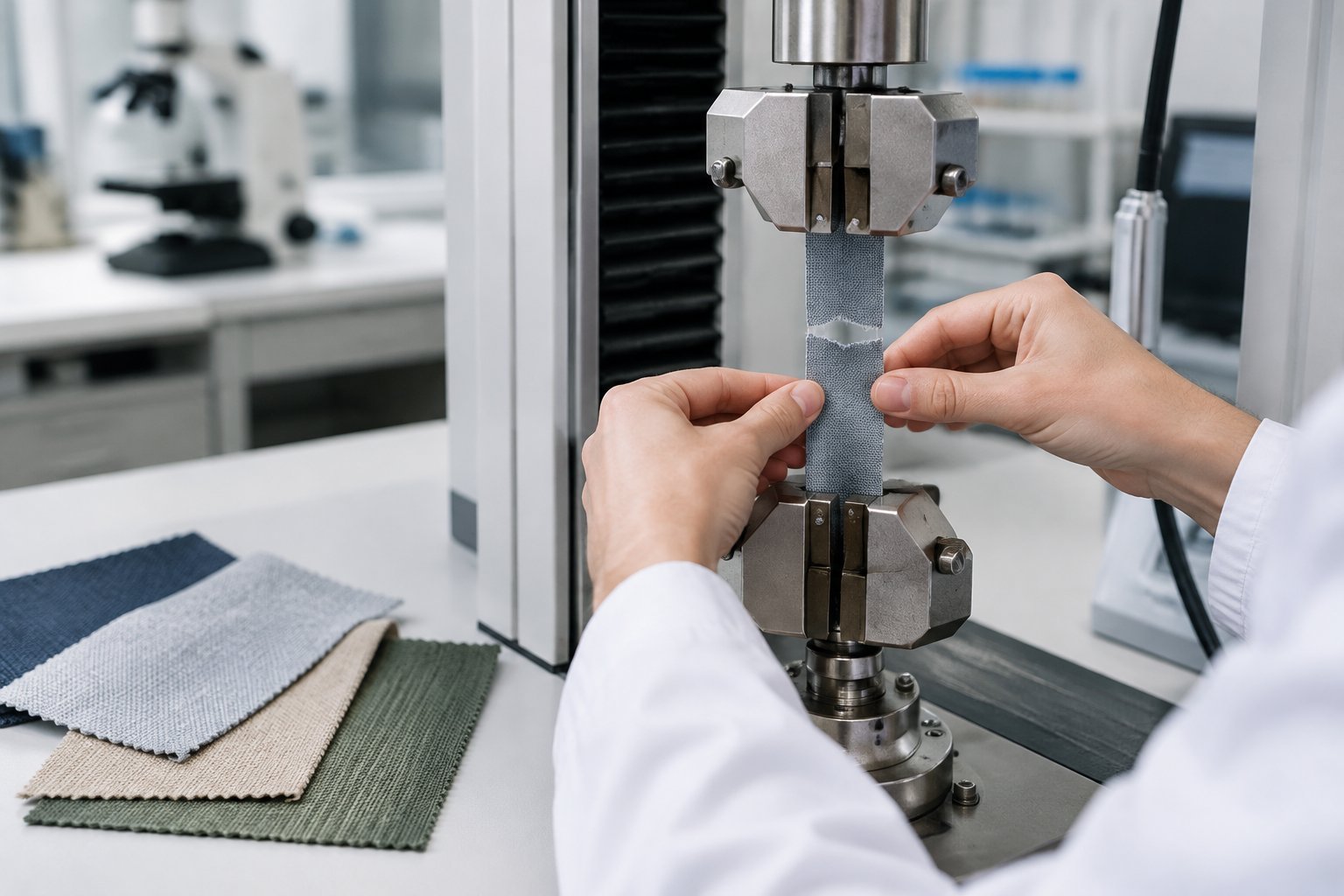
Buyers should specify the method required by their product specification, then verify that its scope suits the textile construction. Pendulum and tensile-machine procedures apply different loading conditions and produce method-specific results.
Elmendorf Pendulum Testing: ASTM D1424 and ISO 13937-1
An Elmendorf tear tester uses a falling pendulum to propagate a prepared tear. The instrument derives the reported tearing force from the energy consumed over the prescribed tearing distance.
ASTM D1424 and ISO 13937-1 describe pendulum testing, but their requirements must be followed independently. A report labeled only “Elmendorf tear test” leaves important details unresolved.
This method supports rapid testing of eligible fabrics. Specimens must tear along an acceptable path, and the instrument’s measurement range must suit the resistance encountered.
Trouser and Tongue Testing: ISO 13937-2, GB/T 3917.2, and ASTM D2261
The trouser method separates the legs of a slit specimen using a tensile-testing machine. ISO 13937-2 and GB/T 3917.2 address trouser-shaped specimens; ASTM D2261 specifies a tongue, single-rip procedure.
These methods record an irregular force trace as the tear advances. ASTM D2261 provides calculations using a single peak or the average of the five highest peaks, making the selected calculation essential to comparison.
GB/T 3917 belongs to the tear-properties test series. Any additional Chinese protective-clothing requirements need their own specification and acceptance limits.
Trapezoidal Testing: When ASTM D5587 Applies
ASTM D5587 uses a trapezoidal clamping arrangement and a prepared cut to evaluate tearing strength. Its geometry changes how yarns engage and redistribute the applied load.
Buyers should select it when the governing specification names that procedure and the fabric falls within its scope. Fabric weight alone provides insufficient grounds for switching methods.
| Comparison point | Elmendorf pendulum | Trouser or tongue | Trapezoidal |
|---|---|---|---|
| Apparatus | Falling pendulum | Tensile-testing machine | Tensile-testing machine |
| Loading | Pendulum-driven tear | Controlled clamp separation | Controlled clamp separation |
| Specimen feature | Prepared slit | Split legs or tongue | Trapezoid grip layout |
| Example standards | ASTM D1424; ISO 13937-1 | ASTM D2261; ISO 13937-2 | ASTM D5587 |
| Comparison basis | Matching pendulum procedure | Matching geometry and calculation | Matching trapezoidal procedure |
Method Scope for Woven, Knitted, and Other Textile Constructions
Woven fabrics are common candidates for tear testing. ASTM D1424 also covers eligible constructions such as air bag fabrics and certain treated textiles, subject to acceptable tearing behavior.
Its knit-fabric scope is restricted to warp-direction testing of warp knit fabric. It excludes the course direction of warp knits and either direction of most other knit fabrics. ASTM D2261 has broader scope, including knitted and nonwoven fabrics, although specimen handling still requires attention.
For geotextiles, the governing application specification should determine the procedure. A documented FR fabric quality-control plan should identify the selected method before production acceptance testing begins.
How Can Buyers Compare Results for Protective-Workwear Fabrics?
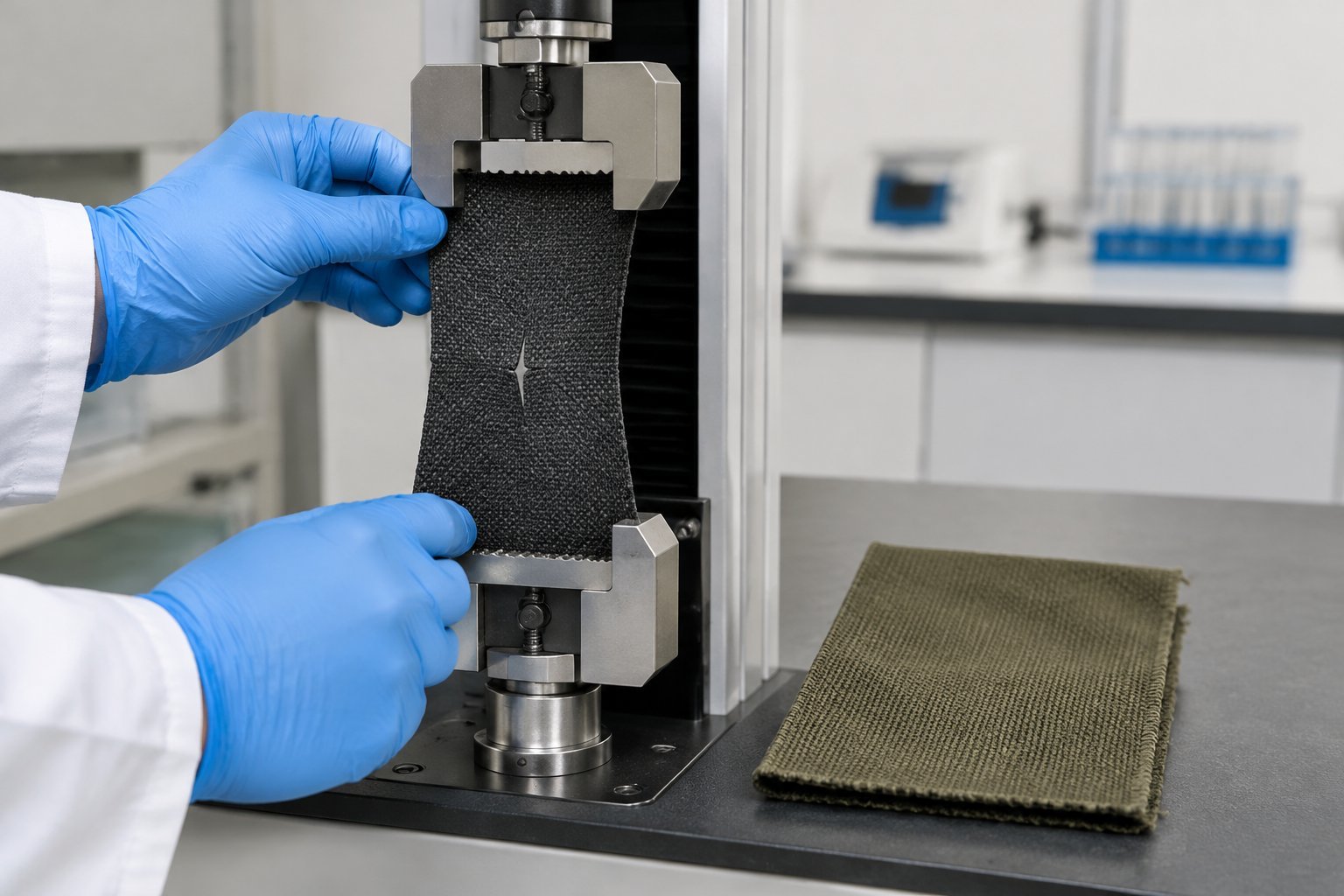
Comparable results require the same method, calculation, specimen condition, and directional convention. Buyers should also examine variation and failure behavior before ranking protective-workwear fabrics.
Match the Method, Calculation, Units, and Tested Direction
A comparison starts with the full standard designation and agreed edition. A report should identify its calculation route, particularly where a method offers alternative peak calculations.
Force units are convertible: 1 lbf equals approximately 4.448 N, and 1 gram-force equals approximately 0.009807 N. A reading labeled “g” requires confirmation that the instrument reports gram-force.
Unit conversion preserves the underlying test method. An Elmendorf result expressed in newtons remains a pendulum result; conversion does not make it equivalent to a trouser-test value.
Check Conditioning, Sampling, Tear Paths, and Result Variation
Moisture condition and pretreatment affect textile testing. Reports should identify the conditioning atmosphere and distinguish conditioned-dry specimens from wet-tested or laundered specimens.
Sampling should represent the production lot and avoid repeatedly testing the same yarn group. The report should retain:
- Individual specimen results and directional averages.
- The number of valid tests.
- Spread or variability information.
- Abnormal tear paths, slipping, and rejected specimens.
- Pretreatment details and sample identification.
After-care evidence needs particular care. Industrial laundering of FR fabrics affects finishing performance, while mechanical retention requires its own before-and-after measurements.
When laboratories disagree, matched specimens from a homogeneous sample provide a stronger investigation than unrelated repeat submissions.
Understand How Yarns, Weave, and Finishing Affect Tear Propagation
Stronger yarns increase the load-bearing potential near a tear tip. Yarn mobility also influences whether neighboring yarns gather together to resist the advancing tear.
A tightly locked structure restricts that redistribution. Ripstop reinforcement changes the tear path and force peaks, while its effectiveness still requires measurement under the selected procedure.
Composition provides useful context when evaluating cotton/nylon blend properties, but blend percentage alone establishes no tear-force value. Yarn quality and fabric construction remain part of the assessment.
Finishing adds another variable. Resin treatment or aggressive processing affects yarn mobility and retained strength, so multi-functional FR finishing compatibility should be evaluated on the final production construction.
Request Product-Specific Evidence for Levitex Fabric Selection
Levitex manufactures 100% cotton, cotton/nylon (C/N), and cotton-rich cotton/polyester (CVC) flame-resistant fabrics. These families are available as woven fabrics and can also be produced as knitted constructions.
Levitex provides a test report for each product. Buyers should request confirmation that the report for the selected fabric includes the required tear method and sample condition; a general product report establishes only the properties it explicitly covers.
A focused inquiry should identify the fabric construction, final finish, required procedure, and directional acceptance limits. Charlie Luo, Sales Manager, handles fabric inquiries at Charlie@levitex.com or (+86) 1551 730 3033. Levitex supplies textiles; finished-garment performance requires separate assessment.
Choose Fabrics Using Comparable Tear-Test Evidence
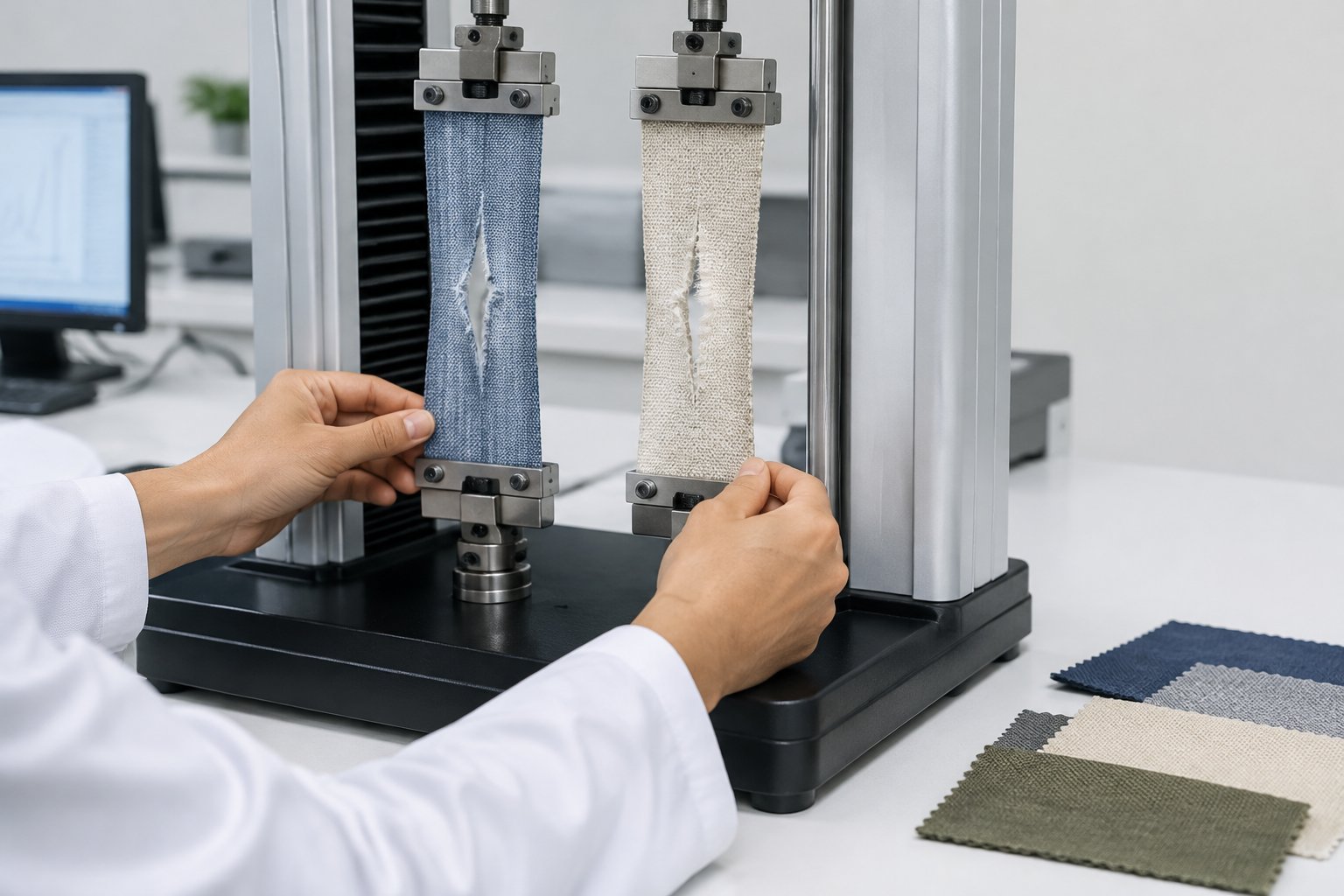
Fabric selection should rely on tear-test results generated under matching procedures and evaluated against written acceptance limits. For industrial textiles, the purchase specification should preserve the approved method through sampling and bulk verification.
A practical approval record includes the method edition, calculation, units, directional convention, specimen condition, and permitted failure behavior. Mechanical evidence should sit alongside the applicable protective requirements, including EN standards for FR workwear where the purchasing specification requires them.
For a Levitex fabric inquiry, attaching that record helps align the requested sample and product-specific report with the intended production requirement.
Frequently Asked Questions
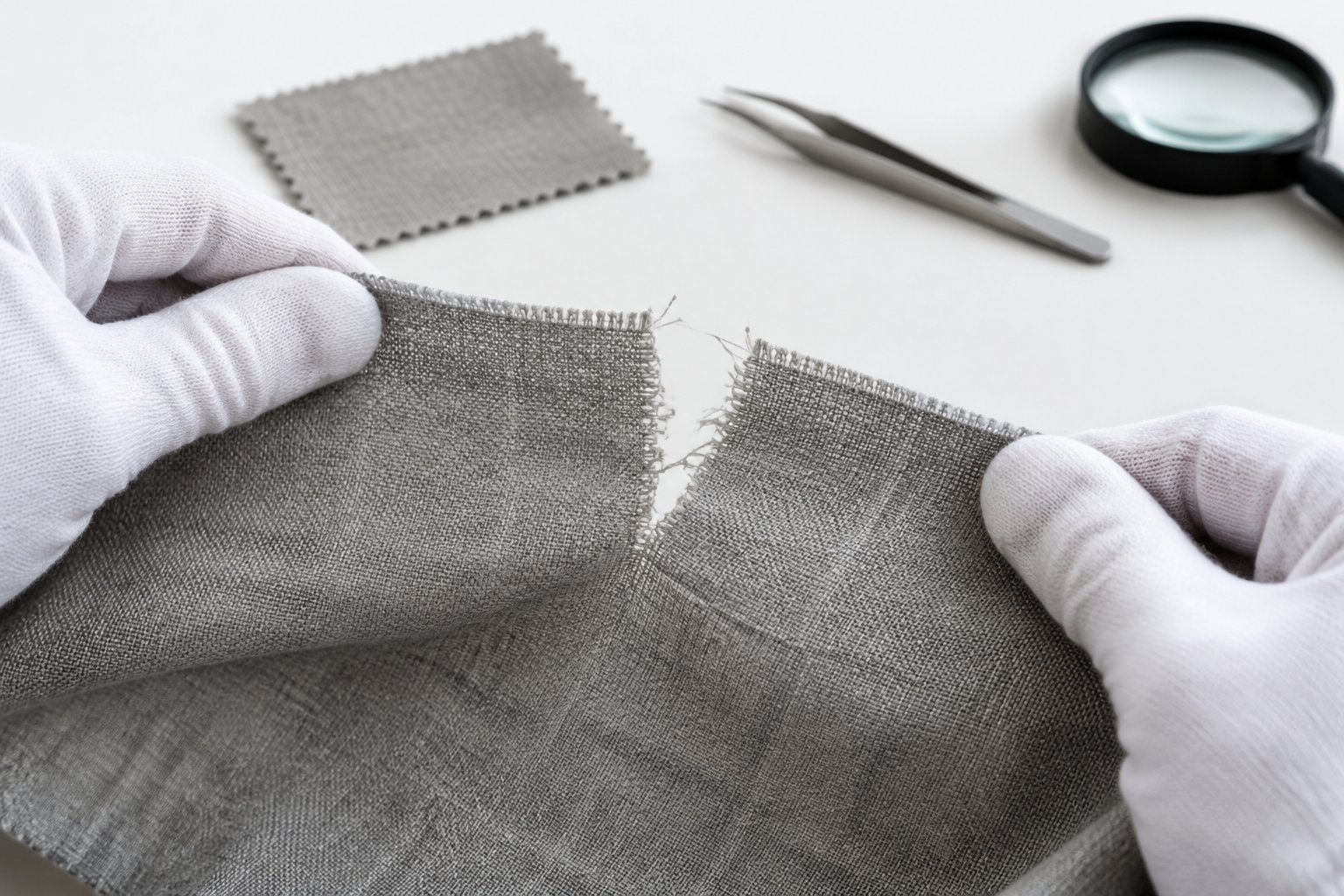
Fabric tear strength FAQs require method-specific answers because each procedure defines how tear resistance is measured.
What is a good tear strength for protective-workwear fabric?
A good result meets the applicable product specification’s minimum under its named test method. Approval should cover both required directions and any specified pretreatment.
Can fabric tear strength be expressed as a percentage?
Fabric tear strength is reported as force, commonly in newtons or pounds-force. Percentage retention describes a separate comparison, calculated as post-treatment force divided by initial force, multiplied by 100.
Can a calculator convert Elmendorf results into trouser-test results?
A calculator cannot reliably convert an Elmendorf tear test result into a trouser-method result. Their loading conditions and calculations differ; establishing a relationship requires paired testing of the specific fabrics.
Does heavier fabric always resist tearing better?
Heavier fabric does not guarantee greater tear resistance. Yarn strength and mobility, together with construction and finishing, determine the measured response.
Which fabrics resist tearing best in industrial workwear?
The strongest candidates are fabrics that demonstrate high tear force under the buyer’s specified procedure and service conditioning. Even an inherent-FR versus treated-FR comparison requires product-specific mechanical reports before either fabric receives a tear-resistance ranking.