
For protective workwear, you should select flame resistant lining fabric with documented flame behavior, adequate mechanical strength, and laundering compatibility with your outer shell. You use the lining to increase the comfort of clothes and hide unfinished seams while maintaining the performance required of your protective garment.
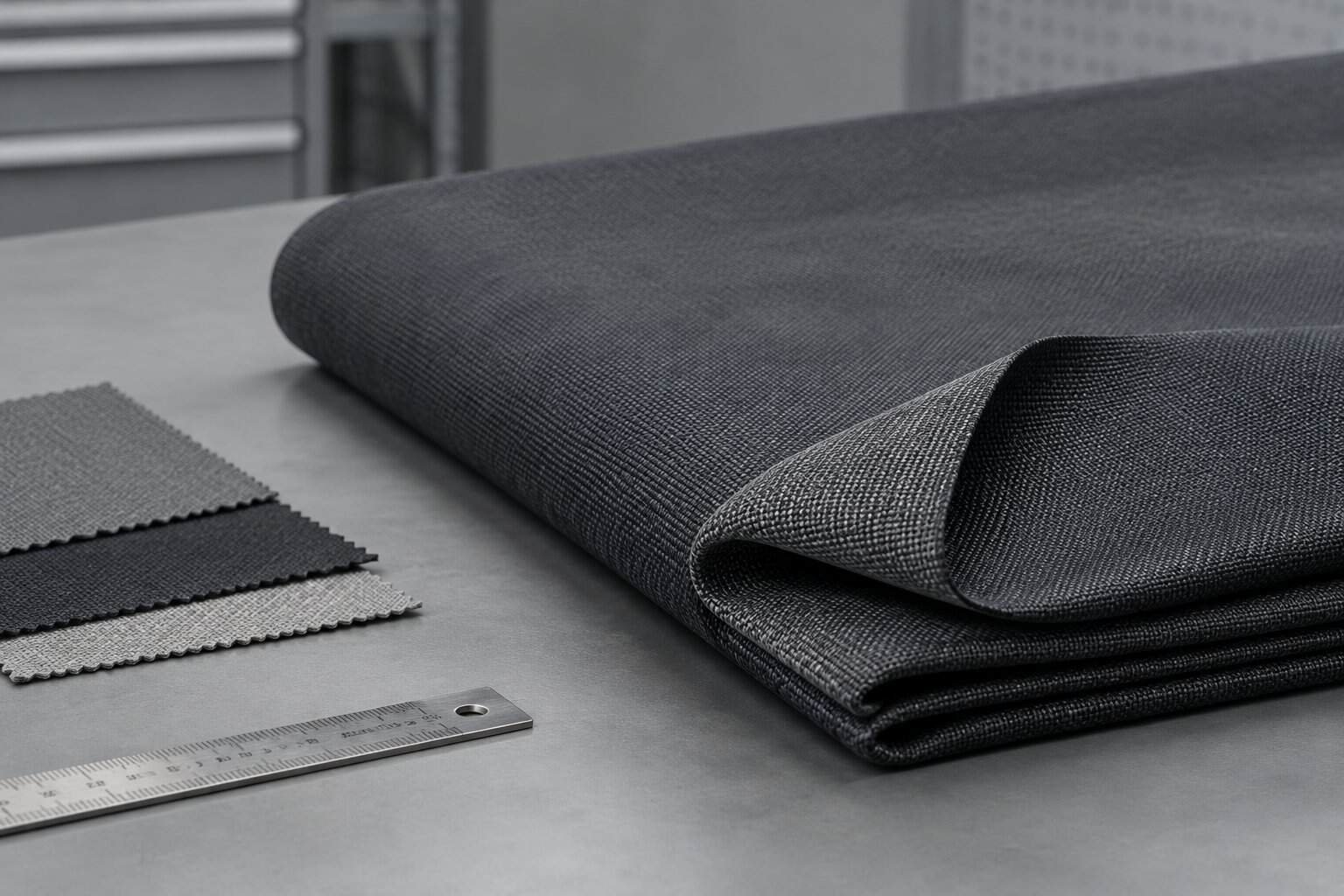
Your lining sits close to the wearer, so its response to heat deserves careful attention. A smooth handle helps with dressing and movement, but you also need evidence that the material remains suitable after cleaning and works with your garment’s other layers.
What Does a Protective Lining Actually Do?
You use a protective lining to improve the garment’s interior while preserving its intended protection. Its contribution depends on its material, attachment points, and place within the tested assembly.
Comfort and Seam Coverage Without Compromising Protection
You add a comfort lining to cover internal seam allowances and reduce friction against the wearer’s clothing or skin. A suitable surface also makes sleeves easier to pull on and reduces snagging during movement.
When developing flame-resistant clothing, you need to assess that comfort benefit alongside flame behavior. Check exposed edges, pocket bags, and lining openings because these details influence where heat or flame reaches internal materials.
Shell, Comfort Lining, Thermal Barrier, and Garment Assembly
You should assign each layer a defined function before selecting fabric:
- Outer shell: Your exposed layer addresses the specified environmental and workplace hazards.
- Comfort lining: Your interior face covers construction details and supports wearability.
- Thermal barrier: Your designated insulating component limits heat transfer through an evaluated construction.
- Garment assembly: Your complete system includes layers, seams, closures, trim, and coverage.
You should credit a comfort lining with thermal insulation only when relevant testing supports that contribution. In specialized protective clothing, a facecloth attached to insulating batting has a different role from a lightweight, uninsulated lining.
Why a Lining Cannot Make an Unsuitable Outer Garment Safe
You need a suitable shell and garment design before adding a protective lining. An outer material that continues burning, melts, or breaks open introduces hazards that an internal layer does not automatically resolve.
For welding applications, your choice of material for welding gear must address the exposure and garment construction. Evaluate spark entry at cuffs and closures as well as the behavior of the layered fabric package.
Which Material Categories Can Suit Protective Linings?
You can shortlist FR-treated cellulosics, inherently FR fibers, and engineered blends when their documented performance matches your application. A fiber name alone gives you insufficient evidence for approving a protective lining.
FR-Treated Cellulosics With Documented Performance
You can consider cotton and other cellulosic constructions engineered with an appropriate flame-retardant treatment. Cotton-rich options offer familiar moisture absorption, while their handle and flexibility depend on fabric construction and finishing.
For flame-retardant treated fabric, request the treatment route, exact composition, and performance after the specified cleaning procedure. Ordinary cotton and cotton receiving an unspecified finish require separate evaluation; neither description establishes protective performance.
Inherently FR Fibers and Engineered Blends
You can also evaluate aramid-based materials and engineered blends containing fibers such as modacrylic or FR viscose. Inherent flame resistance comes from fiber chemistry, while the finished fabric’s behavior also reflects its blend proportions and construction.
You still need evidence for thermal shrinkage, mechanical durability, and the intended exposure. An inherent FR mechanism does not prevent holes, contamination, or seam failure from making your garment unsuitable for service.
Comparing Comfort, Mechanical Strength, and Thermal Behavior
You should compare exact fabric constructions using the same relevant test conditions. Use these categories to organize your shortlist, then replace general expectations with measured results.
| Your selection factor | FR-treated cellulosics | Inherently FR fiber constructions | Engineered blends |
|---|---|---|---|
| Comfort assessment | Absorbency and finished handle | Surface feel and moisture management | Blend-specific comfort balance |
| Mechanical assessment | Tear, tensile, and abrasion results | Fiber and construction effects | Reinforcement and stretch effects |
| Thermal assessment | Treatment and cleaning durability | Shrinkage and structural integrity | Whole-blend thermal behavior |
| Evidence to request | Exact finished-fabric reports | Exact fiber and fabric identity | Complete composition and reports |
When choosing workwear fabric, compare strength at the weight you intend to purchase. A lightweight lining needs enough resistance to tearing and seam stress for its position inside your garment.
How Do You Match the Lining to the Garment?
You match a lining by checking how it moves, shrinks, and survives cleaning alongside your shell. Prototype evaluation should include the assembled garment because separate fabric results leave construction interactions unresolved.
Compatible Shrinkage, Stretch, and Dimensional Stability
You should compare dimensional change in both fabric directions after the same proposed care procedure. A lining that shrinks differently from its shell creates pulling, puckering, or restricted movement.
Check stretch and recovery as well, especially across the back, seat, and elbows. Your pattern allowances and attachment points should accommodate movement without allowing loose lining to bunch or snag.
Seams, Threads, and Construction Compatibility
You need thread, stitch formation, and seam design appropriate to the garment’s protective requirements. Strong fabric offers limited benefit when your lining seam opens during wear or laundering.
Evaluate seam slippage in woven constructions and suitable seam-strength or bursting behavior where relevant. Include quilting, labels, elastic, and attachment tapes in your construction review because these components also form part of the finished garment.
Laundering Conditions and Performance After Cleaning
You should approve one compatible care procedure for all permanently attached layers. Specify whether your garment will undergo home laundering, industrial laundering, or another permitted cleaning process.
Your instructions for laundering flame-retardant fabric should identify permitted chemistry and cleaning conditions. Include drying temperature, finishing procedures, and restrictions on bleach or softeners where required by the material supplier.
Request post-cleaning results for flame behavior and dimensional stability. Use the cleaning cycles and conditions required by your applicable specification; a universal wash count or temperature would overlook differences between materials and end uses.
What Testing and Documentation Should Buyers Require?
You should require traceable reports for the exact lining and the relevant garment assembly, with acceptance criteria tied to your intended use. Check the standard’s edition, specimen preparation, and cleaning preconditioning before accepting a performance claim.
Product Standards vs. Test Methods
You use a test method to measure behavior under defined conditions. A product or garment standard establishes applicable requirements and identifies how results contribute to compliance.
When you test flame-retardant properties in fabrics, results such as afterflame or char length need their method and acceptance criteria attached. A report stating “passed a flame test” leaves essential details unanswered.
For US electrical applications, you should consider the applicable requirements for arc-rated clothing. ASTM F1506-22 addresses arc rating, flame resistance, mechanical durability, garment construction, and labeling. You need the appropriate arc evidence when selecting materials for arc-flash clothing; limited-flame-spread results alone do not establish an arc rating.
When ISO 11611, ISO 11612, and ISO 15025 Are Relevant
You should consider ISO 11611 when your project specifies protective clothing for welding and allied processes. ISO 11612 addresses protective clothing against heat and flame, with performance requirements relevant to specified exposures.
You use ISO 15025 to determine limited flame spread under its defined procedures. It is a test method, so a result under ISO 15025 does not independently establish garment compliance with ISO 11611 or ISO 11612.
Confirm the applicable edition and required performance classifications with your laboratory or conformity-assessment provider. Your shell, lining, and other components require evaluation according to their roles and the standard’s provisions; identical requirements should never be assumed for every layer.
Evidence for the Exact Material and Garment Assembly
You should match each report to the proposed fabric code, composition, weight, construction, and finish. Check the tested color or color range where that affects the report’s coverage.
Your documentation review should also identify:
- The laboratory and report identifier.
- Test methods and standard editions.
- Cleaning and conditioning procedures.
- Specimen orientation and exposed face.
- Measured results and acceptance limits.
- Layer order and attachment details for assembly tests.
To verify fabric quality standards, distinguish a laboratory test report from a product certificate or management-system certificate. Each document supports a different claim, and your purchase specification should state which evidence you require.
What Belongs in a Buyer’s Lining Specification?
You need a specification that connects your exposure assessment to measurable fabric requirements and purchasing controls. Give your supplier enough detail to assess suitability before sampling or production.
End Use, Exposure Risks, and Required Performance
You should identify the garment type, workplace task, and expected exposure. Welding spatter, flash fire, radiant heat, and electric arc require different evidence.
State the applicable garment standard and edition, required classifications, and any customer-specific conditions. Also identify whether your lining will touch the wearer, cover another component, or form part of an evaluated insulating assembly.
Construction, Weight, Width, and Mechanical Properties
You should define the construction closely enough to prevent unreviewed substitutions. Include the following in your request:
- Fiber composition and blend percentages.
- Woven, knitted, nonwoven, or composite construction.
- Nominal mass per unit area and tolerance.
- Usable width and tolerance.
- Required tensile, tear, bursting, or abrasion performance.
- Seam compatibility and dimensional-change limits.
- Colorfastness requirements relevant to wear and cleaning.
- Any justified electrostatic or additional functional requirements.
Use units your purchasing and technical teams recognize, such as g/m² for fabric weight. Set mechanical thresholds through the applicable standard and garment design requirements, with the test method identified for every specified value.
Samples, Traceability, Care Instructions, and Acceptance Criteria
You should approve a representative sample and retain its identity alongside your technical file. Link bulk deliveries to fabric codes, production lots, and agreed inspection criteria.
Your FR fabric manufacturing specification should also define change control for composition, finish, or construction. Require review before any substitution affects the approved garment.
For a requirements discussion with Levitex, send your shell/lining composition, weight, laundering conditions, and required tests to Charlie@levitex.com. You can then discuss fabric requirements without assuming that a particular lining construction or certification applies.
Choose a Lining That Works With the Whole Garment
You should approve your lining through documented material performance and its compatibility with the complete garment. Comfort, seam coverage, and mechanical durability belong alongside the required flame and heat evaluations.
Before authorizing production, confirm the material identity and care procedure against your approved specification. Keep the supporting reports tied to the construction you purchase, including any assembly-specific evidence and agreed substitution controls.
Frequently Asked Questions
You can use these answers to resolve common purchasing questions before finalizing your lining specification.
What is the best lining material for flame-resistant workwear?
For cotton-rich industrial workwear, you can shortlist a documented FR-treated cellulosic lining that meets your required cleaning and mechanical conditions. For applications demanding different thermal behavior, evaluate aramid-based or engineered-blend alternatives through the same garment-specific approval process.
Can ordinary cotton be used as a flame-resistant lining?
You should not specify ordinary cotton as a flame-resistant lining because untreated cotton ignites and continues burning under suitable exposure conditions. Require documented FR performance for the exact cotton construction you intend to use.
Does a flame-resistant lining make any jacket safe for welding?
You cannot approve any jacket for welding solely by adding an FR lining. Your assessment must cover the shell, garment design, closures, seams, and relevant welding-protection requirements.
Can flame-resistant lining fabric be washed with the outer fabric?
You can wash an attached lining with its shell when both materials and the complete garment support the same approved care procedure. Confirm post-cleaning flame performance and dimensional compatibility before releasing the design.
Can I buy flame-resistant lining fabric by the yard?
You should ask your chosen supplier whether it offers cut-yard quantities, sample lengths, or full rolls for the specified fabric. Confirm minimum order quantity, usable width, lot traceability, and technical documentation before ordering.
Is flame-resistant blackout lining suitable for protective clothing?
You should approve blackout lining for protective clothing only when it has evidence meeting your garment’s requirements. Light-blocking performance or an interior-furnishing flame test, including NFPA 701, does not establish suitability for welding or other occupational thermal hazards.