
CVC fabric means chief value cotton: a cotton-polyester blend in which cotton accounts for more than 50% of the fiber content. For industrial textile buyers, it offers a cotton-rich starting point for workwear that requires practical comfort and dimensional stability.
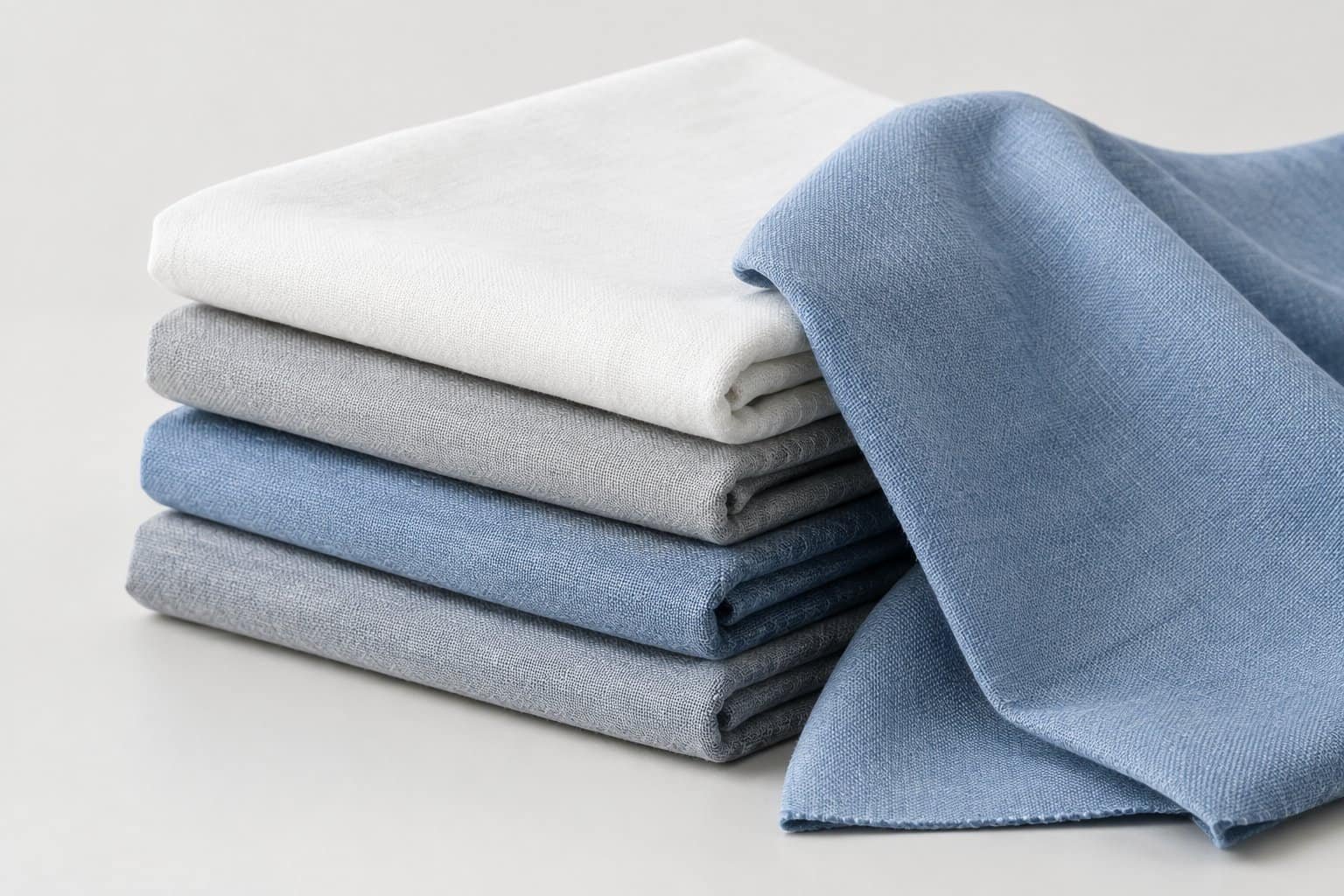
Levitex manufactures cotton-rich blends for protective-workwear applications, alongside 100% cotton and cotton/nylon fabrics. Its textile production includes customized flame-resistant finishing, custom dyeing and printing.
A useful purchasing specification connects the blend percentage to the finished fabric’s construction and intended service conditions. For protective workwear, that connection extends to product-specific performance reports and an agreed laundering procedure.
What Does Chief Value Cotton Mean?
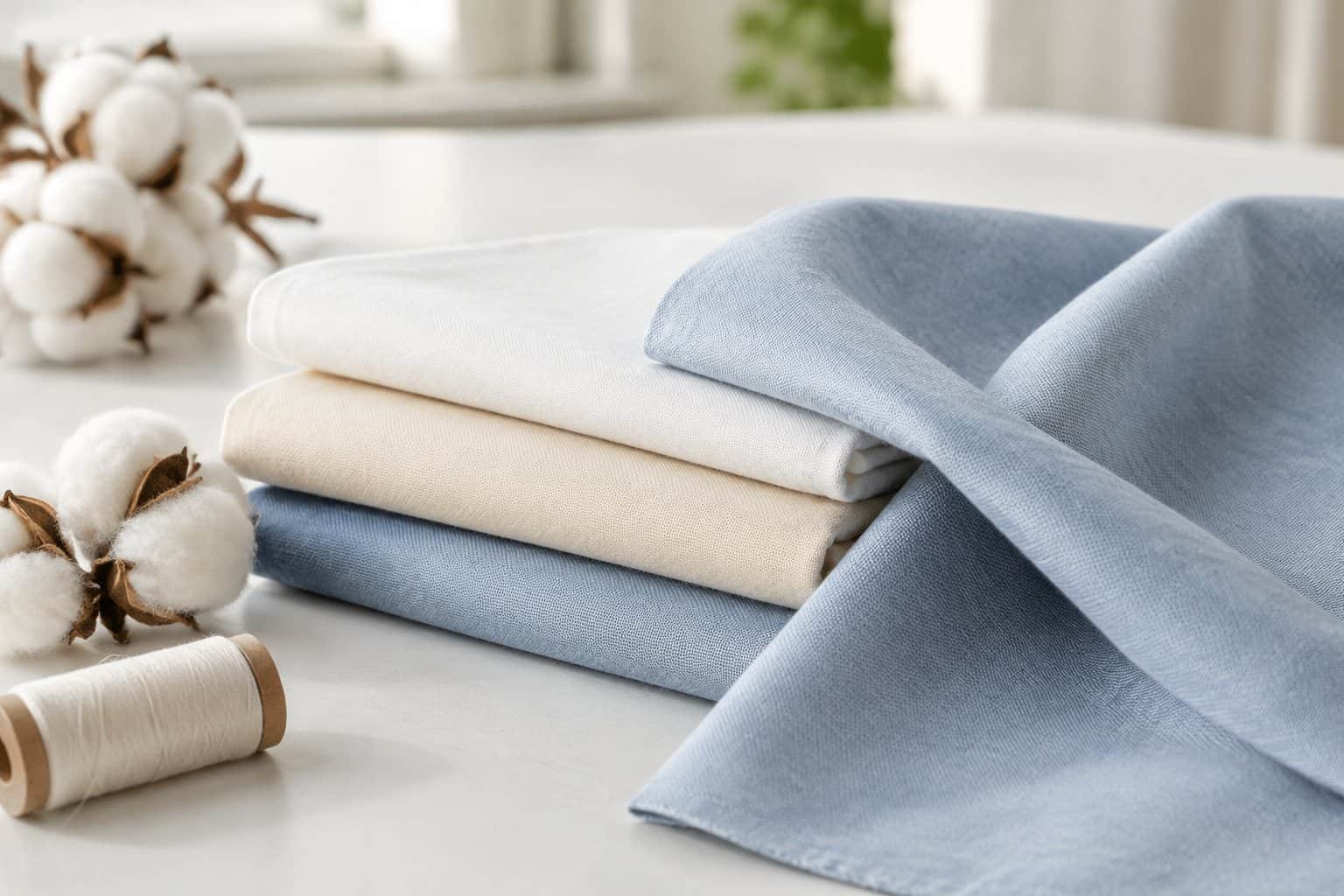
Chief value cotton describes a cotton-majority blend, with polyester supplying the remaining share in conventional CVC fabrics. The term identifies composition; weave, appearance and protective performance require separate specifications.
How Cotton and Polyester Percentages Define the Blend
Cotton constitutes the larger share by weight in a two-fiber CVC blend. Examples include 55% cotton/45% polyester and 80% cotton/20% polyester.
Those percentages describe the fabric’s fiber content without establishing how the fibers are distributed. Blended yarns contain both fibers within the yarn, while other constructions distribute them between different yarn systems. A CVC designation alone gives no assurance of a cotton-only face or polyester-only back.
How to Read CVC 60/40 and CVC 65/35
CVC 60/40 conventionally means 60% cotton and 40% polyester. CVC 65/35 means 65% cotton and 35% polyester.
Purchase orders should spell out each fiber beside its percentage because a bare “65/35” leaves room for interpretation. The specification should also identify any additional fiber separately. A substitution involving elastane or conductive yarn changes the composition and requires explicit approval.
CVC vs. TC: Why the Fiber Order Matters
TC, also called tetron cotton, is commonly used for polyester-rich cotton blends. TC 65/35 conventionally identifies 65% polyester and 35% cotton, reversing the dominant fiber in CVC 65/35.
Supplier terminology varies across markets, so written percentages provide the clearest purchasing reference. A quotation stating “cotton/polyester, 65/35 by weight” is more precise than one stating only “poly-cotton.” Fiber-content verification should match that written description.
How Does the Blend Affect Comfort, Durability, and Cost?
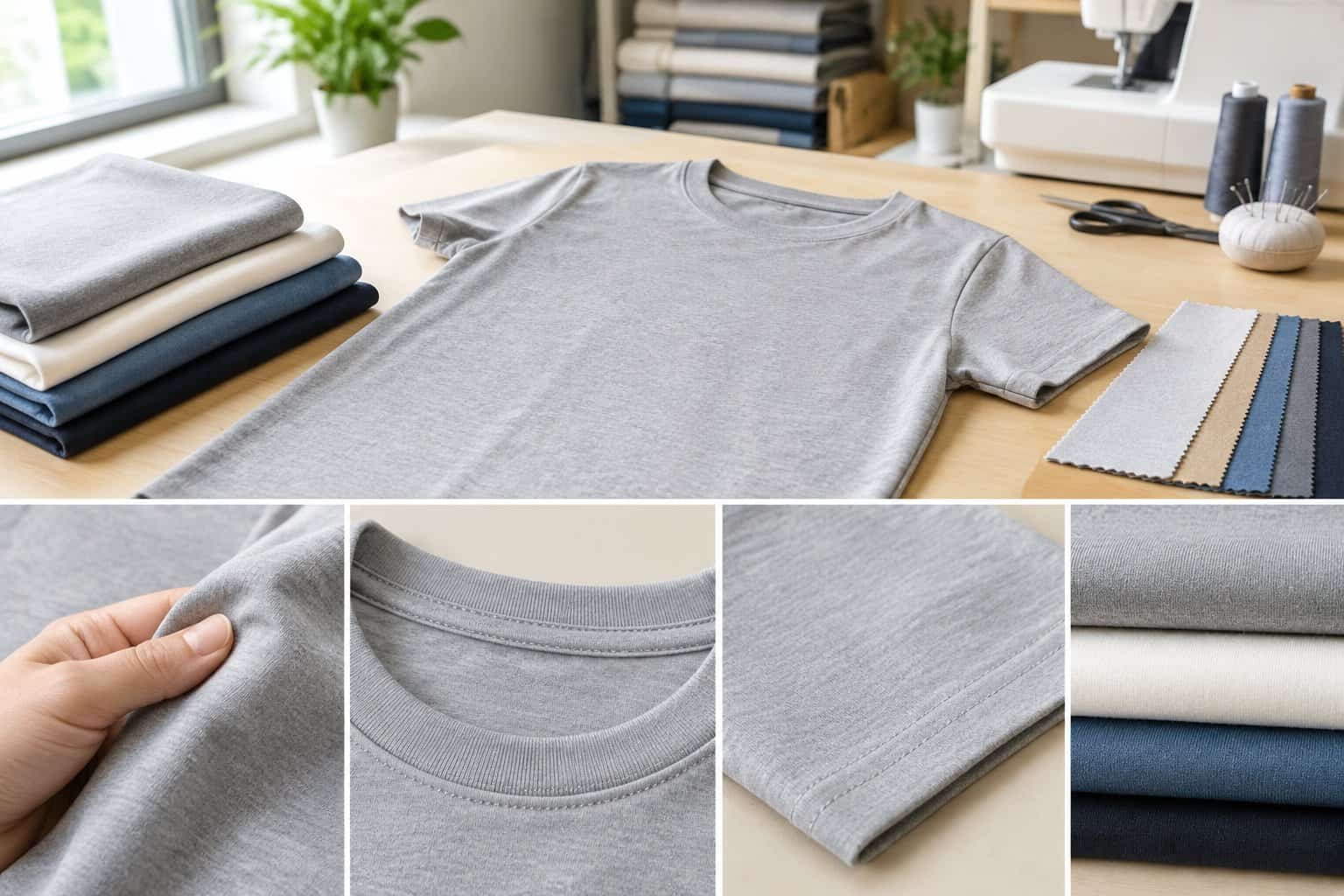
Cotton contributes moisture absorption, while polyester contributes wrinkle recovery and dimensional stability. Construction and finishing determine how strongly those properties appear in the finished textile.
Breathability and Moisture Absorption Depend on More Than Composition
Breathability describes air passage through a fabric; moisture absorption describes its uptake of water. Cotton absorbs substantially more moisture than polyester, but fabric openings govern much of the airflow.
A dense CVC canvas and an open CVC knit behave differently despite identical fiber percentages. Weight, yarn twist and finishing also influence comfort. Comparisons between cotton and polyester therefore need a defined construction before they become useful for workwear selection.
Wrinkle Resistance, Abrasion Resistance, and Pilling Trade-Offs
Polyester supports wrinkle resistance and helps the fabric retain its dimensions during use. Its contribution to abrasion resistance depends on yarn quality and the fabric structure.
Pilling creates a separate trade-off. Strong polyester fibers hold surface pills in place after loose fibers become entangled, particularly on hairy or brushed surfaces. Buyers should specify an acceptable pilling result alongside strength requirements, with the relevant test method and conditioning stated.
A Brief Comparison with 100% Cotton
CVC and 100% cotton fabric differ most clearly in moisture absorption and heat response. Both require an appropriate construction and finishing route for industrial service.
| Criterion | Cotton-Rich CVC | 100% Cotton |
|---|---|---|
| Fiber content | Cotton plus polyester | Cotton only |
| Moisture absorption | Lower at comparable construction | Higher at comparable construction |
| Wrinkle recovery | Polyester contribution | More dependent on finishing |
| Heat response | Polyester melting potential | No thermoplastic melting |
Neither composition establishes protective suitability. A fair comparison uses finished fabrics of comparable weight and construction, assessed against the same end-use requirements.
Why CVC Is Not Always the Cheaper Option
Polyester content creates an opportunity to reduce raw-material cost when polyester prices are lower than cotton prices. The finished-fabric quotation also includes processing expenses.
Dyeing both fiber components, achieving a difficult shade and applying compatible protective finishes add cost. Order quantity and usable width also affect the price per usable meter. Commercial comparisons should use equivalent specifications, including the same inspection and testing requirements.
Which Constructions Suit Industrial Workwear?
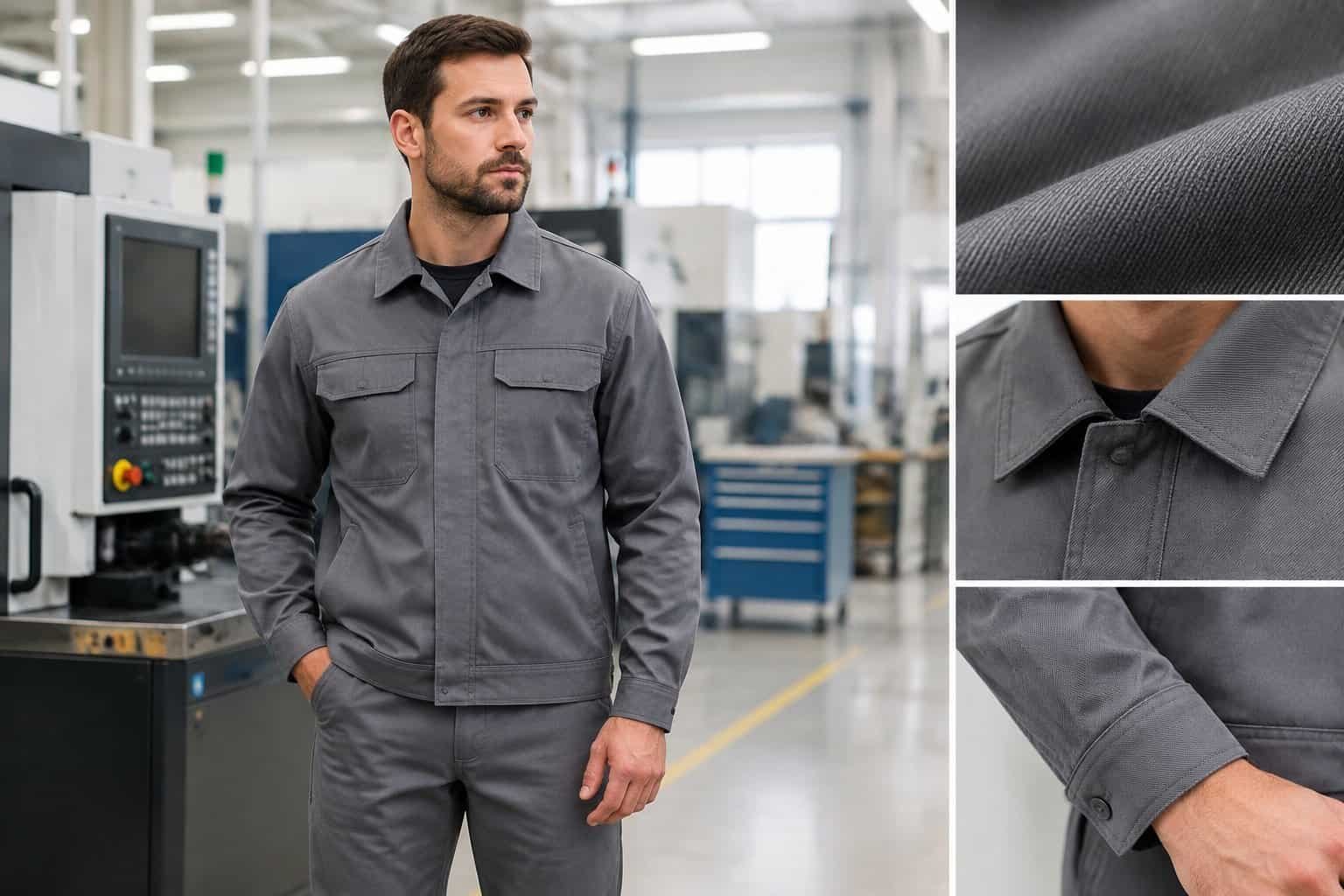
Woven constructions suit workwear requiring structure, while knitted constructions provide loop-based extensibility. CVC identifies the fiber blend in either format.
Woven Twill, Plain Weave, and Canvas for Workwear
Twill provides a diagonal surface and suits workwear requiring a balance of drape and substance. Plain weave uses frequent interlacings to produce a stable structure.
Canvas describes a robust fabric category commonly built with substantial yarns in plain or basket constructions. It suits applications requiring a firmer textile, subject to the relevant performance assessment. Selecting workwear fabric also requires attention to tear behavior, seam performance and the working environment.
Knitted Jersey, Interlock, and Fleece: Structure Is Not Composition
CVC jersey, CVC interlock and CVC fleece are knitted structures made with cotton-rich blends. Jersey offers a single-knit structure, while interlock provides a double-knit construction with greater body.
Fleece incorporates a looped or raised surface that adds bulk and insulation. These terms describe structure or surface treatment without establishing flame resistance. Levitex manufactures flame-resistant knitted fabrics within its industrial textile offering; a particular knit specification requires individual confirmation.
How Yarn Quality and Fabric Weight Shape Performance
CVC yarn quality influences surface uniformity and strength. Combed cotton processing removes short fibers and impurities before spinning, supporting a cleaner yarn surface.
Yarn count, twist and fabric density then determine how that yarn performs in the finished construction. Fabric weight should be stated in grams per square meter (gsm), alongside usable width and tolerances. Equal gsm values leave room for substantial differences in thickness, stiffness and airflow.
How Do Dyeing and Printing Affect Order Consistency?
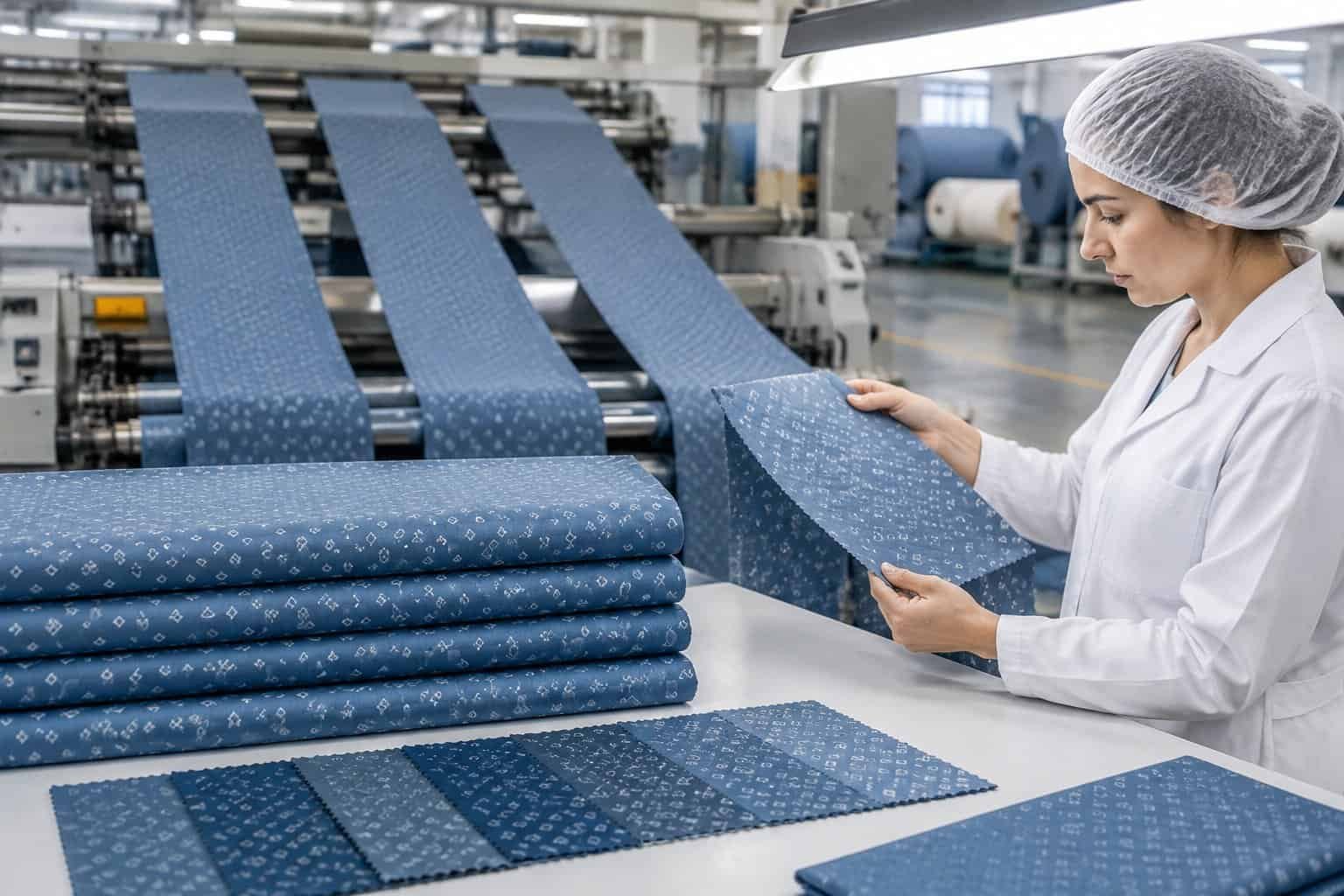
Consistent CVC coloration requires control of both fiber components through dyeing and subsequent finishing. Approval should cover the finished textile’s shade and performance under the agreed care conditions.
Why Cotton and Polyester Require Different Dye Systems
Cotton and polyester have different chemical structures and dye affinities. Reactive dyes are widely used for cotton, while disperse dyes color polyester.
A solid CVC shade therefore requires a compatible process for both components. Mills use separate baths or coordinated one-bath sequences where the chemistry permits. Later fabric finishes introduce further processing conditions, so color approval should represent the complete production route.
Solid Shades and Heather Effects Are Process Choices
A solid shade requires the two components to produce a visually coordinated color. A heather effect deliberately introduces tonal variation through yarn selection or differential coloration.
CVC composition alone establishes neither appearance. A buyer seeking a uniform industrial shade should identify the visual standard explicitly. Approval under more than one agreed light source helps reveal metamerism, where samples match under one light and separate under another.
A Colour-Approval Checklist for Samples and Bulk Production
A reliable approval record connects the color reference to the finished production sample. It also establishes how bulk variation will be evaluated.
The buyer’s record should include:
- A physical master standard and agreed color reference.
- Specified viewing light sources.
- An agreed instrumental tolerance, where applicable.
- Approval of the intended FR and additional finishing route.
- Colorfastness requirements for laundering and rubbing.
- Bulk shade bands and roll-to-roll acceptance limits.
- Retained samples identified by production lot.
These records support FR fabric quality control by connecting an approved sample to identifiable bulk material.
Validating Printing and Embroidery on the Finished Fabric
Screen printing requires validation of the ink system and curing conditions on the finished CVC textile. Polyester dye migration creates a particular concern when heat processing causes background color to enter a printed area.
Embroidery requires assessment of thread, backing and stitch density on the intended garment assembly. For protective workwear, those additions need evaluation against the garment’s requirements. Levitex supplies textiles and custom printing services; garment embroidery and assembly remain downstream responsibilities.
What Makes an FR Specification Different from Ordinary CVC?
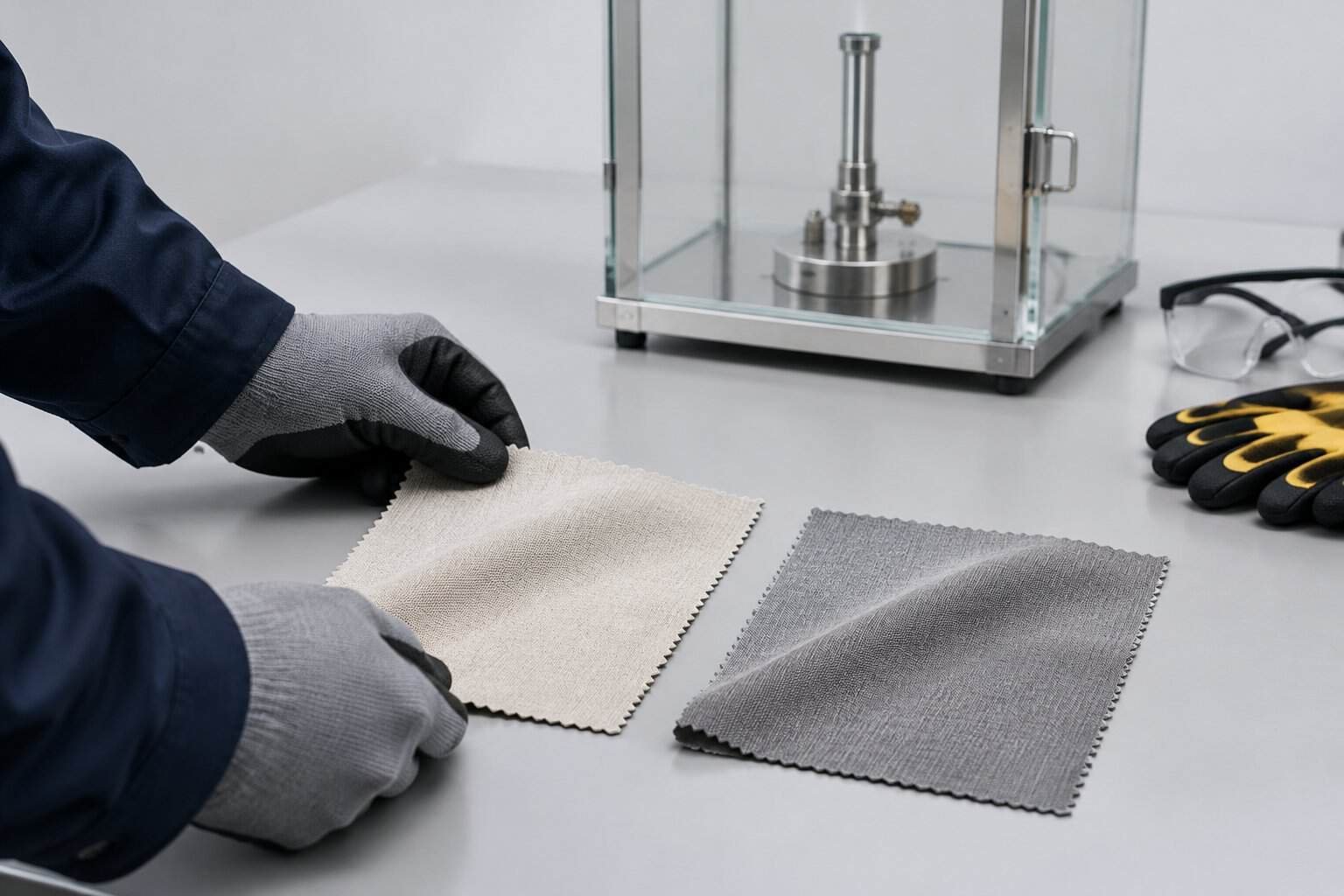
An FR specification adds defined flame-performance requirements and care conditions to the ordinary CVC description. The completed cotton-polyester blend requires assessment after its intended processing.
Why a Cotton-Rich Blend Is Not Inherently Flame Resistant
Ordinary cotton burns, and conventional polyester contributes its own combustion and melting behavior. Increasing the cotton percentage leaves a combustible blend.
A protective CVC textile requires a suitable flame-resistant treatment and verified performance for its intended application. The same distinction applies to flame-retardant 100% cotton: cotton content supplies the base material, while treatment and testing establish the relevant finished-fabric properties.
Polyester Melting and Heat Shrinkage Require Finished-Fabric Assessment
Polyester softens and melts under sufficient heat, and a heated fabric also experiences dimensional changes. The cotton portion, fabric structure and treatment influence the blend’s response.
Assessment should address the behaviors required by the applicable specification, including flame spread and any relevant thermal shrinkage or molten-debris criteria. Arc exposure introduces separate testing requirements. The difference between arc-rated and FR clothing prevents a general FR description from being mistaken for a verified arc rating.
Validate Performance with Product-Specific Reports and Care Conditions
A useful report identifies the tested material closely enough to connect its results to the ordered fabric. Composition, finished weight and sample identification should align with the purchasing documents.
Buyers should also check the test method, pretreatment and reported care conditions. Levitex provides a test report for each product; the relevant report defines which results support that product’s specification.
The agreed FR laundering procedure should remain attached to the technical specification. Changes to finishing chemistry, printing or care conditions require a documented review of their effect on performance.
Specify FR Plus Water or Oil Repellency Without Assuming Barrier Protection
Levitex offers FR plus water-repellent and FR plus oil-repellent finishing on cotton-rich CVC base fabrics. Its CVC 345 gsm multifunctional fabric provides a product-specific starting point for a technical inquiry, with acceptance requirements tied to the relevant reports.
Repellency describes resistance to surface wetting by specified liquids. Waterproofness and chemical-barrier protection require separate evidence. Levitex’s chemical-repellent finishes provide liquid repellency on supported base fabrics; barrier-based chemical protection involves different protection levels and test requirements.
What to Send Levitex for a Fabric Quotation
A useful inquiry gives the CVC fabric manufacturer enough detail to assess the proposed textile and production route. Levitex’s offering covers fabric manufacturing and customization for industrial workwear.
The inquiry should state:
- Exact cotton/polyester composition.
- Woven or knitted construction.
- Finished weight in gsm and usable width.
- Color standard and printing requirements.
- Quantity, including the allocation by color.
- Required standards and relevant test methods.
- Intended laundering conditions.
- Additional repellency or anti-static requirements.
- Sampling, inspection and delivery expectations.
Buyers are invited to send a CVC specification inquiry to Charlie@levitex.com with composition, weight, colour, quantity and required standards. Supporting samples or an existing technical specification help define the requested fabric accurately.
Choose CVC by Verified Workwear Requirements
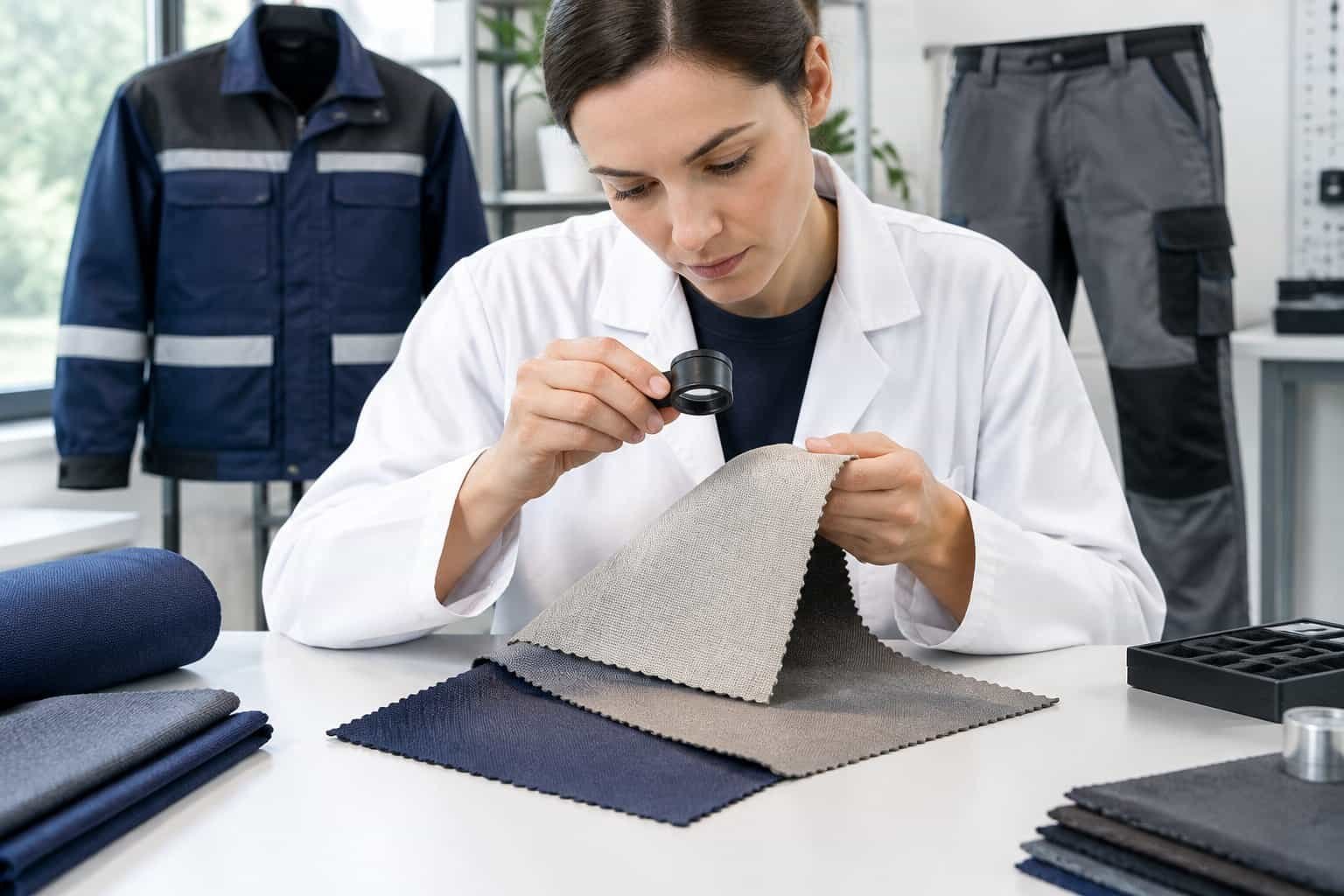
CVC fabric selection starts with an explicit cotton/polyester percentage and ends with approval of the finished textile for its intended workwear use. Construction and processing determine how that blend performs in service.
A CVC fabric manufacturer should receive measurable requirements for the base cloth, color and protective finish. The purchasing file should retain the approved sample, product-specific reports and agreed care procedure so that bulk acceptance follows the same specification.
Frequently Asked Questions
CVC purchasing questions center on suitability, processing and the evidence required before bulk approval.
Is CVC fabric suitable for industrial workwear?
CVC fabric suits industrial workwear when its finished properties meet the job’s requirements. Protective applications require the specified performance evidence for the selected construction and finishing route.
Is CVC fabric better than 100% cotton?
CVC offers polyester-assisted wrinkle recovery, while 100% cotton fabric provides greater moisture absorption at comparable construction. Selection should follow the required comfort properties and service conditions, with protective performance assessed separately.
Does a higher cotton percentage guarantee flame resistance?
A higher cotton percentage provides no guarantee of flame resistance. Both the treatment route and the finished fabric’s test results determine whether the specified flame-performance requirements are met.
Can CVC fabric shrink during industrial laundering?
CVC fabric can shrink during industrial laundering through fabric relaxation and exposure to heat. An agreed fabric shrinkage assessment should use the intended wash-and-dry procedure and measure both lengthwise and widthwise dimensional change.
What should I request from a CVC fabric manufacturer before ordering?
A buyer should request a complete specification, representative finished sample and relevant product-specific reports. Written care instructions and documented FR durability conditions should accompany the agreed bulk acceptance criteria.