
EN ISO 20471 applies to the visibility of flame-resistant workwear by setting requirements for fluorescent and retroreflective materials, their minimum areas, and their placement; flame resistance requires separate evidence against the relevant thermal-protection standard. Buyers sourcing protective clothing for overlapping hazards need both forms of evidence tied to the specified materials and finished garment.

Levitex manufactures flame-resistant textiles and offers fluorescent dyeing for industrial workwear applications. Its role sits at the material-production stage. The external garment maker remains responsible for converting those textiles into an assessed garment with the required visibility classification and thermal performance.
For procurement teams, the distinction affects purchasing documents: a fluorescent FR fabric report supports material selection, while garment conformity requires evidence covering the completed construction.
What Does High-Visibility Compliance Establish—and What Does It Not?
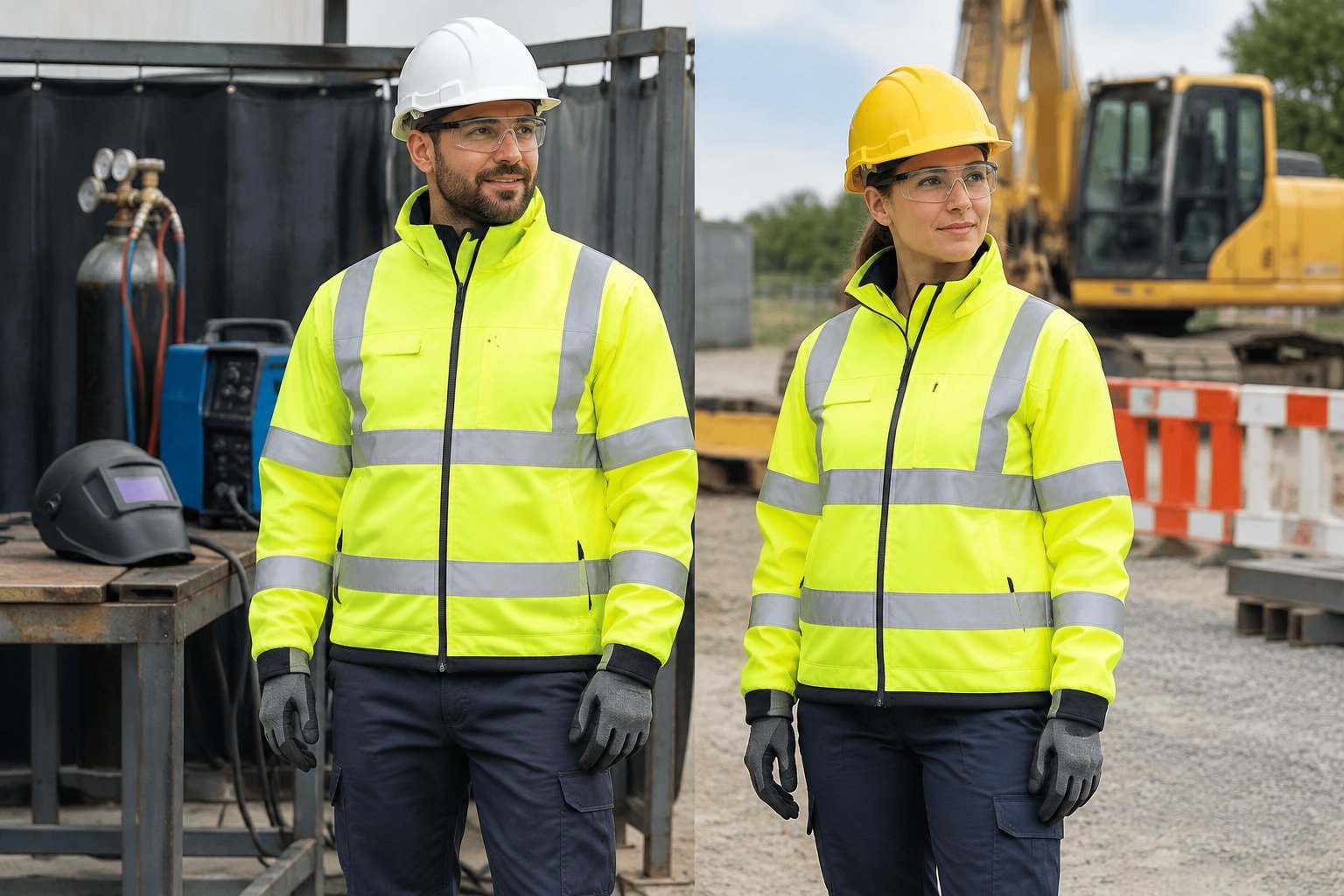
High-visibility compliance establishes the conspicuity performance of protective clothing within the standard’s defined conditions. Thermal protection follows its own assessment requirements.
Daylight Conspicuity and Visibility Under Headlights
EN ISO 20471 addresses high visibility clothing intended to signal the wearer’s presence to operators of vehicles or other mechanized equipment. Fluorescent background material supports daylight conspicuity, while retroreflective material returns incident light toward its source under headlights in darkness.
The standard includes requirements for material performance and garment design. High visibility warning clothing for high risk situations still relies on suitable illumination, unobstructed coverage, and correct use; it provides no guarantee that every operator will detect a wearer.
Why Flame Resistance Requires Separate Evidence
Visibility testing measures properties such as color and retroreflection. Thermal testing evaluates different behavior, including flame spread and other requirements selected for the exposure.
The relevant specification for flame-resistant clothing therefore needs a separately identified thermal standard. EN ISO 11611 addresses welding and allied processes, while EN ISO 11612 addresses specified heat and flame exposures. Electrical arc hazards require their own assessment and supporting evidence.
Which Published Edition and Amendments Apply?
ISO 20471:2013 remains the published international edition identified in ISO’s listing, with Amendment 1:2016. European procurement documents commonly identify the adopted version as EN ISO 20471:2013+A1:2016.
As of November 13, 2026, ISO/DIS 20471 is a draft revision under development. A draft designation does not replace the published standard. Purchasing documents should record the full applicable designation, and the conformity-assessment provider should verify publication status and any relevant transition arrangements before approval.
How Do Visibility Classes Apply to Finished Workwear?
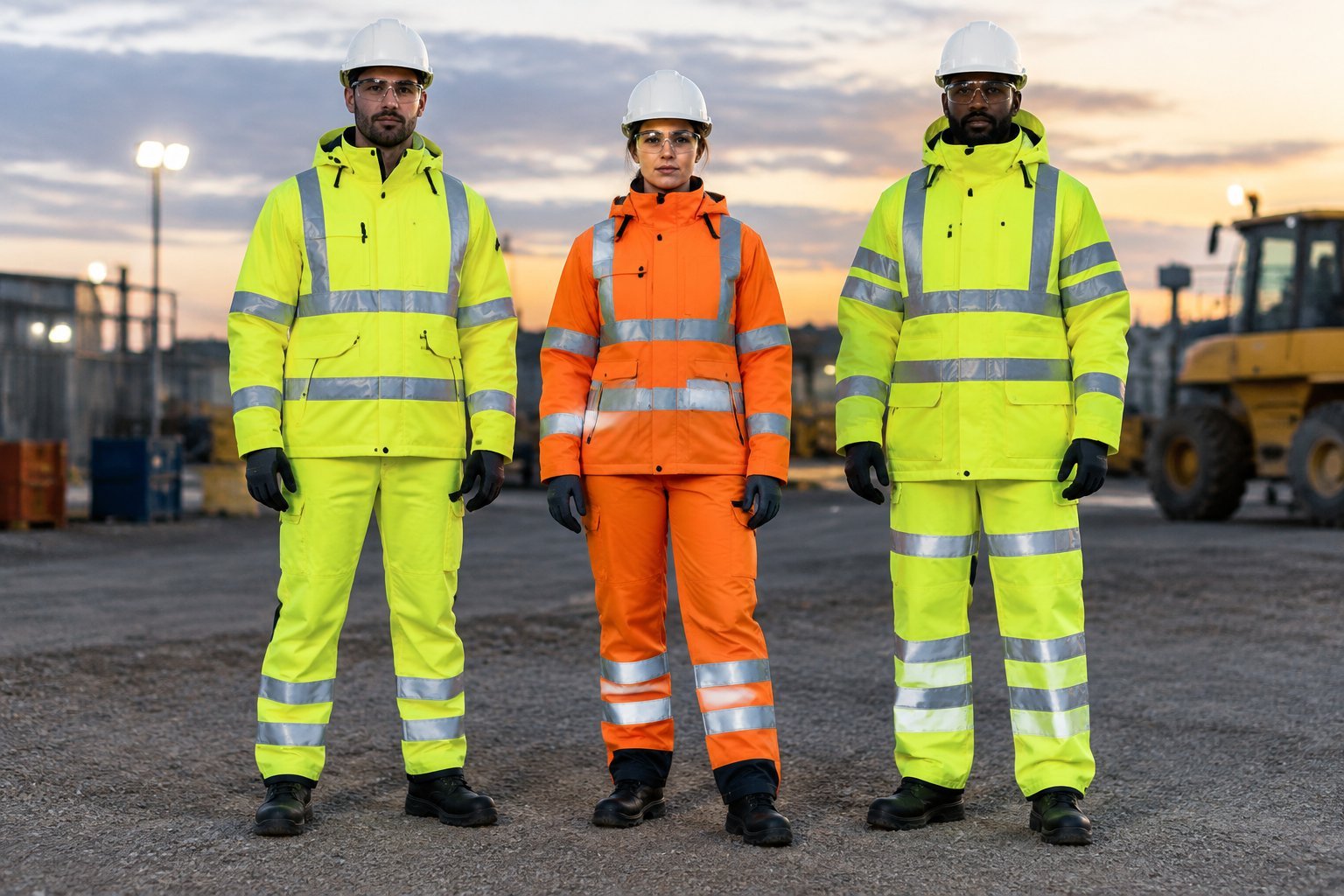
Visibility classes apply to the finished garment or assessed clothing ensemble through material areas and design requirements. Fabric performance forms one part of that PPE assessment.
Minimum Material Areas and Placement Determine Garment Classification
EN ISO 20471 defines three visibility classes. The following minimum areas describe the separate background-material and retroreflective-material route; they serve as general standard education, without establishing any Levitex product claim.
| Material requirement | Class 1 | Class 2 | Class 3 |
|---|---|---|---|
| Minimum background material | 0.14 m² | 0.50 m² | 0.80 m² |
| Minimum retroreflective material | 0.10 m² | 0.13 m² | 0.20 m² |
Placement requirements apply alongside these areas. Class 3 also requires the prescribed torso and limb coverage. A garment maker must assess the applicable design rules, including the smallest offered size and the configuration in which the clothing will be worn.
Why Fabric Approval Does Not Establish a Garment Class
Fabric testing establishes results for the submitted textile. Garment classification requires measurements of the exposed qualifying materials after cutting and assembly.
Dark contrast panels, pockets, and branding reduce available fluorescent area. Tape interruptions affect layout assessment. A jacket and trouser combination also needs documented assessment as an ensemble before a combined class claim is made; adding individual garment labels together provides insufficient evidence.
Selecting a Class Through Workplace Risk Assessment
The employer’s risk assessment should establish the necessary visibility level using traffic exposure, equipment movement, lighting, and task conditions. Garment selection must also account for other PPE that covers qualifying material during use.
For US workplaces, applicable ANSI/ISEA 107 requirements and employer specifications require separate attention. An EN ISO 20471 class does not automatically establish US conformity. International buyers should identify each destination-market requirement in the purchase specification.
What Evidence Does Fluorescent FR Fabric Need?
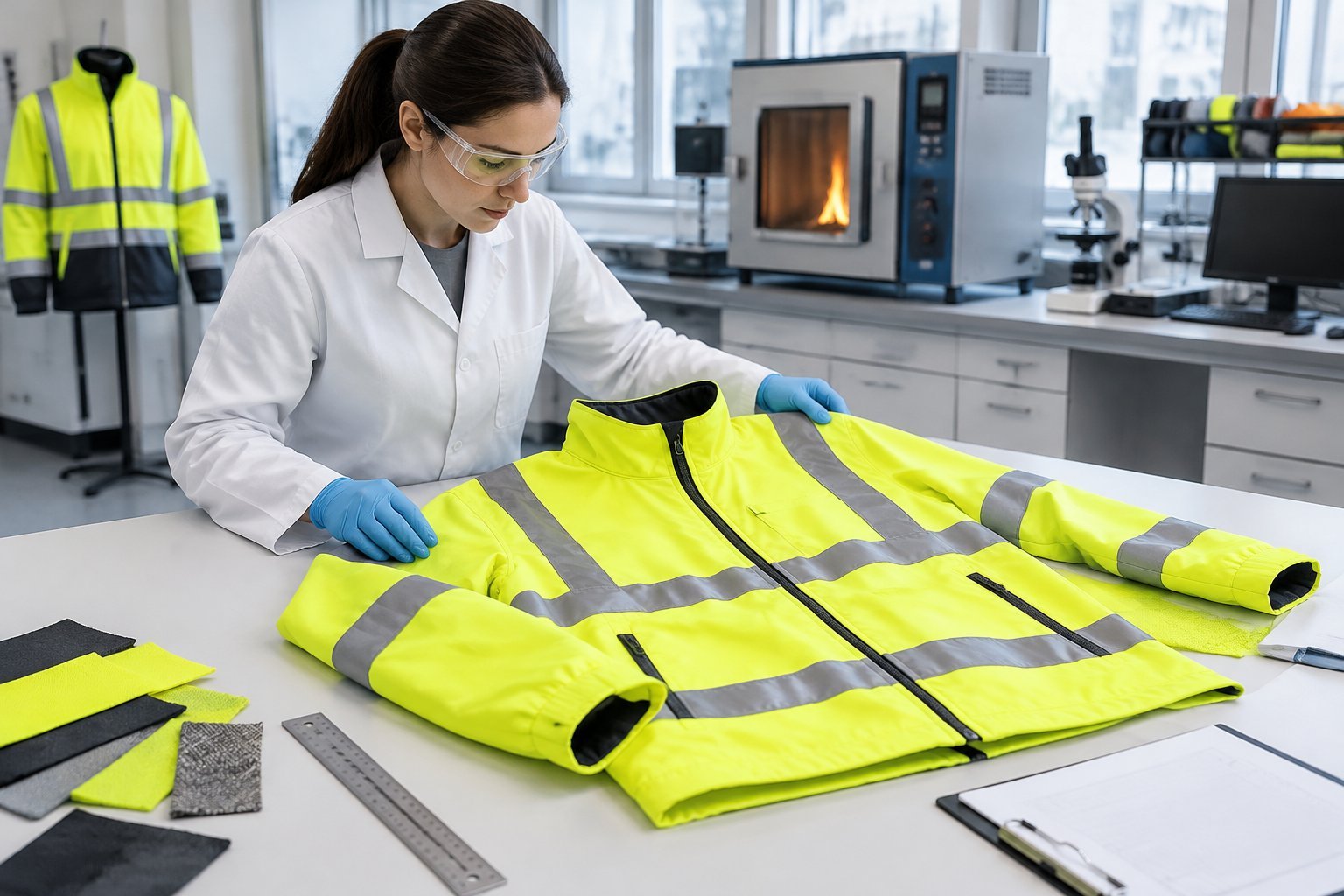
Fluorescent FR fabric needs visibility-related material evidence and separate thermal evidence for the finished textile. Both sets of results must match the proposed production specification.
Fluorescent Colour Performance Is Separate from Flame Resistance
Fluorescent background material is assessed through defined color coordinates and luminance-factor requirements. EN ISO 20471 recognizes specified fluorescent yellow, orange-red, and red color regions.
A textile’s bright appearance alone establishes no conformity. Laboratory testing of flame-retardant properties answers a separate question about thermal behavior. Procurement teams should identify the visibility and thermal methods individually, including the conditioning associated with each result.
How Dyeing and Finishing Affect the Finished Textile
Dye selection and processing affect fluorescent shade and brightness. Flame-retardant treatment and additional finishes alter the textile chemistry, so evidence needs to represent the intended finished production route.
Changes to fabric finishes require technical review before existing reports are carried forward. For example, a new repellent treatment introduces another formulation into the specification. The responsible laboratory or assessment provider should determine which properties require fresh testing after that change.
Why Composition and Weight Cannot Prove Conformity
Composition and fabric weight describe the textile; test results establish its assessed performance. Two fabrics with the same nominal blend and gsm still differ through construction, dye selection, and finishing conditions.
Levitex’s principal fabric families are 100% cotton, cotton/nylon (C/N), and cotton-rich cotton/polyester (CVC). Cotton requires flame-retardant treatment for the relevant FR application. Neither cotton content nor treatment terminology establishes fluorescent performance, a garment class, or a particular thermal protection level.
Who Verifies Tape, Trims, and Garment Construction?
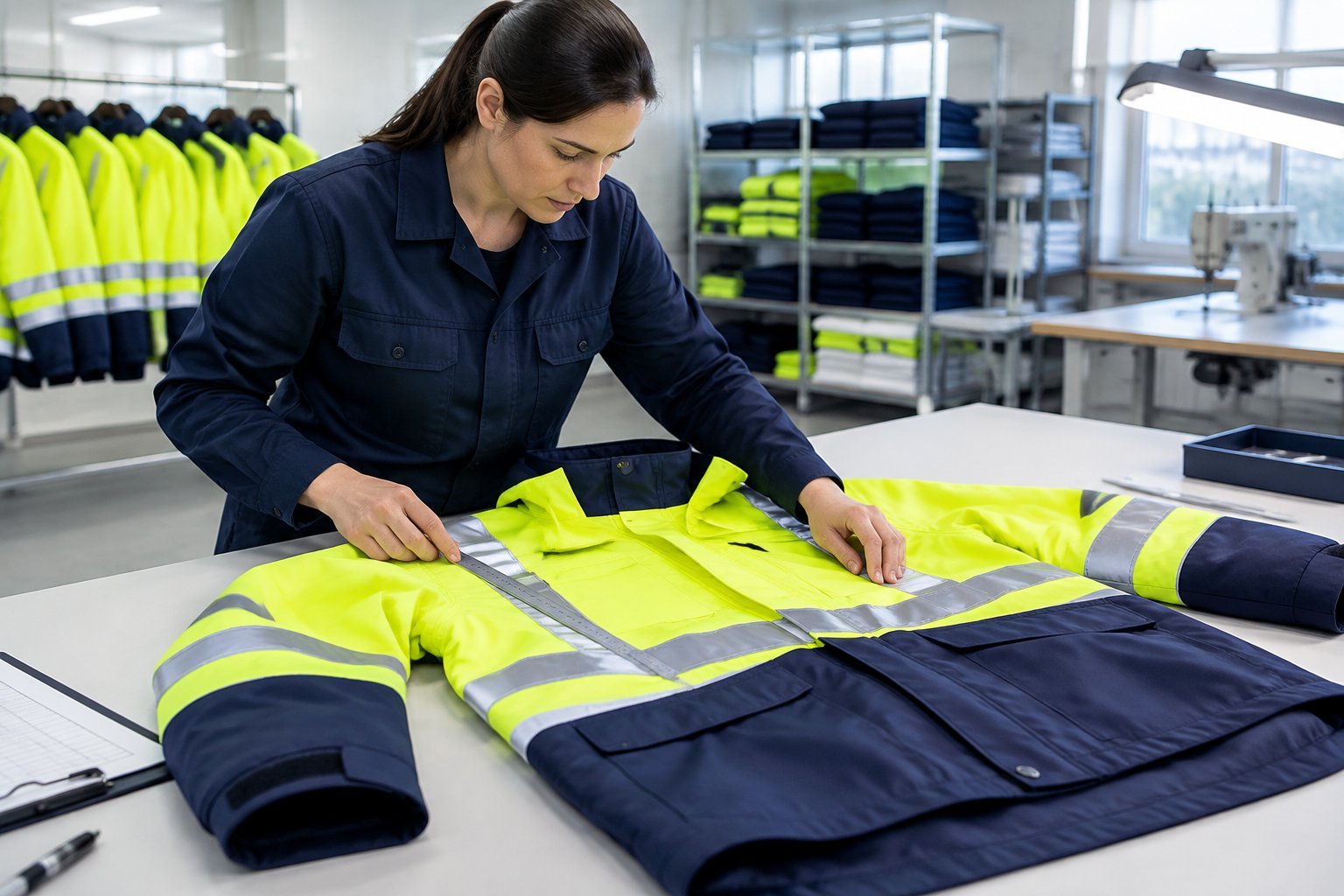
The external garment maker must verify component suitability and the completed construction, with the relevant testing and conformity-assessment providers. Levitex’s textile supply scope excludes tape application and garment assembly.
Retroreflective Performance and Thermal Suitability Are Different Questions
Retroreflection testing evaluates how effectively a material returns light under specified conditions. Thermal suitability addresses its behavior under the garment’s intended heat or flame exposure.
A tape supplier’s visibility report supports only the properties within that report’s scope. For welding protective clothing, the garment maker must also establish suitability against the applicable welding requirements. “FR reflective tape” remains a component description until the relevant evidence and assembly conditions are checked.
Why Sewn or Heat-Applied Tape Is Not a Compliance Shortcut
Sewn and heat-applied tape both require verification for the selected textile and care process. Each application method introduces its own production controls.
Sewn tape requires appropriate thread and seam construction. Heat-applied tape requires a compatible adhesive system and controlled application settings. Application heat and pressure also require review for their effects on the base fabric. Neither attachment method establishes garment conformity by itself.
What the External Garment Maker Must Verify After Assembly
After assembly, the garment maker must verify that the completed protective clothing satisfies the intended visibility and thermal requirements. Component approvals support that work, but their scope ends at the conditions they cover.
The garment-level review should address:
- Qualifying visible areas across the offered size range.
- Tape width, continuity, and placement.
- Seams, closures, labels, and other trims under the applicable thermal requirements.
- Performance after the declared cleaning process.
- Marking and instructions for the approved wearing configuration.
Any proposed logo or construction change should pass through the garment maker’s technical approval process before production release.
What Material Evidence Should Buyers Request from Levitex?
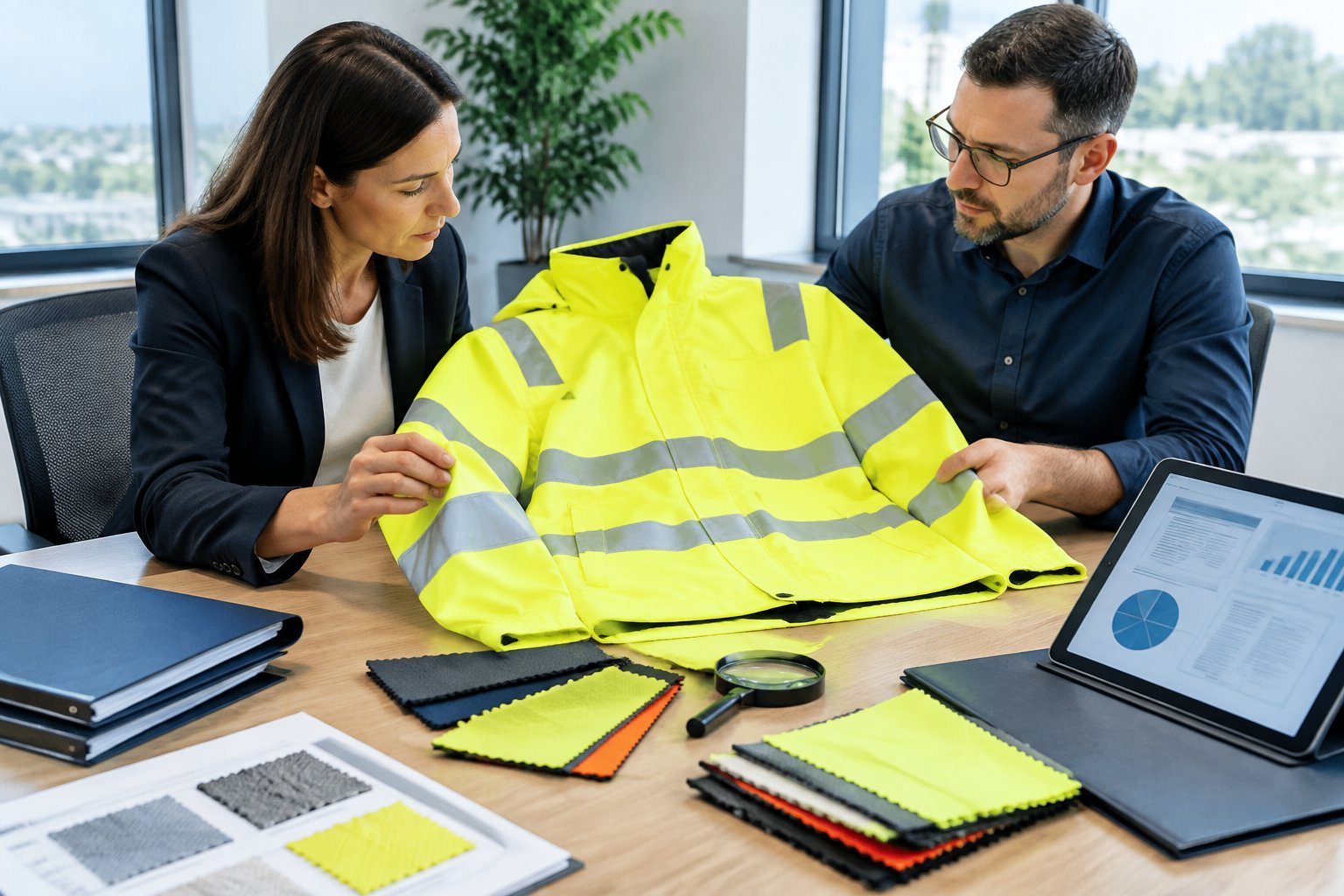
Buyers should request product-specific textile reports that match the intended fluorescent fabric and its processing specification. PPE procurement also needs a clear allocation of garment-level responsibilities.
Match Reports to the Exact Fabric, Colour, and Finish
A useful material-evidence checklist connects the quoted fabric to identifiable samples and reports. Broad category descriptions leave gaps between the tested specimen and the ordered material.
The buyer should request:
- Fabric reference and composition.
- Construction, nominal weight, and agreed tolerances.
- Exact fluorescent color reference.
- Flame-retardant finishing route and any additional finish.
- Report numbers, sample identifiers, and test dates.
- Applicable methods and reported results.
- Production-lot traceability arrangements.
These records support FR fabric quality control during sampling and bulk production. A report for one color or finish needs technical review before it supports another specification.
Check Test Scope, Conditioning, and Declared Care Conditions
Each report should state which properties were tested and how the sample was conditioned. A visibility-related material report and a flame test report serve different purposes within the evidence package.
Declared care conditions deserve particular attention. Washing flame-retardant fabrics involves temperature, chemistry, and mechanical action that affect textile performance. The buyer should compare the tested cleaning procedure with the intended laundry process and request the documented assessment period without assuming a universal wash life.
Separate Textile Evidence from Finished-Garment Documentation
Levitex’s product reports support the properties covered by their stated scope. A textile report supplies no finished-garment visibility class and establishes no conformity for a garment assembled by another company.
The external garment maker must provide the relevant garment documentation, including construction details and the approved marking. Buyers reviewing flame-retardant certification should distinguish laboratory results from product conformity documents and management-system certificates. Each document answers a different procurement question.
Define Levitex’s Fabric and Fluorescent Dyeing Scope in the RFQ
The RFQ should describe a textile order with measurable performance requirements. Levitex offers flame-retardant fabric manufacturing, wholesale supply, custom dyeing including fluorescent dyeing, and custom printing.
The request should identify the fabric family, color, construction, target weight, care process, applicable standards, and required material tests. Buyers should also name the external garment maker responsible for design and assembly.
Fluorescent/FR requirements, color references, care conditions, and requested tests can be sent to Sales Manager Charlie Luo at Charlie@levitex.com. Levitex supplies textiles; finished-garment manufacture, high-visibility design, and tape assembly remain outside its service scope.
Specify Visibility and Flame Resistance with Separate Evidence

EN ISO 20471 and the applicable thermal standard should appear as distinct requirements in the procurement specification. Material reports must match the ordered textile, while the garment assessment must cover the completed design and its declared care conditions.
An effective approval sequence starts with the exact fluorescent FR fabric, proceeds through component selection, and ends with the external garment maker’s conformity documentation. Levitex supports the textile-production stage through fabric manufacturing and fluorescent dyeing.
Before bulk release, the buyer should reconcile the fabric reference, color, finish, and care procedure across the material reports and garment technical file.
Frequently Asked Questions

The following answers clarify recurring scope questions in EN ISO 20471 procurement.
Does EN ISO 20471 mean workwear is flame resistant?
EN ISO 20471 establishes high-visibility requirements and provides no flame-resistance classification. Thermal protection requires separate evidence against the standard appropriate to the workplace exposure.
What is the difference between EN ISO 20471 and EN 471?
EN ISO 20471 succeeded EN 471 as the standard for high-visibility clothing. Legacy EN 471 documentation requires review against the applicable current specification before it supports a new procurement claim.
Can fluorescent fabric alone establish Class 3 compliance?
Fluorescent fabric alone provides insufficient evidence for Class 3 classification. The finished garment or assessed ensemble must satisfy the applicable material-area and design requirements, supported by the required material performance results.
Does adding flame-resistant reflective tape make a garment compliant?
Adding flame-resistant reflective tape provides one component toward a compliant construction. The garment still requires assessment of its full layout and thermal suitability, including attachment details and declared cleaning conditions.
Can Levitex supply finished high-visibility FR garments?
Levitex supplies flame-resistant textiles and offers fluorescent dyeing. External garment manufacturers handle finished high-visibility FR garment design, tape application, and assembly.