
GB 8965.1-2020 is China’s mandatory national standard for flame-retardant protective clothing within its scope; additional hazards require their own applicable requirements, with every designation and edition checked against official records. For industrial buyers, the purchasing goal is a textile specification that supports the required finished garment and its intended workplace exposure.
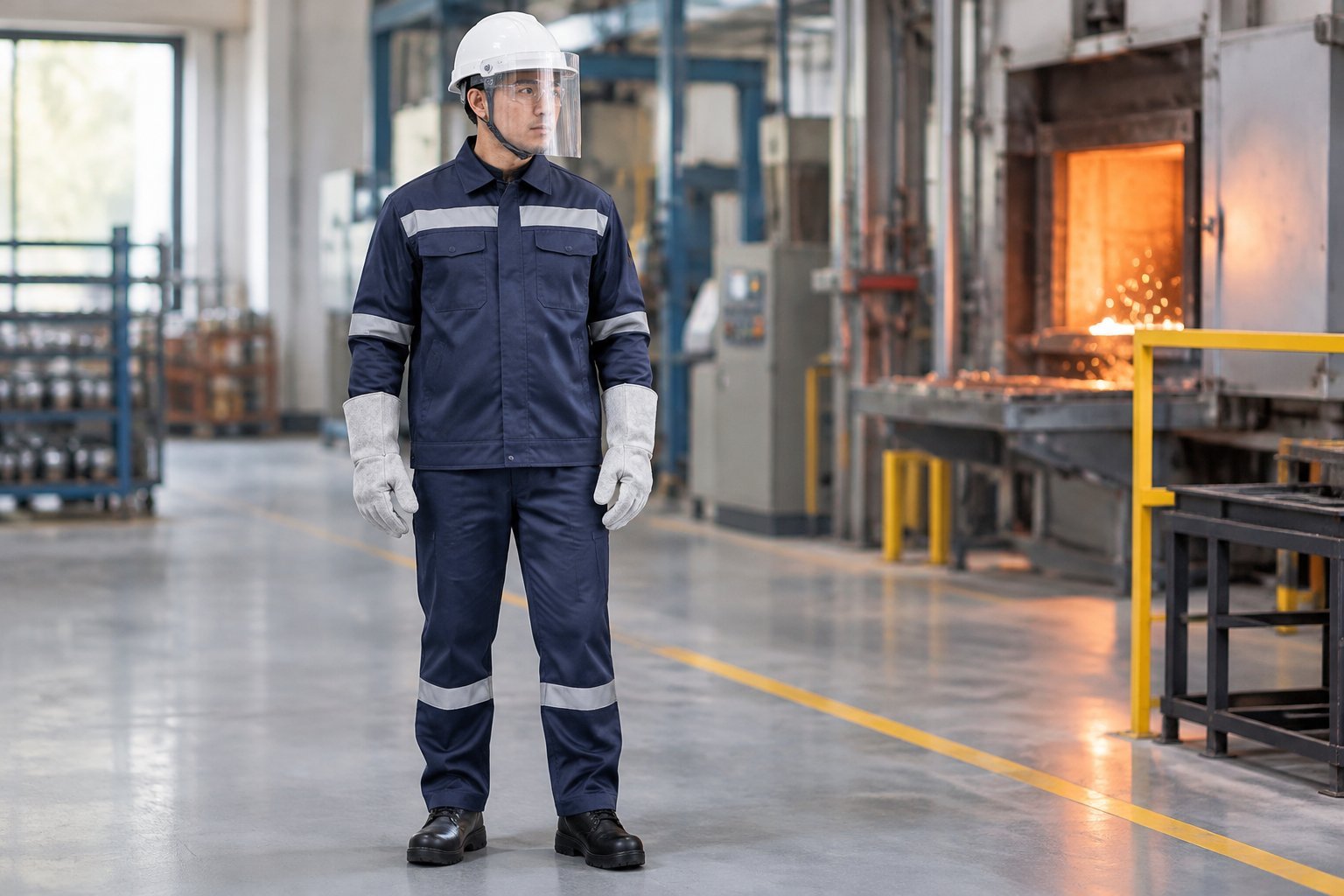
Levitex manufactures flame-resistant textiles for protective-workwear applications. Its role sits at the material stage, where fabric selection and product-specific evidence support the garment manufacturer’s separate conformity responsibilities.
For U.S. procurement teams sourcing for Chinese operations, the destination market and workplace requirements establish the compliance brief. A clear purchase specification identifies the applicable standard, required protection level, and evidence needed for both fabric and finished protective clothing.
Which Standards Apply to the Task and Hazards?
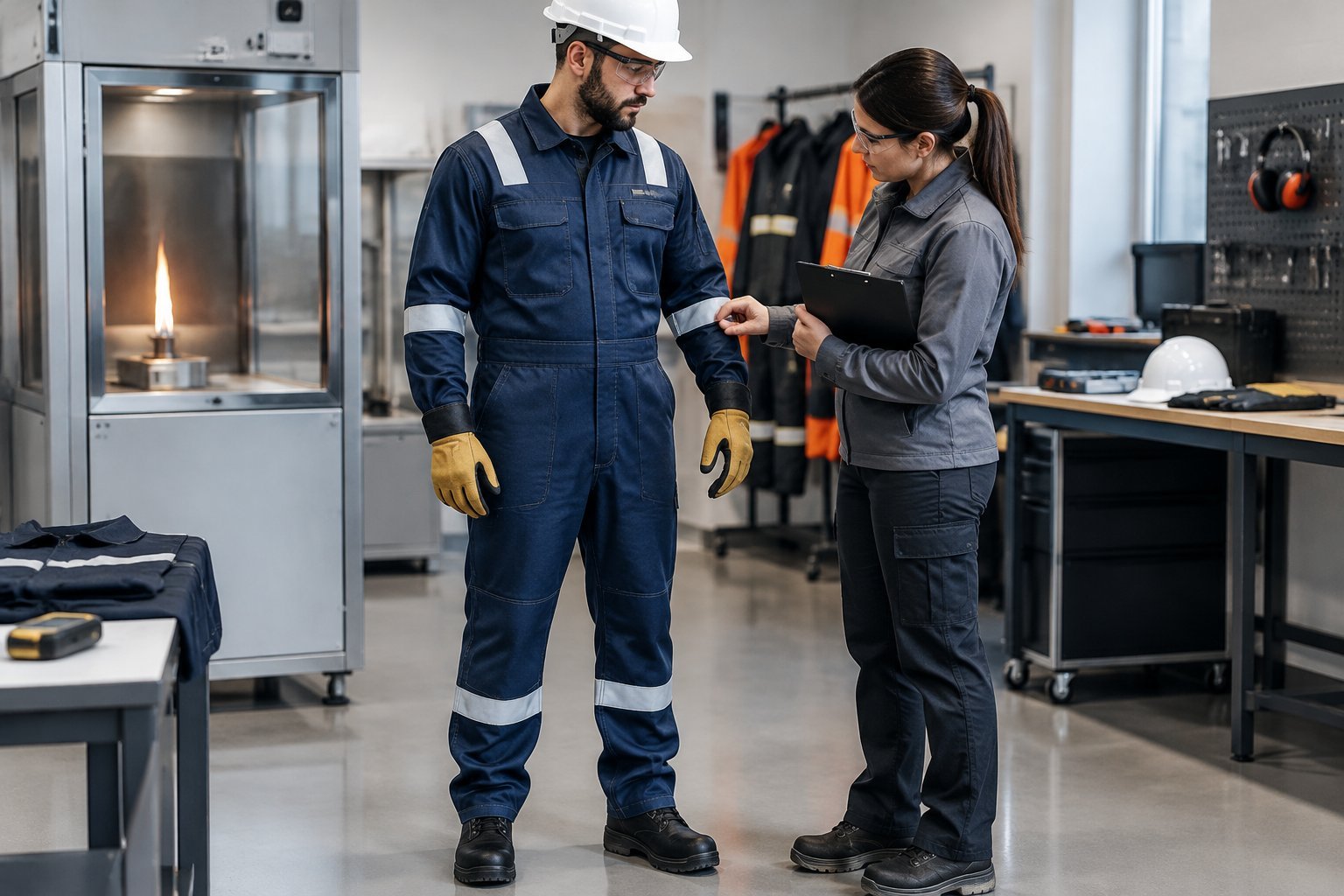
GB 8965.1 provides the starting point for flame-retardant clothing covered by its scope. The task assessment determines which additional protective requirements apply across the industry and workplace.
When Is a Flame-Retardant Clothing Standard Relevant?
A flame-retardant clothing standard becomes relevant when the workplace assessment identifies flame exposure and requires clothing with controlled burning behavior. The assessment should identify the exposure source and expected duration, together with any associated heat hazards.
The specification for flame-resistant clothing should connect those conditions to the applicable garment category. Specialized exposures, including firefighting or molten-metal handling, require a separate scope check before a general industrial clothing standard is selected.
When Do Anti-Static or Chemical Hazards Need Separate Requirements?
Electrostatic ignition risks and hazardous liquid contact introduce additional performance questions. The safety specification should identify the relevant current Chinese requirements for each hazard after checking their official titles and scope.
The distinction between chemical protective clothing levels is especially important where exposure includes pressurized spray or prolonged contact. Liquid repellency describes a different protective function from resistance to chemical permeation, and each requires suitable evidence.
Why Does Chinese Manufacture Not Establish GB Conformity?
Manufacturing location establishes product origin. Conformity requires evidence that the identified product meets the applicable requirements.
A Chinese factory might produce textiles for several export specifications, each with different acceptance criteria. Procurement documents therefore need an explicit GB requirement and a traceable evidence package for the ordered product, including the finished garment where required.
How Do You Verify the Applicable Edition and Scope?
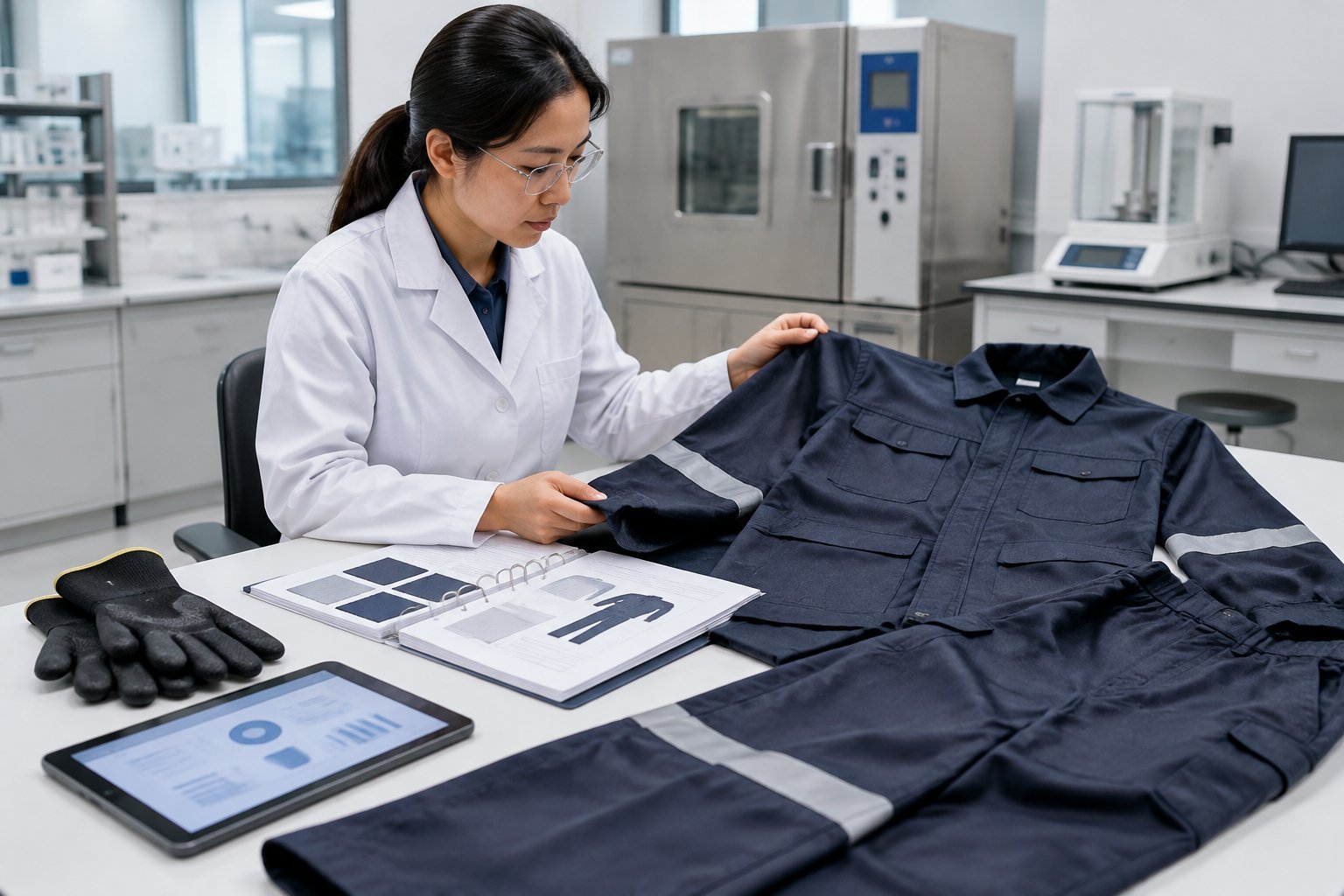
Verification starts with the official Chinese standard record and continues through the applicable standard text. The designation on a quotation should match the edition governing the order and its intended use.
Checking GB 8965.1-2020 Against Official Status and Replacement Notices
The official record identifies GB 8965.1-2020 as “Protective clothing, Flame retardant protective clothing” and lists its status as current. Its publication date is 2020-07-23, and its implementation date is 2021-08-01.
At specification approval, the buyer should check that record again for amendments or replacement notices. The procurement file should retain the date of the check and the implementation information supporting the selected edition.
Distinguishing Mandatory GB Requirements from Recommended GB/T Standards
A GB designation identifies a mandatory national standard. A GB/T designation identifies a recommended national standard, whose requirements also acquire contractual significance when incorporated into a purchase specification.
Recommended test methods also support assessments required by mandatory product standards. The specification should distinguish the clothing standard from its referenced methods and record the applicable editions according to the standard’s referencing rules.
Confirming Covered Products, Exclusions and Transition Dates
The scope clause establishes which protective clothing the standard covers. Procurement teams should read it alongside the definitions and exclusions before assigning the standard to a product.
A scope review should record:
- Intended workplace use and exposure.
- Covered garment category and construction.
- Required protective classification.
- Explicit exclusions.
- Implementation dates and any transition provisions.
Existing inventory and new production also need separate consideration where an official transition notice treats them differently.
What Must Be Verified at Fabric and Garment Levels?
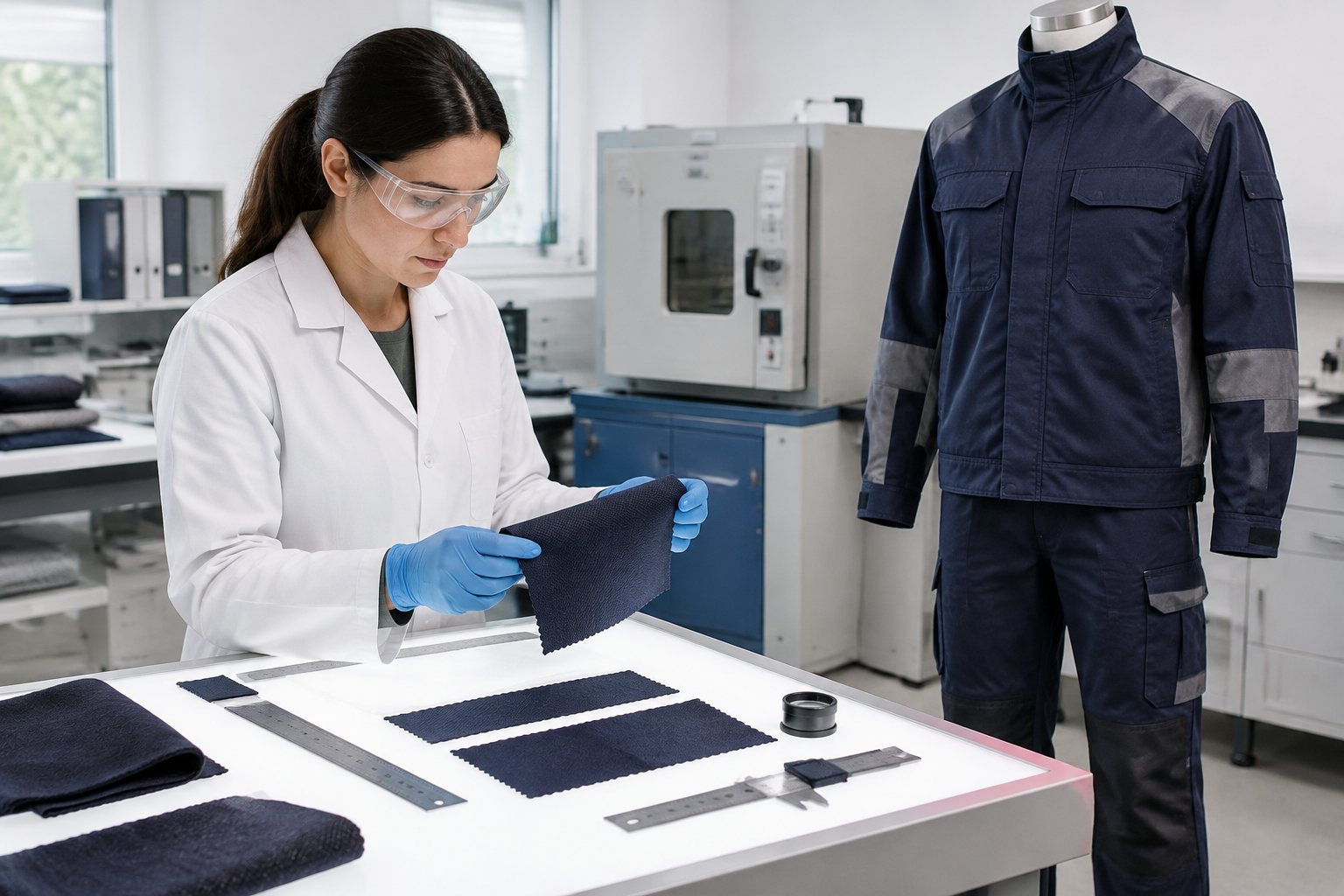
Verification must address the supplied textile and the completed protective clothing at their respective assessment levels. Fabric quality supports garment performance, while construction introduces additional requirements.
Flame Behaviour, Conditioning and Laundering Requirements
Flame testing evaluates specified behavior under controlled exposure. Relevant observations include afterflame, afterglow, damaged length, and melting or dripping where the applicable method requires them.
A report documenting flame-retardant fabric testing should identify sample preparation and conditioning. Results also need a clear relationship to the laundering procedure and pretreatment required by the governing standard.
The purchase specification should reproduce the applicable acceptance criteria from the authorized text. A supplier’s general statement that a finish is “durable” leaves the wash procedure and post-treatment performance undefined.
Tear Strength, Other Physical Properties and Applicable Test Methods
Tear strength measures resistance to the propagation of a tear under a defined method. Breaking strength evaluates a different loading condition, so each result needs its own method and acceptance criterion.
Construction determines which physical tests apply. Woven and knitted fabrics require appropriate assessment routes, and FR fabric quality control should also address dimensional stability and other specified properties.
Reports should state test direction where applicable, units, and sample condition. An isolated strength number provides little purchasing value without those details.
Garment Construction, Components and Whole-Garment Assessments
The finished garment introduces seams and components that affect protection. Closures, pocket arrangements, and exposed trims require assessment under the applicable clothing requirements.
The garment manufacturer should also address coverage during movement and any required whole-garment exposure assessment. Where reflective materials are included, high-visibility flame-resistant workwear needs evidence relevant to the combined assembly.
These responsibilities belong in the garment procurement brief. Levitex supplies textiles and does not provide finished-garment design or assembly services.
Why a Material Test Report Does Not Prove Garment Conformity
A material report establishes results for the submitted textile within the report’s scope. Garment conformity requires additional evidence covering the finished product and applicable construction requirements.
A report for an outer fabric does not assess an untested lining or closure. Procurement teams should connect material reports to the garment bill of materials and check that the evaluated assembly matches the ordered product.
Can EN or NFPA Evidence Satisfy a GB Specification?
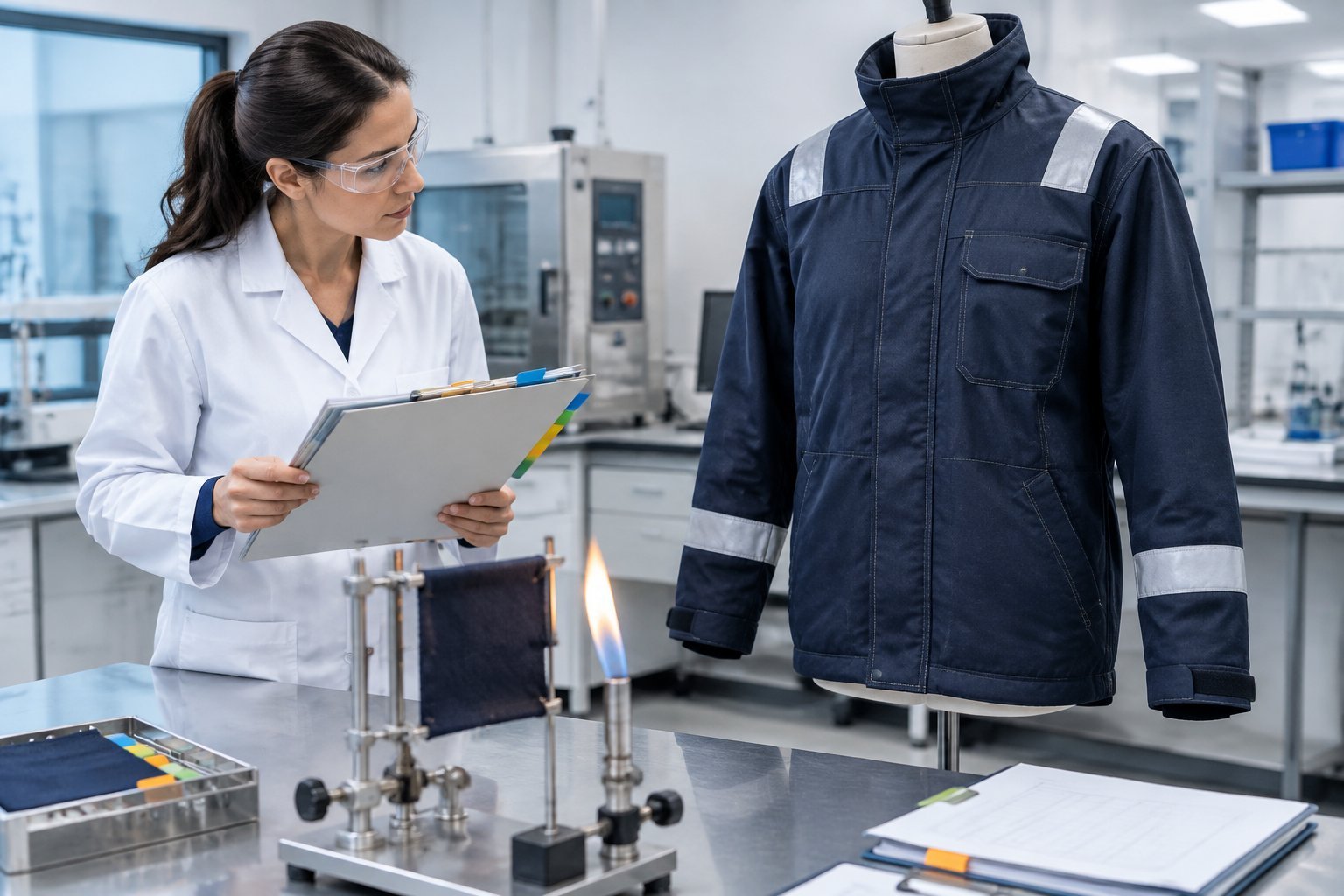
EN or NFPA evidence supports technical review, but acceptance against a GB specification requires a requirement-by-requirement assessment. Shared terminology does not establish equivalent test conditions or conformity.
Comparing Scope and Test Methods Without Claiming Equivalence
The comparison should begin with intended use and product coverage. It should then examine specimen preparation, exposure conditions, measured outcomes, and acceptance rules.
Differences between EN ISO 11612 and NFPA 2112 illustrate why a standard name alone provides insufficient evidence for another specification. GB 8965.1-2020 also needs assessment against its own clauses and referenced methods.
A clause matrix should identify every requirement and the evidence proposed to satisfy it. The responsible conformity assessor should document whether each existing result is acceptable.
Identifying Additional Evidence for a Chinese-Market Requirement
A gap assessment identifies the additional testing or documentation needed for the Chinese-market requirement. It should distinguish missing tests from reports that use different preparation or assessment conditions.
The buyer should agree the evidence plan with the garment supplier and qualified testing body before production. That plan should specify the product configuration to be evaluated and the documents required for acceptance.
How Can Levitex Support the Textile Specification?

Levitex supports the material specification through flame-retardant fabric manufacturing and customization for industrial workwear. Its textile offering includes 100% cotton, cotton/nylon (C/N), and cotton-rich cotton/polyester (CVC).
Defining Cotton, Cotton/Nylon or CVC Fabric Requirements
A usable specification identifies the fiber composition and permitted tolerance. It also defines finished weight and width, together with the required construction.
The selection between CVC fabric and 100% cotton should account for the application and product-specific results. Composition or weight alone establishes no GB protective classification.
Levitex’s monthly production capacity includes 1.5 million meters dedicated specifically to flame-retardant fabrics. Order acceptance still requires agreement on the individual textile specification.
Specifying Woven or Knitted Construction and Custom Finishes
Levitex manufactures woven FR fabrics and flame-resistant knitted fabrics within its stated composition families. The construction needs to appear explicitly in the order because knitting changes the fabric structure and relevant assessment needs.
Custom dyeing and printing are available. FR plus water-repellent and FR plus oil-repellent finishing are offered on all three base-fabric families.
The specification should address multi-functional FR finishing compatibility for the final combination. The ordered color and finish package should match the product configuration covered by the supporting evidence.
Requesting Product-Specific Evidence Without Assuming Tested Protection
Levitex provides a test report for each product. The buyer should request the relevant report and check its methods and scope against the intended specification.
A general product report does not establish dedicated arc protection, molten-metal splash performance, or finished-garment conformity. Additional performance claims require corresponding product-specific evidence.
For textile specification review, buyers are invited to send the exact GB or GB/T designation, edition, required performance, and textile specifications to Charlie@levitex.com. The request should include composition, construction, finished weight, width, color, and required finishes.
Which Official Sources and Documents Should Buyers Check?

The purchasing file should connect official requirements to identifiable test reports and the supplied garment. That connection supports quality review and makes discrepancies easier to resolve before shipment.
Official Chinese Standard Records and the Applicable Standard Text
The National Public Service Platform for Standards Information and the official national standards full-text disclosure platform provide starting points for checking Chinese standard records. SAMR and SAC notices should also be checked for relevant updates.
The document checklist should include:
- Official record for the exact designation and edition.
- Applicable standard text obtained through an authorized channel.
- Amendments or replacement notices.
- Implementation and transition information.
- Referenced test methods required for the assessment.
Translated copies should be checked for completeness. A commercial summary provides orientation but leaves the governing clauses to the applicable standard text.
Report Identity, Test Scope, Conditioning and Product Traceability
Each report should identify the laboratory and report number, along with the tested sample and issue date. Its scope needs to show the methods used and the conditions under which the results were obtained.
The quality review should then connect the sample to production records:
- Supplier article or fabric reference.
- Composition and construction.
- Finished weight and relevant finish description.
- Color and batch information where relevant.
- Pretreatment and laundering details.
- Results against the specified acceptance criteria.
A report bearing a similar product description requires further checking before it is assigned to a different production batch or finish combination.
Garment-Level Evidence and Any Applicable Market-Access Documentation
The garment evidence file should identify the assessed model and its material configuration. It should also include construction assessments and any required whole-garment results.
Documentation described as flame-retardant certification needs checking for issuer, validity, and covered products. Any applicable market-access documentation should be confirmed with the Chinese-market compliance owner.
Labels and user instructions should correspond to the assessed product. The handover file should assign responsibility for keeping those documents aligned with later material or construction changes.
Match the Specification to Verified Scope and Evidence
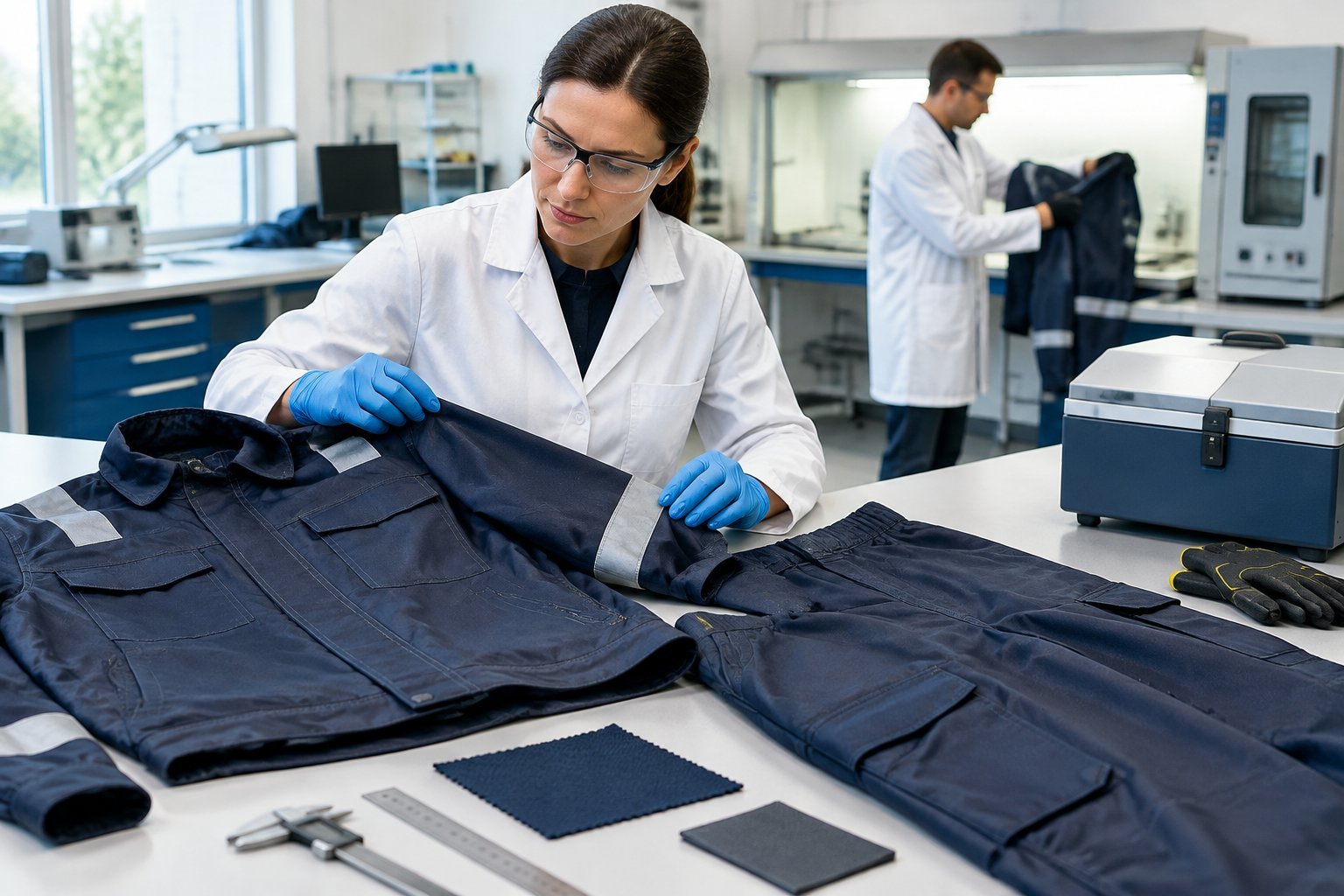
A reliable specification links the workplace hazard to the applicable Chinese standard and the evidence for the ordered protective clothing. GB 8965.1-2020 is the flame-retardant clothing reference to verify against official status and scope, with separate requirements assigned to additional hazards.
The acceptance file should distinguish textile results from garment assessments. Before production approval, procurement teams should resolve missing evidence and confirm that the specified fabric, finishes, and garment configuration match the evaluated product.
Frequently Asked Questions
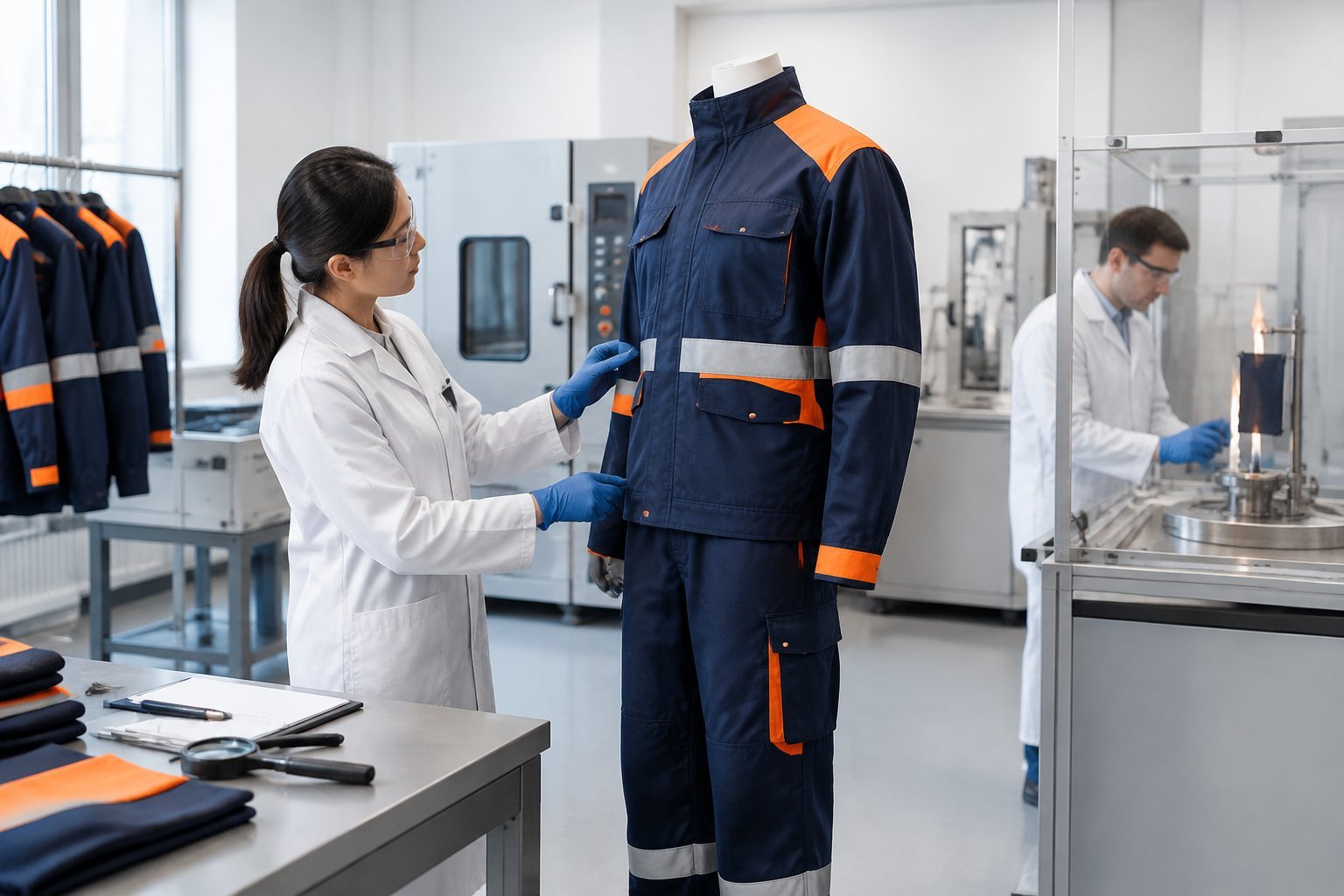
Official status checks and product-specific documents provide the basis for resolving common purchasing questions. Each answer should be applied to the intended garment and destination market.
How can I check whether GB 8965.1-2020 is still current?
The official Chinese national standards record provides the status of GB 8965.1-2020 and associated implementation information. Procurement teams should also check replacement notices and retain a dated record of that verification.
What specifications should I request for GB-compliant flame-retardant clothing?
The request should identify the exact standard and edition, required classification, intended exposure, and finished garment configuration. It should also define textile properties, applicable pretreatment, and the material- and garment-level evidence required for acceptance.
What is the difference between GB and GB/T standards?
GB identifies a mandatory national standard, while GB/T identifies a recommended national standard. A GB/T method referenced by an applicable mandatory requirement or incorporated into a contract forms part of that assessment or contractual obligation.
Is 100% cotton automatically flame resistant?
Untreated 100% cotton is combustible. Suitable flame-retardant treatment of cotton requires product-specific testing to establish performance under the applicable preparation and exposure conditions.
Does a fabric test report establish compliance for the finished garment?
A fabric report establishes results for the tested material within its stated scope. Finished-garment compliance requires evidence addressing applicable construction requirements and the evaluated assembly, including its components.