The EN standards for FR workwear match hazards as follows: EN ISO 11611 covers welding, EN ISO 11612 covers heat and flame, EN 1149-5 addresses electrostatic discharge, EN 13034 covers limited liquid-chemical splash, EN 343 addresses rain, and EN ISO 20471 covers high visibility. Procurement teams need material evidence for the selected FR fabric and garment-level evidence for the finished personal protective equipment (PPE).
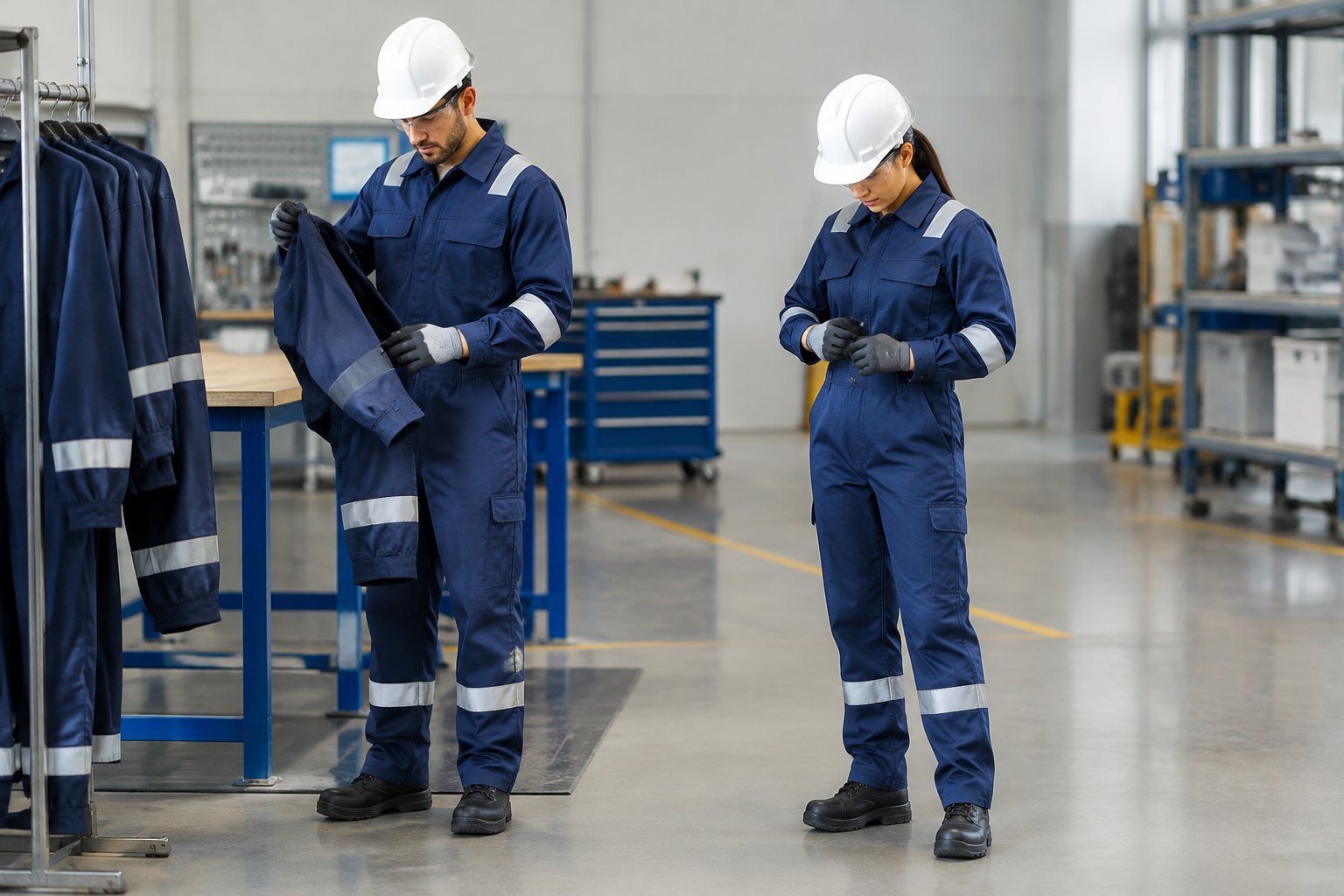
A risk assessment establishes which protections a job requires and whether several hazards occur together. For international buyers, that assessment also connects European specifications with requirements at the destination workplace, including US electrical-safety or flash-fire requirements.
Levitex manufactures flame-resistant workwear textiles, with 1.5 million meters dedicated to flame-retardant fabrics within its monthly production capacity. Its role is textile production; finished-garment conformity remains a separate responsibility involving the garment manufacturer and the applicable assessment process.
Which Standard Matches Each Workplace Hazard?
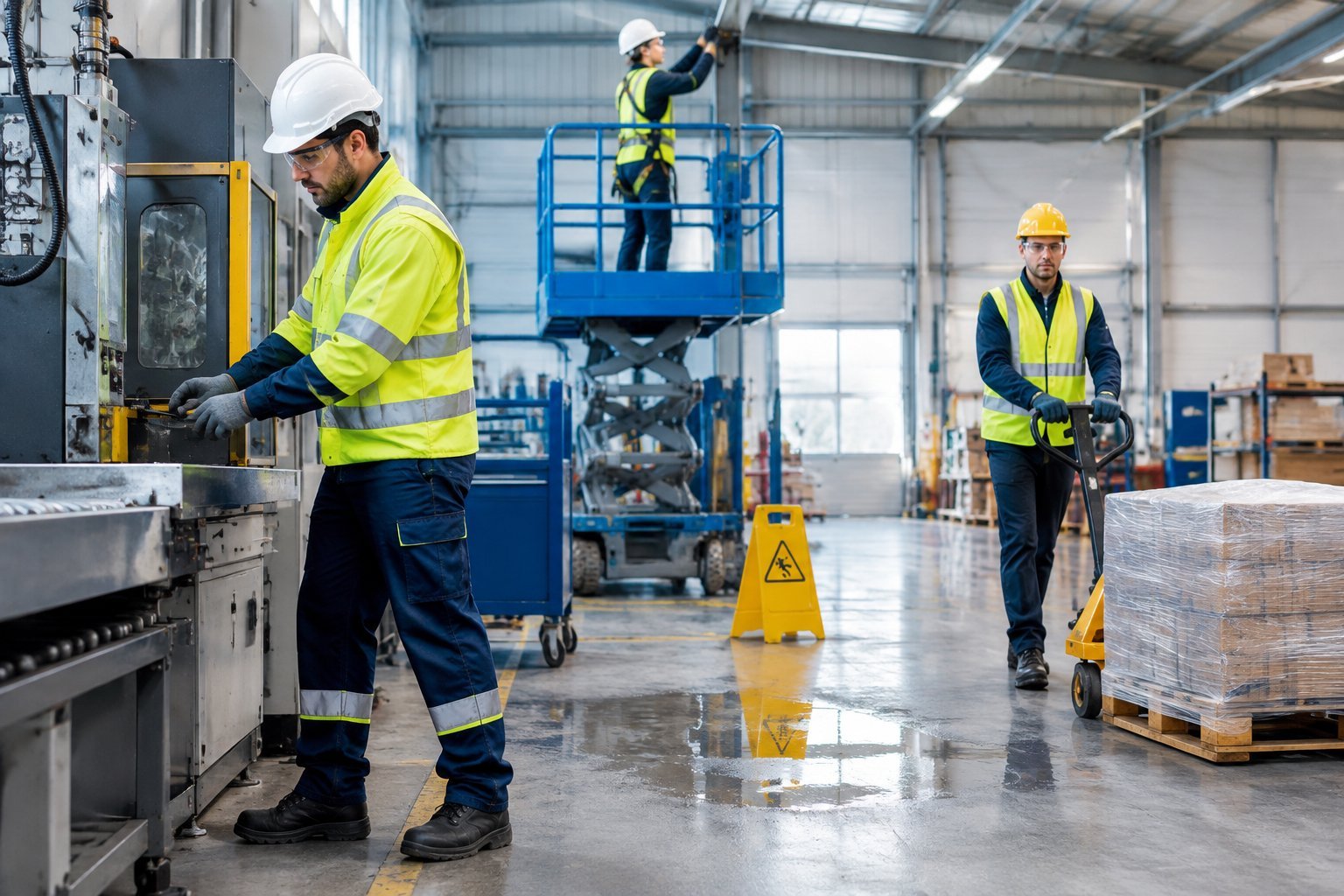
Each standard addresses a defined exposure, and purchasing specifications should connect that exposure to supporting textile and garment evidence. The following matrix separates the principal workwear standards without treating their protection claims as interchangeable.
| Workplace hazard | Relevant standard | Evidence buyers should request |
|---|---|---|
| Welding spatter and associated radiant heat | EN ISO 11611 | Material results and garment scope appropriate to the welding task |
| Industrial heat and flame | EN ISO 11612 | Relevant heat-performance results and finished-garment documentation |
| Incendive electrostatic discharge | EN 1149-5 | Supporting electrostatic tests, garment design evidence and grounding instructions |
| Limited liquid-chemical splash | EN 13034 | Chemical-specific material results and declared Type 6 or PB[6] garment scope |
| Rain exposure | EN 343 | Water-penetration and water-vapor-resistance evidence, including relevant seams |
| Visibility in daylight and vehicle headlights | EN ISO 20471 | Background and retroreflective material results, garment layout and minimum areas |
EN ISO 11611 and EN ISO 11612: Welding vs. Heat and Flame
EN ISO 11611 addresses protective clothing for welding and allied processes. Its scope reflects welding exposures such as small molten-metal droplets and radiant heat from an arc. Selection requires the welding process and working conditions to be identified.
EN ISO 11612 addresses heat and flame protection across several industrial exposures. Its declared performance identifies the thermal protection evaluated, including specific heat-transfer mechanisms and certain molten-metal splashes. The EN ISO 11612 performance codes identify those individual claims.
A reference to ISO 11611 or ISO 11612 in a textile report requires an edition and scope check against the requested EN adoption. A welding result establishes protection within its declared scope; foundry splash protection requires dedicated evidence for the relevant exposure.
EN 1149-5 and EN 13034: Static Discharge and Limited Chemical Splash
EN 1149-5 specifies material performance and design requirements for electrostatic-dissipative protective clothing used as part of an earthed system. Supporting tests address electrostatic properties, while the complete application includes suitable footwear and flooring. This protection addresses ignition risk from electrostatic discharge; electrical insulation requires separate assessment.
EN 13034 addresses limited protection against liquid chemicals. Material testing identifies performance against specified test liquids, while the finished product’s scope distinguishes full-body Type 6 clothing from partial-body PB[6] protection.
The distinctions between chemical protective clothing levels become important when exposure involves sustained contact or pressurized liquid. Chemical repellency describes liquid shedding; a barrier-protection claim requires its own evidence.
EN 343 and EN ISO 20471: Rain Protection and Visibility
EN 343 concerns protection against rain, including resistance to water penetration and water-vapor resistance. Finished rainwear also depends on seams and closures. A water-repellent surface finish alone provides insufficient evidence for an EN 343 garment claim.
EN ISO 20471 addresses high-visibility clothing through material performance and garment design. Fluorescent background cloth contributes daytime conspicuity, while retroreflective material supports visibility under directed illumination. Garment classification also depends on the required visible areas.
For high-visibility flame-resistant workwear, reflective components and attachment methods must preserve the claimed thermal performance. EN 343 and EN 13034 apply independently within their scopes; a heat-and-flame requirement is added when the risk assessment identifies that exposure.
Which Protection Claims Need Separate Evidence?

Electric arc protection and flash-fire protection require dedicated evidence beyond a limited-flame-spread result. Their test methods evaluate different exposures, and each claim must match the intended garment or clothing system.
Why Limited Flame Spread Does Not Establish Arc or Flash-Fire Protection
EN ISO 14116 addresses limited flame spread in materials, assemblies and protective clothing. It evaluates burning behavior under specified conditions. Its scope provides no arc rating or industrial flash-fire garment certification.
An electric arc produces intense thermal energy over a short exposure. An industrial flash fire presents a different thermal environment and requires its own performance assessment.
The difference between AR and FR clothing therefore affects purchasing language. “FR” describes flame resistance broadly; “arc-rated” requires documented arc-test performance. Neither fabric composition nor a flame-spread result supplies the missing arc evidence.
Where IEC 61482-2, NFPA 2112 and US Electrical References Fit
IEC 61482-2 establishes requirements for clothing against the thermal hazards of an electric arc. The IEC 61482 test framework includes open-arc and box-test approaches. Their results use different reporting systems and require interpretation against the electrical risk assessment.
Open-arc documentation includes quantities such as ATPV (arc thermal performance value) or EBT (breakopen threshold energy), expressed in cal/cm². Box-test classifications have a separate basis. A purchasing team should retain the reported method and result without converting one system into the other.
NFPA 2112 addresses industrial short-duration thermal exposures from fire. Comparisons of EN ISO 11612 and NFPA 2112 must preserve their distinct testing and certification requirements.
For US workplaces, NFPA 70E addresses electrical safety practices and PPE selection. ASTM F1506 addresses flame-resistant and electric arc-rated protective clothing performance. The electrical-safety assessment establishes the required protection for the task.
Why Multiple Hazards Require Compatible, Independently Supported Claims
Multi-hazard clothing needs evidence for every claimed function on the specified construction. A protective rain layer changes the clothing assembly, and reflective trim adds components whose behavior requires assessment.
Arc-rated clothing also forms part of a wider PPE system. Head and face protection, gloves, and safety footwear have separate selection requirements. Clothing evidence addresses its declared thermal scope; other electrical hazards require appropriate controls and equipment.
Compatibility extends to underlayers, closures and repairs. If a garment’s material or component changes, the responsible manufacturer must assess the effect on existing results and conformity documentation.
What Must Buyers Verify at Fabric and Garment Level?
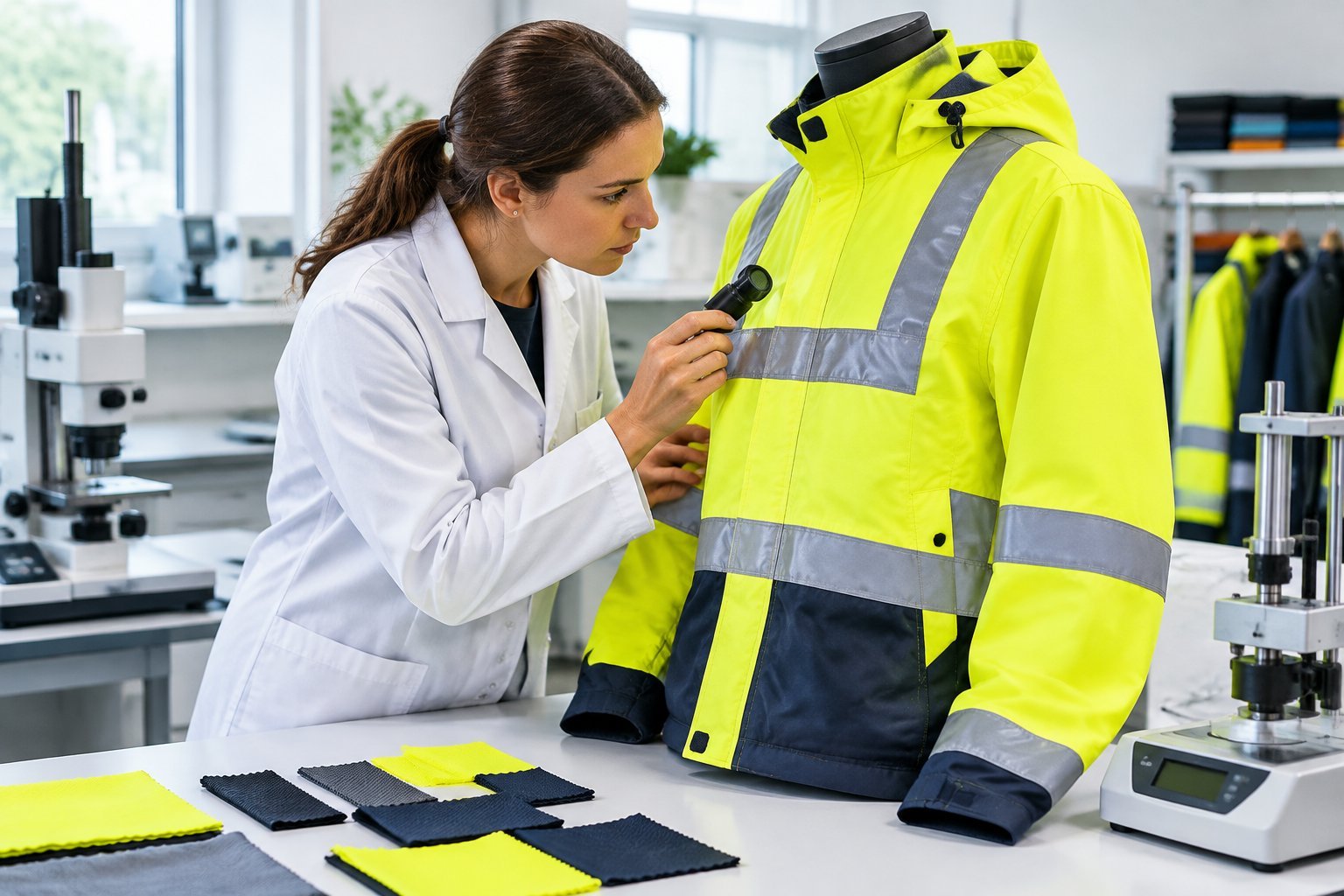
Buyers need a traceable connection between the ordered textile, its test reports and the finished garment’s conformity documents. Each document should identify the product and conditions covered by its claims.
Separate Textile Test Reports From Garment Conformity and CE Marking
A textile report establishes results for the submitted material or assembly under stated test conditions. Finished flame-resistant garments introduce construction features that require their own evaluation, including seams, coverage and closures.
For PPE placed on the EU market, Regulation (EU) 2016/425 establishes the applicable conformity framework. CE marking belongs to the finished PPE’s conformity process, supported by documentation such as the EU declaration of conformity and the required notified-body involvement.
A fabric supplier’s report supports that process within its scope. FR coveralls still require the finished-product manufacturer’s assessment and documentation. For US use, CE marking also requires consideration alongside applicable workplace requirements.
Check the Applicable Edition, Product Scope and Care Conditions
The applicable edition should be checked against the procurement specification, current standards-body records and, for EU claims, the relevant harmonized-standard listing. An international publication date alone does not establish the applicable European adoption or its harmonization status.
Document review should cover:
- Exact standard designation, edition and amendments.
- Fabric or garment identifier and construction.
- Declared performance and exclusions.
- Pretreatment, laundering and conditioning used before testing.
- Approved care instructions and repair restrictions.
- Links between production batches and supporting reports.
Reliable FR fabric quality control preserves this identification through production and delivery. A laboratory report alone also provides insufficient evidence of factory ownership or manufacturing capacity.
Treated FR fabric and inherent FR fabric both require product-specific evidence. Inherent systems include certain modacrylic blends, while treated systems obtain flame resistance through finishing. Neither description establishes a universal service life.
Moisture management and air permeability support wearability during industrial work. Those comfort properties belong alongside protection requirements, with care conditions maintained throughout use.
Specify Levitex Textiles Without Assuming Untested Protection
Levitex supplies flame retardant fabric in 100% cotton, cotton/nylon (C/N), and cotton-rich cotton/polyester (CVC) families. Its capabilities include woven and knitted constructions, custom printing and custom dyeing, including fluorescent dyeing.
FR plus water-repellent and FR plus oil-repellent finishing are available across all three base-fabric families. Selection should identify the intended finish combination and request product-specific evidence for the resulting textile. Multi-functional FR finishing compatibility requires assessment of the combined formulation and construction.
Levitex also produces chemical-repellent fabrics through post-treatment finishing on those base families. These fabrics provide chemical-liquid repellency; barrier-based chemical-resistant protection requires different evidence.
Each product has a test report, and buyers should establish the methods and scope relevant to the order. Levitex supplies textiles and fluorescent dyeing services; garment design and assembly belong to the downstream manufacturer. Dedicated arc performance and molten-metal protection require specific supporting reports before either claim enters a specification.
Match Each Hazard to Verified Textile and Garment Evidence
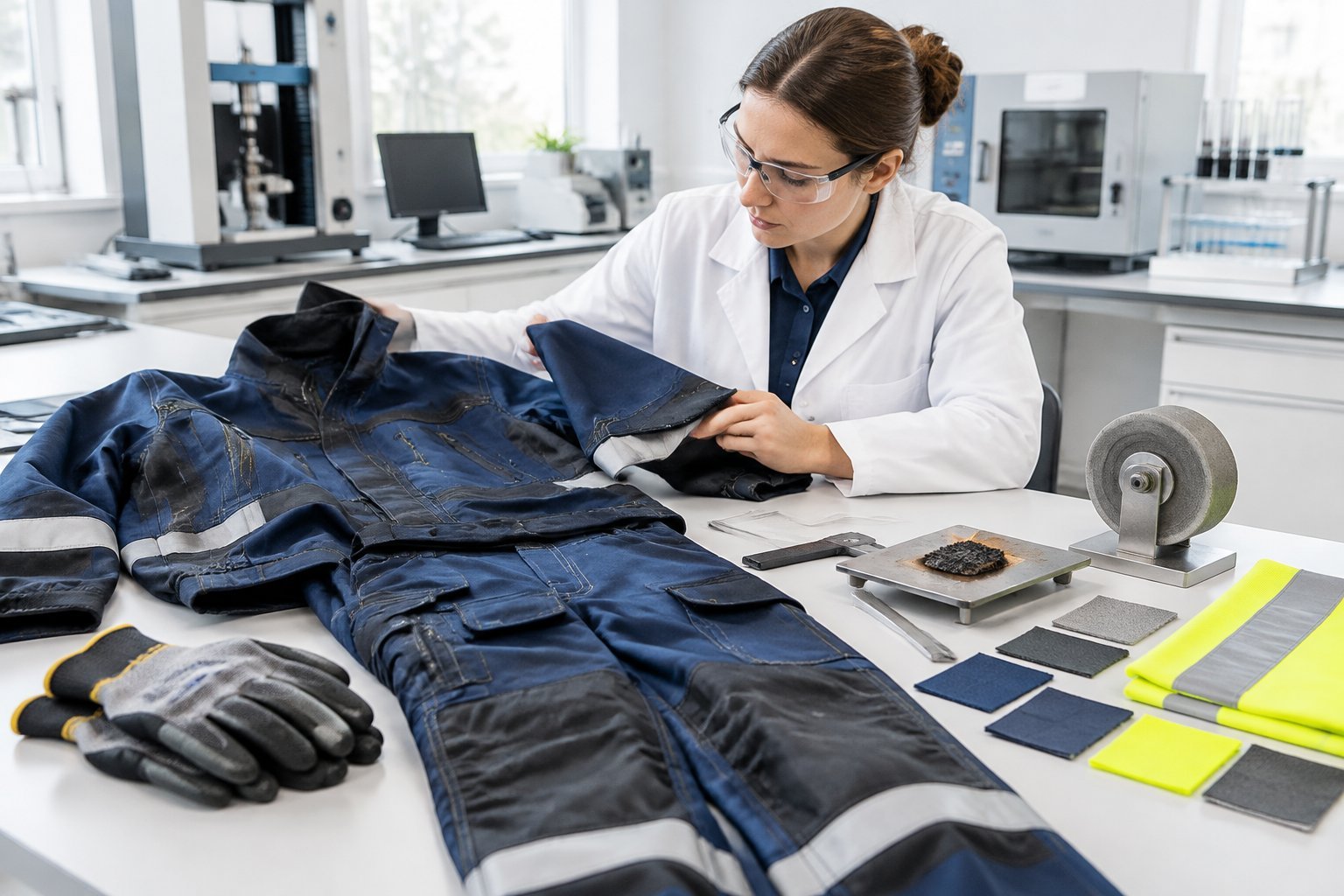
A complete specification connects each risk-assessment finding to the relevant standard and verified product evidence. Welding, heat, static discharge, chemical splash, rain and visibility each retain their own requirements, with dedicated evidence added for arc or flash-fire exposure.
For FR clothing procurement, the purchase specification should identify the required performance, applicable edition, exact textile and intended garment construction. Care conditions and traceability should remain attached to those requirements through delivery.
Buyers discussing Levitex flame retardant workwear textiles should send their hazard requirements, market standards and material specifications to Charlie Luo at Charlie@levitex.com, with a request for the relevant product-specific reports.