
FR knit fabric suits movement-dependent protective layers because its interlocking loops provide structural stretch; woven FR fabric suits industrial trousers, shirts, and coveralls that need stable shape from interlaced warp and weft yarns. The FR knit vs woven fabric decision starts with this construction difference, followed by verification of the finished textile’s protective performance.
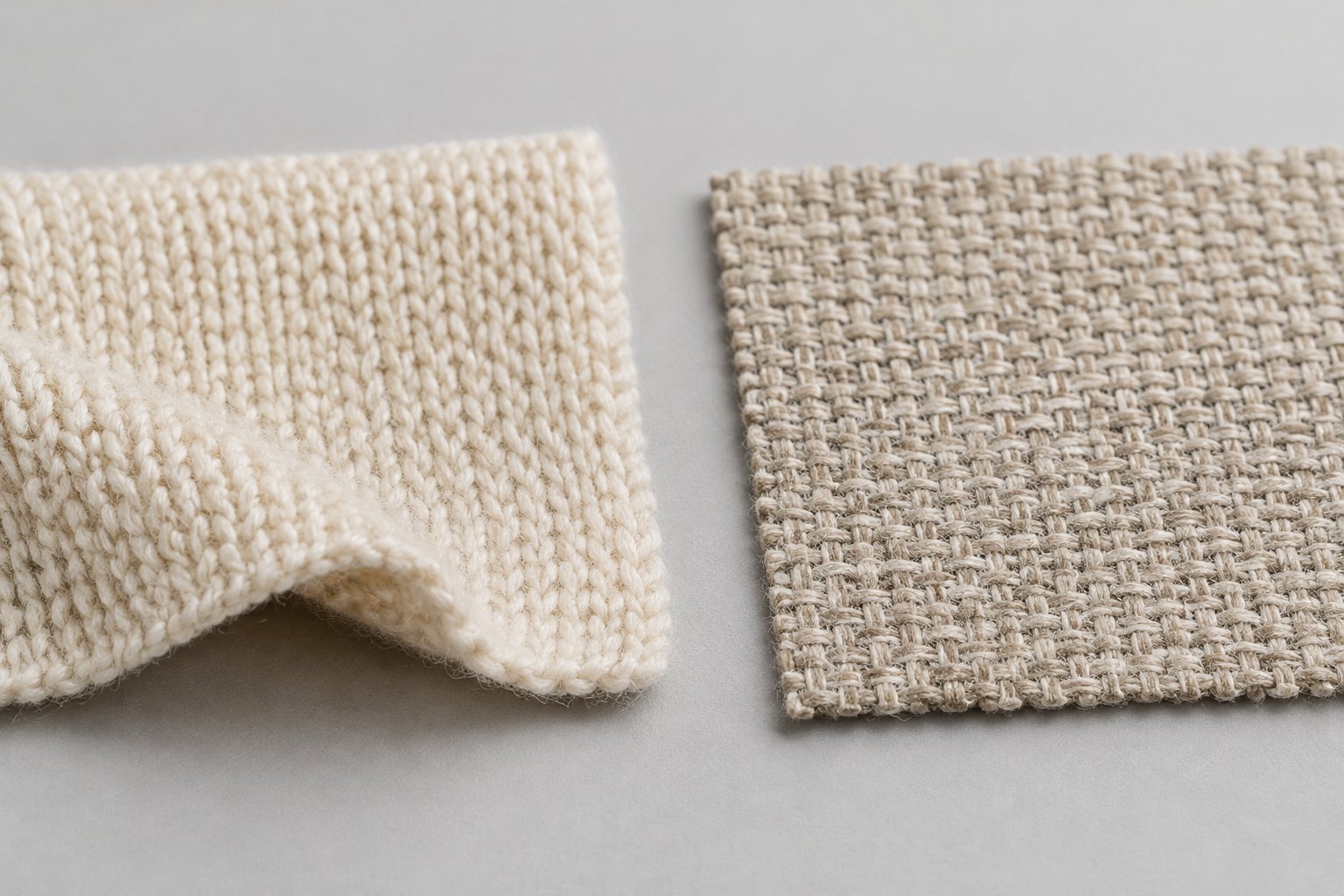
Levitex manufactures flame-resistant textiles in both constructions using 100% cotton, cotton/nylon (C/N), and cotton-rich cotton/polyester (CVC) families. Its role is fabric production for industrial and protective-workwear applications.
Fabric construction influences movement, manufacturing behavior, and laundering response. A successful specification connects those properties to the intended workwear function and requires evidence for the actual finished material.
How Do Loops and Interlaced Yarns Change Fabric Behavior?
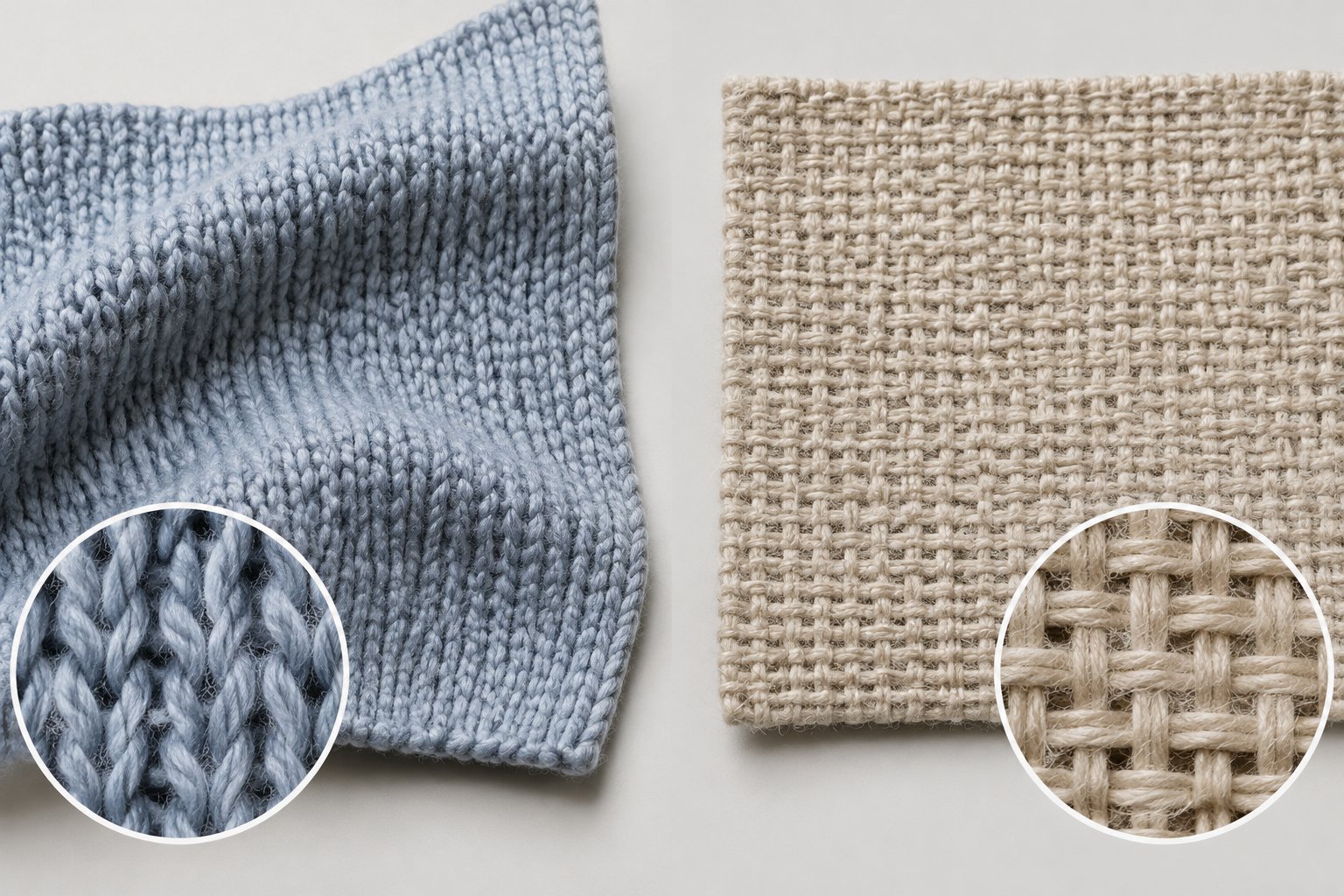
Interlaced yarns restrain movement at crossing points, while connected loops provide space for deformation under load. Yarn size and construction density control how strongly either behavior appears.
Woven Construction: Warp, Weft and Weave Structure
Woven fabric contains lengthwise warp yarns crossed by transverse weft yarns. Their interlacing sequence establishes the woven construction and influences surface texture, flexibility, and resistance to yarn displacement.
Plain weave alternates frequent crossing points. Twill weave creates diagonal lines through a staggered interlacing sequence, while satin weave uses longer floats that produce a smoother face. Longer exposed floats also require attention to snagging during industrial use.
Knit Construction: Courses, Wales and Connected Loops
Knit construction joins yarns through connected loops. Columns follow the wale direction; rows follow the course direction. As loading changes loop shape, knit fabric extends without requiring equivalent extension of the yarn itself.
Weft knitting forms loops across successive courses and includes jersey, rib, and interlock. Circular knitting machines produce many weft-knitted fabrics as tubes that are subsequently processed tubular or opened flat.
Warp knitting uses multiple yarns fed lengthwise to form interconnected loop paths. A warp knit has different deformation behavior from a weft knit, so “knitted” alone leaves the construction specification incomplete.
How to Identify the Structure Without Relying on Stretch Alone
Magnification provides the clearest starting point. A woven sample shows crossing yarn systems; a knit sample shows loop heads and connected stitch columns. Inspection of both faces helps distinguish a smooth-faced knit from a fine woven.
A gentle pull provides supporting information about direction and resistance. Stretch wovens and compact knits make stretch alone an unreliable identification method. Brushing or heavy finishing also obscures the structure, making the supplier’s construction record useful.
How Do the Two Structures Compare in Workwear Performance?

Knits provide structural flexibility, while wovens provide greater restraint along their principal yarn directions. Actual workwear performance also reflects yarn engineering and finishing.
Comparison Table: Stretch, Recovery, Stability, Weight and Hand
The following tendencies describe fabric construction. Each finished specimen still requires measurement against the purchasing specification.
| Criterion | FR Knit Fabric | FR Woven Fabric |
|---|---|---|
| Stretch mechanism | Loop deformation | Yarn crimp or engineered stretch |
| Recovery | Loop and yarn dependent | Yarn and construction dependent |
| Dimensional stability | Loop relaxation sensitive | Warp/weft balance sensitive |
| Weight interpretation | GSM plus loop density | GSM plus yarn density |
| Hand | Flexible, conformable | Controlled, structured |
Knit fabric stretch and recovery require separate evaluation. A sample that extends easily might retain growth after unloading. Spandex and elastane name the same elastic fiber; their inclusion changes composition and requires validation of the resulting FR textile. Levitex’s stated fiber families do not establish elastane-containing product availability.
Why Equal GSM Does Not Mean Equal Thickness or Protection
GSM measures mass per unit area. Two fabrics with equal GSM distribute that mass differently through their thickness, yarn paths, and internal spaces. A bulky knit and a compact twill therefore present different compression and bending behavior.
Protective performance requires the applicable test results. Equal weight establishes neither equal thermal insulation nor equal resistance to flame exposure. Thickness measurements also need a defined pressure because compressible structures respond to the measuring foot.
Air Permeability and Moisture Management Depend on More Than Structure
Air permeability follows the size and connectivity of openings through the finished fabric. A dense double knit and an open woven challenge any blanket assumption that every knit passes more air.
Moisture management includes absorption, liquid spreading, and drying. Fiber chemistry and surface treatments influence each process. The chemical properties of cotton fabric help explain moisture absorption, while construction determines how absorbed liquid distributes through the textile.
Fraying, Curling and Seam Behavior During Production
Woven cut edges require suitable seam finishing to control fraying. Looser constructions also need evaluation for seam slippage, where yarns move apart beside stitching. These characteristics of woven fabric affect seam allowance and assembly settings.
Single jersey is susceptible to edge curling, while compact interlock provides flatter handling. Characteristics of knit fabric also include sensitivity to needle damage and feeding distortion.
A garment manufacturer selects a ballpoint needle or stretch needle through sewing trials. A suitable stretch stitch and correctly adjusted serger support seam extension; thread selection must also match the protective specification.
What Testing Is Needed Before Either Fabric Is Selected?
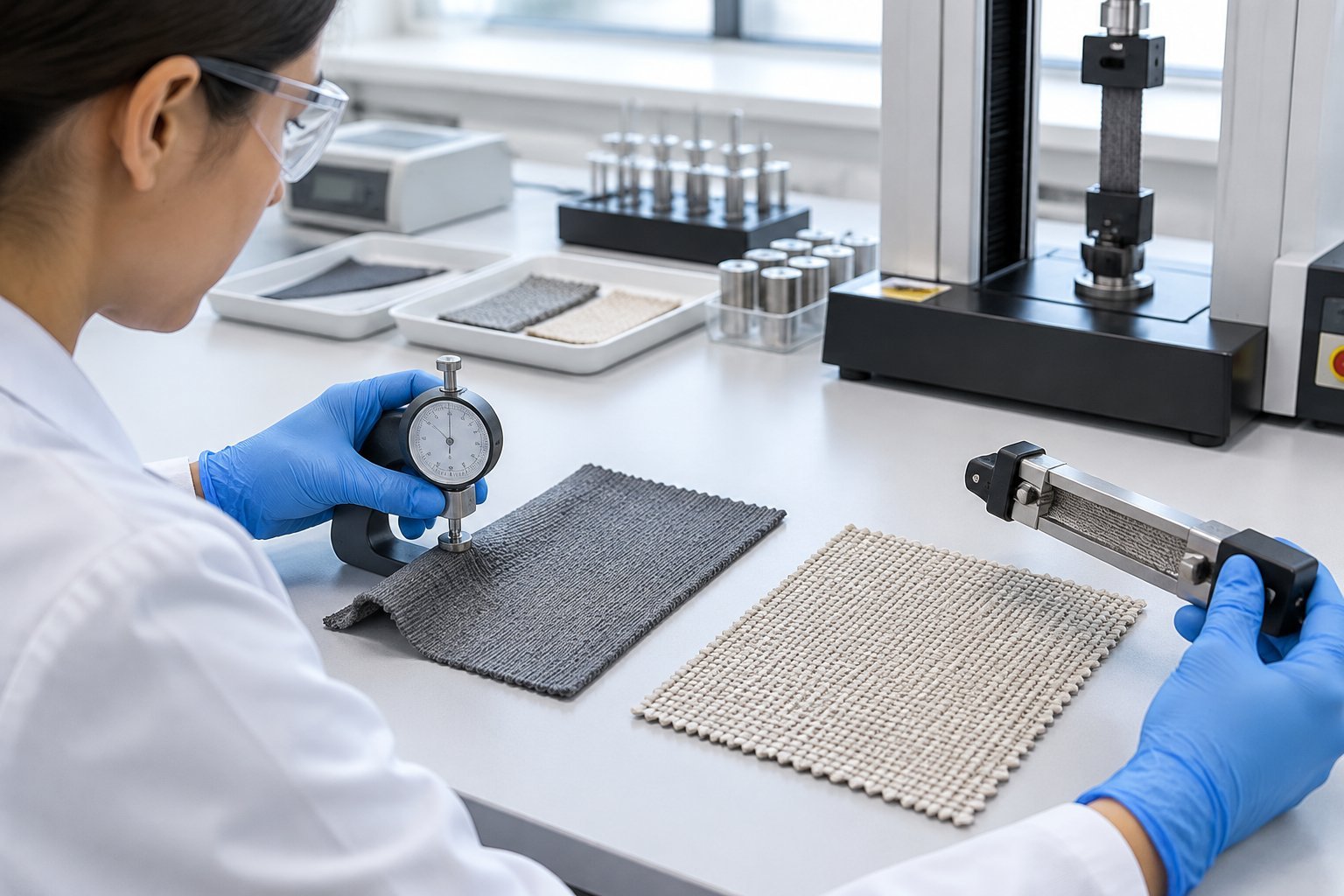
Both constructions require mechanical testing, laundering evaluation, and hazard-specific validation on representative finished specimens. Technical textiles need an agreed test scope that reflects their intended service.
Mechanical Evaluation: Tensile, Tear, Bursting and Abrasion Tests
Tensile testing measures resistance to pulling under a defined specimen geometry. Tear testing assesses propagation of an existing cut and is particularly useful for woven workwear evaluations.
Bursting tests apply multidirectional loading and are useful for knitted fabric. Abrasion testing evaluates surface wear under controlled contact. Results from different test methods require separate acceptance criteria; a tensile result and a bursting result describe different failure mechanisms.
An FR fabric quality control plan should identify specimen direction, conditioning, sampling frequency, and acceptance limits. These details make comparisons between batches interpretable.
Measure Recovery and Dimensional Change After Intended Laundering
Recovery evaluation should define the applied load or extension, hold time, and recovery interval. Recording residual growth identifies fabrics that remain elongated after movement.
Dimensional stability testing should reproduce the intended washing and drying process. For knits, length and width measurements belong alongside skew or spirality observations. For wovens, warp and weft dimensional changes require separate reporting.
The fabric shrinkage specification should state both the laundering procedure and the permitted change. A percentage without its test conditions gives an incomplete basis for acceptance.
Validate FR Performance on the Actual Finished Construction
FR validation must cover the specified composition, fabric construction, and final processing route. Changes in density, surface raising, or finish formulation require review of whether existing evidence remains applicable.
Methods used to test flame-retardant properties in fabrics assess defined aspects of behavior under exposure. The report should identify the specimen and its pretreatment, including laundering where required by the selected specification.
For U.S. procurement, the buyer’s hazard assessment establishes the relevant performance framework. The distinction between EN ISO 11612 and NFPA 2112 requires attention when international specifications enter the same sourcing project.
Why Fabric Test Reports Do Not Establish Garment Compliance
Fabric reports establish results for the tested textile specimen. Garment compliance additionally addresses assembly details and the requirements of the applicable garment standard.
Seams, closures, trims, and coverage affect the finished protective system. The difference between arc-rated and FR clothing also remains relevant: a general FR description provides no dedicated arc-performance result.
Levitex supplies textiles. The garment manufacturer and responsible compliance parties must evaluate the assembled product against its intended requirements.
Which Structures Suit Different Protective-Workwear Functions?

Stable wovens support structured industrial workwear, while qualified knits serve flexible protective layers and components. Each proposed structure requires evidence matching its intended exposure.
Stable Woven Fabrics for Industrial Shirts, Trousers and Coveralls
Cotton twill provides a useful starting construction for workwear needing body and controlled deformation. Its diagonal structure supports a range of weights and surface finishes. Denim belongs to the twill family, but the denim designation alone establishes no FR performance.
Poplin uses a plain-weave construction suited to lighter, stable cloth. Selection among materials used as workwear fabric should account for abrasion exposure, laundering, and the garment’s movement allowance.
Dense construction also affects air passage. A lighter shirt fabric still requires sufficient mechanical performance for its intended duty.
Flexible Knit Fabrics for Protective Layers and Movement-Dependent Components
Jersey knit provides a flexible structure for qualified protective layers. Rib knit offers crosswise extension useful for movement-dependent components, while interlock knit provides a more substantial, stable double-knit option.
French terry incorporates reverse-side loops. Fleece knit commonly receives surface raising that changes bulk and warmth. Those surfaces require assessment in their final condition because finishing alters the material exposed to heat and flame.
Tricot is a warp-knitted construction with its own stability and surface characteristics. These are technical structure examples; Levitex’s knitted-fabric capability concerns textile manufacture, with individual construction availability agreed during specification.
Recognizing Twill, Ripstop, Jersey, Rib and Interlock Specifications
A construction name should lead to a measurable manufacturing description. Useful distinctions include:
- Twill: weave repeat, yarn size, and warp/weft density.
- Ripstop: base weave, reinforcement yarn, and grid spacing.
- Single jersey: stitch density, loop length, and face/back appearance.
- Rib: needle arrangement and repeat, alongside extension and recovery.
- Interlock: double-knit structure and finished dimensional behavior.
“Jersey fabric” leaves substantial room for variation. Two single-jersey specimens with different loop lengths will differ in cover and deformation, even when their compositions match.
How Can Buyers Compare Levitex Fabric Specimens?
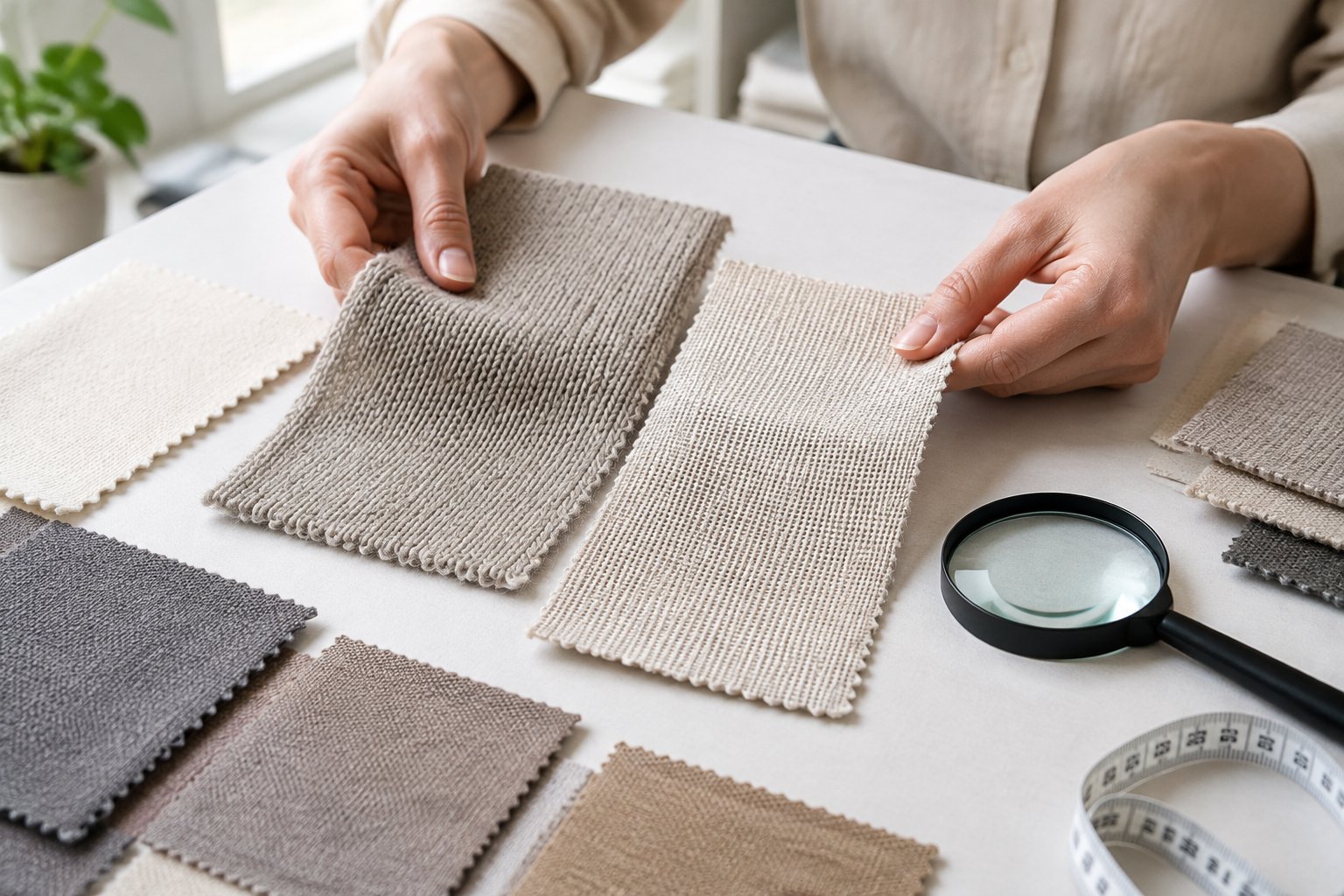
Buyers should compare identified, finished Levitex specimens under matched conditioning and test procedures. Composition and fabric construction belong in separate specification fields.
Specify Cotton, C/N or CVC Separately From Construction
Levitex can manufacture 100% cotton, cotton/nylon (C/N), and cotton-rich cotton/polyester (CVC) FR fabrics in woven and knitted constructions. Knitting changes the yarn arrangement while preserving the stated composition family and industrial end-use focus.
Exact percentages still require agreement. Cotton/nylon blend properties reflect both constituents and their processing, so a family abbreviation leaves essential procurement details open. Plain cotton also requires an appropriate treatment to achieve FR behavior.
Specimen Checklist: Composition, Structure, GSM, Finish and Test Scope
A usable specimen record should contain enough detail to connect the physical sample to its production specification and evidence:
- Composition: fiber names and agreed percentages.
- Structure: weave repeat or knit designation.
- Yarn specification: count, ply, and relevant yarn preparation.
- Density: warp ends and weft picks for wovens; courses, wales, and loop details for knits.
- Finished mass and width: nominal values, tolerances, and measurement conditions.
- Finish: FR treatment and any additional functional finishing.
- Mechanical evidence: applicable methods and acceptance criteria.
- Laundering conditions: washing, drying, and evaluation sequence.
- Traceability: sample identifier, production reference, and report scope.
Thread count is meaningful only alongside its direction, units, and yarn information. For knitted fabric, loop-related measurements provide the appropriate structural description.
Compare Finished Samples Under Matched Conditions
Samples should receive the same conditioning before hand, mass, and dimensional comparisons. Equal specimen size and consistent orientation reduce handling-related differences during assessment.
A controlled comparison changes one principal variable at a time where practical. Matched composition and similar GSM help isolate construction effects, although differences in yarn selection still need recording.
Sample dimensions should support the intended laboratory work. Swatch cards establish appearance and initial hand; larger specimens support physical testing and production trials.
Confirm Custom Dyeing, Printing and Finishing Requirements
Levitex offers custom dyeing and printing alongside customized FR fabric production. Fluorescent dyeing is available, with garment-level high-visibility design and assembly handled outside its textile offering.
FR plus water-repellent and FR plus oil-repellent finishing are available across all three base-fabric families. Multi-functional FR finishing compatibility requires validation on the agreed finished construction; wash durability and performance targets belong in the product-specific specification.
Industrial buyers are invited to send knitted-fabric requirements, composition, structure, weight, quantity, and required supporting evidence to Charlie@levitex.com. Relevant product-specific reports should form part of the technical review before bulk approval.
Choose by Workwear Function and Verified Fabric Performance

Fabric construction should match the required movement and shape retention, with protective claims supported by finished-fabric evidence. Wovens provide controlled structure for industrial workwear; knits provide loop-based flexibility for qualified layers and components.
For these technical textiles, approval should connect the physical specimen to its composition, manufacturing specification, laundering conditions, and applicable reports. Levitex’s cotton, C/N, and CVC families support both construction routes, allowing buyers to request samples around a defined industrial function.
Frequently Asked Questions
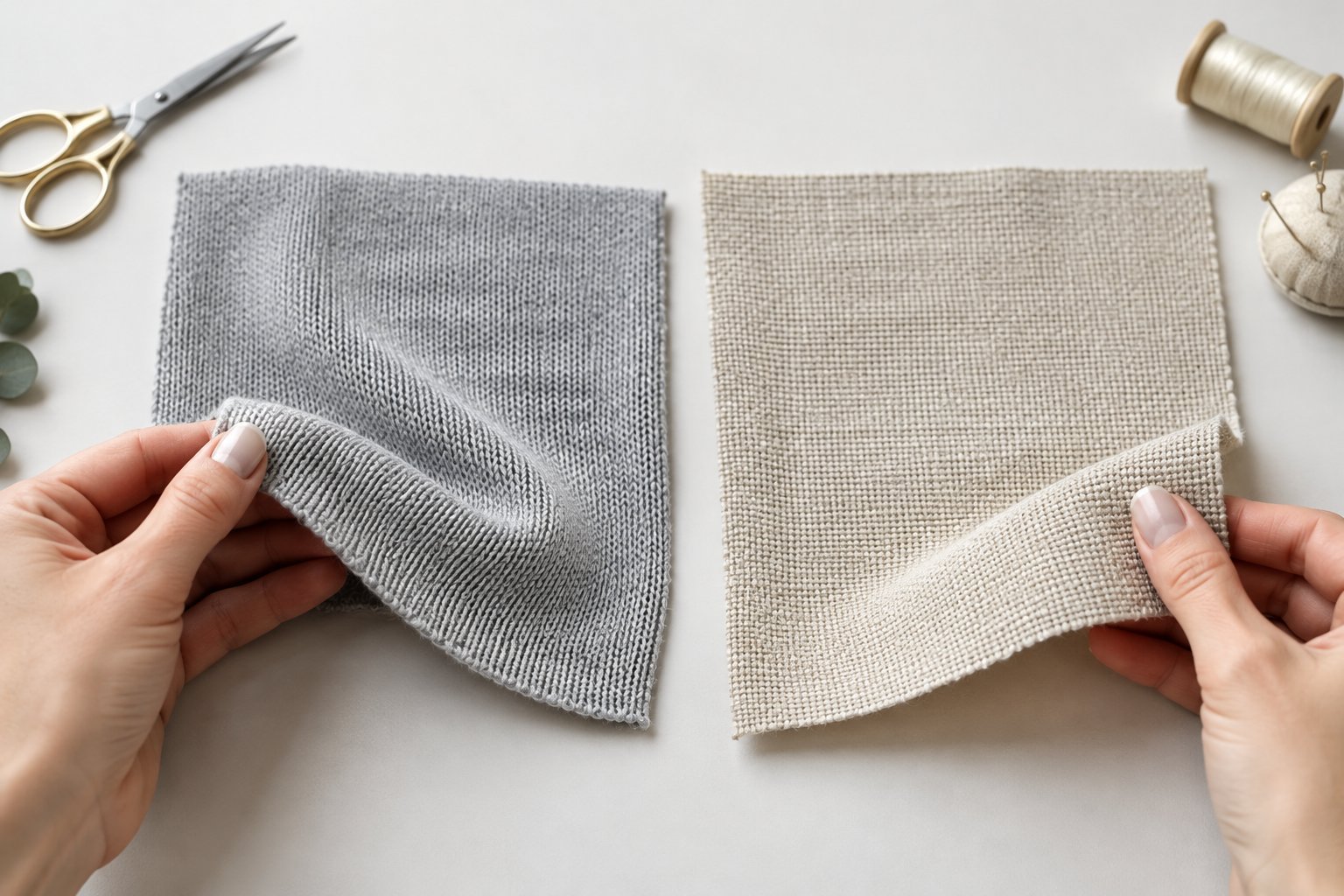
The woven vs knit fabric distinction guides functional selection, while product-specific evidence establishes suitability. The following answers address common sourcing questions.
Which is better for FR workwear: knit or woven fabric?
Woven FR fabric suits shape-retaining workwear, while FR knit suits applications requiring structural flexibility. For either option, approval requires the mechanical and protective evidence specified for the intended duty.
How can I tell whether an FR fabric is knitted or woven?
Magnified inspection reveals the difference between woven and knitted fabric: crossing yarn systems identify a woven, and connected loops identify a knit. Fabric stretch provides a supporting clue, especially when checked in both principal directions.
Is woven FR fabric suitable for hot working conditions?
Woven FR fabric is suitable when its protection and thermal-comfort properties meet the job requirements. Air permeability, garment fit, environmental conditions, and workload all influence heat burden.
Can cotton, C/N and CVC FR fabrics be made in both structures?
Levitex manufactures 100% cotton, C/N, and CVC FR textiles as woven and knitted constructions. Exact composition, construction details, and finished performance require agreement for each order.
Does greater fabric weight mean better flame protection?
Greater GSM alone establishes no protective rating. Buyers should require applicable reports for the finished construction and its specified pretreatment, including laundering where relevant.