
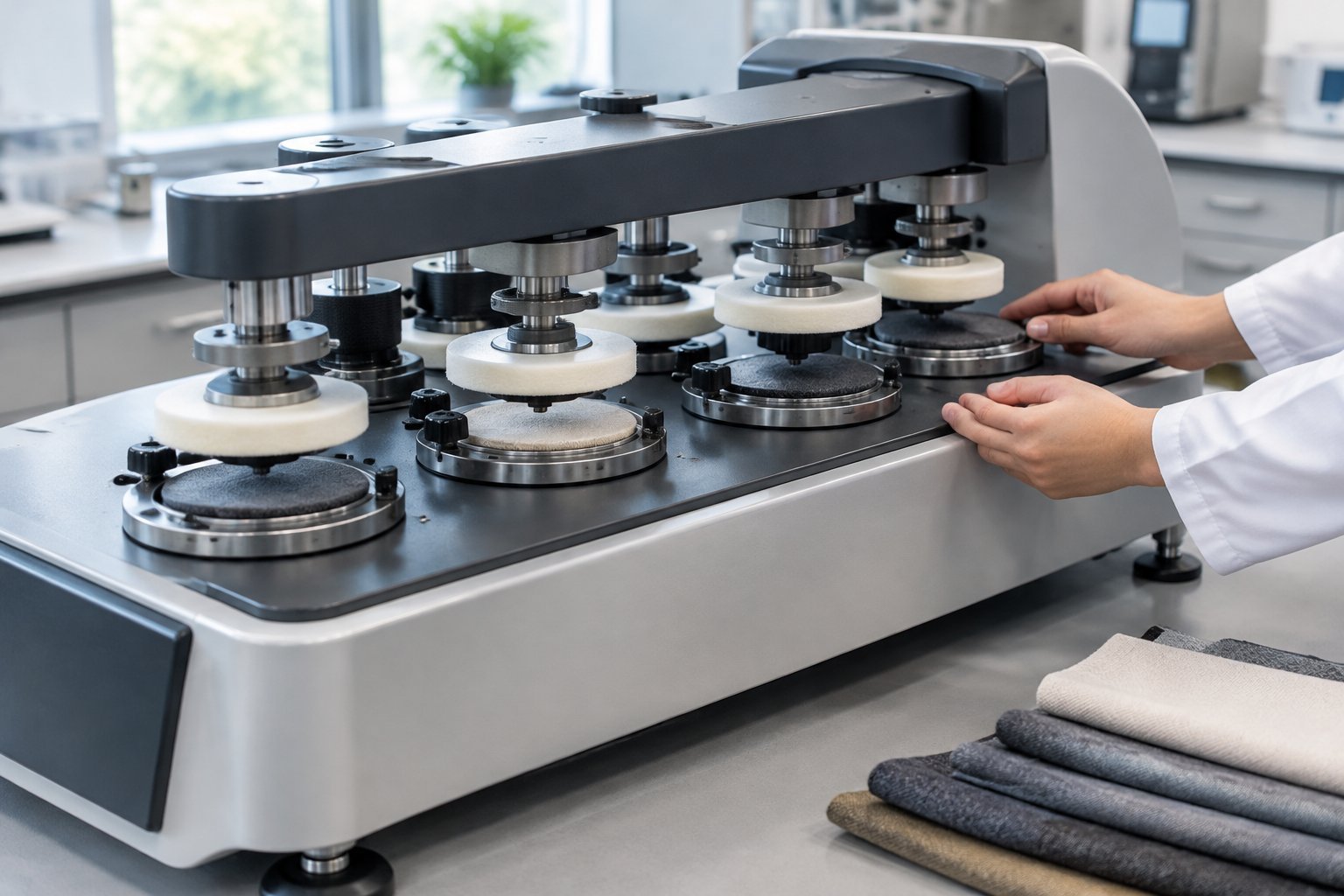
The martindale abrasion test measures fabric abrasion resistance by rubbing specimens against a specified abradant in a multidirectional Lissajous pattern under controlled pressure, then assessing breakdown, mass loss, or appearance change. For industrial workwear buyers, it provides evidence of resistance to repeated surface friction, helping distinguish fabrics that retain their structure under comparable laboratory conditions.
A high abrasion count supports a specific wear-resistance claim. Its practical value comes from the test conditions and endpoint recorded alongside that number. Protective workwear selection also requires evidence of performance after the intended finishing and laundering.
Levitex has manufactured textiles since 1951 and supplies flame-resistant fabrics for industrial protective-workwear applications. Within that context, abrasion data contributes to FR fabric quality control alongside separate assessments of protective performance.
How Are Fabric Specimens Rubbed, Loaded, and Assessed?
The Martindale method uses controlled rubbing, a defined contact pressure, and scheduled inspections to produce a reproducible abrasion result. The selected test method determines specimen preparation and the assessment endpoint.
How the Lissajous Motion and Wool Abradant Create Surface Wear
A Martindale abrasion tester moves specimen holders across an abrasive surface through a repeating Lissajous figure. The path changes direction continuously, distributing rubbing across the fabric surface and exposing yarns to friction from multiple directions.
For conventional textile abrasion testing under ISO 12947, a specified woven wool abradant provides the rubbing surface. Circular test specimens sit in holders above the abradant, which is mounted on the testing tables with the prescribed supporting material.
The laboratory checks the abradant for contamination and replaces it at the required intervals. Substituting an arbitrary abrasive material changes the test conditions and prevents a straightforward comparison with results obtained using the specified wool fabric.
Preparing Test Specimens and Selecting the Specified Loading
The laboratory takes representative specimens from the submitted fabric, avoiding defects and unintended duplication of the same yarns across specimens. It conditions the material in the atmosphere required by the method before mounting it without wrinkles or unintended stretching.
Backing materials and loading assemblies follow the applicable procedure. Nominal pressures of 9 kPa and 12 kPa are common in textile Martindale testing; the correct selection follows the standard and intended application. Pressure describes force distributed over the contact area, so a loading-weight figure alone provides incomplete information.
The submitted material also needs a defined treatment history. Fabric finishes affect surface behavior, so an unfinished development sample and a finished production fabric represent different test conditions.
When Testing Stops: Breakdown, Mass Loss, and Appearance Change
The endpoint determines when abrasion testing stops and what the laboratory reports. The specimen breakage method, termed determination of specimen breakdown in ISO 12947-2, uses construction-specific failure criteria.
For woven fabrics, breakdown includes two separate yarns becoming completely broken. Knitted fabrics use a hole-based criterion, while other constructions require their prescribed assessment. Surface fuzzing alone does not automatically establish breakdown.
Other procedures answer different questions:
- Mass loss: specimens are weighed before and after specified abrasion intervals.
- Appearance change: the abraded surface is assessed against the procedure’s visual criteria.
- Breakdown: specimens are inspected at prescribed intervals until the defined failure condition occurs or the agreed test limit is reached.
Inspection intervals belong in the interpretation because failure is detected during an inspection, not continuously measured at every rubbing movement.
Which Standards Apply: ISO 12947, ASTM D4966, and GB/T 21196?
ISO 12947 establishes a multipart framework for determining textile abrasion resistance using the Martindale test method. ISO 12947-1 covers the apparatus; ISO 12947-2 addresses specimen breakdown. Parts 3 and 4 address mass loss and appearance change, respectively.
EN ISO 12947 identifies the European adoption of the ISO framework. ASTM D4966 provides a Martindale abrasion method used in US specifications, while GB/T 21196 provides the corresponding Chinese standard series.
A purchase specification should identify the standard number, relevant part, and edition. A Martindale tester shared across procedures does not make every procedure interchangeable. Separate GB standards for flame-retardant protective clothing address protective requirements beyond this abrasion-method framework.
What Do Martindale Results Actually Tell You?
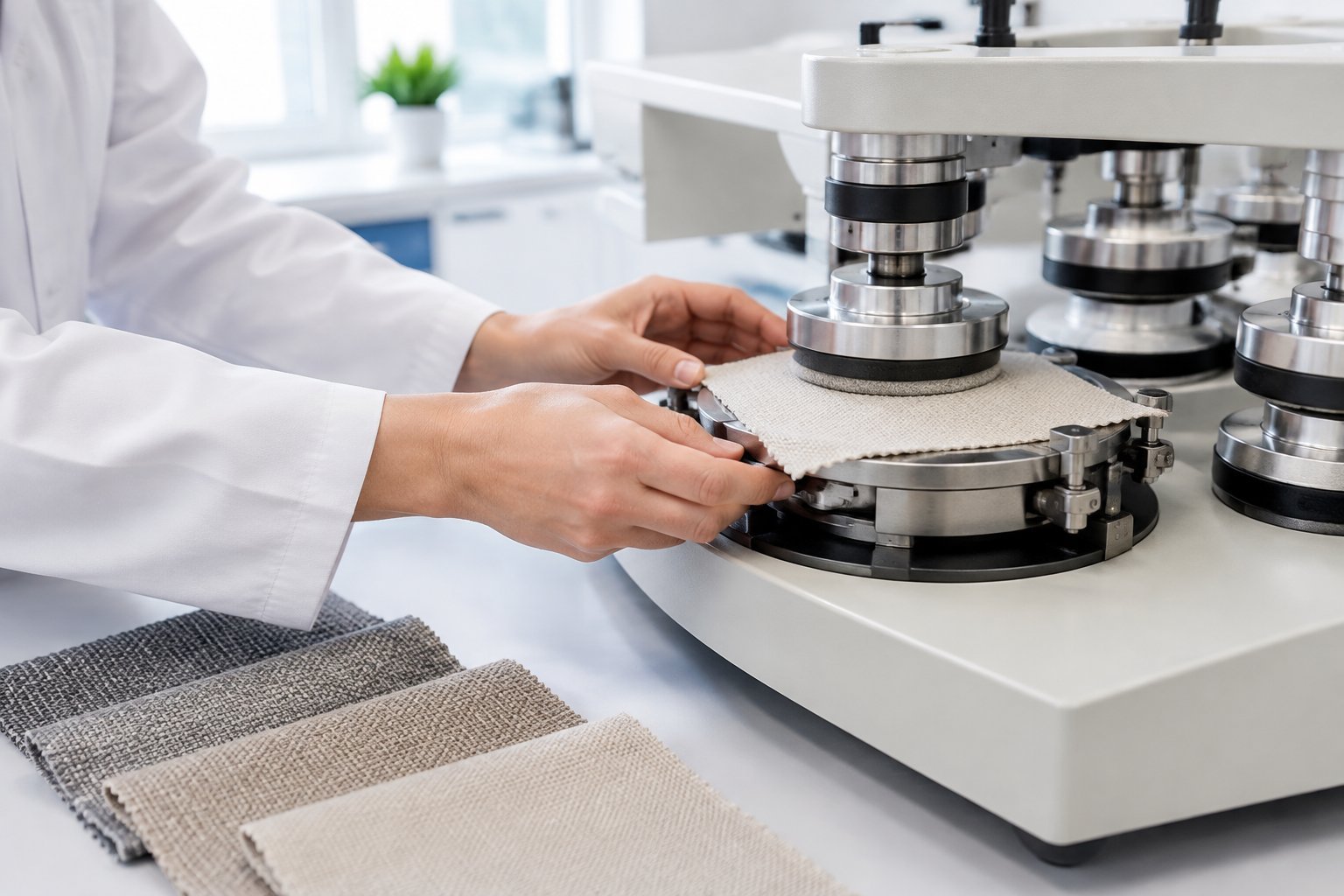
Martindale results describe a specimen’s response to a defined laboratory abrasion exposure. Their interpretation requires the endpoint, test conditions, and reported counting convention.
Reading Cycle Counts, Endpoints, and Results Without Breakdown
A report stating “40,000 cycles to breakdown” describes a different outcome from “no breakdown at 40,000 cycles.” The second statement establishes survival through the test limit; the eventual failure point remains undetermined.
Commercial specifications use terms such as rubs, abrasion cycles, and Martindale cycles. The laboratory’s standard and counter convention establish what those terms represent. A complete Lissajous pattern includes multiple rubbing movements, so an assumed definition of “cycle” introduces ambiguity.
Individual specimen results also deserve attention. A reported average conceals variation unless the report includes the underlying observations, specimen count, and reporting basis.
Why Matching Test Conditions Matters More Than Comparing Bare Numbers
A defensible comparison uses the same method, endpoint, and specimen treatment. Differences in pressure or abradant alter the exposure, while backing and conditioning affect how specimens respond.
A practical comparison record includes:
- Standard, part, and edition.
- Nominal pressure and specified abradant.
- Fabric face tested and backing arrangement.
- Conditioning and pretreatment.
- Specimen count and inspection intervals.
- Endpoint, test limit, and individual results.
Abrasion also measures a different failure mechanism from fabric tear strength, which concerns the propagation of an existing tear. Fabric tensile strength measures resistance to pulling forces. Each result contributes separate information about mechanical durability.
Abrasion vs. Pilling: Different Methods and Different Results
Abrasion testing evaluates material wear under controlled friction. Fabric pilling concerns the formation of entangled fiber balls on the surface, which requires its own assessment procedure.
The Martindale pilling test uses a modified method, such as ISO 12945-2, with its specified setup and exposure conditions. A Martindale pilling tester assesses surface changes after defined rubbing stages, with visual grades commonly running from 5 for little or no change to 1 for severe change.
An instrument equipped for both procedures still produces separate abrasion and pilling results. A high abrasion count supplies no pilling grade, and visible fuzzing during an abrasion run does not replace a formal pilling assessment.
Martindale vs. Wyzenbeek: Why Rub Counts Cannot Be Converted
The Martindale rub test and the Wyzenbeek test use different rubbing actions and specimen arrangements. Their results require interpretation within their respective methods.
| Criterion | Martindale | Wyzenbeek |
|---|---|---|
| Common ASTM method | ASTM D4966 | ASTM D4157 |
| Rubbing action | Multidirectional Lissajous path | Back-and-forth action |
| Specimen arrangement | Circular specimen holder | Tensioned fabric over an oscillating cylinder |
| Common reporting term | Rubs or cycles, as defined | Double rubs |
There is no universal conversion factor between Martindale counts and Wyzenbeek double rubs. Different constructions respond differently to the two methods, so a fixed multiplier creates an unsupported equivalence.
When a US customer specifies Wyzenbeek, acceptance requires evidence under that specified method. A Martindale result remains useful as additional mechanical-performance information.
How Should Industrial Workwear Buyers Use Abrasion Data?

Industrial workwear buyers should use abrasion data to compare identified fabrics under matched conditions and evaluate resistance to a relevant wear mechanism. Acceptance criteria need to reflect the workplace exposure and the complete fabric specification.
Why Upholstery Rating Bands Are Not Workwear Acceptance Criteria
Upholstery fabric rating bands relate to seating applications and their associated specifications. Industrial garments encounter different contact surfaces, localized stresses, and cleaning conditions.
Workwear abrasion concentrates at locations such as knees or cuffs. Equipment edges and embedded grit introduce damage mechanisms that a standard wool abradant does not reproduce fully. A commercial-upholstery label therefore supplies no automatic workwear acceptance threshold.
A buyer’s workwear fabric selection should combine abrasion resistance with the mechanical and protective requirements of the job. Garment construction and workplace wear trials remain responsibilities within the broader finished-product evaluation.
Comparing Cotton, C/N, and CVC After Specified Finishing and Laundering
Levitex’s principal base-fabric families are 100% cotton, cotton/nylon (C/N), and cotton-rich cotton/polyester (CVC). Composition identifies the fiber blend; abrasion performance requires evidence for the finished fabric.
Yarn properties and construction influence the rubbing response. Finishing adds another variable, so a comparison should use the intended production state and identify any differences in fabric weight or structure.
A useful evaluation separates two conditions:
- As supplied: the fabric after its specified production finishing.
- After pretreatment: the same specification after an agreed laundering procedure and number of cycles.
Industrial laundering affects FR fabric repellency through a different performance mechanism, so repellency and abrasion require their own assessments. The pretreatment record should state the washing procedure and drying conditions.
Levitex offers FR plus water-repellent and FR plus oil-repellent finishing on all three base-fabric families. Any abrasion claim for a selected combination needs a report identifying that finished construction.
What to Request From Levitex: Fabric Identification and Relevant Test Reports
A useful request begins with the fabric reference and the intended assessment. Levitex supplies textiles for protective-workwear production; the finished-garment manufacturer handles garment design, assembly, and garment-level validation.
The buyer’s request should include:
- Product reference, composition, construction, and nominal fabric weight.
- Color, finishing combination, and identifiable production batch.
- Required abrasion method, loading, and endpoint.
- Laundering pretreatment, where applicable.
- Acceptance criterion and reporting requirements.
Levitex provides a test report for each product. The buyer should establish which methods the relevant report covers and request Martindale evidence specifically when abrasion resistance is an acceptance requirement.
Separate testing of flame-retardant properties addresses behavior under flame exposure. For a fabric-specific discussion, buyers can contact Sales Manager Charlie Luo at Charlie@levitex.com or (+86) 1551 730 3033 with the proposed specification and required test conditions.
Choose Workwear Fabrics Using Comparable Test Evidence
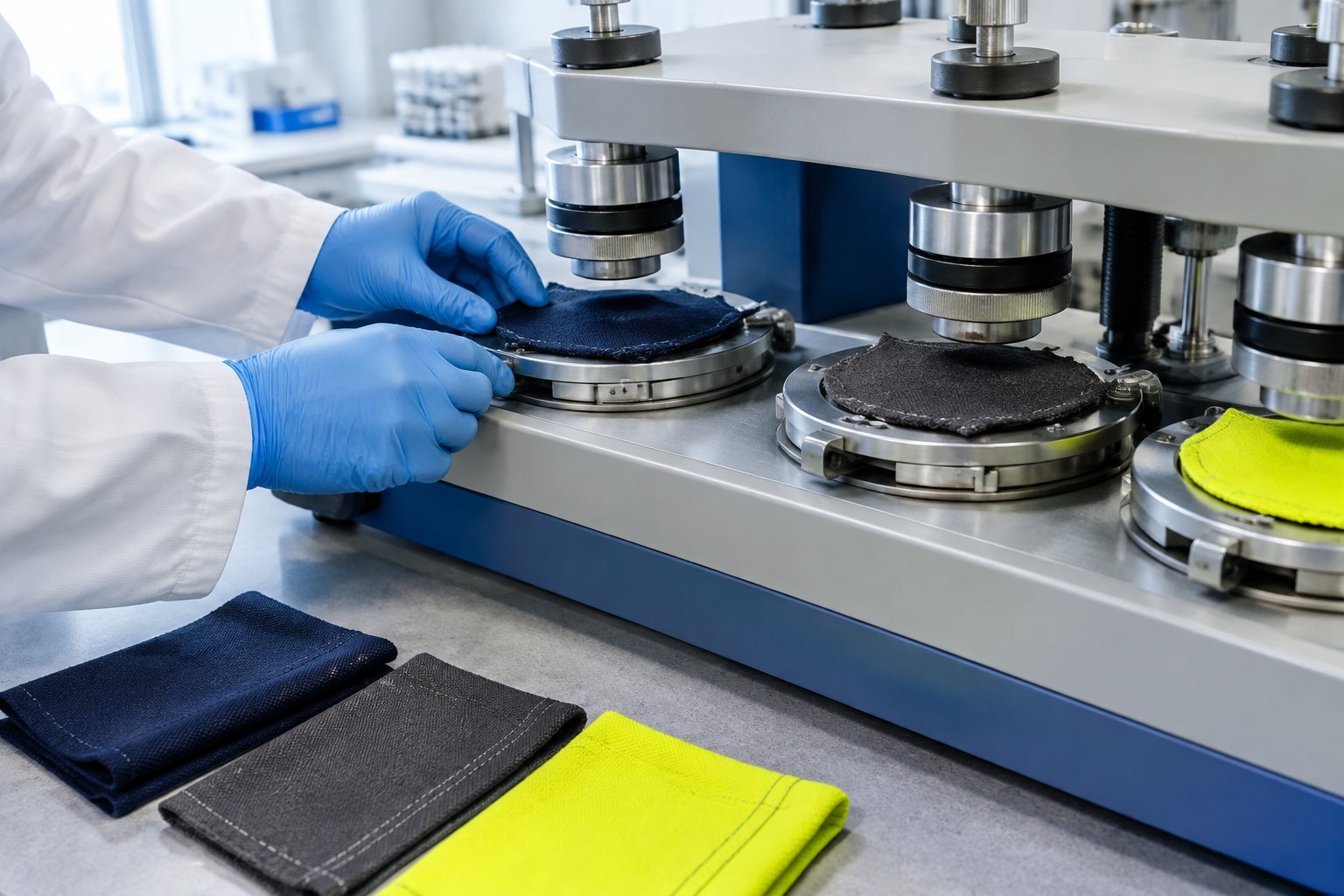
Comparable test evidence gives Martindale cycles a usable purchasing context. The strongest comparison identifies the finished fabric and holds the abrasion testing conditions constant.
For protective workwear, abrasion belongs alongside the applicable EN standards for FR workwear or other customer-specified protective requirements. A cycle count establishes neither garment lifespan nor protective conformity.
Before approval, the purchasing record should retain the method and edition, loading, endpoint, pretreatment, and specimen results. Any result stopped at an agreed limit should remain labeled “no breakdown at the stated limit,” preserving the distinction between demonstrated survival and measured failure.
Frequently Asked Questions
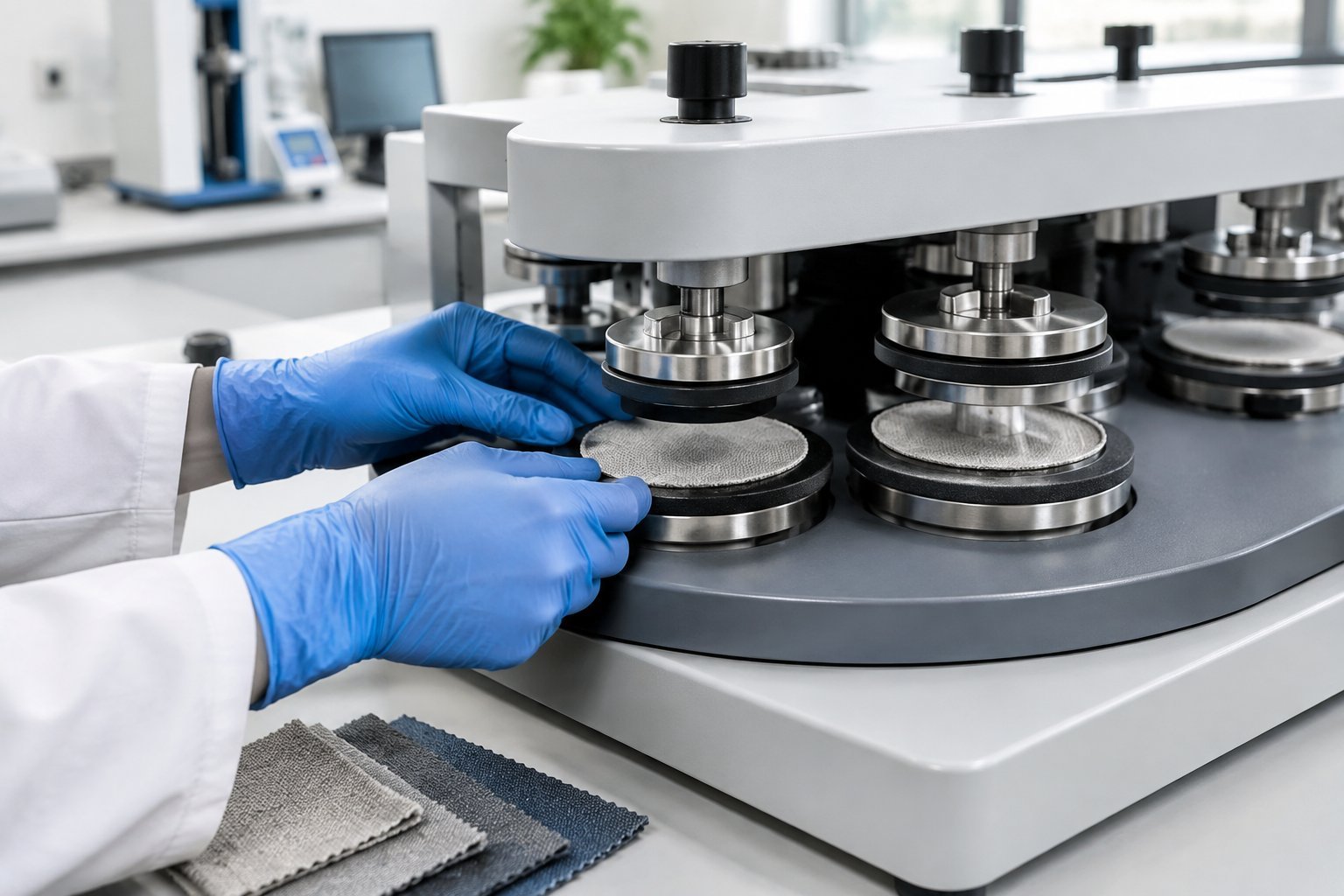
A Martindale test report becomes useful when its stated result is read together with the method and endpoint. These common questions address the terms used in purchasing specifications.
What does 40,000 Martindale mean on a fabric report?
“40,000 Martindale” identifies a reported abrasion count under the stated test conditions. The accompanying wording establishes whether breakdown occurred at that count or the specimens survived a test stopped at 40,000.
Does 100,000 Martindale mean a fabric will last longer?
A result of 100,000 Martindale cycles demonstrates greater laboratory abrasion endurance than a lower breakdown result obtained under matching conditions. Garment service life also involves exposure conditions, laundering, and other failure mechanisms, so the count provides no direct lifespan prediction.
Is Martindale the same as double rubs?
Martindale counts and Wyzenbeek double rubs describe exposures produced by different test methods. A specified result from one method requires testing under the other method before a corresponding acceptance claim is made.
Does a Martindale abrasion result also measure pilling resistance?
Pilling resistance requires a separate procedure, such as the Martindale pilling test under ISO 12945-2. Its visual grade and exposure stages should be reported separately from abrasion breakdown data.
Where can I get the official Martindale test standard PDF?
Official standard PDFs are available through ISO, ASTM International, or authorized national standards organizations, depending on the required document. The purchaser should obtain the exact part and edition named in the testing specification and check the publisher’s licensing terms.