
Laboratories test color fastness to washing by laundering a textile specimen with specified adjacent fabrics under controlled conditions, then grading its color change and the staining of those fabrics separately. For industrial textile buyers, these results help establish whether a production shade meets color-retention requirements and limits dye transfer during laundering.
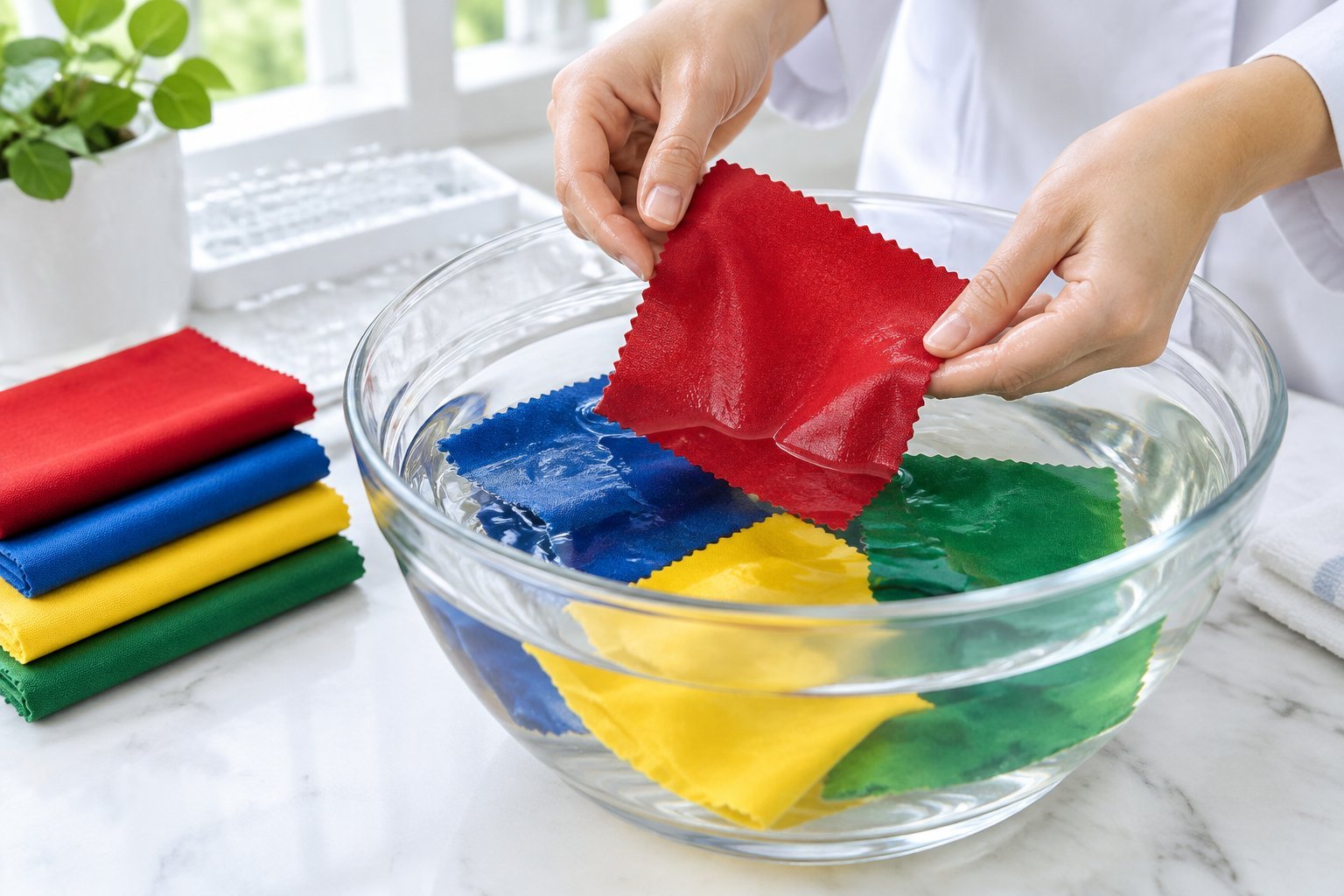
A fabric that retains its shade still needs a separate staining assessment. Small amounts of released dye can visibly stain pale materials while producing little apparent change in the original specimen.
Levitex manufactures flame-resistant textiles and provides custom dyeing for industrial workwear fabrics. Its production context makes the distinction important: colorfastness testing should represent the supplied fabric after its final finishing process.
What Do Color Change and Staining Grades Mean?
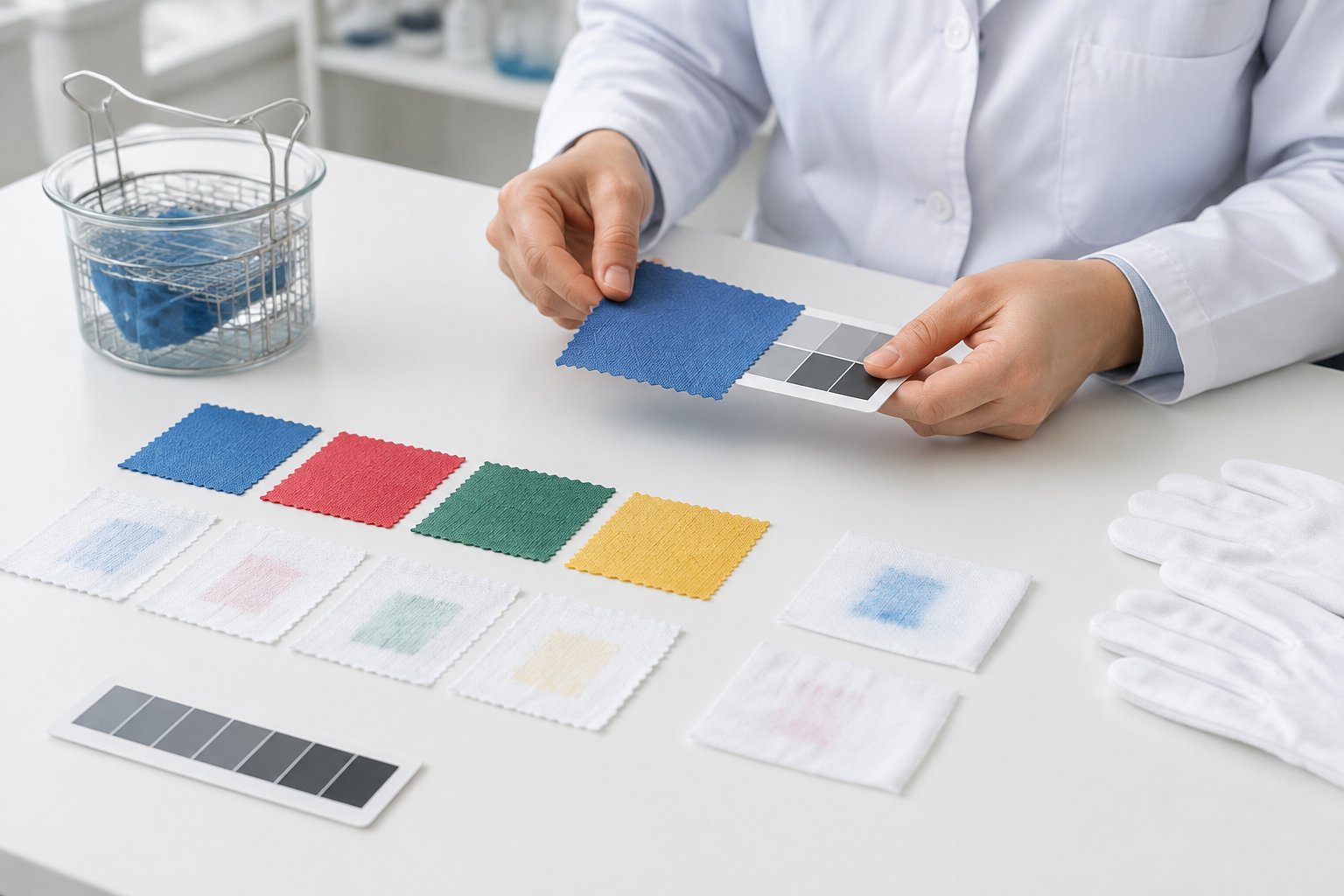
Color change grades describe the washed specimen’s appearance, while staining grades describe color transferred to adjacent fabrics. Both assessments are needed to characterize washing performance.
Specimen Fading vs. Color Transfer to Adjacent Fabrics
Color change includes fading and shifts in hue or depth. The laboratory compares the tested specimen with an unwashed reference from the same material.
Staining measures dye transfer onto specified adjacent fabrics during the washing test. Color bleeding describes dye release into the wash liquor; the staining assessment records the visible contamination left on the adjacent material.
A multifiber adjacent fabric contains bands of different fibers. Depending on the specified type, these include cotton, nylon, polyester, acrylic, wool, and acetate. Each band provides a separate indication of the released dye’s affinity for that fiber.
How Grey Scales Rate Change and Staining from 1 to 5
Two separate grey scales support visual assessment: the grey scale for color change and the grey scale for staining. “Gray scale” is the US spelling of the same term.
The grading range runs as follows:
- 5: No perceptible color change or staining.
- 4: Slight color change or staining.
- 3: Moderate color change or staining.
- 2: Considerable color change or staining.
- 1: Severe color change or staining.
Intermediate grades, such as 4-5 and 3-4, represent steps between the whole grades. These are ordered visual ratings; grade 4 does not mean that 80% of the original dye remains.
Trained assessors evaluate specimens under specified illumination and viewing conditions. Instrumental assessment requires the applicable assessment procedure and should be identified in the report.
Reading Fiber-Specific Results Without Assuming a Universal Pass Grade
A complete staining result identifies each assessed fiber. A single entry reading “staining: 4” leaves important information unresolved when multifiber fabric was used.
For example, an illustrative report might show color change of 4, cotton staining of 4-5, and nylon staining of 3. The nylon result identifies the greatest staining in that test, even though the specimen retained its shade well.
Acceptance follows the buyer’s specification, including which adjacent fibers must meet its threshold. Within FR fabric quality control, the report also needs a traceable connection to the tested shade, finish, and production lot.
How Do Laboratories Select and Run the Washing Test?
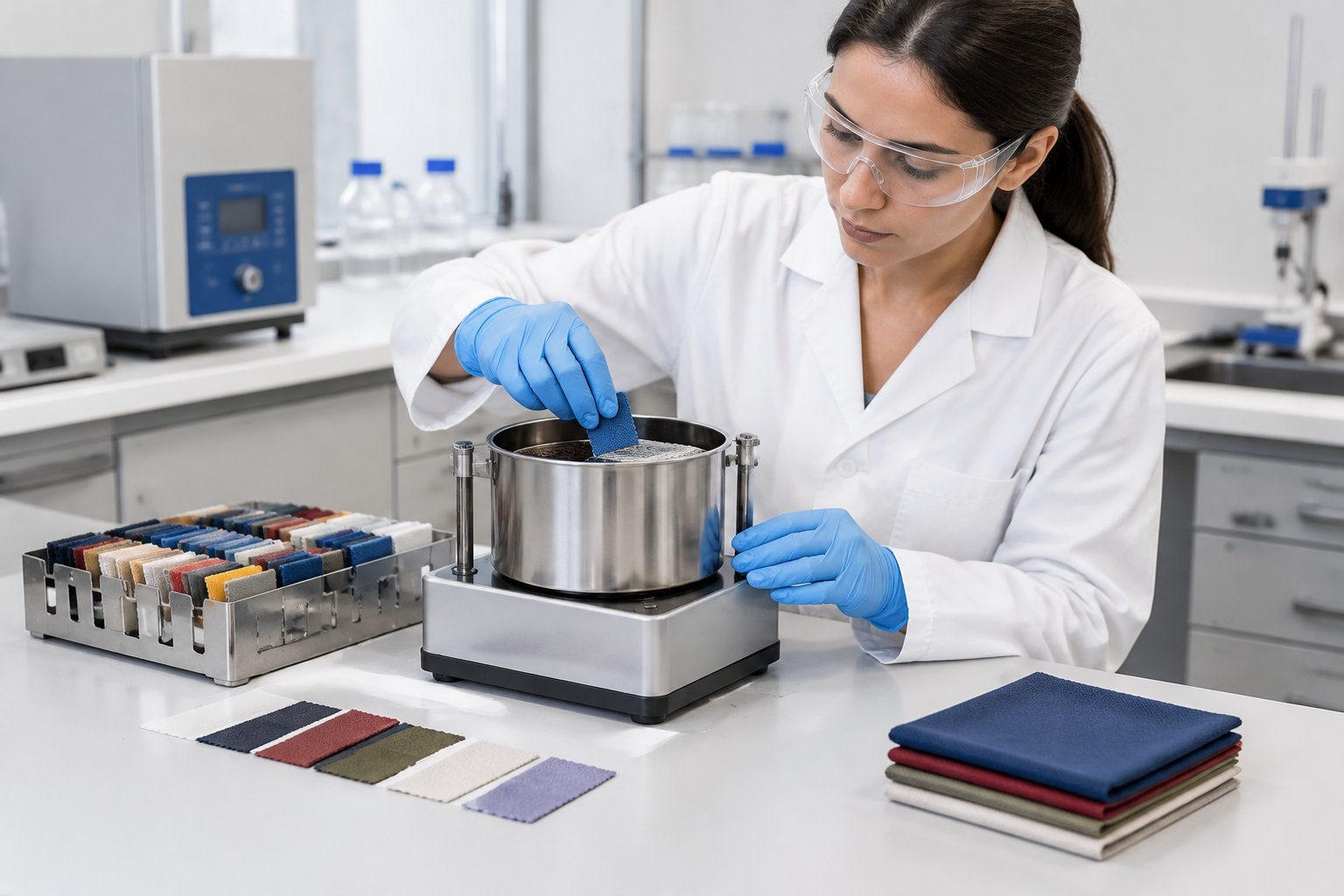
Laboratories select the washing method and condition from the buyer’s specification and intended laundering exposure. The standard number alone leaves essential test settings unspecified.
ISO 105-C06 vs. AATCC TM61: Scope and Condition Selection
ISO 105-C06:2010 addresses colour fastness to domestic and commercial laundering using reference detergent. The edition was reviewed and confirmed in 2026.
AATCC TM61, also called AATCC 61, provides accelerated laundering procedures widely used in US textile testing programs. Its selected procedure establishes the exposure used for the colorfastness test.
| Criterion | ISO 105-C06 | AATCC TM61 |
|---|---|---|
| Scope | Domestic and commercial laundering | Accelerated laundering |
| Procedure selection | Named condition, including S or M | Numbered test option |
| Detergent system | Specified reference formulation | Specified formulation for option |
| Exposure settings | Defined by selected condition | Defined by selected option |
| Assessment | Color change and staining | Color change and staining |
ISO single tests use an “S” designation; multiple tests use “M” and apply increased mechanical action. The standard describes approximate laundering relationships for these procedures, with qualifications.
ISO 105-C08 is another washing method with its own reference-detergent and bleach system. Substitution between methods requires agreement with the buyer.
Preparing, Washing, Rinsing and Drying the Composite Specimen
The laboratory follows the specimen dimensions and assembly requirements of the selected procedure. A production-representative sample and an unwashed reference provide the basis for evaluation.
The working sequence is:
- Identify the specimen. Record its material, shade, finish, and lot reference.
- Prepare the composite. Attach or assemble the textile with the required adjacent fabric.
- Prepare the wash liquor. Use the specified detergent concentration and any required additives.
- Run the exposure. Control temperature, duration, liquor volume, and mechanical action.
- Rinse and dry. Follow the procedure’s instructions, including specimen separation where required.
- Assess the results. Grade color change and staining after the prescribed preparation for evaluation.
Poor handling after washing introduces avoidable variation. Contact between wet colored material and an adjacent fabric during drying can produce additional transfer outside the intended exposure.
Why Detergent, Temperature and Mechanical Action Must Be Recorded
These conditions determine the chemical and physical severity of the test. A grade becomes meaningful only when the exposure that produced it is identifiable.
Higher temperature changes dye mobility and desorption. Detergent formulation, alkalinity, and bleach affect color stability; mechanical action increases abrasion and dye release. Steel balls are included only where the selected procedure requires them.
A useful report records the method edition and condition code, with any permitted options or deviations. Protective-workwear buyers should also align the selected exposure with the supplier’s FR laundering instructions.
What Accelerated Results Cannot Prove About Industrial Laundering
An accelerated washing result establishes color performance under its stated laboratory exposure. It does not establish a fabric’s lifetime in every industrial laundry process.
Industrial laundries use process-specific combinations of chemistry, loading, extraction, and drying. Heavily soiled workwear also introduces contaminants absent from a standard clean-specimen test.
Validation for a particular laundry program therefore requires testing representative of that process. Industrial laundering of FR fabrics and repellency involves additional performance questions, while fabric shrinkage requires separate dimensional assessment.
What Affects Results in Dyed Workwear Fabrics?
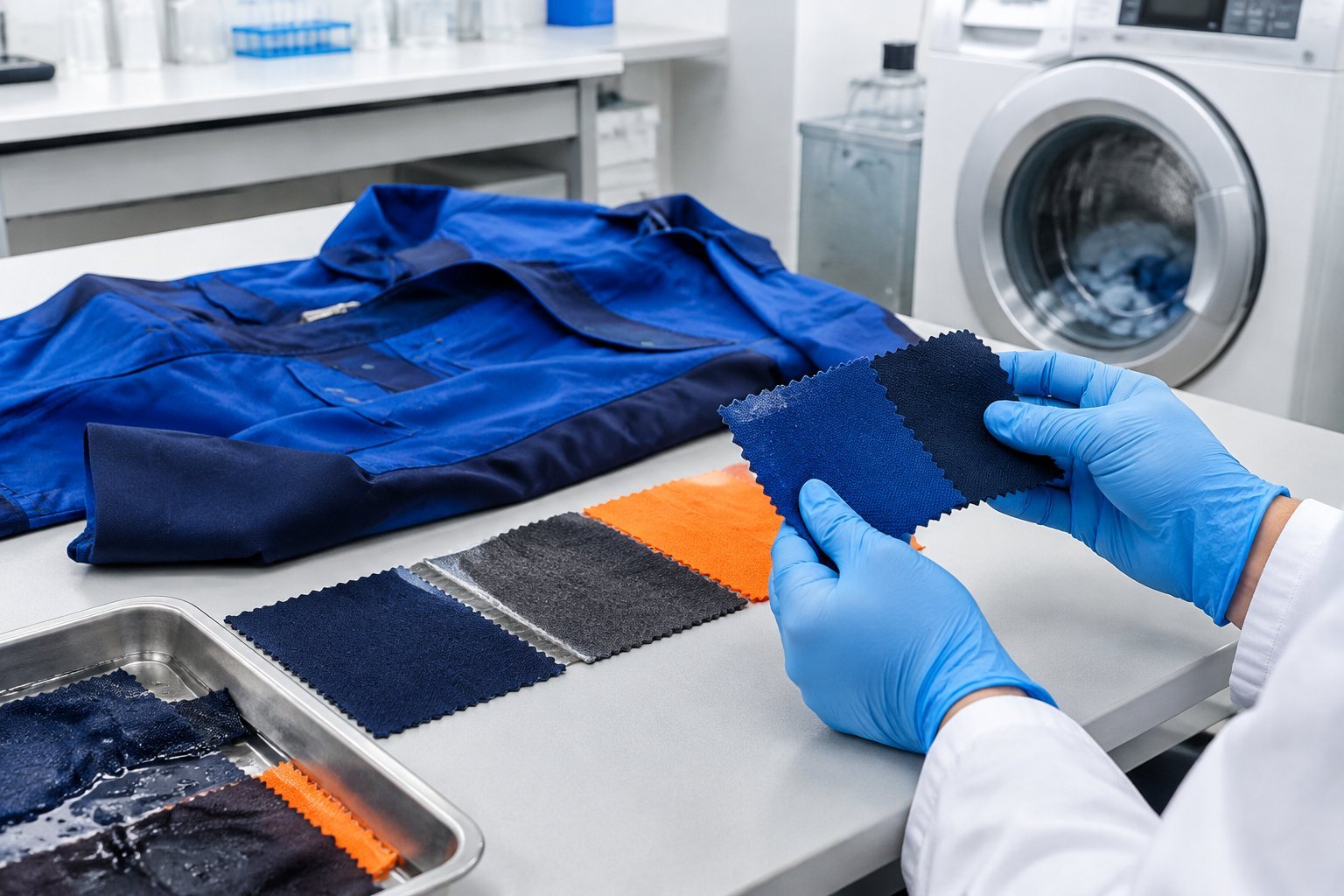
Wash fastness reflects the dye-fiber system and the complete production process. Dye selection establishes the performance potential, while fixation and subsequent processing determine the finished result.
How Dye Selection, Fixation and Washing-Off Influence Fastness
Different dye classes attach to fibers through different mechanisms:
- Reactive dyes form covalent bonds with cellulose under suitable fixation conditions. Unfixed and hydrolyzed dye requires effective washing-off.
- Direct dyes have affinity for cellulose through noncovalent interactions. Their washing performance varies by dye structure and aftertreatment.
- Vat dyes are applied in a soluble reduced form and converted back to an insoluble form within the fiber.
- Acid dyes serve fibers such as nylon and wool. Dye selection and application conditions influence their wash fastness.
- Disperse dyes color polyester through diffusion into the fiber. Residual surface dye requires appropriate clearing.
The dye-fiber bond is only part of the result. Inadequate rinsing leaves mobile color on an otherwise well-dyed textile, and deeper shades increase the amount of dye that processing must fix or remove.
For custom dyeing and printing on FR fabric, shade approval and fastness approval serve separate purposes. A visually accurate lab dip establishes a color target; bulk-production testing assesses the supplied textile.
Why Cotton, C/N and CVC Need Evaluation After Final Finishing
Levitex’s main base-fabric families are 100% cotton, cotton/nylon (C/N), and cotton-rich cotton/polyester (CVC). Each presents a different dyeing system, with blends requiring attention to the behavior of both fiber components.
Natural fibers and synthetic fibers respond differently to dyeing chemistry. A cotton-rich blend’s composition alone therefore provides insufficient evidence of its textile color fastness.
Final fabric finishes introduce further processing, including chemical exposure and heat. Assessment after final finishing captures the condition supplied to the buyer, including any shade change or altered staining behavior caused by that processing.
Specifying the Method, Acceptance Criteria and Product-Specific Report
A purchasing specification should make the laboratory’s task and the acceptance decision explicit. Useful entries include:
- Standard designation, edition, and exact test condition.
- Minimum color-change grade.
- Minimum staining grade for each required adjacent fiber.
- Required specimen state, including final finish and any preconditioning.
- Shade and production-lot identification.
- Reporting requirements for deviations and assessment procedure.
Levitex provides a test report for each product; buyers should request the report relevant to the proposed fabric and verify which properties it covers. Colorfastness results and flame-retardant property tests address separate performance requirements.
For a fabric inquiry, buyers can send the shade reference and required washing method to Sales Manager Charlie Luo at Charlie@levitex.com. Including the acceptance criteria gives the discussion a defined technical starting point.
Compare Grades Only Under Matching Test Conditions
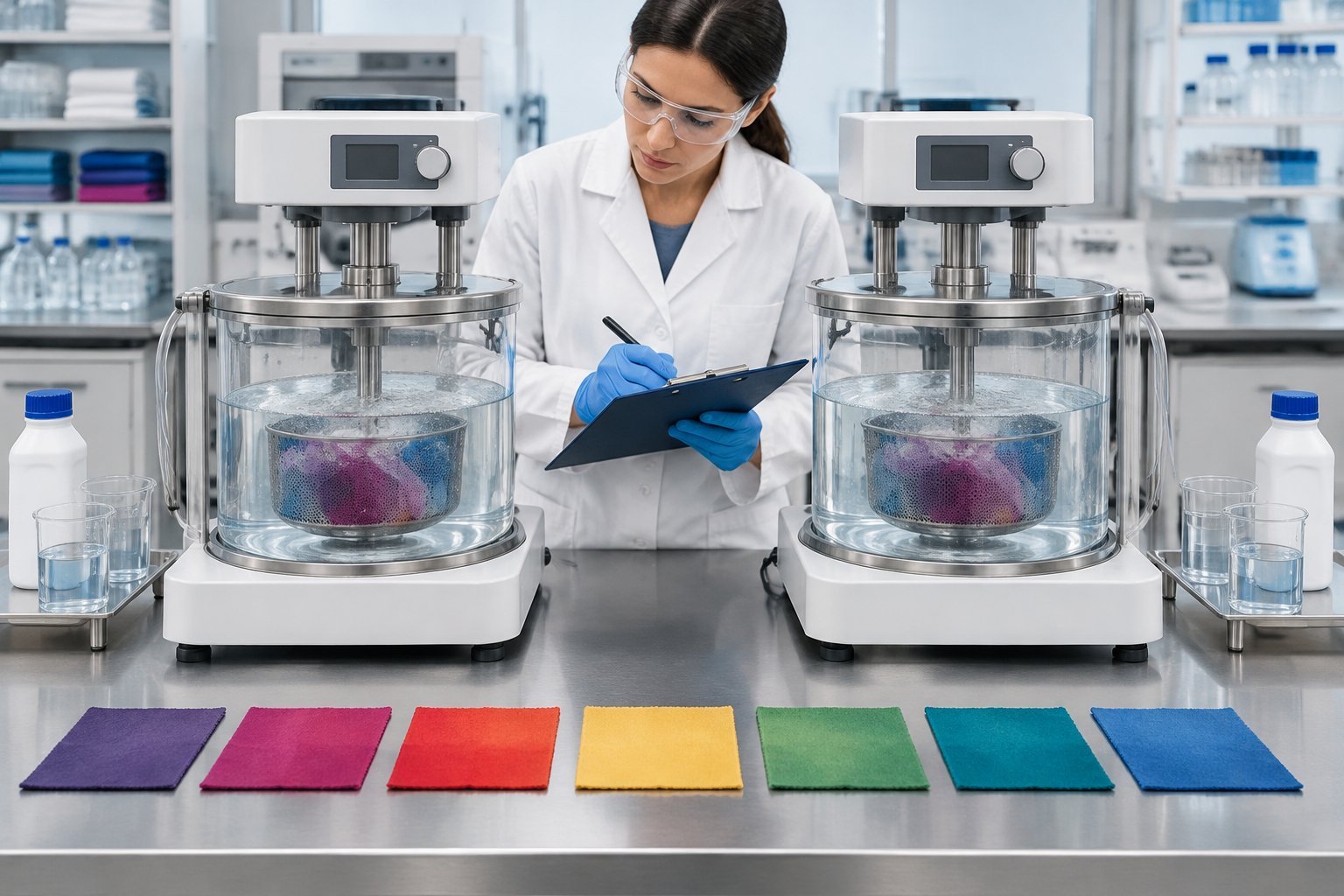
Meaningful color fastness comparisons require matching methods, exposure conditions, and assessment procedures. A higher grade from a milder washing test does not establish superior performance under a more severe exposure.
Procurement teams should compare color change separately from every required staining result. The method edition, condition code, detergent system, and final-finish state belong beside those grades.
Before approving a shade, the buyer should confirm that the report identifies the proposed fabric and relevant production state. Any difference in test conditions should be resolved before the results enter a supplier comparison or acceptance decision.
Frequently Asked Questions
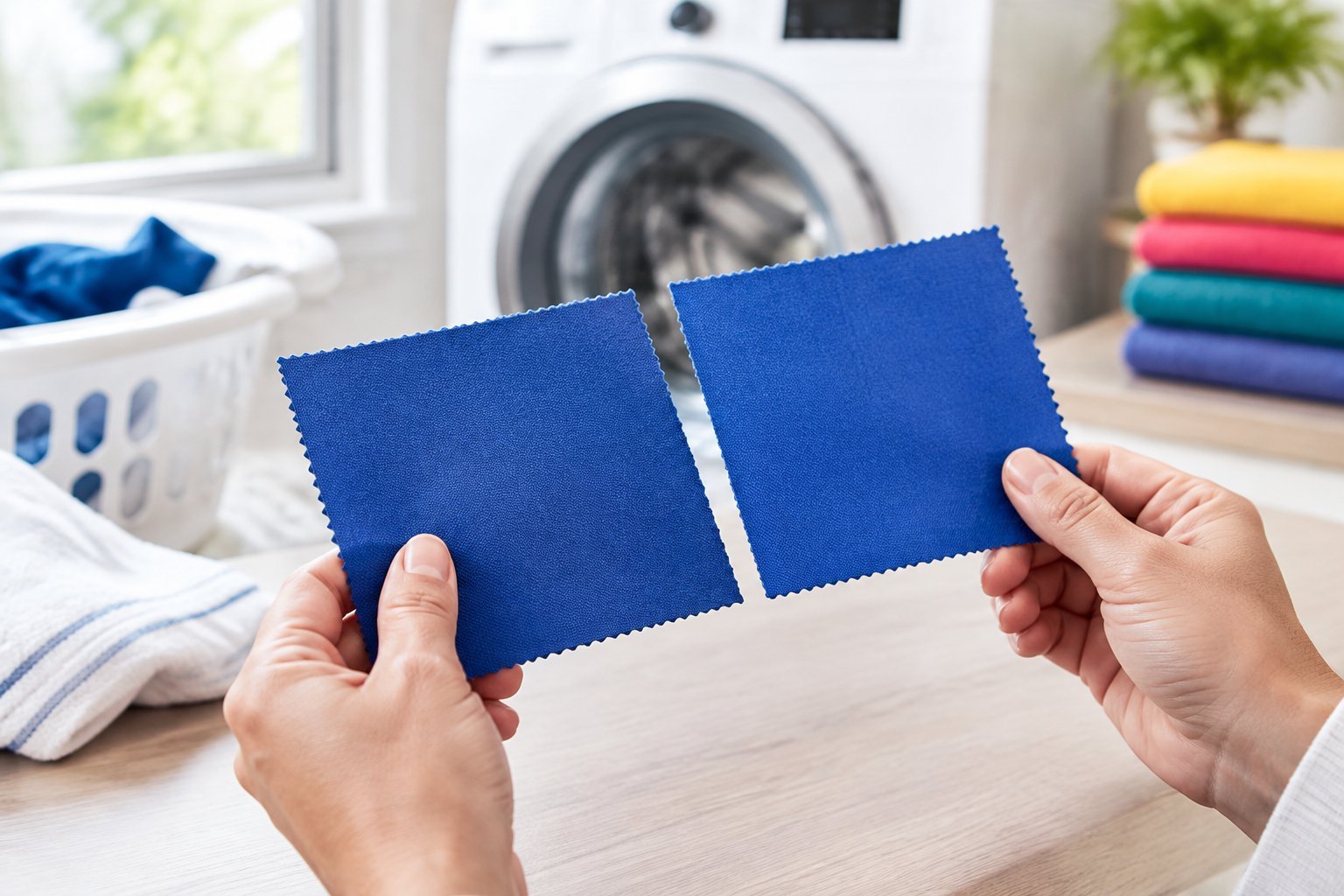
Washing-fastness decisions require separate attention to the acceptance threshold and the scope of the test.
What is a good washing fastness rating for workwear fabric?
Grade 4 or better is a useful starting target for a workwear purchasing specification. The buyer still needs to define separate color-change and staining requirements under a named test condition; this example is not a Levitex product rating.
Can ISO 105-C06 and AATCC TM61 results be compared directly?
Results from the two methods require a technical review before comparison. Their detergent systems and exposure conditions differ, so matching grade numbers alone do not demonstrate equivalent performance.
Does a high color-change grade guarantee low staining?
A high color-change grade provides no guarantee of low staining. A small release of dye can visibly stain an adjacent fiber while leaving little perceptible change in the original specimen.
Which dyestuff gives the best washing fastness?
Properly selected reactive and vat dyes provide strong washing-fastness options for cotton, while polyester commonly uses disperse dyes. Selection must account for the fiber, shade, and finishing route, followed by testing of the finished textile.
Does passing a wash fastness test also prove resistance to perspiration or crocking?
Passing a washing test establishes performance only for the specified washing exposure. Color fastness to perspiration and crocking require separate colorfastness testing because sweat contact and rubbing create different transfer mechanisms.