
Color fastness to light is tested by exposing textile materials to controlled daylight or filtered xenon arc light, then rating their color change against blue wool references or a gray scale under specified conditions. For industrial workwear buyers, the useful result combines the rating with its test method and exposure endpoint.
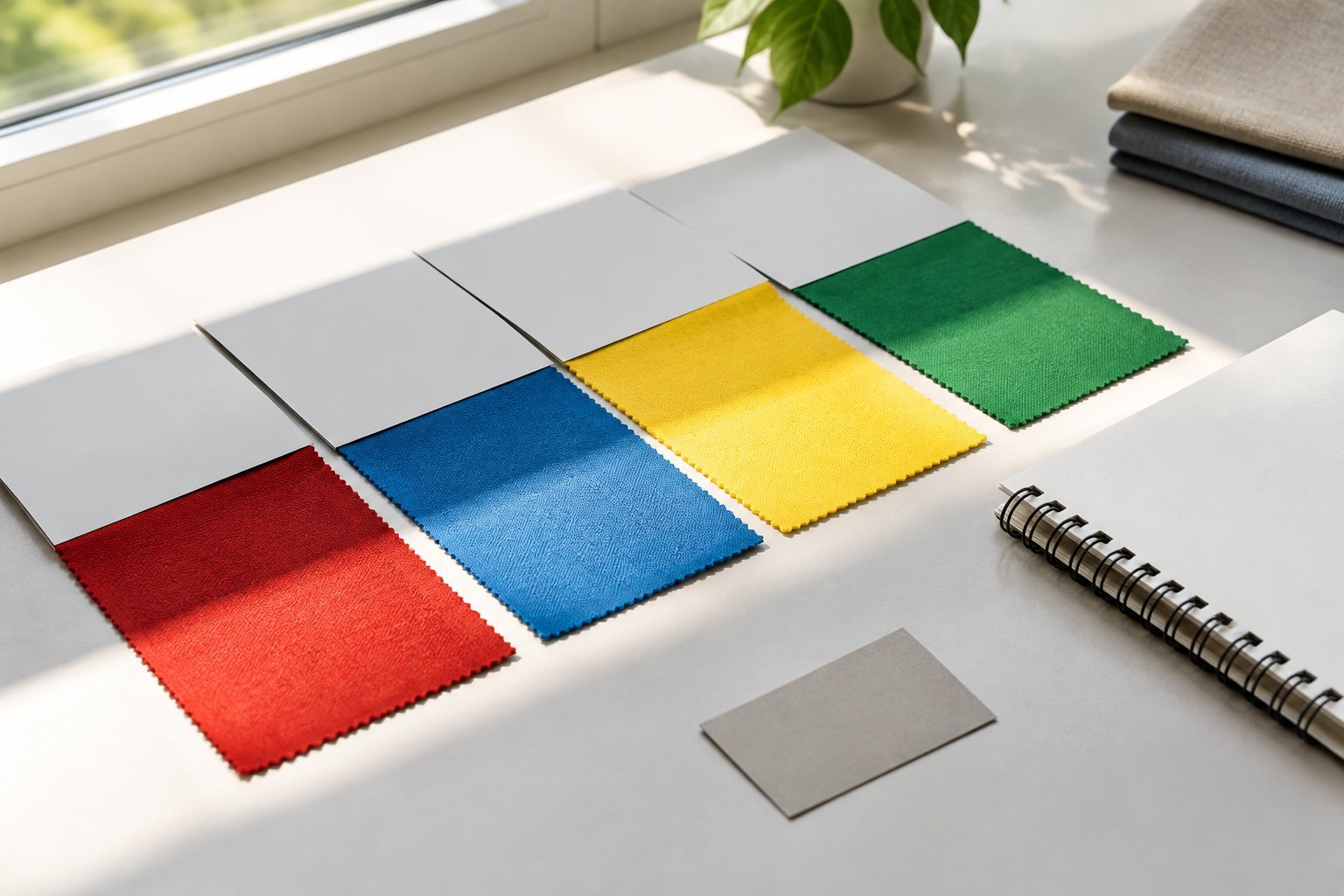
A report marked “grade 4” leaves an important question unanswered: which scale produced that number? Lightfastness specifications help purchasing teams compare shades consistently and establish an appearance requirement before bulk production.
Levitex, established in 1951, manufactures flame-resistant textiles and provides custom dyeing and printing for industrial workwear applications. Color retention forms part of fabric selection alongside the separate performance requirements associated with protective use.
What Do Fading Ratings Actually Measure?
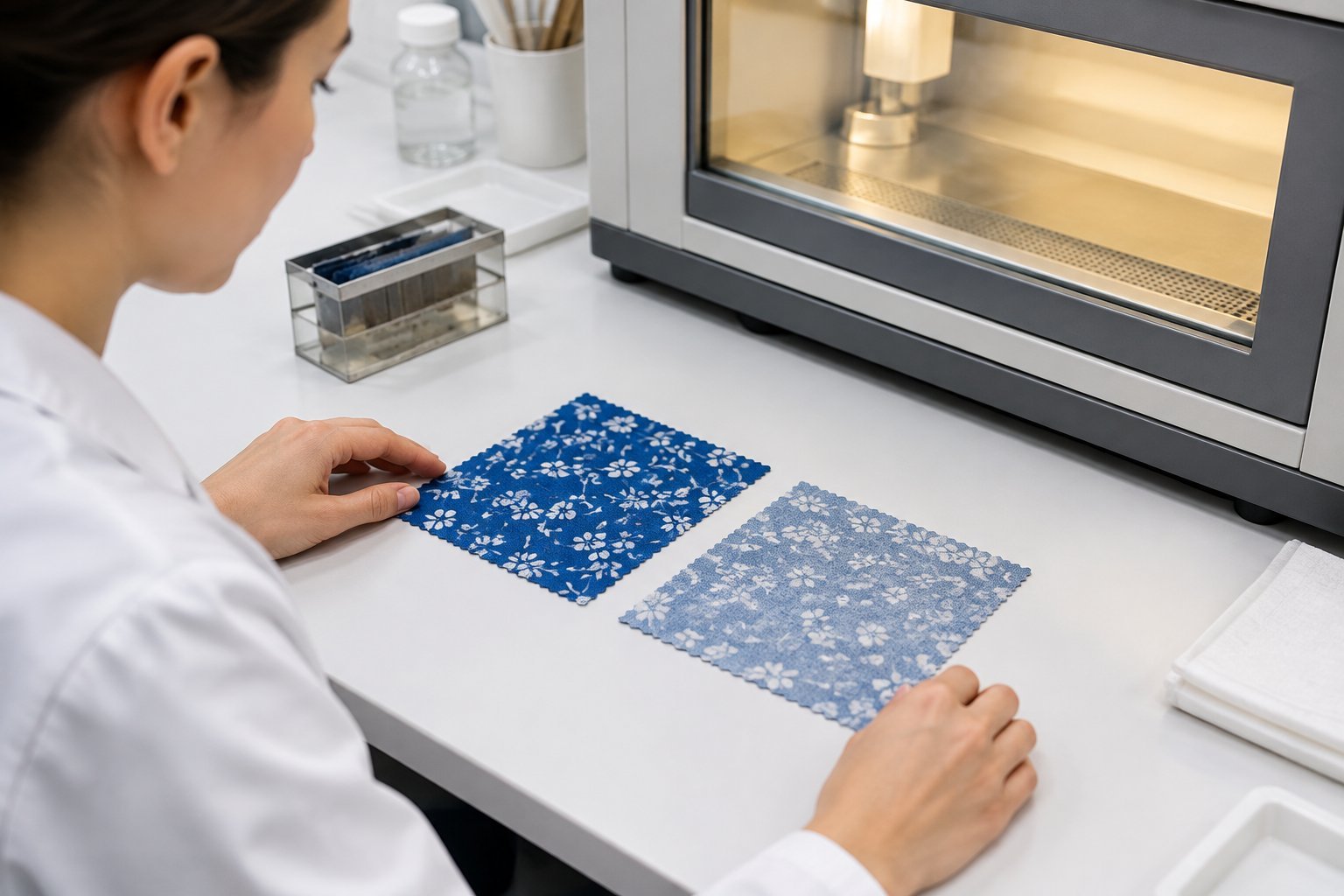
Fading ratings describe a textile’s resistance to light-induced color change under a defined exposure. The scale determines whether the result expresses relative fading resistance or the amount of change after a specified dose.
How Light Exposure Causes Color Change
Light absorbed by a dye or pigment initiates chemical reactions that alter its color-producing molecular structure. Ultraviolet radiation contributes to this degradation, and visible light also causes fading in susceptible colorants.
The result includes loss of color strength, a shift in hue, or both. A blended shade changes hue when its component colorants fade at different rates, so assessment must consider the complete color difference.
Oxygen, moisture and heat influence these reactions. That interaction explains why a light fastness test requires environmental control alongside a defined light source.
Blue Wool Ratings of 1–8 vs. Gray Scale Grades of 1–5
Blue wool standards provide reference fabrics with different fading resistances. In the ISO blue wool reference series numbered 1–8, higher numbers indicate greater resistance.
The gray scale for color change evaluates the difference between exposed and unexposed material. Its grade applies to the exposure already completed.
| Criterion | Blue Wool Series 1–8 | Gray Scale for Color Change |
|---|---|---|
| Scale range | 1–8 | 1–5 |
| Higher value indicates | Greater fading resistance | Smaller color difference |
| Basis of assessment | Relative reference fading | Exposed/unexposed contrast |
| Highest grade means | Highest resistance in the series | No perceptible color change |
| Exposure context | Defined reference endpoint or procedure | Specified dose or endpoint |
Blue wool rating 8 still represents a test result under defined conditions; it provides no promise of permanent color retention. Gray scale grade 5 describes the appearance after the stated exposure.
Some procedures use blue wool references designated L2–L9. Those references form a different series, so the report must identify which reference set was used.
Why a Rating Needs Its Test Method and Exposure Conditions
A light fastness rating becomes comparable when the method, reference system and exposure conditions align. Two gray scale results obtained after different radiant exposures answer different questions.
“Color fastness” and “colour fastness” are spelling variants with the same technical meaning. The meaningful distinctions lie in the exposure procedure and assessment scale.
Within FR fabric quality control, a lightfastness requirement belongs beside sample identification and production traceability. The report should identify the exact shade and finished fabric represented by the result.
How Do Laboratories Control Exposure and Assess Results?
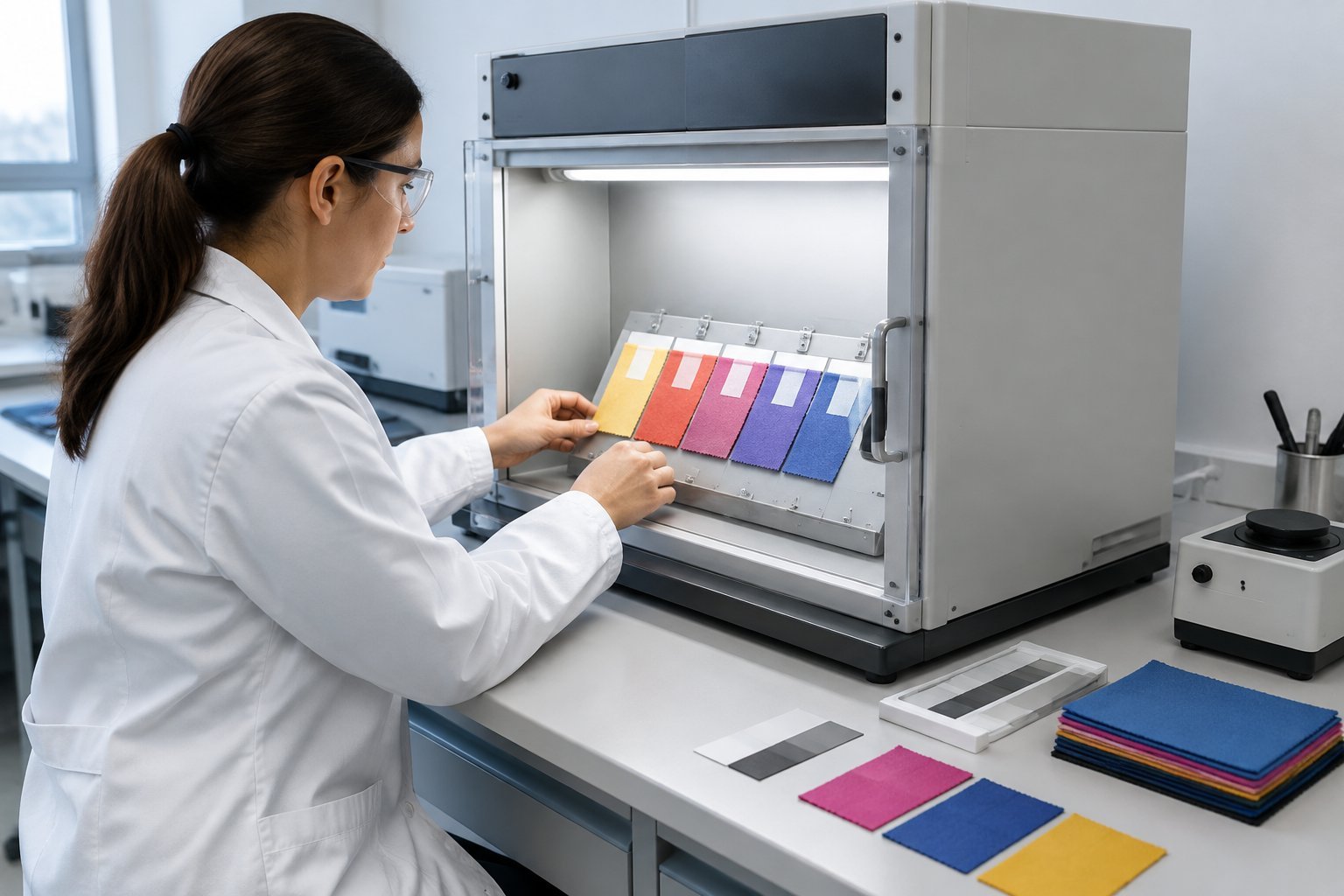
Laboratories make light fastness testing repeatable by controlling the light spectrum and exposure environment, then assessing specimens against defined references. The chosen standard establishes how exposure ends and how the result is reported.
ISO 105-B02 vs. ISO 105-B01 and AATCC 16.3
ISO 105-B02 covers artificial-light testing using a xenon arc fading lamp. ISO 105-B01 covers daylight exposure, while AATCC 16.3 provides xenon arc procedures widely specified in the US textile market.
Dated designations such as ISO 105-B01:2014 and ISO 105-B02:2014 identify particular editions. A purchase specification should state the agreed edition and applicable procedure, with the laboratory confirming the required version before testing.
“AATCC 16” alone leaves the exposure method insufficiently defined because the designation has encompassed different light-source procedures. An AATCC 16.3 request also needs its applicable option and endpoint.
These textile testing methods assess color behavior under their respective conditions. A result from one method requires technical review before acceptance against a requirement written around another.
How a Filtered Xenon Arc Lamp Simulates Daylight
A xenon arc lamp produces broad-spectrum radiation that includes ultraviolet and visible wavelengths. Optical filters modify that output to reproduce the spectral conditions required by the selected test.
Filter selection changes the exposure reaching the specimen. Daylight and window-glass-filtered conditions represent different service environments, so the laboratory must use the filter system required by the procedure.
A light fastness tester also needs maintained filters and calibrated monitoring equipment. Lamp wattage alone gives insufficient information about the spectrum or irradiance at the specimen surface.
Controlling Irradiance, Radiant Exposure, Temperature and Humidity
Irradiance describes the rate at which radiant energy reaches a surface. Radiant exposure describes the energy accumulated over time.
Reports may express irradiance at a selected wavelength in W/m²/nm or across a wavelength band in W/m². Comparisons require matching wavelength definitions and units.
Temperature control includes the prescribed black-panel or black-standard measurement, with chamber air temperature recorded where required. Relative humidity also affects fading behavior, particularly in moisture-sensitive dye-fiber systems.
Clock time and radiant exposure serve different reporting purposes. A controlled dose helps account for changes in light output during the test; the specified method determines the permitted exposure controls.
Preparing Specimens, Exposing References and Reporting Color Change
Specimens must represent the supplied fabric’s surface and finish. For printed textiles, sampling should include each relevant color because separate print components have different fading behavior.
The laboratory mounts specimens with protected areas that retain the original appearance. Blue wool reference standards are exposed as required by the selected procedure, with masking and inspection following the prescribed sequence.
After exposure, assessment takes place under specified viewing conditions. Instrumental color measurements provide additional information when the agreed procedure permits them and identifies the calculation used.
A useful report records:
- Fabric identification, shade and production lot.
- Test standard, edition and procedure.
- Light source and optical filters.
- Irradiance setting and exposure endpoint.
- Temperature and humidity conditions.
- Reference series and assessment scale.
- Result, pretreatment and any procedural deviations.
These details make a colour fastness to light result interpretable during shade approval or a production dispute.
How Should Workwear Buyers Interpret and Specify Results?

Workwear buyers should treat lightfastness as a shade-specific appearance requirement and verify protective properties through their relevant tests. Procurement decisions require results for the finished construction and intended processing route.
How Dyes, Shade Depth, Fiber Blends and Finishes Affect Fading
Dye chemistry establishes the starting point for fading resistance. A color match approved under indoor lighting gives no direct evidence of its stability during prolonged exposure.
Shade depth also influences the result. A deeper shade often shows greater apparent lightfastness than a pale shade produced with the same dye system, but each approved recipe needs its own evidence.
Fiber blends introduce further variables because their components require compatible coloration systems. The choice of workwear fabric material therefore affects both processing and the interpretation of shade performance.
Cotton’s moisture absorption supports its use in industrial workwear, while its lightfastness remains dependent on the applied dye system. Composition alone establishes no fading grade.
Finishing introduces another interaction. Assessment of the final finished fabric captures the combined effects of coloration and processing, making it valuable during research and development.
Why Fading Resistance Does Not Establish UPF or Flame Protection
Lightfastness measures visible color stability. UPF measures ultraviolet transmission through a textile, and flame tests evaluate behavior under specified ignition or heat exposure.
A strong lightfastness result therefore provides no UPF classification. UPF fabric testing requires its own procedure and specimen conditions.
Flame protection likewise needs separate evidence appropriate to the application. EN ISO 11612 codes describe defined heat and flame performance categories, each supported by the relevant assessment.
For fluorescent protective workwear, fading also raises a separate visibility question. The material color and garment requirements associated with EN ISO 20471 flame-resistant workwear require their own evaluation; Levitex’s textile supply remains distinct from finished-garment design and assembly.
Why Washing and Light Exposure Need Separate Assessments
Washing subjects coloration to detergent chemistry and mechanical action. Light exposure subjects it to photochemical degradation, so success in either assessment establishes performance only for that exposure.
A procurement specification should state color fastness to washing separately, including the required laundering conditions. In international reports, “colour fastness to washing” describes the same property.
Surface color transfer introduces another requirement. Color fastness to rubbing evaluates transfer during friction, including wet or dry conditions where specified.
If the application requires light testing after laundering, the agreed sequence must identify the pretreatment. Testing the as-supplied fabric and testing a laundered specimen produce different evidence.
What to Request for Levitex Custom-Dyed and Printed Fabrics
Levitex offers custom dyeing, including fluorescent dyeing, and custom printing. Its main base-fabric families are 100% cotton, cotton/nylon (C/N), and cotton-rich cotton/polyester (CVC).
For a lightfastness inquiry, a buyer should provide the approved color standard and identify the intended industrial application. Printed orders also need a pattern reference and an agreement on which colors require individual assessment.
The request should define:
- Finished composition, construction and fabric weight.
- Shade reference or approved print artwork.
- Light-exposure method and applicable procedure.
- Required endpoint and acceptance criterion.
- As-supplied or pretreated specimen condition.
- Sampling and production-lot requirements.
Levitex supplies a test report for each product. A buyer should request the applicable product-specific report and establish whether its scope includes the required lightfastness assessment.
Broader EN standards for FR workwear remain separate procurement requirements where the hazard assessment calls for them. Buyers developing a custom fabric specification can contact Sales Manager Charlie Luo at Charlie@levitex.com to discuss the shade and reporting requirements.
Specify the Method, Exposure and Acceptance Criterion Together
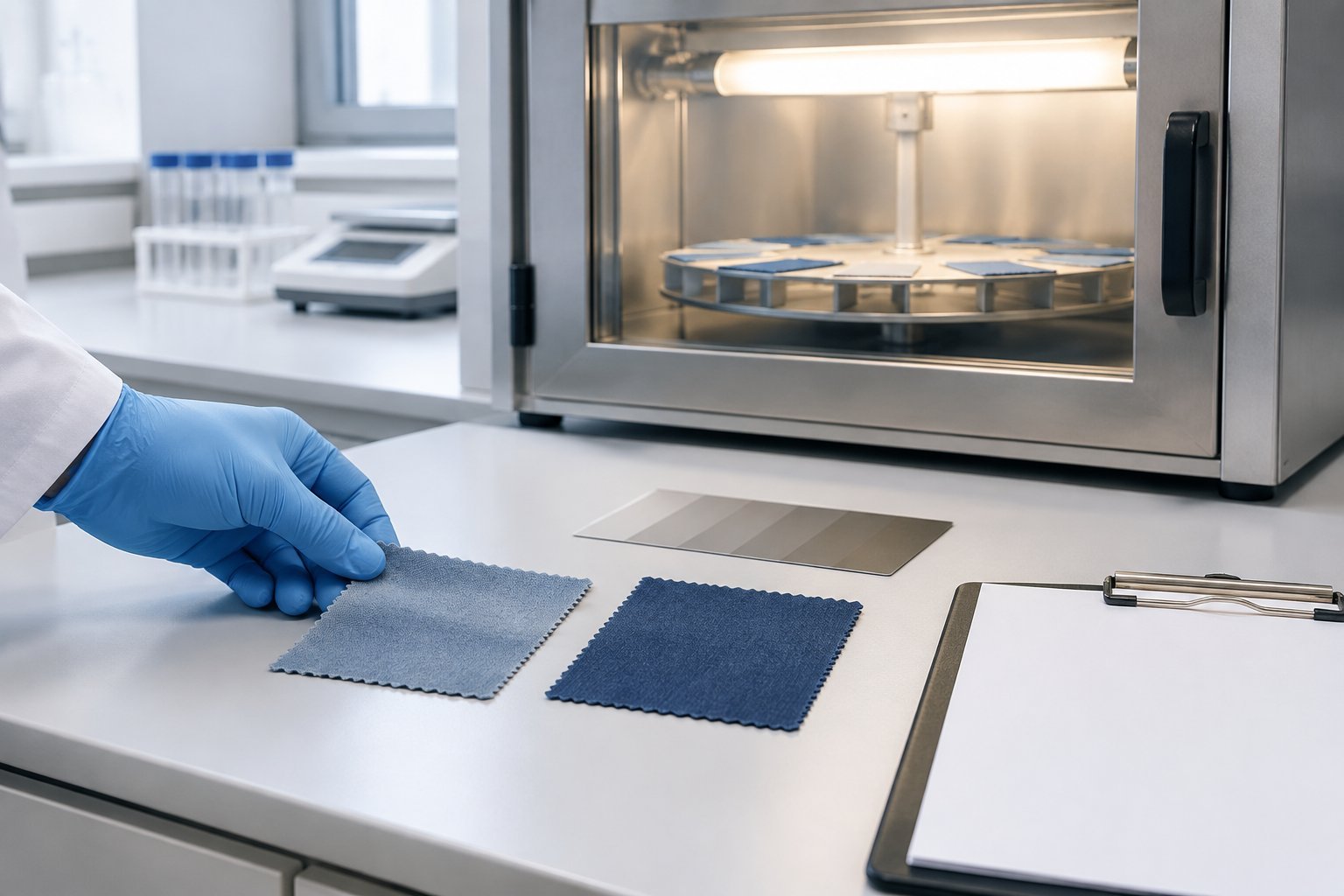
A complete color fastness to light specification ties the rating to a named method and a defined exposure endpoint. That combination supports comparable quotations and clear production acceptance.
A practical specification follows this structure:
Lightfastness testing to the agreed standard, edition and procedure; exposure to the stated radiant dose or reference endpoint; assessment using the identified scale; minimum acceptance result as agreed for the specified shade and finished fabric condition.
The light fastness rating should remain attached to the specimen identification and pretreatment record. Separate requirements should address washing performance and any protective claims relevant to the fabric’s intended use.
Frequently Asked Questions

Useful answers about lightfastness begin with the scale and exposure conditions attached to the result. Those details determine how a buyer should interpret a reported grade.
What is a good lightfastness rating for industrial workwear?
A good rating meets the buyer’s agreed appearance requirement under an exposure relevant to the work environment. Prolonged outdoor use warrants a more demanding specification, with feasibility checked against the exact shade and finished fabric.
Does grade 4 mean the same thing in every light fastness report?
Grade 4 has different meanings on blue wool and gray scales. A comparable result requires the same assessment system and compatible exposure conditions.
What does light fastness of 40 hours mean?
It identifies an exposure duration whose meaning requires the associated light source and test settings. Some specifications refer to AATCC fading units, which are reference-based exposure measures and must be distinguished from elapsed clock hours.
Can laboratory exposure hours predict years of outdoor use?
Laboratory hours have no universal conversion into outdoor years. A service-life estimate requires validated correlation for the material and relevant field conditions, including location and exposure orientation.
Does visible fading mean an FR fabric has lost flame protection?
Visible fading alone establishes no conclusion about retained flame protection. Fabric showing discoloration or deterioration should be assessed under the applicable inspection criteria, with protective performance verified through the relevant tests when required.