
Cotton drill fabric is a firm, closely woven cotton twill used for durable work clothing; twill names the broader weave family, while canvas commonly uses a plain or basket-weave construction. Drill suits work trousers and structured uniforms because its compact construction provides body with a defined diagonal surface.
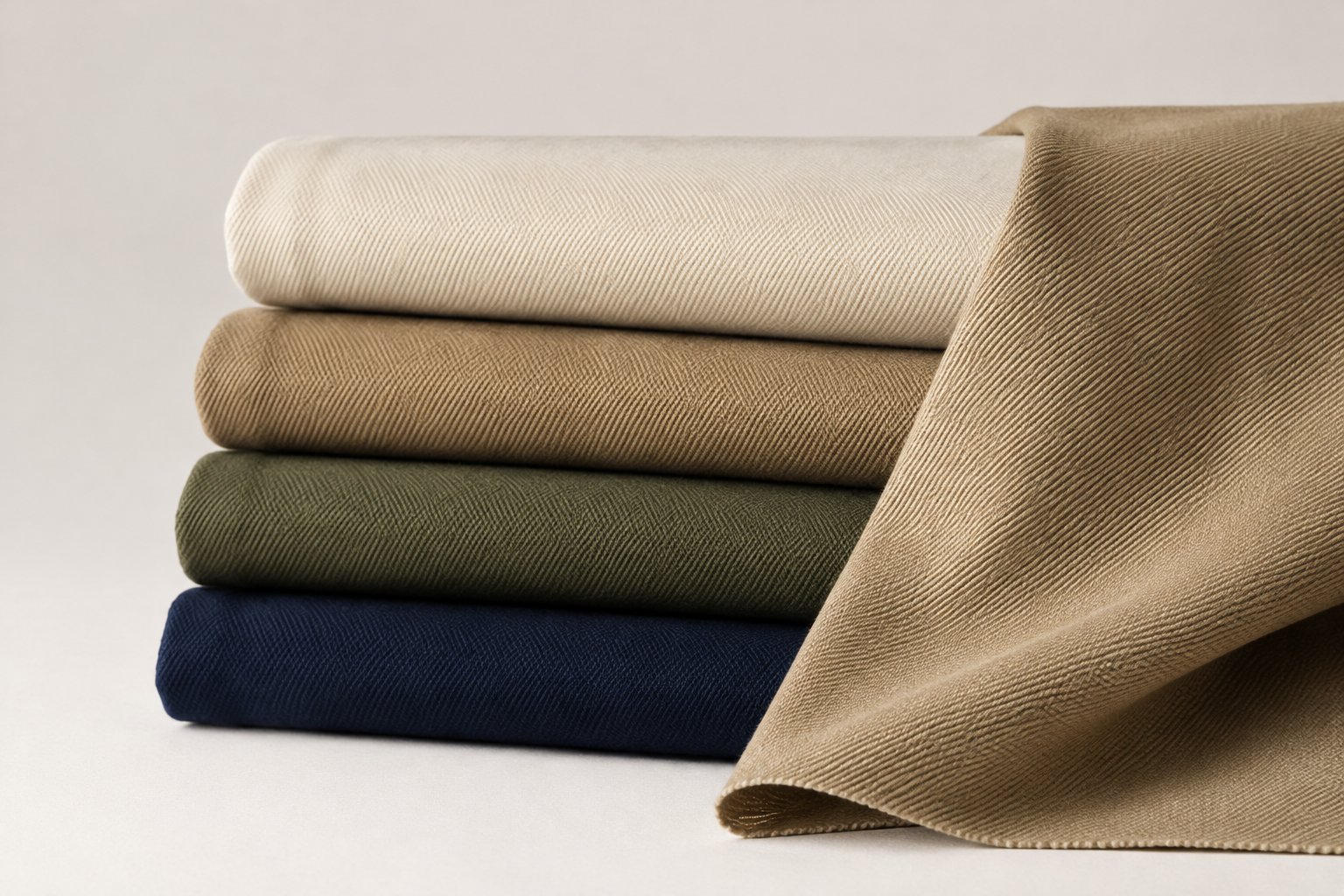
For industrial buyers, these names provide a starting point for comparing cloth. Yarn size, fabric density and finishing determine how a particular construction handles during cutting, sewing and service.
Levitex manufactures textiles for industrial and protective-workwear applications, including customized flame-resistant fabrics. Its manufacturing focus brings a useful distinction to drill selection: everyday durability and verified protective performance require separate specifications.
How Does Drill Construction Differ from Other Cotton Fabrics?
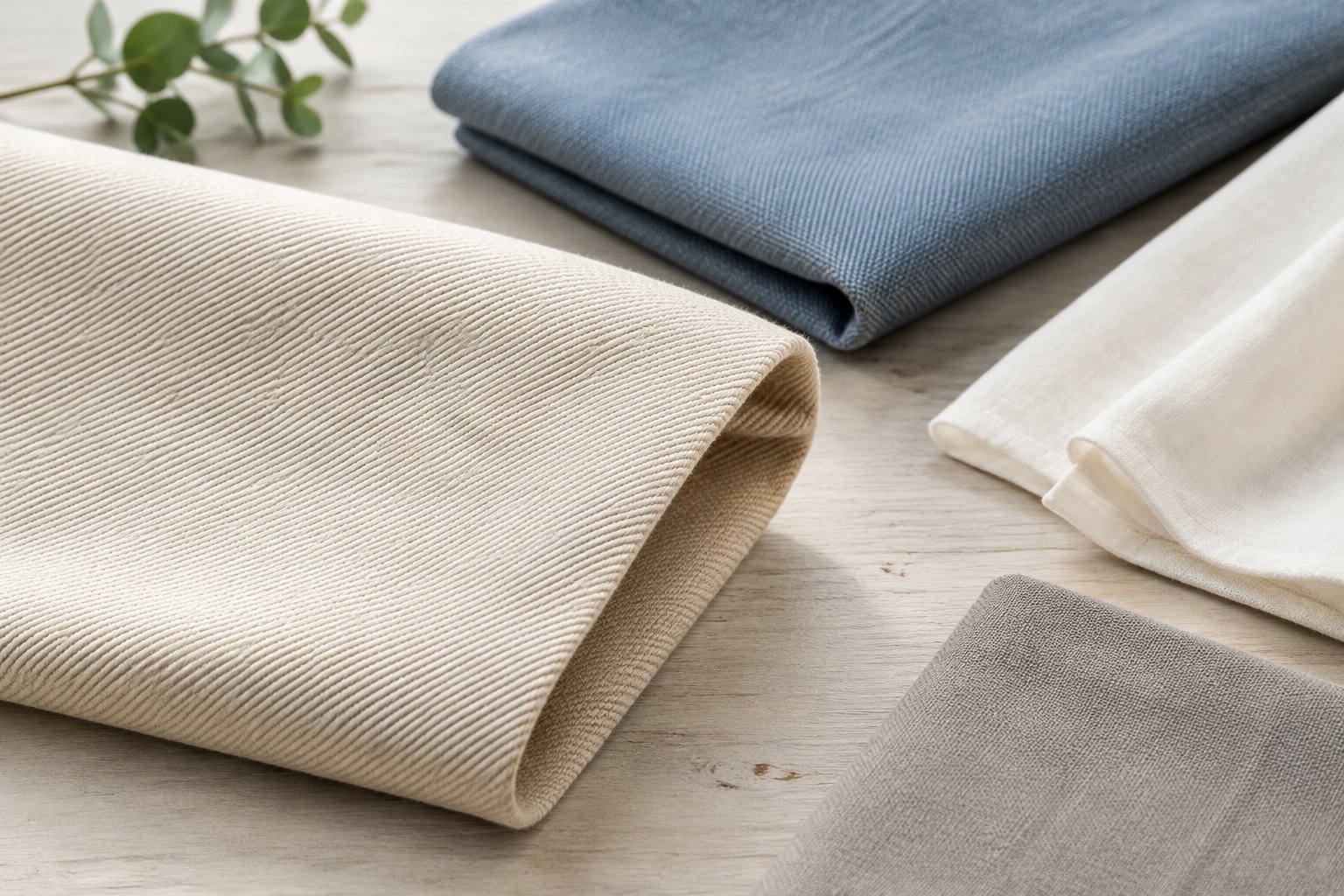
Drill combines a pronounced twill surface with a compact, substantial construction. Its characteristic handle comes from the interaction of yarns, weave density and finishing.
What Creates Drill’s Diagonal Surface and Firm Handle?
A twill weave shifts the interlacing point between successive yarns, forming diagonal ribs across the cloth. Cotton drill commonly uses a warp-faced construction, which gives the lengthwise yarns greater prominence on the face.
The firm handle also reflects yarn thickness and the number of yarns packed into the fabric. A softening finish changes that initial feel, while shrinkage-control treatment affects dimensional stability.
A diagonal surface alone provides little evidence of service life. Buyers assessing rubbing wear need a defined abrasion method, such as the Martindale abrasion test, with acceptance criteria appropriate to the intended garment.
Drill vs. Generic Twill: A Fabric Type vs. a Weave Family
Drill belongs within the twill family. That family also includes lightweight shirtings and heavier industrial fabrics, so a purchase description containing only “twill” leaves substantial room for variation.
Drill describes a recognizable cloth type associated with a firm handle and durable construction. Commercial naming still varies between suppliers, making an approved reference sample valuable.
For repeat orders, the specification should identify the weave repeat, yarn counts, thread density and finished weight. Those details help prevent substitution with another twill that looks similar but behaves differently during production.
Drill vs. Canvas: Construction Matters More Than the Label
Canvas commonly uses plain or basket-weave interlacing, producing a different surface from drill’s diagonal ribs. Heavy yarns and compact weaving give many canvas fabrics substantial body.
| Comparison point | Cotton drill | Generic twill | Cotton canvas |
|---|---|---|---|
| Category | Specific cloth type | Weave family | Cloth category |
| Common construction | Compact twill | Varied twill repeats | Plain or basket weave |
| Surface | Distinct diagonal ribs | Diagonal pattern | Interlaced texture |
| Handle | Firm, garment-oriented | Broadly variable | Often substantial |
| Industrial uses | Trousers, uniforms | Shirts through outerwear | Heavy workwear, covers |
These categories overlap in weight and stiffness. A lightweight canvas and a heavy drill challenge any simple assumption that canvas always feels heavier.
Buyers should compare finished samples and measured properties. Fabric tensile strength describes resistance to pulling loads; it provides information that a trade name or hand assessment cannot establish.
Does Cotton Drill Always Mean 100% Cotton?
Traditional cotton drill is made from cotton, and 100% cotton drill is available commercially. Supplier terminology also includes cotton-rich drill blends, making a written fiber declaration essential.
A specification should state the exact percentages by mass, including any additional functional yarns. Cotton/nylon and cotton/polyester constructions require their own identification.
The properties of cotton/nylon blends differ from those of pure cotton. Buyers should assess the declared composition alongside construction and finish before treating two drill fabrics as interchangeable.
Which Industrial Applications Suit Drill?
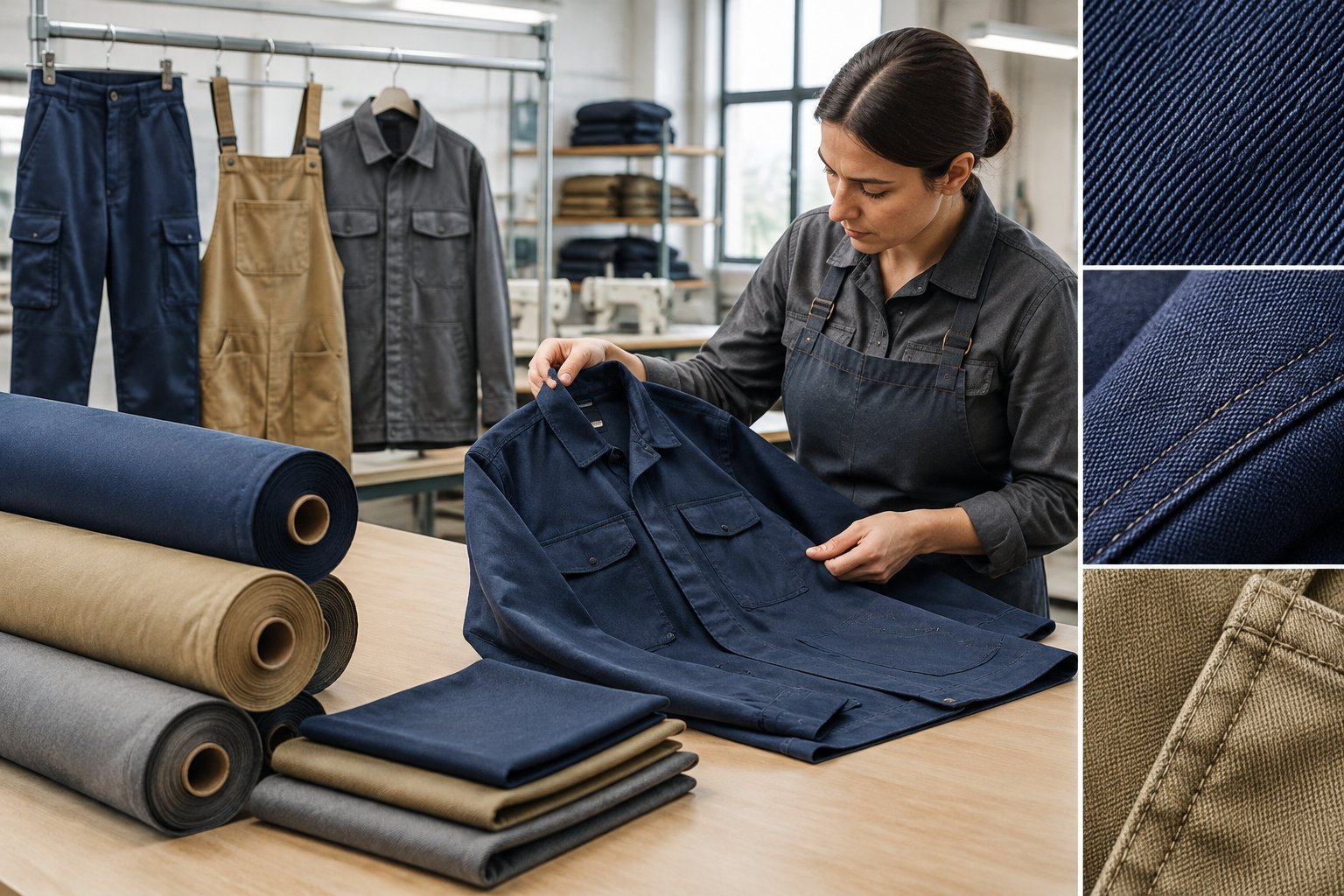
Drill suits work trousers, overalls and uniforms that require a firm woven fabric with enough body for repeated use. The selected weight and finish must also support movement and the intended laundering process.
Why Drill Is Used for Work Trousers, Overalls and Uniforms
A compact drill construction supports pockets, seams and other heavily handled areas of work clothing. Its firm surface also helps maintain the recognizable shape of uniform trousers and overalls.
Cotton absorbs moisture, which contributes to its suitability for workwear. Airflow still depends on fabric openness and finishing; dense drill requires closer comfort assessment for hot workplaces.
Selecting materials for workwear also involves the garment’s mechanical demands. Pocket corners, knee areas and seat seams deserve particular attention during garment trials because local stresses exceed those across an unstressed fabric panel.
How Weight and Handle Affect Jackets and Structured Workwear
Heavier drill gives jackets and structured garments greater body, while lighter constructions reduce bulk around elbows and underarms. Excessive stiffness restricts movement and complicates multilayer seams.
Finished weight should be recorded in grams per square meter, with ounces per square yard added for U.S. purchasing documents. A useful conversion is 1 oz/yd² ≈ 33.9 gsm.
Weight alone leaves important differences unresolved. Garment producers should assess fold recovery and seam bulk, then verify fabric tear strength using the specified method. A heavy fabric still needs evidence of resistance to tear propagation.
What Military Uniform Applications Require Beyond Durable Cloth
Military uniforms require conformity to the purchasing authority’s specification. Relevant requirements include shade consistency, dimensional stability, mechanical performance and the approved laundering procedure.
Camouflage introduces pattern registration and color-control requirements. Near-infrared reflectance control requires separate evidence whenever the contract specifies it.
Levitex offers flame-resistant camouflage fabric and custom printing. Its camouflage offering does not include near-infrared reflectance control, so contracts containing that requirement need a supplier route capable of documenting it.
What Should Buyers Specify for Protective-Workwear Production?
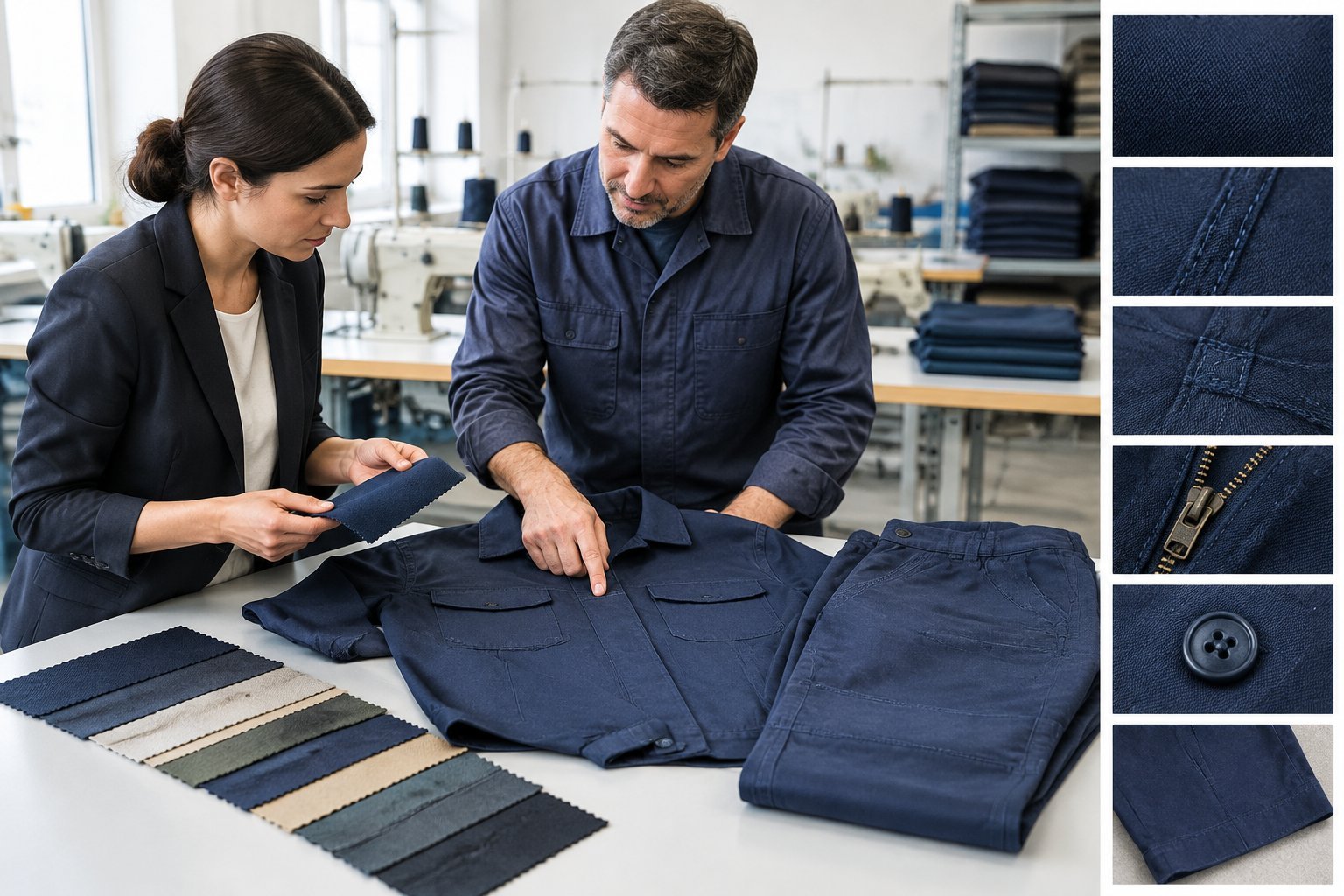
Protective-workwear specifications must connect each workplace hazard to documented fabric performance and applicable garment requirements. Cotton content and twill construction alone do not establish protection.
Why Cotton Content and Twill Construction Do Not Establish Protection
Untreated cotton is combustible. A dense drill weave provides structure, but flame behavior requires a suitable FR treatment and product-specific testing.
Mechanical durability also addresses a different question from heat, chemical or electrical protection. Neither fabric weight nor an industrial product label establishes an arc rating or molten-metal splash performance.
For flame-retardant cotton fabrics, the purchasing record should identify the finished material and its supporting report. Any claimed protection must match the tested construction and treatment.
How FR and Repellent Finishes Change the Specification
FR finishing changes the material supplied, so approval should cover the finished cloth. Relevant checks include flame behavior, dimensional change and mechanical properties after the specified conditioning or laundering.
Levitex offers FR plus water-repellent and FR plus oil-repellent finishing on 100% cotton, cotton/nylon (C/N), and cotton-rich cotton/polyester (CVC) base fabrics. Requested performance levels and care conditions require agreement for the selected product.
Repellent treatment promotes liquid shedding at the surface. Chemical-repellent cloth has different protection characteristics from barrier-based chemical-resistant material, and multifunctional FR finishing compatibility requires assessment across the complete finish combination.
Which Fabric Reports and Garment Requirements Apply?
The employer’s hazard assessment and destination-market requirements determine the relevant standards. In U.S. applications, flash-fire and electrical-arc clothing follow different selection routes, with separate evidence supporting each claim.
International contracts might specify EN ISO 11611 for welding or EN ISO 11612 for heat and flame. Other EN standards for FR workwear address additional hazards and garment functions.
A useful report identifies:
- The tested sample and its composition.
- Construction, finished weight and treatment.
- Test method and applicable edition.
- Pretreatment or laundering conditions.
- Results and the scope of the assessment.
Garment producers must address seams, closures, coverage and all incorporated components. Levitex supplies textiles; finished-garment design and assembly remain outside its offering.
Why BS 5867 Is Not a Workwear Protection Standard
BS 5867 addresses fabrics for curtains, drapes and window blinds. Its end use and test framework differ from those used for protective work clothing.
A BS 5867 result therefore provides evidence within that furnishing context. It does not establish that drill is suitable for welding garments, flash-fire coveralls or electrical protective clothing.
When a quotation includes this standard, the buyer should identify the intended workwear hazard and request the corresponding evidence. The fabric report must support the application named in the purchase specification.
What to Confirm with Levitex About Samples, Customization and Care
Levitex provides wholesale FR fabrics, custom dyeing and custom printing. Its monthly production capacity includes 1.5 million meters dedicated specifically to flame-retardant fabrics.
For a drill inquiry, a buyer should submit the desired composition, weave, finished weight, width and color reference. The intended application and required performance should accompany those construction details.
A practical inquiry should also request:
- A representative sample with its finish clearly identified.
- Confirmation of the proposed construction’s availability.
- Minimum order quantity, sampling arrangements and production lead time.
- Product-specific reports for the selected finished fabric.
- Care instructions and agreed dimensional-change limits.
Industrial buyers can contact Sales Manager Charlie Luo at Charlie@levitex.com or (+86) 1551 730 3033 to discuss the proposed fabric specification.
Choose Drill by Construction, End Use and Verified Performance
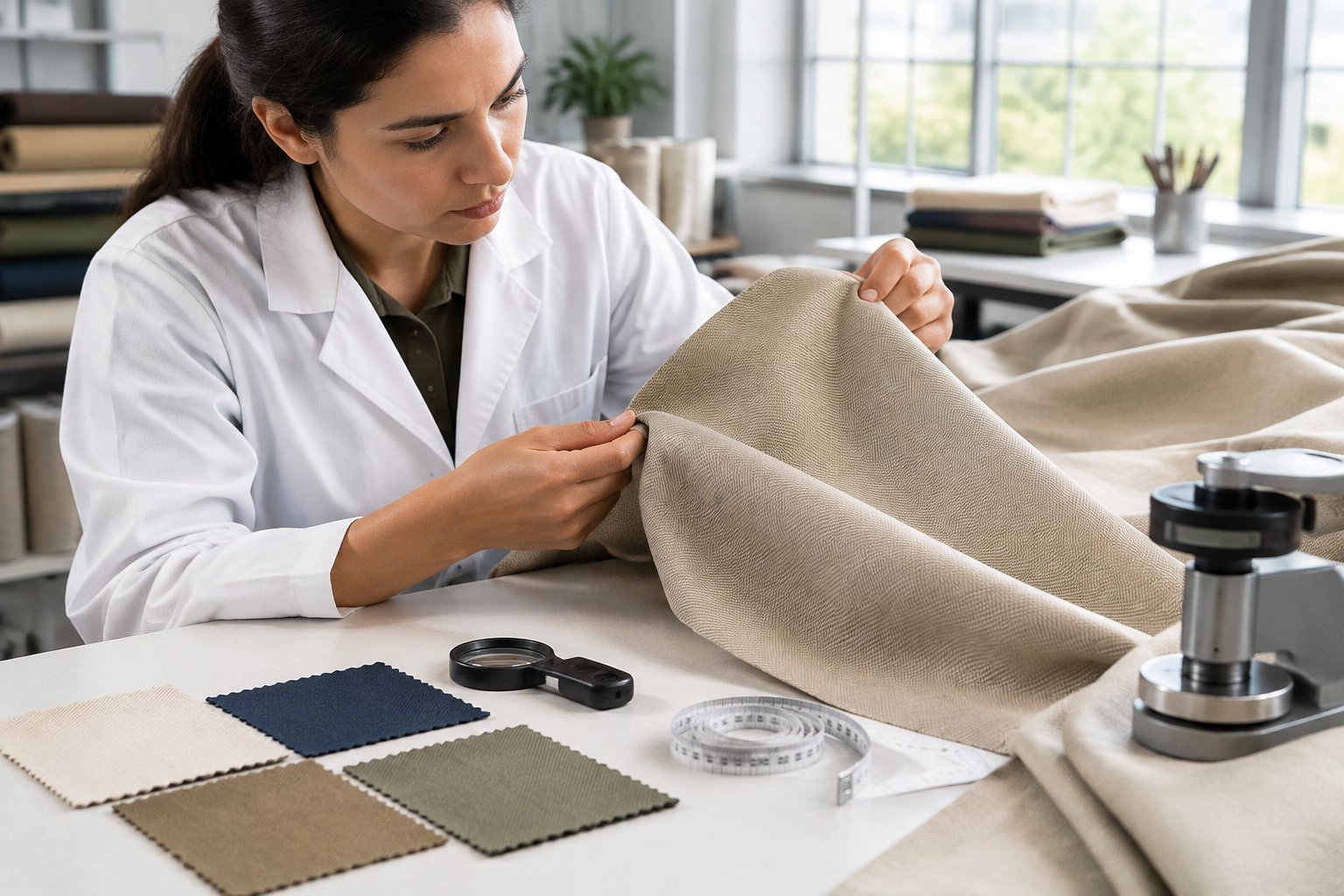
Cotton drill offers a firm twill construction suited to durable uniforms and structured workwear. Generic twill covers a wider range of fabrics, while canvas commonly brings a plain or basket-weave structure.
Purchase approval should connect the cloth description to an identified sample and measurable requirements. For protective applications, the finished fabric needs supporting reports, and the garment producer must satisfy the relevant clothing requirements.
A repeat-order specification should retain the approved composition, construction, finish and care conditions, together with the reference sample used for production approval.
Frequently Asked Questions
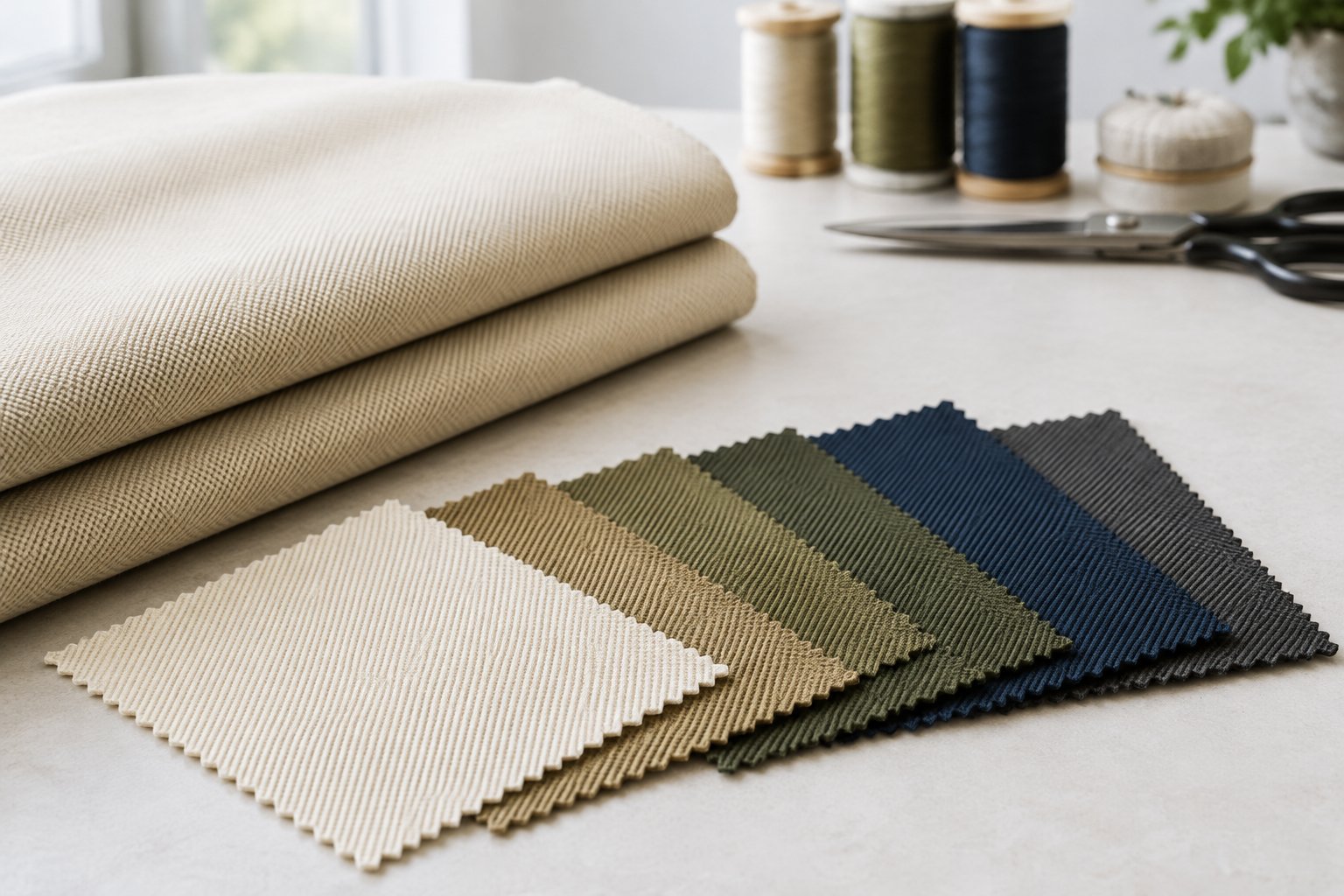
Cotton drill purchasing questions center on composition, garment suitability and laundering behavior. Order quantities also require supplier-specific confirmation.
What is the difference between cotton and cotton drill fabric?
Cotton identifies the fiber, while cotton drill fabric identifies a particular woven cloth made with a pronounced twill structure. Cotton also forms many other fabric types, including plain-weave shirting and canvas.
Is 100% cotton drill fabric available?
Yes, 100% cotton drill is commercially available. A supplier’s written composition declaration should identify the ordered fabric because drill descriptions also appear on cotton-rich blends.
Is cotton drill suitable for work shirts?
Lightweight drill suits work shirts when its flexibility and airflow meet the job’s requirements. A garment sample should establish comfort around the shoulders and elbows, especially where protective finishing adds firmness.
Does cotton drill shrink when washed?
Cotton drill is susceptible to washing shrinkage, particularly when dimensional stabilization is limited. The supplier should state residual shrinkage under the intended care procedure so the garment producer can set cutting allowances.
Can cotton drill fabric be supplied by the yard or in bulk?
Retail suppliers sell cotton drill fabric by the yard, while industrial manufacturers supply wholesale quantities under agreed order terms. Levitex offers wholesale fabric production; buyers should confirm minimum order quantities and sampling arrangements for the requested construction, color and finish.