
Alkali resistance is a material’s ability to retain its required properties during exposure to alkaline substances under specified conditions. For industrial buyers, that means selecting fabrics, coatings, or structural materials that preserve the strength and function their application requires.
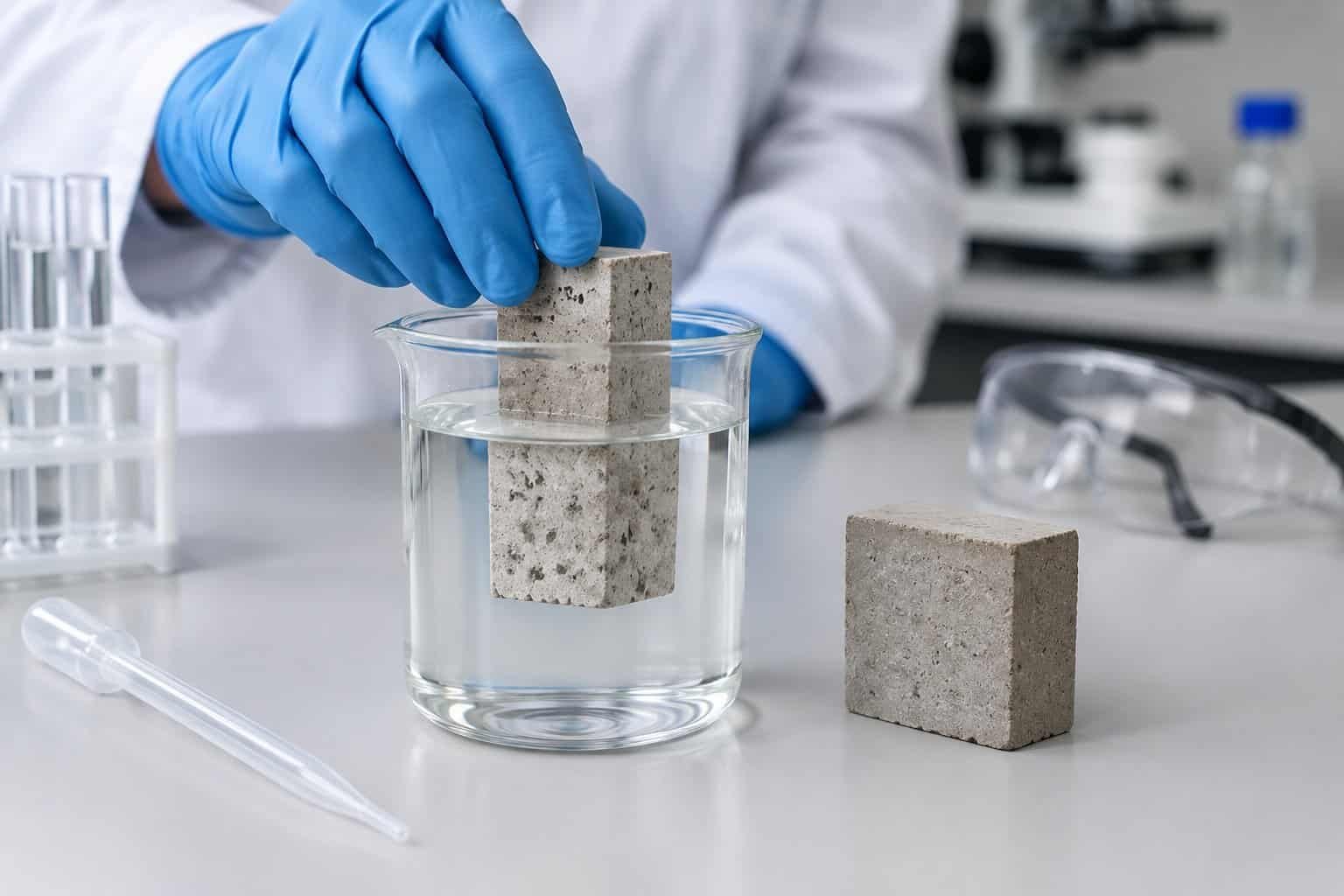
A fabric that remains strong after alkaline cleaning and a coating that survives caustic process liquid serve different purposes. Each needs evidence tied to its actual exposure, including the chemical concentration and temperature.
For workwear procurement, the distinction extends to wearer safety. Fiber durability, liquid repellency, and chemical-barrier performance describe separate properties, and each requires an appropriate evaluation.
What Does It Mean for a Material to Resist Alkalis?
A material resists alkalis when it retains acceptable performance after a defined alkaline exposure. The required performance might involve tensile strength, dimensional stability, adhesion, or another application-specific property.
How Alkaline Exposure Can Degrade Materials
Alkaline substances attack susceptible chemical bonds or alter a material’s structure. Depending on its composition, the resulting damage includes swelling, surface erosion, embrittlement, or loss of adhesion.
Visible appearance provides only part of the picture. A reinforcement or fabric might retain its shape while losing tensile capacity, so evaluation should include the property responsible for its useful function.
Why Resistance Is Specific to Exposure Conditions
A resistance claim applies to a defined combination of material and exposure. Successful service in a dilute cleaning solution does not establish performance in concentrated caustic liquid.
The acceptance criterion also changes with the application. Slight discoloration might be acceptable in a structural component, while a small loss of coating adhesion could compromise a containment system.
Which Exposure Conditions Determine Performance?
Chemical identity, concentration, temperature, exposure duration, and mechanical loading determine performance in an alkaline environment. A useful specification records these conditions together, including foreseeable cleaning and maintenance exposures.
Chemical Identity, Concentration, and pH
The chemical name and formulation provide essential information beyond pH. Sodium hydroxide, alkaline detergents, and cement porewater present different exposure conditions, even when their measured alkalinity seems comparable.
Concentration should include its measurement basis, such as percentage by mass. Commercial mixtures also require attention to surfactants or solvents because these ingredients influence wetting and material compatibility.
Temperature, Contact Time, and Repeated Exposure
Higher temperature accelerates many degradation processes and changes the relevance of a compatibility rating. Brief splashes and continuous immersion therefore require separate consideration.
Repeated exposure also introduces cumulative damage, especially when liquid remains in folds or beneath a coating defect. Test conditions should reflect the hottest credible contact and the interval before effective cleaning or decontamination.
Mechanical Stress and Combined Chemical Exposure
Mechanical loading creates additional failure routes during chemical contact. Tension, flexing, and abrasion expose weaknesses that an unstressed immersion specimen might retain without visible damage.
Combined hazards also require separate evidence. For example, flame-retardant performance testing addresses a different function from chemical compatibility, even when both properties are required in the same workwear fabric.
How Do Common Material Categories Compare?
Common material categories contain useful candidates for alkaline service, but selection requires grade-specific evidence. Formulation and construction influence performance within every category.
Qualified Comparison of Polymers, Coatings, Ceramics, and Reinforcements
Each category has characteristic selection concerns, and the finished system determines service performance. The following comparison identifies those concerns without assigning universal resistance ratings.
| Selection factor | Polymers | Coatings | Ceramics | Reinforcements |
|---|---|---|---|---|
| Key specification | Resin grade | Binder and cure | Ceramic composition | Fiber and matrix |
| Relevant damage | Swelling or cracking | Blistering or debonding | Surface attack | Strength loss |
| Assembly concern | Joints and seals | Defects and substrate | Grout and joints | Fiber-matrix interface |
| Useful evidence | Exposure testing | Adhesion after exposure | Chemical compatibility | Strength retention |
A polymer’s name alone leaves important formulation differences unresolved. Likewise, epoxy chemistry, curing conditions, and film integrity affect a coating’s suitability, while ceramic installations require compatible jointing materials.
Ordinary Glass vs. Engineered Alkali-Resistant Glass
Ordinary glass reinforcement and engineered alkali-resistant glass have different suitability for cementitious environments. Alkaline attack on susceptible glass reduces its reinforcing contribution over time.
Engineered AR-glass is formulated for this exposure; specific products are designed to reinforce cementitious composites. In a fiber-reinforced polymer composite, the resin and fiber-matrix interface also affect chemical access and retained strength.
Where Construction Applications Fit
Construction applications place alkali resistance within the performance requirements of a complete assembly. Concrete reinforcement, masonry primers, and industrial floor coatings each face distinct exposure and loading conditions.
An alkali-resisting primer supports coating compatibility over alkaline masonry. Its application still depends on substrate preparation, moisture conditions, curing requirements, and compatibility with the selected topcoat.
How Do Cotton and Other Textile Substrates Respond?
Cotton tolerates useful alkaline processing conditions, while each textile substrate requires evaluation for its intended service exposure. Fiber composition provides a starting point for selection, followed by testing of the finished fabric.
Cotton Performance Depends on Processing and Exposure
Cotton’s response to alkali includes controlled swelling during textile processing. Mercerization uses caustic soda to alter fiber properties, and traditional processing employs 25–26% sodium hydroxide by mass under controlled conditions.
That manufacturing process includes managed treatment and washing stages. The chemical properties of cotton fabric must therefore be interpreted alongside exposure temperature, duration, and the condition of the finished textile.
Polyester, Nylon, and Blends Require Separate Evaluation
Polyester and nylon bring different chemical structures and exposure limits to a fabric. Hot alkaline conditions promote hydrolysis of susceptible polyester, while nylon behavior requires attention to its particular grade and service conditions.
A cotton-versus-polyester comparison helps explain substrate differences, but blend percentages do not establish chemical performance. Testing should cover the finished blend because damage to one component affects the fabric’s strength and integrity.
How Finishes, Dyes, and Laundering Affect Fabric Performance
The finished textile includes treatments whose durability differs from that of the underlying fibers. Chemical-repellent finishes and dyes respond to exposure through mechanisms that require their own evaluation.
Laundering introduces detergent chemistry, heat, and mechanical action. Dimensional changes such as fabric shrinkage also affect fit and coverage, so retained chemical performance should be considered alongside garment dimensions.
Does Material Durability Mean Chemical Protection?
Material durability establishes how a material survives exposure; wearer protection requires evidence that the clothing limits hazardous contact. A strong fabric still needs evaluation for liquid passage and the performance of the finished garment.
Alkali-Resistant Materials vs. Chemical-Repellent Fabrics
Alkali-resistant materials retain specified properties during alkaline exposure, while chemical-repellent fabrics encourage liquid shedding under evaluated conditions. Textile selection therefore requires a clear distinction between chemical-resistant fabric functions and surface repellency.
Levitex produces chemical-repellent fabrics through post-treatment finishing on cotton, cotton/nylon (C/N), and cotton/polyester (CVC) base fabrics. These products require product-specific assessment for the intended chemical; their repellent finish does not establish barrier-level chemical protection.
Repellency, Penetration, and Permeation Are Different Measures
Repellency describes liquid shedding, penetration describes liquid passage through openings or defects, and permeation describes molecular transport through a material. The distinction between water resistance and fabric repellency also illustrates why surface beading alone provides limited evidence.
Chemical testing must address the relevant transport mechanism. ISO 6530 measures penetration, absorption, and repellency indices for protective clothing materials exposed to liquid chemicals, mainly those of low volatility.
Why Garment Protection Requires More Than Fabric Data
Garment protection depends on construction and the integration of protective equipment. Seams and closures introduce pathways that a flat fabric specimen does not represent.
Selection of chemical protective clothing levels also requires an assessment of the task and exposure route. OSHA emphasizes that protective equipment must function as an integrated ensemble, including compatible interfaces between clothing and other equipment.
Safe Handling and Alkali Burn Precautions
Alkali handling requires exposure controls, suitable protective equipment, and accessible emergency facilities. The potential for deep tissue injury explains why alkali exposure can cause severe burns, even when initial discomfort seems limited.
Chemical-specific safety data sheets should guide emergency procedures. NIOSH specifies immediate irrigation with large amounts of water and immediate medical attention for chemicals assigned its immediate eye-irrigation instruction; contaminated clothing and dry chemical deposits require the appropriate chemical-specific response.
What Test Evidence Should Buyers Request?
Buyers should request reports that connect an identifiable product to the intended alkaline environment and required function. A useful report documents specimen preparation, exposure conditions, measured results, and acceptance criteria.
Match Test Methods to the Material and Intended Exposure
The test method must address the material category and the failure mechanism being evaluated. A reinforcement durability test provides different information from a protective-clothing penetration test.
For example, the cited edition of ASTM D7705/D7705M evaluates FRP reinforcing bars through alkaline exposure followed by tensile testing, with procedures conducted at 60°C (140°F). Procurement specifications should identify the applicable edition and procedure because methods and their scopes change.
For clothing materials, ASTM F903 evaluates liquid penetration through suitable specimens and assemblies. Its scope explicitly recognizes that hazardous chemicals can permeate specimens that pass penetration testing, requiring separate permeation evaluation where relevant.
Review Strength Retention and Relevant Protective Performance
Strength retention should be assessed against an unexposed baseline and a predefined minimum requirement. The report should identify which property was measured, such as tensile capacity or tear strength, and describe specimen variability.
Protective performance requires additional endpoints when hazardous contact is possible. ASTM F1383 measures intermittent-contact permeation and reports breakthrough times and cumulative permeation; those results do not establish safe skin-exposure levels or a universal wear time.
Request Results After Laundering and Repeated Use
Reusable workwear requires performance evidence after its specified care process. Reports should state wash-cycle count, detergent conditions, drying method, and any finish-reactivation procedure.
ISO 15797 provides industrial washing and finishing procedures for evaluating workwear, with procedure selection tied to the fabric and intended use. Chemical-repellent performance still requires reassessment after that conditioning; the laundering procedure itself does not certify protection.
Repeated use also includes abrasion and flexing. A relevant evaluation should reproduce the wear mechanisms most likely to damage the fabric surface or its finish.
A Procurement Checklist for Compatible Materials
A procurement specification should translate exposure conditions into measurable product requirements and acceptance evidence. Clear documentation also supports consistent incoming inspection and replacement decisions.
Define the Chemical Exposure and Required Function
The exposure description should identify the full chemical formulation and how contact occurs. A safety data sheet supports this work, while process information establishes the conditions experienced by the material.
A practical specification records:
- Chemical name, mixture ingredients, and concentration basis.
- Normal and maximum credible contact temperatures.
- Splash, spray, immersion, or contaminated-surface contact.
- Contact duration and frequency.
- Mechanical loading or abrasion during exposure.
- Required function and measurable acceptance criteria.
For textiles, the chosen workwear fabric material must also support the garment’s physical demands. Chemical compatibility belongs alongside requirements for strength and care durability.
Request Product-Specific Reports and Representative Samples
Reports and samples should correspond to the exact product being purchased. A fabric report should identify its composition, construction, finish, and conditioning history so results remain traceable to the supplied material.
Samples should represent the proposed production specification, including relevant dyeing or printing. Buyers discussing alkaline splash-related chemical-repellent fabric requirements with Levitex can contact Charlie@levitex.com with the exact chemical and intended tests; suitability requires evaluation of the proposed fabric.
Confirm Care Instructions, Replacement Criteria, and Supplier Claims
Care instructions should describe the process required to maintain the evaluated performance. Replacement criteria should address damage and contamination as well as the validated service-life limits established for the product.
Supplier claims should identify their scope clearly. Factory quality systems, for example, address different questions from product compatibility, while fabric quality control supports consistency between an approved specification and production deliveries.
Useful purchasing documents include approved care conditions, inspection responsibilities, and rules for handling contaminated items. Any change in finish formulation or substrate should trigger review of the supporting evidence.
Choose Materials for the Exposure, Not the Label
Reliable alkali resistance is demonstrated through retained performance under defined chemical and service conditions. Material composition narrows the candidates, while product-specific testing establishes the basis for selection.
For fabrics, durability and repellency require separate treatment from garment-level protection. A purchasing decision should therefore be supported by the exact exposure specification, relevant test reports, and performance results after the intended care process.
Frequently Asked Questions
Alkali resistance describes a defined material property, and its practical meaning follows the intended exposure and function.
What does alkali resistance mean?
Alkali resistance means a material retains specified useful properties during exposure to alkaline substances. The claim should identify the chemical conditions and the property being assessed.
Is cotton resistant to alkaline chemicals?
Cotton tolerates alkaline conditions used in controlled textile processing, including mercerization. Performance during industrial exposure still requires evaluation of the chemical concentration, temperature, contact duration, and finished fabric.
Is all fiberglass alkali resistant?
Engineered alkali-resistant glass is specifically formulated for alkaline applications such as cementitious reinforcement. Ordinary glass reinforcement requires separate assessment, and a composite’s resin system also influences durability.
What is alkali-resisting primer used for?
Alkali-resisting primer supports a compatible coating system over alkaline masonry surfaces. Product instructions determine the required surface preparation, curing conditions, and suitable topcoats.
Does chemical-repellent fabric protect against every alkali?
Chemical-repellent fabric has chemical-specific performance limits established through testing. Its ability to shed one liquid does not establish protection against other alkaline substances, immersion, or molecular permeation.
Can laundering change a fabric’s chemical repellency?
Laundering changes chemical repellency when washing conditions remove, damage, or alter the finish. Reusable fabrics require performance results after the specified wash and drying process, including any approved reactivation treatment.