
For packing and dry material handling, cement plant workwear fabric should start with a durable woven cotton or cotton-blend construction supported by abrasion, tear, and tensile test data. Hot-area work and wet cement contact require additional, task-specific protection assessments before fabric approval.
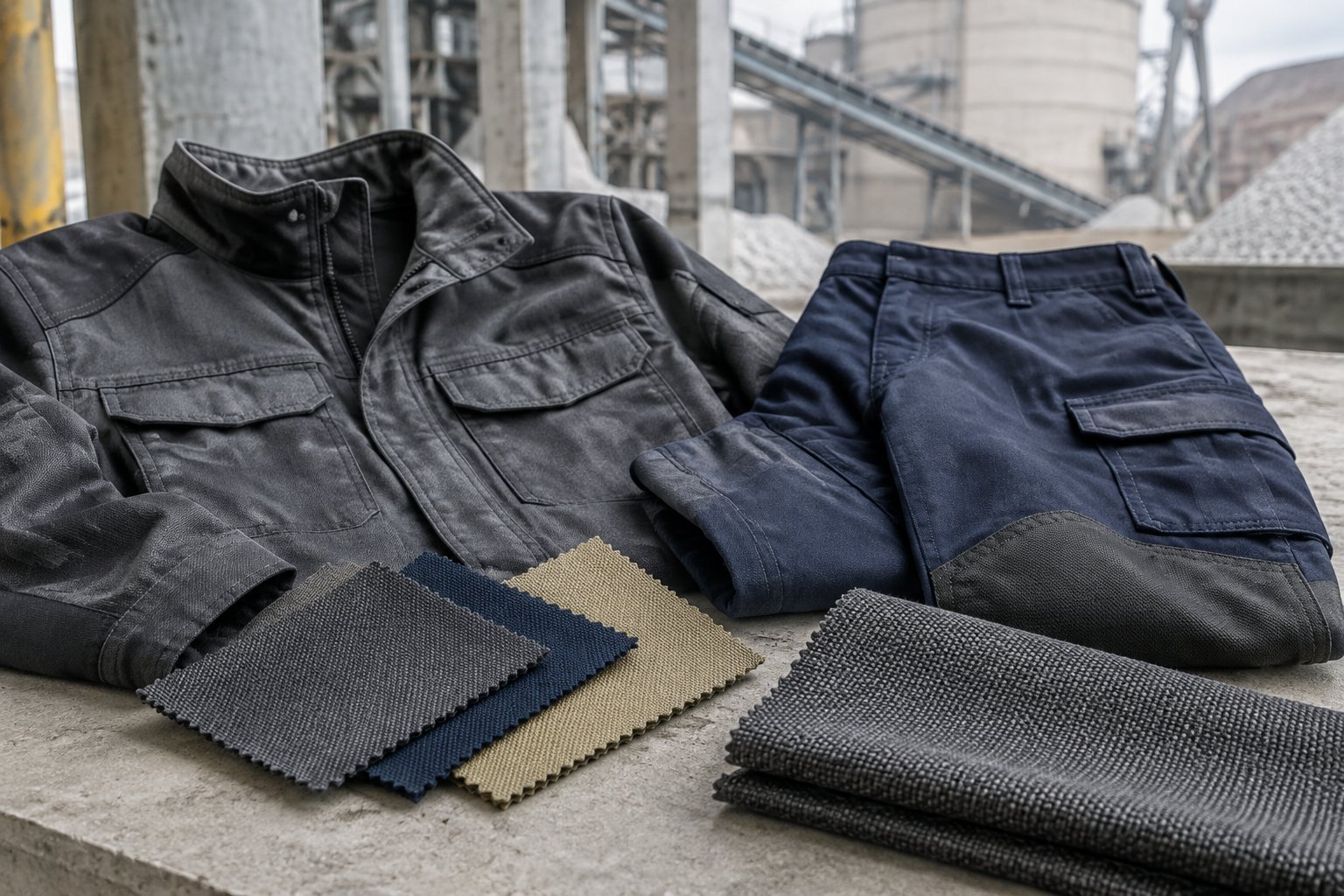
The purchasing goal is a fabric specification that matches each role’s exposure and survives the intended laundry process. A packing operator’s main wear points differ from those of a technician working near hot equipment or an outdoor maintenance crew.
Levitex manufactures industrial workwear textiles in 100% cotton, cotton/nylon (C/N), and cotton-rich cotton/polyester (CVC). Its flame-retardant manufacturing and custom finishing services give buyers several routes to a task-specific specification, with protection claims tied to the exact finished fabric’s reports.
Which Tasks and Exposures Must the Fabric Address?
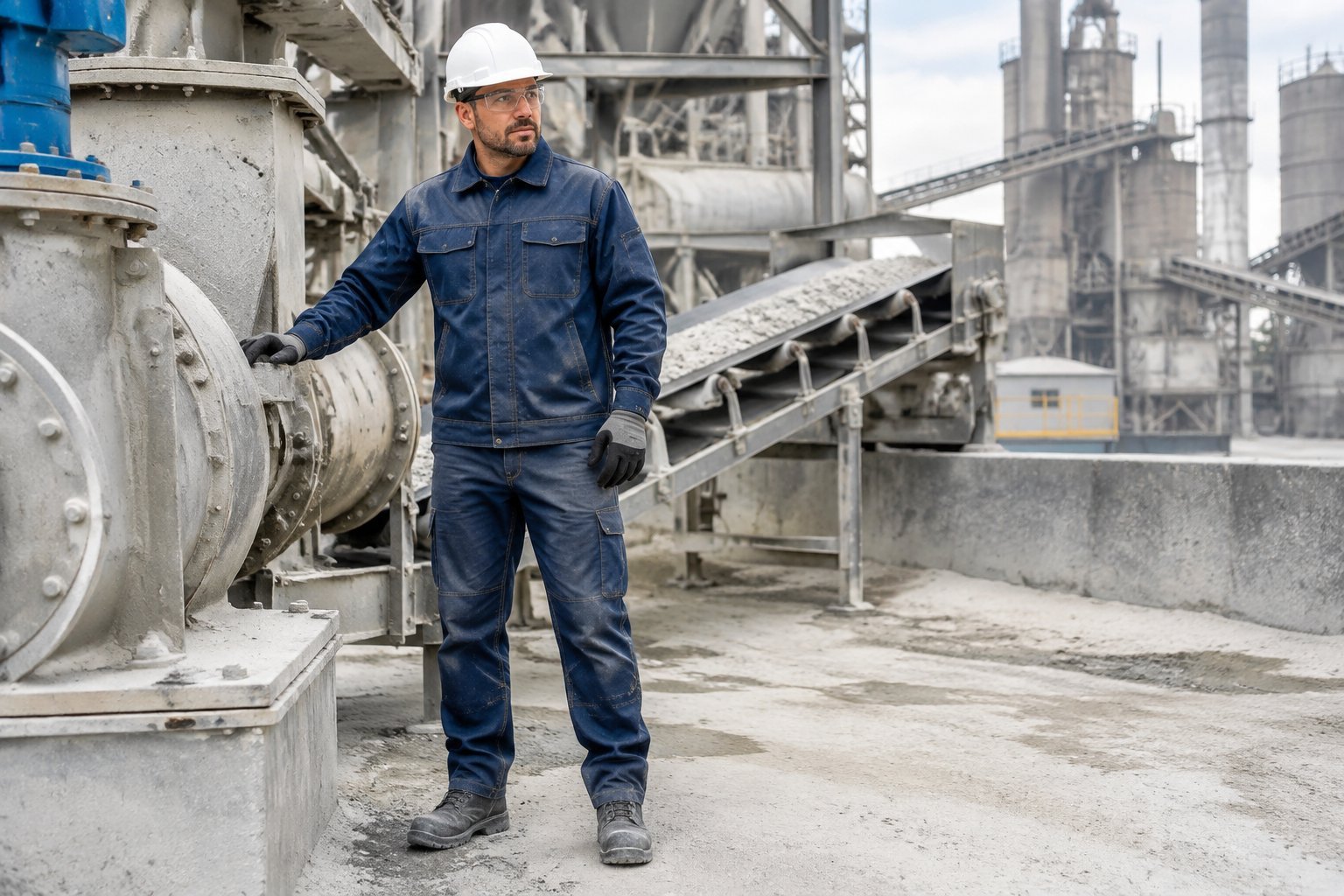
Fabric selection should follow the worker’s task, contact conditions, and exposure duration. Dry abrasive dust, wet alkaline cement, and hot equipment create different purchasing requirements.
Dry Dust and Abrasive Contact in Packing and Material Handling
Packing lines and material-handling areas expose workwear to gritty deposits and repeated rubbing against equipment. Knees, forearms, and the seat deserve close inspection during garment trials because localized wear determines replacement frequency.
Buyers should record where fabric rubs, where snags occur, and how dust collects inside clothing. A dense construction deserves evaluation for dust ingress and comfort, but ordinary workwear fabric provides no respiratory protection. Airborne dust control and respiratory PPE belong in the plant’s separate exposure-control program.
Wet Alkaline Cement Requires a Separate Protection Assessment
Wet cement creates an alkaline skin-contact hazard, including chemical burns. Dry deposits also become a skin concern when mixed with sweat or trapped moisture, making contaminated clothing removal and hygiene procedures important.
Water repellency describes resistance to surface wetting. It establishes no protection against sustained wet cement contact or alkaline permeation.
A chemical-protective fabric assessment must identify the actual substance and contact conditions. The safety team should specify the required protective ensemble for wet work, including interfaces with gloves and boots; cotton and FR textiles provide no chemical-barrier assurance.
Hot-Area Maintenance Requires Hazard-Specific Thermal Evidence
Maintenance near kilns, coolers, and hot ductwork requires an assessment of radiant heat, hot surfaces, and potential flame exposure. Welding and electrical work add their own requirements, even when performed during the same shutdown.
An FR designation establishes only the performance covered by its supporting tests. Arc exposure requires dedicated arc evidence, while contact heat and radiant heat require relevant thermal results.
Steel plants and cement plants share some maintenance tasks, but molten-metal requirements belong to a separate assessment. Levitex’s general FR offering carries no dedicated molten-metal protection claim.
Outdoor Maintenance Balances Weather Exposure and Heat Stress
Outdoor crews need protection appropriate to rainfall, solar exposure, and their physical workload. Water repellency helps shed incidental moisture, while sustained rain requires evaluation of the complete weather-protective garment.
Comfort assessment should separate moisture absorption from drying speed and airflow. A fabric air permeability test provides useful airflow data, although garment fit and layering also influence heat burden.
Traffic visibility and sun-protection requirements need their own evidence. Color choice alone establishes neither a high-visibility garment classification nor a UV protection rating.
Which Fabric Attributes Matter for Each Role?
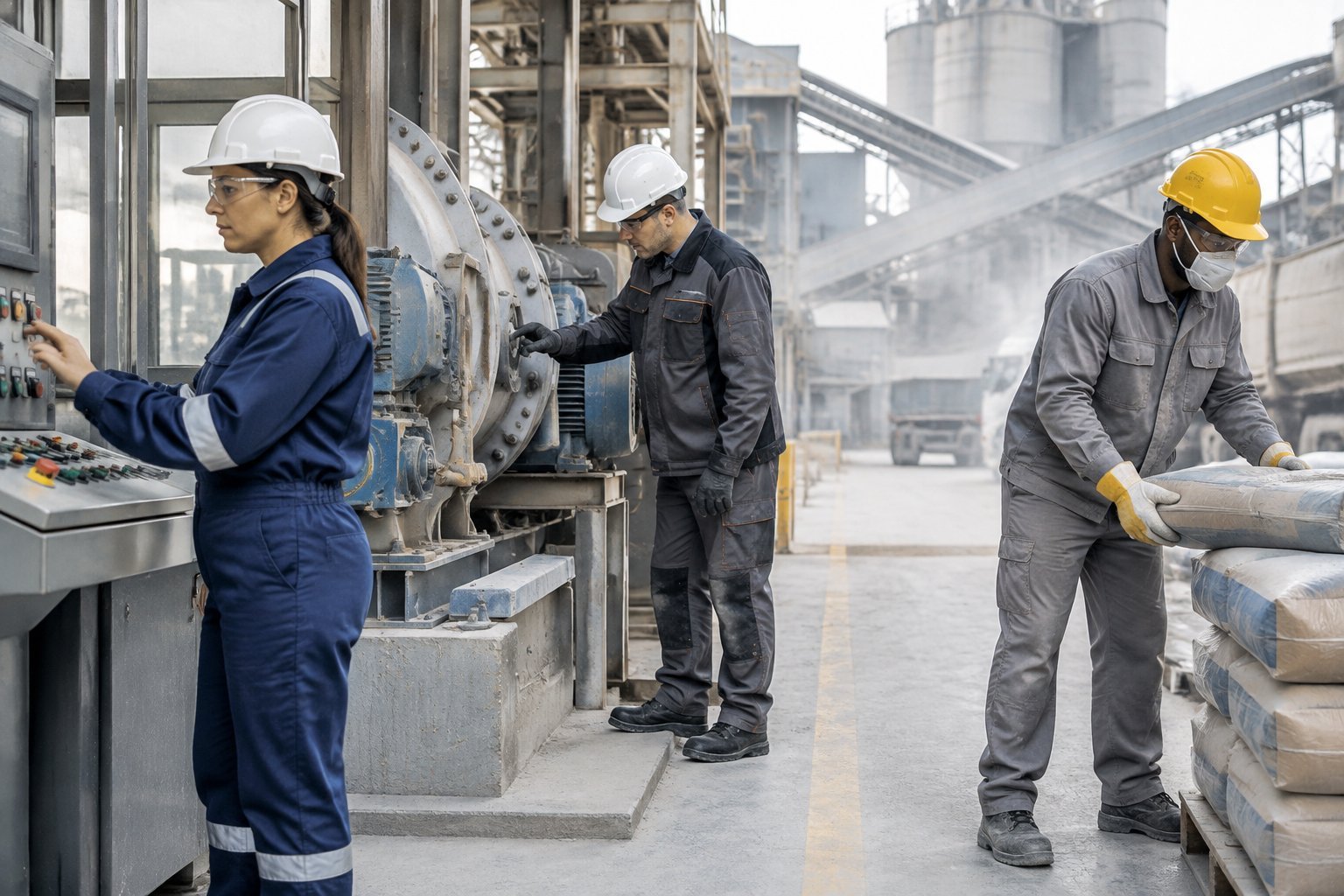
The useful specification combines composition with measured mechanical performance, finished weight, and task-required finishes. Each attribute should have an acceptance criterion that the supplier and buyer agree before production.
Compare Cotton, Cotton/Nylon and CVC for the Intended Task
Levitex’s three base-fabric families give buyers different starting points for development. Cotton offers moisture absorption; nylon or polyester content changes the balance of mechanical behavior, drying, and dimensional stability.
| Selection point | 100% Cotton | Cotton/Nylon (C/N) | Cotton-Rich Cotton/Polyester (CVC) |
|---|---|---|---|
| Composition | Cotton only | Cotton plus nylon | Cotton-dominant blend |
| Development focus | Absorbent workwear | Durability-focused workwear | Blended-fiber workwear |
| Key trial check | Drying and shrinkage | Wear and surface appearance | Comfort and stability |
| Thermal approval basis | Exact finished-fabric report | Exact finished-fabric report | Exact finished-fabric report |
Published cotton/nylon blend properties help explain material selection, but the blend name supplies no guaranteed strength or protective rating. Buyers should compare samples at equivalent finished weights and with the intended finish applied.
A packing-role trial should emphasize abrasive contact. A hot-area trial first needs confirmation that the proposed fabric meets the task’s thermal requirements.
Assess Abrasion Resistance, Tear Strength and Tensile Strength Separately
Abrasion resistance measures damage from repeated rubbing. Fabric tear strength measures resistance to the growth of an existing tear, while fabric tensile strength measures breaking force under pulling.
Each result answers a different failure question. High tensile strength supplies limited information about how rapidly a small cut spreads at a pocket edge.
The purchasing specification should state:
- The test method and acceptance threshold for each property.
- Warp- and weft-direction requirements where applicable.
- Sample conditioning and whether results apply before or after laundering.
- The abrasion endpoint, such as specimen breakdown or a defined appearance change.
Cycle counts from different abrasion methods should remain separate during comparisons.
Balance Fabric Weight and Weave for Work Pants and Jackets
Fabric weight describes mass per unit area. It helps control consistency between orders, but yarn selection and construction also influence service life.
Work pants need evaluation at the knees and seat, especially during kneeling or climbing. Jackets require attention to elbow flexing and forearm contact without creating excessive stiffness.
Twill offers a useful workwear construction for development; plain weave and canvas constructions provide other options for specific contact conditions. Ripstop grids target tear propagation, so buyers still need separate abrasion results for the full fabric surface.
Finished weight should appear on the order with an agreed tolerance. Comparisons should use fabric after all specified finishing operations.
Specify FR and Repellent Finishes Only Where the Assessment Requires Them
FR finishing belongs in specifications for identified thermal hazards. Water- or oil-repellent finishing addresses defined liquid-wetting requirements, with separate validation for each function.
Levitex offers FR plus water-repellent and FR plus oil-repellent finishing on 100% cotton, C/N, and CVC base fabrics. Buyers should request the relevant product-specific results and care requirements without assigning an assumed rating or wash life.
Levitex also produces chemical-repellent fabric through post-treatment finishing. Its liquid-repellency function differs from a chemical barrier, so wet alkaline cement requires the separate assessment described above.
At garment level, the external manufacturer remains responsible for compatible seams, closures, and any reflective materials.
How Can Buyers Validate Performance Before Bulk Ordering?
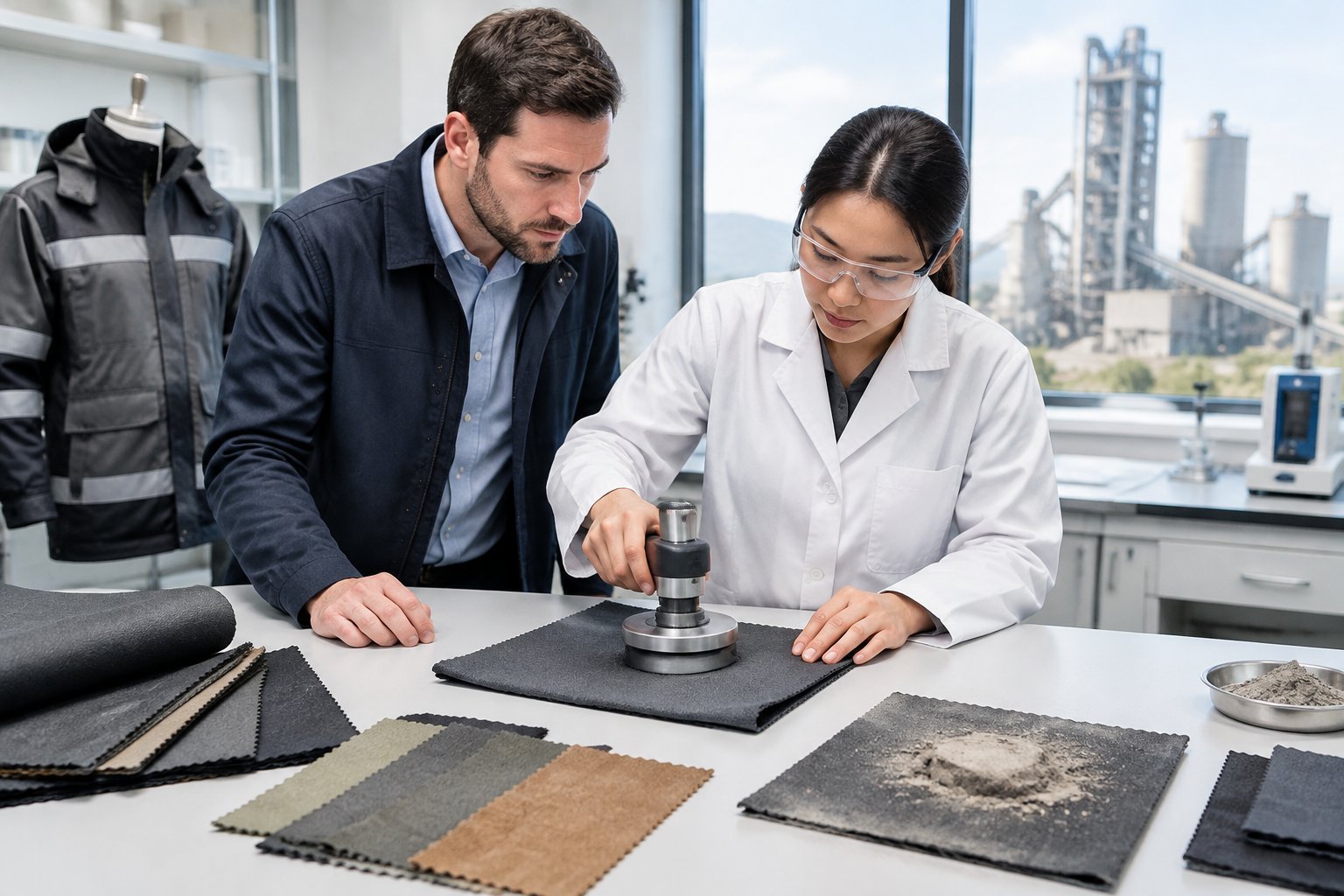
Bulk approval should combine exact-fabric reports with laundry validation and task-based sample trials. A new swatch establishes initial appearance and handle; service suitability requires additional evidence.
Check Strength, Shrinkage and Finish Performance After the Intended Laundry Process
The laundry specification should identify washing conditions and the drying process. Industrial laundering exposes fabric to a different combination of detergent chemistry, temperature, and mechanical action from domestic washing.
An industrial laundering and repellency review should establish which functions need reassessment after the agreed process. The industrial laundry provider should participate when uniforms enter a managed rental program.
Post-laundry checks should cover:
- Dimensional change in both fabric directions.
- Relevant mechanical strength.
- Color change and surface deterioration.
- Required FR or repellent performance.
- Skew or distortion that affects garment fit.
The buyer should agree test intervals and acceptance limits before the trial begins. An arbitrary wash count gives little value without the corresponding wash and dry conditions.
Review Reports for the Exact Finished Fabric, Not Just the Product Family
A useful report identifies the specimen closely enough to connect its results to the proposed order. That includes composition, construction, finished weight, and the finishing route.
For protective applications, flame-retardant fabric testing must match the claimed performance and stated pretreatment. Buyers should inspect the method, specimen identification, results, and laboratory details.
Levitex states that each product has a test report. The buyer still needs to verify the report’s scope against the intended task; a general product report establishes no dedicated arc or molten-metal performance.
Batch traceability and FR fabric quality control should also appear in the approval discussion. Fabric reports support textile selection, while finished-garment assessment remains a separate responsibility.
Discuss Fabric Samples and Task-Specific Requirements With Levitex
A productive sample request starts with the role and its main failure risks. Buyers should supply the proposed composition, finished weight range, required functions, and laundry conditions, alongside any site-mandated performance criteria.
Levitex supplies textiles and custom dyeing or printing services. A buyer or its garment partner should convert trial yardage into representative garments for fit and task evaluation.
Levitex’s monthly production capacity includes 1.5 million meters dedicated specifically to flame-retardant fabrics. For a relevant fabric discussion, procurement teams can contact Sale Manager Charlie Luo at Charlie@levitex.com or (+86) 1551 730 3033 with their task brief and report requirements.
Match Each Plant Role to a Verified Fabric Specification
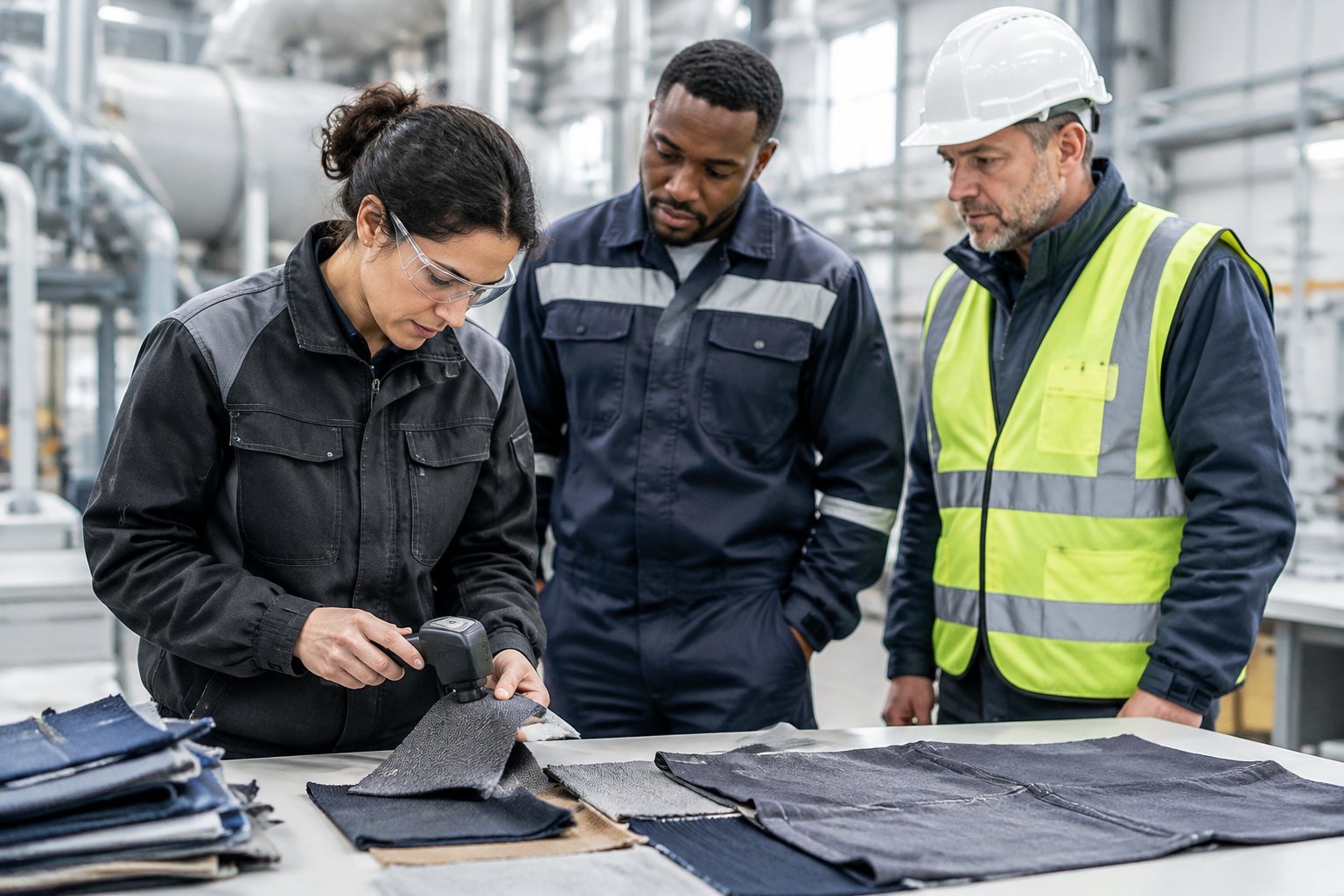
Each cement plant role should receive an approved fabric specification linked to its assessed exposure and intended laundering.
- Packing and dry handling: Confirm abrasion performance and directional strength, then inspect localized wear during a trial.
- Wet cement work: Obtain the separate alkaline-contact assessment and required protective ensemble before approving clothing materials.
- Hot-area maintenance: Require thermal evidence matching the identified hazard and verify garment-component compatibility.
- Outdoor maintenance: Balance mechanical durability with weather exposure and heat burden; validate any required visibility or UV protection separately.
The final purchase specification should identify the approved fabric, applicable reports, acceptance limits, and laundry conditions. Changes to construction or finishing should trigger a documented review before substitution.
Frequently Asked Questions
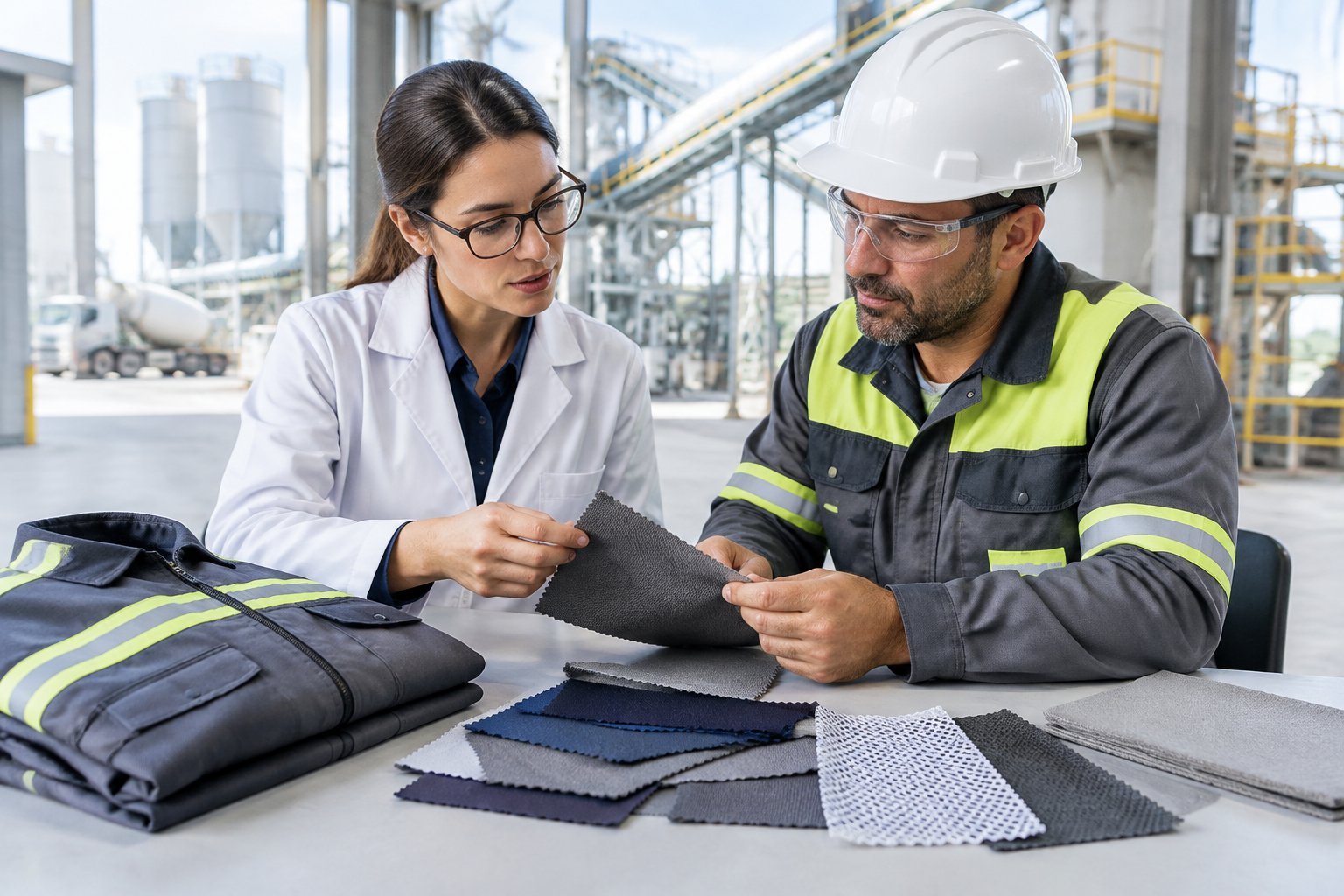
Role-specific evidence provides the basis for purchasing decisions about cement plant textiles. These questions address common specification shortcuts.
What fabric is best for cement plant workwear?
A tested woven cotton or cotton-blend fabric is a practical starting point for packing and dry handling roles. The approved choice should meet the role’s mechanical-performance requirements and retain acceptable dimensions after the intended laundry process.
Does every cement plant worker need flame-resistant fabric?
FR requirements follow the site’s task assessment and clothing policy. Packing personnel and technicians exposed to flame or hot-area maintenance hazards require separate evaluations, even when they work at the same facility.
Can water-repellent fabric protect against wet cement?
Water repellency alone provides no verified protection against wet cement’s alkaline hazard. Approval for that exposure requires evidence appropriate to the substance, contact duration, and complete protective ensemble.
Does heavier fabric always last longer in cement plants?
Fabric weight alone cannot predict service life. Buyers need abrasion and strength results alongside post-laundry checks, because yarn quality, weave, and finishing influence how workwear wears through.
What should buyers ask wholesale cement plant workwear fabric suppliers?
Buyers should request exact-fabric reports, batch traceability, laundry requirements, and samples suitable for task trials. Discussions about minimum order quantities, lead times, and sampling should follow a defined technical brief, with protective-performance requirements recorded in the quotation.