
A buyer verifies a fire retardant canvas IMPA code by matching the item against the current authoritative IMPA Marine Stores Guide, then confirming the supplier’s description, dimensions, order unit, and flame-resistance evidence. This gives marine supply buyers a traceable catalogue reference and a clear specification for quotation.
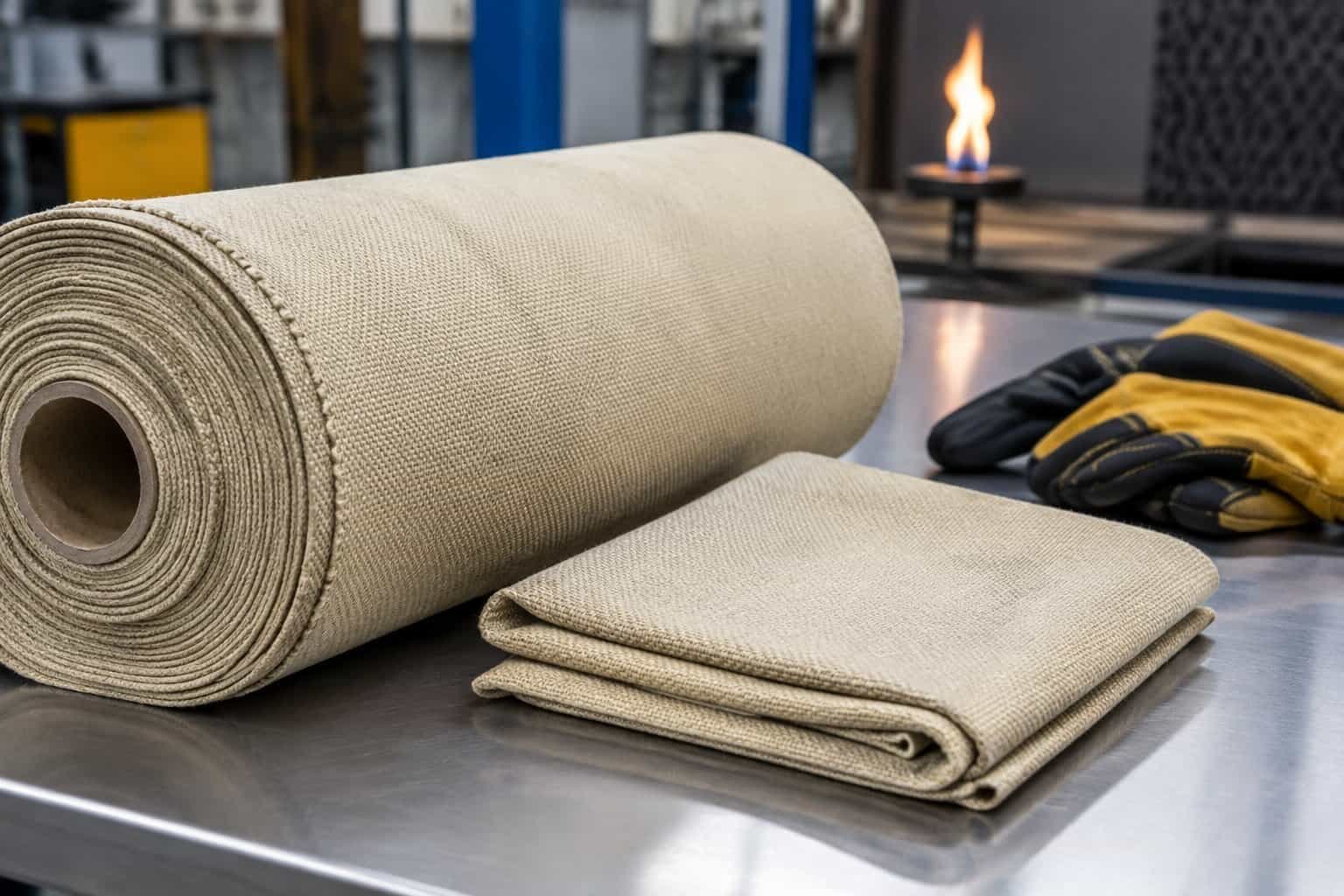
IMPA identifiers organize purchasing references; flame-resistance claims require separate product evidence. Levitex supplies customizable canvas base cloth and brings textile-manufacturing expertise to the fabric specification stage. Its supply scope remains distinct from finished marine equipment and marine approval.
A useful purchasing record therefore connects the catalogue entry to the exact material being offered. A supplier listing alone leaves room for differences in construction, width, or finished-item scope.
How Do You Confirm the Correct Catalogue Entry?

The correct entry requires a direct match with the current authoritative IMPA Marine Stores Guide. Supplier catalogues provide supporting detail, while the authoritative entry establishes the reference being purchased.
Check the Current Authoritative IMPA Marine Stores Guide
The buyer should search the current guide using the item description and check the complete entry. The purchasing file should retain the catalogue wording, reference, category, stated dimensions, and unit, together with the edition or access date.
Search results and copied supplier descriptions serve as leads during this check. Any exact code awaiting authoritative verification should remain outside an approved purchase specification. No numerical code is assigned here because that requires a current authoritative entry check.
Distinguish Canvas Rolls, Tarpaulins and Finished Curtains
The product form determines what the supplier must deliver. Canvas sold by length needs a defined width and quantity; a tarpaulin needs finished dimensions and construction details; a curtain needs its own finished-item specification.
Supplier categories help expose mismatches. Berth Marine lists canvas within rigging equipment and flame-retardant curtains within cloth and linen products. A description containing “canvas” still requires clarification when the quoted item includes grommets, hems, or other fabrication.
Resolve Conflicting Supplier Descriptions Before Quoting
Every discrepancy should be resolved in writing before price comparison. Supplier listings associated with the same reference show widths of 915 mm and 1020 mm, while another offered matching SKU specifies 1000 mm.
Those figures demonstrate why a buyer should separate catalogue dimensions from offered dimensions. The quotation should identify any substitution and obtain explicit acceptance. Recording the approved specification also supports FR fabric quality control during incoming inspection and batch acceptance.
What Must Match Beyond the Catalogue Reference?
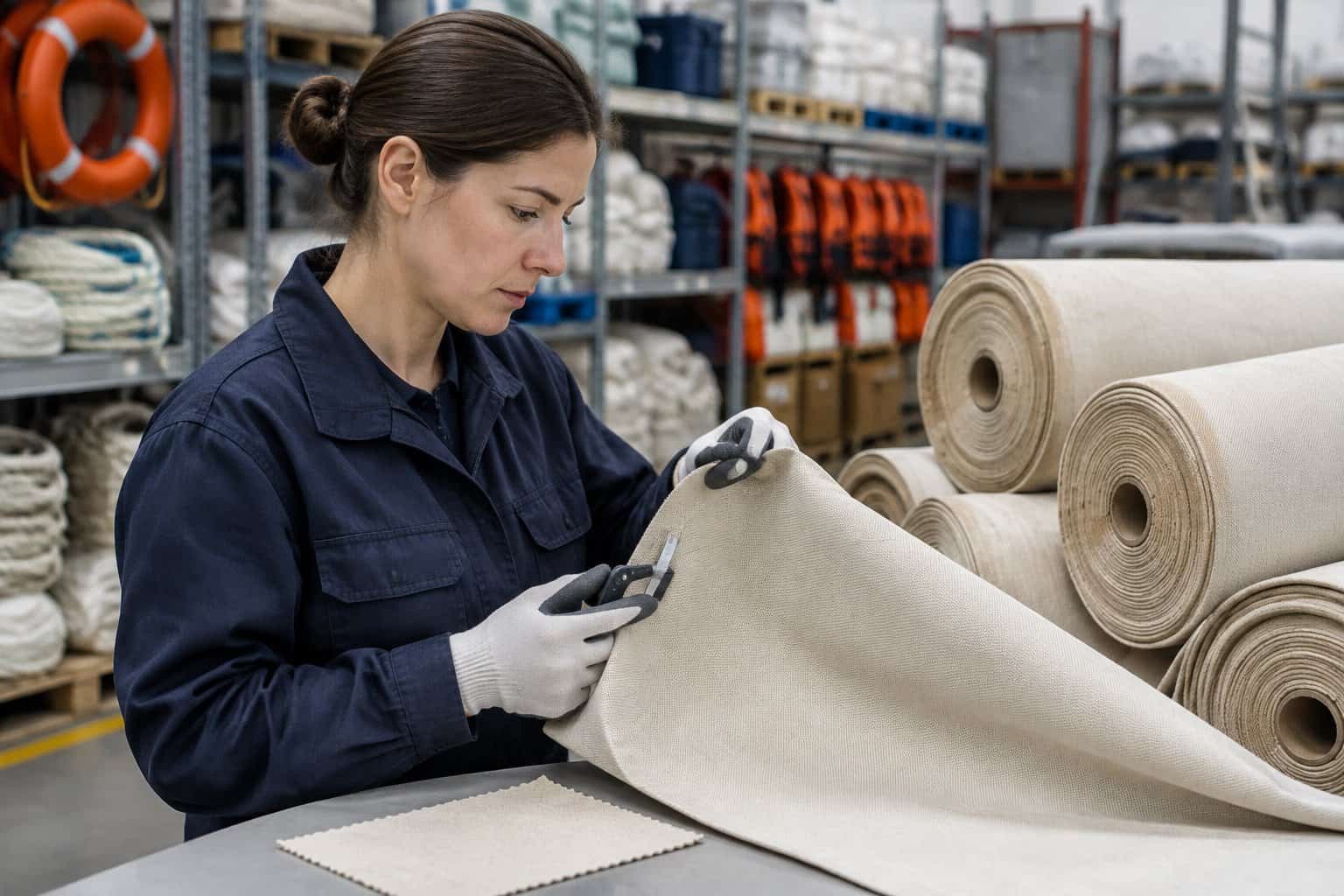
An acceptable match requires agreement on the physical product and its intended service conditions. The procurement record should also identify the evidence supporting each performance claim.
Confirm Description, Dimensions, Base Cloth and Order Unit
The quotation should repeat the approved description and state the actual supplied width. For roll goods, it should distinguish total ordered length from individual roll length and clarify usable width where selvages affect cutting yield.
The base-cloth specification should identify composition, construction, and required weight with agreed tolerances. Any coating or fabric finishes should be described separately.
Order units deserve an explicit check. A meter, piece, and set represent different quantities; a “set” needs a defined contents list. Where a curtain listing uses SET but the supplier prices per piece, the quotation must reconcile that difference.
Specify Intended Use Rather Than Vessel Type Alone
The intended application establishes the relevant performance requirements. A deck cover and an interior curtain involve different exposure conditions, even when both are ordered for commercial vessels.
References to tankers, bulk carriers, container ships, or offshore platforms provide operating context. The buyer should additionally state installation location, expected exposure, cleaning conditions, and whether the purchase covers raw cloth or a fabricated article.
For multi-functional specifications, FR finishing compatibility deserves review because the finished combination requires its own supporting evidence.
Separate Flame-Resistance Evidence from Waterproofing and Marine Approval
Each claimed property needs documentation relevant to that property. Waterproof wording establishes the supplier’s water-performance claim; flame resistance requires its own test evidence, and marine approval requires documentation covering the applicable marine requirement.
A useful flame-retardant fabric test report identifies the tested material and method. The buyer should check the sample description, conditioning, results, and connection to the offered cloth.
Acceptance requirements should name the applicable standard and required evidence. An IMPA reference by itself provides no certification of fire performance or marine suitability.
What Should You Send Levitex for a Canvas Inquiry?
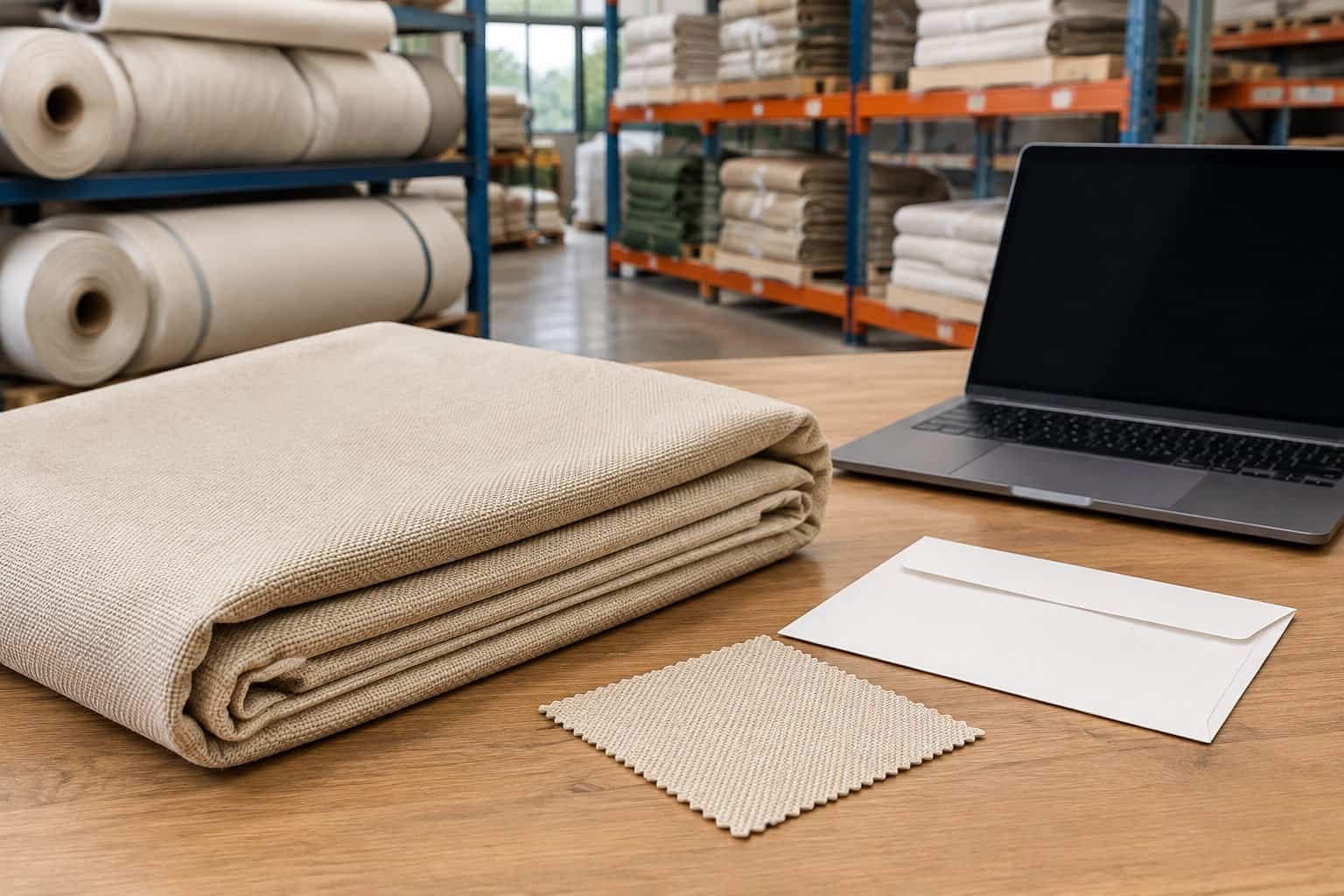
Levitex needs the verified purchasing reference and a fabric-level specification to assess a canvas inquiry. Its customized fabric production supports customer-specified base-cloth requirements.
Provide the Verified Reference, Fabric Specification, Quantity and Intended Use
A concise inquiry should contain enough detail to separate the catalogue requirement from the requested textile supply:
- Verified IMPA reference and exact catalogue description, including the edition or access date.
- Required product form, such as canvas base cloth supplied in rolls.
- Composition, construction, weight, and color requirements.
- Width and length requirements, with clearly stated measurement units and tolerances.
- Total quantity, order unit, and preferred roll lengths.
- Intended application, exposure conditions, and cleaning method.
- Required performance evidence and any supplied samples, drawings, or existing reports.
For U.S. purchasing teams, dimensions should identify inches or millimeters explicitly. Any conversion should retain the original specified measurement to prevent rounding from becoming an unapproved change.
Request Relevant Product-Specific Evidence
The inquiry should identify the exact claim requiring support and the relevant test method or purchasing requirement. Levitex provides product test reports; the report requested for an order should correspond to the offered construction and finishing specification.
Cotton canvas requires suitable flame-retardant treatment to achieve an FR specification. Composition and fabric weight alone establish no tested protection level.
The buyer should also state cleaning conditions. Requirements for washing flame-retardant fabrics belong in the inquiry whenever retained performance after cleaning forms part of acceptance. Numerical durability claims require product-specific support.
Define Customizable Base-Cloth Supply Separately from Finished Marine Equipment
Levitex supplies canvas base cloth customized to customer requirements. Its offering covers textile production, with custom dyeing and printing available.
Finished curtain fabrication, mounting hardware, and approved marine equipment fall outside that supply scope. Where a catalogue entry describes a completed article, the inquiry should identify the cloth component being requested and leave fabrication requirements with the responsible finished-equipment supplier.
Buyers may send canvas base requirements, dimensions, quantity, and available evidence to Charlie@levitex.com. The inquiry should identify any marine approval requirement separately; Levitex’s base-cloth supply carries no implied marine approval.
Verify the Entry, Then Specify the Cloth

A verified IMPA entry provides the purchasing reference, while an agreed fabric specification defines the cloth being supplied. Both should remain attached to the quotation and order record.
Before approval, the buyer should close any discrepancy in dimensions or order unit and confirm that the requested evidence covers the offered material. A Levitex inquiry should then state the canvas base-cloth requirements and clearly separate them from finished marine equipment obligations.
Frequently Asked Questions
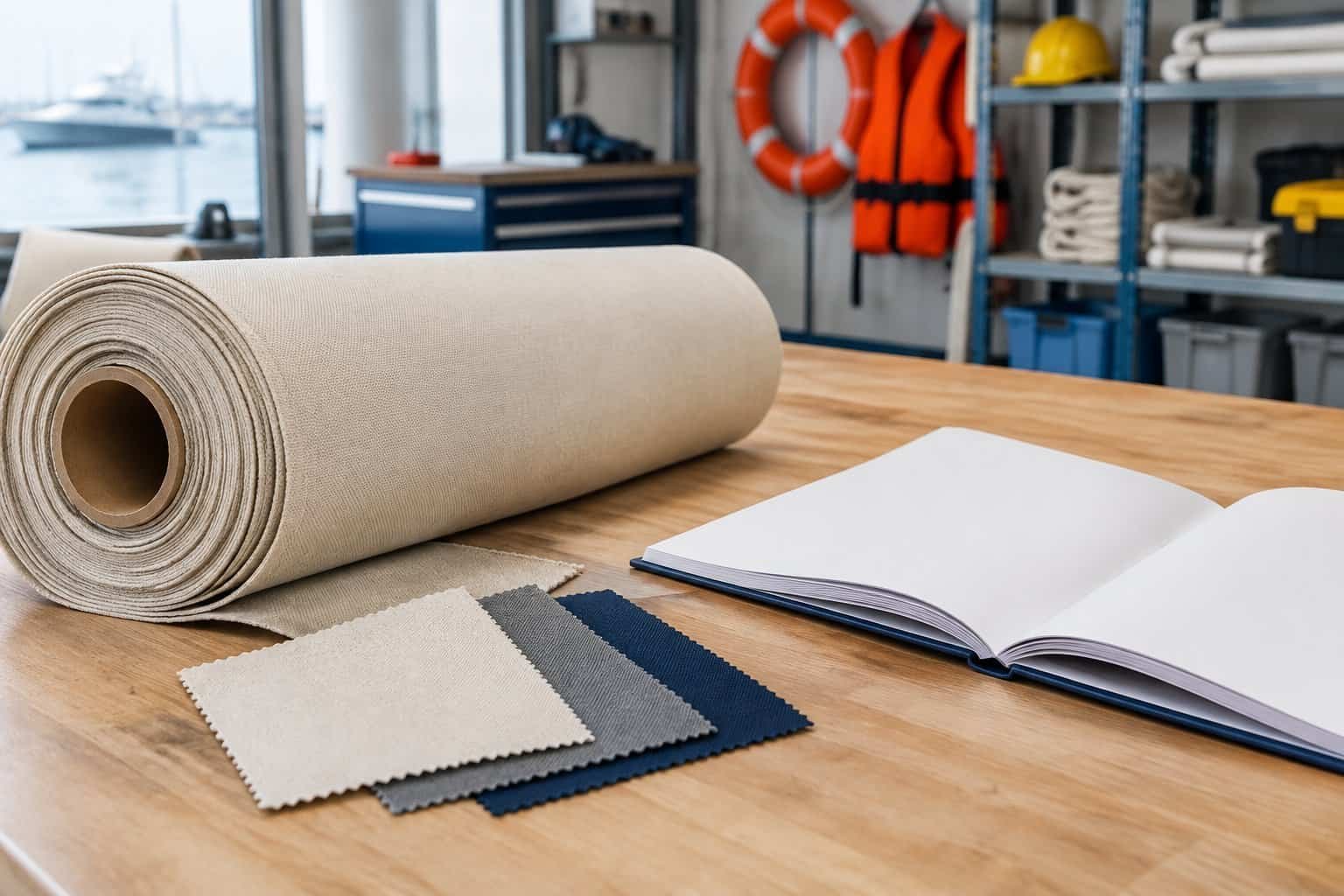
IMPA canvas inquiries require an exact product-form match and separate performance documentation. These distinctions resolve common purchasing ambiguities.
Is there one IMPA code for all fire-retardant canvas?
A single reference should never be assumed to cover every fire-retardant canvas product. The current authoritative guide must establish the entry for the required product form and specification.
Can a flame-retardant curtain code identify canvas sold by the roll?
A curtain reference identifies the specified curtain item. Roll fabric requires a separately verified match covering its supplied width and length-based order unit.
Does a waterproof tarpaulin listing prove flame resistance?
Waterproof wording provides no proof of flame resistance. The offered tarpaulin needs separate flame-performance evidence tied to its construction and finish.
Is untreated cotton canvas inherently flame retardant?
Untreated cotton canvas is combustible. Cotton content alone provides no basis for an FR claim, including claims associated with natural flame-retardant materials.
What should I do when suppliers list different dimensions for the same IMPA code?
The buyer should check the authoritative entry and request written confirmation of each supplier’s offered dimensions. Any substitution needs approval before purchase.
Can Levitex supply finished marine curtains or approved marine equipment?
Levitex supplies customizable canvas base cloth, with finished marine curtains and approved marine equipment outside its offering. Fabric inquiries should specify the textile requirements and required product evidence.