An importer verifies a flame retardant fabric HS code by matching the fabric’s composition, construction, and finishing to the destination’s current tariff schedule, then having a customs broker review the classification against the applicable legal notes. For U.S. shipments, that process uses the Harmonized Tariff Schedule of the United States (HTSUS) and the fabric’s condition as imported.

Levitex manufactures industrial protective-workwear textiles in 100% cotton, cotton/nylon (C/N), and cotton-rich cotton/polyester (CVC). Established in 1951, the company’s manufacturing experience supports the material documentation buyers need for classification review.
A defensible entry starts with a precise specification. A commercial description such as “FR workwear fabric” leaves essential customs questions unanswered, including fiber percentages, fabric weight, and whether a visible coating forms part of the imported material.
Which Fabric Characteristics Determine Classification?
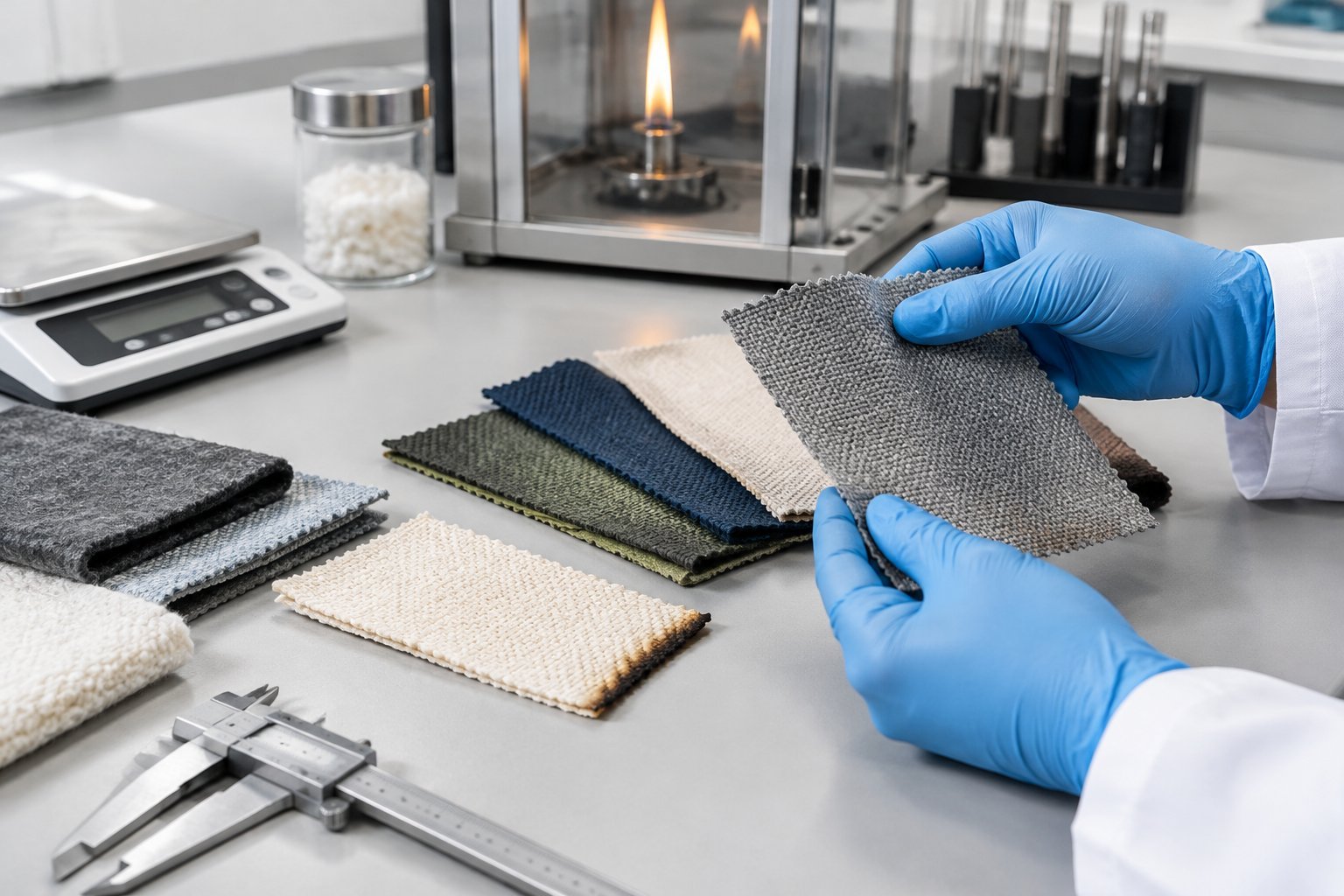
Classification follows the fabric’s measurable characteristics and its condition at importation. Searches for “hs codes for fire retardant” become useful only after those characteristics are documented.
Fiber Proportions and Mass per Unit Area
A composition statement should identify every fiber and its percentage by weight. “Cotton blend” leaves the broker without the information needed to apply textile mixture rules, including relevant Section XI notes.
Mass per unit area also affects tariff provisions. The specification should state the finished fabric weight in grams per square meter (gsm), supported by the relevant measurement record. A fabric weight chart helps interpret units, while classification requires the shipment’s own finished specification.
Where conductive yarn or another additional fiber is present, its composition and proportion belong in the declaration data.
Woven vs. Knitted Construction
Woven and knitted fabrics follow different tariff pathways. The supplier should identify the construction explicitly, supported by a technical sheet or representative sample.
For woven material, useful details include weave structure, yarn characteristics, and thread density where the tariff requests them. Knitted material requires its own construction description, including whether it is warp-knitted or weft-knitted.
Levitex manufactures flame-resistant knitted fabrics as well as woven constructions. Changing construction changes the classification assessment even when the stated fiber family remains the same.
FR Finishing vs. Visible Coatings
The broker needs the finishing process and the physical character of any applied layer. Flame-retardant treatment describes a performance-related manufacturing process; customs analysis also examines how the treatment exists on or within the textile.
For plastic-coated fabrics, Chapter 59 notes include a naked-eye visibility criterion with qualifications and exclusions. A color change alone does not establish a visible coating for that assessment.
Supplier documentation should distinguish impregnation, coating, and lamination. It should also identify the coating material and the treated face or faces.
How Do HS Headings and National Tariff Extensions Differ?

The international HS establishes a shared classification framework, while national tariff extensions provide destination-specific detail. A code supplied for an exporting country therefore requires a separate destination-country check.
International Six-Digit Codes vs. Destination-Specific Extensions
The World Customs Organization maintains the Harmonized System, also called the harmonized system of nomenclature. Its structure includes four-digit headings and six-digit subheadings.
The United States extends that structure through the HTSUS. U.S. import reporting uses ten-digit statistical reporting numbers; the eight-digit level establishes the tariff subheading, and the final two digits provide statistical detail.
A supplier’s export declaration number should be recorded with its jurisdiction. Its additional digits should never be assumed to carry the same meaning in the United States.
Why Cotton, C/N, and CVC Require Separate Assessment
Each fabric family requires its own composition review. Cotton/nylon and cotton-rich cotton/polyester contain different non-cotton fibers, and their exact proportions affect the legal analysis.
The relevant cotton/nylon blend properties help describe the material commercially. Customs classification additionally requires the declared percentages and applicable textile mixture rules.
The broker should assess each specification separately, including weight and finishing. Even two fabrics marketed under the same blend abbreviation require separate review when their construction or treatment differs.
Why FR Treatment Does Not Automatically Mean Heading 5903
Heading 5903 covers textile fabrics impregnated, coated, covered, or laminated with plastics, subject to its legal scope and exclusions. Assignment requires evidence that the imported goods meet those terms and the applicable notes.
A flame-retardant fabric treatment does not, by its name alone, establish a qualifying plastic-coated fabric. The broker needs information about the treatment chemistry and resulting physical structure.
Where the specification leaves that distinction unresolved, a sample examination and additional manufacturing details provide a stronger basis for review.
Which Sources Can You Trust When Checking a Code?

Current official tariffs and applicable customs rulings provide the strongest classification foundation. Commercial databases provide search leads and shipment context.
Check Current Official Tariffs and Applicable Legal Notes
For U.S. imports, the broker should consult the current HTSUS published by the U.S. International Trade Commission. The review includes the General Rules of Interpretation, relevant section and chapter notes, and the complete candidate provision.
U.S. Customs and Border Protection (CBP) rulings provide additional guidance when their product facts closely match the shipment. Differences in coating visibility or fiber percentages deserve particular attention.
The classification file should retain the tariff revision reviewed and the reasons the provision fits. Flame-retardant certification addresses product or system requirements; its scope supplies a separate kind of evidence from tariff law.
Use Shipment Databases as Leads, Not Classification Authority
Global trade data and import-export data help identify descriptions used in previous transactions. Their keyword results require inspection at the individual shipment level.
A search for fire-resistant fabric might return an upholstered seat, a finished garment, or a chemical preparation. Those records describe different imported goods, even when their text includes the same performance term.
The broker should compare the full goods description with the actual fabric specification. Shipment frequency alone provides no assurance that a code fits another product.
Verify Duties, Taxes, and Export Incentives Separately
Import duty assessment follows classification and also requires origin, customs value, and the entry date. U.S. review should include applicable Chapter 99 provisions and any relevant trade-remedy measures.
A GST rate displayed by an overseas trade platform belongs to that jurisdiction’s tax system. The United States has no federal GST.
Duty drawback and export benefits require separate eligibility checks under the relevant programs. Classification supports those assessments, but the importer or exporter must also satisfy the program’s documentary and procedural requirements.
What Information Does Your Customs Broker Need?

A customs broker needs a shipment-specific technical file that describes the goods precisely enough to apply the destination tariff. Consistent identifiers across samples and commercial documents help keep the review tied to the correct fabric.
A Broker-Ready Checklist for Fabric Specifications and Shipment Details
The classification package should contain:
- Product identity: Manufacturer, article number, and commercial description.
- Fiber composition: Each fiber’s percentage by weight, including any conductive component.
- Construction: Woven or knitted, with the relevant weave or knit details.
- Finished measurements: Mass per unit area in gsm and fabric width.
- Yarn details: Staple or filament information and other characteristics requested by the broker.
- Coloration: Unbleached, bleached, dyed, yarn-dyed, or printed condition.
- Finishing: FR process description and any additional functional treatments.
- Applied layers: Coating or laminate material, location, visibility, and available weight information.
- Imported form: Rolls, cut lengths, or further-processed articles, with photographs or samples.
- Shipment facts: Country of origin, destination, anticipated entry date, quantity, and invoice value.
- Existing classification records: Earlier rulings or broker determinations, with their product specifications.
Records from FR fabric quality control help connect the declared specification to the supplied production lot. The broker should flag missing facts before a code is finalized.
Requesting Relevant Product Documentation From Levitex
Levitex supplies textiles for industrial production and protective-workwear applications. Its offering includes custom dyeing and printing, alongside customized flame-retardant fabric production.
Documentation requests should identify the article number and ordered finish combination. For example, water-repellent FR finishing belongs in the treatment description when specified, together with any available information about the resulting fabric surface.
Buyers are invited to request material specifications for their customs broker at Charlie@levitex.com. Levitex provides product information to support the review; classification remains subject to the destination’s customs requirements, without a classification guarantee.
When to Seek a Binding Classification Ruling
A prospective U.S. importer should consider a CBP binding ruling when a material classification question remains unresolved before importation. Coated constructions and uncertainty between competing tariff provisions are practical reasons to seek that determination.
A ruling request should present complete product facts, a proposed classification with reasoning, and supporting documents or samples as required. CBP’s Part 177 procedures govern the process.
A ruling applies to the merchandise and circumstances it describes. Material changes require another assessment, and CBP retains authority over the ruling’s legal application. This article provides general trade information and does not constitute legal advice.
Verify the Fabric Specification Against the Destination Tariff

A verified classification connects the imported flame retardant fabric to a current destination tariff provision through documented product facts. The review should establish composition and construction, resolve the nature of applied finishes, and confirm the complete national reporting number.
For U.S. entries, the importer should retain the broker’s reasoning alongside the specification and tariff revision reviewed. Any change to the fabric’s composition, construction, or coating should trigger a fresh classification check before shipment.
Frequently Asked Questions

A fabric’s documented physical characteristics determine the starting point for HS code verification. The following answers address common checks during import preparation.
Is there one HS code for all flame retardant fabrics?
Flame retardant fabrics fall under different tariff provisions according to their composition, construction, finishing, and imported form. A performance description alone supplies insufficient detail for classification.
How do I verify a flame retardant fabric HS code for the USA?
The importer verifies the proposed code against the current HTSUS and has a customs broker assess the supporting specification and legal notes. The entry file should record the complete ten-digit reporting number and the basis for its selection.
Does flame retardant finishing change a fabric’s HS code?
FR finishing changes classification when the resulting imported fabric meets a different tariff provision under the applicable legal rules. The broker needs the treatment description and physical evidence, particularly where a coating or laminate is involved.
Can cotton/nylon and CVC fabrics use the same HS code?
They share a code only when each fabric independently satisfies the same destination tariff provision. Their exact percentages and other classification characteristics require separate review before that conclusion is reached.
Where can I find an official tariff PDF for my destination?
Official tariff PDFs are available through the destination’s customs authority or designated tariff publisher. For the United States, the U.S. International Trade Commission publishes HTSUS materials; the importer should confirm that the downloaded revision applies to the anticipated entry date.