
A practical gsm fabric weight chart places 150–185 GSM at the lighter end of workwear, 220–260 GSM in a middle working range, and 305–350 GSM toward heavier constructions; these are illustrative purchasing bands, with GSM measuring fabric mass per square meter.
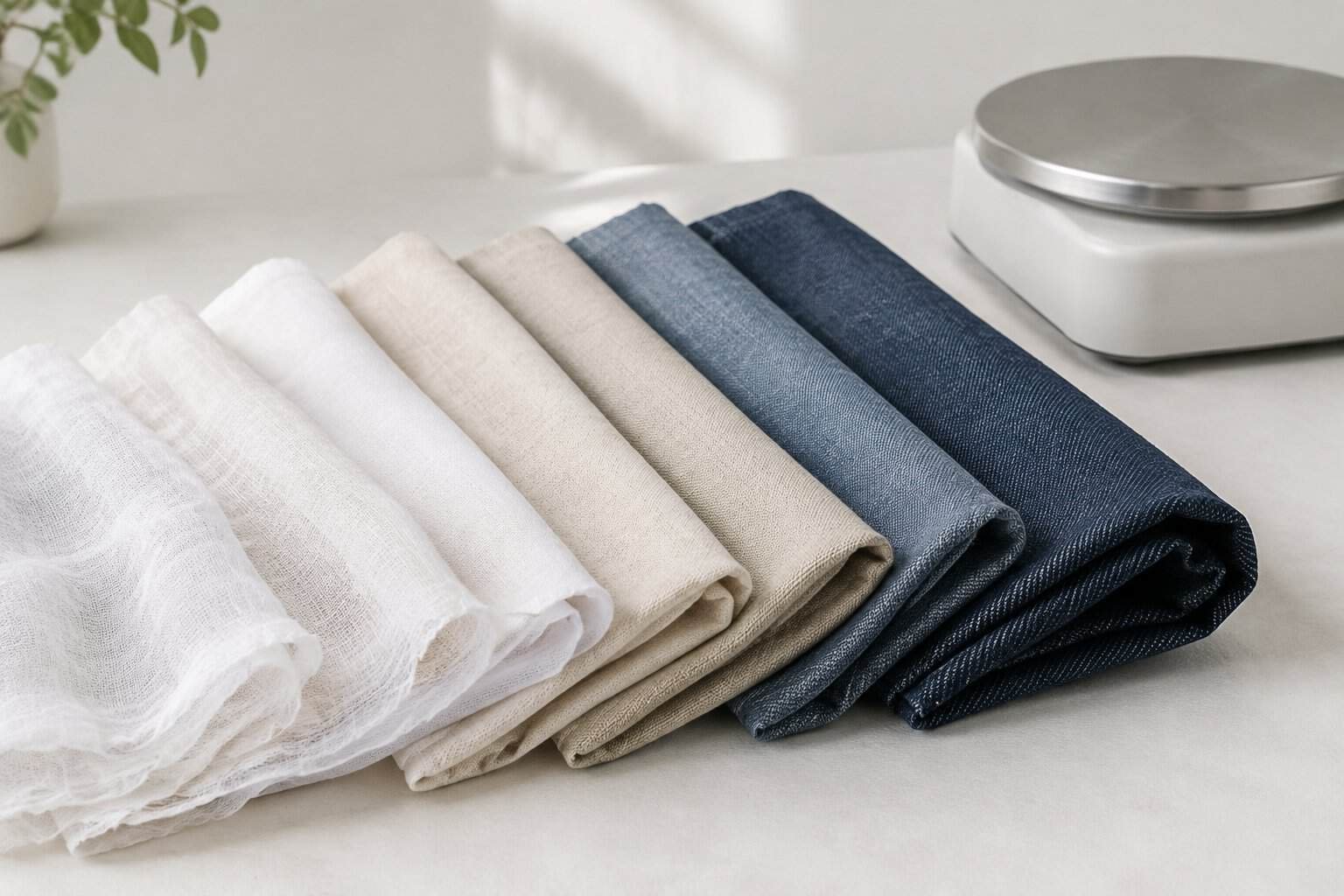
For industrial buyers, fabric weight helps narrow a specification and compare quotations across suppliers. A complete fabric specification also identifies composition, construction, finished width, tolerances, and the evidence required for the intended protective application.
Levitex manufactures flame-resistant textiles for industrial workwear, with 1.5 million meters per month dedicated to flame-retardant fabrics. Its production focus makes weight a useful starting point for discussing workwear fabric materials, alongside laundering conditions and product-specific performance requirements.
What Do Common Fabric Weights Tell Buyers?
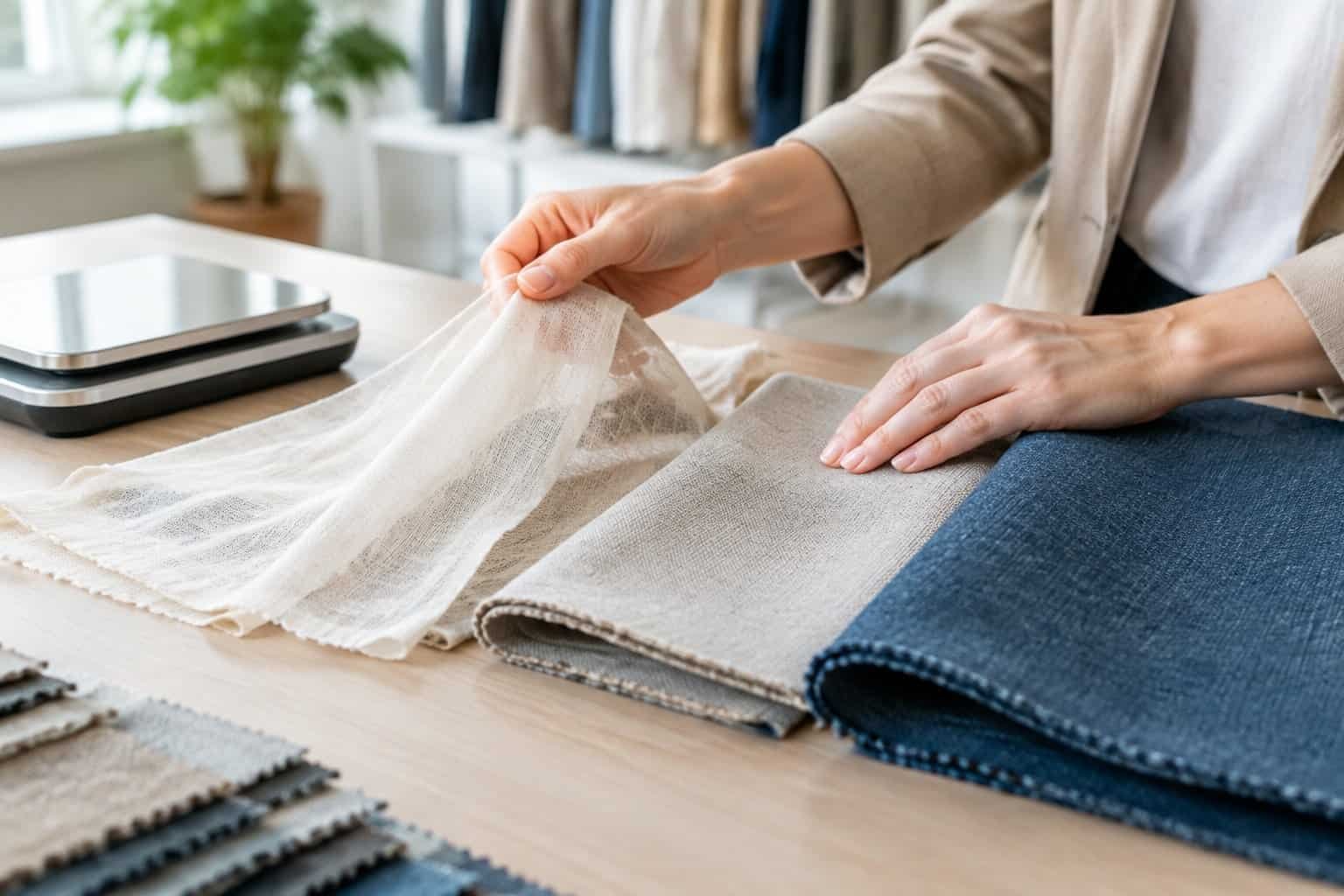
Common fabric weights indicate how much textile mass a garment specification introduces per unit of area. Construction and finishing determine how that mass translates into handling and wear.
What Does GSM Measure?
GSM means grams per square meter, also written as grams per square metre or g/m². A fabric weighing 220 GSM has a mass of 220 grams for each square meter under the stated measurement conditions.
Fabric GSM describes mass per unit area. Thickness requires a separate measurement: a lofty fleece fabric contains air within its structure, while a compact woven fabric packs its mass into a flatter profile.
Light, Medium, and Heavy: Reference Bands, Not Fixed Definitions
Weight categories serve as purchasing shorthand. Suppliers place their boundaries differently, so a numerical target gives a clearer basis for agreement than “medium-weight fabric.”
For industrial workwear discussions, the following reference bands provide a useful starting point:
| Reference band | Illustrative GSM range | Purchasing interpretation |
|---|---|---|
| Lightweight fabrics | Below 200 | Lower fabric mass for shirting and layering applications |
| Medium-weight fabrics | 200–300 | Starting range for many trouser and coverall specifications |
| Heavyweight fabrics | Above 300 | Higher-mass constructions for substantial workwear |
These categories establish neither hazard suitability nor a supplier’s available stock. Each application still requires its own construction and performance specification.
Illustrative Workwear Weights: 150, 185, 220, 260, 305, and 350 GSM
The following weights are comparison points for purchasing discussions. They represent illustrative fabric options, with Levitex availability subject to confirmation for the requested composition and finish.
| Finished weight | Illustrative application discussion | Main point to check |
|---|---|---|
| 150 GSM | Lightweight work shirting or textile layers | Coverage and required strength |
| 185 GSM | Work shirts with additional body | Comfort after finishing and laundering |
| 220 GSM | Light trousers or coverall fabrics | Mobility and abrasion requirements |
| 260 GSM | General industrial trouser and coverall fabrics | Strength, flexibility, and heat burden |
| 305 GSM | More substantial trousers or jackets | Drape and seam bulk |
| 350 GSM | Heavy workwear panels or outer fabrics | Bending stiffness and wearer workload |
A 350 GSM option contains approximately 89% more mass per square meter than a 185 GSM option. That difference affects fabric mass calculations, while wear performance still requires separate evidence.
Typical Weights by Construction: Poplin, Twill, Canvas, Jersey, and Fleece
Typical GSM ranges overlap because each construction supports multiple yarn sizes and densities. These broad market references describe fabric families; they do not establish FR performance or Levitex product availability.
| Construction | Illustrative GSM range | Industrial purchasing relevance |
|---|---|---|
| Poplin, including cotton poplin | 90–150 | Lightweight woven shirting |
| Chambray | 90–160 | Lightweight work-shirt constructions |
| Twill shirting | 130–180 | Shirt fabrics with diagonal weave |
| Twill for trousers | 220–300 | Structured industrial workwear |
| Canvas, including cotton canvas | 200–400+ | Firm fabrics for workwear and industrial textile applications |
| Denim | 270–470 | Substantial woven trouser fabrics |
| Single jersey, including cotton jersey | 110–260 | Knitted workwear tops and layering textiles |
| French terry | 240–330 | Looped-back knitted workwear layers |
| Brushed fleece | 260–400 | Raised-back insulating textile layers |
| Polar fleece | About 200–400 | Lofted insulating fabrics requiring separate protective assessment |
Composition remains a separate specification. For example, 100% cotton requires an appropriate flame-retardant treatment when flame-resistant performance is required.
How Do You Convert GSM to Ounces per Square Yard?
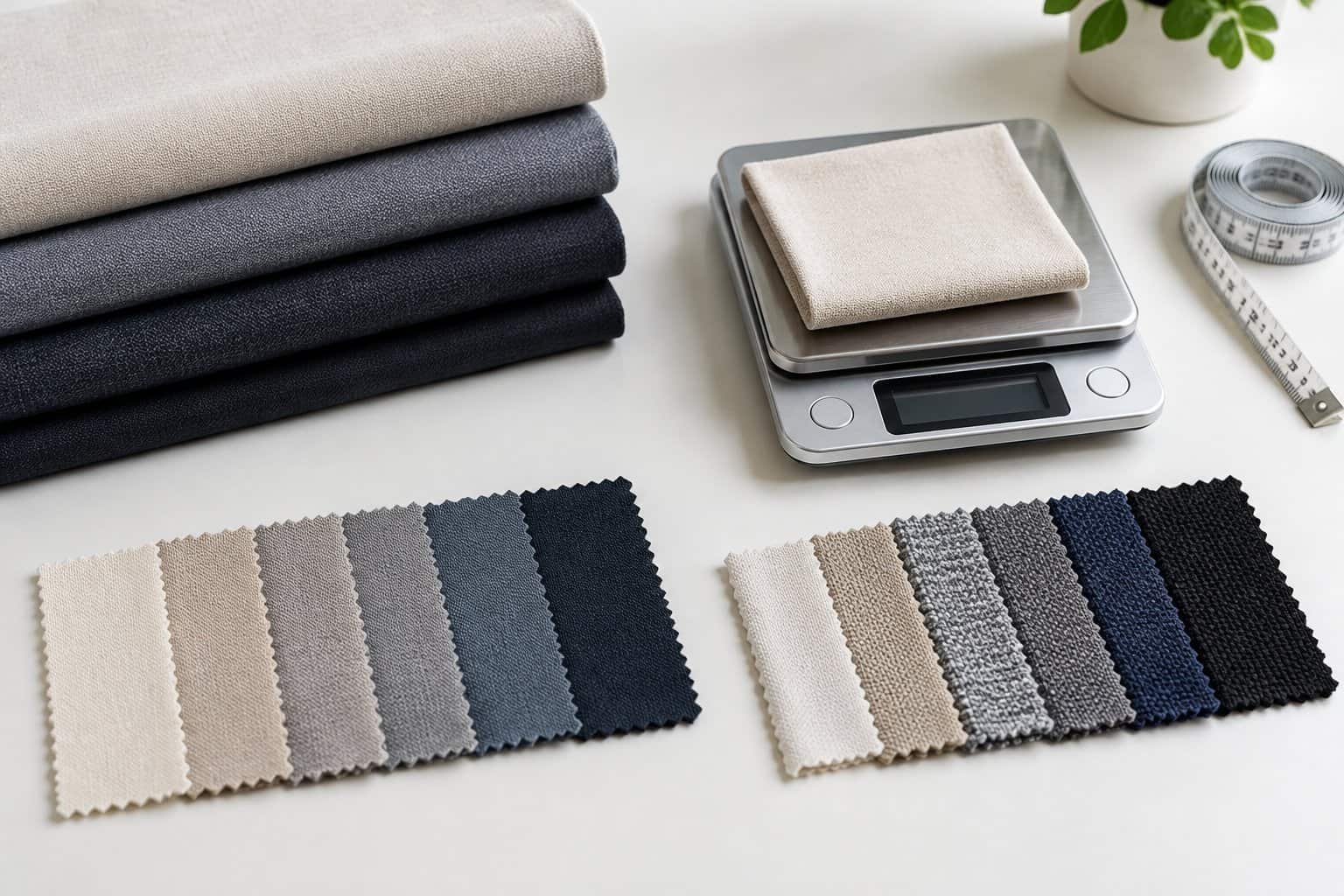
GSM converts to ounces per square yard by dividing by approximately 33.9057. Both units express mass per area, so this conversion works independently of roll width.
Verified Formulas for Converting in Both Directions
The conversion follows from one avoirdupois ounce equaling 28.349523125 grams and one square yard equaling 0.83612736 square meters:
- oz/yd² = GSM ÷ 33.9057
- GSM = oz/yd² × 33.9057
For example, 260 GSM ÷ 33.9057 equals approximately 7.67 oz/yd². In the other direction, 8 oz/yd² × 33.9057 equals approximately 271.25 GSM.
Any gsm calculator used during purchasing should distinguish square-yard weight from linear-yard weight. Quotations should retain enough precision to prevent rounding from changing the agreed acceptance limits.
Static Conversion Table for Common Workwear Weights
This static table supports comparisons between metric specifications and US quotations. Ounce values are rounded to two decimal places.
| GSM | oz/yd² |
|---|---|
| 150 | 4.42 |
| 185 | 5.46 |
| 200 | 5.90 |
| 220 | 6.49 |
| 260 | 7.67 |
| 300 | 8.85 |
| 305 | 9.00 |
| 350 | 10.32 |
| 400 | 11.80 |
A contract should identify the controlling unit. If GSM controls acceptance, the rounded ounce equivalent serves as a reference.
Why Ounces per Linear Yard Requires Fabric Width
Ounces per linear yard describes the mass of a one-yard length across the quoted fabric width. Wider fabric produces a higher linear-yard weight at the same GSM.
The formula is:
Ounces per linear yard = GSM × width in meters × 0.9144 ÷ 28.349523125
At 200 GSM and 1.50 meters wide, one linear yard weighs approximately 9.68 ounces. An “ounce” quotation therefore needs an explicit unit designation before comparison.
Why Can Fabrics at the Same GSM Perform Differently?
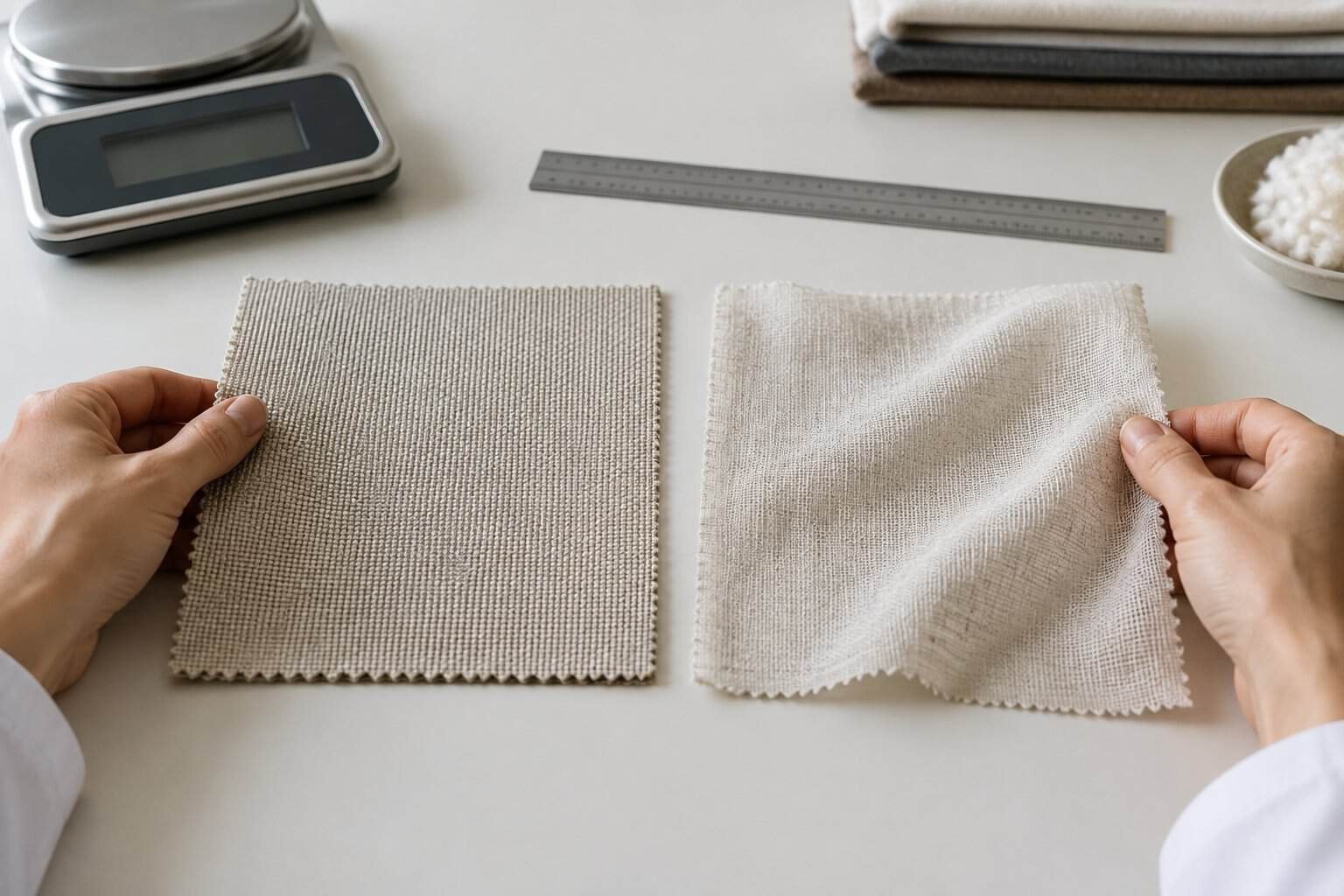
Equal-GSM fabrics perform differently because yarn properties, fabric structure, and finishing distribute the same mass differently. Their strength and thermal behavior require measurements beyond fabric weight.
How Yarn Count and Woven or Knitted Construction Change Feel
Yarn count describes yarn fineness. In the English cotton count system (Ne), a higher number indicates a finer yarn; in tex, a higher number indicates a coarser yarn.
Woven fabrics interlace warp and weft, while knitted fabrics form interconnected loops. A compact twill and a looped knit at 220 GSM therefore differ in stretch, drape, and surface texture.
A useful sample comparison includes bending the fabric and examining its face and reverse. Fabric names alone leave important details unresolved, including yarn twist and thread density.
Balancing Fabric Mass, Coverage, Mobility, and Thermal Comfort
Increasing fabric mass adds textile weight over the same garment area. Air permeability and thermal resistance also depend on pore structure, thickness, and finishing.
A lightweight fabric with a tight construction restricts airflow differently from an open knit. Heavyweight fabric with a stiff finish creates a different mobility burden from flexible fleece at the same GSM.
For physically demanding work, purchasing teams should evaluate fabric samples alongside garment fit trials conducted by the garment supplier. Levitex supplies the textile; garment construction and wearer assessment remain separate activities.
How Finishing and Dimensional Changes Affect Finished GSM
Fabric finishes influence finished mass through chemical add-on, fiber removal, or changes in fabric dimensions. A comparison between greige GSM and finished GSM must account for the full processing route.
Compaction reduces area and increases GSM when mass remains constant. Stretching fabric to a greater finished width distributes that mass over more area.
Laundering introduces another measurement state. Fabric shrinkage increases mass per area when dimensional contraction exceeds mass loss, so an after-wash GSM result needs its laundering procedure recorded.
Why Weight Alone Cannot Establish Protective Performance
Protective performance comes from the tested fabric or assembly under the applicable method. Composition and GSM provide specification details, but neither establishes a protective rating.
For electrical hazards, arc-rated fabric requires relevant arc-test evidence. An assumed ATPV derived from a weight chart has no valid purchasing basis.
The same distinction applies to welding exposure and chemical splash. Buyers need reports that identify the tested article and relevant conditioning, with garment-level requirements assessed separately.
How Should Buyers Measure and Agree Fabric Weight?

Reliable fabric-weight acceptance requires an agreed test method, representative sampling, and a defined fabric state. A contractual tolerance then gives both parties the same acceptance criteria.
Calculate GSM from Sample Mass and Measured Area
The basic calculation is:
GSM = sample mass in grams ÷ sample area in square meters
For a rectangular specimen measured in centimeters:
GSM = sample mass in grams × 10,000 ÷ (length × width)
A 10 cm × 10 cm specimen has an area of 100 cm², or 0.01 m². If it weighs 2.60 grams, its calculated weight is 260 GSM.
Accurate specimen area and an appropriately calibrated balance are essential. A cutter’s conversion multiplier must match its actual cutting area.
Select the Applicable Method: ISO 3801 or ASTM D3776/D3776M
ISO 3801 addresses the determination of mass per unit length and mass per unit area of woven fabrics. ASTM D3776/D3776M covers mass per unit area of fabrics through different testing options.
The purchase agreement should identify the applicable standard, edition, and procedure. A small-swath measurement and a full-width determination represent different sampling approaches.
For knitted fabrics, the selected method must suit that construction. Consistent procedures strengthen FR fabric quality control by making supplier and buyer results comparable.
Agree Conditioning, Sampling, and Finished Fabric State
Moisture affects specimen mass, particularly in absorbent fibers such as cotton. The laboratory should condition specimens according to the agreed method and applicable textile-conditioning standard.
A practical specification records:
- Conditioning atmosphere and equilibrium requirements.
- Number of rolls and specimens sampled.
- Sampling positions across width and along length.
- Treatment of selvages, creases, and defects.
- Relaxation requirements for knitted or tension-sensitive fabrics.
- Whether testing occurs before or after laundering.
The fabric specification should identify the delivered state, such as fully finished, relaxed fabric. Separate dimensional stability requirements establish how width and length are assessed after washing.
Set Contractual Tolerances and Resolve Out-of-Spec Results
A tolerance becomes binding through agreement between buyer and supplier. There is no universal acceptance percentage for every industrial textile.
For illustration, a contractual target of 300 GSM ±5% creates limits of 285–315 GSM. Those figures are an arithmetic example, not a Levitex standard tolerance.
The agreement should also define whether acceptance applies to individual results or a lot average. Disputed results require matched conditioning and sampling procedures, followed by an agreed retest or independent laboratory assessment.
What Should an FR Fabric RFQ Include?
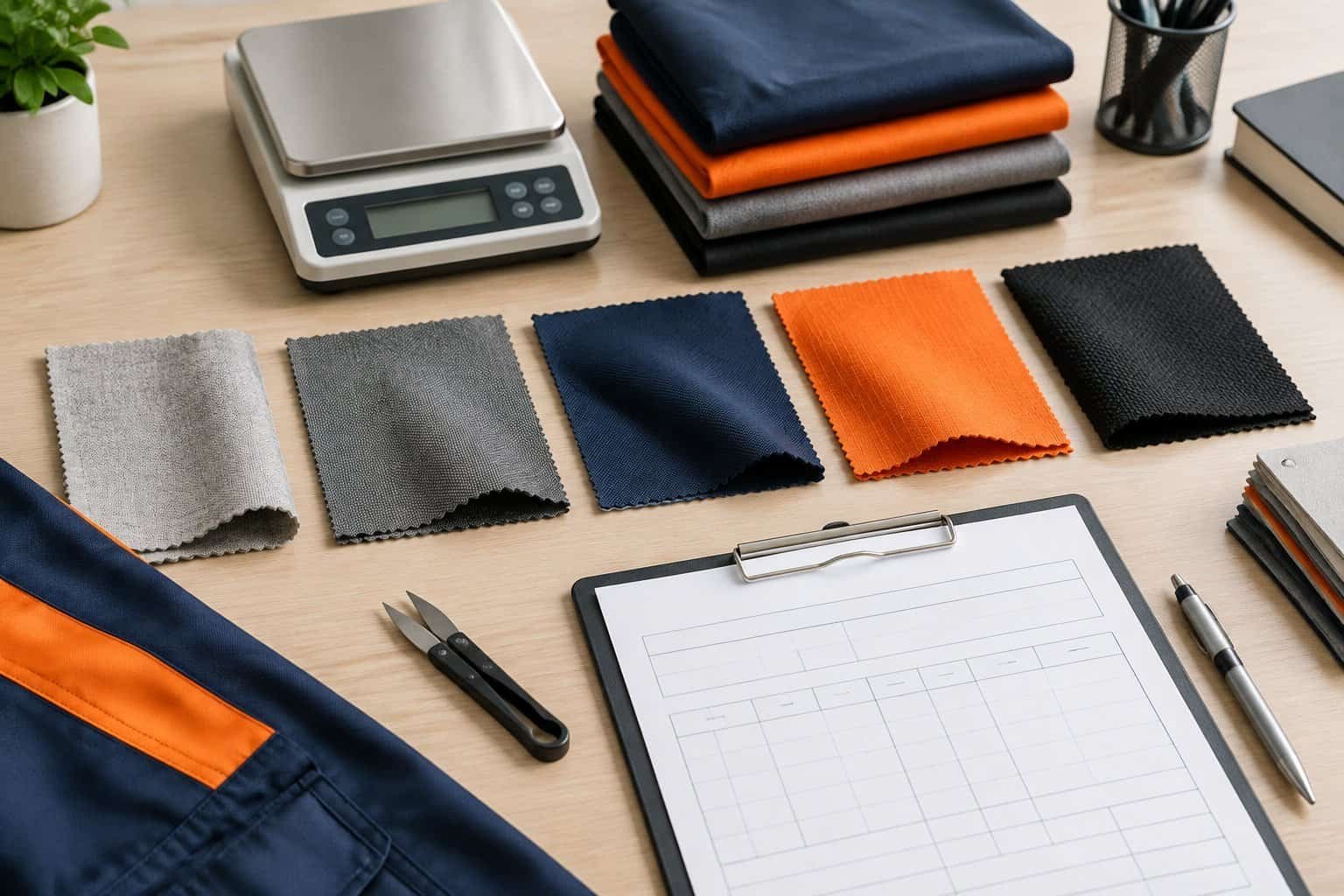
An FR fabric RFQ should define the delivered textile and the evidence required for its intended application. Complete specifications help suppliers quote comparable material and identify sampling requirements.
Specify Composition, Construction, Finished GSM, Width, and Tolerance
Levitex’s main composition families are 100% cotton, cotton/nylon (C/N), and cotton-rich cotton/polyester (CVC). These families support woven fabrics and knitted constructions.
A useful RFQ checklist includes:
- Garment application and industrial working conditions.
- Fiber composition with exact blend percentages.
- Construction, such as twill, cotton canvas, or a specified knit.
- Target finished fabric GSM and agreed tolerance.
- Finished width, usable cutting width, and width tolerance.
- Color reference or printing requirements.
- Order quantity and quantity per color.
- Required dimensional stability and strength properties.
Descriptions such as “heavy FR twill” leave multiple production variables open. A numerical specification gives sampling and quotation a defined starting point.
Define Required Finishes and Product-Specific Evidence
Levitex offers FR plus water-repellent and FR plus oil-repellent finishing on all three base-fabric families. The requested performance must be agreed for the particular fabric and finishing combination.
A buyer’s specification should distinguish water repellency from waterproof performance. Chemical liquid repellency also requires defined chemicals and test conditions, with the protection mechanism distinguished from barrier-based chemical-resistant fabrics.
Evidence requests should identify the applicable methods and acceptance requirements. Reports need to match the offered article, while laundering instructions should align with the intended cleaning process and any required post-laundering tests.
Estimate Fabric Mass from Width, Length, and GSM
Fabric mass follows directly from area:
Fabric mass in kilograms = width in meters × length in meters × GSM ÷ 1,000
For example, 1,000 meters of 260 GSM fabric at 1.50 meters wide contains approximately 390 kilograms of fabric. This excludes packaging and roll cores.
Fabric consumption for garment production also requires marker efficiency and cutting allowances. Buyers calculating usable output should distinguish total roll width from usable cutting width and account for the agreed shrinkage allowance.
Ask Levitex to Confirm Samples, Availability, MOQ, and Lead Time
Levitex supplies textiles through wholesale and customized production, including custom dyeing and printing. Samples and quotations should establish the offered article’s actual specification before bulk approval.
Availability, minimum order quantity, and lead time require confirmation for the requested combination of construction, color, and finishes. The illustrative weight tables above do not represent a stock list.
Buyers should send the garment application, target weight, tolerance, laundering conditions, and protective-test requirements to Charlie@levitex.com. Requests should also include width and quantity per color so Charlie Luo can coordinate an appropriate fabric quotation.
Choose a Verified Fabric Specification, Not GSM Alone

A verified fabric specification combines a numerical weight target with construction details and application-specific evidence. The purchasing decision should use conditioned, finished-fabric measurements with contractual acceptance limits.
GSM and oz/yd² provide a common basis for comparing offers. Sample approval and product-specific reports complete that comparison.
Before bulk production, the buyer and supplier should record the approved article, test procedure, sampling plan, and retest process in the purchase agreement.
Frequently Asked Questions
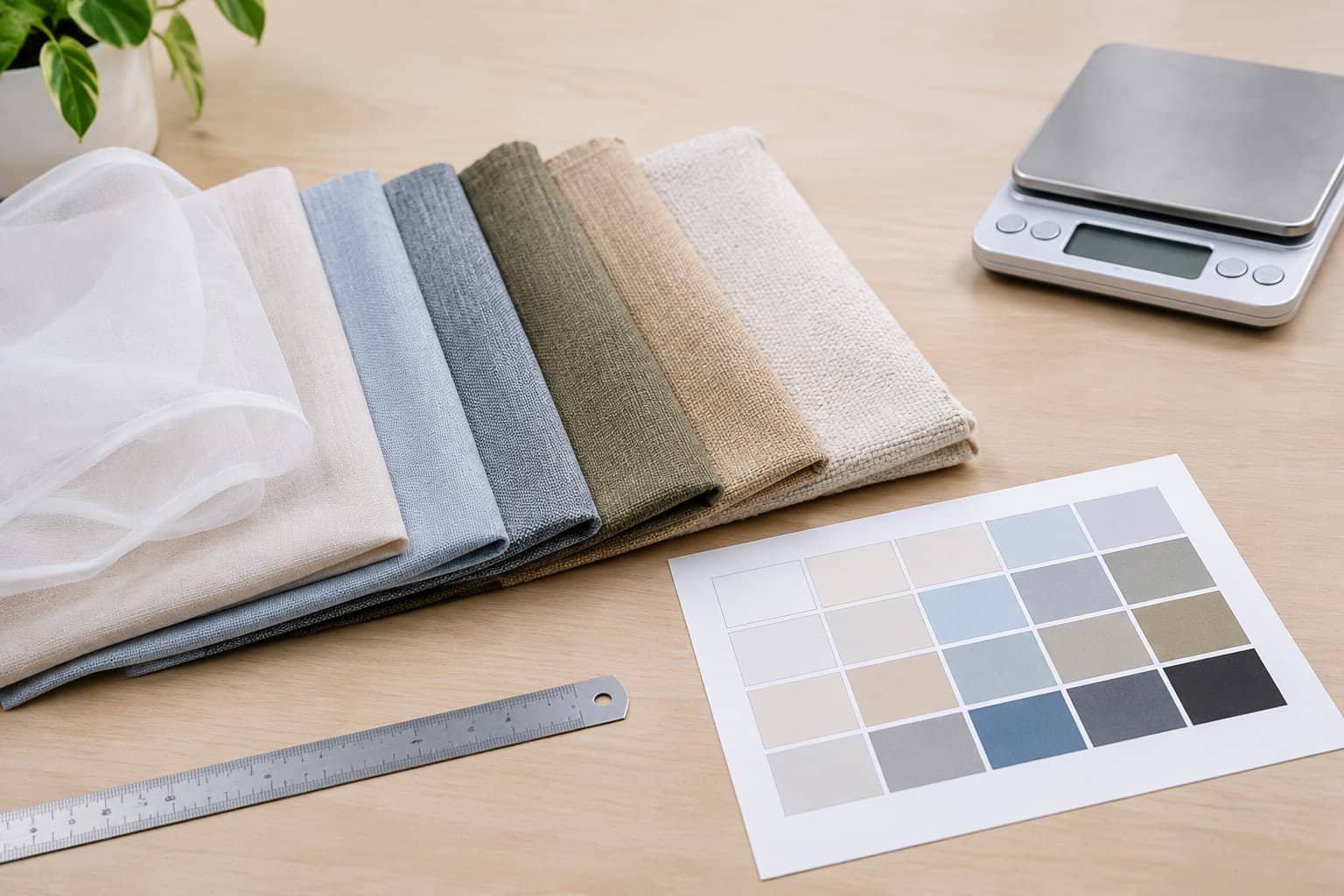
GSM questions become useful purchasing decisions when the weight is tied to a defined fabric and garment application.
Which GSM is good for industrial workwear fabric?
For initial sourcing, 150–185 GSM provides reference points for lighter work shirting, while 220–300 GSM provides starting points for trousers and coveralls. Final selection requires the specified construction and evidence for the workplace hazards.
Is 200 GSM fabric heavy?
At 200 GSM, fabric falls near the transition between lightweight and medium-weight workwear in the reference bands above. It represents a more substantial shirt fabric and a lighter option within many trouser-fabric ranges.
Is 300 GSM heavy for a work shirt?
A 300 GSM woven fabric is heavy for a conventional work shirt. A shirt specification at that weight warrants a sample assessment for bending stiffness, seam bulk, and comfort during the intended workload.
Is 400 GSM considered heavyweight fabric?
A 400 GSM fabric qualifies as heavyweight within the workwear reference bands used here and equals approximately 11.80 oz/yd². Its thickness still varies with construction, especially between compact canvas and lofted fleece.
Does higher GSM mean better flame resistance?
Higher GSM does not establish better flame resistance; the relevant flame-retardant fabric tests establish the reported performance. Comparisons require product-specific results under matching methods and conditioning requirements.