
To clean welding gloves safely, inspect them first, remove loose nonhazardous dirt using an approved method, and spot-clean only when your manufacturer permits it. You should wash gloves only when their exact care instructions explicitly allow washing; many leather and lined designs require more restricted care.
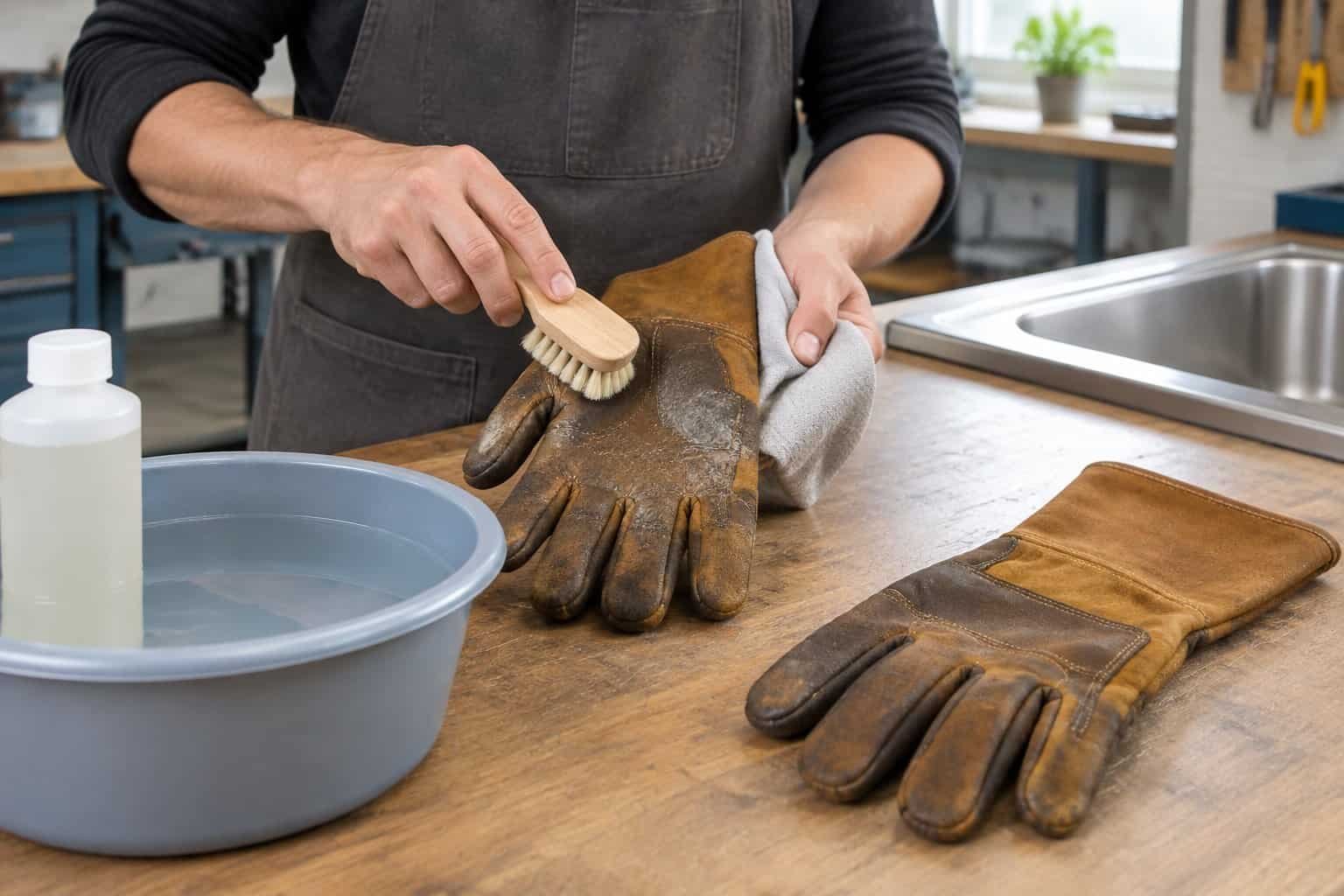
When you work out how to clean welding gloves, your goal is safe reuse. A cleaner surface does not prove that damaged insulation or contaminated leather has recovered its protective performance. Your decision starts with the glove’s construction and what it has contacted.
Are All Welding Gloves Washable?
You should treat your welding gloves as washable only when the manufacturer explicitly approves washing for that model. Leather panels, insulating liners, and reinforced seams require compatible care.
Check the Manufacturer’s Care Instructions First
Find your model number and read the care label, packaging, or official product instructions. Look for the permitted cleaning method, any approved cleaning agent, and drying restrictions.
Keep instructions for washing flame-retardant fabrics separate from your glove-care procedure. Permission to launder your welding jacket does not authorize the same treatment for your gloves.
Identify Leather, Linings, and Explicitly Washable Designs
Check whether your gloves use split cowhide, goatskin, another leather, or a combination of materials. Then identify any lining, coating, or reflective backing; your outer shell alone does not determine the cleaning method.
When you assess materials used in welding gear, include the complete assembly. A washable liner material does not establish that your assembled glove tolerates immersion, and an explicitly washable design still requires its specified procedure.
What Should You Check Before Cleaning?
Take your gloves out of service and assess both physical damage and contamination before you start cleaning. This prevents you from spending time cleaning gloves that require replacement or controlled handling.
Remove Gloves from Service and Inspect Their Condition
Let your gloves cool before handling them. Examine the palms, fingertips, thumb crotches, and cuffs under good lighting, gently opening folds to expose hidden wear.
Check for holes, embedded spatter, thinning leather, and separated stitching. Inspect the accessible lining without pulling it loose or turning the glove inside out unless permitted.
Include your gloves in your routine welding PPE inspection. Set suspect gloves aside so you do not accidentally return them to use.
Assess Oil, Chemical, and Metal-Dust Contamination
Identify what your gloves contacted before choosing a cleaning method. Ordinary dry dirt requires a different response from cutting fluid, solvent residue, or dust containing hazardous metals.
If the contamination is unknown, isolate your gloves and involve your safety supervisor. Use your workplace hazard assessment and the contaminant’s safety data sheet to determine handling requirements.
Avoid judging safety by appearance or smell. You cannot establish that hazardous residue has been removed through a visual check alone.
Which Dirt-Removal Methods Are Safe?
Use the least aggressive method approved for your gloves and the contamination present. Keep routine surface cleaning separate from hazardous-contamination control.
Remove Loose Dirt Without Dispersing Hazardous Dust
For ordinary, nonhazardous surface dirt, use gentle wiping or a soft brush only when your glove instructions permit it. Work over a surface where you can collect the debris, paying attention to cuff folds and seams.
Avoid shaking or beating your gloves. Do not use compressed air to blow dust from them, and keep potentially hazardous metal dust out of the air.
For hazardous or combustible dust, follow your workplace’s designated collection procedure. Use vacuum equipment only when it is approved for that specific dust hazard.
Spot-Clean Only When the Manufacturer Allows It
Follow your model’s instructions for the cleaning agent and application method. If those instructions permit a damp cloth, control the moisture so you do not saturate the leather or lining.
Work gently on the affected area, then remove residue exactly as directed. Avoid adding an immersion rinse, disinfectant, or household degreaser to the procedure.
Stop if your treatment causes surface damage or distortion. Stronger scrubbing is an unsuitable response to contamination that an approved method fails to remove.
Seek Guidance When Care Instructions Are Missing
Pause wet or chemical cleaning when you cannot locate instructions for your exact model. Contact the manufacturer with the product identification and a description of the dirt or contaminant.
At work, ask your safety supervisor to establish an approved procedure before you proceed. For hazardous exposure, keep your gloves isolated while that assessment is underway.
Avoid borrowing a care recipe from visually similar gloves. Differences in tanning, linings, and construction affect which treatments are suitable.
How Should Gloves Be Dried and Stored?
Dry your gloves completely using their approved method, then store them where they remain clean and protected from damage. Moisture trapped in a lining requires attention even when the outside feels dry.
Follow Approved Drying and Storage Instructions
If your manufacturer specifies air-drying, choose a ventilated location away from direct heat and welding activity. Avoid using a torch, heater, hot workpiece, or tumble dryer unless the applicable instructions expressly authorize that drying method.
Keep your procedure for drying fire-retardant clothing separate from your glove instructions. A garment’s dryer allowance does not establish a safe treatment for leather hand protection.
Store your dry gloves away from chemicals and abrasive tools. Keep them out of sealed storage while moisture remains inside.
Inspect Again Before Returning Gloves to Service
Check your gloves after cleaning and drying, including the lining and fingertip areas. Look for remaining residue, new cracks, or changes in shape.
Once you have cleared the contamination concern, check fit and finger movement. Confirm that your cuffs still provide suitable overlap with your flame-resistant welding clothing.
Keep damp, distorted, or damaged gloves out of service. Do not test their protection by touching hot metal or exposing your hands to sparks.
When Should Welding Gloves Be Replaced?
Replace your gloves when damage, altered fit, or unresolved contamination makes them unsuitable for the task. Base that decision on their condition and your manufacturer’s criteria, without assigning a universal replacement interval.
Recognize Burns, Hardening, Shrinkage, and Seam Damage
Remove your gloves from use if you find burn-through, deep cracking, brittle leather, or open seams. Check high-wear areas closely, especially where your fingers bend and your thumb grips the torch.
Treat hardening or shrinkage that restricts movement as a reason to retire the pair. A displaced or damaged liner also warrants removal from service.
When choosing replacement welding gloves, match their protection and dexterity to your welding process. Avoid improvised patches or stitching repairs unless the manufacturer and workplace procedure authorize them.
Resolve Hazardous Contamination Before Reuse or Disposal
Keep oil-soaked or chemically contaminated gloves isolated until you have an approved decision on decontamination or replacement. Applying a stronger household cleaner does not establish safe reuse.
Follow your workplace’s waste procedure for gloves carrying hazardous residue. Depending on the contaminant, you will need specialist assessment or controlled disposal.
Keep retired contaminated gloves out of general-purpose shop use. Reassigning them to cleanup work leaves the exposure problem unresolved.
Let Approved Care and Glove Condition Guide Reuse
Your safest care routine follows the exact manufacturer instructions and includes inspections before and after cleaning. Use only authorized treatments, and return your gloves to service only when they are fully dry and suitable for the work.
Keep questionable gloves set aside while you resolve missing instructions or contamination concerns. Replace pairs with compromised leather, damaged seams, or unresolved hazardous residue.
Frequently Asked Questions
You need model-specific approval for machine washing and leather treatments. For oil exposure or wet gloves, keep the pair out of welding service until you have addressed the condition.
Can welding gloves go in the washing machine?
You should machine-wash your welding gloves only if their manufacturer explicitly permits it for that model. Follow every specified washing and drying restriction, including any limits on cleaning agents.
Can I use saddle soap or conditioner on leather welding gloves?
Use saddle soap or conditioner only when your glove manufacturer approves the exact treatment. A product intended for ordinary leather goods does not establish compatibility with your welding gloves’ protective construction.
What should I do if welding gloves become contaminated with oil?
Remove your oil-contaminated gloves from service and follow your workplace contamination procedure. Obtain manufacturer or safety-supervisor guidance before attempting cleaning; absorbed oil requires an approved assessment for reuse or disposal.
Can I use welding gloves while they are wet?
Keep your wet welding gloves out of service until they are fully dry and have passed inspection. Remember that ordinary welding gloves are not electrical-insulating PPE, and dry gloves do not replace proper electrical safety controls.