When welding, you should avoid ordinary meltable nylon or polyester clothing, easily ignited untreated garments, exposed skin, and clothing that traps sparks or molten spatter. Choose welding protective clothing suited to your task, and check every layer, including the shirt beneath your jacket and the trousers covering your boots.
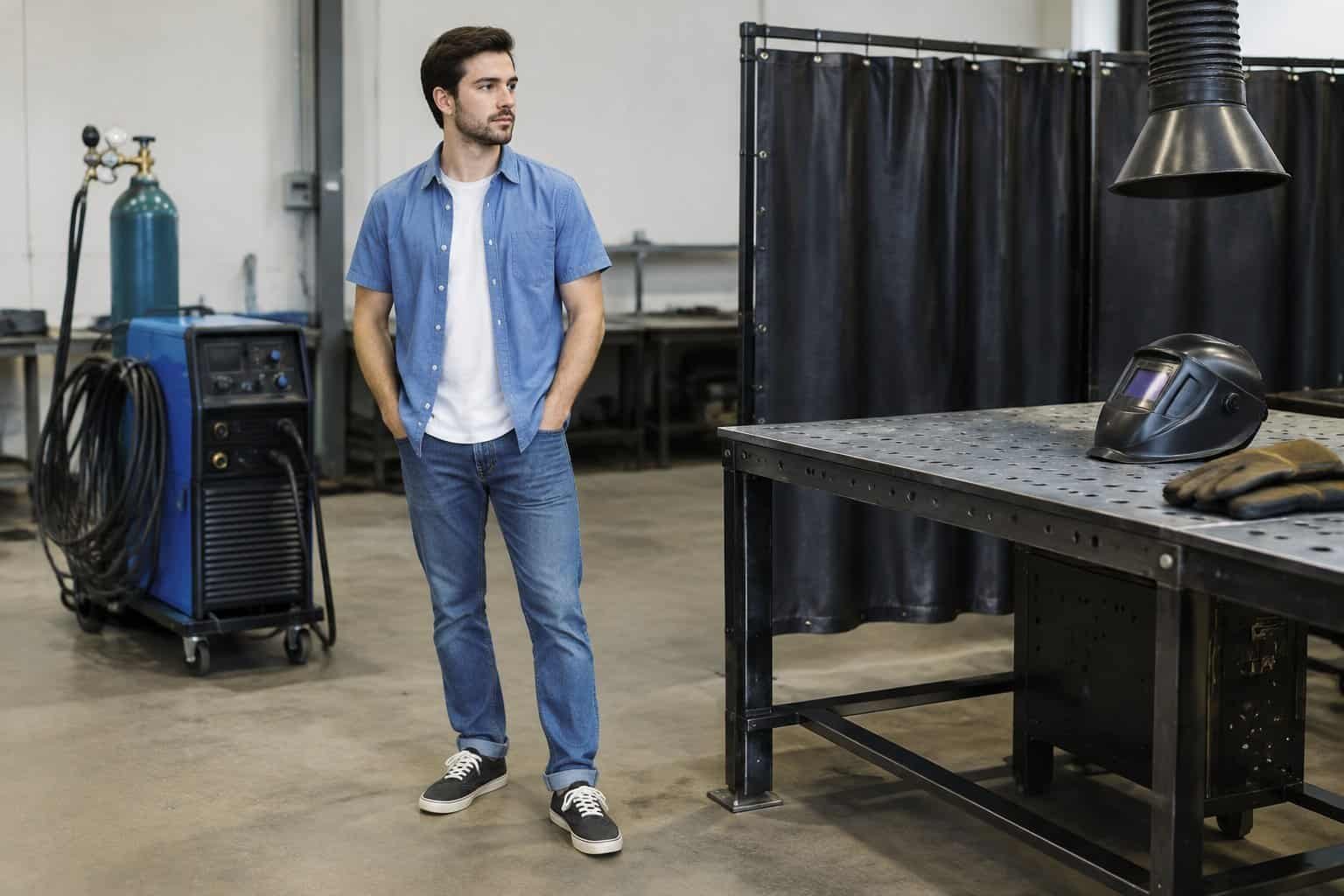
Knowing what not to wear when welding helps you distinguish several different problems: fabric melting against your skin, clothing sustaining combustion, and hot particles entering openings. A heavy-looking fabric or a familiar fiber name gives you insufficient evidence of protection.
Whether you select garments for your own work or specify fabrics for a workwear range, start with the expected welding exposure. Your employer’s workplace hazard assessment determines the required protection; this educational guidance supports that assessment.
Which Clothing Hazards Must Be Addressed First?
Your first priorities are preventing clothing ignition or melting and keeping welding radiation and hot material away from your skin. Your clothing selection also needs to account for electrical hazards and the surrounding work environment.
Melting, Ignition, Spatter, and Exposed Skin
You face different injury mechanisms from different materials. Ordinary thermoplastic fabrics soften or melt under sufficient heat, while combustible fabrics sustain burning under suitable ignition conditions.
You also need coverage against molten metal droplets, hot slag, and arc radiation. OSHA identifies UV radiation, burns, and electrical shock among welding hazards, so a clothing check must extend beyond whether a shirt catches fire.
How the Employer’s Hazard Assessment Determines Suitable Clothing
Your employer should evaluate the welding process, current, work position, exposure duration, and nearby hazards before selecting PPE. Overhead work creates different spatter-entry risks from work performed at a bench.
Follow the resulting clothing requirements and training, including any need for supplemental leather protection. Your flame-resistant clothing remains one part of the controls required alongside ventilation, welding screens, and safe hot-work procedures.
Which Everyday Fabrics Need Caution?
You should screen everyday clothing for both melting behavior and combustibility before considering it suitable for welding. Use the distinctions below to identify the evidence you need from a protective garment supplier.
| Everyday material | Hazard you need to address | Qualified alternative to consider |
|---|---|---|
| Ordinary nylon | Heat-induced shrinking or melting | A documented welding-protective fabric system |
| Ordinary polyester | Melting under sufficient heat | A tested protective blend appropriate to your exposure |
| Rayon | Ignition and burning of regenerated cellulose | A purpose-designed FR fabric with relevant test documentation |
| Untreated cotton | Ignition and continued burning | FR-treated cotton in a suitable welding garment |
| Ordinary wool | Variable protection with weight, construction, and blends | A welding-protective garment with verified performance |
Ordinary Nylon and Polyester Can Melt
You should treat ordinary nylon windbreakers, polyester sports shirts, and similar everyday garments as melt hazards near welding heat. Under sufficient exposure, these thermoplastics soften, shrink, or melt, creating an additional contact-burn risk.
Check blend labels as well as the main fiber name. Your cotton-rich stretch garment might contain polyester or elastane, and its appearance gives you no assurance of welding performance.
Rayon and Untreated Cotton Can Burn
You should classify rayon as regenerated cellulose, with ignition and burning as its principal fabric concerns. Describing ordinary rayon as a meltable thermoplastic confuses the mechanism you need to control.
Your untreated cotton clothing is also combustible, even when thick or tightly woven. For cotton fabric to provide flame-retardant performance, you need an appropriate treatment and supporting test evidence; a “100% cotton” label establishes fiber content alone.
Why Wool Is Not an Automatic Protective Substitute
You should assess a wool garment by its construction and documented performance before using it for welding. Wool has useful resistance to ignition, but a lightweight sweater offers different coverage and heat protection from purpose-designed protective clothing.
Inspect any lining, blend components, and open knit structure. You still need a garment that meets your workplace requirements and prevents spatter from reaching your skin.
How Aramids and Tested Protective Blends Differ
You should distinguish ordinary synthetic clothing from specialized protective textiles. Aramids are synthetic fibers with inherent flame resistance, and engineered protective blends combine fibers to achieve specified performance.
Select a material for welding gear through relevant fabric and garment evidence. An aramid name or a small synthetic percentage alone gives you insufficient information about spatter resistance, heat transfer, or finished-garment suitability.
How Can Layers and Clothing Design Increase Risk?
Your clothing system increases risk when an inner layer melts, an opening admits spatter, or contamination adds fuel. Inspect the complete outfit while moving into your working positions.
Base Layers Beneath Protective Outerwear
You should include underwear, thermal tops, and sweatshirts in your clothing assessment. Sufficient heat passing through protective outerwear creates a melting hazard when you wear ordinary thermoplastic layers underneath.
Follow your employer’s requirements for non-melting or FR base layers. If you specify a lined garment, evaluate the flame-resistant lining fabric with the outer material and the intended construction.
Cuffs, Open Pockets, and Gaps That Collect Spatter
You should eliminate turned-up trouser cuffs and close pocket flaps before starting work. These features form ledges or receptacles where hot particles remain against the garment.
Check your collar, front closure, and waist overlap while bending or reaching. Keep closures secured as intended, and use garments with pocket designs suited to welding exposure.
Oil, Grease, and Other Combustible Contamination
You should remove contaminated clothing from service when oil, grease, or combustible residue compromises its condition. An FR fabric’s properties do not eliminate the fuel carried on its surface.
Use the manufacturer’s instructions for washing flame-retardant fabrics and inspect the garment after cleaning. If contamination remains, keep the garment out of use until your workplace’s cleaning or replacement requirements are satisfied.
Loose Fits, Damage, and Accessories
You need enough ease for movement while controlling hanging fabric and snag points. Excessively loose sleeves, dangling drawstrings, and unsecured accessories create hazards around fabrication equipment.
Remove jewelry when your workplace assessment requires it, especially where conductive items or entanglement present a risk. Check for holes, failed seams, and damaged closures; arrange approved repairs or replacement before returning compromised clothing to service.
How Do You Select Tested Welding Protective Clothing?
You should select clothing with documented welding performance and a design suited to your exposure. A generic FR claim or an electrical arc rating alone provides insufficient evidence for the full range of welding hazards.
What ISO 11611 Covers and Where Its Protection Ends
You can use ISO 11611 documentation to assess protective clothing intended for welding and allied processes with comparable risks. Its scope includes garments and items such as hoods, aprons, sleeves, and gaiters intended to protect against small molten-metal splashes, brief flame contact, and radiant heat from an electric arc.
Check the edition identified in the documentation and its applicable performance classifications. Class 1 and Class 2 distinguish lower and higher specified welding exposure levels; neither designation promises protection against every welding condition.
Treat the standard’s limited electrical-contact provisions with particular care. Your welding clothing is unsuitable as electrical insulating equipment, and you need separate protection for your eyes, hands, and other hazards outside the garment’s scope.
Matching Garment Performance to Welding Tasks and Exposure
You should match protection to the actual spatter and heat exposure, including where particles strike or collect. MIG/GMAW, TIG/GTAW, stick/SMAW, and flux-cored welding impose different demands, with settings and position further affecting exposure.
For heavy spatter or overhead work, your assessment might require supplemental leather sleeves, an apron, or more extensive coverage. Account for heat stress and mobility so you can keep the required protection properly fastened throughout the task.
Keep arc-rated and flame-resistant clothing requirements distinct in your specification. An arc rating addresses an electrical arc thermal exposure; you still need evidence relevant to welding spatter and garment construction.
Checking Labels, Fabric Documentation, and Care Instructions
You should verify that the documentation identifies the garment or fabric you intend to purchase. Match the composition, fabric weight, finish, and product reference to the supplied material.
Use a purchasing checklist to verify fabric quality requirements:
- Confirm the standard designation, edition, and claimed performance class.
- Check whether evidence covers fabric, a component, or the finished garment.
- Review permitted cleaning methods and any declared cleaning-cycle limitations.
- Establish inspection, repair, and replacement criteria.
If you manufacture welding workwear, you can discuss application-specific fabric requirements with Levitex at Charlie@levitex.com. Include your target standard, exposure conditions, and garment construction so the discussion stays focused on fabric selection and supporting documentation.
What Should a Head-to-Toe Clothing Check Include?
Your pre-work check should confirm continuous coverage and compatible overlaps from your head to your footwear. Repeat the check in the posture you will use for welding, especially when kneeling or reaching overhead.
Head, Neck, Arms, and Other Exposed Skin
You should cover your arms and neck and protect exposed areas around your helmet. Choose an appropriate FR cap or hood when your assessment identifies exposure to sparks or arc radiation.
Keep your sleeves down and collar secured. Your welding gear selection also needs suitable eye and face protection, with hearing and respiratory protection determined by the task.
Hand Protection and Compatibility at the Cuffs
You need task-appropriate welding gloves that provide the required heat protection while preserving enough dexterity to control your equipment. Your glove selection for fine TIG work will differ from the heavier protection required for substantial spatter exposure.
Check your welding gloves together with your jacket sleeves. Gloves should cover your hands, wrists, and lower forearms, and the cuff arrangement should maintain coverage as you move.
Keep gloves dry and inspect them for holes or degraded seams. Ordinary wool gloves provide insufficient evidence of suitability for welding hand protection.
Trouser Coverage, Footwear, and Spatter Entry Points
You should wear full-length, uncuffed trousers over suitable protective boots that cover your ankles. Sneakers, open footwear, and low-cut shoes leave vulnerable entry points or provide insufficient protection for the assessed exposure.
Keep your pant legs over your boots so falling particles shed outside the footwear. Check coverage while crouching, and add suitable gaiters or other protection when the assessment identifies remaining spatter-entry risks.
Your footwear selection must also address the workplace’s impact and sole requirements. Boots provide defined protection within their design limits, so inspect the uppers and closures before use.
Choose Welding Clothing by Verified Protection, Not Fabric Name
You should base your clothing choice on documented welding performance, suitable coverage, and the hazards identified for your task. Check ordinary meltable fabrics and combustible untreated garments carefully, while evaluating specialized protective blends through their supporting evidence.
Before striking an arc, secure your closures, inspect your layers, and check the overlaps at your wrists and boots. If a garment’s suitability or condition is uncertain, resolve it with your supervisor or PPE supplier before continuing.
Frequently Asked Questions
Use your workplace clothing requirements to resolve everyday garment choices. These answers address common uncertainties about familiar fabrics and coverage.
Are jeans okay to weld in?
Your jeans are suitable only when their material, condition, and protective performance meet the task’s requirements. Ordinary denim is combustible, while stretch denim introduces additional fibers; choose documented welding-protective trousers when your assessment requires them.
Can I wear a polyester shirt under a welding jacket?
You should avoid an ordinary polyester shirt beneath your welding jacket because sufficient transmitted heat creates a melting hazard. Follow your workplace requirements for an appropriate non-melting or FR base layer.
Is a cotton shirt enough protection for MIG welding?
You should not rely on an ordinary cotton shirt as your sole protective clothing for MIG welding. Your required protection follows the assessed spatter and heat exposure, and some tasks require supplemental leather protection.
Can welding clothing contain synthetic fibers?
You can wear synthetic-containing welding clothing when the protective fabric system and finished garment have appropriate documented performance. Aramids and engineered FR blends differ substantially from everyday polyester or nylon apparel.
Can I weld in shorts or short sleeves?
You should cover your legs and arms against welding radiation and hot particles. Shorts and short sleeves leave exposed skin, so use full-length trousers and suitable arm coverage required by your workplace assessment.