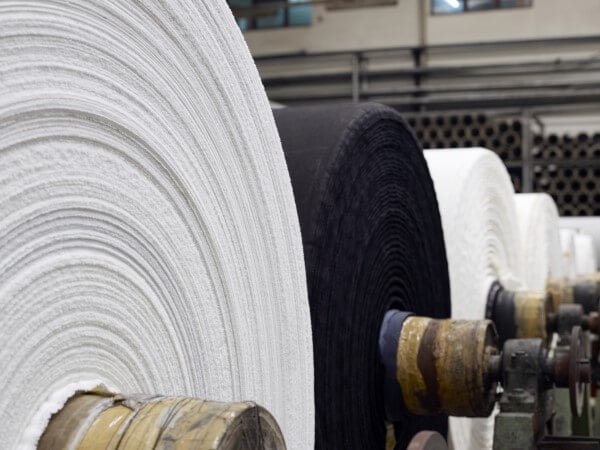
An overview of technical textiles manufacturing. You will benefit from our quality flame retardant fabrics.
Yarn Preparation
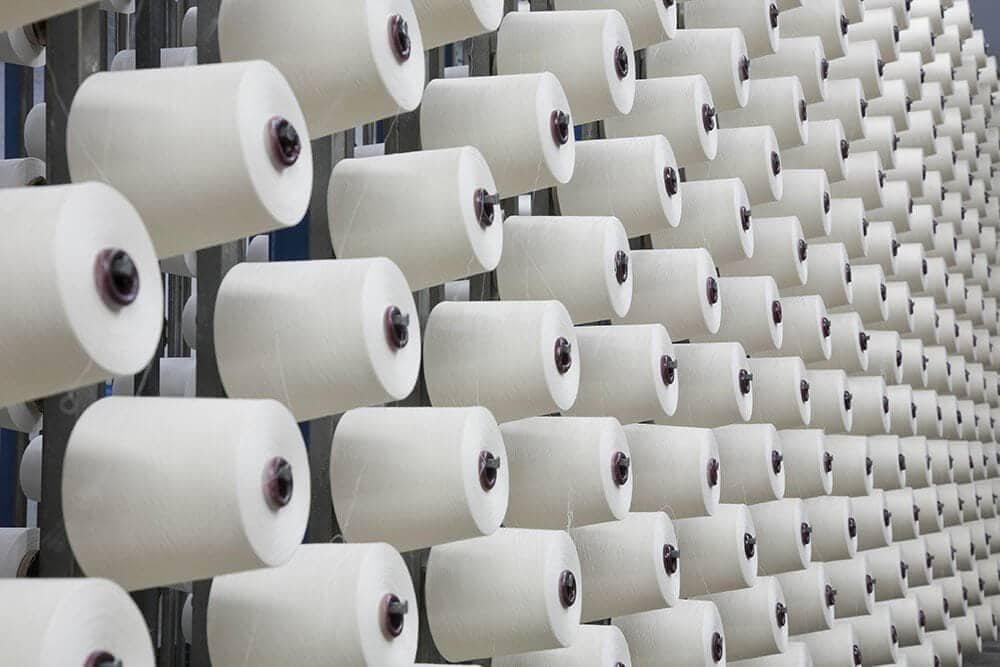
We carefully engineer our fiber blends and source premium yarns. In our facility, we convert tube yarns into high‑volume cones and assemble them onto standard warp beams, preparing them for knitting. This precise upstream process ensures consistent quality, smooth continuous production, and minimal material waste—reflecting our commitment to both performance and sustainability.
Fabric Manufacturing
In our weaving hall, rapier and air-jet looms run in synchronized precision, interlacing warp and weft into uniform grey fabrics. Real‑time monitoring controls tension, density, and surface integrity. Every meter produced is a stable foundation for subsequent FR finishing—where efficiency meets craftsmanship from the very first pick.
The raw fabric comes out at this stage; it’s called “greige fabric“. With our techniques, we can produce flame-retardant knitted fabric in various styles, including:
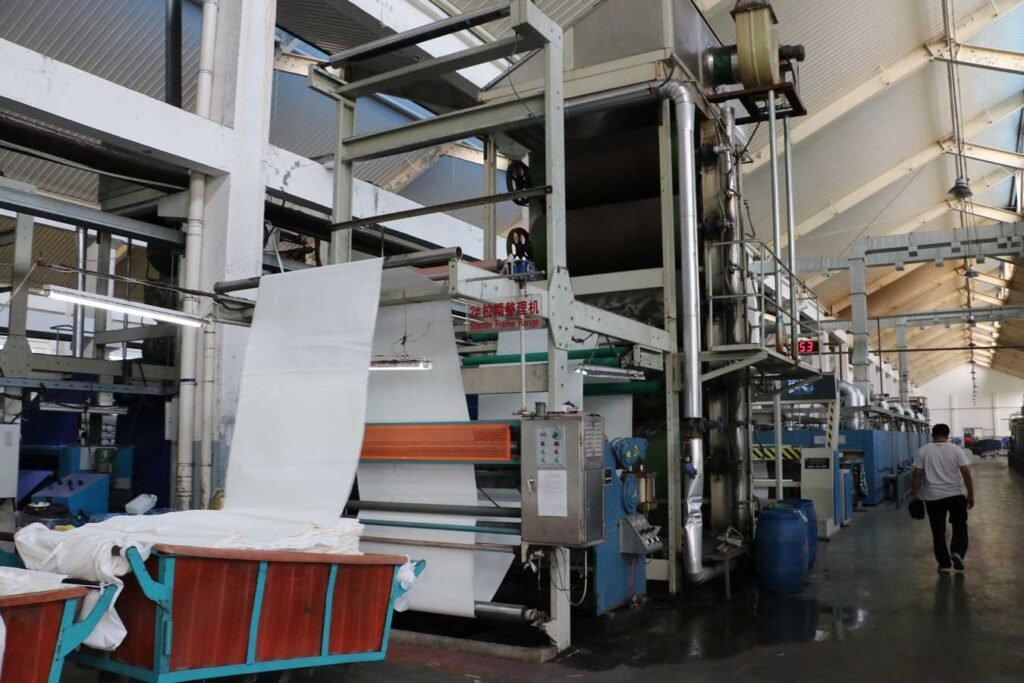
Our bleaching process carefully removes natural pigments from greige fabrics to enhance whiteness and dye affinity, ensuring brilliant color uptake. Using eco-friendly oxidizing agents and closed-loop water recycling, we prepare RFD (ready-for-dyeing) fabrics with consistent purity and minimal environmental footprint. This critical step not only enables vibrant shades but also lays a clean foundation for subsequent FR finishing, where safety meets aesthetics.
Fabric Finishing
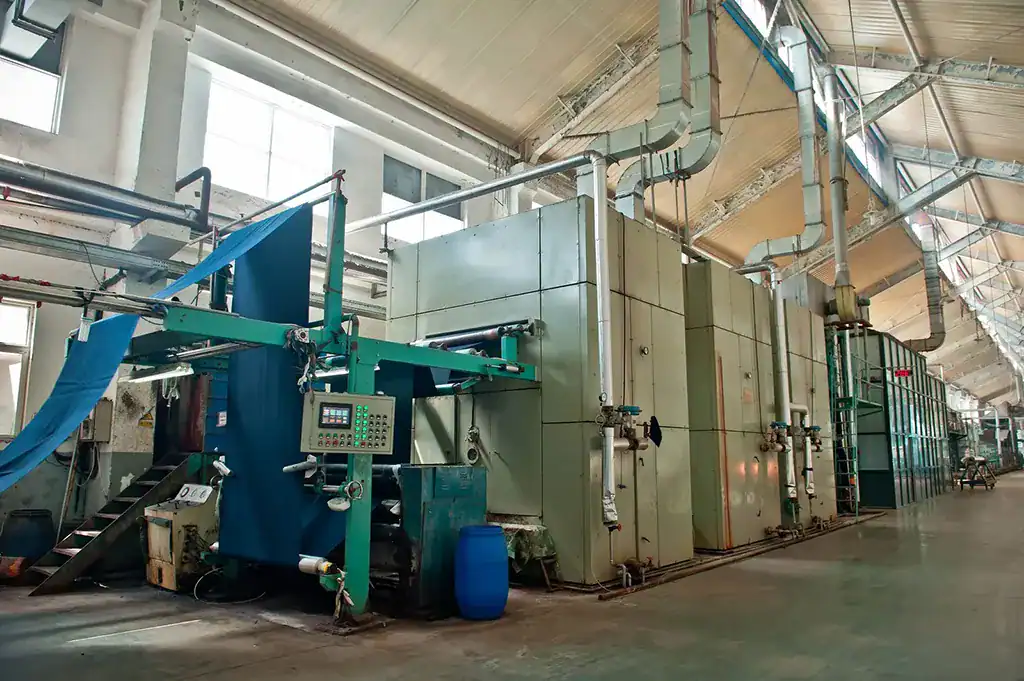
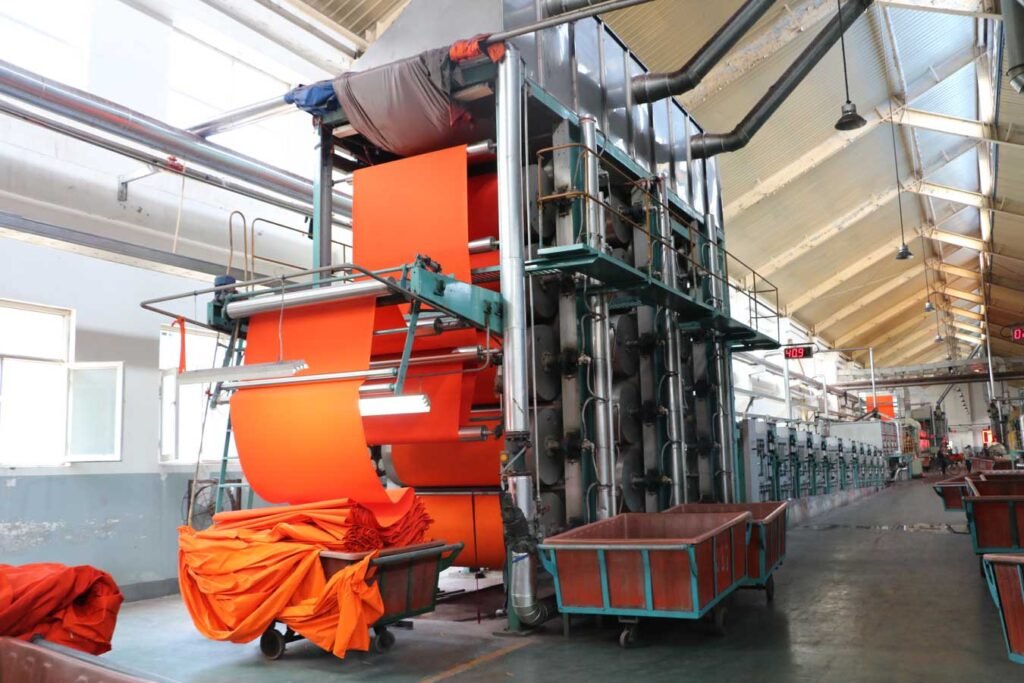
At Levitex, finishing is where performance takes form. We apply tailored FR treatments—impregnation, lamination, coating—with exacting control to achieve durable flame protection, a soft handle, and consistent quality. Every process is monitored for efficiency and environmental responsibility, ensuring our finished fabrics safeguard lives and respect the planet.
Packaging and Storage
After final inspection, each finished roll is conveyed to packing, sealed in waterproof, moisture-proof woven bags or clear film, and labeled with full order and shipping details. Rolls are then palletized, moved by lift truck, and stored on designated warehouse shelves—ready for dispatch. This streamlined workflow ensures fabric protection, traceability, and rapid order fulfillment.