
For general industrial uniforms without thermal hazards, you get a practical balance of comfort, strength, and easy care from cotton-rich blended workwear fabrics. Your fabric specification identifies both the fiber composition and the construction used for work trousers, coveralls, jackets, or shirts.
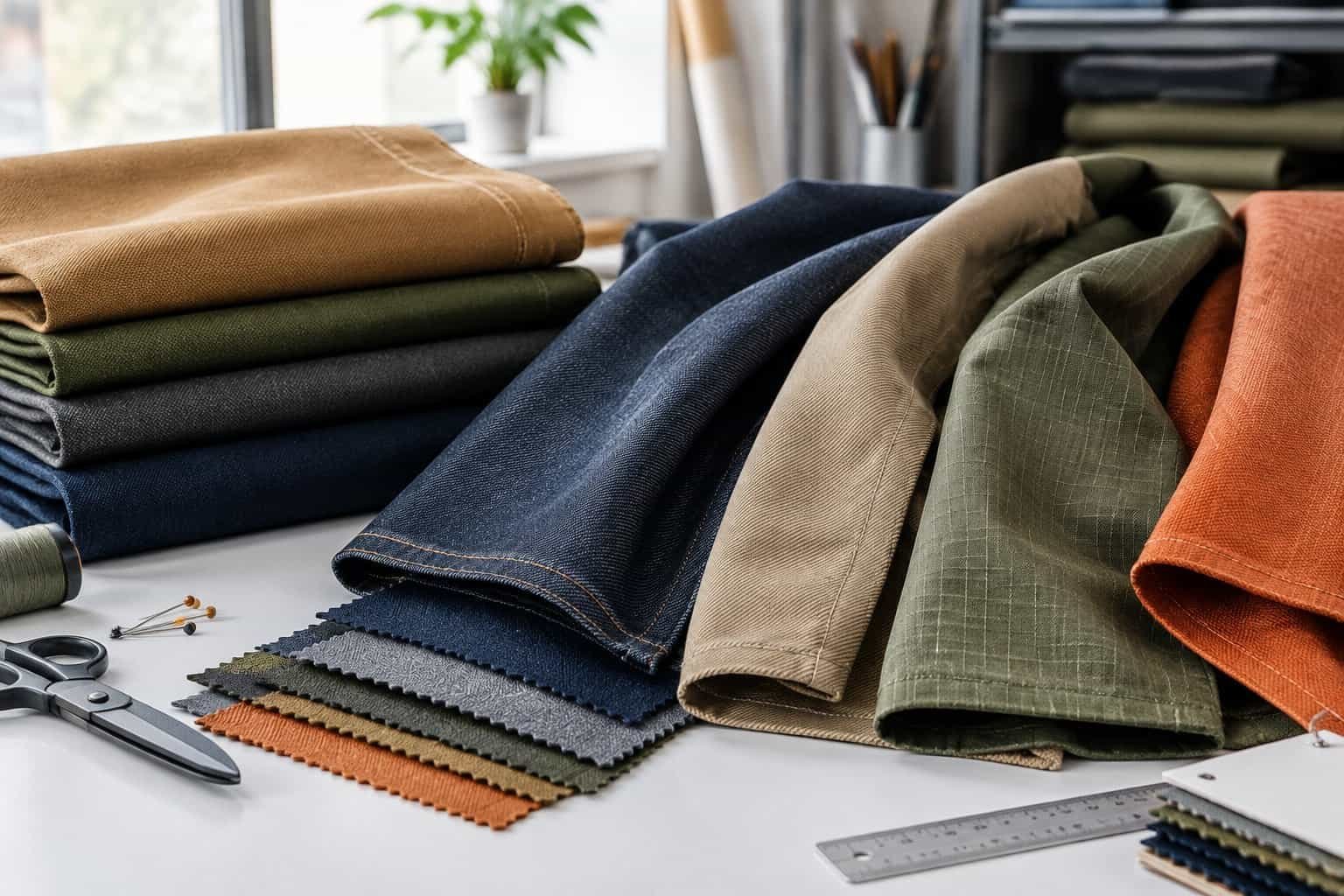
You need separate evidence for everyday durability and protective performance. A fabric that withstands repeated washing still requires hazard-specific verification before you use it around flames, electrical arcs, or chemical liquids.
Your purchasing brief should connect the job to measurable requirements. With agreed test methods and approved samples, you give your garment manufacturer a clear basis for production and bulk acceptance.
How Do Cotton, Polyester, Nylon, and Blends Compare?
You gain absorbency from cotton, low moisture uptake from polyester, and abrasion-resistant options from nylon. With blends, you adjust those properties through the fiber ratio, yarn selection, and finishing process.
Use this comparison as a starting point for ordinary, uncoated fabrics. Your finished-fabric test results establish the performance you approve for production.
| Selection criterion | 100% cotton | Polyester | Nylon | Cotton-rich blends |
|---|---|---|---|---|
| Fiber moisture uptake | High | Low | Higher than polyester | Ratio-dependent |
| Drying behavior | Slower when saturated | Faster with suitable construction | Construction-dependent | Ratio-dependent |
| Shape retention | Shrinkage control needed | Good | Good | Finishing-dependent |
| Abrasion potential | Construction-dependent | Good | High | Blend-dependent |
| Thermal-hazard approval | FR verification required | Specialist verification required | Specialist verification required | FR verification required |
100% Cotton: Comfort, Absorbency, and Drying Tradeoffs
You get a soft, absorbent natural fiber when you select 100% cotton. During strenuous work, absorbed perspiration increases the amount of moisture your garment holds, extending drying time after saturation.
For a cotton specification, check fabric density and the finished hand as well as weight. Your cotton workwear selection should include wash trials because shrinkage control and drying conditions affect garment fit.
Polyester: Moisture Uptake, Shape Retention, and Heat Limitations
With polyester, you gain low fiber moisture absorption and good shape retention. You should evaluate wicking separately: moving liquid across a fabric depends on yarn geometry, construction, and any moisture-management finish.
Include thermal exposure in your cotton versus polyester comparison. Ordinary polyester is thermoplastic and melts under sufficient heat, so you need purpose-designed, verified protective materials for welding or other thermal hazards.
Nylon: Strength, Abrasion Resistance, and Moisture Behavior
You gain useful strength and abrasion resistance from nylon, also called polyamide. Your result still depends on yarn size and fabric construction; a lightweight nylon textile and a dense reinforcement fabric serve different purposes.
You should account for nylon absorbing more moisture than polyester. For rain exposure, request water-penetration results for the finished material, because nylon fiber content alone provides no waterproofing assurance.
Cotton-Rich Blends: Balancing Comfort, Strength, and Care
With cotton-rich blends, you retain cotton’s absorbent character while adding synthetic fibers for selected mechanical or care properties. Cotton/polyester and cotton/nylon give you different development routes, so record the exact composition percentages.
Compare finished samples at similar weights before judging comfort. You cannot rank breathability from the blend name alone, and you should confirm that any added stretch remains compatible with your laundering and protective requirements.
How Do Weave and Construction Affect Fabric Selection?
You use weave and construction to control fabric firmness, flexibility, and resistance to particular forms of wear. Fiber names describe composition; twill, canvas, denim, and ripstop describe structural features.
Twill: Structure, Flexibility, and Wear
You recognize twill by its diagonal surface pattern. For trousers and coveralls, its structure offers useful drape, although yarn characteristics and finishing determine how flexible your finished fabric feels.
Specify the twill construction alongside composition and weight. You should also assess seam behavior in a sewn sample, particularly where pockets or knee panels create concentrated loads.
Canvas and Plain Weave: Construction, Weight, and Firmness
You get frequent yarn interlacings with plain weave, while canvas describes a substantial fabric commonly made using plain-weave constructions. For tool-contact areas and structured jackets, a dense canvas gives you a firm fabric option.
Compare actual samples before equating canvas with a particular weight or stiffness. Your finished fabric requires abrasion and tear testing, especially when a coating or softening treatment changes its handling.
Denim: a Twill Fabric Rather Than a Fiber Type
When you specify denim, you are choosing a twill fabric commonly associated with a warp-faced appearance. You must still identify its fiber composition, which might include cotton, synthetic fibers, or stretch yarns.
For industrial garments, assess color transfer and dimensional change before approving denim. If your workplace has a flame or arc hazard, require the relevant protective evidence for the exact denim article and finished garment.
Ripstop: Reinforcement Against Tear Propagation
You select ripstop for a reinforcing grid intended to limit the spread of a tear after damage begins. The grid comes from yarn arrangement and does not establish abrasion performance by itself.
Request tear results in both fabric directions and examine the reinforcement yarn specification. You should also assess snagging separately, particularly where raised grid yarns contact rough equipment or sharp edges.
Which Performance Requirements Should Buyers Specify?
You should turn each performance requirement into a named test method, an acceptance criterion, and a defined sample condition. Record whether your results apply before washing or after the agreed laundering sequence.
Abrasion Resistance and Tear and Tensile Strength
You need separate measurements for surface wear, tear propagation, and resistance to pulling forces. An abrasion result describes repeated rubbing under particular test conditions; it does not predict every failure your garment will encounter.
Specify relevant ASTM or ISO methods with your laboratory and garment manufacturer. For tensile and tear testing, request results in both principal fabric directions and retain the units, conditioning details, and test configuration.
Shrinkage and Dimensional Stability After Laundering
You protect garment fit by setting dimensional-change limits for both length and width. Your fabric shrinkage requirements should identify the washing process, drying method, and number of cycles used for approval.
Check appearance as well as dimensions after laundering. You should inspect twisting and puckering in sewn samples, especially where the shell fabric meets reinforcement panels or trims with different shrinkage behavior.
Colorfastness to Washing, Rubbing, and Light
You need separate colorfastness checks for laundering, rubbing, and light exposure. For dark uniforms, wet rubbing deserves particular attention because transferred dye affects adjacent materials and surfaces.
Set acceptance ratings using the chosen test method. If your garment requires fluorescent high-visibility fabric, include the applicable color and visibility requirements after the specified conditioning, alongside ordinary shade-retention checks.
Breathability and Comfort Across Fabric Weights
You assess comfort more accurately by combining air permeability with moisture-management or water-vapor measurements suited to your application. Fabric weight describes mass per area, while weave density and finishes influence airflow.
Compare candidates under the same test conditions and in representative garments. Your comfort assessment should include movement and layering, since a flexible fabric still feels restrictive when the garment pattern or protective assembly limits mobility.
Which Protective Finishes Match the Workplace Hazard?
You need a hazard-specific specification for each protective function, including evidence that performance survives the required care process. Your choice of fabric finishes also affects hand feel and compatibility with other treatments.
Flame Resistance and Welding Protection Require Verified Performance
For flame exposure, you need documented flame-resistant performance from the exact fabric and garment system. Your specification should identify the hazard, applicable standard, and conditioning required before testing.
When you select FR fabric finishing, request evidence after the prescribed laundering. For US flash-fire applications, evaluate the relevant NFPA 2112 requirements; for welding, assess protection against sparks and molten spatter together with garment coverage and construction.
Arc Protection Requires More Than an FR Label
For electrical work, you need an arc-rated clothing system selected through your workplace electrical hazard assessment. Your arc-flash clothing materials require a documented arc rating and applicable garment-performance evidence.
Request the rating in cal/cm² and identify the tested fabric or layer assembly. You should verify the selected clothing against the assessment and applicable NFPA 70E provisions; a general flame-resistance report does not establish its arc rating.
Chemical Repellency Is Not Barrier-Based Chemical Resistance
You should specify chemical protection against the actual substance and exposure conditions. Your assessment needs the chemical identity, concentration, contact duration, and expected form of exposure, such as intermittent splashes or sustained contact.
When you evaluate chemical-protective fabrics, distinguish liquid repellency from penetration and permeation performance. You can discuss Levitex chemical-repellent fabrics produced through post-treatment finishing on cotton, cotton/nylon (C/N), and cotton/polyester (CVC); those repellency results do not establish barrier-based chemical resistance.
Water Repellency Is Not Waterproofing
For rainwear, you need water-penetration performance appropriate to the exposure and a garment construction that manages seams and openings. Surface beading describes how liquid behaves on the fabric face.
Your waterproofing and water-repellency requirements should separate surface wetting tests from resistance to water pressure. Specify care durability and assess the finished garment, including closures and seam sealing where required.
How Should Businesses Evaluate and Order Fabric?
You reduce procurement risk by approving a written specification and representative samples before committing to bulk production. Carry the same acceptance criteria through quotation, production approval, and incoming inspection.
Match Climate, Tasks, and Garment Use
Start your brief with the garment type and the work performed. For work trousers, identify kneeling and tool contact; for shirts, describe upper-body movement and the amount of coverage required.
Record temperature and humidity conditions, including whether your workforce moves between indoor and outdoor areas. You should also identify layering needs and any workplace hazards before selecting a fabric weight.
Define Laundering Conditions and Required Service Life
Give your supplier the actual care process, including wash temperature, detergent chemistry, and drying conditions. If you use an industrial laundry, obtain its process details before setting durability targets.
Define service life through agreed inspection and retirement criteria. You should include loss of protective performance where relevant, alongside physical damage, unacceptable dimensional change, or deterioration that prevents the garment from serving its intended function.
Document Composition, Construction, Weight, and Finishes
Create a technical sheet that identifies the fabric article and composition percentages. Include weave, finished weight in GSM or oz/yd², usable width, color standard, and permitted tolerances.
List every functional treatment and its required durability. For repeat orders, you should record the approved specification revision and require written approval before any change to yarns, dyes, or finishing chemistry.
Evaluate Samples and Relevant Test Reports
Approve swatches for initial screening, then request enough sample yardage to make representative garments. You should assess the fabric after the intended care process and keep an approved reference sample for bulk comparison.
Your fabric quality checks should connect each report to the quoted article. Confirm laboratory identity, test date, method, specimen description, and preconditioning, and check that any certificate covers the product and claim you intend to make.
Confirm Wholesale Supply, Custom Dyeing, Printing, and Order Terms
Before ordering workwear fabrics wholesale, confirm minimum quantities and delivery terms directly with your supplier. Your purchase agreement should address color approval, roll-length tolerances, inspection procedures, and handling of nonconforming goods.
For wholesale FR fabrics, custom dyeing, custom printing, and customized flame-retardant fabric production, you can discuss your requirements with Levitex. Its monthly production capacity includes 5 million meters, with 1.5 million meters dedicated specifically to flame-retardant fabrics; confirm availability and scheduling for your particular specification.
Choose Fabric Against a Verified Job Specification
You make a defensible fabric purchase when the approved material meets your job requirements and documented acceptance criteria. Keep composition and construction separate, then verify durability and any protective claims under the intended care conditions.
Retain your signed technical sheet, approved sample, and relevant reports with the order record. To discuss fabric specifications, send your application, composition, weight, color, and required tests to Charlie Luo at Charlie@levitex.com.
Frequently Asked Questions
You can use these purchasing answers to turn common material preferences into a more precise supplier brief.
What fabric is best for industrial workwear?
For a general-duty industrial uniform without thermal hazards, you should shortlist cotton-rich blended twill as a practical starting specification. Confirm its suitability with durability results, wash trials, and a garment sample before bulk approval.
What is the best fabric for work trousers?
For work trousers exposed to repeated rubbing, you should compare dense twill and canvas using abrasion results and sewn wear samples. If your main concern is tears spreading after puncture damage, add ripstop to your shortlist and assess its directional tear results.
Is cotton or polyester better for hot working conditions?
If you prioritize sweat absorption and a natural hand, you should start with cotton; if you prioritize rapid drying, consider a polyester fabric with verified moisture-management performance. Compare air permeability and garment fit at comparable weights, and apply your workplace’s thermal-hazard requirements before choosing either.
Is ordinary cotton fabric flame-resistant?
You should treat ordinary cotton as combustible and require documented FR performance for flame-hazard applications. Flame-retardant treatment gives you a route to protective cotton fabric, subject to the required testing and care instructions.
What should I request before buying workwear fabrics wholesale?
Request a technical specification, representative sample yardage, relevant test reports, and written commercial terms before you approve an order. Include your color reference and laundering process, then agree how the supplier will demonstrate that bulk fabric matches your approved sample.