You wear a welding jacket to protect your torso and arms from welding sparks, small molten-metal droplets, and brief flame contact, with treated FR cotton suited to lower-spatter work and leather suited to heavier spatter exposure when the garment’s documented performance matches your task. Your choice also needs to preserve coverage as you reach, bend, and handle equipment.
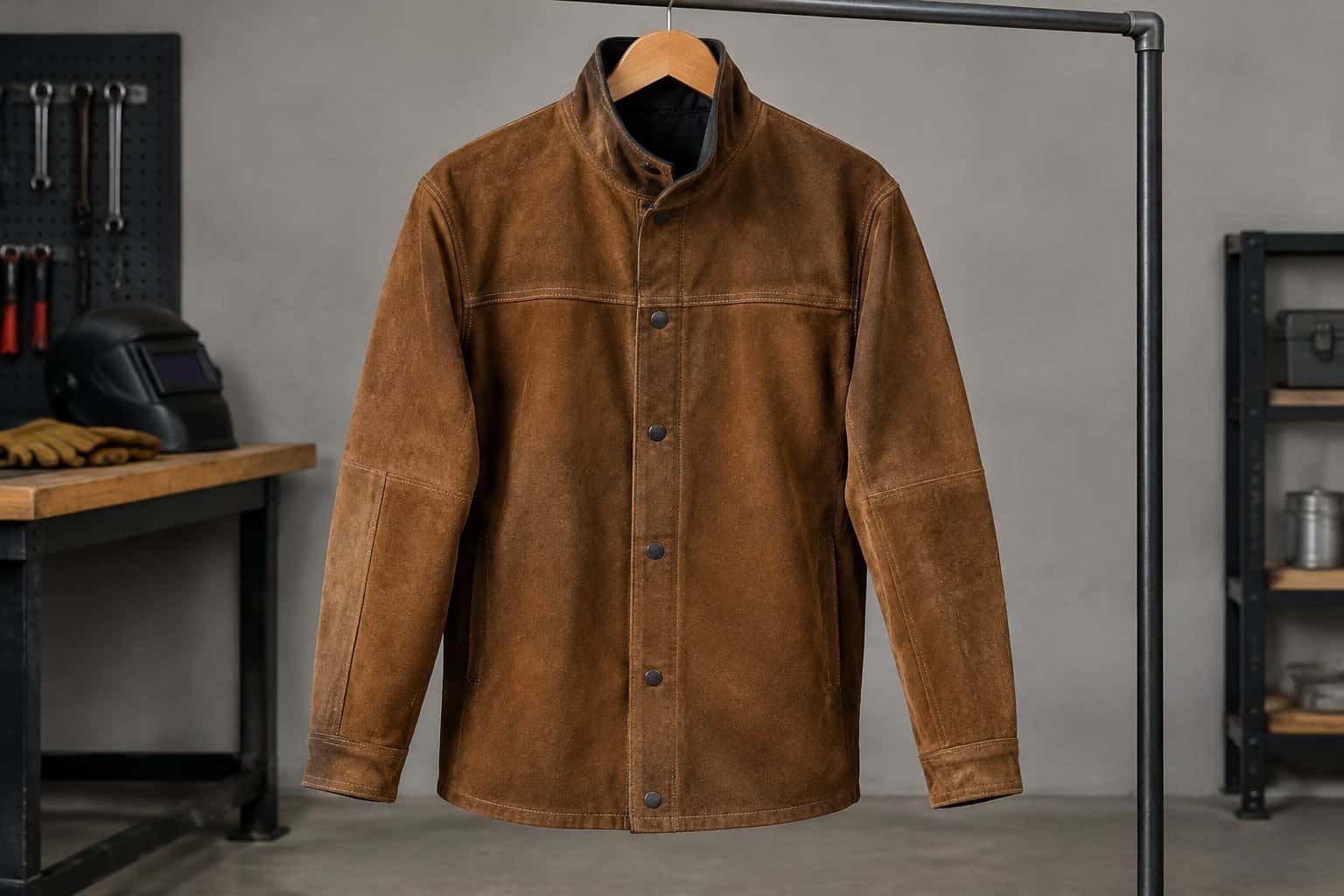
For your workwear specification, start with the actual exposure and the finished garment’s protective performance. You need evidence covering its construction and intended use, plus a fit that keeps your neck, wrists, and waist covered throughout the job.
What is the Purpose of a Welding Jacket?
You use a welding jacket to reduce exposure to welding-related thermal hazards across your upper body. Your protection depends on the material, garment design, condition, and coverage.
Protection Against Sparks, Spatter, and Brief Flame Contact
Your jacket provides a protective outer layer where sparks and small molten-metal droplets strike your sleeves or torso. Suitable construction helps limit flame spread and heat transfer under the conditions covered by its testing.
You also need covered skin to reduce exposure to welding-arc radiation. Keep the front and collar fastened during work; an open neckline gives falling sparks a direct route inside your clothing.
Treat flame resistance as a defined protective property. Even suitable material has exposure limits, and prolonged heat or accumulated hot spatter increases your burn risk.
Protection Limits and the Need for Complete Welding PPE
Your jacket leaves your head, hands, and lower body dependent on other protective equipment. Build your complete welding PPE around the assessed hazards, including suitable eye and face protection, gloves, protective trousers, and footwear.
For your eyes and face, use a welding helmet with a suitable filter shade and the required underlying eye protection. Address fumes through ventilation and any respiratory protection required by your workplace assessment.
Keep electrical and chemical hazards within their own safety assessments. A welding-clothing label alone gives you no basis for assuming electrical insulation, chemical-barrier performance, or an electrical arc-flash rating.
What is The Best Material for Welding clothes?
For lower-spatter work, you should consider documented treated FR cotton garments; for heavier spatter, evaluate suitable leather or reinforced hybrid construction. Your selection still requires evidence for the finished garment and its intended exposure.
Treated FR Cotton vs. Leather: A Qualified Comparison
You get different comfort and maintenance trade-offs from treated FR cotton and leather. When assessing cotton for welding gear, check the fabric weight and protective performance alongside the garment’s construction.
Use this comparison to narrow your specification, then verify the exact product:
| Your selection criterion | Treated FR cotton | Leather | Tested textile/blend or hybrid |
|---|---|---|---|
| Exposure to evaluate | Lower-spatter applications | Heavier spatter applications | Documented intended exposure |
| Comfort consideration | Breathability and fabric weight | Weight and heat buildup | Panel placement and composition |
| Mobility consideration | Textile flexibility | Thickness and stiffness | Construction-specific |
| Care requirement | Specified laundering process | Specified leather care | Instructions for all components |
| Evidence to request | Finished-garment documentation | Finished-garment documentation | Exact construction documentation |
With treated FR cotton, you rely on a finish that changes how the textile responds to flame, often promoting protective char formation. You still face heat-transfer and burn risks during excessive exposure.
With leather, you gain a durable option for spatter-exposed areas, but you also carry additional weight and thermal burden. Check thickness, flexibility, and condition without treating leather type alone as proof of protection.
Purpose-Designed Tested Blends and Hybrid Constructions
You also have purpose-designed textile options using treated fibers, inherently flame-resistant fibers, or engineered combinations. Evaluate the tested fabric system and finished garment; composition alone does not establish welding suitability.
With a hybrid jacket, check whether leather reinforcement covers the areas receiving the greatest spatter. Examine transitions between materials, because those seams must preserve coverage during movement.
If your design includes a flame-resistant lining fabric, assess it within the complete assembly. Require evidence that accounts for the lining and outer shell together, including any effect on heat retention or mobility.
Why Ordinary Cotton and Casual Nylon Are Not Substitutes
You should keep ordinary cotton out of a specification that requires flame-resistant welding clothing. Untreated cotton burns, and a heavy weave alone does not establish the protective performance you need.
When selecting layers, account for materials you should avoid wearing for welding, including casual meltable synthetics. Ordinary nylon and polyester present melting hazards under sufficient heat.
Keep purpose-designed tested blends distinct from everyday synthetic garments. If your proposed fabric contains nylon or polyester, require evidence for that exact formulation and construction before approving it.
How Do You Choose Protection and Fit for the Job?
You choose suitable protection by assessing spatter intensity and welding position, then checking coverage through your actual working movements. Include exposure duration and surrounding tasks in that assessment.
Match Materials to the Welding Process, Spatter, and Exposure
Start your assessment with the process, but record the conditions around it. TIG welding commonly involves less spatter than stick or flux-cored welding, while your settings and technique affect the actual exposure.
For overhead work, assess where hot particles will land and whether they will collect at openings. For sustained high-spatter operations, evaluate suitable leather reinforcement or additional protective garments through your workplace PPE selection process.
Include grinding and cutting if you perform them in the same clothing. Account for heat stress through suitable work practices and breaks while maintaining the required protective coverage.
Check Collar, Sleeve, and Torso Coverage
Fasten your collar and check that your neck coverage remains effective in your normal working posture. Raise your arms, reach forward, and bend at the waist while wearing your intended underlayers.
Your sleeves should maintain overlap with your welding gloves, and your jacket hem should remain over your protective trousers. Check those interfaces with your elbows bent and your arms extended.
Avoid oversized openings that collect spatter or excess fabric that creates a snagging hazard. Use the manufacturer’s measurements and a movement-based fit check before approving your size.
Assess Closures, Seams, Mobility, and Compatibility With Other PPE
Inspect your front closure for secure fastening and protective coverage over vulnerable components. Check pocket flaps and cuffs for openings where hot particles could lodge.
Examine seams at your shoulders, elbows, and reinforcement boundaries. Look for secure stitching and appropriate seam construction; a high stitch count by itself gives you insufficient evidence of heat performance.
Wear your helmet and other required equipment during the fit check. Confirm that you can reach your work without pulling open the collar, exposing your wrists, or displacing another item of PPE.
What Should You Verify Before Buying and During Use?
Before buying, you should verify exact-model documentation and care requirements; during use, you should inspect condition and remove unsuitable garments from service. Keep those decisions traceable to your workplace requirements and the manufacturer’s instructions.
Check Applicable Current ISO 11611 Documentation
Ask your supplier to identify the ISO 11611 edition applicable to the proposed welding clothing and your procurement requirements. Verify that the documentation covers the exact model, intended use, and claimed performance classification.
When checking fabric quality standards, distinguish fabric test results from finished-garment evidence. Your jacket’s design also includes closures, seams, pockets, and any lining or reinforcement.
Check the label against the supporting documentation and instructions. Confirm the applicable edition’s status and acceptance for your workplace at the time of purchase; an ISO reference alone does not establish OSHA compliance or suitability for every welding task.
Follow Manufacturer-Specified Care Instructions
Use the cleaning process specified for your exact garment, including detergent restrictions and drying conditions. Your FR laundering procedure should preserve protective performance while removing contamination.
Check instructions for bleach, fabric softener, and other laundry additives before use. Oil, grease, and combustible residues require attention because they introduce additional burning hazards.
For leather and mixed-material jackets, follow care instructions covering every component. Avoid applying conditioners or treatments unless the garment manufacturer authorizes them.
Inspect for Damage and Decide When to Retire
Inspect your jacket before use for holes, thinning, open seams, and damaged closures. Also check for charring, stiffened leather, and contamination that remains after approved cleaning.
Base your protective clothing replacement decision on condition and manufacturer-defined limits. A universal few-month replacement schedule gives you no reliable measure of remaining protection.
Remove questionable clothing from service while you seek an authorized assessment. Use approved repairs with suitable materials, and retire the garment when damage or contamination prevents continued safe use.
A Practical Buyer Checklist
Before approving your purchase, record the requirements below against the exact garment model. Resolve gaps before placing an order or approving production.
- Define your exposure: Record the welding process, position, spatter intensity, duration, and related tasks.
- Specify your construction: Identify composition, fabric weight, reinforcement, lining, and required coverage.
- Verify your evidence: Match the label, applicable standard edition, test documentation, and intended-use instructions.
- Approve your fit: Check movement, size range, and interfaces with other PPE.
- Plan your care: Establish cleaning, inspection, repair, and retirement procedures.
If you manufacture welding workwear, you can discuss your fabric requirements with Levitex, whose production capacity includes 1.5 million meters dedicated specifically to flame-retardant fabrics per month. Send your application, desired composition/weight, and required test standards to Charlie@levitex.com for a fabric discussion, keeping finished-garment approval within your product development process.
Frequently Asked Questions
You should resolve workplace obligations and product-specific instructions before putting a garment into service. Keep your purchase records and care information available for the people responsible for PPE approval.
Do you really need a welding jacket?
You need suitable protective upper-body clothing when your welding assessment identifies exposure to sparks, spatter, or related thermal hazards. Choose a jacket or another approved clothing configuration that maintains coverage for your task.
Are welding jackets required by OSHA?
Under OSHA’s general-industry welding requirements in 29 CFR 1910.252(b)(3), you must have appropriate protective clothing when exposed to welding hazards. Your selection follows the nature, size, and location of the work; the provision does not prescribe one jacket design for every operation.
Can you wash a treated FR cotton welding jacket?
You can wash a treated FR cotton jacket when its manufacturer specifies a washable care process. Follow the stated temperatures and product restrictions, including any validated laundering limits.
How should a welding jacket fit women?
You should choose a size and cut that provides sufficient room through your chest and hips while keeping your sleeves and collar secure. Check coverage with your intended layers and gloves during reaching and bending; sizing up alone often creates excess fabric without correcting proportions.
Does a welding jacket protect against electric shock or arc flash?
You should treat electric-shock protection and electrical arc-flash protection as separate requirements. Welding clothing does not provide electrical insulation, and you need a documented arc-rated clothing system when your electrical hazard assessment requires arc-flash PPE. Verify the relevant rating and complete ensemble before performing that work.