
For industrial teams, cotton protective clothing with long sleeves provides arm and torso coverage; FR-treated garments suit documented flame hazards, while electricians exposed to arc flash need tested arc-rated clothing matched to the task. Cotton’s comfortable feel supports everyday wear, and properly selected sleeves maintain coverage during reaching and bending.
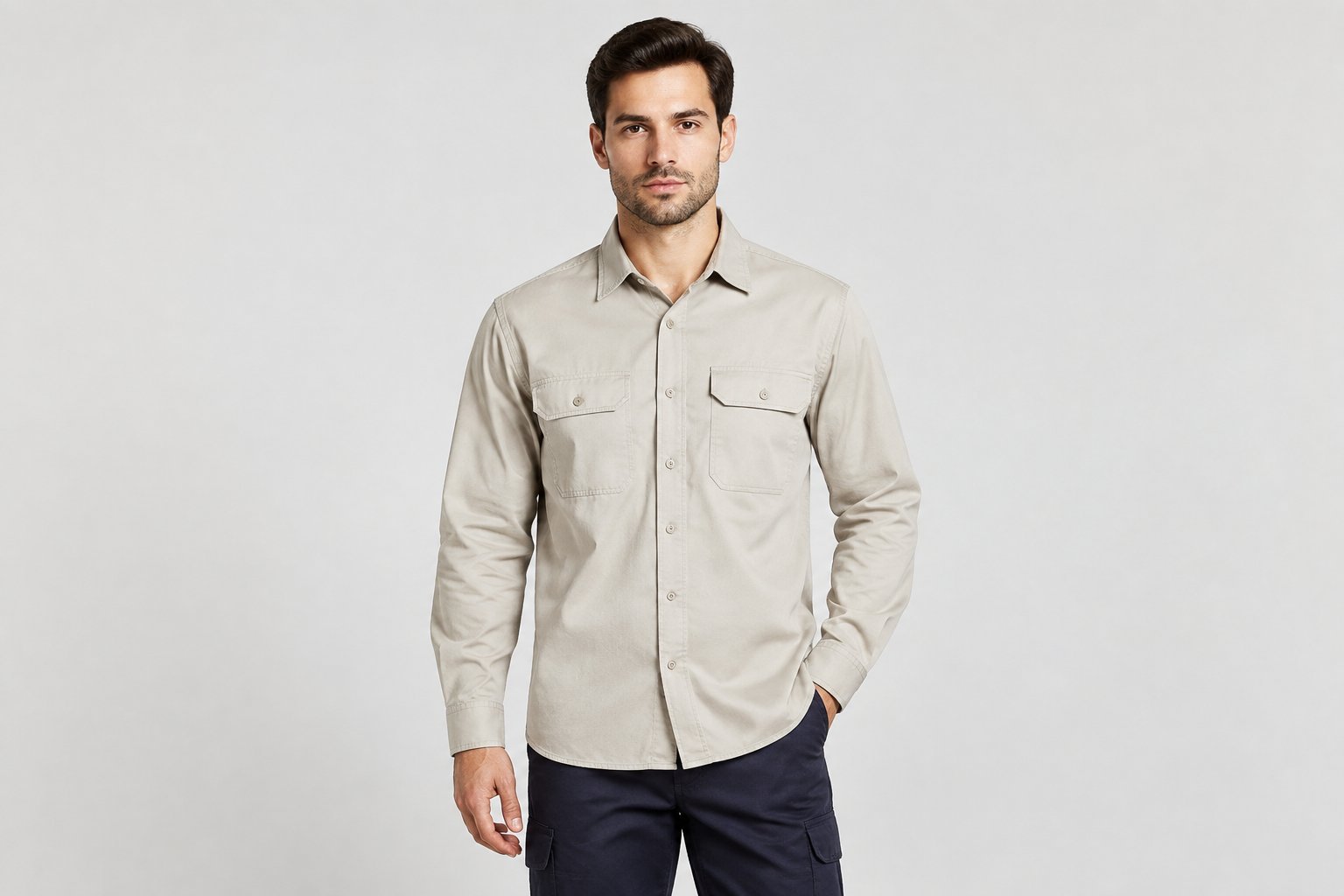
A successful purchase connects fabric performance with finished-garment construction and workplace requirements. Buyers benefit from separating basic workwear from protective apparel early, before approving samples or placing a wholesale fabric order.
What Protection Can Long-Sleeved Cotton Workwear Provide?
Long-sleeved cotton workwear covers exposed skin and provides a physical layer against routine workplace contact. Specialized hazards require additional performance evidence tied to the intended exposure.
Where Arm and Torso Coverage Helps
Sleeves reduce direct skin contact with dusty surfaces and minor incidental rubbing. A closed shirt front and sufficient garment length extend that coverage across the torso during normal work movements.
The fabric’s construction determines how substantial that physical layer is. Lightweight shirting provides different abrasion performance from a heavier woven fabric, and neither establishes cut resistance without relevant testing.
Princeton University distinguishes protective apparel from uniforms worn solely for identification. Such employee-identification clothing is not considered PPE, so a workwear label alone establishes no hazard-specific protection.
Why Ordinary Cotton Is Not Flame-Resistant or Shock-Protective
Ordinary cotton is combustible and continues burning under conditions that sustain combustion. Its natural fiber composition supplies no flame-resistance rating, even when the fabric feels thick or substantial.
Cotton also provides no electrical insulation rating for protection against shock. Contact with energized conductors requires electrical safety controls and appropriately rated insulating equipment.
For thermal hazards, flame-resistant clothing requires documented performance appropriate to the exposure. Welding sparks, flash fire, and electric arc flash demand separate consideration because their exposure conditions differ.
When Electricians Need Tested Arc-Rated Clothing
Electricians need arc-rated clothing when the workplace electrical risk assessment identifies an arc-flash exposure requiring that protection. Selection follows the employer’s electrical safety program and applicable task-specific requirements.
The garment or tested clothing system must provide an adequate arc rating for the selected assessment method. A cotton label, an FR description, or a long sleeve supplies insufficient evidence by itself.
Different arc-flash clothing materials achieve different tested performance. Arc-rated apparel addresses thermal exposure from an arc; it supplies no substitute for shock protection or establishing an electrically safe work condition.
How Do Ordinary Cotton, FR-Treated Cotton, and Arc-Rated Clothing Compare?
Ordinary cotton provides basic coverage, FR-treated cotton adds demonstrated flame-resistant behavior, and arc-rated clothing carries measured arc performance. These categories overlap because an FR-treated cotton garment also qualifies as arc-rated when the necessary testing and garment requirements are satisfied.
Comparison Table: Fabric Type, Tested Performance, and Protection Limits
The distinction rests on the evidence attached to the material and finished garment. Buyers should compare documented performance before comparing weight or appearance.
| Selection criterion | Ordinary cotton workwear | FR-treated cotton workwear | Tested arc-rated clothing |
|---|---|---|---|
| Material basis | Untreated cotton | Cotton with FR treatment | Qualified FR fabric or system |
| Flame-performance evidence | No inherent FR claim | Relevant flame-test results | FR performance requirements |
| Arc rating | None established | Only if arc tested | Documented in cal/cm² |
| Intended selection basis | General workwear coverage | Specified thermal hazard | Assessed arc-flash exposure |
| Electrical shock protection | None established | None established | None established |
| Finished-garment verification | Fit and construction | Hazard-specific requirements | Rating, construction, and labeling |
A fabric report supports only the material and conditions identified in that report. Garment suitability also involves closures, seams, and other components specified by the applicable requirements.
Why Flame Resistance and Arc Ratings Are Not Interchangeable
Flame resistance describes controlled behavior during flame exposure. An arc rating quantifies performance under a specified electric arc test, expressed in calories per square centimeter.
The difference between AR and FR clothing affects purchasing directly: arc-rated clothing is flame-resistant, while an FR designation alone establishes no arc rating. A vertical-flame test result supplies no substitute for arc testing.
A garment intended for both flash-fire and arc-flash hazards needs evidence for both applications. Buyers should verify each claim separately, including the relevant standard and product identification.
What Does Cotton-Rich Blend Composition Tell You?
Cotton-rich composition helps predict fabric handling and wear characteristics, while protective ratings require testing. The full blend description also helps manufacturers assess laundering compatibility and construction choices.
Comfort and Durability Trade-Offs in Cotton, C/N, and CVC Fabrics
Cotton absorbs moisture and offers a familiar feel against the skin. When heavily wetted with perspiration, it retains moisture, so fabric construction and workplace heat conditions deserve attention.
Cotton/nylon (C/N) blends introduce nylon to support mechanical durability. Cotton/polyester (CVC) blends combine a cotton-majority composition with polyester, which contributes dimensional stability and faster drying characteristics.
The practical cotton-versus-polyester trade-offs also depend on yarn and weave. Buyers should compare finished samples after the intended laundering process, since an unwashed swatch gives limited information about the garment’s eventual feel and dimensions.
Why Fiber Percentages Cannot Establish a PPE Rating
Fiber percentages identify composition; they establish no flame, arc, or chemical-protection rating. Treatment chemistry and finished construction influence performance alongside the blend.
A high cotton percentage does not make a garment safe for an electrical exposure. Likewise, the presence of nylon or polyester does not determine whether a specially engineered FR blend meets a particular requirement.
US cotton-content claims must accurately describe the material. The FTC requires product labels to reflect fabric content accurately, but that labeling obligation is separate from protective-performance verification.
Chemical Repellency Is Not Barrier Chemical Resistance
Chemical repellency describes a fabric’s ability to shed specified liquids under defined test conditions. Barrier chemical resistance concerns penetration or permeation performance against identified chemicals, with protection linked to exposure conditions.
LEVITEX manufactures chemical-repellent fabrics through post-treatment finishing on cotton, cotton/nylon (C/N), and cotton/polyester (CVC) base fabrics. Those finishes establish no equivalence to barrier-based chemical-resistant materials or their test results.
For chemical exposure, buyers need information about the chemical’s identity, concentration, contact duration, and exposure mechanism. Applicable chemical protective clothing levels also involve the complete ensemble, including interfaces and respiratory protection where required.
Which Labels and Documents Should Buyers Check?
Buyers should check garment identification, hazard-specific performance claims, supporting reports, and care instructions before approving protective workwear. Every document should be traceable to the material or garment being purchased.
Matching Documented Performance to the Workplace Hazard Assessment
The employer’s hazard assessment establishes the performance the clothing must deliver. A University of Waterloo guideline states that protective measures should be identified from the hazards involved.
A purchasing specification should identify the exposure and applicable requirements. For arc-flash work, it should also state the required rating or clothing-system selection established through the employer’s approved method.
Useful checks include:
- Exact garment model and manufacturer identity.
- Applicable standard and edition.
- Arc rating where required.
- Relevant certification details and product scope.
- Care instructions and any stated service limitations.
- Traceability between reports, fabric references, and supplied goods.
Distinguishing Standards Guidance, Testing, and Certification
A standard establishes requirements or methods within its scope. A test report records results for identified specimens under specified conditions, while certification involves a defined conformity-assessment scheme.
NFPA 70E addresses workplace electrical safety practices and PPE selection. ASTM F1506 specifies performance requirements for flame-resistant and arc-rated textile materials used in electrical protective clothing; ASTM F1959 determines arc ratings through testing.
NFPA 2112 addresses garments for short-duration thermal exposures from fire. Its certification scope differs from an arc rating, and a quality-management certificate establishes no garment-specific protective performance.
Checking Fabric Reports Against Finished-Garment Claims
Fabric reports must match the supplied fabric reference and relevant construction details. Weight, finish, and laundering preparation deserve particular attention when comparing a report with a purchase specification.
Finished garments introduce additional variables, including sewing thread, closures, reflective trim, and reinforcement materials. A tested base fabric alone establishes no certification for every garment made from it.
Effective FR fabric quality control includes document traceability and production consistency. Buyers should also check whether the claimed performance covers the finished color or treatment configuration being ordered.
Requesting Specifications and Samples for Wholesale Fabric Orders
Wholesale orders benefit from a written technical specification approved before production. The specification should identify composition, fabric weight, usable width, weave, finish, and color requirements.
Performance documentation should state test methods, results, specimen identification, and laundering conditions. Samples should represent the intended production construction so garment manufacturers can evaluate sewing behavior and dimensional change.
LEVITEX’s monthly production capacity includes 5 million meters, with 1.5 million meters dedicated specifically to flame-retardant fabrics. Workwear garment manufacturers can contact Charlie Luo at Charlie@levitex.com about FR fabric requirements and relevant technical documentation, including sample and custom-production needs.
How Should Sleeves, Cuffs, and Garment Fit Be Selected?
A suitable fit maintains coverage throughout the worker’s normal movement without restricting motion or creating snag hazards. Fit approval should include the other PPE worn during the task.
Maintaining Wrist and Torso Coverage During Movement
Sleeves should continue covering the wrist area during reaching, subject to the intended glove interface. Shirt length should preserve the required overlap with trousers when the wearer bends or raises both arms.
A standing fit check misses gaps that appear during work. Sample evaluations should include overhead reaching, forward bending, and the task’s normal working posture.
Garment manufacturers should assess fit over the intended underlayers. Size selection should follow garment measurements and wearer trials; buying a smaller size risks restricted movement and reduced coverage.
Balancing Mobility, Breathability, and Fabric Weight
Fabric weight affects drape and thermal comfort, but it establishes no protective rating. A heavier fabric also adds bulk, which affects comfort during sustained activity.
The choice of cotton for workwear should account for absorption and the intended environment. Air permeability and garment design influence comfort alongside fiber composition.
Sample reviews should examine shoulder mobility and underarm restriction. Workplace heat-stress controls remain necessary when the approved protective ensemble imposes a substantial heat burden.
Choosing Secure Cuffs and Avoiding Exposed Gaps
Secure cuffs keep sleeves positioned during movement and reduce loose fabric near equipment. Their closure design should suit the task and the garment’s protective requirements.
Gloves and sleeves need a compatible interface that preserves coverage through wrist movement. Any required overlap should follow the PPE manufacturers’ instructions and the workplace assessment.
Closures should remain fastened as intended during exposure. Altered cuffs or added accessories require review because changes affect fit and potentially the garment’s documented construction.
How Do Washing and Wear Affect Protective Performance?
Correct laundering removes hazardous contamination and preserves garment condition within the manufacturer’s care requirements. Wear, chemical damage, and uncontrolled cleaning processes compromise continued suitability.
Following the Manufacturer’s Laundering Instructions
The garment’s care instructions govern detergent selection and cleaning conditions. A generic cotton wash routine provides insufficient guidance for treated fabrics, reflective components, or specialized finishes.
Appropriate washing of flame-resistant fabric clothing follows the approved process, including restrictions on bleach and additives. Fabric softeners and dryer sheets should be excluded when the manufacturer prohibits them.
A laundering record is useful where the manufacturer sets a service limit. A laboratory’s specified number of wash cycles describes a test condition; it establishes no universal retirement date for every garment made from that fabric.
Managing Oil, Grease, and Other Contamination
Combustible contamination creates an additional fuel load on protective clothing. Oil-soaked or fuel-contaminated garments should be removed from service and handled through the employer’s approved cleaning procedure.
Persistent staining requires assessment because visible appearance alone does not establish that combustible residue has been removed. Garments should return to use only after cleaning satisfies the manufacturer’s requirements and workplace procedure.
Chemical contamination also requires controls for handling and transport. Home laundering is unsuitable when the contaminant or employer’s procedure requires specialist decontamination.
Inspecting Damage and Deciding When to Replace Clothing
Inspection should cover fabric thinning, holes, open seams, and damaged closures. Cuffs and elbows deserve close attention because repeated flexing and rubbing concentrate wear in those areas.
Protective garments require approved repairs using compatible materials and methods. An ordinary patch or replacement fastening changes the construction and needs evaluation before the garment returns to service.
The service life of fire-retardant clothing follows its condition and manufacturer-defined limits. Clothing with unrepairable damage, persistent hazardous contamination, or uncertain protective integrity should be withdrawn pending assessment or replacement.
Choose Documented Protection Alongside Comfortable Coverage
Long sleeves and a comfortable cotton-based fabric support consistent coverage during work. Protective selection also requires evidence matched to the hazard and verification of the finished garment’s claims.
Before production approval, garment manufacturers should resolve specification gaps, evaluate representative samples, and confirm laundering requirements. Final approval should include movement checks with the intended PPE and traceable documentation for the purchased material.
Frequently Asked Questions
Cotton workwear selection becomes clearer when each protective claim is checked separately. The following answers address common purchasing and use questions.
Is 100% cotton clothing naturally flame-resistant?
Ordinary 100% cotton clothing is combustible and has no inherent flame-resistance rating. Cotton requires an appropriate FR treatment and relevant performance verification for a flame-resistant protective claim.
Can electricians wear ordinary long-sleeved cotton shirts?
Ordinary cotton shirts are suitable only where the employer’s task assessment and clothing rules permit them. An identified arc-flash exposure requiring protective apparel calls for appropriately selected arc-rated garments; cotton supplies no electrical shock protection.
Does every flame-resistant cotton garment have an arc rating?
An FR designation alone establishes no arc rating. Buyers need a documented rating in cal/cm² and supporting garment information for arc-flash applications.
Can rolling up sleeves reduce protective coverage?
Rolling up sleeves exposes the forearms and reduces the garment’s intended coverage. During tasks requiring full sleeve protection, sleeves should remain extended and cuffs secured as specified.
Are high-visibility cotton shirts automatically flame-resistant?
High-visibility cotton shirts require a separate FR claim and supporting evidence to establish flame resistance. Fluorescent color and reflective trim address visibility, and their presence establishes no arc rating.
What should buyers request when ordering cotton workwear fabric wholesale?
Buyers should request a complete fabric specification, representative samples, and traceable reports supporting each required protective claim. They should also confirm laundering conditions and which finished-garment requirements remain the garment manufacturer’s responsibility.