
Cotton nylon blend fabric properties combine cotton’s moisture absorbency and familiar hand feel with nylon’s contribution to abrasion resistance and strength, making the blend useful for industrial workwear exposed to repeated friction. The finished fabric’s performance also reflects its yarn, construction, weight, and treatment.
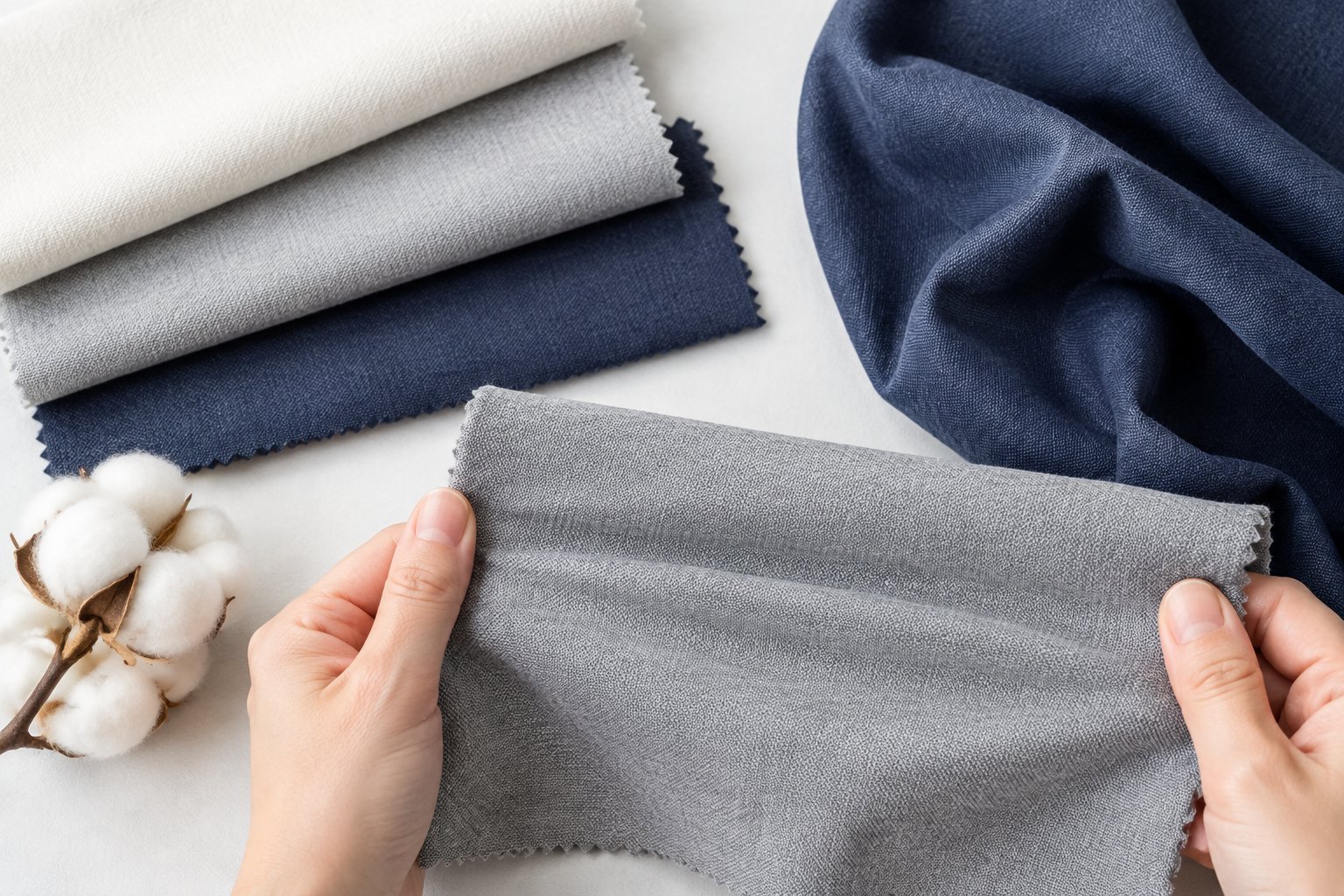
For textile buyers, that combination offers a practical route to balancing wear resistance with wearer comfort. A cotton nylon fabric specification becomes more useful when it includes measurable acceptance criteria for the conditions the workwear will face.
Levitex manufactures cotton, cotton/nylon (C/N), and cotton-rich cotton/polyester (CVC) textiles for protective-workwear applications. Its manufacturing focus places particular emphasis on how base cloth and finishing interact during industrial production.
What Do Cotton/Nylon Ratios Tell Buyers?

Cotton/nylon ratios identify fiber proportions by mass; they provide a starting point for material selection. Construction details and product reports establish how a particular blend performs.
How Cotton Fiber and Nylon Fiber Contribute to the Blend
Cotton fiber supplies moisture absorbency and a familiar surface feel. Among natural fibers used in workwear, cotton also offers established dyeing and finishing routes, including treatments developed for cellulosic materials.
Nylon fiber contributes toughness and resistance to rubbing. Fiber blending distributes these characteristics through the yarn, while fabrics made with different fibers in the warp and filling require additional construction details to describe their behavior accurately.
Cotton’s response to processing chemicals also affects production choices. The chemical properties of cotton fabric help explain why treatment compatibility requires attention when a cotton-nylon blend enters finishing.
Reading 88/12 and Other Composition Specifications
An 88/12 specification means 88% cotton and 12% nylon when the components are stated in that order. It is a composition example, with no automatic implication of legal suitability, flame resistance, or service life.
Other proportions, including 50/50, produce a different balance of fiber characteristics. A complete specification names each fiber beside its percentage and identifies whether the components are intimately blended within yarns or distributed through separate yarn systems.
The same ratio supports multiple fabrics. An 88/12 twill and an 88/12 knit require separate assessments because their structures respond differently to movement and laundering.
Why C/N and NyCo Are Not the Same as CVC
C/N and NyCo identify cotton-and-nylon combinations. Neither abbreviation establishes a universal ratio, so “NyCo fabric” needs an accompanying composition statement.
CVC identifies a cotton-rich cotton/polyester blend in Levitex’s product range. Polyester and nylon are different synthetic fibers, with different processing behavior and performance characteristics.
Purchase documents should retain the full fiber names. A substitution from nylon to polyester changes the material specification even when the cotton percentage remains unchanged.
How Do Construction and Composition Affect Performance?
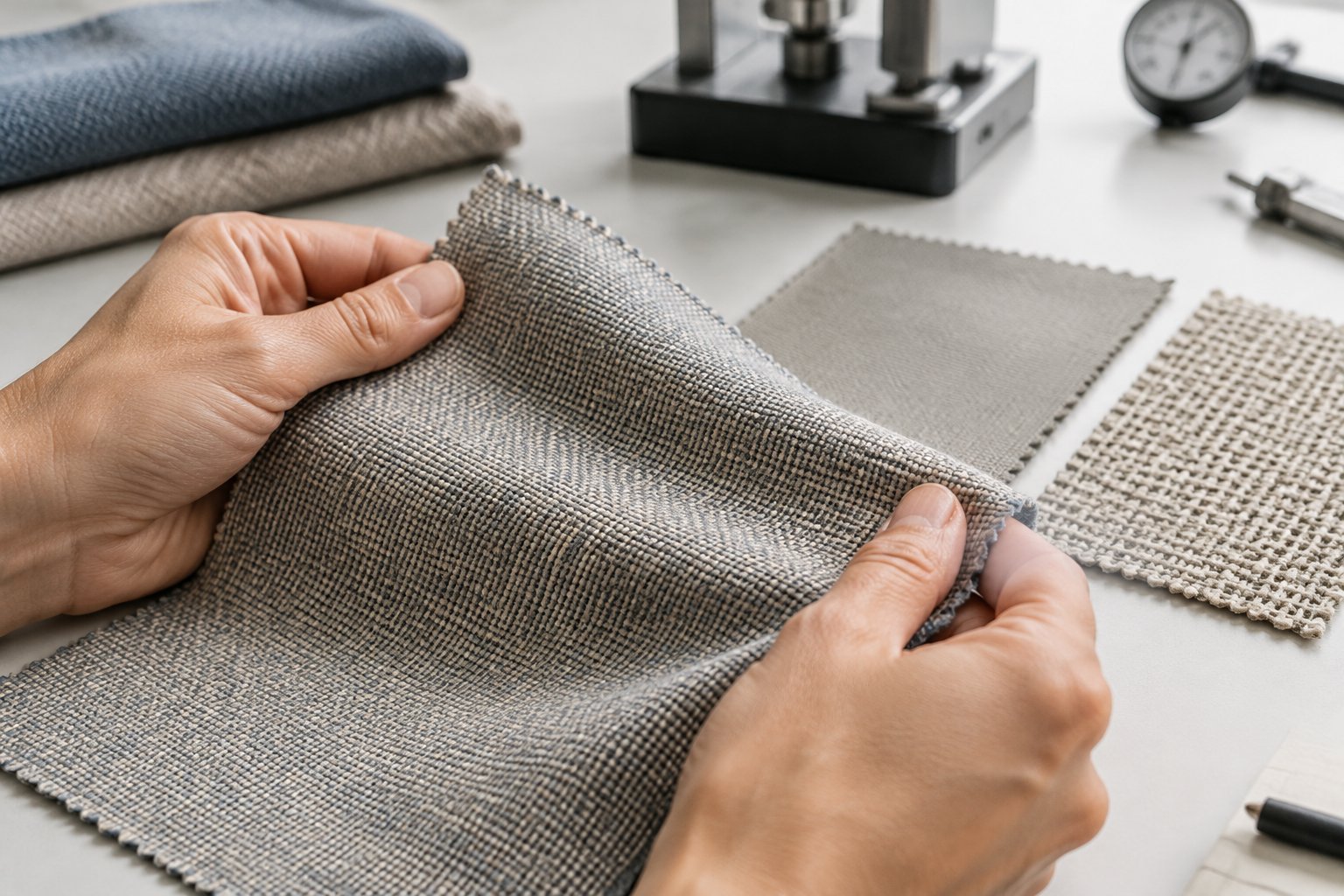
Construction determines how the fibers function together, including resistance to damage and the movement of air or moisture. Comparisons become meaningful when fabric structure, finishing, and conditioning are documented.
Abrasion Resistance, Tear Strength, and Their Trade-Offs
Nylon reinforcement offers a route to improved abrasion resistance, but the result requires testing on the finished fabric. Fiber quality, yarn twist, and exposed yarn floats affect how quickly a surface wears.
Tear strength measures the force required to propagate an existing tear. Tensile strength measures resistance to pulling until rupture; the two results describe different failure modes.
A dense construction might resist surface wear while limiting yarn movement during tearing. Ripstop reinforcement changes tear propagation, yet its grid does not establish a particular strength value without a test report.
Breathability, Moisture Absorbency, and Drying Behavior
Breathability includes several distinct properties. Air permeability describes airflow through fabric, while water-vapor resistance describes opposition to moisture-vapor transfer.
Cotton contributes moisture absorbency within the fibers. Wicking describes liquid movement through the textile, and drying describes moisture loss under specified environmental conditions.
For breathable fabrics used in hot work areas, buyers need these properties separated in the specification. Thermal regulation also reflects workload and garment ventilation, so a fabric-level airflow result provides only part of the comfort assessment.
How Yarn, Weave, Knit Structure, and Weight Change Comfort
Yarn size and twist influence surface texture and flexibility. A finer yarn does not automatically produce a cooler blended fabric because the manufacturer might increase yarn density to achieve the required weight.
Twill, plain weave, and ripstop create different surfaces and patterns of yarn movement. Knitted structures introduce loop-based stretch and different dimensional behavior; changing to knitting leaves the stated composition unchanged.
Levitex manufactures flame-resistant knitted fabrics as well as woven constructions. Selecting an appropriate workwear fabric therefore requires both fiber composition and a defined structure, with finished weight stated in gsm or oz/yd².
Shrinkage, Dimensional Stability, and Laundering Conditions
Cotton/nylon fabrics require dimensional-stability testing because relaxation during washing and drying changes fabric dimensions. Nylon content alone provides no shrinkage guarantee.
Reports should identify lengthwise and widthwise change separately. Knitted fabrics also warrant attention to spirality, while woven fabrics require checks for skew or bow when relevant to cutting and assembly.
For FR textiles, laundering conditions belong in the performance specification. Wash temperature, detergent, drying method, and pretreatment history must correspond to the intended service process.
How Does C/N Compare With Cotton and CVC?
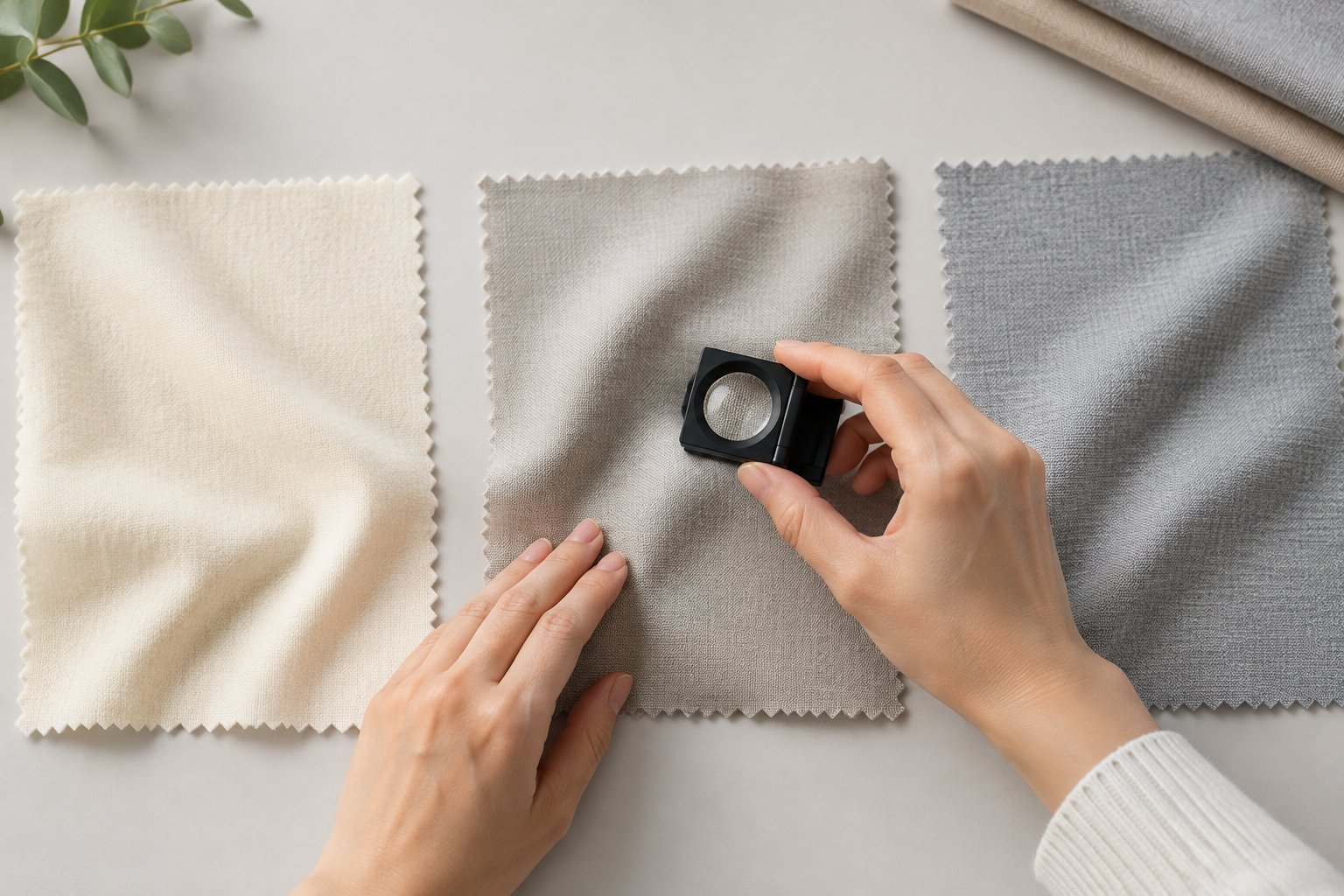
C/N combines a cotton-rich handle with nylon reinforcement, while pure cotton and CVC offer different material and processing balances. A purchasing comparison should evaluate each finished fabric against the same operational requirements.
Pure Cotton vs. C/N vs. Cotton-Rich Polyester Blends
Pure cotton supplies an entirely cellulosic base with strong moisture absorbency. Its suitability for protective workwear still requires the appropriate treatment and evidence for the intended hazard.
C/N adds nylon to cotton, creating an option for applications where repeated rubbing is a purchasing concern. CVC uses polyester in its synthetic component and belongs to a separate family of cotton blends.
The broader cotton vs. polyester comparison helps distinguish absorbency from synthetic-fiber behavior. For procurement, price comparisons require matched width and finished weight, followed by equivalent testing and finish requirements.
What Pure Nylon and Stretch Blends Do Differently
Pure nylon removes the cotton component and changes moisture uptake, surface feel, and thermal behavior. Nylon fabric also requires a construction or treatment specification before any claim of water resistance becomes meaningful.
Spandex blends introduce an elastomeric component for stretch and recovery. A nylon-spandex blend has a different composition from a two-fiber cotton/nylon fabric, while a knitted cotton/nylon fabric gains structural stretch through its loops.
For protective applications, flame-retardant nylon requires specific material engineering and testing. Neither stretch behavior nor nylon content establishes suitability for heat exposure.
Evidence Comparison Table: Match Construction, Conditioning, and Test Methods
The table identifies the evidence needed for a fair comparison. Its entries describe material characteristics and verification requirements, without assigning unsupported performance rankings.
| Comparison criterion | Pure cotton | Cotton/nylon (C/N) | Cotton-rich polyester (CVC) |
|---|---|---|---|
| Fiber composition | 100% cotton | Cotton + nylon | Cotton + polyester |
| Moisture uptake contribution | Cotton throughout | Cotton-led | Cotton-led |
| Abrasion evidence | Finished-fabric result | Finished-fabric result | Finished-fabric result |
| Tear evidence | Warp/filling results | Warp/filling results | Warp/filling results |
| Conditioning basis | Agreed common protocol | Agreed common protocol | Agreed common protocol |
| FR evidence | Product-specific report | Product-specific report | Product-specific report |
Matched construction means comparable weight, yarn arrangement, and density, with differences recorded explicitly. Laboratory conditioning should also follow the same protocol because moisture content affects textile measurements.
Abrasion comparisons need the same apparatus, loading, abradant, and endpoint. Tear results require the same method, such as ASTM D1424 where applicable; results from different tear-test principles should remain separate.
What Changes When Flame-Retardant Finishing Is Added?
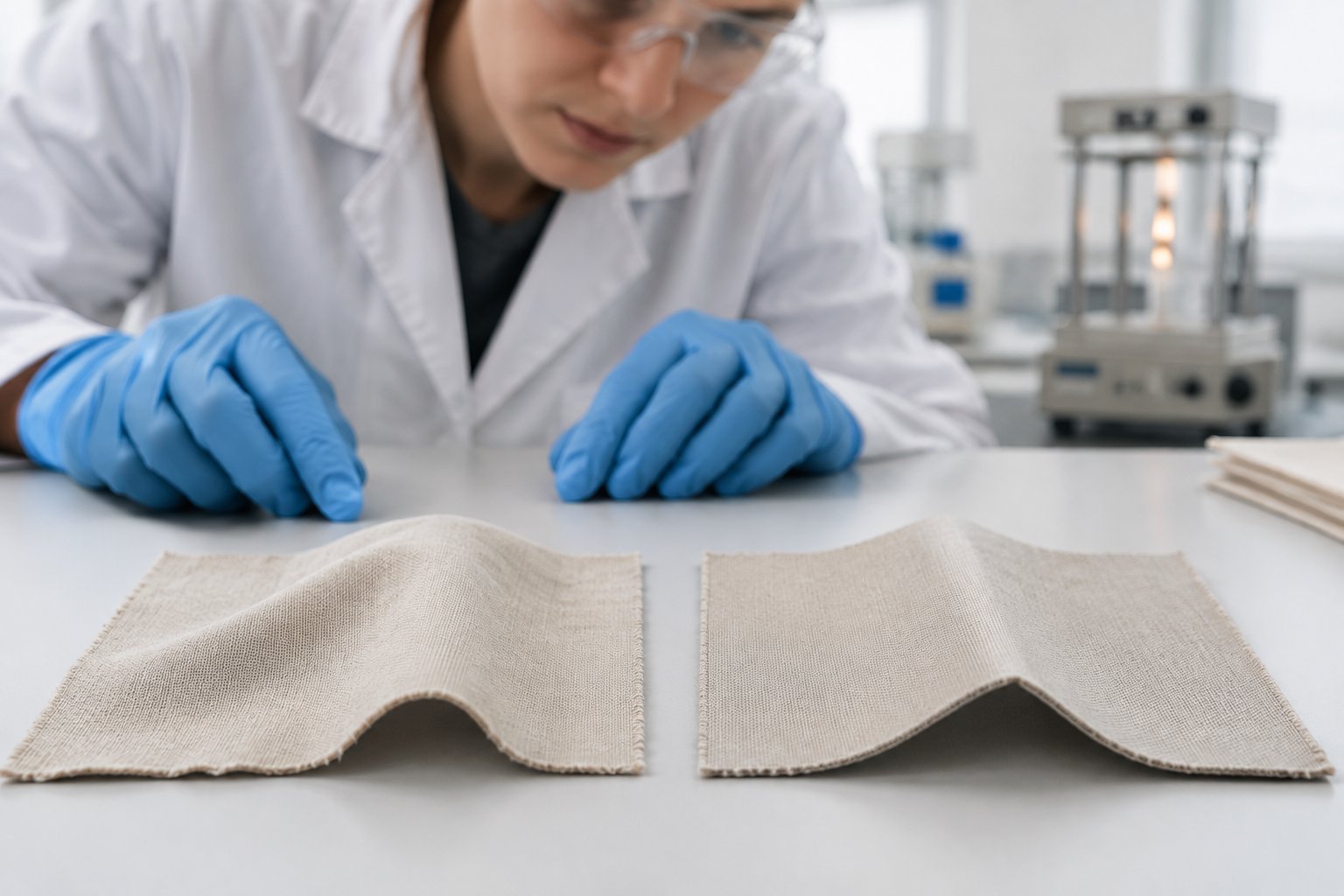
Flame-retardant finishing changes burning behavior and requires the finished textile to be assessed for mechanical performance and comfort. The approved specification must describe the treated fabric supplied for production.
Why Composition Alone Does Not Establish Flame Resistance
Untreated cotton burns, and nylon is a thermoplastic fiber that softens and melts under sufficient heat. Combining them does not establish flame resistance.
An 88/12 cotton nylon fabric therefore needs an appropriate FR production route and supporting test evidence before protective claims are made. The ratio supplies composition information only.
Flame-retardant-treated fabric gains its intended burning behavior through a controlled treatment process. The report must identify the tested material and the relevant exposure method.
How FR Finishing Can Affect Strength and Hand Feel
FR processing changes the fabric through chemical application and subsequent production stages. Treatment chemistry, curing conditions, and mechanical finishing influence the final hand and strength.
A fabric that feels supple before treatment needs reassessment after the full process. Buyers should compare tear resistance and tensile results on the finished goods, together with the comfort properties required for the application.
The effect of flame-retardant fabric treatment belongs in sample approval. An approved untreated swatch establishes limited evidence about the hand or performance of the eventual FR textile.
Combining FR With Water and Oil Repellency
Levitex offers FR plus water-repellent and FR plus oil-repellent finishing on 100% cotton, C/N, and CVC base fabrics. Each combination needs its own specification and product-specific evidence.
Repellency describes resistance to surface wetting by specified liquids. Waterproofness requires a different assessment, and chemical liquid repellency provides a different protection function from a barrier-based chemical-resistant material.
Additional fabric finishes require compatibility checks across the complete treatment package. Repellency results should identify the test liquid, method, and laundering condition, alongside the required FR assessment.
What Product Reports Prove, and What Requires Separate Testing
A product report records results for identified specimens under a stated method and conditioning procedure. Its scope extends to the material and conditions described in that document.
Levitex provides a test report for each product. Procurement teams should request the specific report needed to substantiate each performance requirement.
Dedicated arc or molten-metal protection claims require dedicated evidence; Levitex does not claim those tests for its C/N fabrics. Finished workwear also requires assessment of relevant seams, closures, and other components through the garment manufacturer’s compliance process.
What Should an Industrial Textile RFQ Specify?
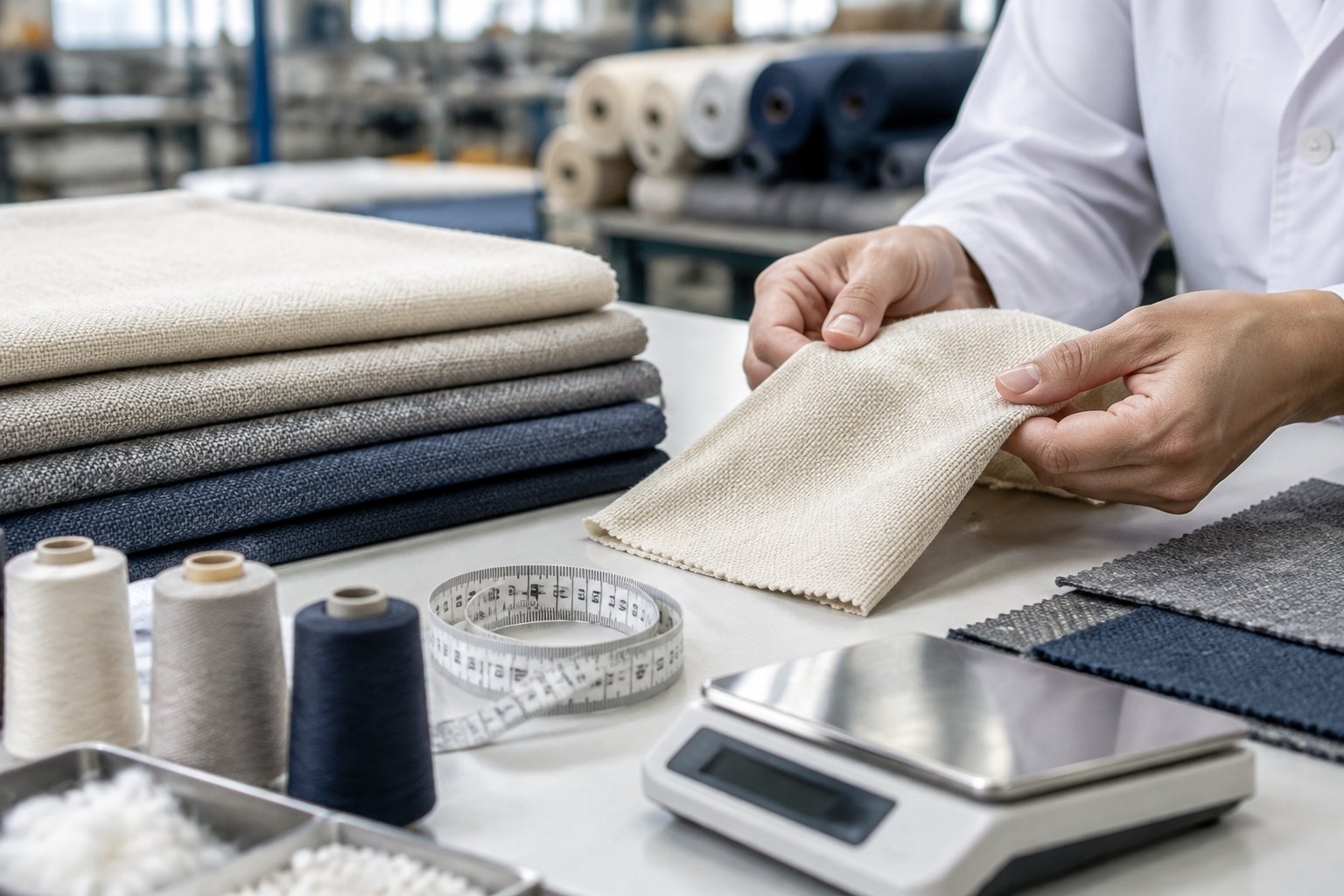
An industrial textile RFQ should define the finished fabric, its acceptance limits, and the evidence required before shipment. That gives suppliers a consistent basis for quotations and sample development.
RFQ Checklist: Composition, Construction, Weight, Width, and Tolerances
A complete cotton nylon blend RFQ identifies the material intended for uniforms or protective workwear. The following details establish a usable production specification:
- Composition: Named fibers, percentages, and agreed composition tolerances.
- Construction: Woven or knitted structure, weave or knit designation, and relevant yarn details.
- Finished weight: Target gsm or oz/yd², with tolerance.
- Usable width: Minimum cuttable width and the treatment of selvages.
- Quantity: Total meters and the allocation by color.
- Dimensional limits: Permitted lengthwise and widthwise change after the specified laundering.
- Roll requirements: Length range, identification, packaging, and defect acceptance criteria.
The RFQ should also identify the intended application. Hazard information helps determine which fabric evidence the buyer needs for the downstream product.
Define Required Finishes, Test Methods, and Laundering Conditions
Finish descriptions should identify each required function separately. An FR requirement and an oil-repellency requirement need their own methods and acceptance criteria.
The specification should state the applicable standard edition, specimen preparation, and laboratory conditioning. For laundered results, it should name the washing procedure and drying conditions, together with the agreed number of cycles.
FR fabric quality control also requires a clear sampling plan. The buyer and supplier should agree which tests apply to development approval and which apply to production-lot release.
Approve Samples, Color, and Bulk-Lot Acceptance Criteria
A swatch supports initial assessment of appearance and hand feel. A laboratory color sample supports shade approval, while production-representative fabric supports a broader assessment of the finished material.
The approval record should identify sample code and finish status. Color acceptance also needs an agreed light source and a defined visual or instrumental assessment procedure.
Bulk-lot criteria should cover shade continuity, usable width, and relevant defects. Buyers should specify how rejected rolls, retesting, and replacements will be handled before production begins.
Confirm MOQ, Lead Time, and Documentation With Levitex
Levitex has manufactured textiles since 1951. Its monthly production capacity includes 5 million meters, with 1.5 million meters dedicated specifically to flame-retardant fabrics.
Order-specific MOQ and lead time require confirmation against the selected construction and color allocation. Custom printing, testing arrangements, and finishing requirements also belong in that discussion.
Fabric-specification inquiries may be sent to Charlie@levitex.com with composition, construction, weight, quantity, and required evidence. Levitex supplies textiles; finished-garment manufacture and garment-design or assembly services fall outside its offering.
Choose C/N by Verified Performance, Not Ratio Alone
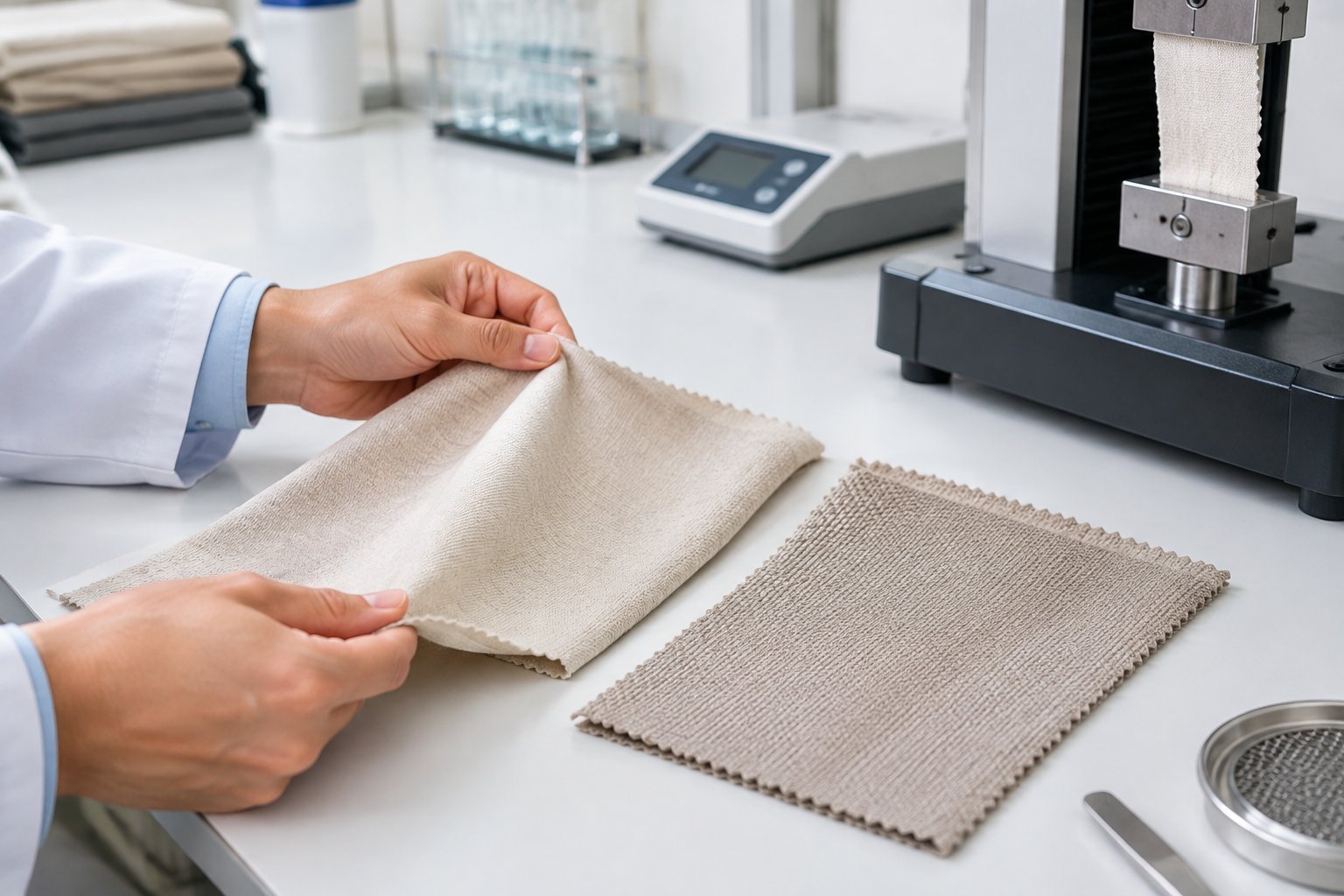
A suitable cotton-nylon blend combines the required wear resistance with acceptable comfort and documented protective performance. Composition starts the selection process; finished-fabric evidence supports approval.
Buyers should compare candidate blended fabric under matched conditioning and relevant test methods. Construction differences need to remain visible in the comparison, particularly when weight or finishing changes.
For production approval, the specification should connect the accepted sample to the bulk material and its reports. That record should include composition, finished dimensions, laundering conditions, and lot-acceptance criteria.
Frequently Asked Questions
Cotton nylon blend suitability rests on finished-fabric properties and the requirements of the intended workwear application.
What is a cotton nylon blend good for in industrial workwear?
A cotton nylon blend suits industrial workwear applications seeking cotton’s absorbency alongside nylon reinforcement against repeated friction. Protective uses require the specified finishing and supporting product reports.
Does cotton nylon blend fabric shrink?
Cotton nylon blend fabric is subject to dimensional change during laundering. The applicable shrinkage result should identify fabric direction, washing procedure, and drying conditions.
Is cotton nylon blend fabric more breathable than pure cotton?
C/N has no automatic breathability advantage over pure cotton. Air permeability and moisture-vapor performance require comparison at matched construction, weight, and finish.
What are the disadvantages of cotton nylon blends?
Potential disadvantages include added dyeing complexity, moisture retention from the cotton component, and the need to assess nylon’s thermal behavior. The finished fabric also requires verification of shrinkage, hand feel, and treatment compatibility.
Is an 88/12 cotton nylon blend automatically flame resistant?
An 88/12 cotton nylon blend requires an appropriate FR treatment or engineered production route to support a flame-resistance claim. Its composition alone establishes neither protective performance nor a laundering-life limit.