
Paint shop workwear fabric should be assessed against the painting task’s ignition hazards and solvent exposure, with separate evidence for flame resistance, electrostatic performance, and any required chemical protection. For industrial painters, that assessment starts with the coating, application method, ventilation, and foreseeable contact during cleanup.
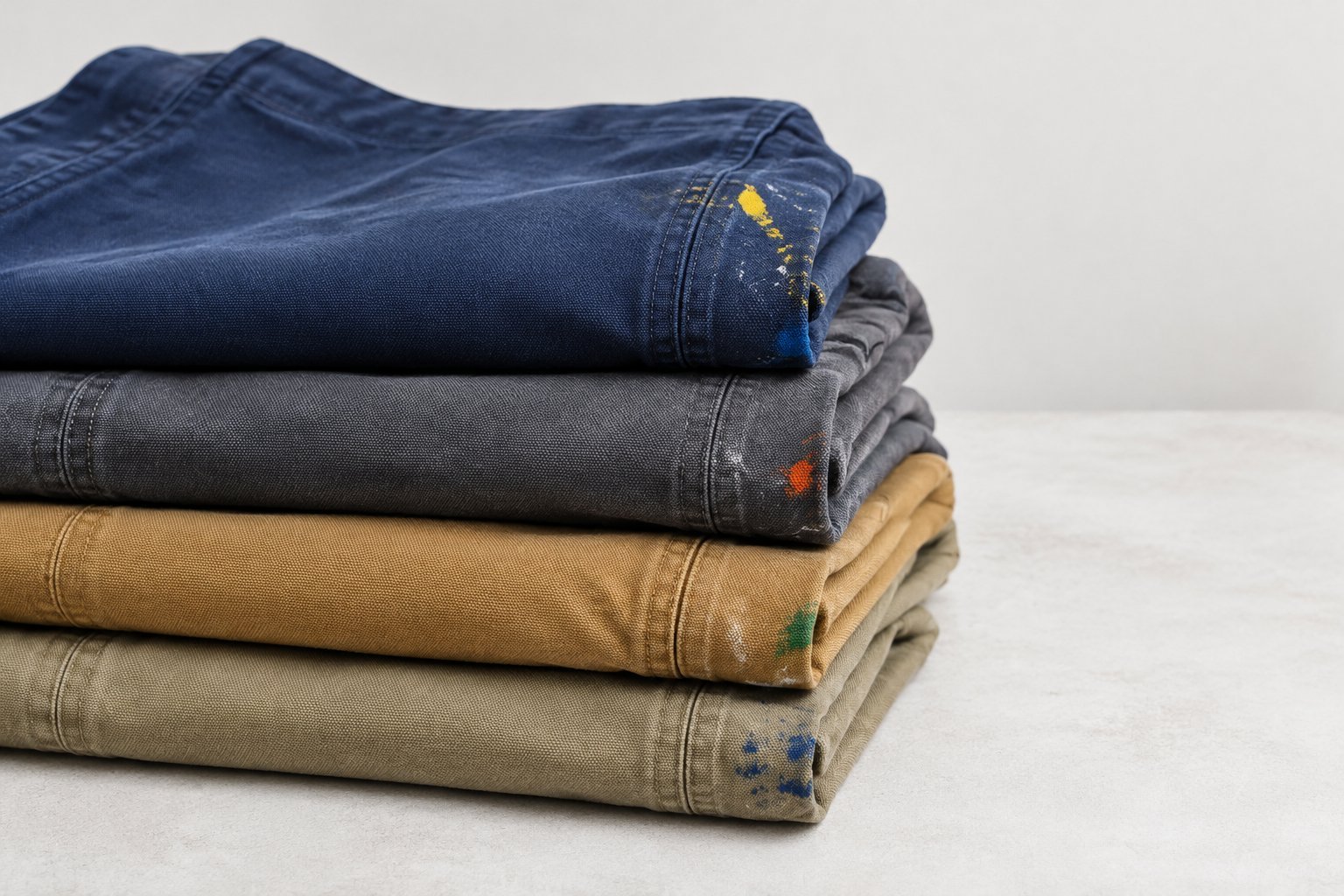
Levitex manufactures flame-resistant textiles for protective workwear, including cotton and cotton-blend fabrics. A useful purchasing specification connects those textile properties to a qualified safety team’s exposure assessment, then identifies the garment-level requirements that remain for the PPE supplier.
Spraying, mixing, and equipment cleaning create different exposure conditions. A fabric approved for one operation requires reassessment when the chemical mixture or contact pattern changes.
Which Hazards Does the Painting Task Create?
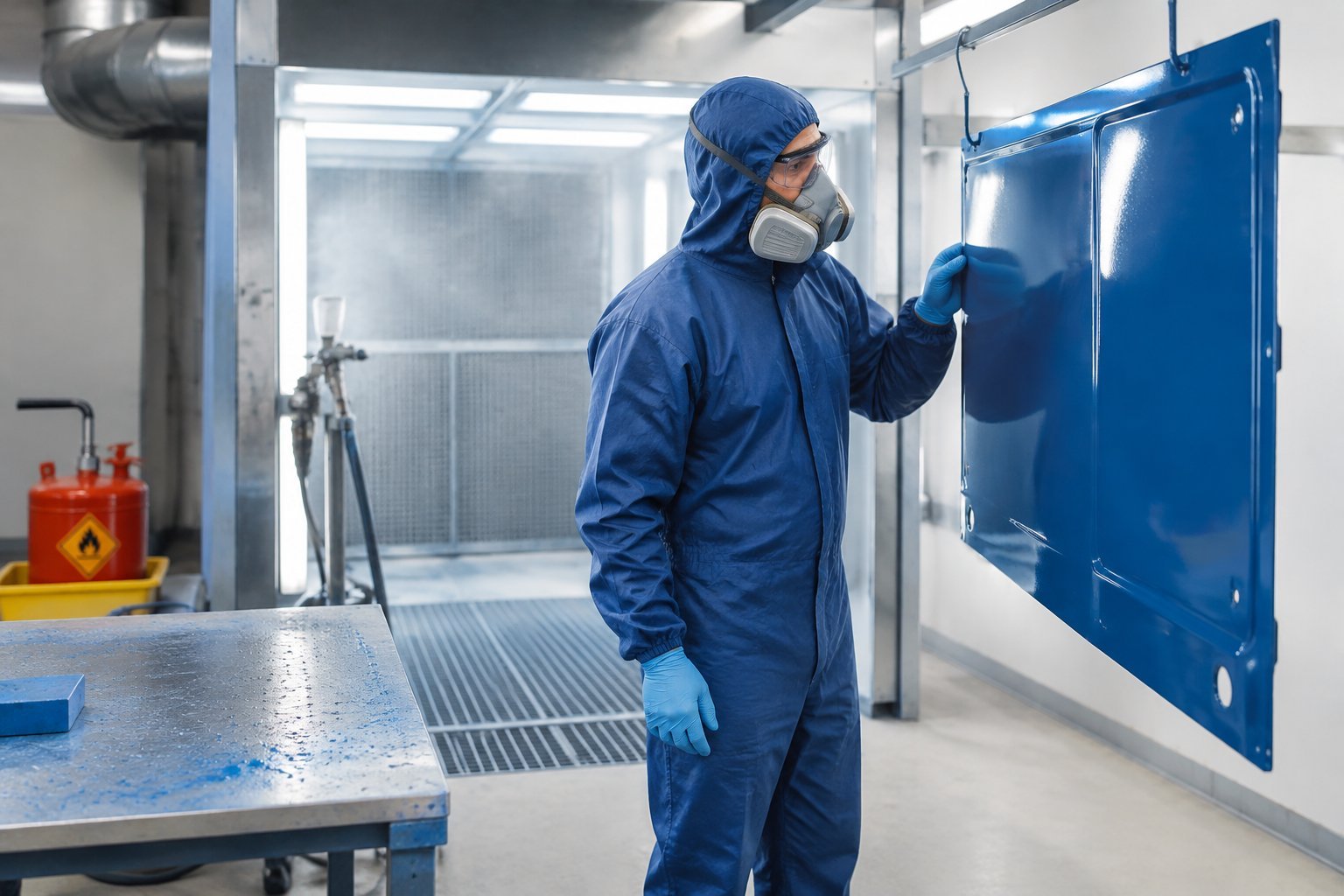
The painting task establishes the protective requirements through its potential ignition sources and routes of chemical exposure. The assessment should include routine production and foreseeable disturbances, such as a leaking connection or ventilation failure.
Could Flammable Vapors or Paint Mist Create an Ignitable Atmosphere?
Flammable solvents release vapors, while spraying disperses liquid into fine droplets. An ignitable atmosphere exists when a combustible mixture and sufficient ignition energy coincide; the assessment therefore needs the actual coating formulation and operating conditions.
A waterborne label alone provides insufficient detail about co-solvents or spray hazards. The qualified team should review safety data sheets alongside application pressure, ventilation performance, booth classification, and nearby ignition sources. Protective workwear supports the resulting controls while ventilation and ignition prevention remain essential.
Where Could Static Charge Accumulate and Discharge?
Charge develops during liquid transfer, atomization, and contact or separation between materials. Insulating footwear or an unsuitable floor allows charge on a person to persist, creating a potential discharge point near a flammable mixture.
The assessment should trace the complete system: personnel, clothing layers, footwear, flooring, equipment bonding, and grounding arrangements. Electrostatic spray equipment requires particular attention to its operating instructions. A conductive yarn pattern visible in fabric provides no measurement of the installed system’s performance.
Does Solvent Exposure Involve Splashes, Soaking, or Vapor?
Splashing, sustained wetting, and vapor exposure require different evidence. Mixing creates spill opportunities, while cleaning guns or hoses introduces direct contact with concentrated cleaning mixtures.
The team should record the exposed body areas and the longest credible contact duration before removal or decontamination. Selecting among chemical protective clothing levels requires that exposure detail alongside the chemical identity. Inhalation hazards require a separate assessment of ventilation and respiratory protection.
What Does Each Protective Property Actually Prove?
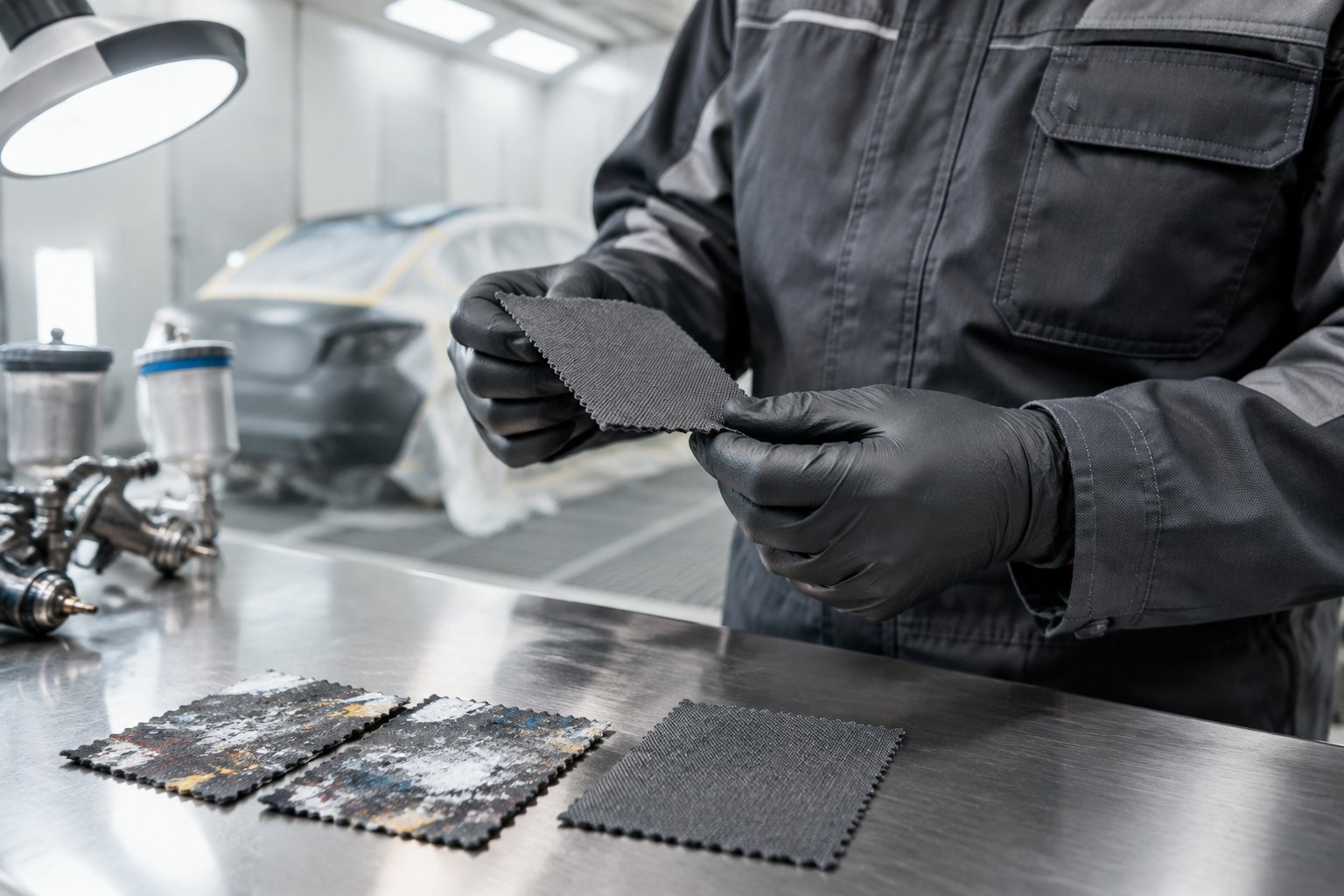
Each protective property supports a defined claim under specified test conditions. A combined fabric description requires evidence for every property relevant to the task.
Flame Resistance Requires Its Own Supporting Evidence
Flame-resistance results describe material behavior under the reported exposure, including continued burning after the ignition source is removed. They do not establish solvent permeation resistance or electrostatic performance.
A review of flame-retardant fabric testing should connect the tested sample to its composition, finish, and pretreatment. For U.S. flash-fire procurement, NFPA 2112 has a different scope from EN ISO 11612; an EN ISO 11612 versus NFPA 2112 comparison helps distinguish the evidence requested. Neither standard name alone establishes a particular Levitex fabric’s conformity.
Antistatic Performance Depends on the Wider Grounding System
Antistatic testing characterizes properties such as resistance or charge decay under defined conditions. Humidity, laundering, and specimen construction influence the meaning of those results.
The wearer’s electrostatic performance also involves the complete clothing ensemble and its intended grounding path. Footwear and flooring require compatibility checks, and an insulating outer layer changes the assessment. Antistatic workwear also provides no basis for claiming electrical shock protection.
Liquid Repellency Is Not a Solvent Barrier
Liquid repellency describes resistance to surface wetting by the tested liquid. Chemical protection additionally involves penetration through openings and permeation through the material at a molecular level.
A solvent mixture might wet a surface that sheds water, and permeation can occur without visible damage. Assessment of chemical-resistant fabric therefore requires chemical-specific evidence tied to concentration and exposure conditions. Levitex’s chemical-repellent textiles provide liquid repellency through post-treatment finishing; they are distinct from barrier-based chemical-resistant materials.
Why FR and Antistatic Properties Alone Cannot Establish Task Safety
FR and antistatic evidence address only part of a paint-shop exposure assessment. Chemical contact, inhalation, eye exposure, and garment openings remain separate concerns.
An additional protective layer also changes the ensemble. A chemical-protective coverall worn over FR workwear needs evaluation for its flame behavior and electrostatic compatibility wherever ignition hazards exist. The qualified safety team should approve the assembled system, including its interfaces with gloves and other PPE.
How Do Base Fabrics and Finishes Affect Selection?
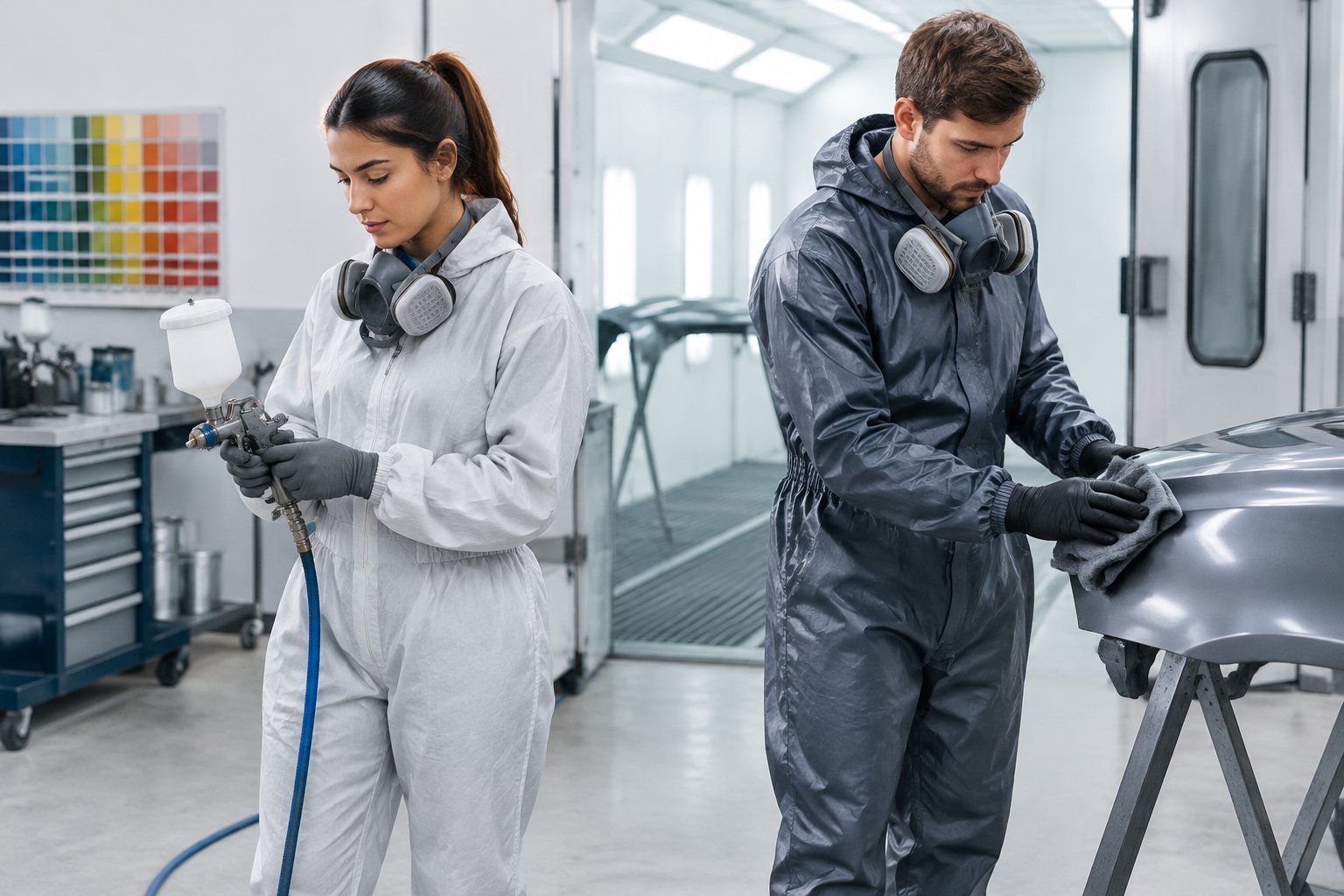
Base fabrics influence comfort and mechanical durability, while the finished construction determines the protective evidence available. Fiber composition alone establishes none of the required flame, static, or chemical claims.
Comparing Cotton, Cotton/Nylon, and Cotton-Rich Polyester Blends
Levitex’s three main fabric families are 100% cotton, cotton/nylon (C/N), and cotton-rich cotton/polyester (CVC). The following comparison identifies selection considerations without assigning untested protection levels.
| Selection consideration | 100% cotton | Cotton/nylon (C/N) | Cotton-rich cotton/polyester (CVC) |
|---|---|---|---|
| Fiber composition | Cotton only | Cotton plus nylon | Cotton-dominant polyester blend |
| Moisture handling | Absorbent cellulose | Blend-dependent | Blend-dependent |
| Mechanical selection focus | Yarn and construction | Nylon reinforcement contribution | Strength and dimensional stability |
| FR evidence required | Finished-fabric report | Finished-fabric report | Finished-fabric report |
| Solvent barrier inferred | No | No | No |
Untreated cotton burns, so protective FR cotton requires a suitable treatment and supporting results. Cotton/nylon blend properties also depend on the yarn and construction, preventing a universal durability ranking from composition alone.
The CVC fabric versus 100% cotton decision should include handling and laundering requirements. Any synthetic content requires evaluation within the finished material’s heat-exposure results.
Balancing Weave, Weight, Mobility, and Abrasion in Work Pants
Work pants need sufficient movement for crouching and access to low-mounted equipment. Fabric stiffness and garment fit affect that movement alongside the weave.
Twill, plain weave, and reinforced constructions distribute yarns differently, changing flexibility and resistance to mechanical damage. Fabric weight describes mass per area; it provides no independent measure of flash-fire or chemical protection. Painters’ knee and seat areas deserve attention because abrasion and sustained contact occur there.
Garment trials should assess movement using the intended PPE ensemble. Reinforcement panels, stretch components, and pocket materials need inclusion in the final protective assessment.
Evaluating Repellent Finishes Without Assuming Paint or Solvent Protection
Repellent finishing changes surface wetting behavior, while stain-release finishing supports soil removal during washing. A finish described as easy-clean provides no chemical barrier evidence.
Levitex offers FR plus water-repellent and FR plus oil-repellent finishing across all three base-fabric families. The finished combination needs product-specific evaluation because fabric finishes interact with handling and other performance requirements.
Paint includes binders and additives as well as its liquid carrier. Repellency results for standard test liquids cannot predict every coating mixture’s wetting, adhesion, or removal behavior.
What Should the Qualified Safety Team Verify Before Ordering?
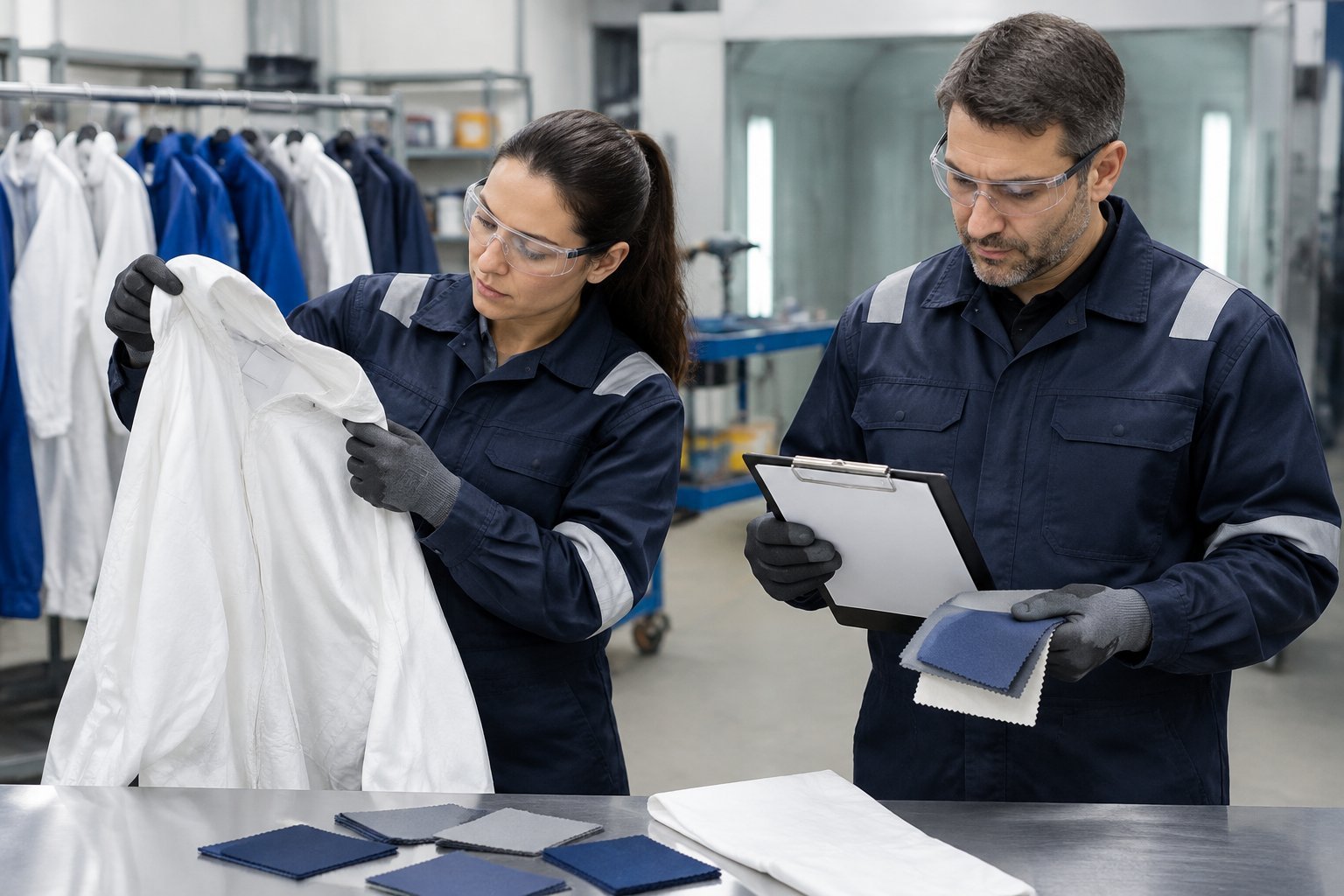
Ordering should follow a documented match between the exposure assessment, the required evidence, and the maintenance program. The purchase specification needs enough detail to identify the approved textile after production and laundering.
Exposure Checklist: Task, Chemical Identity, Concentration, and Contact Duration
The exposure record should distinguish spraying from mixing and cleaning. A single job title conceals important differences in chemical concentration and contact frequency.
The qualified team should document:
- Coatings, hardeners, thinners, and cleaning agents, with current safety data sheets.
- Chemical identities and working concentrations, including mixed formulations.
- Application method and the condition of ventilation controls.
- Splash frequency, contact pressure, temperature, and maximum credible contact duration.
- Exposed body areas, including knees or forearms against contaminated surfaces.
- Ignition hazards and the site’s electrostatic control requirements.
- Removal, decontamination, and emergency arrangements.
Work pants require particular attention when kneeling introduces prolonged contact with contaminated floors or equipment.
Evidence Checklist: Separate Flame, Static, and Chemical Test Results
Each report should identify its sample and test method, including the edition used. Results should correspond to the finished fabric being ordered and the specified care conditions.
The evidence package should address:
- Flame behavior and any task-required heat or flash-fire performance.
- Electrostatic performance with the reported conditioning environment.
- Repellency to the identified test liquids.
- Chemical penetration or permeation when barrier protection is required.
- Mechanical performance and dimensional stability after relevant pretreatment.
- Garment-level evaluation of closures, seams, trims, and PPE interfaces.
Oil-repellent fabric testing provides surface-wetting evidence for specified liquids. A general statement that a product has a test report does not establish that all these assessments were performed.
Care Checklist: Contamination, Laundering, Inspection, and Replacement
The maintenance program should define what happens after routine soiling and after significant chemical contact. Dried paint changes the textile surface, while retained solvents introduce an additional ignition concern.
The care specification should establish:
- Approved washing and drying procedures.
- Contaminants requiring immediate withdrawal from service.
- Restrictions on detergents, bleach, softeners, or field-applied treatments.
- Inspection criteria for holes, thinning, damaged closures, and persistent deposits.
- Conditions triggering retesting or replacement.
- Handling arrangements for contaminated garments before laundering.
A fixed wash count requires supporting evidence for the specific textile and process. Fabric that looks clean still needs to meet the program’s documented acceptance criteria.
What Levitex Can Supply and What Requires Garment-Level Assessment
Levitex supplies industrial workwear textiles, wholesale FR fabrics, custom dyeing, and custom printing. Its production capacity includes 5 million meters per month, with 1.5 million meters dedicated specifically to flame-retardant fabrics.
Buyers can review antistatic fabric options against their required specifications. Any flame, electrostatic, or arc claim requires the relevant product-specific evidence; a category label or URL establishes no rating.
Levitex produces chemical-repellent fabrics through post-treatment finishing on cotton, C/N, and CVC bases. It supplies textiles, without finished uniforms, complete PPE design, or solvent-barrier systems.
Batch identification and FR fabric quality control support the connection between approved samples and bulk deliveries. Garment manufacturers and the qualified safety team remain responsible for assessing the assembled workwear. Buyers seeking textile specifications and supporting evidence can contact Charlie Luo at Charlie@levitex.com.
Match Fabric Evidence to the Assessed Painting Task
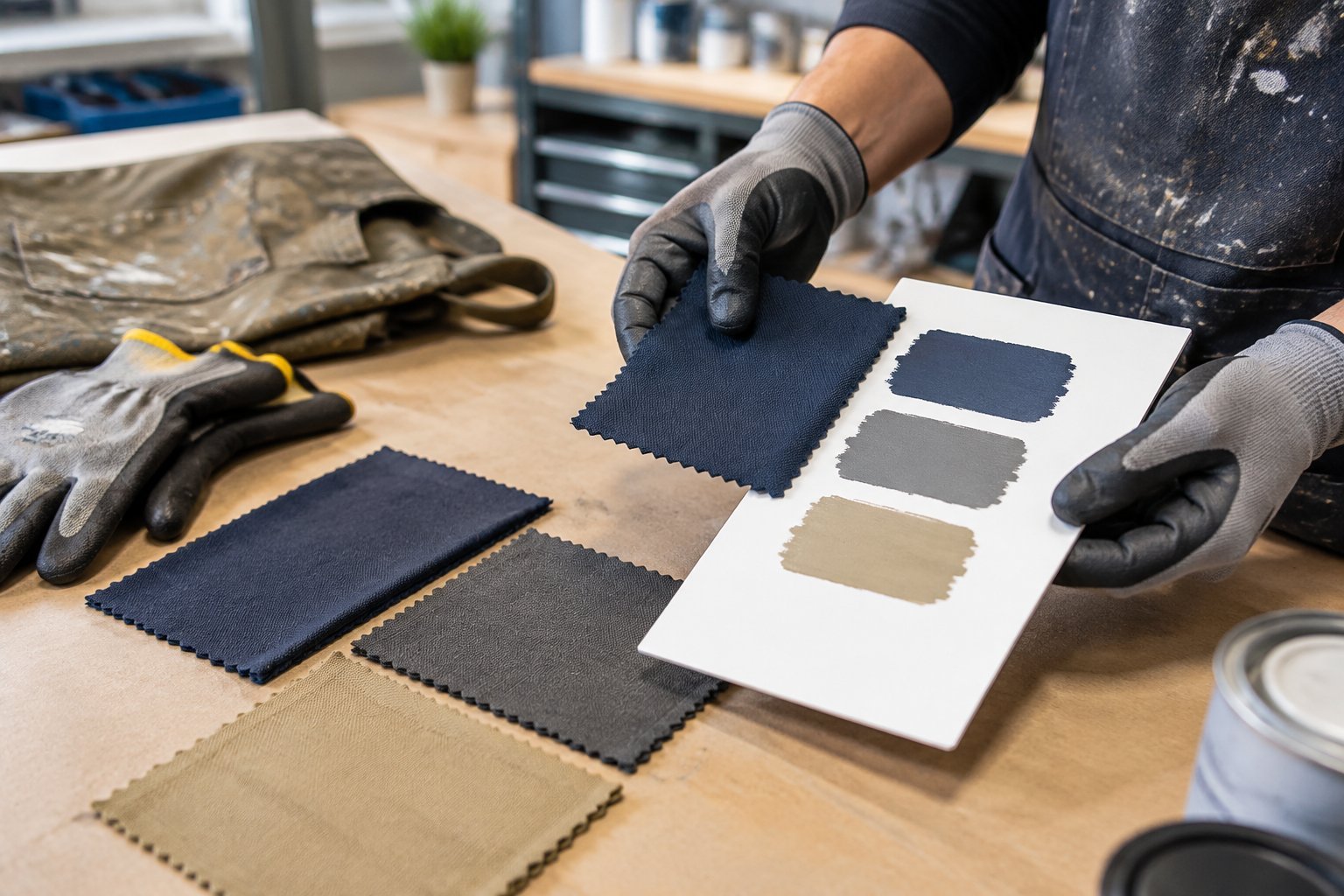
A defensible fabric choice connects each assessed hazard to a specific report and a defined maintenance requirement. Painters’ workwear needs that connection across routine application, equipment cleaning, and foreseeable contamination.
The ordering package should identify the approved fabric and finish combination, required evidence, laundering procedure, and garment-level responsibilities. Where the assessment identifies a solvent-barrier requirement, the PPE selection process should include chemical-specific penetration or permeation data and approval of the complete ensemble.
Frequently Asked Questions
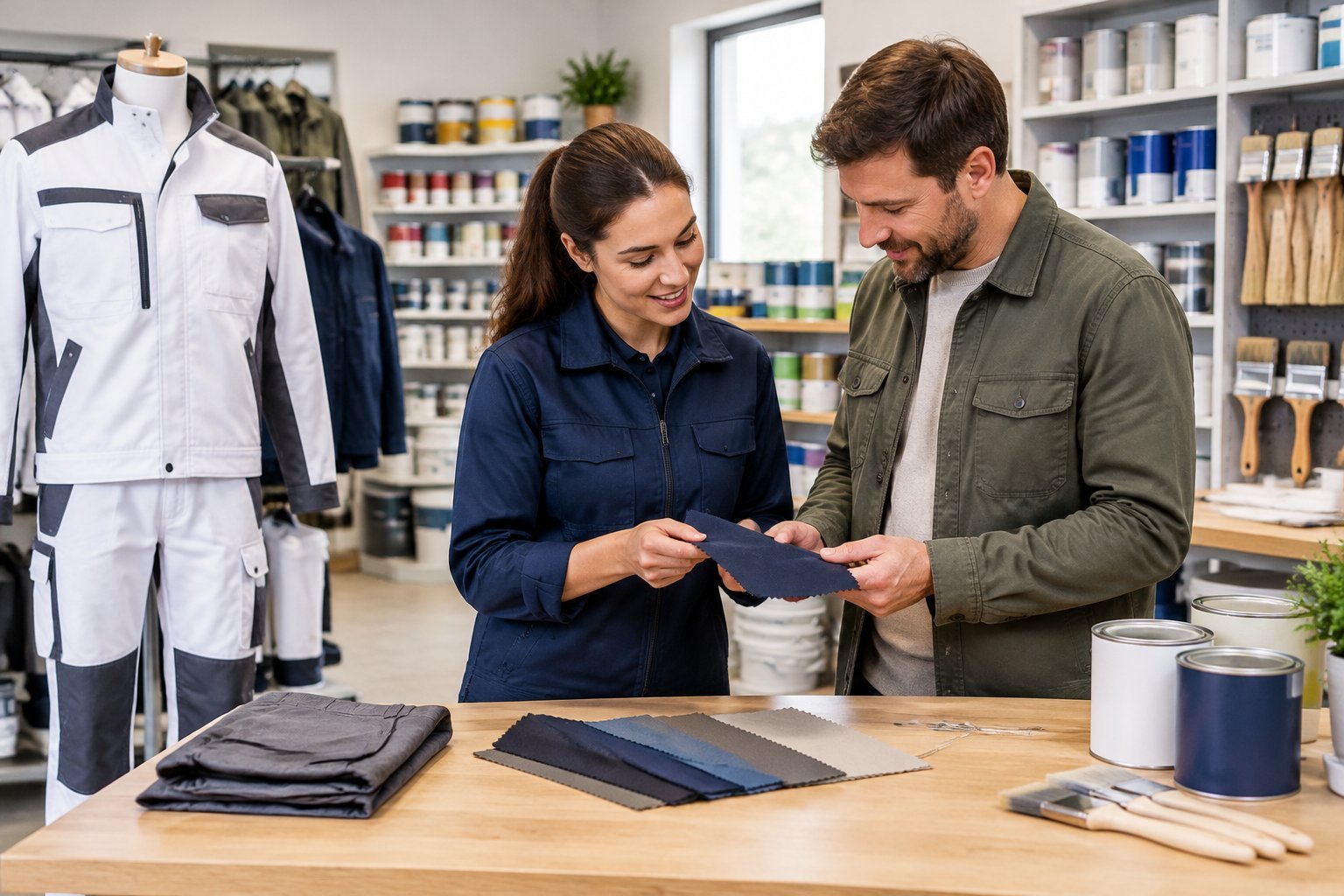
These answers clarify common purchasing decisions for industrial painters’ workwear. Final approval belongs with the qualified team responsible for the site’s tasks and exposures.
What fabric is best for industrial paint shop workwear?
The strongest choice is a finished industrial fabric whose documented properties match the assessed painting task. Cotton, C/N, and CVC are candidate base fabrics, with selection supported by the relevant reports and garment evaluation.
Do all painters need flame-resistant and antistatic workwear?
FR and antistatic workwear is appropriate where the hazard assessment identifies the corresponding flame and electrostatic ignition risks. Industrial spraying, solvent transfer, and equipment cleaning require task-specific review before those requirements are assigned.
Does FR antistatic fabric protect against paint solvents?
FR and antistatic designations establish no solvent-protection claim. Solvent-contact protection requires evidence for the actual chemical mixture and exposure conditions, including barrier testing when the assessment calls for it.
Can paint contamination affect a fabric’s protective performance?
Paint contamination alters the fabric surface and introduces additional combustible material when the deposit contains flammable constituents. Persistent deposits, retained solvent, or damage should trigger withdrawal and review under the approved care procedure.
Does Levitex supply finished paint shop uniforms?
Levitex manufactures textiles for industrial protective-workwear applications. Finished uniforms and work pants require a garment supplier, with complete-PPE approval handled through the qualified safety assessment.