
Fabric bowing and skewing are measured on relaxed, flat fabric by expressing weft-line curvature and diagonal displacement as percentages of fabric width; control requires balanced processing tension, effective straightening, and verification after relaxation and agreed laundering. For industrial workwear buyers, these measurements help prevent off-grain cutting, mismatched panels, and distortion that becomes visible after washing.
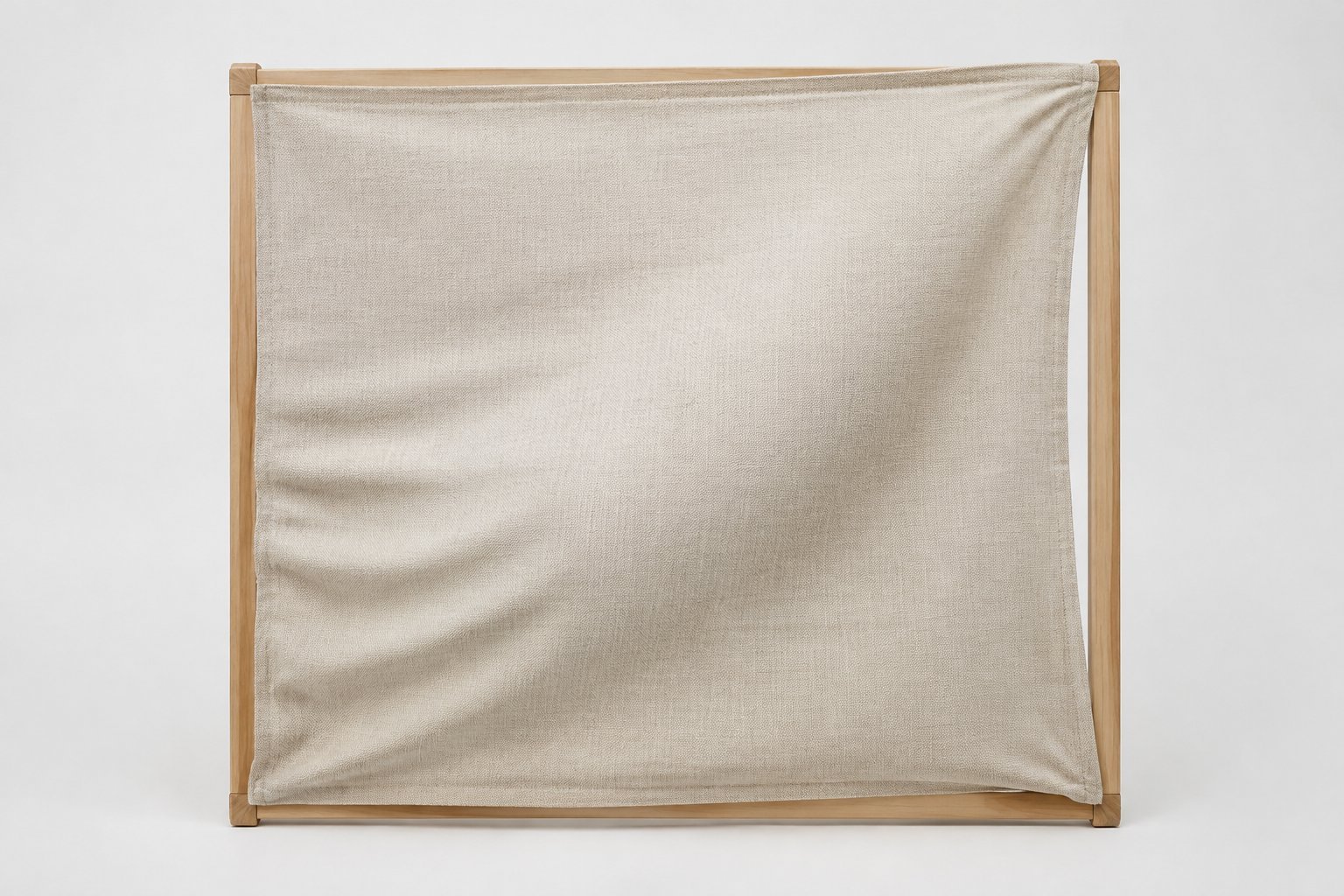
Levitex manufactures protective-workwear textiles, where fabric geometry belongs alongside protective performance in FR fabric quality control. A roll that looks straight under inspection-machine tension still needs assessment in its relaxed condition before cutting approval.
How Do Bow and Skew Differ?
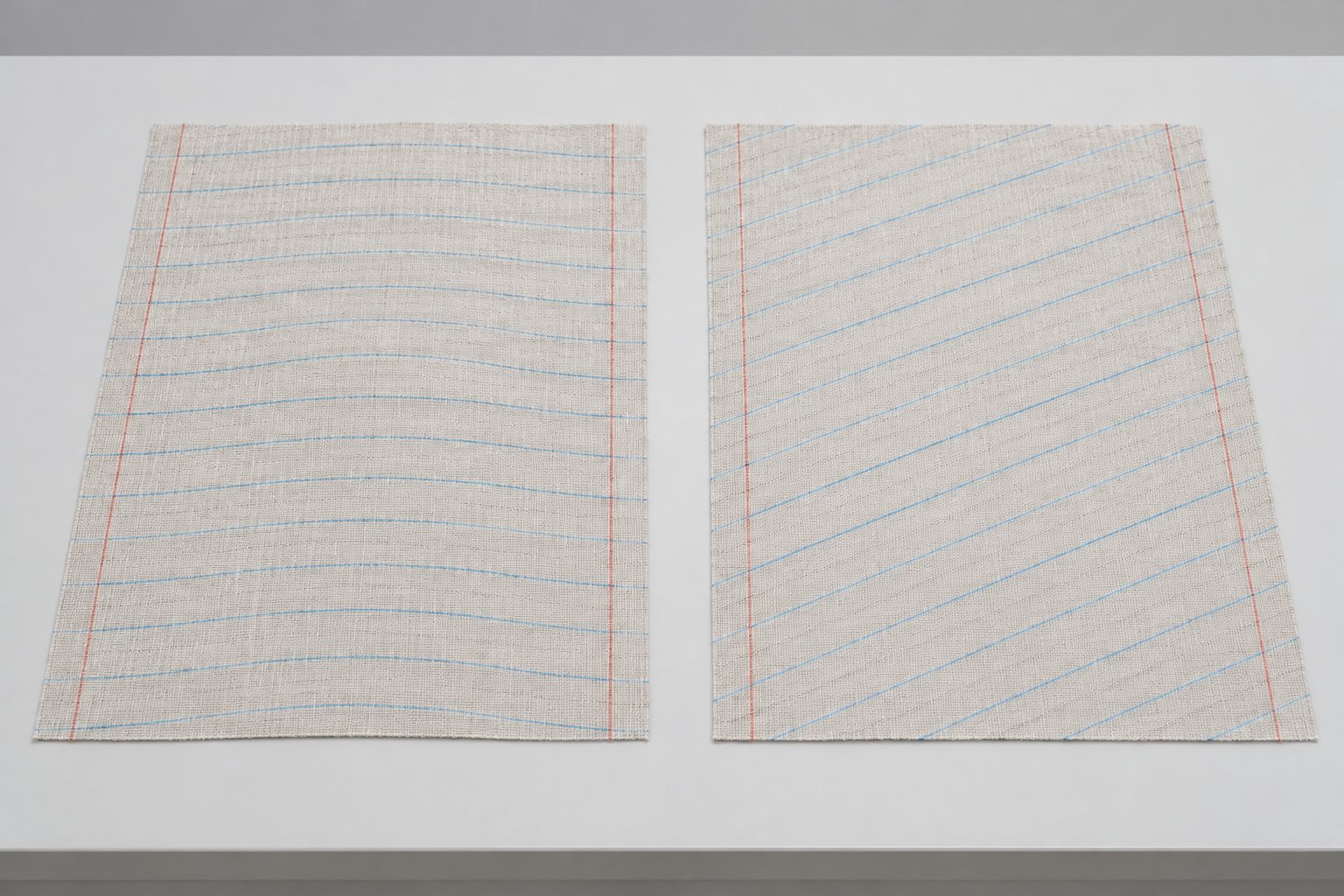
Bow describes curvature across the fabric width, while skew describes a crosswise line running diagonally between the edges. Both affect the relationship between the lengthwise and crosswise structure.
Recognizing Curved Weft Lines vs. Diagonal Displacement
In woven fabric, warp yarns run lengthwise and weft yarns run across the width. A weft yarn, also called a filling yarn, provides the structural line for checking distortion against the fabric selvedge, commonly spelled “selvage” in the United States.
With bow, that line curves forward or backward across the width. With skew, its endpoint at one edge sits ahead of its endpoint at the opposite edge.
A visible print requires a separate check because print alignment and yarn alignment are different characteristics. During custom dyeing and printing on FR fabric, approval criteria should distinguish structural distortion from placement or repeat distortion.
Identifying Single Bow, Double Bow, and Combined Distortion
A single bow has one principal arc across the width. A double bow has two curved regions, producing a more complex wave; hooked distortion concentrates a sharp curve near an edge.
Combined distortion includes both curvature and an edge-to-edge offset. Inspectors should record each component separately and sketch irregular shapes, since one percentage gives limited information about where cutting problems will occur.
Distinguishing Woven Distortion From Knitted Course Skew
Knitted fabric requires inspection of courses and wales, the crosswise rows and lengthwise columns of loops. Course bow and course skew describe their displacement across the fabric.
Among knitted fabric defects, spirality is especially relevant because yarn torque and loop construction influence twisting during relaxation. A straight-looking course at finishing therefore needs a post-relaxation check, particularly when the fabric will undergo repeated laundering.
How Do You Measure Distortion and Set Acceptance Limits?
Reliable measurement requires tension-free fabric, defined reference lines, and a written acceptance specification. Bow and skew should remain separate entries in the fabric inspection record.
Preparing Relaxed Fabric and Establishing Reference Lines
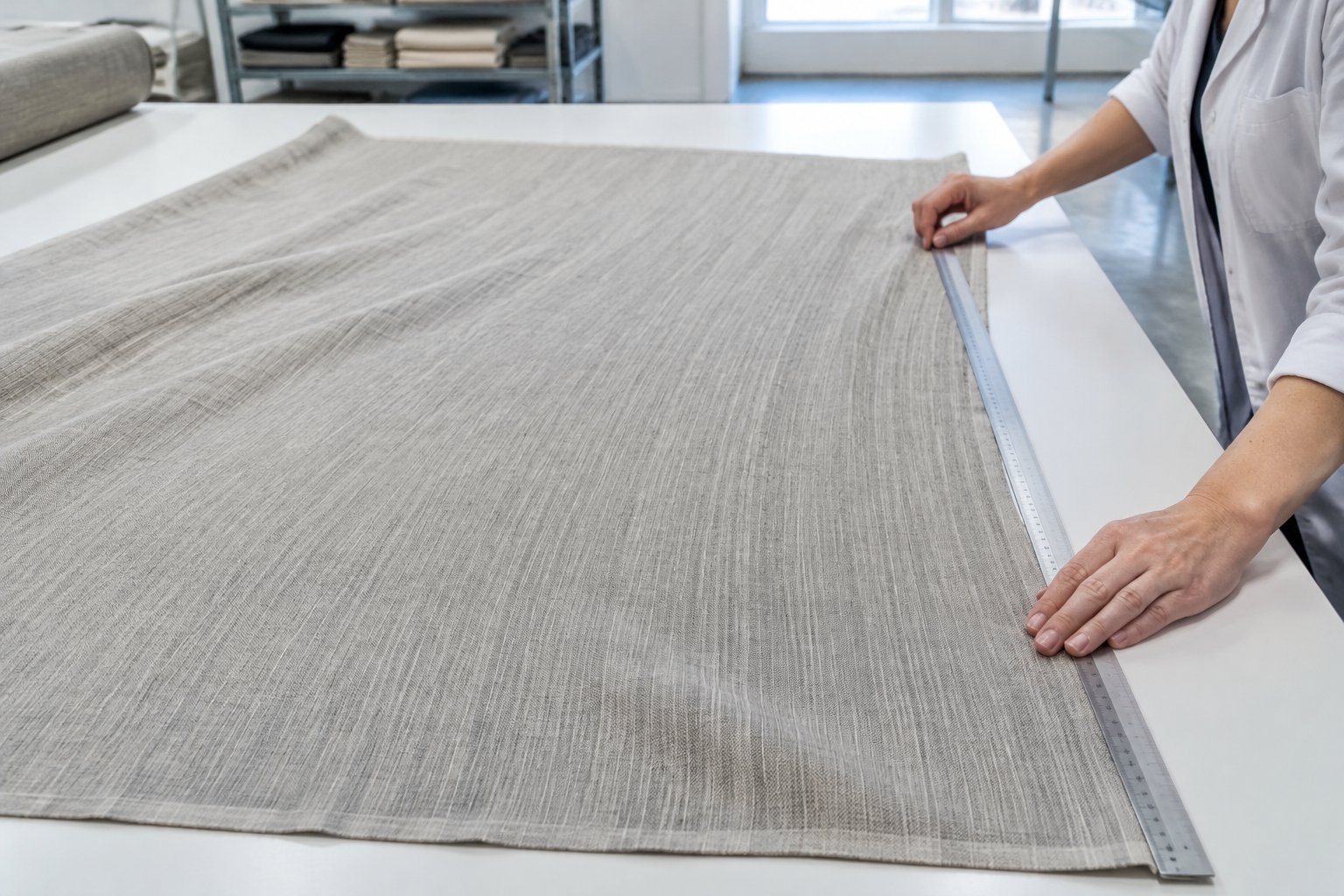
The inspector lays sufficient full-width fabric on a flat surface, allowing it to relax under the agreed conditioning procedure. The cloth should remain free of pulling, hanging weight, and hand-stretching during measurement.
A traceable filling yarn or knitted course establishes the crosswise structural line. A square establishes a reference perpendicular to the longitudinal edge, while a straight line connecting the yarn’s two edge intersections provides the reference for separating bow from skew in combined distortion.
The record should identify whether the measurement spans full width or a defined usable width. Consistent edge selection prevents differences caused by selvedge trimming or inconsistent measuring points.
Calculating Bow and Skew Percentages With Hypothetical Examples
For a straightforward full-width assessment, the calculations are:
- Bow (%) = maximum bow depth ÷ measured fabric width × 100
- Skew (%) = longitudinal edge-to-edge offset ÷ measured fabric width × 100
Bow depth is measured parallel to the fabric length between the traced yarn and its edge-to-edge reference line. Skew offset is measured lengthwise at the opposite edge from a perpendicular reference through the starting point.
Consider a hypothetical 60-inch-wide fabric:
| Measurement | Hypothetical value | Calculation | Result |
|---|---|---|---|
| Maximum bow depth | 0.9 inch | 0.9 ÷ 60 × 100 | 1.5% bow |
| Skew offset | 1.2 inches | 1.2 ÷ 60 × 100 | 2.0% skew |
These figures illustrate the arithmetic only. Double bows and hooked shapes require the measurement conventions specified in the agreed method; inspectors should retain their shape and location records alongside the percentages.
Using ASTM D3882 and Agreeing Buyer-Specific Tolerances
ASTM D3882 provides a recognized method for measuring bow and skew in woven and knitted fabrics. The purchase specification should identify the applicable edition and follow its requirements for specimen preparation, measurement, and reporting.
Acceptance limits belong in the buyer-supplier agreement. ASTM D3882 supplies a measurement method; the buyer’s end use establishes the acceptable result.
The agreement should state separate bow and skew limits, sampling locations, and the condition of assessment. Fabric intended for conspicuous checks or aligned panels requires particular attention to localized curvature.
Recording Roll Measurements Alongside 4-Point Inspection Results
A 4-point fabric inspection records fabric defects under an agreed scoring system. Bow and skew need dedicated measurements alongside that score because a roll-level defect total does not describe crosswise geometry adequately.
Useful record fields include:
- Roll number, lot number, and measured width.
- Distance from the roll start at each measurement.
- Bow percentage, skew percentage, and distortion direction.
- Localized hooks or waves, supported by a sketch or photograph.
- Relaxation condition and any post-laundering results.
- Acceptance, segregation, or reprocessing decision.
Sampling should cover agreed positions along the roll, with additional checks around joins and visible changes. Geometry approval also remains separate from fabric tensile strength and fabric tear strength requirements.
What Causes Distortion, and How Far Can Correction Go?
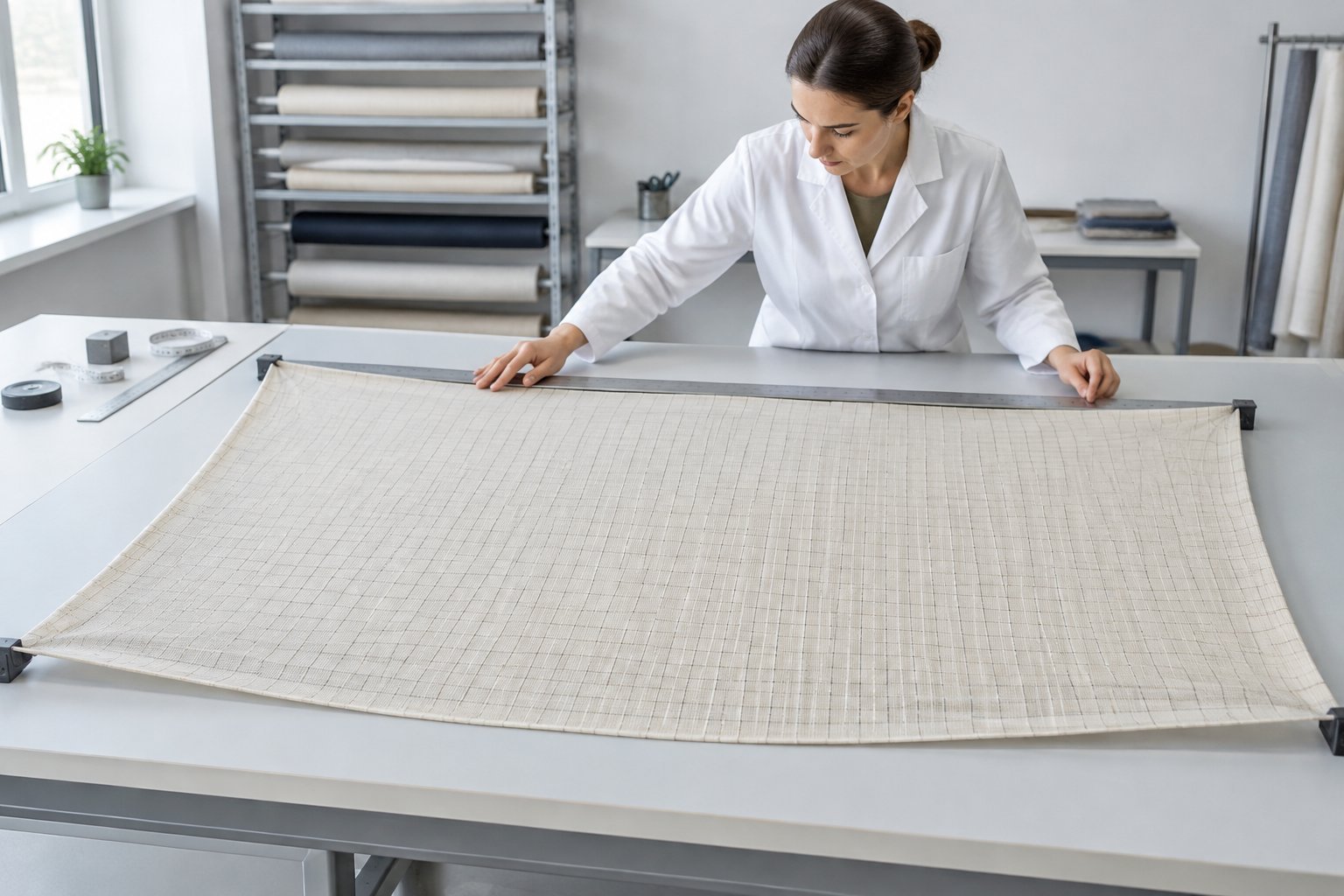
Unequal movement across the fabric width creates distortion, and finishing equipment corrects only the portion that responds to controlled mechanical adjustment. Construction-related forces and stored strain require verification after processing.
Tracing Greige Distortion to Weaving Tension and Fabric Construction
Fabric bowing formation starts during fabric weaving when the center and edges experience different restraint or take-up. Warp-tension variation, temple restraint, and uneven fabric withdrawal influence the geometry of greige fabric.
Construction also affects how readily the cloth distorts. Yarn count, weave, density, and yarn twist should be considered together; fabric weight alone gives an incomplete prediction.
Comparing greige and finished measurements helps locate the stage responsible for bowing formation. A recurring shape already present before wet processing points the investigation toward weaving and construction.
Checking Batch Stitching, Roller Alignment, and Stenter Feeding
During fabric processing, an angled batch join introduces unequal leading positions across the width. Here, fabric stitching refers to joining fabric lengths for continuous processing, an operation separate from garment assembly.
Operators should check join squareness and roller alignment, including uneven nip pressure or surface wear. Differing roller speeds and uneven winding tension also introduce strain.
At the stenter machine, edge feeding and center support require coordinated adjustment. Fabric finishes add processing stages where geometry should be checked, especially when drying occurs while the cloth is held under tension.
Using Weft Straighteners Without Assuming Permanent Correction
A weft straightener detects or responds to yarn-line displacement and adjusts the fabric through corrective rollers. Bow correction changes relative travel across the width, while skew correction changes the edge-to-edge relationship.
Settings require adjustment to the construction and incoming distortion. Excessive correction risks creating an opposite curve or transferring distortion toward an edge.
A straight line at the machine exit establishes the condition at that moment. Residual bowing must be assessed after release from processing tension, with particular attention to any change during storage and relaxation.
Verifying Geometry After Relaxation and Agreed Laundering
Post-processing verification establishes whether the corrected geometry survives the conditions specified for the order. The inspector measures the relaxed finished fabric, then repeats the assessment after the agreed laundering and drying procedure.
Fabric shrinkage measures dimensional change, while bow and skew describe alignment. Both records are useful because width or length change alone leaves distortion unexplained.
The report should retain before-and-after values and the direction of movement. If distortion returns, the mill needs to investigate stored strain, yarn behavior, and finishing conditions before selecting a reprocessing route.
Applying These Controls to Levitex Industrial FR Fabric Orders
Levitex manufactures 100% cotton, cotton/nylon (C/N), and cotton-rich cotton/polyester (CVC) FR fabrics, with woven and knitted constructions available. Geometry requirements should identify the actual construction and intended industrial application.
FR plus water-repellent and FR plus oil-repellent finishing are available on all three base-fabric families. Orders involving these combinations need both geometry checks and product-specific performance verification, reflecting multi-functional FR finishing compatibility.
Levitex supplies textiles; external garment manufacturers remain responsible for cutting and assembly validation. Buyers discussing an order with Sales Manager Charlie Luo at Charlie@levitex.com can provide their bow/skew method, tolerance, and laundering protocol alongside the fabric specification. Any proposed reprocessing should include agreement on which product-specific properties require rechecking.
Accept Fabric on Verified Geometry, Not Appearance Alone
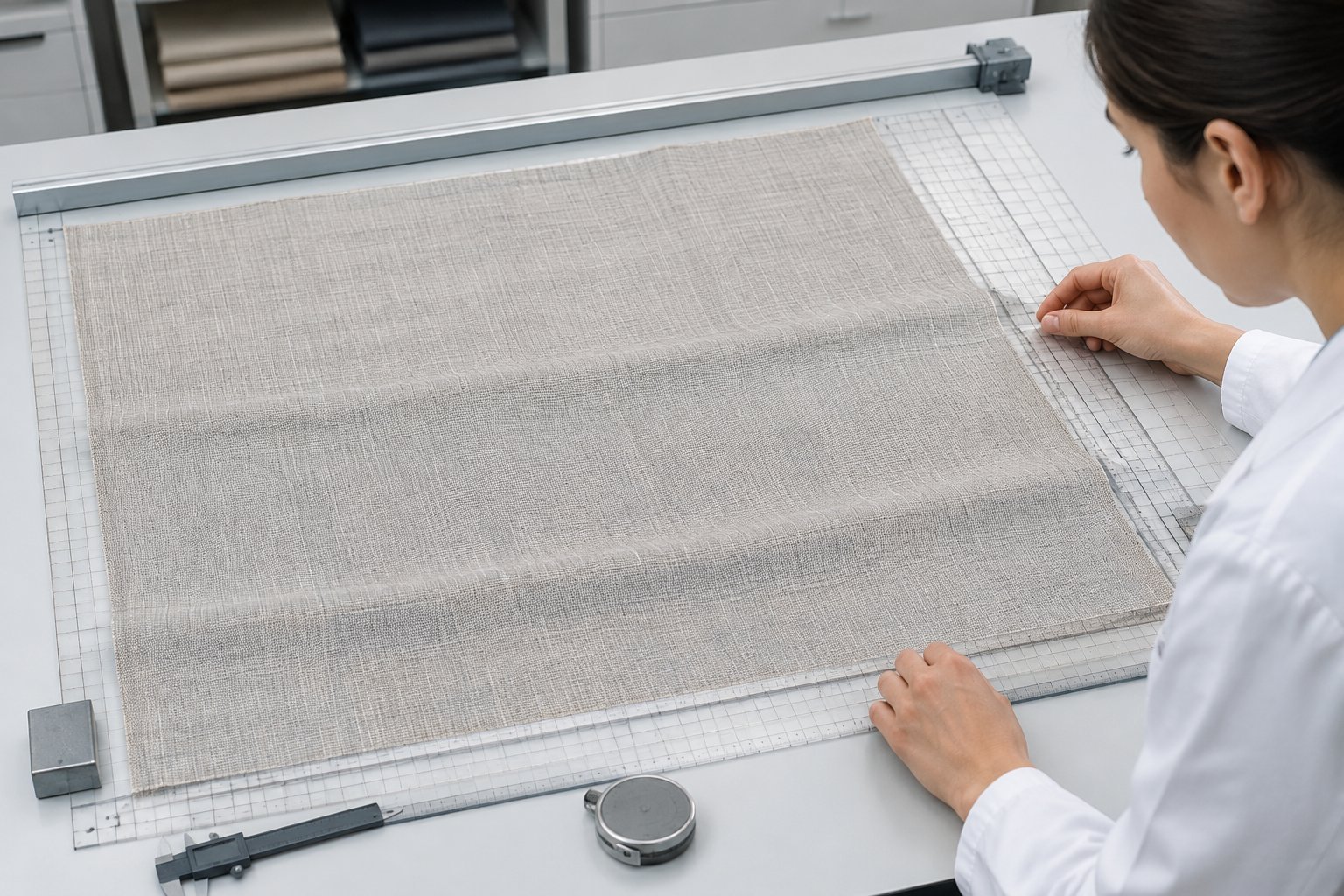
Fabric acceptance should rely on recorded bow and skew values in the agreed relaxed and post-laundering conditions. A smooth roll surface under machine tension provides insufficient evidence of stable geometry.
The release record should connect each inspected roll to its sampling positions and acceptance decision. Residual bowing or skew above the agreed limit requires segregation and a documented disposition before cutting.
For industrial protective-workwear textiles, geometry approval belongs alongside the relevant product-specific performance reports. Reprocessed material needs repeat geometry inspection and whatever performance checks the reprocessing agreement requires.
Frequently Asked Questions
Can bowing and skewing occur in the same fabric roll?
Yes, bowing and skewing occur together, including within the same crosswise yarn line. The inspector records curvature and edge-to-edge offset separately, with a sketch for irregular or hooked shapes.
What percentage of fabric bowing is acceptable?
The acceptable percentage is the limit written into the purchase specification for the intended application. That specification should identify the measurement method, width basis, and assessment condition so both parties evaluate the same characteristic.
Why can distortion return after washing?
Washing releases stored processing strain and allows yarns or loops to move toward a different relaxed geometry. For protective textiles, the industrial laundering procedure and repellency maintenance requirements should be agreed before post-wash distortion is evaluated.
Can a garment factory correct bowed or skewed fabric?
A garment factory has limited options, including segregation, revised spreading, or buyer-approved grain-aligned cutting for manageable distortion. Significant correction requires controlled textile finishing, and any cutting concession needs evaluation for panel alignment and fabric consumption.
Does a passing 4-point inspection guarantee acceptable bow and skew?
A passing 4-point fabric inspection establishes compliance with the agreed defect-scoring criteria only. Bow and skew require their own measurements and acceptance limits on the roll inspection record.