
Ripstop fabric uses a woven reinforcing grid to slow the spread of small tears, helping industrial workwear resist damage after a snag or puncture. Stronger yarns run through the woven fabric at regular intervals, giving a developing tear additional resistance when it reaches a grid line.
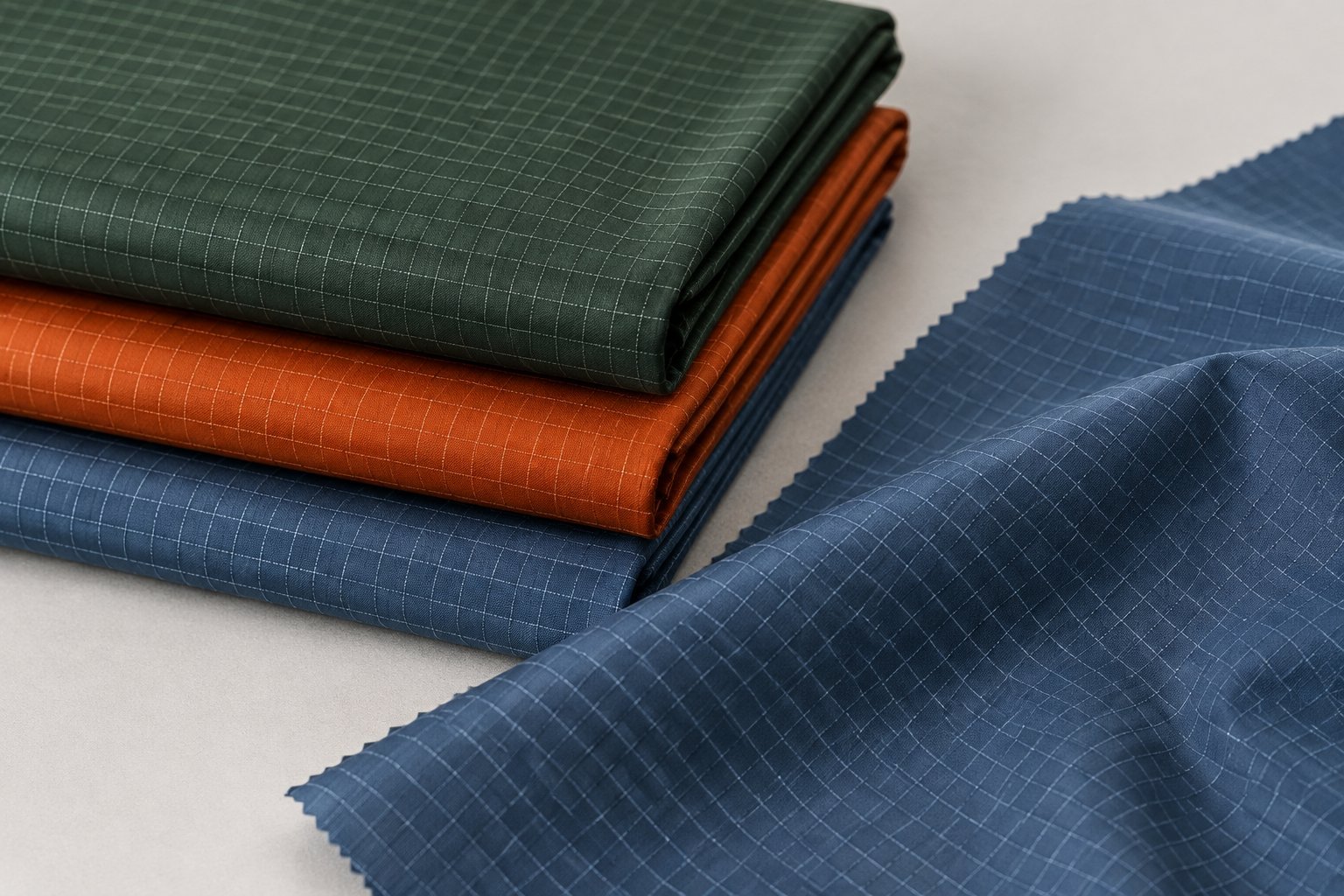
For industrial buyers, that construction offers a practical route to tear resistance without relying entirely on heavier cloth. Its value comes from the combination of reinforcement yarns, base-fabric structure, and finishing.
Levitex manufactures protective-workwear textiles in 100% cotton, cotton/nylon (C/N), and cotton-rich cotton/polyester (CVC). Its manufacturing experience dates to 1951, supporting a fabric-selection approach that connects construction with the demands of industrial use.
How Does the Reinforcing Grid Limit Tear Propagation?
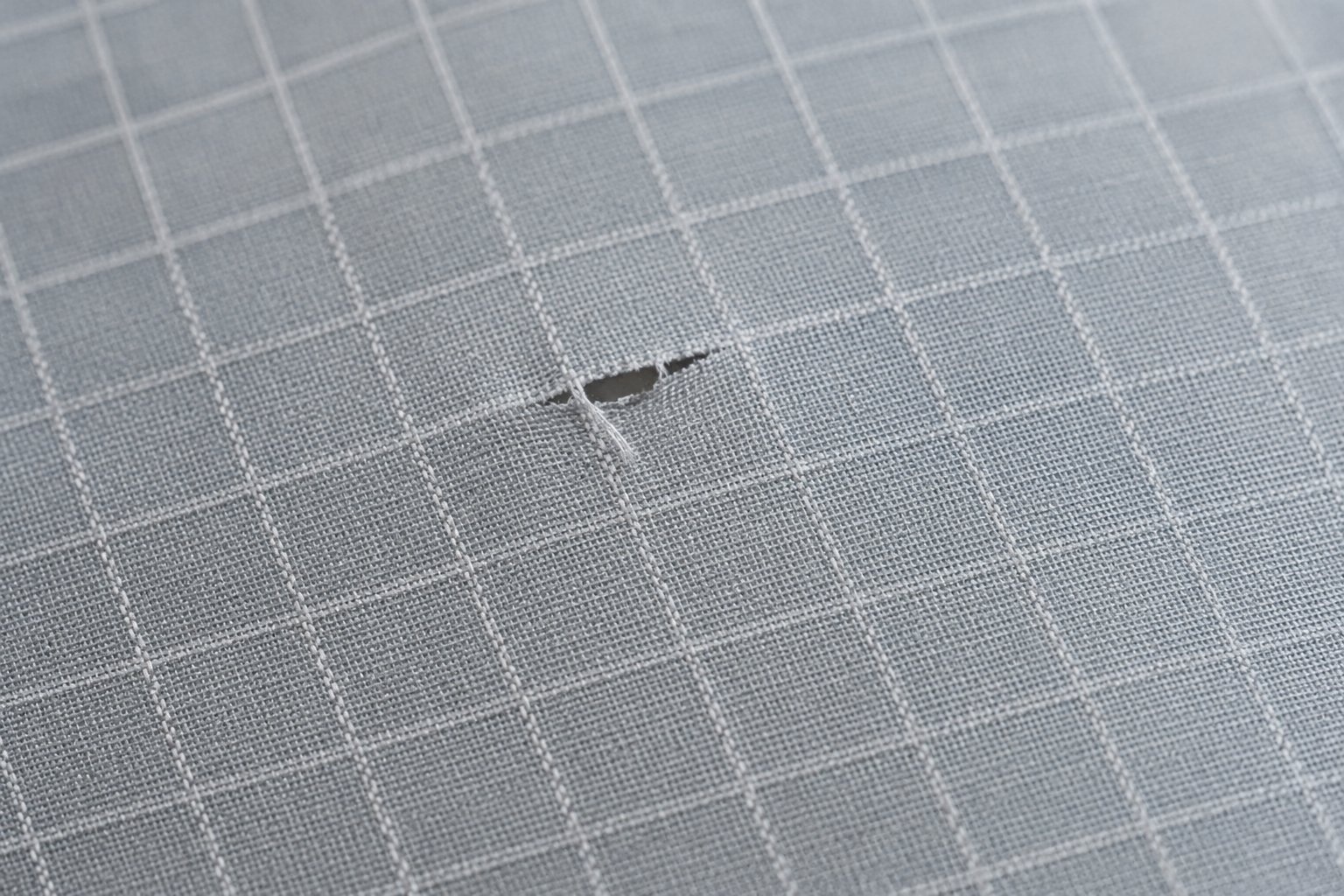
The reinforcing grid limits tear propagation by placing stronger yarn groups across the path of a developing rip. Its effectiveness comes from how those reinforcements interact with the surrounding cloth under load.
How Reinforcement Yarns Are Woven into the Base Cloth
During weaving, reinforcement yarns enter the warp and weft at repeated intervals, forming a crosshatch pattern. Manufacturers create that reinforcement with thicker yarns, stronger yarns, or groups of finer yarns woven together.
The grid is integral to the fabric structure. It requires no separate stitching operation after weaving, and its appearance ranges from prominent raised checks to a subtle surface pattern.
Grid spacing controls how far a tear travels before encountering reinforcement. Yarn size and base-cloth density also influence flexibility, so a visibly larger grid alone provides little evidence of performance.
What Happens When a Tear Reaches the Grid?
A tear concentrates force at its tip as neighboring yarns break or pull apart. When that tear reaches a reinforcing line, the stronger yarn group increases resistance and helps distribute force into adjacent fabric.
Under sufficient load, the reinforcement also breaks or pulls out. Grid intersections and yarn mobility affect the outcome, which explains why fabrics with similar-looking checks produce different tear-test results.
A meaningful fabric tear strength comparison uses the same test method and conditioning procedure. Results should identify both fabric directions because warp and weft performance need separate evaluation.
Why Ripstop Is Not Tear-Proof or Automatically Abrasion-Resistant
Ripstop reinforcement addresses the spread of an existing tear. Sharp edges, repeated snagging, or forces that exceed the reinforcement’s strength still cause damage.
Abrasion involves progressive surface wear from rubbing. Fiber choice, yarn construction, and finishing influence that behavior, so an abrasion claim needs its own supporting evidence.
Likewise, fabric tensile strength describes resistance to pulling an intact specimen apart. Buyers should keep tensile, tear, and abrasion results separate when comparing workwear fabrics.
Which Fiber Compositions Suit Industrial Applications?
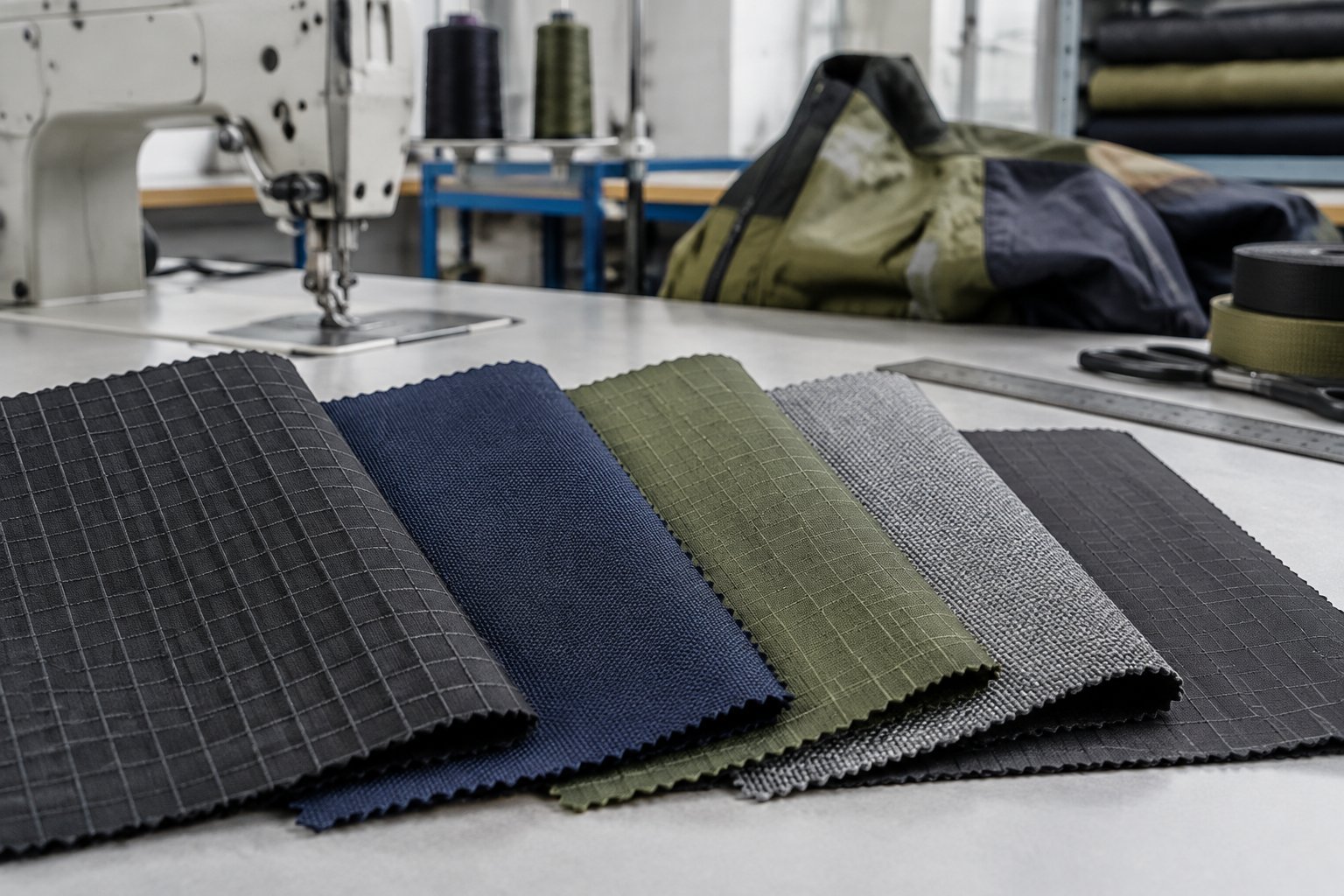
Cotton and cotton-rich ripstop constructions suit industrial workwear applications that call for moisture absorption and a familiar textile hand. Nylon and polyester versions bring different moisture and thermal behavior that requires separate evaluation.
Cotton Ripstop and Cotton-Rich Blends for Workwear
Cotton ripstop combines cotton yarns with the reinforcing grid. Cotton’s moisture absorption supports comfort during physical work, while fabric density and finishing influence drying behavior.
Cotton-rich blends retain a substantial cotton component while introducing synthetic fibers for particular manufacturing or service requirements. Their suitability still rests on the finished fabric’s performance and the intended laundering conditions.
Several properties make cotton useful for workwear, but composition alone does not establish breathability. A densely woven, heavily finished cotton cloth feels different from a lighter construction with greater air permeability.
How Cotton/Nylon and CVC Compositions Differ from the Grid Construction
C/N describes a cotton/nylon blend; CVC describes a cotton-rich cotton/polyester blend. Ripstop describes the woven reinforcement structure, so either composition requires an additional construction specification.
A cotton/nylon label does not establish that nylon occupies only the reinforcing grid. The blend distribution and reinforcement-yarn composition belong on the technical specification when they affect the intended use.
Cotton/nylon blend properties reflect the proportion and arrangement of the fibers. For CVC, buyers should likewise obtain the precise cotton/polyester percentages and assess the finished cloth, particularly where heat exposure is relevant.
How Nylon Ripstop and Polyester Ripstop Differ from Cotton-Based Options
Nylon ripstop and polyester ripstop use synthetic fibers throughout, or as their dominant component. Both absorb less moisture than cotton; nylon has greater moisture uptake than polyester.
Nylon provides elasticity and toughness, while polyester offers low moisture absorption and useful dimensional stability. Actual fabric performance also changes with filament size, weave density, and finishing.
Heat-exposed applications require particular care because conventional nylon and polyester are thermoplastic fibers. A synthetic ripstop designation supplies no proof of flame resistance, melting behavior under the intended exposure, or suitability for protective workwear.
How Should Buyers Specify Ripstop for Protective Workwear?

A useful ripstop specification combines construction details with measurable performance requirements and an agreed approval sample. For protective workwear, it also identifies the workplace hazards and the evidence required for the finished application.
Compare Grid Construction, Fabric Weight, Tear Strength, and Hand
The fabric description should give suppliers enough information to reproduce the approved construction. A request for quotation should identify:
- Fiber composition and reinforcement-yarn composition.
- Grid spacing in both fabric directions.
- Base weave, yarn specifications, and fabric density.
- Finished weight in g/m² and usable width.
- Tear-test method and required results in both directions.
- Shrinkage limits and intended laundering conditions.
- Approved hand, surface appearance, and color reference.
Fabric weight helps describe the cloth, but it cannot predict tear strength by itself. Reinforcement design and yarn movement also affect the force required to extend a tear.
Sample handling should include folding across the grid and checking the feel of several fabric layers. Where worker comfort is a priority, an agreed fabric air permeability test provides measurable evidence alongside the hand assessment.
Distinguish Ripstop Construction from Flame Resistance and Liquid Repellency
Ripstop establishes a reinforcement structure. Flame resistance and liquid repellency require their own material systems and verification.
Levitex offers FR plus water-repellent and FR plus oil-repellent finishing on 100% cotton, cotton/nylon (C/N), and cotton-rich cotton/polyester (CVC) base-fabric families. The requested combination still requires confirmation for the selected ripstop construction.
Water-repellent FR finishing supports surface water shedding under specified conditions. Waterproof performance requires separate evidence of resistance to water penetration, including any relevant garment seams.
Chemical liquid repellency also has a defined scope. Levitex produces chemical-repellent fabrics through post-treatment finishing; applications requiring a chemical barrier need protection evidence appropriate to that exposure.
Check Product-Specific Reports and Separate Fabric Evidence from Garment Requirements
Each Levitex product has a test report. Buyers should match the report to the exact product reference, composition, construction, and finish proposed for the order.
A report review should identify the test method, specimen preparation, laundering pretreatment, and reported results. Any difference between the tested sample and the proposed production fabric needs clarification before approval.
Flame-retardant fabric testing establishes performance under the stated test conditions. Arc performance and molten-metal splash protection each require dedicated evidence; a general FR report supplies no substitute for those assessments.
Garment-level evaluation also includes seams, closures, and other components. Levitex supplies textiles, while the garment manufacturer and responsible compliance parties address finished-garment requirements for the destination market and workplace.
Confirm Levitex Fabric Options, Tan or Custom Colors, and Sampling Requirements
Levitex offers wholesale FR fabrics, customized production, custom dyeing, and custom printing. Buyers should request written confirmation of the proposed ripstop construction within the company’s cotton, C/N, or CVC fabric families.
A tan requirement needs a physical standard or an agreed color reference. Descriptions such as “light tan” leave room for shade differences, particularly across fiber blends and surface finishes.
Color approval should identify the viewing conditions and acceptable shade tolerance. The sampling agreement should also state whether the submitted material represents color only, finished hand, or the proposed bulk-production construction.
Industrial buyers can send their specification and target color to Sales Manager Charlie Luo at Charlie@levitex.com. An effective inquiry includes estimated order quantity, required finish combination, intended laundering conditions, and the sample size needed for evaluation.
Choose the Grid and Composition for the Actual Workwear Requirement
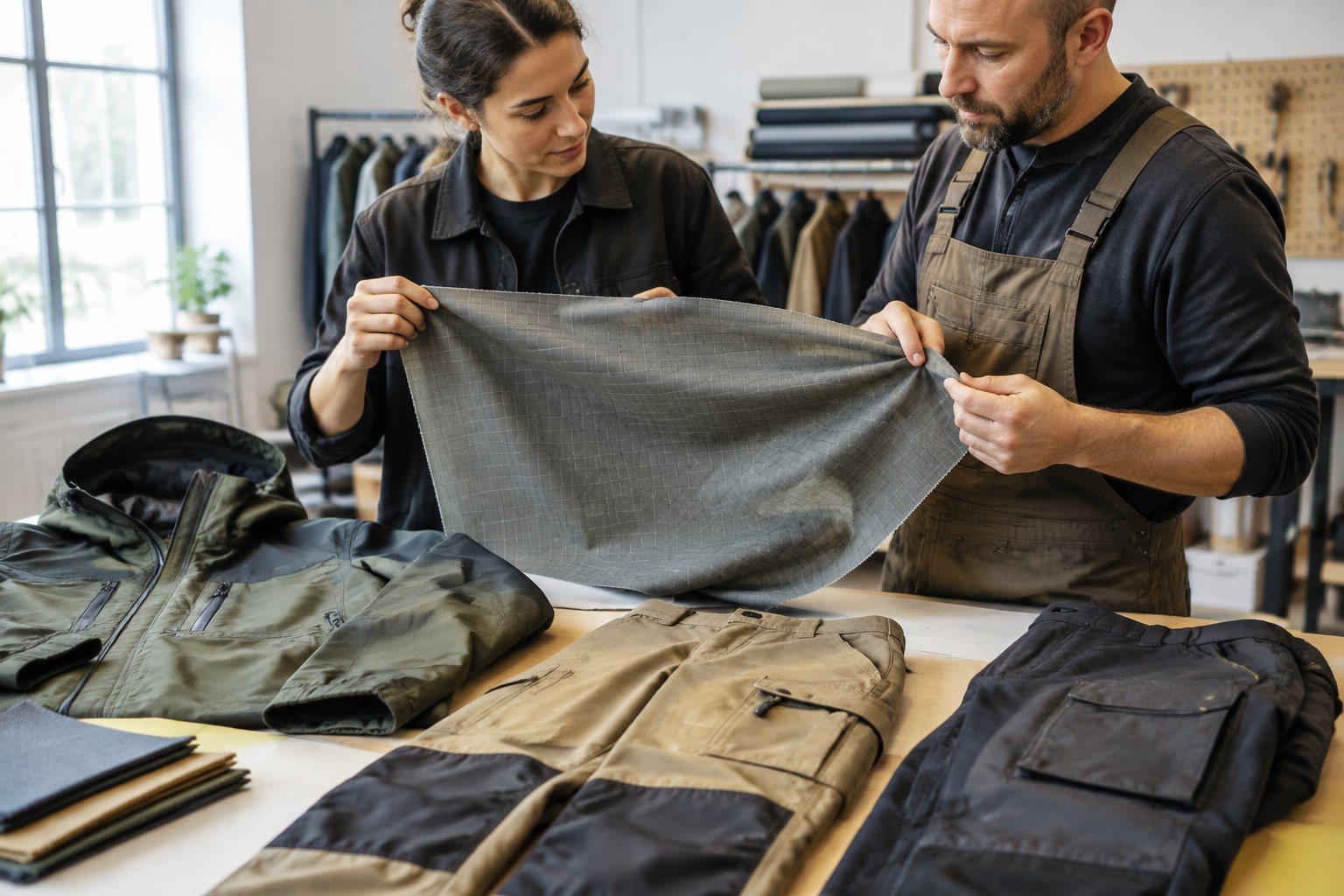
The right ripstop fabric pairs a suitable reinforcing grid with a composition and finish supported by the intended application’s evidence. Grid appearance offers a starting point; measured tear performance establishes how the finished cloth behaves under a specified test.
For procurement, the approval package should connect the fabric specification, physical sample, and relevant product reports. Protective-workwear orders also need a clear division between fabric acceptance requirements and the garment manufacturer’s responsibilities.
Before bulk approval, the buyer should resolve differences in grid spacing, finished weight, shade, or laundering pretreatment. The purchase order should identify the approved sample and report references so production and inspection teams work against the same requirements.
Frequently Asked Questions
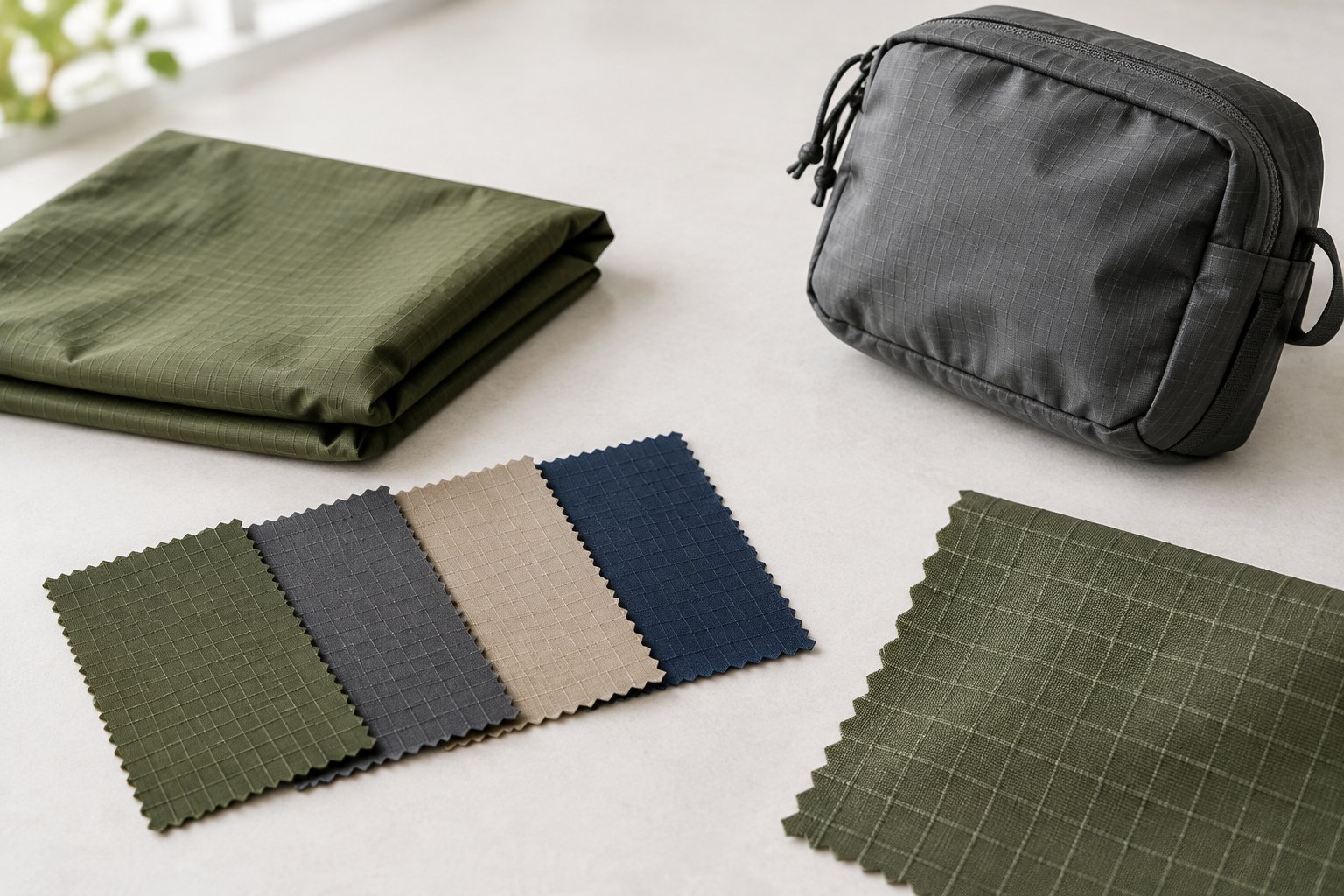
Ripstop fabric describes a reinforcing construction, so purchasing decisions also require composition and performance details.
Is ripstop fabric always 100% cotton?
Ripstop is available in cotton, synthetic fibers, and blends. Cotton ripstop should carry an explicit composition statement, including details of any different reinforcement yarns.
Is ripstop fabric waterproof?
Waterproof performance requires a suitable material system and verified water-penetration resistance. Surface water beading alone establishes neither fabric waterproofness nor finished-garment protection.
Is ripstop fabric naturally flame-resistant?
Flame resistance comes from the fiber system or a suitable treatment. Cotton, nylon, and polyester ripstop each require product-specific evidence before selection for flame-exposed work.
Is ripstop hard to sew into industrial workwear?
Ripstop is compatible with industrial sewing when needle, thread, and machine settings suit the finished cloth. A production trial should check skipped stitches, seam puckering, and damage where the needle crosses reinforcing yarns.
Where can industrial buyers source ripstop fabric?
Industrial buyers source it through textile manufacturers and specialist workwear-fabric suppliers. Levitex accepts wholesale and custom fabric inquiries, with construction availability and sampling terms confirmed against the requested specification.