
Buyers approve a fabric lab dip by comparing a physical dyed sample with an agreed color standard under controlled lighting, checking the specified color-difference tolerance, and recording approval of one clearly identified sample before bulk dyeing. That approval establishes the shade target for production and creates a reference for resolving later color questions.
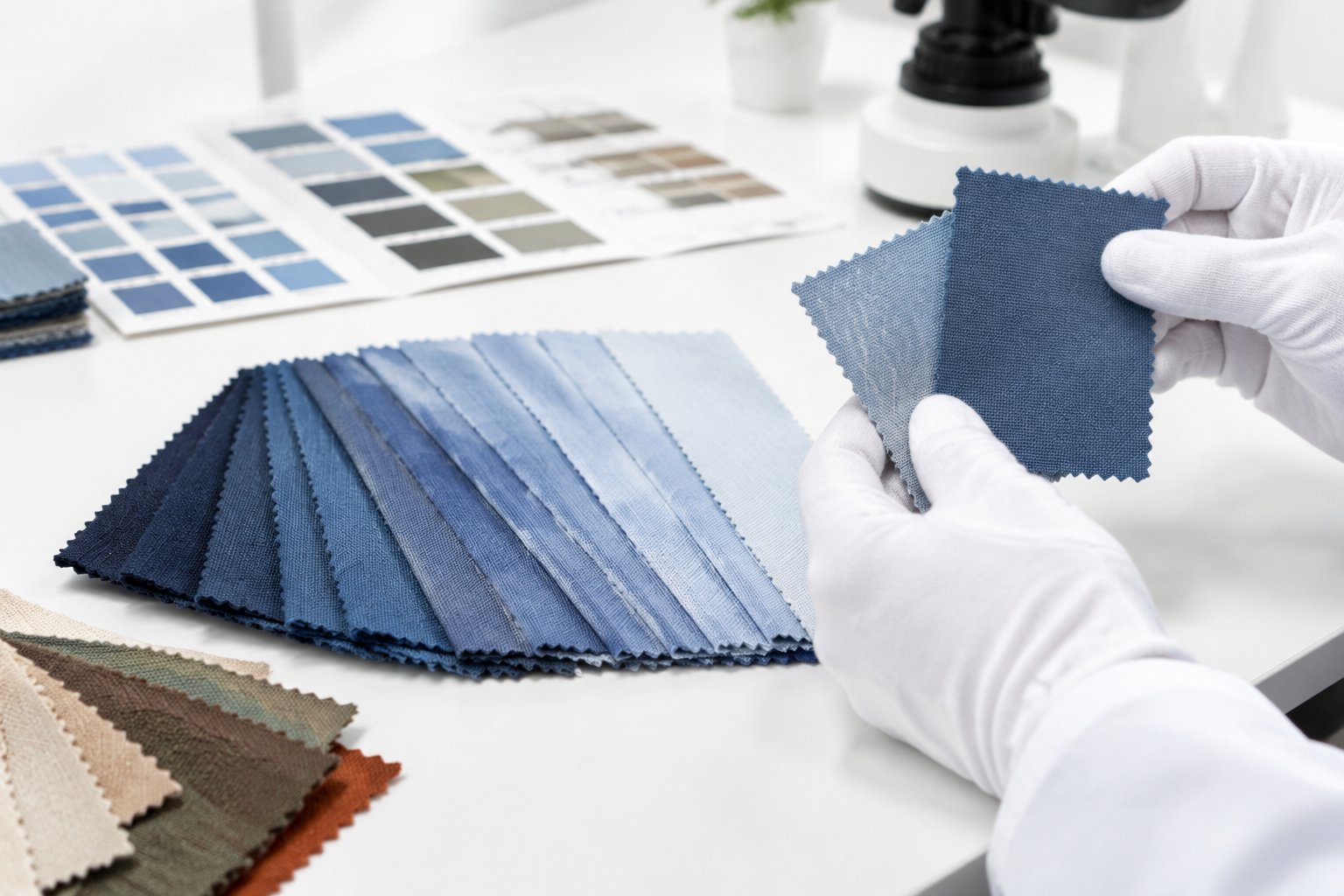
In textile manufacturing, lab dips connect color matching with a reproducible dyeing process. Their value comes from developing the shade on the intended fabric and preserving the details needed to transfer that result into production.
Levitex manufactures industrial and protective-workwear textiles and provides custom dyeing and printing. For these applications, color development also needs to account for the finishing route, since flame-retardant and repellent treatments influence the fabric’s final appearance.
How Does a Color Reference Become a Dyed Sample?
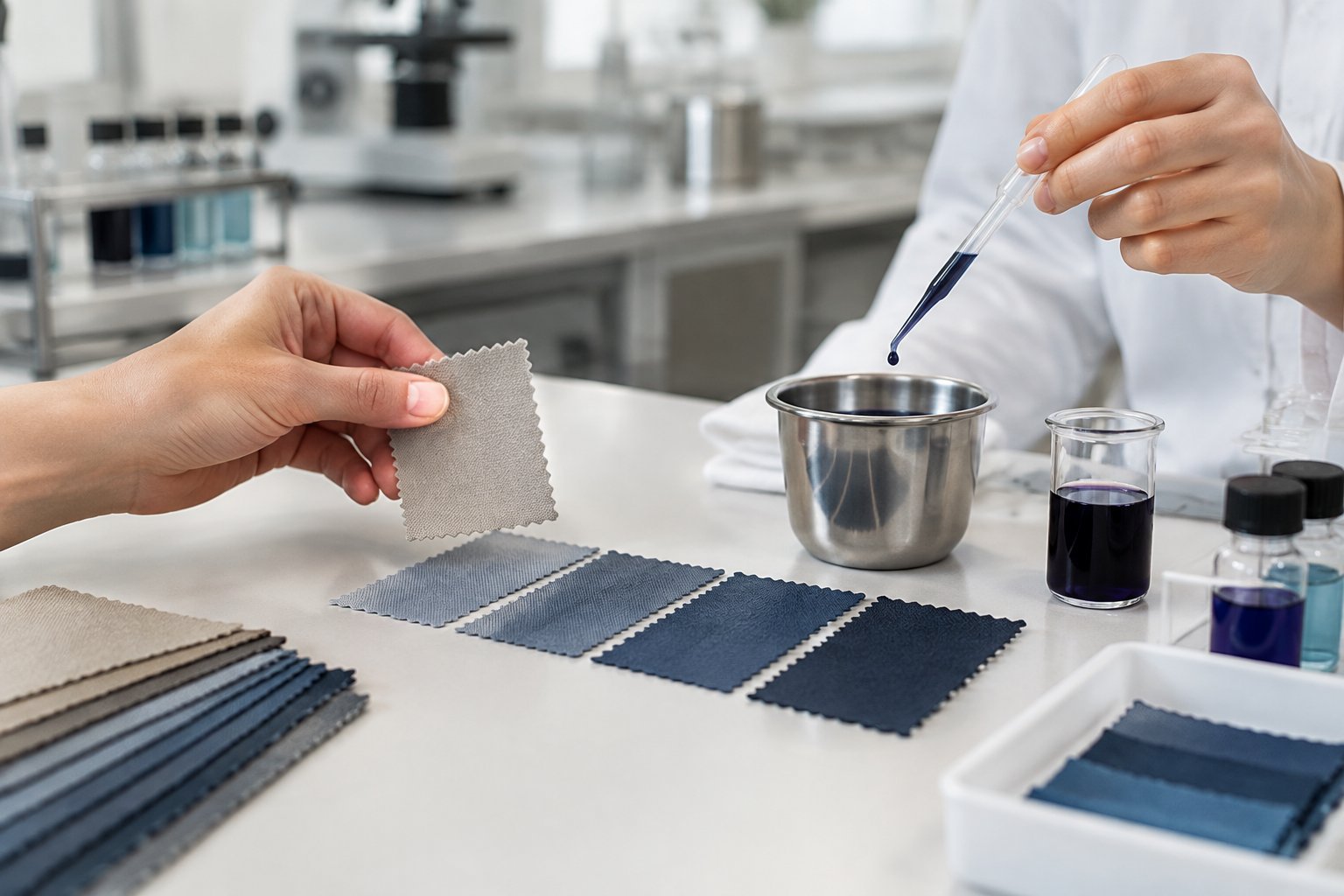
A dye house converts a color reference into a laboratory sample by selecting compatible dyes and reproducing a controlled dyeing sequence on the intended substrate. Every trial needs enough process detail to explain both the resulting shade and any subsequent correction.
Choose a Physical Color Standard and Define the Fabric
A physical color standard gives the colorist a stable target. Suitable references include a maintained textile color standard, an approved fabric swatch, or an identified previous-production sample.
A Pantone reference needs its complete code and reference system. If several color standards accompany the request, the buyer should specify which one governs acceptance when their appearances differ.
The development brief should identify:
- Fiber composition and blend percentages.
- Fabric construction, including weave or knit structure.
- Fabric weight in gsm and relevant surface treatment.
- Intended dyeing and finishing route.
- Required lighting conditions and colorfastness requirements.
- The controlling color standard and its identification.
Texture and preparation affect apparent shade. A smooth woven swatch and a brushed construction require separate evaluation, even when both carry the same composition and color designation.
Develop a Dye Recipe for the Actual Fiber Composition
The dye technician selects a dye formulation suited to the fibers and production method. Reactive dyes are widely used for cotton, disperse dyes for polyester, and acid dyes for nylon.
Cotton/polyester and cotton/nylon blends require attention to both fiber components. Their dye recipe must account for each component’s dye affinity and the intended balance of color across the fabric surface.
A spectrophotometer supports initial color development by measuring the standard and supplying data for formulation software. The colorist then evaluates the proposed dye formula against processing requirements and required fastness.
The distinction between reactive dyes and pigment dyes also affects development: reactive dyes bond with suitable fibers, while pigment coloration relies on a binder system. These routes require different recipes and processing controls.
Dye, Wash, Dry and Condition the Laboratory Sample
The lab dip process starts with prepared fabric of a recorded dry weight. The technician measures dye stock solutions, adds auxiliaries, and sets the liquor ratio, meaning the relationship between fabric weight and dye-bath volume.
A sample dyeing machine follows a programmed temperature and time profile. In a reactive-cotton process, controlled soda ash addition establishes alkaline conditions for fixation; the dosing sequence influences levelness.
After dyeing, washing removes unfixed dye and residual chemicals. The sample is then dried and conditioned at controlled temperature and humidity before assessment.
The laboratory record should capture dye concentration, water quality, pH, and dosing sequence alongside the machine program. Consistent chemical properties of cotton fabric help explain its response to processing, while differences in pretreatment still require control between laboratory and production material.
How Should Buyers Review and Approve the Shade?

Reliable lab dip approval combines controlled visual assessment with agreed instrumental criteria and a traceable written decision. The buyer and supplier need matching evaluation conditions so that both assess the same shade relationship.
Compare Physical Samples Under Agreed Lighting Conditions
The reviewer should place the standard and lab dip side by side in a maintained light booth with a neutral surround. Both pieces need consistent orientation and enough folded layers or backing to prevent the surface beneath them from affecting the comparison.
The approval brief should identify a primary illuminant, such as D65, plus relevant secondary lighting. For industrial workwear, the secondary source should reflect the specified evaluation environment.
Metamerism occurs when two samples match under one light source and differ under another. Reviewing the pair under each agreed illuminant reveals that mismatch.
The comparison should cover lightness, hue, and saturation. Sample labels and brightly colored surrounding objects should remain outside the immediate viewing area.
Use Spectrophotometer Readings and Agreed Delta E Tolerances
A spectrophotometer measures spectral reflectance and supports a numerical assessment of color difference. Delta E expresses that difference using a specified calculation method.
The approval agreement needs more detail than a number alone. It should define the delta E formula, illuminant and observer settings, measurement geometry, aperture, backing, and sample presentation.
There is no universal acceptance value for every fabric and shade. The buyer and dye house should agree a tolerance suited to the application and record any separate limits for lightness or hue.
Instrumental readings support visual judgment. Textured surfaces require consistent measurement positions, and fluorescent shades need a measurement setup appropriate to their optical behavior.
Record Specific Corrections and Retain the Approved Reference
Useful feedback describes the direction of the mismatch. A comment such as “Option B is too dark and too yellow under D65” gives the colorist a clearer correction target than “color inaccurate.”
Each submission should carry a unique sample number and revision. Approval records should identify the selected option, fabric specification, standard, evaluation conditions, date, and authorized approver.
Buyer and supplier should retain matching physical approval samples in protective storage away from light and contamination. The record should also state whether the original standard or approved lab dip governs subsequent bulk acceptance.
Development approval needs a defined production-release status. This avoids a selected shade being treated as authorization to proceed while another requirement remains unresolved.
What Can Change Between Lab Approval and Bulk Production?
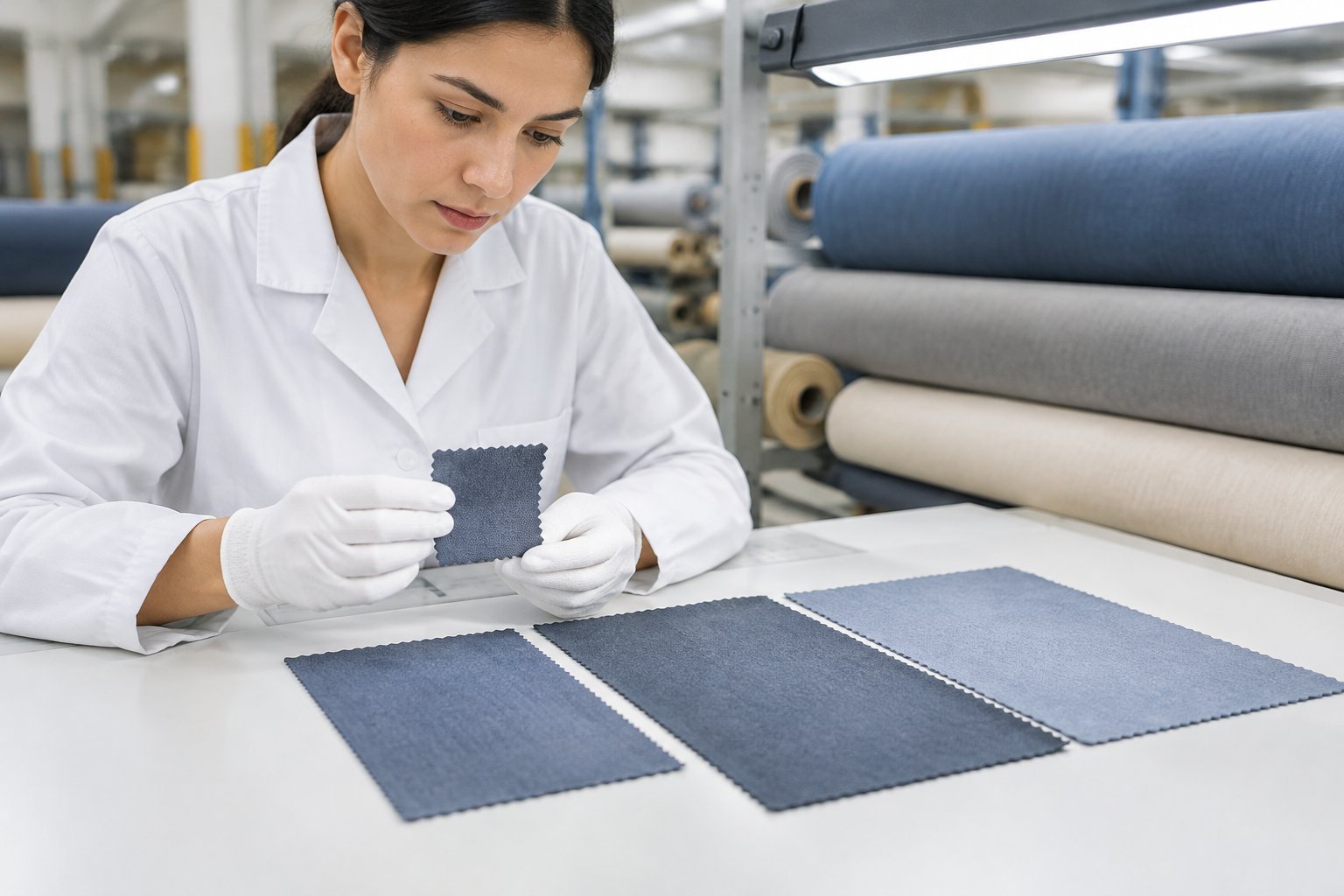
Production-scale equipment, fabric preparation, and finishing introduce variables that require a separate bulk shade check. An approved laboratory recipe provides the starting point for controlling those variables throughout fabric production.
Why Laboratory Recipes Need Production-Scale Validation
A lab dyeing machine handles a small, controlled sample. Bulk dyeing introduces different circulation patterns, loading conditions, and heat-transfer behavior.
Changes in liquor ratio or chemical dosing alter the conditions around the fabric. Differences in absorbency between prepared-fabric lots also affect dye uptake and shade consistency.
The production team therefore needs a documented scale-up procedure. Depending on the process, validation involves a pilot run or an initial production lot followed by shade assessment before further quantities proceed.
Any production correction should be recorded against the laboratory recipe. Untracked adjustments make repeat orders harder to reproduce and complicate investigations into color variation.
Check Shade After FR and Repellent Finishing
Final shade approval should evaluate fabric after its intended finishing sequence. Heat exposure and finish application affect surface appearance, including perceived depth and undertone.
Levitex offers FR plus water-repellent and FR plus oil-repellent finishing on 100% cotton, cotton/nylon (C/N), and cotton-rich cotton/polyester (CVC) base-fabric families. Color development for these combinations should identify the finish state of every submitted sample.
The specification should distinguish an intermediate dyed sample from a fully finished reference. Changes to fabric finishes require a review of their effect on the approved appearance.
For custom dyeing and printing on FR fabric, buyers should communicate the complete intended processing route before shade development begins.
Keep Color Approval Separate From Protective-Performance Evidence
A shade decision establishes acceptance of appearance under the agreed conditions. Protective performance requires its own product-specific evidence.
For industrial textiles, FR fabric quality control should track the approved construction and finishing specification alongside relevant test reports. Composition and weight alone establish no tested protection level.
Colorfastness also needs separate assessment. Applicable methods within the ISO 105 series address defined exposures, including washing, rubbing, and light.
For example, color fastness to washing evaluates shade change and staining after a specified laundering procedure. A visually accepted lab dip provides no substitute for that result.
Use Bulk Samples and Shade Bands to Check Production Consistency
Bulk fabric approval should use samples tied to identifiable production lots and rolls. An agreed sampling plan should assess variation along the fabric length and across its width.
A shade band brings representative production swatches together for comparison. It helps the buyer and mill identify the range within a shipment and establish acceptable shade groupings.
The bulk review should address:
- Agreement with the controlling approved reference.
- Side-to-side and lengthwise color consistency.
- Differences between dye lots.
- Roll identification and shade-group records.
Color consistency during garment manufacturing also requires shade-aware cutting. External garment manufacturers should maintain lot identification and keep components within approved shade groupings.
Approve a Traceable Shade, Then Verify the Bulk Fabric
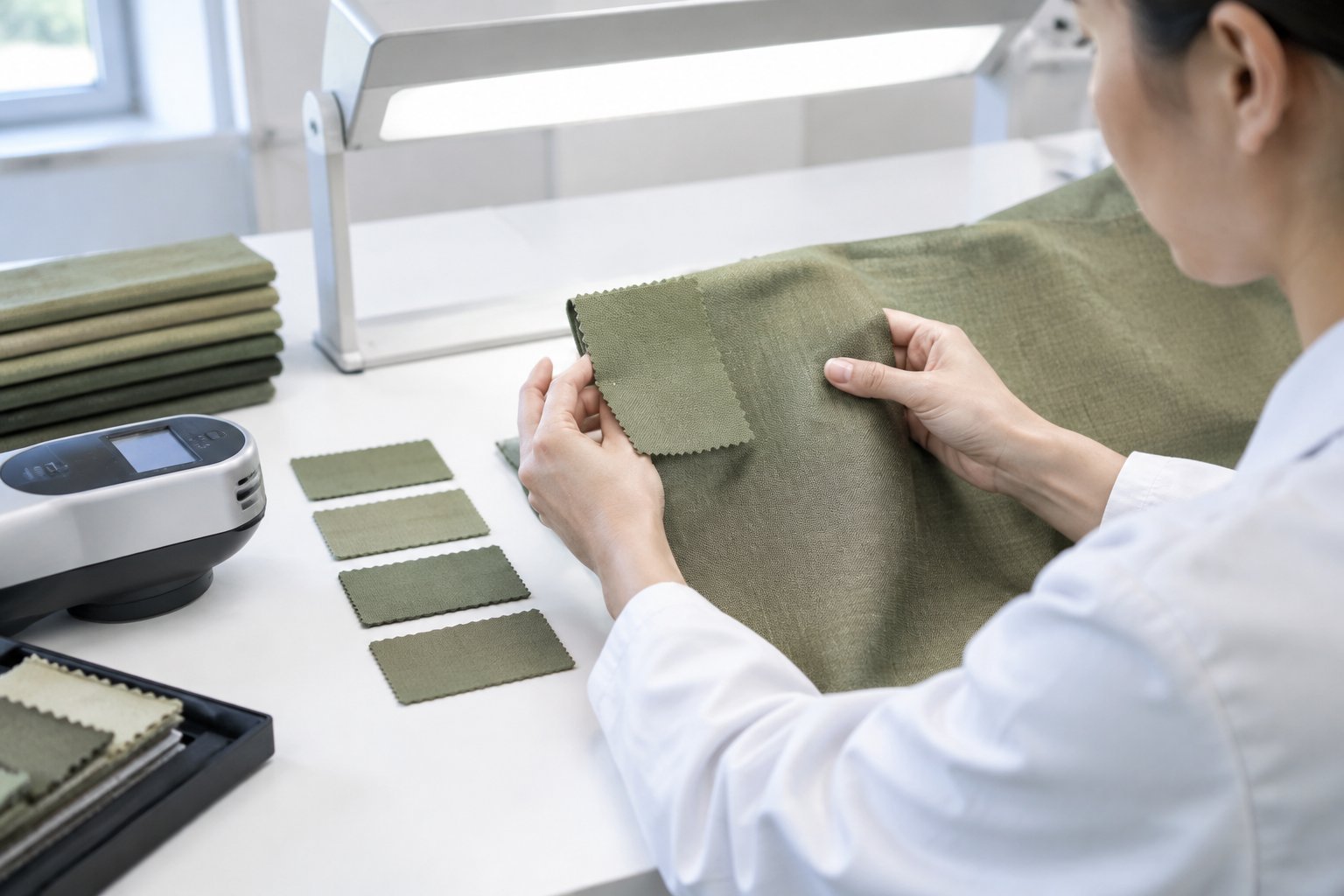
A dependable approval process preserves the connection between the color standard, the selected laboratory sample, and the finished bulk fabric. The release record should identify the approved shade and tolerance, with a separate checkpoint for production acceptance.
Levitex’s industrial textile buyers can discuss their color reference and intended finishing route with Sales Manager Charlie Luo at Charlie@levitex.com. A useful inquiry includes the base-fabric specification, required quantity, and existing color-approval requirements.
Frequently Asked Questions
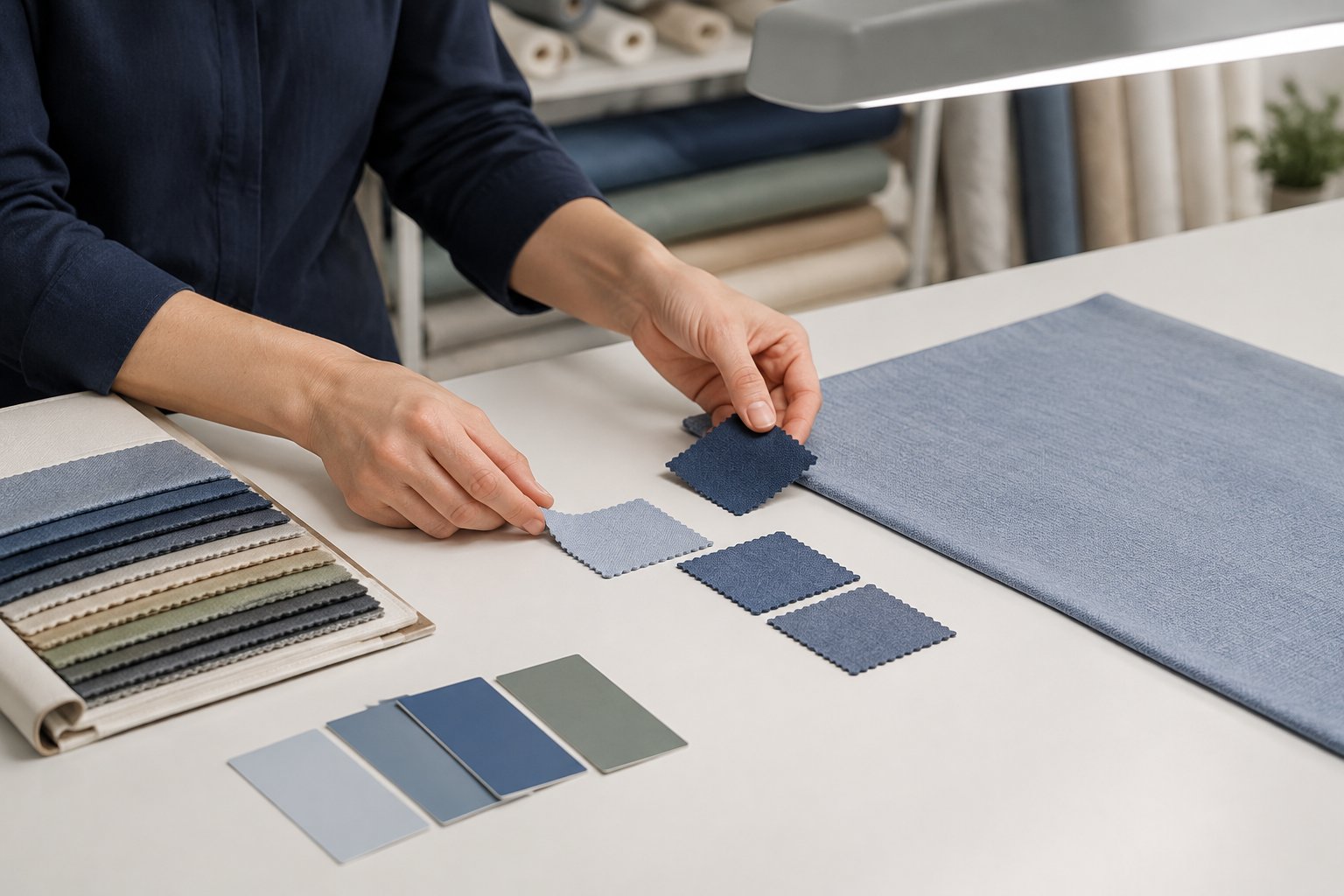
These approval questions concern sample purpose, reference quality, and the limits of laboratory matching.
What is the difference between a lab dip and a strike-off?
A lab dip evaluates a dyed shade; a strike-off evaluates a printed trial. A strike off also supports review of artwork reproduction and print placement or repeat, where applicable.
Can I approve a fabric lab dip from a photograph?
A photograph supports preliminary feedback, while dependable final approval requires physical evaluation. Camera processing and display settings alter apparent shade and conceal metamerism.
Is a Pantone reference enough to request a lab dip?
A complete Pantone reference establishes a starting color target. The request also needs the reference system, fabric specification, and intended finish so the laboratory develops the appropriate sample.
How long does lab dip approval take?
Approval takes the combined time for development, sample delivery, buyer review, and any revision rounds. The supplier should confirm the schedule against the specific fabric sampling and lead-time requirements.
Does an approved lab dip guarantee the bulk fabric will match?
An approved lab dip establishes the production shade target within agreed tolerances. Bulk samples still require review after finishing to verify the shipment’s color consistency.