
Reactive dyes suit cotton workwear requiring a soft handle and durable color because they bond chemically with cellulose; pigment dyes suit broader fiber combinations and printing applications because binders hold their color particles on the fabric. The comparison of reactive dyes vs pigment dyes centers on fixation chemistry, which influences processing and finished-fabric performance.
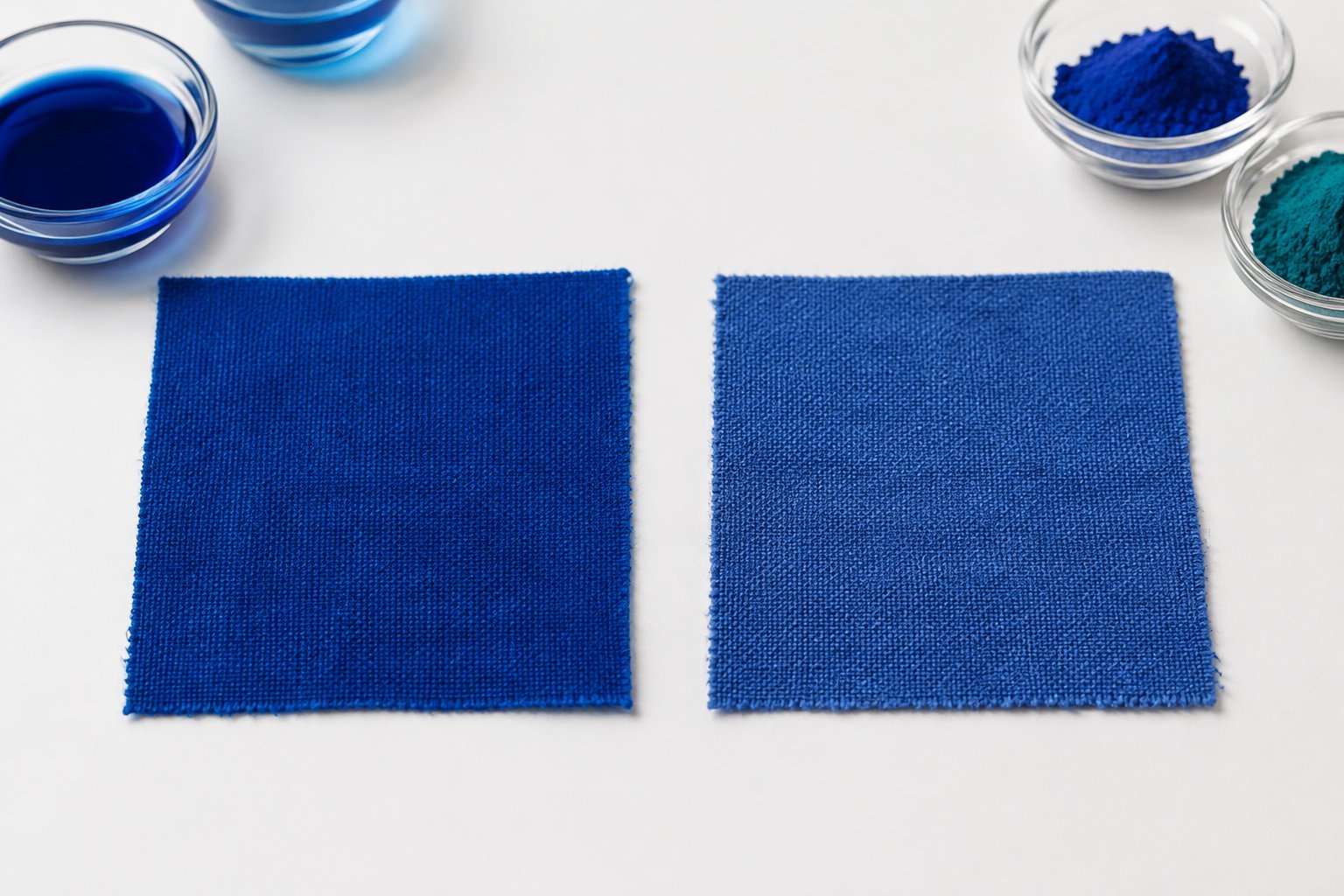
Neither route guarantees a particular fastness result. Reactive dye performance relies on fixation and thorough wash-off, while pigment performance relies heavily on binder formulation and curing.
Levitex manufactures flame-resistant fabrics and provides custom dyeing and printing for industrial workwear applications. For these textiles, color approval belongs alongside evaluation of the finished fabric’s protective treatment and intended laundering conditions.
How Does Each Coloring Method Attach Color to Fabric?
Reactive dyes form chemical bonds with compatible fiber groups, while pigments normally depend on a cured binder for attachment. This distinction applies across conventional textile printing and digital textile printing.
Reactive Dyes Form Chemical Bonds With Compatible Fibers
A reactive dye contains a chemical group that reacts with suitable sites on the fiber. In cotton processing, controlled alkaline conditions promote covalent bonding between the dye and cellulose.
The chemical properties of cotton provide the foundation for this reaction. Water also reacts with reactive dyes, producing hydrolyzed dye that requires removal during washing and soaping.
Compatibility extends to other cellulosic fibers, including viscose and linen. The broader label “natural fibers” needs qualification: wool and silk require reactive dye selections and processing conditions appropriate to their protein structure.
Pigments Normally Depend on Binders and Curing
“Pigment dye” is a common commercial term for coloration with insoluble pigment particles. These particles are dispersed in a liquid formulation and held on the textile by a polymer binder.
During curing, the binder forms a film and develops adhesion. Its chemistry and curing conditions influence flexibility and resistance to abrasion.
In pigment printing, the binder accompanies the pigment through the ink or paste system, sometimes with a separate pretreatment. As with other fabric finishes, application uniformity and compatibility with subsequent treatments affect the finished result.
Dyeing vs. Printing: Compare Equivalent Production Processes
A useful comparison pairs reactive dyeing with pigment coloration for solid shades, or reactive printing with pigment printing for patterned fabrics. Comparing a solid-dyed fabric against a heavily printed sample introduces differences in coverage and application method.
Reactive printing commonly involves fixation followed by wash-off. Pigment printing commonly involves drying and curing, with the precise sequence determined by the formulation.
Digital textile printing describes the application technology. Digital systems use different colorant chemistries, including reactive dye inks and pigment inks; the word “digital” alone establishes neither fixation method nor fastness.
What Changes in Handle, Shade, and Colorfastness?
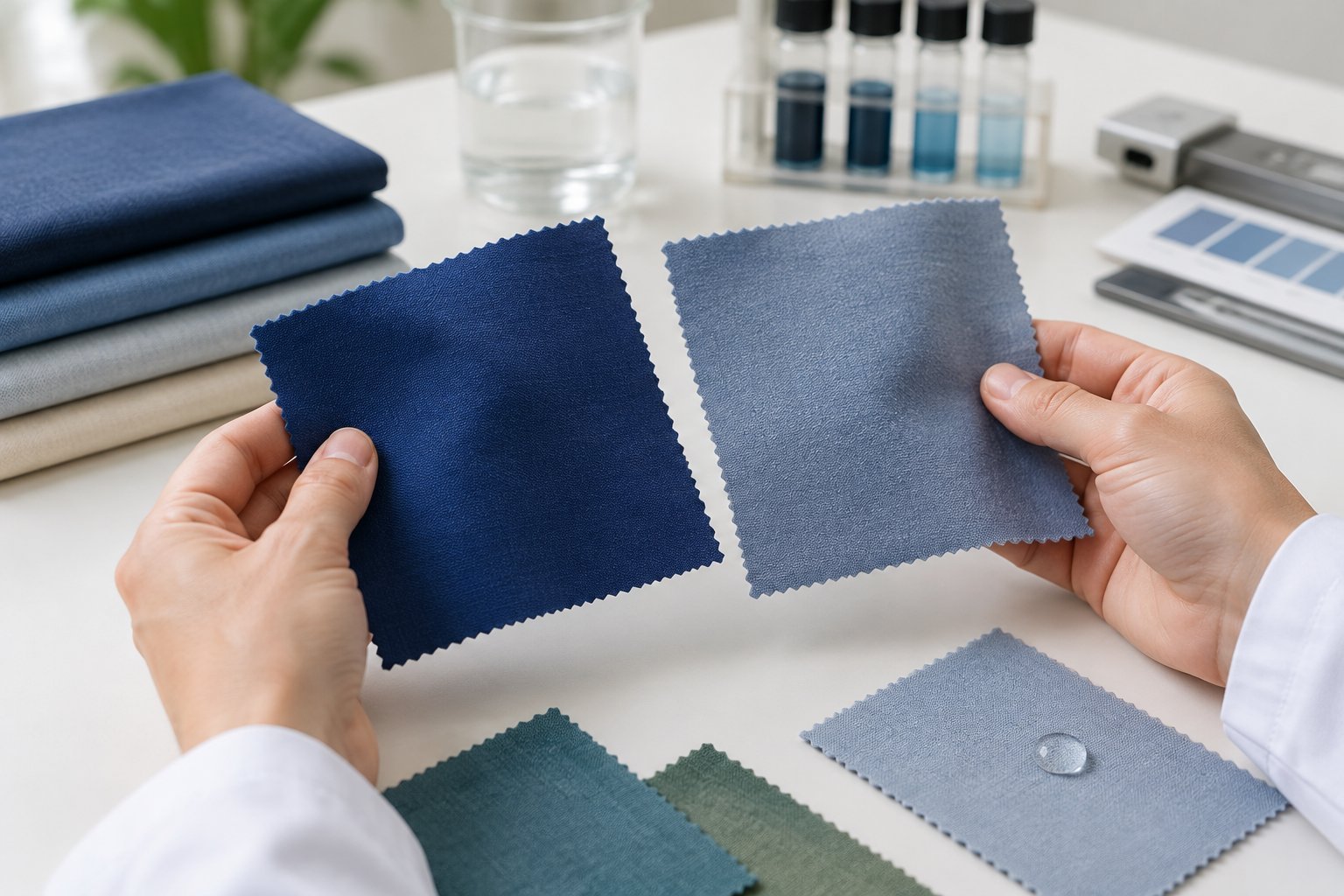
Reactive coloration preserves the fiber’s natural handle without requiring a pigment-binding film, while pigment coloration introduces a binder whose properties affect touch and wear. Shade and colorfastness remain formulation- and process-specific.
| Criterion | Reactive Dyes | Pigment Coloration |
|---|---|---|
| Color attachment | Covalent fiber bonds | Binder adhesion |
| Handle influence | No binder required | Binder-dependent |
| Shade development | Fiber and fixation-dependent | Pigment and coverage-dependent |
| Wash durability | Fixation and wash-off-dependent | Binder and cure-dependent |
| Rubbing durability | Surface residue-sensitive | Film and abrasion-sensitive |
| Processing demand | Fixation plus wash-off | Drying plus curing |
How Fixation and Binder Films Affect Fabric Handle
Reactive dyes add color without requiring a continuous binding film. After adequate wash-off, the fabric retains much of its underlying flexibility, although preparation and final finishing also influence softness.
Pigment handle depends on binder flexibility and application amount. A light print with a well-selected binder feels different from a high-coverage print containing substantial binder and opaque pigment.
For procurement, handle assessment should use the final finished sample. An unfinished color sample gives limited information about the stiffness introduced by later FR or repellent treatments.
What Determines Shade Depth and Batch Consistency?
Reactive shade development responds to dye selection and fiber preparation. Cotton absorbency, fixation conditions, and wash-off consistency influence the final color across a production lot.
Pigment shade responds to particle dispersion and deposited colorant quantity. Print coverage and fabric surface texture also affect the apparent depth; suitable opaque formulations support coverage over darker grounds.
Both routes require controlled color assessment. A practical approval specifies the reference standard, viewing illumination, and acceptable instrumental color difference, with checks after all finishing operations. Approval under a second light source helps identify metamerism between the standard and production fabric.
How Do Washing, Rubbing, and Light Exposure Affect Color?
For reactive fabrics, color fastness to washing reflects fixation quality and removal of loose or hydrolyzed dye. Pigment wash performance reflects the binder’s resistance to the specified detergent and wash conditions.
Color fastness to rubbing deserves separate assessment, especially for dark workwear shades. Wet rubbing adds moisture to the abrasion challenge, so a satisfactory dry result provides incomplete evidence.
Color fastness to light follows the photostability of the selected colorants. Certain pigments provide strong light resistance, while reactive dye selections differ substantially. Buyers should specify separate requirements for washing, rubbing, and light exposure, including the relevant test conditions.
Which Process Fits Industrial and FR Workwear Fabrics?
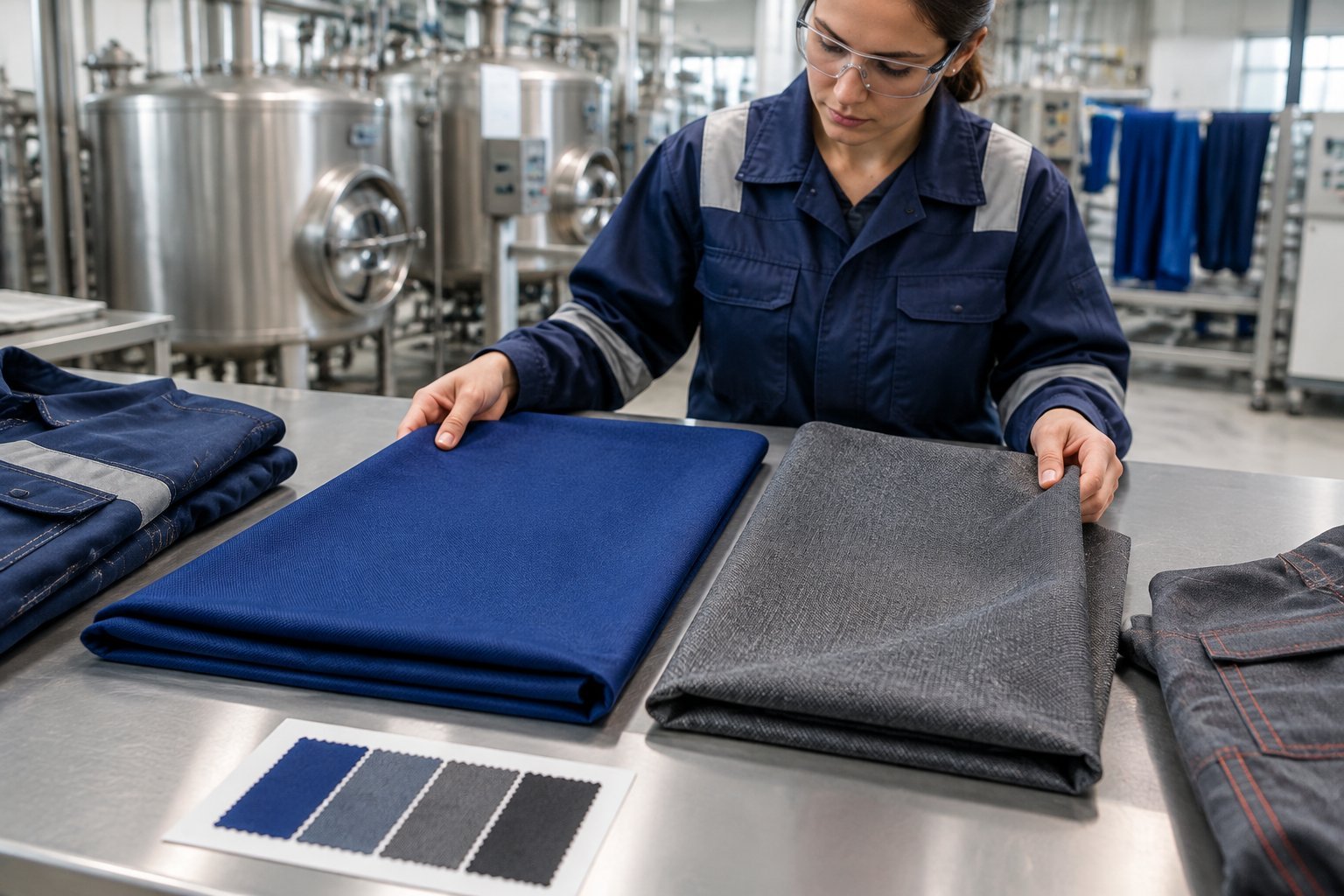
Industrial workwear needs a coloring route matched to its fiber composition and validated after protective finishing. Reactive dyes are suitable candidates for cellulosic components; pigment printing offers broader substrate applicability through binder adhesion.
Match the Coloring Route to Cotton, C/N, and CVC
Levitex’s main fabric families are 100% cotton, cotton/nylon (C/N), and cotton-rich cotton/polyester (CVC). Their different fiber compositions require different coloration plans.
On 100% cotton, reactive dyes color the cellulose component directly. In C/N, a reactive recipe selected for cotton requires separate evaluation of nylon coloration and the desired blend appearance.
For CVC, polyester requires a compatible coloring approach when both components need coloration. Solid shades commonly use disperse dyes for polyester alongside reactive dyes for cotton.
Pigment printing offers a shared surface-coloration approach across these blends. Binder adhesion still requires verification on the actual fabric, especially when prior finishes alter wetting.
Validate Coloration Alongside Flame-Retardant and Repellent Finishes
Colorants and auxiliaries become part of the finished textile system. Pigment binder add-on changes the material present at the fabric surface, while reactive coloration introduces processing conditions that must fit the chosen finishing sequence.
Multi-functional FR finishing compatibility therefore requires evaluation using the complete production recipe. A color change involving a different binder, auxiliary package, or curing schedule warrants technical review.
Levitex offers FR plus water-repellent and FR plus oil-repellent finishing on all three base-fabric families. Performance approval should address the final construction and treatment combination through product-specific reports. Chemical liquid repellency also requires separate assessment from barrier-based chemical protection.
Compare Processing Costs, Water Use, and Effluent Treatment
Reactive processing requires resources for fixation and removal of unfixed dye. Conventional cotton reactive dyeing also introduces salt and alkali into the wastewater stream, creating demands for effluent treatment.
Pigment printing reduces post-print washing where the approved system uses drying and curing without wash-off. Its environmental assessment still includes curing energy, binder chemistry, and equipment-cleaning wastewater.
A defensible cost comparison includes:
- Fabric preparation and colorant consumption.
- Fixation, washing, drying, and curing energy.
- Water supply and wastewater treatment.
- Setup losses, rejected material, and reprocessing.
- Required fastness and protective-performance testing.
Claims of lower cost or lower environmental impact need a defined production boundary and comparable finished-fabric requirements.
What Should Buyers Confirm With Levitex Before Ordering?
Buyers should confirm the proposed chemistry and approval sequence for the exact fabric. Levitex’s custom dyeing and printing for FR fabric serves textile procurement; finished-garment design and assembly remain outside its offering.
A focused request should identify composition, construction, weight, target shade or artwork, and intended laundering conditions. It should also specify relevant fastness requirements and required protective finishes.
Levitex provides a test report for each product. Buyers should confirm that the relevant report covers the ordered specification and requested tests. Color approval alone establishes no protective-performance claim.
For a project-specific discussion, buyers can email Sales Manager Charlie Luo at Charlie@levitex.com with the fabric specification and color reference.
Choose the Coloring Route by Fabric and Verified Performance
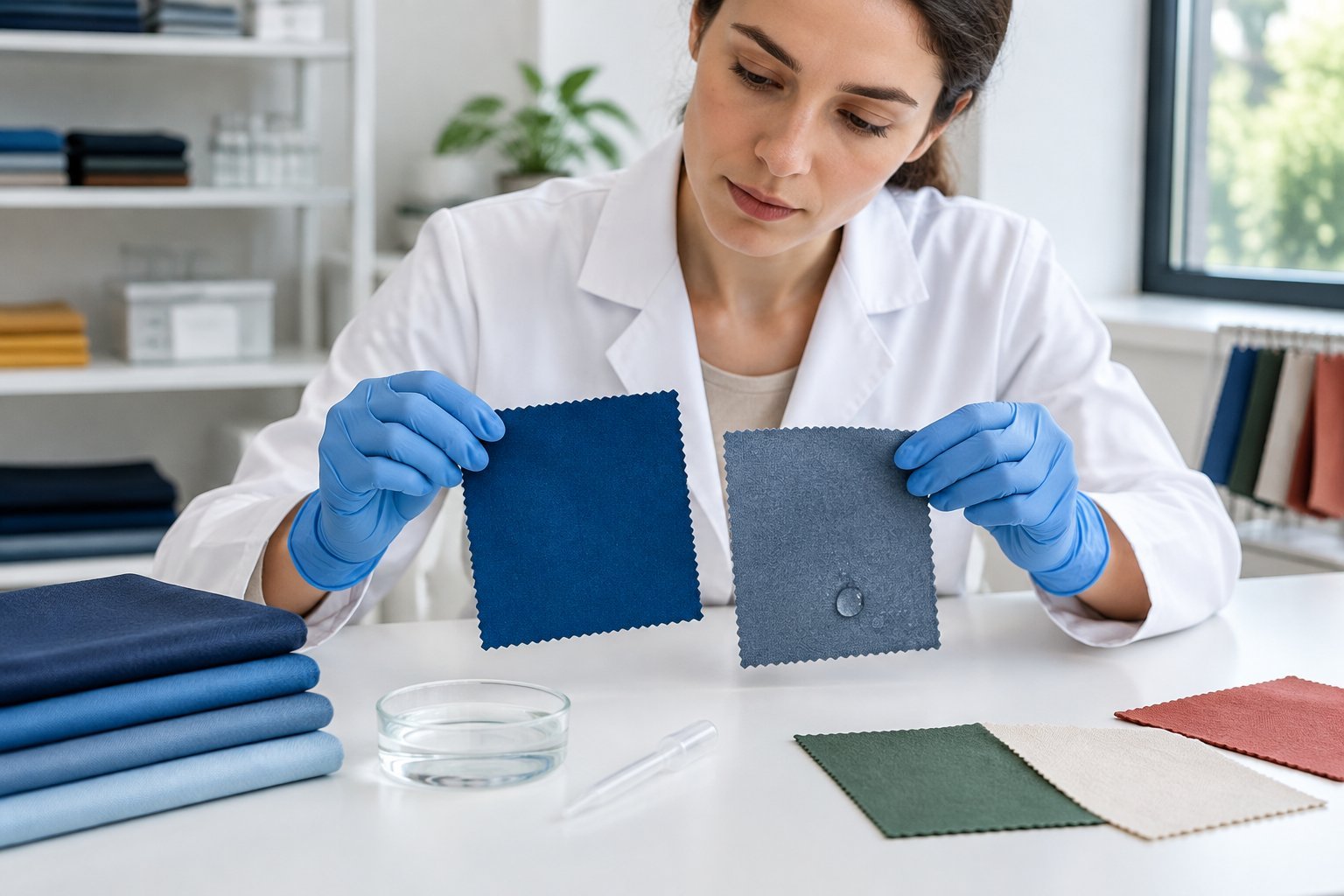
Reactive dyes provide chemically bonded coloration on compatible fibers, while pigment systems offer binder-based coloration across a wider range of substrates. Each route supports industrial fabrics when its process is matched to the required performance.
Procurement approval should combine the finished sample with defined colorfastness requirements. Wash fastness needs a stated method and laundering conditions; rubbing and light exposure require their own acceptance criteria.
For FR textiles, fabric quality control should connect the approved shade and finishing recipe to the production batch. The purchase specification should identify the accepted sample and the product-specific reports required before shipment.
Frequently Asked Questions
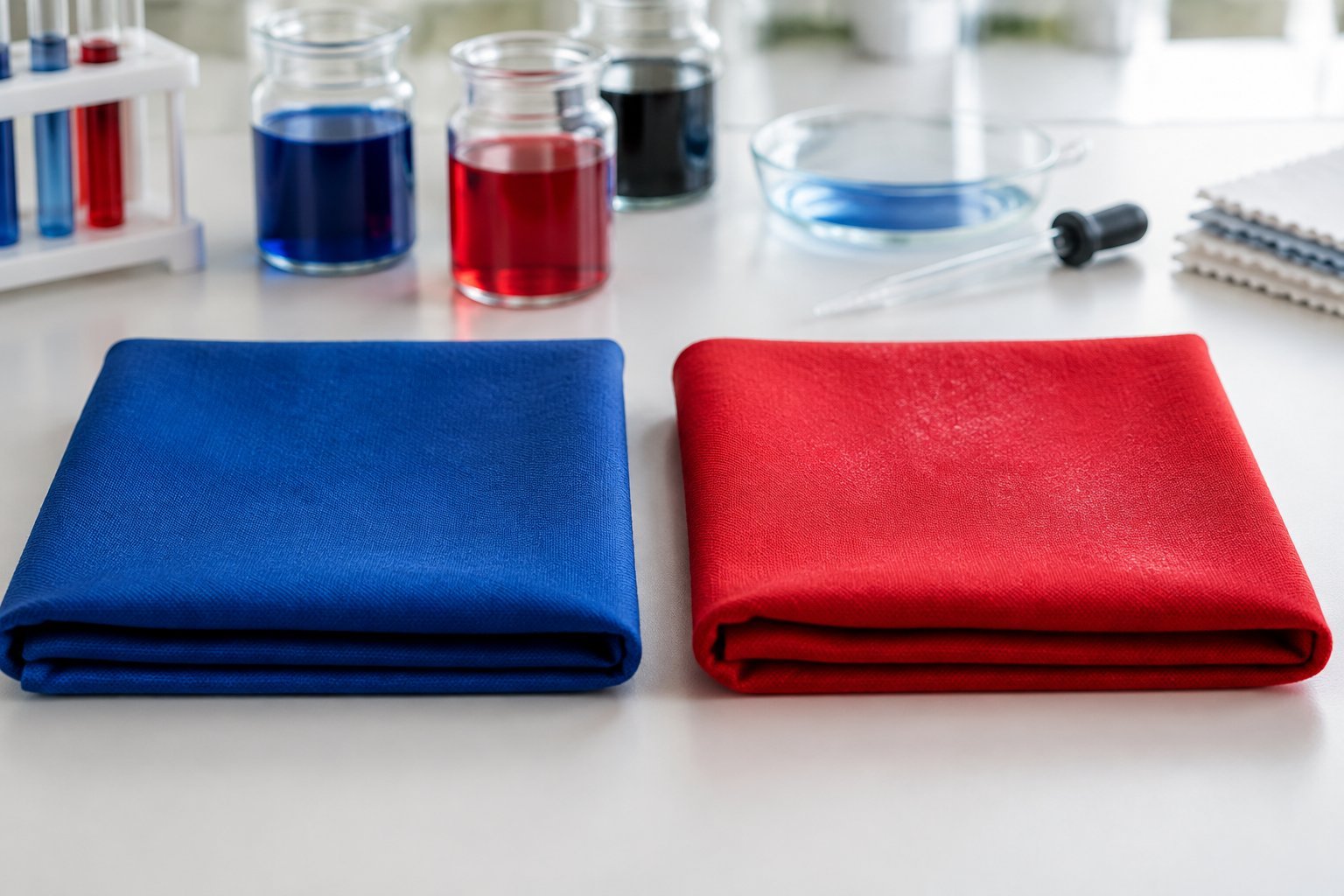
Reactive and pigment coloration differ primarily in attachment chemistry. The following answers clarify common purchasing questions.
What is the difference between pigment dye and reactive dye?
Reactive dye forms chemical bonds with compatible fibers. Pigment coloration normally uses a cured binder to hold insoluble color particles on the textile.
Can you give an example of a reactive dye?
C.I. Reactive Blue 19 is an example of a reactive dye used for cellulosic textiles. Its suitability for a workwear specification requires evaluation within the complete dyeing and finishing recipe.
Do reactive dyes always have better wash fastness than pigments?
Neither colorant class guarantees superior wash fastness. A properly cured pigment system supports durable coloration, while incomplete reactive wash-off leaves loose dye that affects washing results.
Can reactive dyes color every fiber in a cotton blend?
Reactive dyes selected for cotton color its cellulose component. Polyester needs a compatible separate dye class, while nylon coloration requires chemistry and processing appropriate to that fiber.
Does pigment printing affect flame-retardant fabric performance?
Pigment printing adds binder and other formulation components that influence the finished fabric’s behavior. FR performance requires verification on the printed, finished construction under the specified preparation and laundering conditions.