
Cotton/nylon suits railway workshop work that demands abrasion durability, cotton-rich CVC suits programs prioritizing shape retention and cost, and appropriately FR-finished cotton suits tasks requiring absorbent heat-and-flame protective workwear. For trackside duties, railway workwear fabric also needs verified visibility performance within the operator’s approved garment specification.
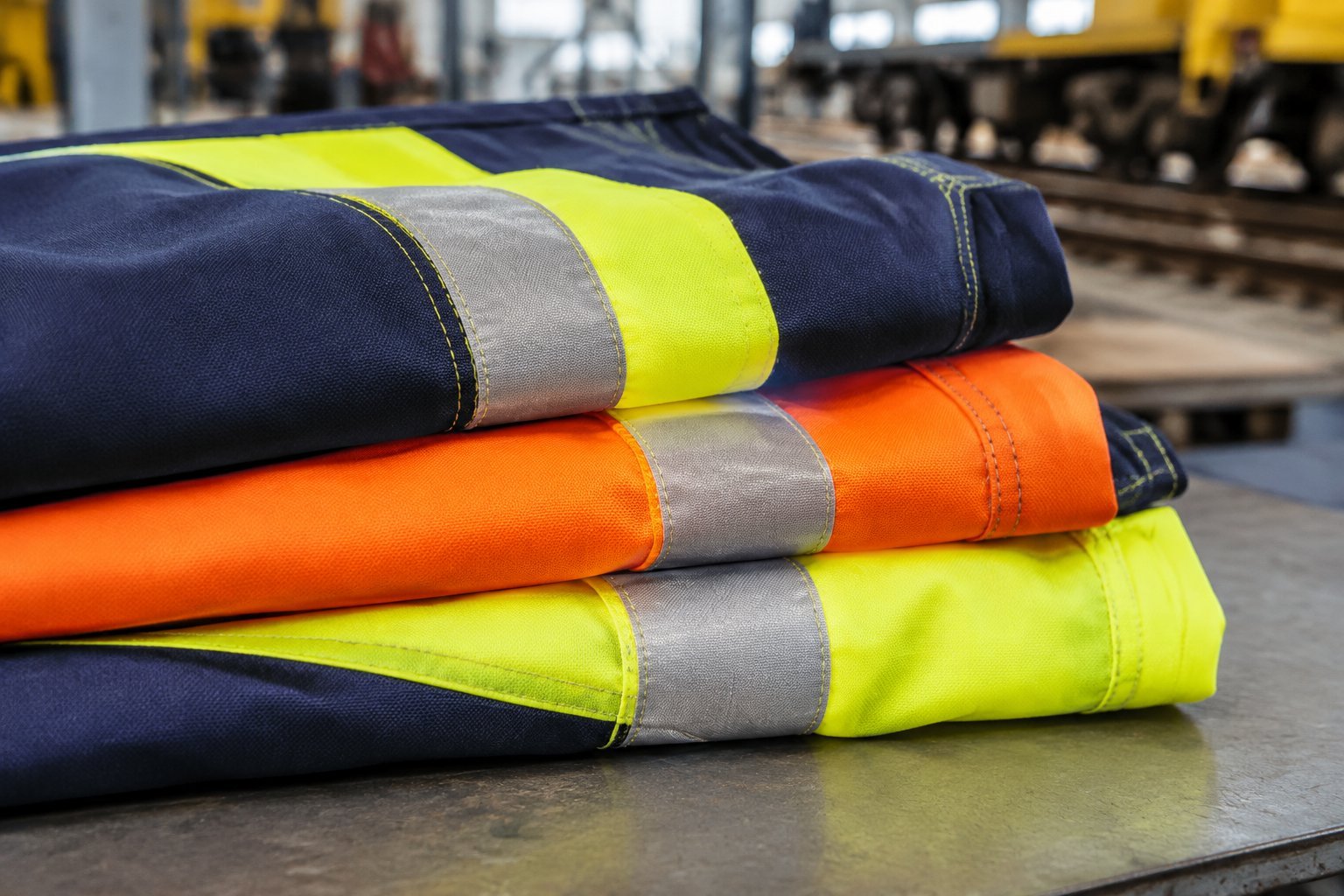
The purchasing challenge is matching those material choices to separate hazards. A durable workshop cloth, a fluorescent background fabric, and an arc-rated textile each serve different protective functions. One property establishes little about the others.
Levitex manufactures industrial workwear textiles in 100% cotton, cotton/nylon, and cotton-rich cotton/polyester families. Its manufacturing experience dates to 1951, with production focused on fabrics for protective applications.
Which Fabric Requirements Apply to Each Railway Task?
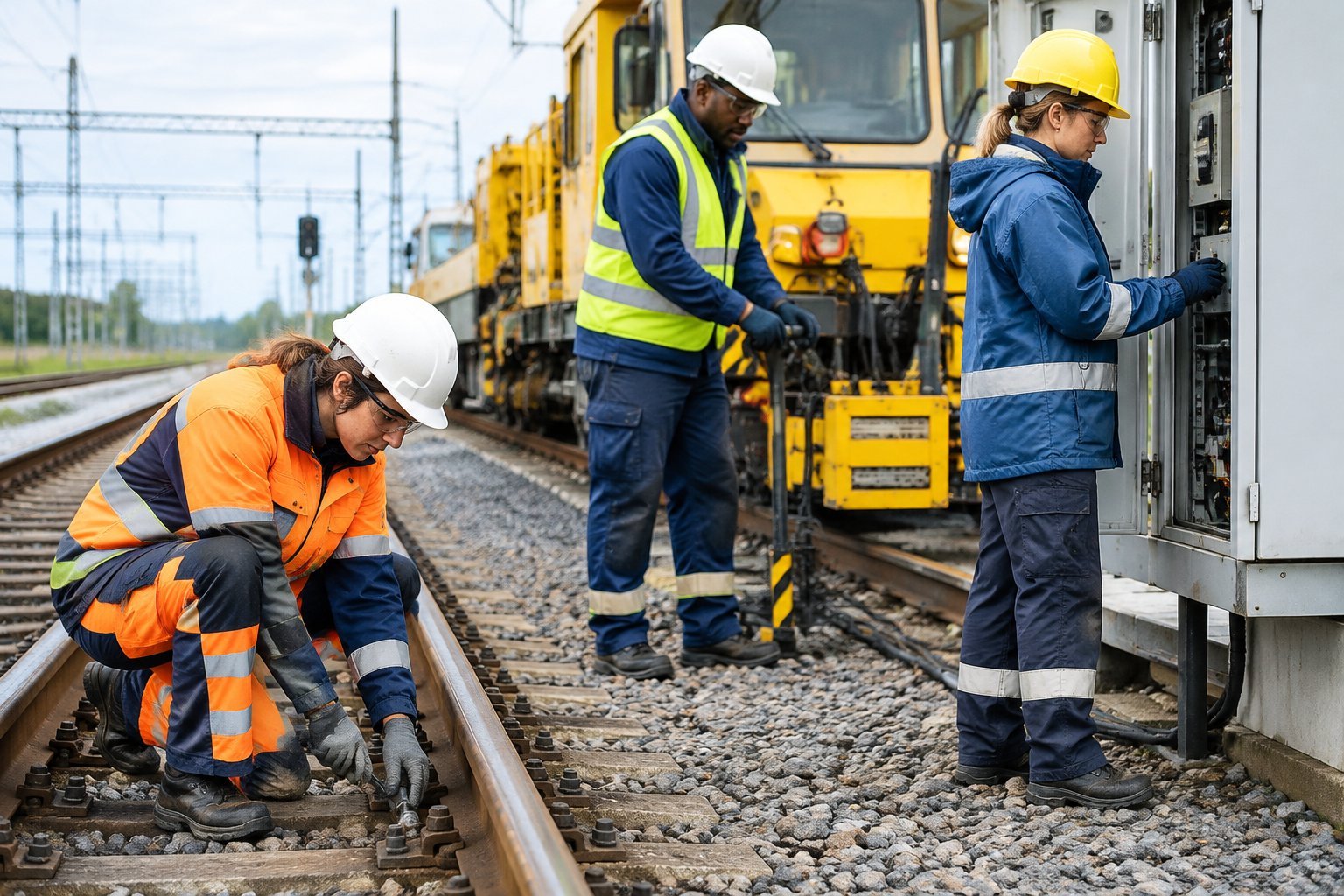
Railway clothing requirements follow the worker’s exposure and the operating jurisdiction. Trackside visibility, workshop durability, and thermal protection require separate specifications, even when a single garment must address several hazards.
Trackside Visibility: EN ISO 20471 and UK RIS-3279-TOM
Trackside high-visibility clothing needs fluorescent background material for daytime conspicuity and retroreflective material for visibility under illumination. EN ISO 20471 addresses material performance and garment design, including minimum visible areas. UK RIS-3279-TOM adds rail-specific requirements involving fluorescent orange background material.
For US purchasing, the applicable railroad rules and employer hazard assessment establish the specification. ANSI/ISEA 107 is a relevant US high-visibility apparel standard; European and UK requirements apply when the contract or operating network specifies them.
Programs requiring high visibility and flame resistance need evidence for both functions. Fluorescent color alone establishes neither the required garment class nor thermal protection.
Workshop Maintenance: Abrasion, Tearing and Grease Exposure
Workshop fabrics face repeated contact with equipment edges, rough surfaces, and contaminated components. Abrasion resistance addresses surface wear; tear resistance concerns the spread of an existing cut. Tensile strength describes resistance to pulling forces.
Purchasing specifications should distinguish these properties. A dense cloth that withstands rubbing still needs suitable tear performance for snag-prone duties.
Grease exposure adds cleaning demands. Fabric trials should assess soil release and changes after the intended laundry process. Persistent oily contamination also requires attention wherever heat or ignition sources are present.
Heat, Flame and Electrical Tasks: Separate Protection Requirements
Welding, thermal cutting, and electrical maintenance require protection selected for their specific exposures. EN ISO 11612 addresses heat and flame protection; EN ISO 11611 addresses welding and allied processes. Neither designation establishes an electric arc rating.
US electrical programs use the employer’s electrical safety assessment and applicable requirements to determine protective clothing. Arc-rated fabric requires dedicated evidence relevant to electric arc exposure.
Ordinary cotton remains combustible, and untreated synthetic blends introduce melting concerns. Levitex’s general product reports establish only the properties covered by each report; dedicated arc performance requires separate supporting evidence.
Why Fabric Properties Do Not Establish Garment Compliance
Finished-garment assessment includes fabric performance alongside construction details. Reflective tape placement, exposed material area, closures, seams, and trim compatibility affect the result.
A qualifying background material loses usable visible area when pockets or branding cover it. Similarly, a protective base cloth requires compatible components throughout the garment.
The garment manufacturer must evaluate the completed design against the applicable standard and operator specification. Textile documentation supports that process within its stated scope.
How Do Cotton, Cotton/Nylon and CVC Compare?
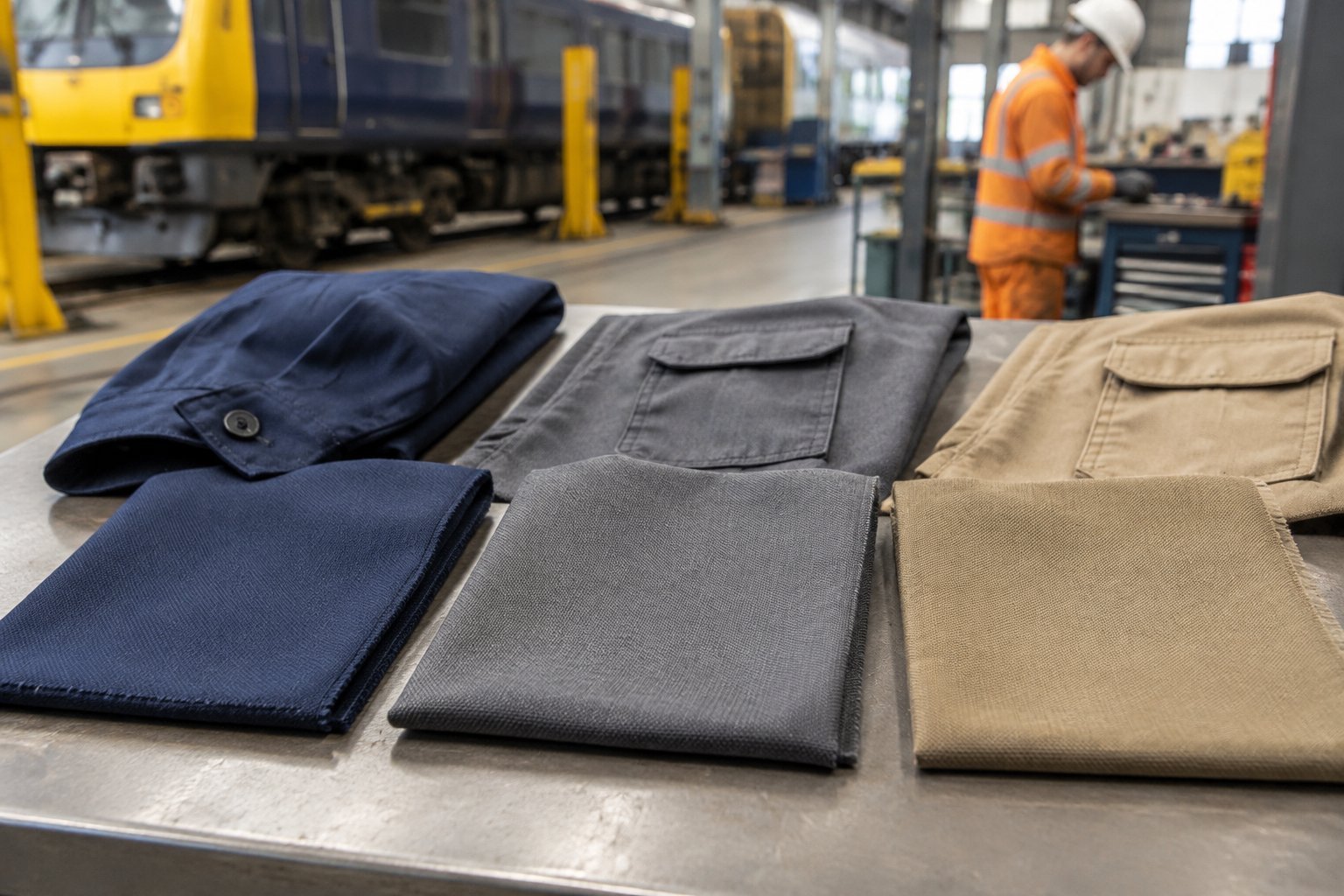
Cotton favors absorbency, cotton/nylon adds a mechanical-durability option, and cotton-rich CVC supports dimensional stability with a different cost balance. Yarn selection and finishing determine the performance of the purchased cloth.
| Selection factor | 100% cotton | Cotton/nylon | Cotton-rich CVC |
|---|---|---|---|
| Composition | Cotton | Cotton and nylon | Cotton-majority cotton/polyester |
| Main selection benefit | Absorbency | Durability potential | Shape-retention potential |
| Comfort consideration | Retains absorbed moisture | Construction-dependent hand | Blend-dependent moisture handling |
| Cost consideration | Cotton-price exposure | Nylon and processing costs | Ratio and dyeing costs |
| Thermal qualification | FR treatment and testing | Blend-specific FR testing | Blend-specific FR testing |
These comparisons describe substrate characteristics. They establish no product-specific protection level or service life.
100% Cotton: Absorbency and Comfort With Appropriate FR Finishing
Cotton absorbs moisture and offers a familiar hand for industrial workwear. It suits applications where skin comfort and moisture absorption carry substantial weight in material selection.
Absorbency also means retained water. During wet or cold work, drying behavior needs assessment across the clothing system. Fabric density and finishing influence air movement through the cloth.
For thermal duties, 100% cotton requires appropriate FR treatment and relevant testing. Buyers should evaluate the finished textile’s strength and hand because treatment changes the base cloth’s characteristics.
Cotton/Nylon: Evaluating Mechanical Durability Alongside Comfort
Cotton/nylon blends introduce nylon to improve mechanical durability in a cotton-based construction. They warrant consideration for workshop trousers and coveralls exposed to frequent rubbing.
The properties of cotton/nylon blends also reflect yarn quality, blend ratio, and weave. A composition statement alone provides insufficient detail for predicting wear life.
Useful comparisons hold finished weight and construction as consistent as practical. Buyers should compare abrasion results and retained tear strength after laundering, then assess stiffness and mobility in garment samples. Thermal suitability requires evidence for the exact finished blend.
Cotton-Rich CVC: Balancing Dimensional Stability, Comfort and Cost
CVC denotes a cotton-rich cotton/polyester blend. Its polyester component supports dimensional stability and changes drying behavior, while the cotton majority contributes absorbency and a cotton-oriented hand.
For repeated-laundry programs, CVC versus 100% cotton deserves comparison at the finished-fabric level. Shrinkage after the intended wash process affects garment sizing and replacement consistency.
CVC pricing reflects more than fiber cost. Blend ratio, dyeing requirements, finishing, and production losses influence the quotation. Thermal applications require particular attention to the finished blend’s flame behavior, shrinkage, and melting characteristics.
Twill vs. Ripstop: Choosing Construction and Weight for the Task
Twill provides a diagonal structure widely used in industrial workwear. Its drape and surface characteristics suit many trouser and coverall constructions, subject to the selected yarns and density.
Ripstop fabrics incorporate reinforcing yarns in a grid. That structure aims to restrict tear propagation; puncture resistance remains a separate property. Comparisons should include measured fabric tear strength in both principal directions.
Weight selection also affects heat burden and movement. Kneeling workshop duties and active outdoor inspection impose different demands, so heavier cloth requires justification through task performance and wear trials.
How Do Finishes and Laundering Affect Fabric Selection?
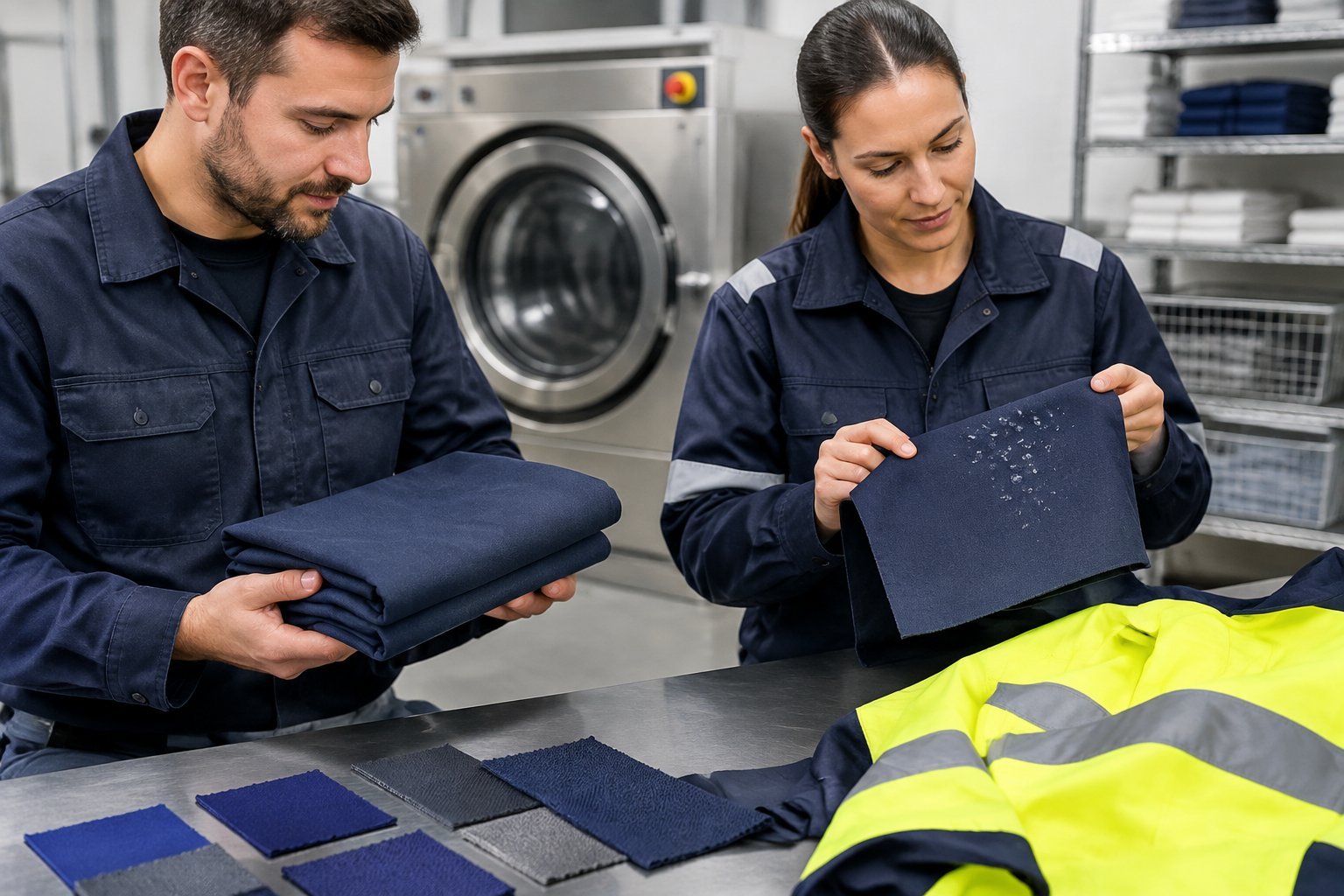
Finishing and laundering determine how the selected substrate performs during service. Repellency, fluorescent color, and FR behavior each need verification after the care process specified for the railway program.
Water and Oil Repellency Are Not Waterproof or Chemical Barriers
Water-repellent finishes reduce surface wetting, while oil-repellent finishes resist wetting by specified oils. Waterproof systems address water penetration under defined conditions and require attention to seams at garment level.
The distinction between waterproofness, water resistance, and repellency is important for outdoor rail duties. A surface finish provides limited information about protection during sustained rain.
Levitex offers FR plus water-repellent and FR plus oil-repellent finishing on 100% cotton, cotton/nylon, and CVC fabrics. Its chemical-repellent fabrics use post-treatment finishing for liquid repellency; chemical-barrier protection requires evidence specific to the substance and exposure.
Fluorescent Colour, Soiling and Washing: What Requires Verification?
Fluorescent material needs assessment against the required color boundaries and luminance criteria. A visual match to an orange sample provides a color-development reference, with compliance established through the specified testing.
Ballast dust and grease reduce exposed fluorescent area. Washing introduces further changes through fading, shrinkage, and finish loss. Color fastness to washing provides useful information, while high-visibility qualification requires its own applicable measurements.
The intended laundry process belongs in the specification. Industrial laundering affects FR fabric and repellency according to the treatment chemistry and care conditions. Any reapplication of repellency needs approval for the particular protective textile.
Specifying Levitex Fabrics and Requesting Relevant Product Evidence
Levitex supplies textiles and offers custom dyeing, including fluorescent dyeing, plus custom printing. Fluorescent dyeing capability supports color development; high-visibility performance requires product-specific verification.
A focused fabric inquiry should identify:
- Base composition and woven or knitted construction.
- Finished weight, usable width, and required color.
- Task exposures and applicable material test requirements.
- Intended laundering process and requested finishes.
- Order quantity, color quantities, and delivery needs.
Levitex provides a test report for each product. Buyers should check its identification and scope against the proposed cloth as part of FR fabric quality control.
The minimum order quantity and production timing require quotation for the requested specification. Buyers seeking fabric for an approved garment program can contact Sales Manager Charlie Luo at Charlie@levitex.com. A railway clothing supplier or garment manufacturer remains responsible for finished-clothing construction and approval.
Match the Fabric to the Task and Verify the Complete Garment
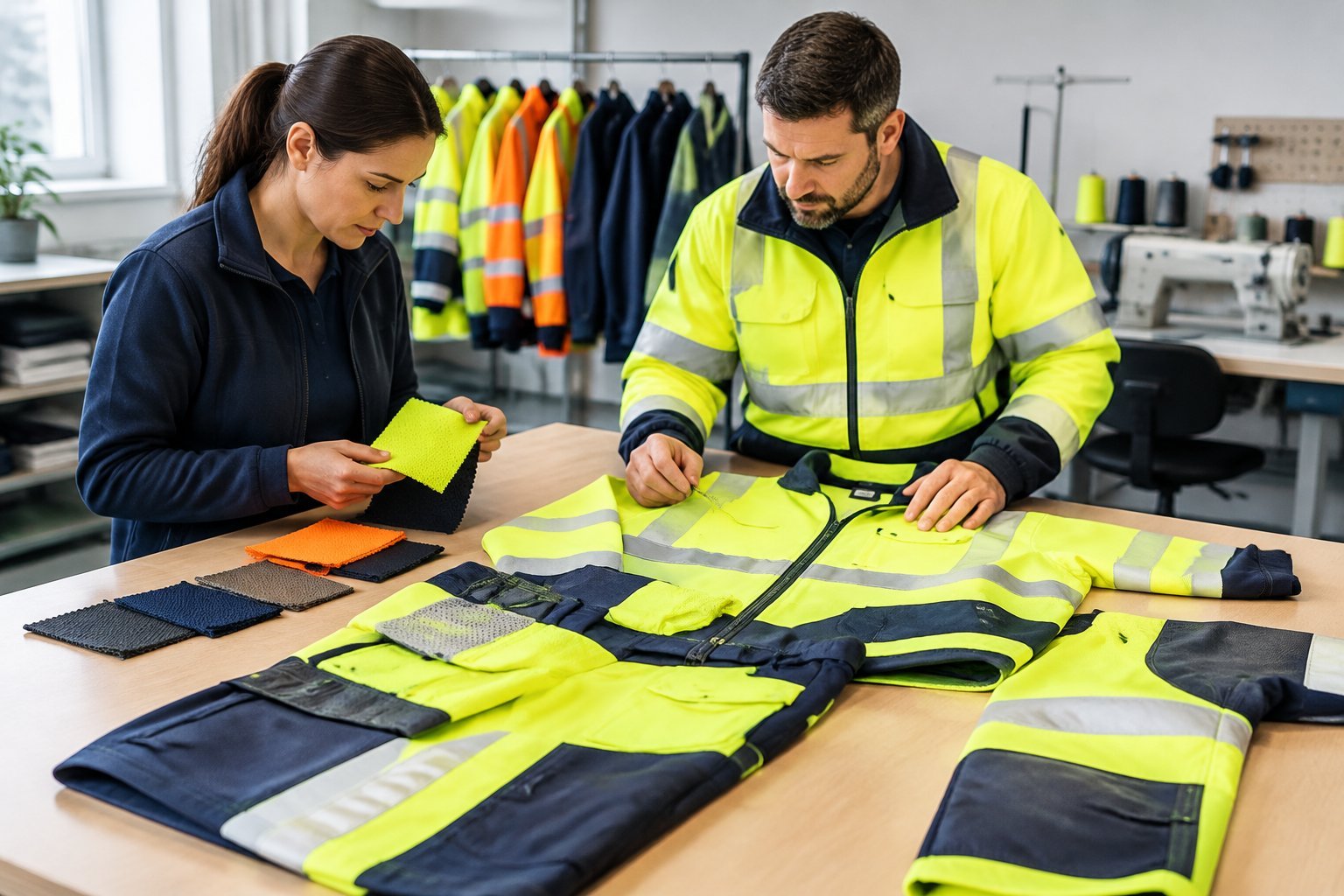
Effective railway workwear starts with a task-specific fabric choice and ends with verification of the completed clothing.
Trackside programs require visibility evidence against the applicable operator specification. Workshop programs need mechanical durability and practical cleaning performance. Heat, flame, and electrical duties require separate protective qualification.
Cotton, cotton/nylon, and CVC each provide useful starting points. The purchase specification should connect the chosen substrate to the required construction, finishing, and care process. Garment approval must then account for reflective materials, seams, closures, and the complete design.
Frequently Asked Questions
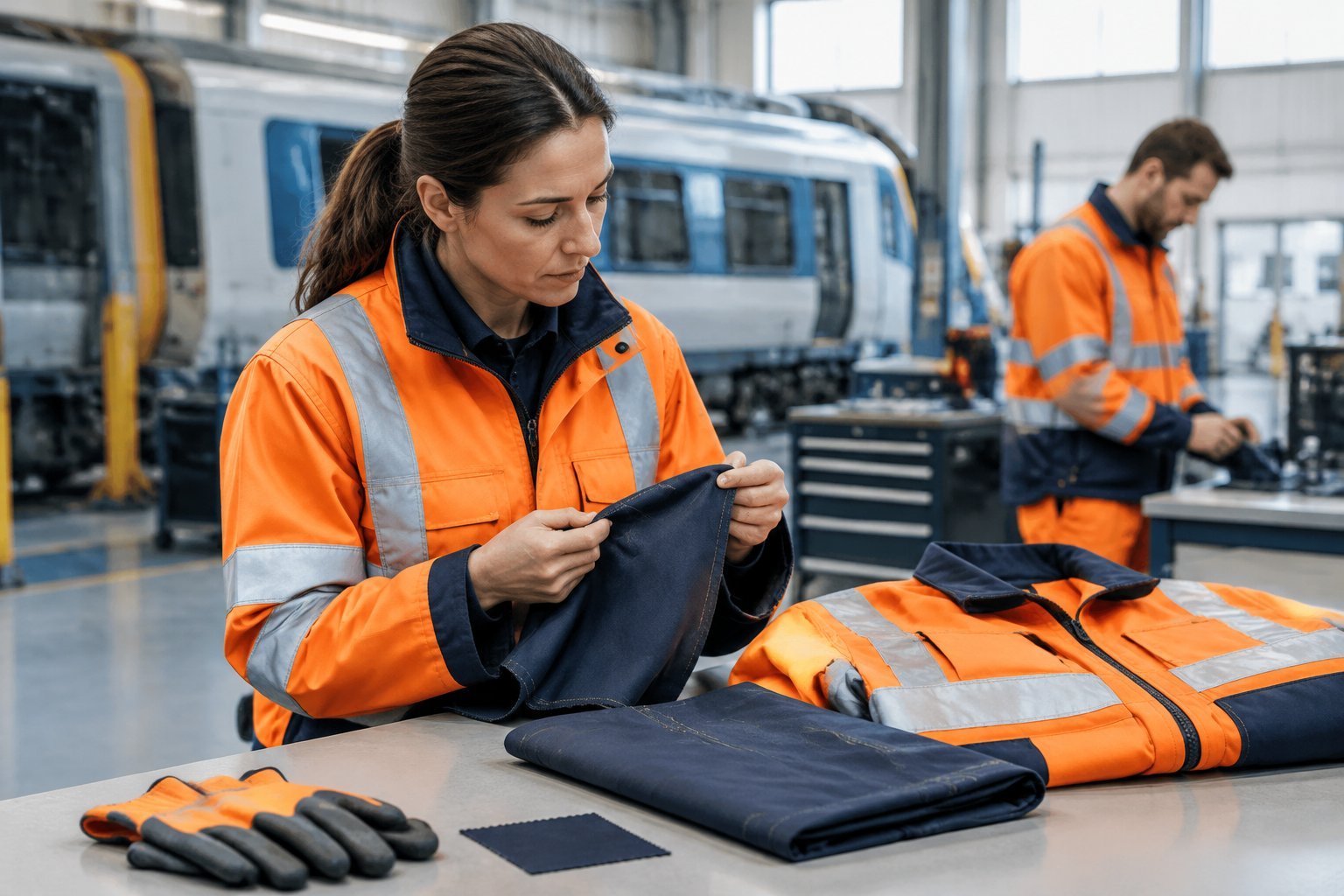
Railway workwear selection combines textile performance with task-specific and operator requirements. These distinctions help resolve common material-selection questions.
What fabric is used for railway workwear?
Railway workwear uses cotton, cotton/nylon, and cotton/polyester blends among other task-specific textiles. The selected cloth needs the construction and verified performance appropriate to its use, such as workshop maintenance or trackside visibility.
Does all railway workwear need flame-resistant fabric?
Flame-resistant fabric is required where the hazard assessment and applicable rules identify relevant thermal exposure. Electrical arc duties require dedicated arc-protection evidence, while visibility requirements need separate assessment.
Is fluorescent orange fabric enough to meet RIS-3279-TOM?
RIS-3279-TOM compliance requires assessment of the applicable material properties and completed garment. Orange color alone establishes insufficient evidence for approval; the garment’s construction and required visibility features also need verification.
Are ripstop fabrics suitable for railway maintenance clothing?
Ripstop fabrics suit maintenance applications where limiting tear propagation is a priority. Suitability also requires appropriate abrasion performance, comfort, and laundering durability, together with any specified protective functions.
Can Levitex supply fabric rather than finished railway clothing?
Levitex supplies fabric for industrial protective-workwear applications, including 100% cotton, cotton/nylon, and cotton-rich CVC options. Its services cover textile manufacturing and customization; finished railway clothing and garment-design or assembly services fall outside its offering.