Source fabric for your workwear’s water-protection requirements with LEVITEX. Share your application, preferred composition, weight, and wash conditions so we can discuss suitable options, sampling, and the test evidence needed for approval.
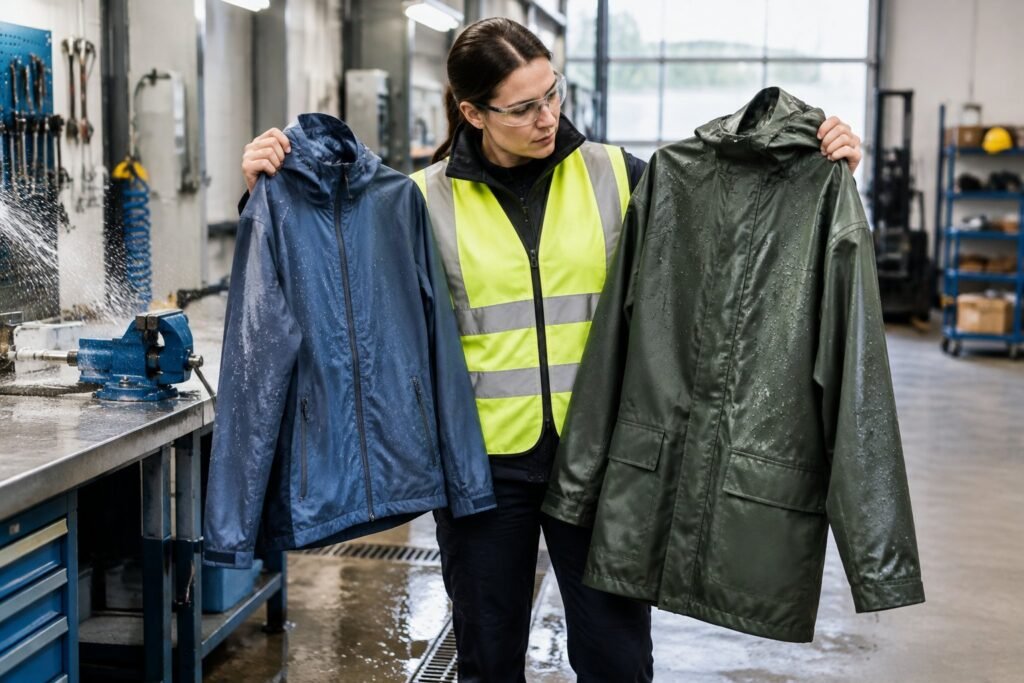
Water protection level depends on how long fabric stays wet, not just rain forecasts. Coolant splash or brief drizzle differs from a full shift kneeling in standing water; mixing them up causes workwear failure.
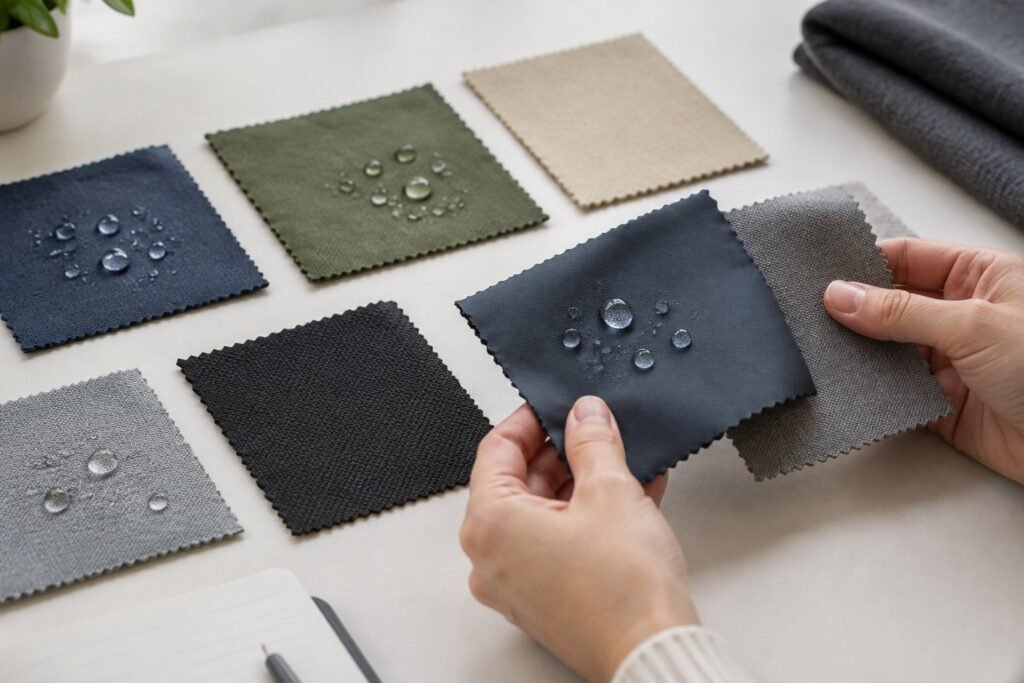
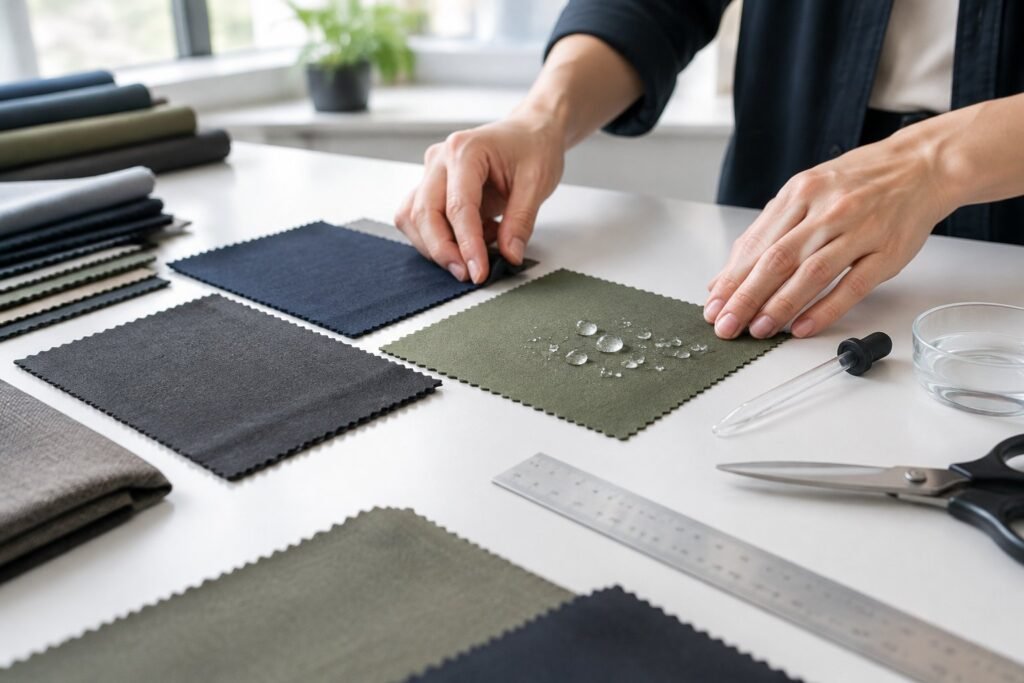
Waterproof, water-resistant, and water-repellent fabrics solve different exposures: repellent makes drops bead and roll off; resistant handles light moisture briefly; waterproof blocks water under sustained pressure. Match the fabric to the job before requesting samples: intermittent splash needs repellency, while sustained wet exposure needs pressure-resistant fabric. Reviewing these differences before locking a spec saves sample-review time and avoids finishes that look right on paper but fail on the floor.
Choose the Substrate and Requested Finish
Substrate choice sets the ceiling for finish performance. Nylon and polyester take water-resistant and water-repellent treatments better than natural fibers because synthetic yarns absorb less moisture.
Cotton and blends can still carry repellent finishes, but fiber absorbency affects wet behavior. Composition, weave density, and weight shape outcomes: tighter, denser weaves add physical resistance—though density alone doesn’t make fabric durable or water-resistant—while heavier fabrics resist abrasion better and lighter ones offer flexibility. When defining a request, specify substrate, construction, and target weight together, then ask which finishes apply. Our guide on fabric finishes covers application, handfeel, and performance changes—useful before finalizing a spec sheet.
Check Water Protection and Wearer Comfort Separately
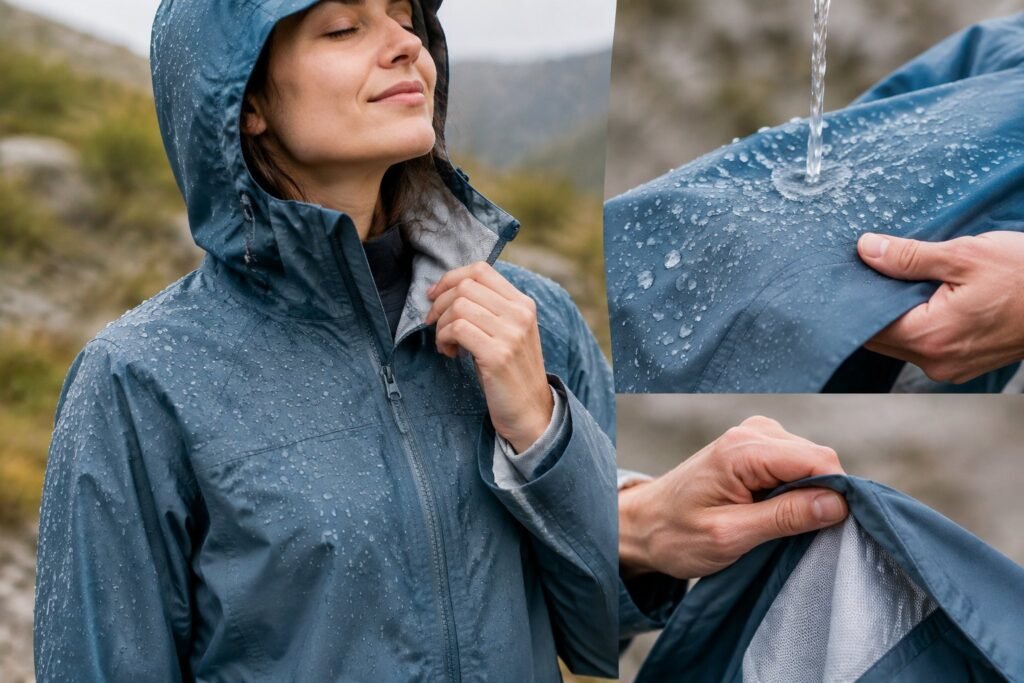
Water protection and comfort are separate properties; testing one doesn’t confirm the other. A waterproof material can block rain under pressure while trapping heat and sweat. Request evidence for each property separately.
Ask for penetration-resistance results distinct from moisture-vapor transmission data. Surface beading demonstrates repellency, not resistance under pressure—different tests, not substitutes. Comfort also depends on fit, layering, and movement; our workwear fabric options cover composition and construction affecting protection and wearability.
Seams, stitching, and closures affect wet-weather performance even when the base fabric tests well. A waterproof fabric with unsealed seams can leak at the stitch line—a garment-construction issue separate from the fabric, worth raising with the final-product builder.
Verify Performance After the Intended Care Process
Post-wash performance matters as much as day-one performance, since finishes and coatings wear with repeated laundering.
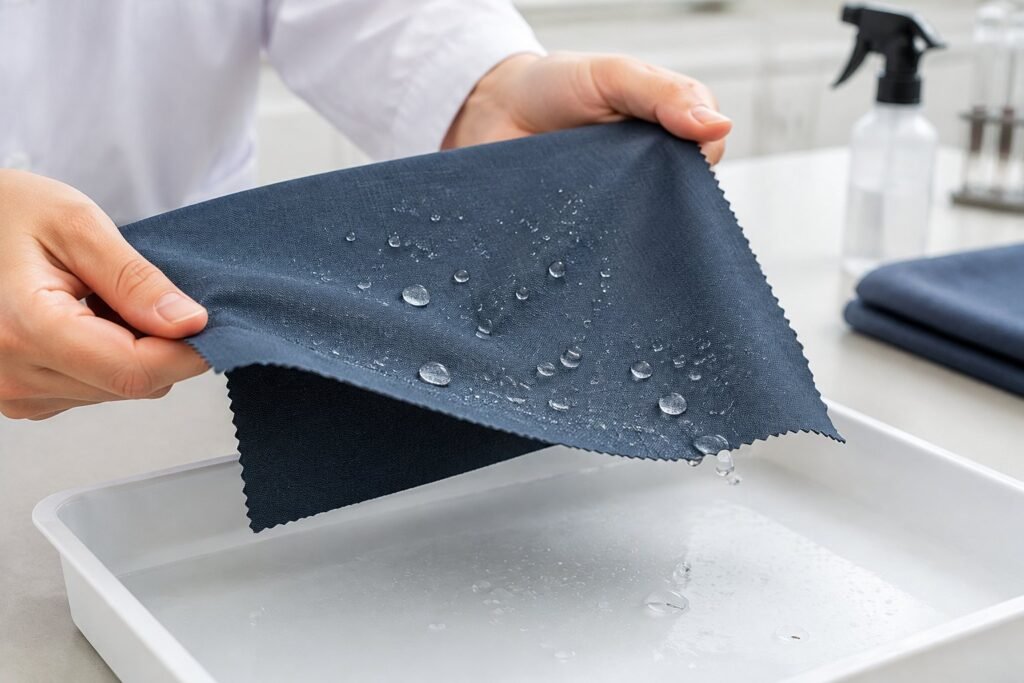
A sample that repels water off the roll may not after your care program’s wash cycles. Request water-repellency and penetration-resistance results before and after the intended care process, using the same test method, and ask suppliers to use your actual laundering conditions—not generic cycle counts. Dimensional stability matters too: shrinkage or distortion can alter fit and seam tension.
Our resource on fabric shrinkage and dimensional stability explains what to check before approval. Request this data as a set, not isolated figures, to judge full life cycle rather than a snapshot.
Set Sample Approval Criteria Before Bulk Sourcing
Set approval criteria before samples arrive so the review is objective rather than a quick visual check. Write down what you’re checking for composition, weight, construction, color match, and water performance before you open the package.
Separate the first-look review from the technical review. Check handfeel, surface consistency, and color match against your reference first. Then move to water-repellency and penetration checks using a documented method so results can be compared across suppliers.
Decide in advance what counts as a pass. If the sample doesn’t hold up after the laundering conditions you plan to use, note that before moving to bulk discussions. A clear approval checklist, agreed before samples land on the table, keeps the decision based on data rather than first impressions.
Define Your Sourcing Request and Discuss Options
Source fabric for your workwear’s water-protection requirements with LEVITEX. Share your application, preferred composition, weight, and wash conditions so we can discuss suitable options, sampling, and the test evidence needed for approval.
A complete sourcing request speeds up the conversation on both sides. Include the garment application, expected wet exposure level, preferred composition, target weight, color, care process, and the specific test requirements the fabric needs to meet.
Email Charlie at Charlie@levitex.com or reach out through our contact page with these details. The more specific the request, the more useful the discussion about suitable options and sample evidence.