
Carhartt is a strong first choice among the best construction workwear brands for general construction crews because its duck work pants, bib overalls, and outerwear cover demanding everyday site work. For contractors managing uniform purchases, those garment categories provide a practical starting point for matching clothing to daily wear and seasonal conditions.
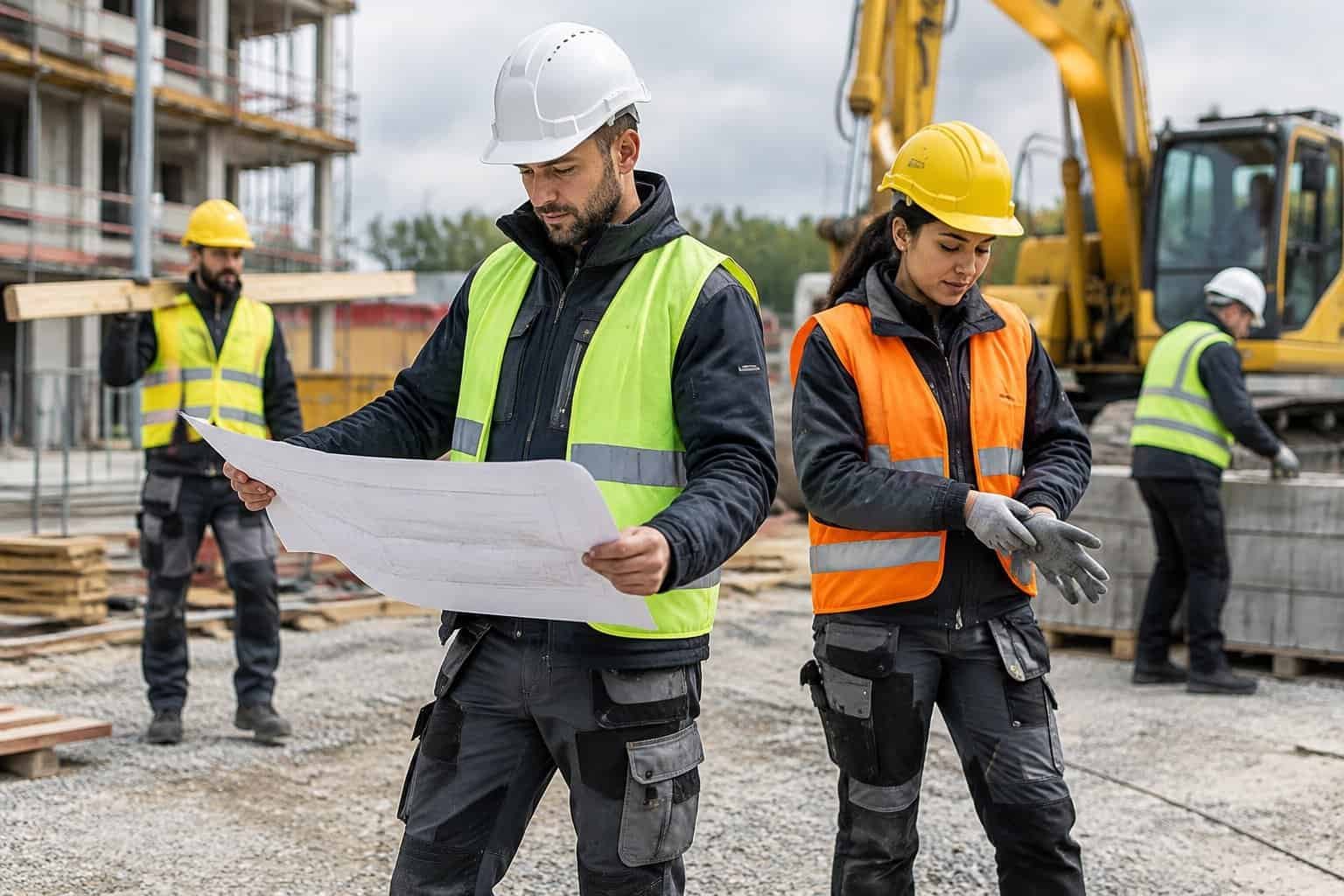
Dickies deserves consideration for straightforward crew uniforms, while Blaklader stands out for tool-focused work pants. This comparison uses garment focus, movement, reinforcement, and procurement requirements; it makes no claim of hands-on testing or a universal performance ranking.
For crews and manufacturers developing custom uniforms, the useful benchmark is the garment specification: where reinforcement sits, how loaded pockets behave, and whether the fit survives repeated laundering.
Quick picks:
- Carhartt: first choice for general construction clothing and outdoor layers.
- Dickies: practical starting point for uniform-style shirts and pants.
- Blaklader: focused option for tradespeople prioritizing tool-pocket layouts.
1. Carhartt
Carhartt provides a broad starting point for contractors selecting everyday work pants, bib overalls, and jackets. Its association with cotton duck makes it particularly relevant when buyers are comparing substantial woven fabrics for rough material contact.
The buying decision should distinguish between a heavy, structured garment and a lighter style intended for frequent movement. Double-front construction adds material at high-wear areas, while the exact knee coverage and pocket arrangement deserve inspection on each selected model.
Cotton workwear offers useful comfort characteristics, but fabric weight and garment construction affect drying and flexibility. Procurement teams should compare sample garments after laundering, especially when workers alternate between kneeling and climbing.
Carhartt is a sensible benchmark for a mixed construction crew. A single garment specification still needs to account for different trades and seasonal workloads.
2. Dickies
For uniform-style work shirts and pants, Dickies offers a straightforward comparison point. Its familiar work-pant and work-shirt categories suit contractors seeking a consistent crew appearance across site and customer-facing duties.
The Original 874 Work Pant illustrates the brand’s traditional uniform approach. Buyers should assess its cut against the actual job, particularly where a worker needs substantial knee reinforcement or carries tools in garment pockets.
A useful purchasing exercise compares a conventional uniform pant with a reinforced construction pant. The crew should assess pocket access while wearing gloves and check waistband pressure during a full squat.
Budget decisions should use current quotes for the exact garments and sizes required. Replacement frequency and alteration costs belong in that calculation alongside purchase price.
3. Blaklader
Blaklader deserves close attention when integrated tool storage drives the work-pant decision. Its trade-focused trousers emphasize pocket organization and reinforced areas, giving buyers concrete features to compare beyond appearance.
Knee-pad compatibility requires careful checking. The pocket location must hold the specified insert over the knee during movement, and the garment’s sizing must preserve that alignment after washing.
For crews comparing construction work pants, a loaded fitting trial is especially useful. Workers should wear their normal belt and place regularly used tools in the intended pockets.
Additional storage also creates bulk. Contractors should check clearance around harness straps and access through tight work areas before standardizing a pocket-heavy design.
4. Timberland PRO
Timberland PRO is relevant to contractors assessing work apparel alongside work footwear. Its jobsite clothing gives buyers another option for pants, shirts, and outer layers within a work-focused range.
Apparel and footwear require separate evaluations. A boot’s cushioning technology or protective marking establishes nothing about a shirt or jacket bearing the same brand name.
For clothing purchases, the useful questions concern bending room, shoulder reach, and layering compatibility. A jacket fitting should include the midlayer workers expect to wear during colder shifts.
Contractors comparing complete clothing programs should identify exact garment styles in their purchasing records. This prevents a replacement order from substituting a visually similar item with a different fit or fabric.
5. Caterpillar / Cat Workwear
Cat Workwear is a relevant option for crews comparing utility-oriented pants and outerwear. Its construction identity is recognizable, while the purchasing decision should rest on the selected garment’s functional details.
Tool-pocket placement deserves particular attention. A pocket that works while standing must also remain accessible when the worker kneels or wears a tool belt.
For outdoor layers, buyers should separate water repellency, water resistance, and waterproof performance. Those descriptions address different expectations for exposure to rain and wet surfaces.
Procurement documents should record the garment’s stated weather performance and care instructions. Any required visibility classification belongs on the specification for the exact item being ordered.
6. Wrangler
Wrangler is a useful choice for construction workers who prefer work jeans and familiar trouser styling. Its RIGGS Workwear range provides a more work-focused starting point than selecting solely from casual denim.
The practical comparison is between a conventional jean layout and trousers with dedicated utility storage or reinforced sections. Buyers should check the individual garment for the features their crew needs.
A comfortable waistband during standing gives only part of the fit assessment. Workers should also crouch and step onto a safe raised platform to check tension across the seat and thighs.
Denim appearance establishes neither protective performance nor suitability for every construction task. The selected style should match the crew’s abrasion exposure and movement requirements.
7. Wolverine
Wolverine gives contractors another established workwear name to compare for pants, outerwear, and footwear. It is especially relevant when buyers already include its work boots in their purchasing shortlist.
Clothing selection still needs its own acceptance criteria. Reinforcement placement, seam finishing, and closure operation provide more useful information than coordinating brand labels.
Workwear material also affects comfort across a shift. A cotton-versus-polyester comparison helps explain differences in moisture behavior and drying, while protective applications require specifications appropriate to the hazard.
Before approving a crew order, the contractor should confirm the selected garment identifiers and replacement process with the seller. That record supports consistent reordering as workers join the crew or replace worn clothing.
Construction Workwear Brand Comparison
Carhartt leads this shortlist for broad general-construction use, while the other brands offer distinct starting points for uniform programs or trade-specific clothing. The table compares buying contexts without assigning unsupported price bands or performance scores.
| Brand | Work context | Garment focus | Selection consideration | Limitation to address |
|---|---|---|---|---|
| Carhartt | General construction | Duck pants, bibs, jackets | Weight and reinforcement | Bulk during active work |
| Dickies | Crew uniforms | Work shirts and pants | Consistent fit and appearance | Task-specific reinforcement |
| Blaklader | Tool-intensive trades | Utility work trousers | Pockets and knee-pad positioning | Loaded-pocket bulk |
| Timberland PRO | Apparel and footwear purchasing | Work clothing and boots | Evaluate categories separately | Footwear claims do not establish apparel performance |
| Caterpillar / Cat Workwear | Utility-focused site clothing | Pants and outerwear | Storage and weather specifications | Exact garment documentation |
| Wrangler | Denim-preferring crews | Work jeans and RIGGS Workwear | Cut and utility features | Casual and work styles differ |
| Wolverine | Outdoor work clothing | Pants, layers, footwear | Fabric and closure details | Replacement-style consistency |
These are selection priorities, not measured weaknesses shared by every garment. A sample order should establish whether the shortlisted styles meet the contractor’s acceptance criteria.
Crew Workwear Procurement Checklist
A crew workwear program should begin with written garment requirements and a representative fitting trial. Separating routine clothing needs from hazard-specific PPE requirements keeps purchasing decisions clear.
How Should You Assess Fabric Durability and Reinforcement?
Durability assessment should cover the fabric and the finished garment. Buyers should inspect seams, pocket corners, belt loops, closures, and areas exposed to repeated rubbing.
- Match knee and seat reinforcement to the crew’s actual wear patterns.
- Check whether pocket attachment points remain secure under normal tool loads.
- Record fabric composition and weight in the purchasing specification.
- Request relevant abrasion, tear-strength, or seam-strength results when performance claims influence the order.
Workwear fabric selection should also account for the working environment. A heavier construction changes heat retention and movement, so fabric weight alone is insufficient evidence of suitability.
How Can You Check Movement, Fit, and Crew Sizing?
A representative crew fitting should include workers across the required size range and body shapes. Waist measurements alone leave important differences in rise, thigh room, and garment length unresolved.
Participants should squat, kneel, climb a safe step, and reach overhead while wearing their normal equipment. Assessors should note hem lift, waistband pressure, pocket access, and snagging risks.
Separate fit records help accommodate women’s and men’s sizing requirements without assuming equivalent cuts. The approved size should also leave appropriate room for seasonal layers while keeping loose fabric controlled around equipment.
What Laundering and Replacement Requirements Matter?
The laundering process should be agreed before a bulk order is approved. Home washing and industrial laundering expose garments to different handling conditions, and the care label must support the intended process.
A washed sample helps reveal changes in dimensions, stiffness, and appearance. Buyers should also evaluate whether applied branding remains compatible with the garment’s intended use.
Fabric finishes require care instructions suited to their function. Replacement rules should identify damaged seams, failed closures, and worn reinforcement; protective garments require additional retirement criteria tied to their instructions and condition.
When Does a Job Require Verified Protective Clothing?
Verified protective clothing is required when the employer’s hazard assessment or applicable site rules identify a clothing-related protection requirement. Ordinary durable workwear does not automatically qualify as high-visibility, flame-resistant, arc-rated, or chemical-protective PPE.
Buyers should obtain documentation for the exact garment and its intended exposure. Relevant U.S. specifications include ANSI/ISEA 107 for high-visibility apparel and ASTM F1506 for qualifying flame-resistant, arc-rated textile materials used in electrical protective clothing.
Flame-resistant clothing and arc-rated clothing require precise selection. An FR description alone establishes no particular arc rating, and cotton content alone establishes neither classification.
Fabric Sourcing for Custom Construction Workwear
Custom construction workwear begins with a fabric specification that the garment manufacturer can translate into a finished clothing design. Fabric sourcing is a separate purchasing activity from ordering finished uniforms from the seven brands above.
Which Fabric Requirements Should Garment Manufacturers Specify?
Garment manufacturers should define composition, weight, construction, and performance requirements before requesting fabric samples. The specification should connect each requirement to the intended garment and work environment.
Useful requirements include:
- Fiber blend, weave, and target fabric weight.
- Tear strength, abrasion performance, and dimensional stability.
- Color consistency and laundering conditions.
- Required functional finishes and supporting test methods.
- Protective performance requirements where applicable.
For hot-weather work pants, manufacturers should balance air permeability with the necessary abrasion performance. Sample garments should confirm comfort and fit before production approval.
How Can Levitex Support Custom Workwear Fabric Sourcing?
Levitex supports wholesale fabric sourcing and customized production for workwear manufacturers. Its services include custom dyeing, custom printing, and flame-retardant fabric manufacturing.
Established in 1951, the business reports monthly production capacity of 5 million meters, with 1.5 million meters dedicated specifically to flame-retardant fabrics. Those figures describe fabric manufacturing capacity; finished-garment performance requires the appropriate design and verification.
Garment manufacturers or uniform procurement teams developing custom workwear are invited to discuss fabric requirements with Charlie Luo at Charlie@levitex.com. Enquiries should identify the intended garment, laundering process, and required performance documentation. This is a fabric-sourcing discussion; no supplier relationship with the compared brands is claimed.
How Does Chemical Repellency Differ From Barrier Protection?
Chemical-repellent finishing reduces wetting by specified chemical liquids under defined conditions. Barrier-based chemical protection addresses penetration or permeation through a protective material or garment system.
Levitex produces chemical-repellent fabrics through post-treatment finishing on cotton, cotton/nylon (C/N), and cotton/polyester (CVC) base fabrics. These fabrics have distinct protection levels, applications, and test results from barrier-based chemical-resistant materials.
Selection of chemical protective clothing levels requires attention to the substance, concentration, exposure route, and contact duration. A repellency claim alone provides insufficient evidence for prolonged contact or protection against an unspecified chemical mixture.
Frequently Asked Questions
Contractors should approve exact garments through fit checks and documented requirements before extending a purchase across the crew.
What is the best construction workwear brand for my crew?
Carhartt is the strongest starting point on this shortlist for a mixed general-construction crew needing work pants and substantial outerwear. A pilot order should establish which styles suit each role before the contractor standardizes the program.
How do Carhartt and Dickies compare for construction work?
Carhartt is particularly relevant for duck garments and outdoor layers, while Dickies provides a clear starting point for uniform-style shirts and pants. Contractors should compare matched garment categories and current quotes to evaluate replacement cost fairly.
Which listed brands should I compare for tool-focused work pants?
Blaklader and Cat Workwear deserve early consideration for utility-oriented trousers. A loaded fitting trial should check pocket accessibility, tool security, and interference with belts or harnesses.
How should contractors choose workwear for summer and winter?
Summer purchasing should prioritize breathable garments suited to the required coverage and protection, while winter purchasing should provide compatible layers with controlled bulk. Seasonal samples should be assessed with the crew’s normal PPE because extra layers change fit and movement.
Is durable construction workwear automatically protective PPE?
Durability alone establishes no high-visibility, flame-resistant, arc-rated, or chemical-protective classification. Contractors should require the exact garment’s markings and supporting documentation, then confirm that its stated performance matches the identified exposure.