
MASCOT is a strong choice of workwear for electricians handling installation tasks because its range includes kneepad pockets and interchangeable tool pockets designed for electrical trades. Bulwark deserves consideration for arc-rated clothing programs, while Carhartt, STRAUSS, and Wrangler offer additional options for everyday workwear.
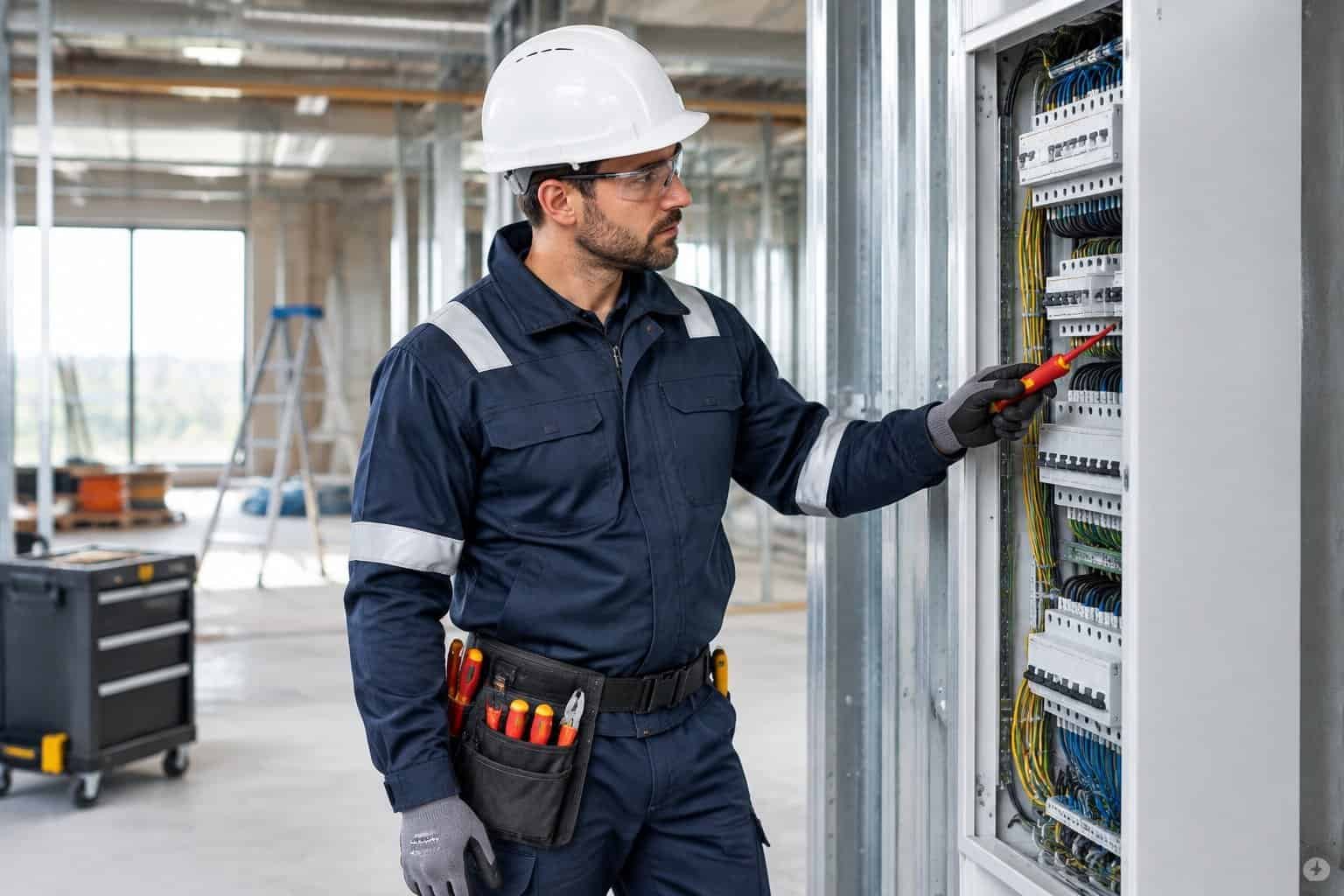
For employers and uniform buyers, the useful distinction is between practical trade clothing and garments with documented electrical-arc protection. A comfortable uniform supports movement throughout a shift; an arc-rated clothing specification also requires evidence matched to the workplace hazard assessment.
Quick picks:
- MASCOT: Installation work requiring kneepad pockets and configurable tool storage.
- Bulwark: Arc-rated clothing programs requiring garment-level protection documentation.
- Carhartt: Teams comparing everyday workwear with a separate protective range.
1. Bulwark
Bulwark belongs on the shortlist for electricians whose employers specify flame-resistant and arc-rated garments. Its protective clothing focus makes it a relevant starting point for uniform programs covering electrical maintenance and industrial work.
Its range includes FR shirts, pants, coveralls, and outerwear. Selection should proceed by exact garment identification, with the required arc rating and applicable performance documentation recorded alongside the style number.
The practical comparison is between complete uniform combinations: shirt and pants, coveralls, or additional protective outer layers. Buyers should assess size availability and laundering requirements across that combination. The employer’s electrical safety program determines the required protection level.
2. Carhartt
Carhartt offers a useful route for employers comparing everyday trade clothing with a separate FR range. Its electrician gear collection addresses residential wiring and factory maintenance.
The brand’s general workwear and protective garments require separate purchasing specifications. An electrician-themed collection establishes occupational relevance; the individual garment label establishes its protective claims.
For ordinary work clothing, comparison should focus on movement and wear at high-contact areas. For protective clothing, the purchasing record should identify the exact FR or arc-rated style and its supporting documentation. Familiar branding alone provides insufficient information for assigning a garment to an arc-exposed task.
3. MASCOT
MASCOT provides the most specific documented tool-storage and kneeling features among the manufacturer descriptions supplied for this comparison. Its electrician range includes kneepad pockets and interchangeable Click Pocket System holster pockets, including pockets developed for electricians.
The holster pockets are sold separately and transfer between compatible garments. That detail affects both uniform specification and accessory costs, especially when crews require different pocket arrangements.
MASCOT also identifies protective offerings associated with IEC 61482-2, alongside flame-protection and other standards. Buyers considering those garments for a US electrical safety program should obtain the exact product’s ratings and test documentation. The electrician collection includes different protection scopes, so each selected style requires its own review.
4. STRAUSS
STRAUSS is relevant for electricians comparing trade-oriented clothing through a US storefront. It maintains a dedicated US collection for electrician workwear.
Its inclusion provides another option for assessing installation clothing and everyday jobsite needs. Useful selection checks include pocket access while crouching, freedom of movement when climbing, and the position of knee protection during floor-level work.
The collection’s occupational title establishes its intended audience. For any arc-exposed assignment, the employer still needs garment-specific evidence supporting the required protection. Buyers should compare individual styles against the same written uniform specification used for the other brands.
5. Wrangler
Wrangler is a relevant option for electricians comparing conventional work pants and shirts. Its electrician work-pants offering emphasizes clothing for the demands of the trade, and its range also includes electrician-oriented work shirts.
For everyday pants, useful checks include waistband comfort under a tool belt and pocket access while kneeling. Fabric choice should reflect abrasion exposure, working temperature, and the employer’s clothing rules.
Wrangler’s occupational categories provide a starting point for garment selection. Any protective requirement belongs in the specification for the exact item, including its documented arc rating where required. Ordinary denim and a trade-focused description do not establish electrical-arc protection.
Selection Criteria and Safety Scope
A defensible comparison separates documented protective performance from everyday workwear features. Each brand earns consideration through relevant clothing offerings, while individual garments remain the unit of approval.
Official Manufacturer Documentation and Relevant Ranges
Manufacturer product records should establish the garment’s intended use and any claimed protective performance. Category descriptions help identify relevant ranges; labels and technical documents support approval of a particular style.
This is a documented-range comparison, without hands-on testing or a price ranking. Broad brand reputations receive less weight than traceable garment information. The same distinction applies to flame-resistant clothing: an FR claim requires its own supporting performance evidence.
Protection Requirements Before Comfort, Durability, and Storage
Protective requirements define the eligible garments before practical features enter the comparison. Within that eligible group, buyers should assess freedom of movement, reinforcement placement, and tool-pocket layout.
Fabric weight alone provides no arc rating. Likewise, choosing between Nomex and FR fabric requires attention to the particular fabric and garment documentation.
Levitex supplies fabrics for workwear manufacturing, including customized flame-retardant production. It operates at a monthly production capacity of 5 million meters, with 1.5 million meters dedicated specifically to flame-retardant fabrics. Those capabilities concern fabric supply; finished electrician PPE requires its own garment-level compliance evidence.
Hazard Assessment and De-Energization Before Clothing Selection
The electrical safety process starts with hazard assessment and establishing an electrically safe work condition wherever required. De-energization includes the applicable isolation, lockout/tagout, and absence-of-voltage verification procedures.
When exposure remains, the employer selects appropriate PPE through its electrical safety program. Decisions about arc-flash PPE selection must address the assessed thermal hazard alongside separate shock-protection requirements.
Arc-rated clothing reduces thermal injury risk within its performance limits. Electrical insulating gloves and other shock-protection measures serve different functions, and clothing leaves safe work procedures fully applicable.
Five Electrician Workwear Brands Compared
The five brands serve different purchasing priorities, with MASCOT offering explicit electrician-specific storage details and Bulwark focusing on protective clothing. The table distinguishes range-level relevance from the documentation needed for a particular assignment.
Comparison Table: Range Scope, Documented Protection, Practical Features, and Limitations
| Brand | Range Scope | Protection Scope | Practical Comparison Point | Selection Limitation |
|---|---|---|---|---|
| Bulwark | Protective workwear | FR and arc-rated garments | Uniform and outer-layer combinations | Exact garment rating required |
| Carhartt | Everyday workwear and FR range | Style-specific protective claims | General and protective uniform options | Separate range specifications |
| MASCOT | Electrician and protective ranges | IEC 61482-2 offerings identified | Kneepad pockets; modular holster pockets | US program documentation review |
| STRAUSS | US electrician collection | Verify selected garment | Trade-oriented clothing options | Collection title establishes no rating |
| Wrangler | Electrician pants and shirts | Verify selected garment | Conventional workwear fit and storage | Ordinary denim establishes no rating |
Practical features should be compared under the intended working conditions. A pocket arrangement that suits a standing installation task needs a separate fit check when the wearer crouches or works beneath equipment.
For crews working in heat, hot-weather work-pants selection should remain within the employer’s established protection requirements. Breathability and lighter construction are useful comparison points after eligible garments have been identified.
Arc-Rated Garment Documentation and Buying Checklist
An arc-rated garment purchase should produce a traceable record connecting the exact style to its rating, applicable standards, and care instructions. That record helps prevent substitutions that change the approved clothing specification.
Does the Exact Garment Have a Documented Arc Rating?
The exact garment should carry a documented arc rating appropriate to the selected protection method. Procurement records should capture its style identifier, rating in cal/cm², and relevant manufacturer documentation.
Fabric descriptions such as “heavy cotton” provide insufficient evidence. The distinction between arc-flash clothing materials becomes useful when the selected garment’s composition and tested performance are both identifiable.
Which Standards and Test Reports Support Its Claims?
US electrical safety programs commonly reference NFPA 70E for workplace practices and ASTM F1506 for relevant protective clothing performance requirements. NFPA 70E is a workplace electrical safety standard; a claim of generic “NFPA 70E certification” requires scrutiny.
Arc-testing documentation should identify the applicable method, such as ASTM F1959/F1959M or IEC 61482-1-1. A box-test classification under IEC 61482-1-2 does not establish an interchangeable cal/cm² rating. Welding certification to EN ISO 11611 also requires separate consideration from electrical-arc performance.
Are Layers Compatible With the Required Protection?
Every layer needs review within the intended clothing system. Base layers, outerwear, and accessories affect coverage and thermal behavior during an incident.
Individual arc ratings cannot be added together to calculate a layered-system rating. A higher claimed combination rating requires supporting test evidence for that combination. Where an assessment specifies an arc-flash suit, its intended protective use should align with the complete ensemble and task requirements.
Does the Fit Support Coverage, Mobility, and Kneeling?
Protective fit should preserve coverage throughout the electrician’s working movements. A standing fitting alone misses gaps that develop during overhead reaching or deep crouching.
A practical fitting assessment includes:
- Raising both arms while checking shirt-to-trouser overlap.
- Squatting and kneeling without excessive fabric tension.
- Checking sleeve position with the required gloves.
- Testing pocket access while wearing normal work equipment.
Kneepads should remain correctly positioned throughout kneeling. Any proposed garment alteration requires manufacturer approval where it affects protective construction.
What Laundering, Inspection, and Replacement Instructions Apply?
The manufacturer’s care instructions govern washing and drying, including restrictions on cleaning products. Procurement should establish whether the employer’s laundry process meets those instructions before garments enter service.
Inspection should address holes, damaged closures, and contamination that cleaning has failed to remove. Repair materials and methods must preserve the required protection. Decisions about arc-flash suit replacement also require attention to damage, incident exposure, and the manufacturer’s retirement criteria.
Frequently Asked Questions
Electrician workwear decisions require both garment-level evidence and a practical fit assessment. These answers address common points of confusion when comparing the five brands.
Which workwear brand is best for electricians exposed to arc-flash hazards?
Bulwark is a strong starting point for an arc-rated uniform shortlist because its range centers on protective workwear. Approval still belongs to the exact garment or tested clothing system matched to the employer’s assessed hazard.
What should electricians look for in work pants?
Electricians should look for adequate working coverage, unrestricted movement, accessible pockets, and knee protection suited to their tasks. For arc-exposed assignments, the pants also need the documented protective performance required by the employer’s electrical safety program.
Are ordinary cotton work clothes flame-resistant or arc-rated?
Ordinary cotton work clothes are combustible and carry no inherent FR or arc-rating claim. Cotton-based protective garments require appropriate treatment or engineered construction, supported by testing and labeling.
Are all garments from an FR clothing brand suitable for electrical work?
Suitability belongs to the exact garment and task, so a brand’s FR reputation alone provides insufficient evidence. The distinction between FR clothing requirements for electricians and a specific arc-rating requirement should remain explicit in purchasing specifications.
How can buyers compare women’s electrician workwear across these brands?
Buyers should compare exact women’s styles using the same protection requirements applied to other garments, followed by a movement-based fitting assessment. Useful checks include waist-to-hip fit, sleeve coverage during overhead work, and kneepad alignment when crouching; any required alterations should preserve the manufacturer’s protective specification.