
EN ISO 11611 specifies safety requirements and test methods for protective clothing used in welding and allied processes with comparable risks. It addresses welding spatter, brief flame contact, radiant heat, and limited protection against accidental electrical contact. For textile buyers, it provides a framework for matching FR fabric evidence to the intended welding application.
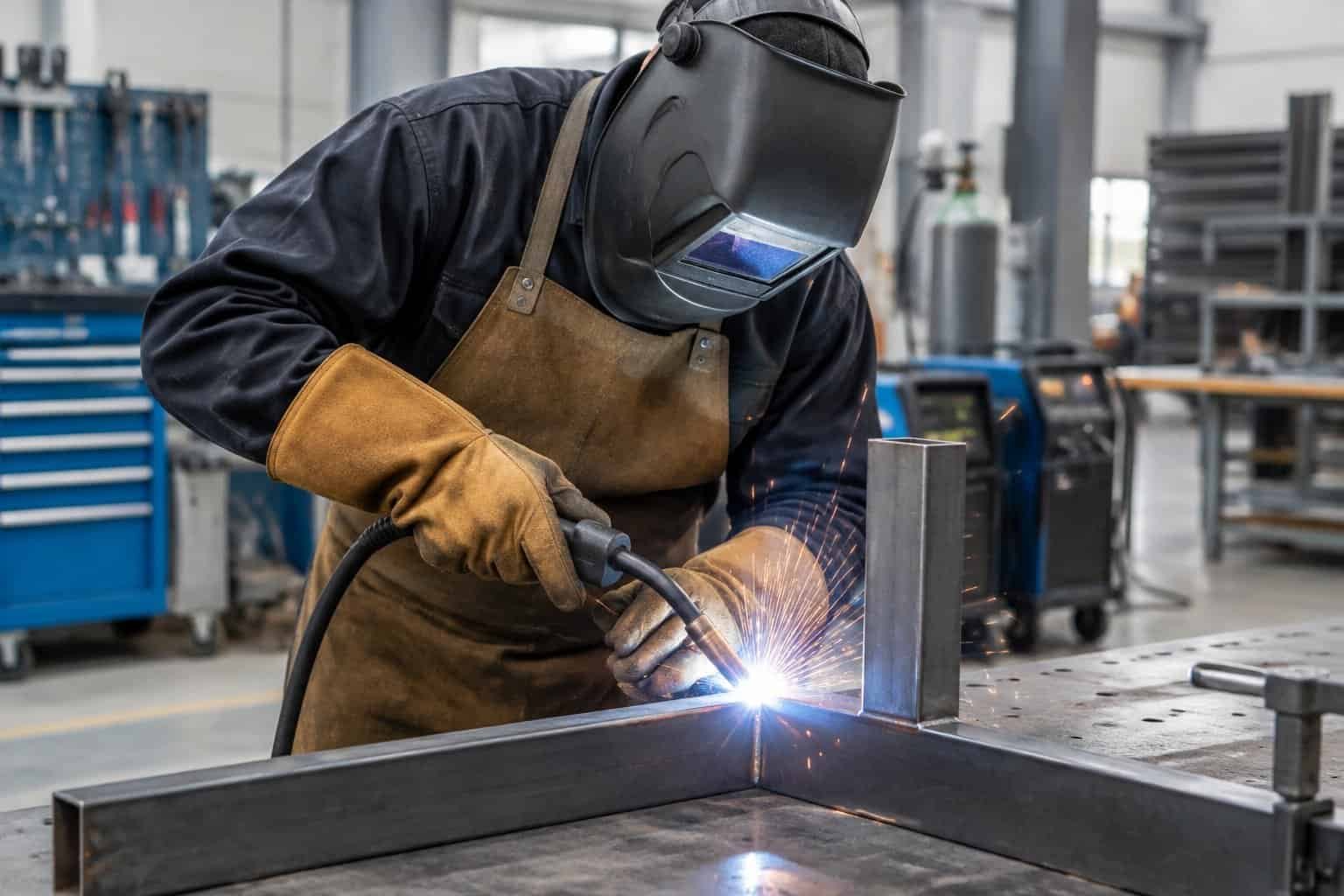
Levitex manufactures protective-workwear textiles, including cotton and cotton-blend FR fabrics. Its role sits at the material-selection stage, where a documented fabric specification supports the garment manufacturer’s subsequent assessment.
A useful purchasing specification identifies the applicable edition, required class, and flame-application codes. Those details establish what laboratory evidence must demonstrate before fabric enters welding protective clothing production.
What Does the Standard Cover, and Which Edition Applies?
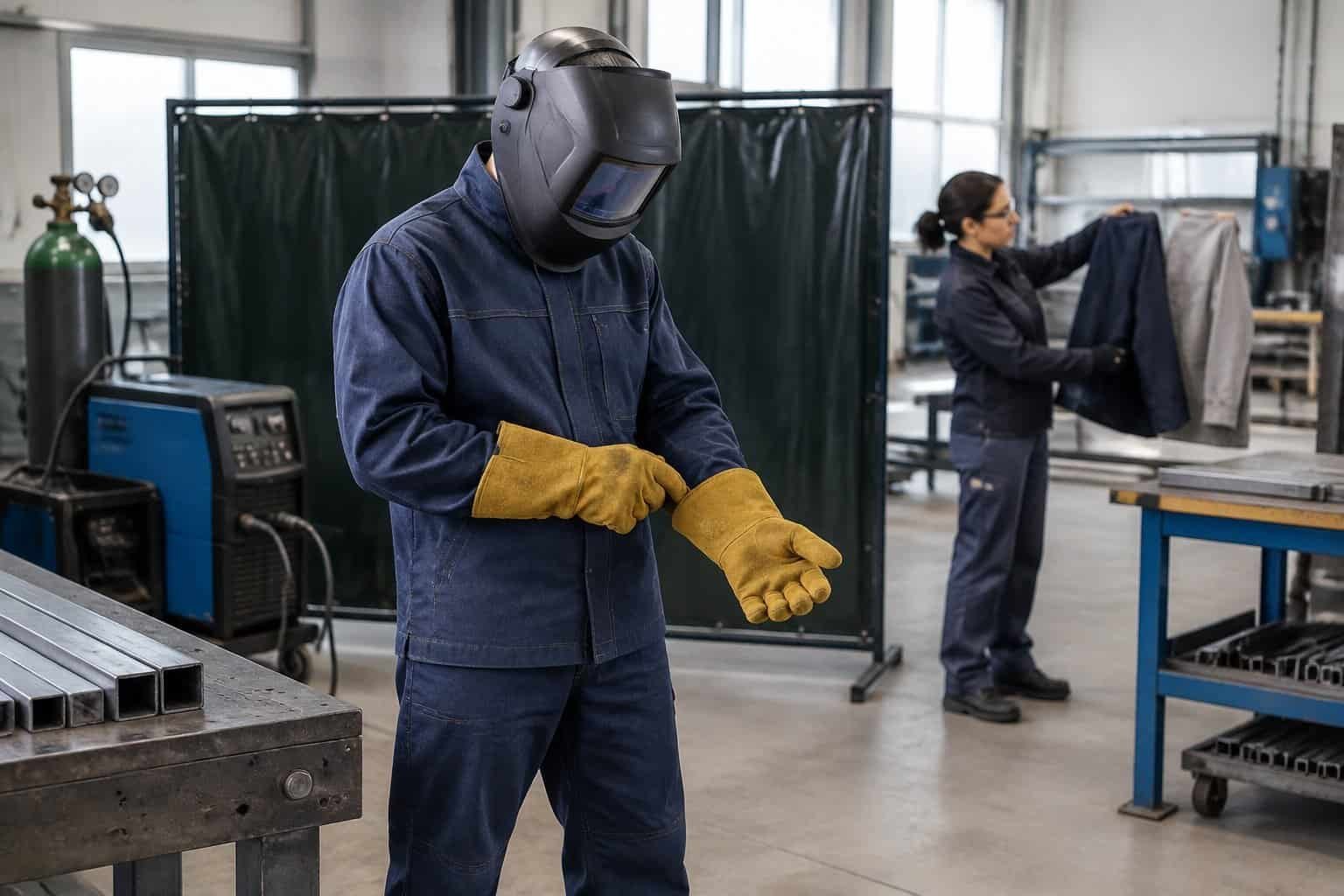
ISO 11611:2024 is the current international edition; the applicable EN edition and conformity documentation require separate confirmation for the destination market. The standard covers protective clothing for welding and similar processes, with requirements extending beyond fabric performance.
Which Welding Hazards and Protective Items Are Covered?
The scope includes protection against small splashes of molten metal, short contact with flame, and radiant heat generated by welding arcs. It also addresses limited protection against brief, accidental contact with live electrical conductors under specified welding conditions.
Covered items include suits and supplementary garments such as aprons, sleeves, hoods, and gaiters. Separate personal protective equipment requirements apply to welding gloves, footwear, helmets, and eye or face protection.
Buyers still encounter the shorthand “EN 11611” and the older reference EN 470-1. A procurement document should identify the complete designation and edition because a shortened standard name leaves the evidence basis unclear.
What Changed Between ISO 11611:2015 and ISO 11611:2024?
ISO 11611:2024 replaced the withdrawn ISO 11611:2015 international edition. A significant development is its explicit treatment of harmful artificial optical radiation, including UV-A, UV-B, and especially UV-C, across three risk levels.
The 2024 scope also describes welding-process groups based on measured emitted irradiance and excludes laser welding. Its optical-radiation risk levels require attention separately from the familiar Class 1 and Class 2 spatter and radiant-heat classifications.
EN ISO 11611:2015 identifies the European adoption of the 2015 text. International publication, European adoption, and regulatory recognition have separate timelines, so buyers should obtain the exact edition named in the report and applicable conformity documents.
How Does Welding Protection Differ from EN ISO 11612?
EN ISO 11612 addresses clothing protection against heat and flame across a broader range of industrial exposures. Welding protection adds application-specific requirements, including small-metal-splash testing and garment features that reduce spatter entry or retention.
A claim for flame-resistant clothing therefore needs supporting evidence for the intended welding use. Shared test methods between standards do not establish interchangeable compliance.
How Do Class 1 and Class 2 Differ?
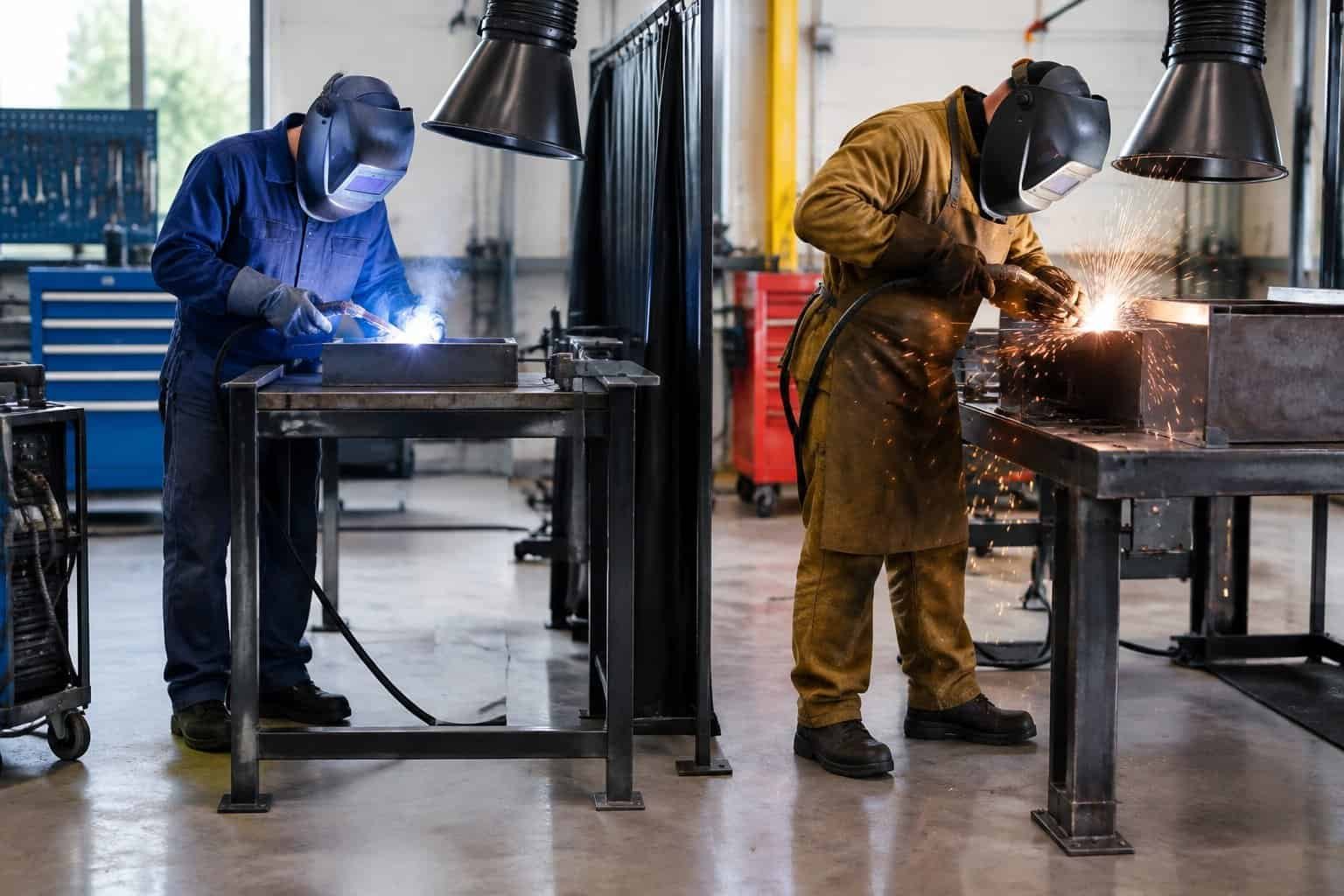
Class 1 addresses lower spatter and radiant-heat exposure, while Class 2 addresses more hazardous welding conditions with higher exposure. Selection requires both process information and an assessment of the actual working position.
Lower vs. Higher Spatter and Radiant Heat Exposure
The two classes distinguish performance against specific welding hazards. Both require compliance with the applicable baseline requirements; a higher result in one thermal test alone does not establish Class 2.
The following figures summarize the familiar 2015-edition thermal thresholds. A report against another edition requires assessment against that edition’s complete requirements.
| Criterion | Class 1 | Class 2 |
|---|---|---|
| Intended exposure | Lower spatter and radiant heat | Higher spatter and radiant heat |
| ISO 9150 droplet threshold | At least 15 drops | At least 25 drops |
| ISO 6942 RHTI 24 threshold at 20 kW/m² | At least 7 seconds | At least 16 seconds |
| Illustrative applications | TIG, low-current MIG | High-current MIG, gouging |
These laboratory thresholds describe controlled test conditions. They do not specify a safe workplace exposure duration.
How Welding Processes and Working Conditions Influence Selection
TIG welding and low-current MIG welding are examples associated with lower-spatter selection guidance. Higher-current MIG welding, MAG welding, and MMA welding with basic or cellulose-coated electrodes involve conditions associated with higher protection requirements.
Plasma cutting, gouging, and oxygen cutting also require attention to substantial hot-particle exposure. Electrode type and operating current affect the hazard, so the process name alone leaves important details unresolved.
Overhead work increases the opportunity for spatter to collect on shoulders or enter openings. Confined positions and proximity to adjacent welding operations also influence the assessment of FR clothing for welding.
Why Fabric Composition and Weight Cannot Establish a Class
Composition and mass influence fabric behavior, but a class claim requires results for the identified material or assembly. Construction, finishing, and pretreatment affect performance even when two fabrics share a nominal weight.
The same principle applies when assessing whether 100% cotton is suitable for welding. A cotton label provides fiber information; the relevant report establishes performance against the specified requirements.
A purchasing specification should connect the class requirement to a fabric reference and its test evidence. Substitution with a similar-looking cloth requires technical review.
What Do A1, A2, and the Material Tests Measure?
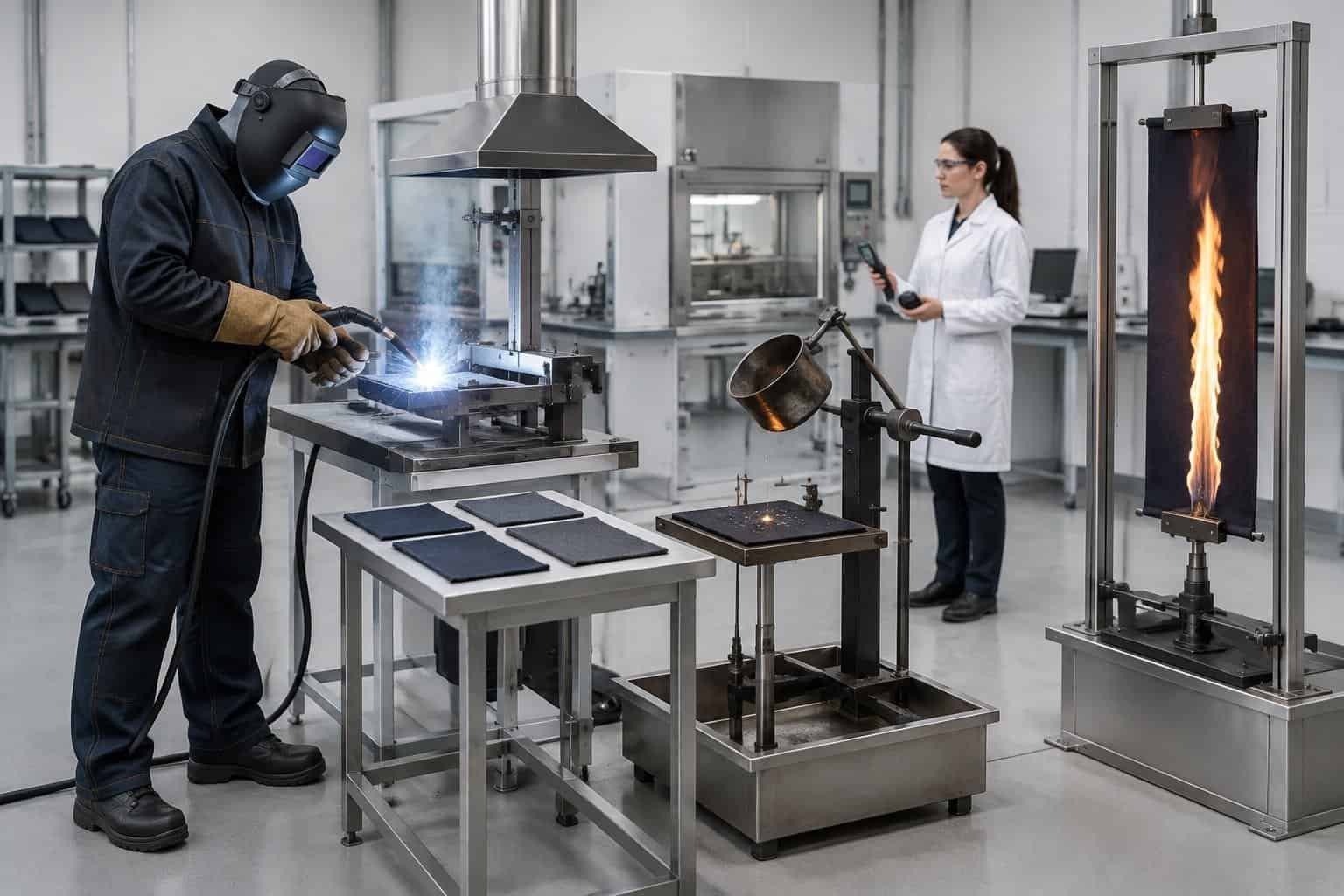
A1 and A2 identify flame-application procedures, while separate tests assess spatter, radiant heat transfer, electrical resistance, and mechanical performance. Each result answers a specific question about the tested specimen.
A1 Surface Ignition vs. A2 Edge Ignition
ISO 15025 measures limited flame spread under controlled flame application. Procedure A applies the flame to the specimen surface and corresponds to A1; Procedure B applies it to the lower edge and corresponds to A2.
These codes identify application methods. They are independent of the Class 1 or Class 2 designation and do not represent melting or dripping classes.
Assessment includes flame propagation and afterflame or afterglow behavior, together with applicable requirements for debris, holes, and seam integrity. Procedure-specific acceptance criteria belong in the report assessment because surface and edge ignition have different specimen exposure conditions.
Small Metal Splashes and Radiant Heat Transfer
ISO 9150 evaluates the impact of small splashes by applying molten-metal droplets to a specimen and measuring the temperature response behind it. The droplet count required to produce the specified temperature rise supports classification.
ISO 6942 assesses radiant heat transfer. RHTI 24 records the time required for the calorimeter temperature to rise by 24°C under the stated test conditions.
These methods address distinct heat-transfer mechanisms. A splash result cannot supply a missing radiant-heat result, and welding-droplet testing does not establish protection against a large foundry splash.
Electrical Resistance and Mechanical Strength
EN 1149-2 measures electrical resistance through the material thickness. Within the welding standard, this supports assessment of limited protection against accidental electrical contact.
That measurement differs from evaluating electrostatic charge dissipation. An anti-static claim therefore requires its own applicable evidence.
Mechanical requirements assess whether the material retains sufficient integrity for protective use. ISO 13937-2 measures tear force for applicable woven specimens; the relevant test route depends on the material construction. A complete fabric-testing assessment also checks the other required properties and any justified method exclusions.
How Pretreatment and Tested Assemblies Affect Results
Pretreatment establishes the condition in which performance was assessed. A report should identify cleaning procedures and the number of cycles, together with any other required preparation.
The specimen configuration is equally important. A result for an outer fabric combined with a lining applies to that tested assembly; the outer layer alone requires its own evidence.
For layered constructions, the report should identify layer order and exposed face. Information about flame-resistant lining fabric becomes relevant when the lining forms part of the protective assembly or changes its thermal behavior.
Why Does a Fabric Report Not Establish Garment Compliance?
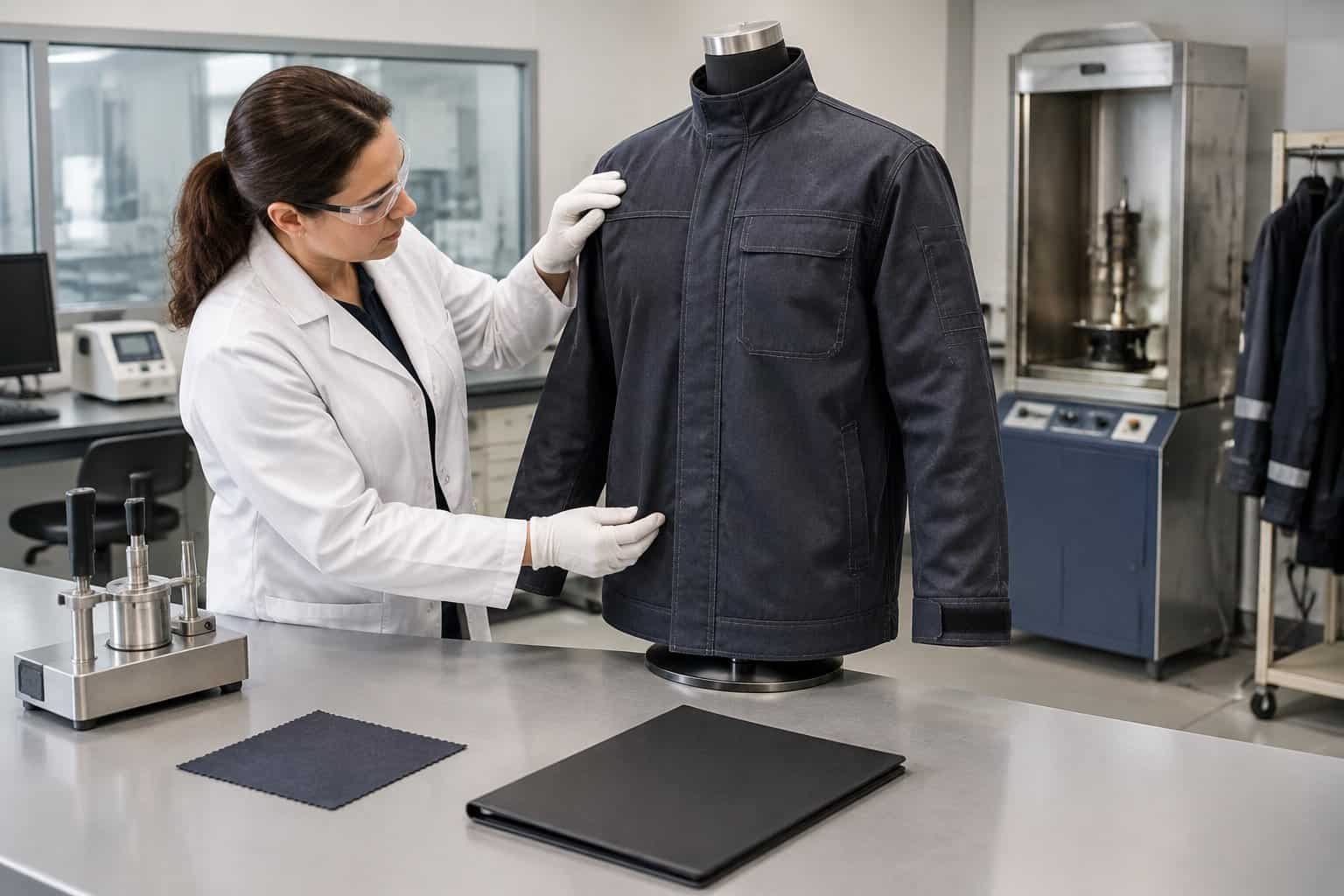
A fabric report establishes results for its identified specimens, while garment compliance also requires assessment of the finished protective clothing. Garment design and component selection determine how that material performs as worn.
Coverage, Seams, Closures, and Trims Require Separate Assessment
Welding clothing requires suitable body coverage throughout foreseeable working movements. Jacket-to-trouser overlap, neck closure, and cuff arrangements affect whether hot particles reach underlying clothing or skin.
Pockets and external folds require particular attention because they create collection points for spatter. Exposed fasteners and trim introduce additional materials into the protective system.
ISO 13688 supplies general protective-clothing requirements, including ergonomics and sizing. Garment-level conformity documentation must address the applicable finished-product requirements alongside the textile evidence.
Limited Electrical Protection Is Not Electrical Insulation PPE
The standard describes reduced risk from brief, accidental contact with live electrical conductors at voltages up to approximately 100 V DC under normal welding conditions. This is a restricted protective function with defined conditions.
Electrical work involving exposed energized parts requires a separate hazard assessment and appropriate electrical protective equipment. A welding-clothing designation does not authorize contact with live conductors.
Electrical arc-flash protection also has a separate evidence basis. Arc-rated fabric requires applicable arc testing; radiant heat from a welding arc does not establish an arc-flash rating.
Additional Protection and the Effects of Moisture, Wear, and Contamination
A complete welding PPE arrangement includes suitable protection for the head, face, eyes, hands, and feet. Higher local exposure also requires assessment of supplementary items such as sleeves or aprons.
Moisture and sweat affect electrical protection. Oil contamination creates an additional combustible load, while abrasion or holes reduce the integrity of the protective covering.
Inspection and appropriate laundering of FR clothing should follow the manufacturer’s instructions. Repairs require compatible materials and a controlled procedure that preserves the garment’s assessed construction.
How Should Buyers Read Labels and Laboratory Reports?

Buyers should reconcile every label claim with the product identity and scope recorded in its supporting documents. A standard number without an edition or traceable specimen reference leaves the purchasing decision incomplete.
Label and Report Table: Edition, Class, A1/A2, and Evidence Scope
The label summarizes declared protection; laboratory documents provide the underlying measurements and specimen details. Their identifiers should connect to the product being purchased.
| Item | Label or product declaration | Supporting evidence to verify |
|---|---|---|
| Standard and edition | Complete designation and year | Matching assessment basis |
| Class | Class 1 or Class 2 | Results supporting the declared class |
| Flame code | A1, A2, or both | ISO 15025 procedure and results |
| Product identity | Garment model or fabric reference | Matching specimen description |
| Assembly scope | Defined protective configuration | Layers, exposed face, seams where applicable |
| Care instructions | Declared cleaning conditions | Pretreatment consistent with those conditions |
For example, “Class 2 A1” records a different flame-application claim from “Class 2 A1+A2.” A buyer should preserve that distinction in the purchase specification and approval record.
Laboratory-Document Checklist: Identity, Methods, Pretreatment, and Results
A useful laboratory-document review covers the following points:
- Document identity: report number, issue date, issuing laboratory, and authorized approval.
- Specimen traceability: supplier reference, composition, construction, mass, and finish description.
- Test basis: standard editions, test methods, deviations, and subcontracted work.
- Pretreatment: cleaning method, cycle count, conditioning, and any additional preparation.
- Configuration: individual fabric or assembly, layer order, test face, and specimen direction.
- Results: measured values, required limits, individual observations, and classification conclusions.
- Accreditation scope: relevant methods within the laboratory’s accredited activities, where accreditation is required.
- Production connection: evidence linking the tested specimen to the approved commercial specification.
A report date records when the work was issued. Any validity or review condition should come from the applicable certification scheme, contract, or issuing body.
When Changes or Missing Evidence Require Further Verification
Changes to yarn, construction, finishing chemistry, or layer arrangement require an assessment of their effect on the existing evidence. Colour changes also warrant review when the approval scope does not cover the proposed variant.
Missing pages, unexplained specimen codes, and absent pretreatment details justify clarification before acceptance. One passing test leaves the remaining applicable requirements unresolved.
Effective FR fabric quality control connects the approved specification to production batches. Where existing documentation does not cover a change, the responsible technical or conformity-assessment body determines the necessary verification.
How Can Levitex Support Welding-Fabric Selection?
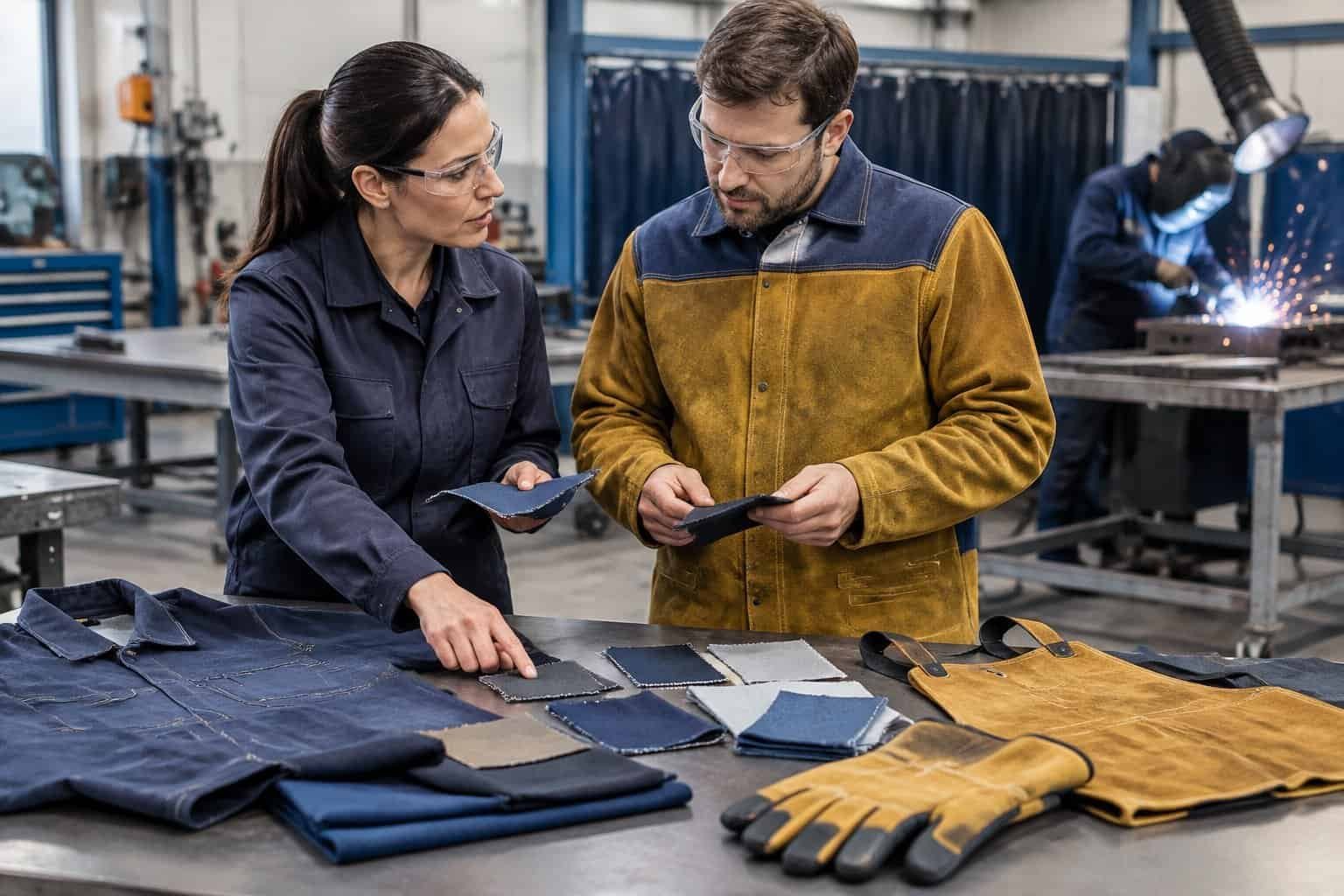
Levitex supports welding-fabric selection through textile manufacturing and specification discussions tied to product-specific evidence. Established in 1951, the company dedicates 1.5 million meters per month to flame-retardant fabrics.
Discuss Cotton, C/N, and CVC Fabrics Against Documented Requirements
Levitex manufactures three principal FR fabric families: 100% cotton, cotton/nylon (C/N), and cotton-rich cotton/polyester (CVC). These provide material options for industrial protective-workwear development.
Selection discussions should begin with the welding application and required evidence. Composition, construction, and finished mass then define the candidate cloth for assessment.
No blend designation establishes an EN ISO 11611 class. The relevant product report must support any proposed performance claim for welding protective clothing.
Confirm Custom Colour and Finishing Requirements with Product-Specific Evidence
Levitex provides custom dyeing and printing, including fluorescent dyeing. FR plus water-repellent and FR plus oil-repellent finishing are available across all three base-fabric families.
Each requested combination requires review against the intended welding specification. Additional fabric finishes introduce processing variables that require consideration within the product’s evidence scope.
Levitex supplies textiles. Finished-garment design, reflective-tape assembly, and garment certification remain outside its offering.
Request Relevant Specifications and Reports Before Ordering
A productive inquiry includes the welding process, required class, and A1/A2 requirement. It should also identify the applicable edition, proposed construction, colour, and cleaning conditions.
Levitex provides a test report for each product; buyers should request the specific report and check which methods and claims it covers. The existence of a report does not establish every welding requirement.
Buyers can send their welding application, required class, fabric construction, and available reports to Charlie Luo at Charlie@levitex.com for a product-specific discussion.
Match Welding Risk to the Right Evidence
EN ISO 11611 selection begins with the hazards of welding and allied processes and ends with traceable evidence for the specified product. Class, flame-application codes, and edition each describe a different part of that assessment.
Before ordering, the buyer should align the fabric reference with its laboratory documents and confirm the garment manufacturer’s responsibilities. Any unresolved assembly detail or unsupported claim should be clarified before production approval.
Frequently Asked Questions
The following answers address common interpretation points during purchasing and technical review.
Is ISO 11611:2015 still the current edition?
ISO 11611:2015 has been withdrawn and replaced internationally by ISO 11611:2024. An existing EN-designated document requires a separate check of its applicable adoption and conformity-assessment status.
Does Class 2 mean a fabric also meets both A1 and A2?
Class 2 does not automatically establish both flame-application codes. The declaration and supporting ISO 15025 results must identify whether A1, A2, or both were assessed.
Can EN ISO 11612 replace EN ISO 11611 for welding clothing?
EN ISO 11612 alone does not establish conformity for welding clothing. The welding application requires assessment against the applicable welding-specific requirements.
Does EN ISO 11611 establish an electrical arc rating?
EN ISO 11611 does not establish an electrical arc-flash rating. Any arc-rating claim requires separate evidence from the applicable arc test method.
Is a fabric test report enough to certify finished welding clothing?
A fabric test report alone is insufficient to certify finished welding clothing. The finished product also requires assessment of its construction and applicable garment-level requirements.