
Desizing removes weaving size, scouring removes waxes and oily impurities, and bleaching breaks down natural coloring matter to produce a whiter fabric base. These textile pretreatment stages prepare cotton fabric for uniform dyeing, with each stage addressing a different obstacle to consistent wet processing.
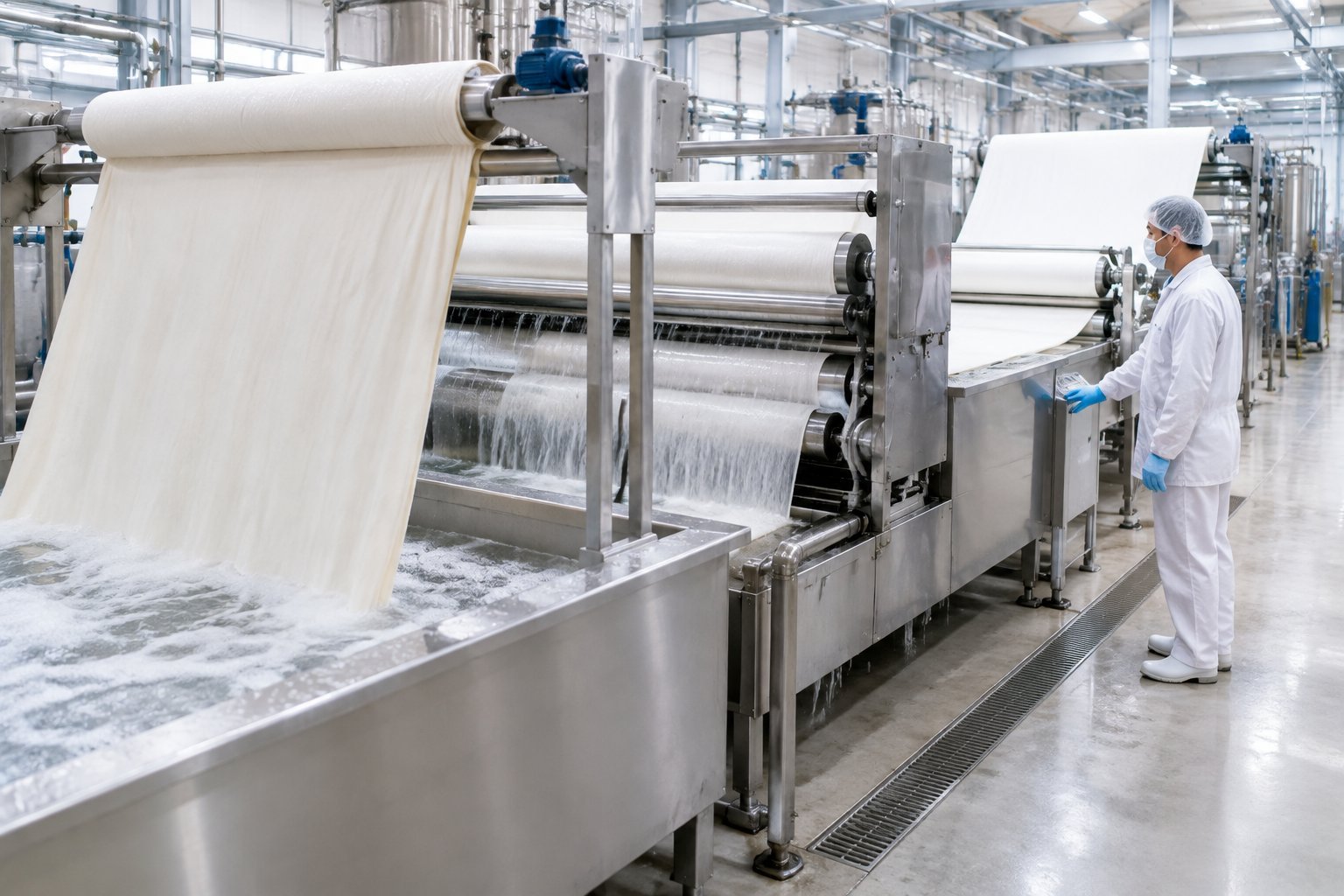
For industrial textile buyers, the useful distinction is between cleanliness, absorbency, and whiteness. A fabric that looks white still requires checks for residual size and even wetting before dyeing or protective finishing. Levitex manufactures flame-resistant textiles and provides custom dyeing and printing, making preparation quality relevant to both color consistency and subsequent fabric finishes.
What Does Each Preparation Stage Remove?
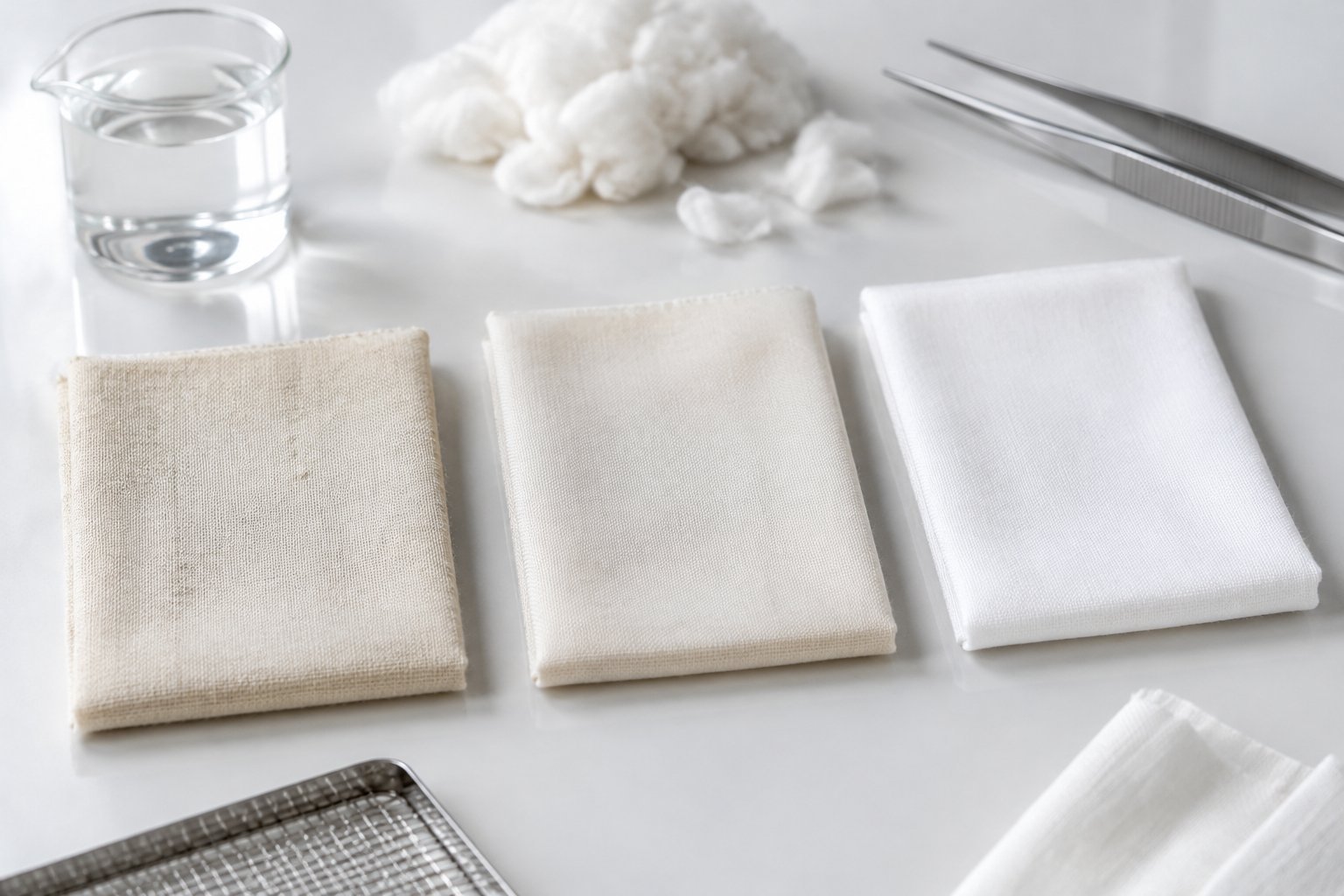
Desizing targets applied sizing agents, scouring removes natural and manufacturing impurities, and bleaching reduces the fabric’s natural color. Their success is assessed through different checks because appearance alone gives an incomplete picture of preparation quality.
| Comparison point | Desizing | Scouring | Bleaching |
|---|---|---|---|
| Main target | Warp size | Waxes, oils, pectins | Natural pigments |
| Typical treatment | Enzyme or size-specific washing | Alkali and surfactants | Hydrogen peroxide |
| Main result | Size removal | Improved absorbency | Increased whiteness |
| Relevant check | Residual size | Wetting uniformity | Whiteness uniformity |
| Route selection | Size chemistry | Fiber and contamination | Shade and whiteness target |
Desizing Removes Size Applied to Warp Yarns Before Weaving
Sizing protects warp yarns against abrasion and repeated stress during weaving. The applied film contains starch, synthetic polymers, or a mixture, sometimes with lubricants that help the yarns run smoothly through the loom.
Desizing breaks down or dissolves that film so washing carries it away. The treatment must match the sizing agents: an enzyme selected for starch has a specific action that does not extend to every synthetic polymer.
Thorough washing is part of the operation. Chemically loosened size that remains in the fabric still interferes with later processing, even when the cloth feels softer.
Scouring Removes Waxes, Oils, and Other Impurities
Scouring cleans the cotton surface and improves its ability to wet evenly. It addresses natural waxes, pectins, fatty substances, and contamination introduced during spinning or weaving.
Conventional cotton scouring uses sodium hydroxide, also called caustic soda, with suitable auxiliaries. Surfactants and wetting agents help the bath penetrate the fabric and disperse loosened oily material so washing removes it.
The chemical properties of cotton fabric help explain its suitability for controlled alkaline preparation. Processing severity still requires control because excessive treatment consumes strength reserve needed for industrial workwear.
Bleaching Removes Natural Coloring Matter
Bleaching reduces the yellowish or cream coloration remaining after cleaning. Hydrogen peroxide is a widely used bleaching agent for cotton because controlled oxidation breaks down the structures responsible for natural color.
A consistent white base supports pale shades and bright colors whose appearance is sensitive to the underlying cotton tone. Bleaching intensity therefore follows the required shade and the incoming fabric’s color.
Whiteness alone does not establish readiness for dyeing. Residual size and poor absorbency require separate assessment, while excessive oxidation risks cellulose damage and reduced fabric tear strength.
Which Processing Sequence Does the Fabric Need?
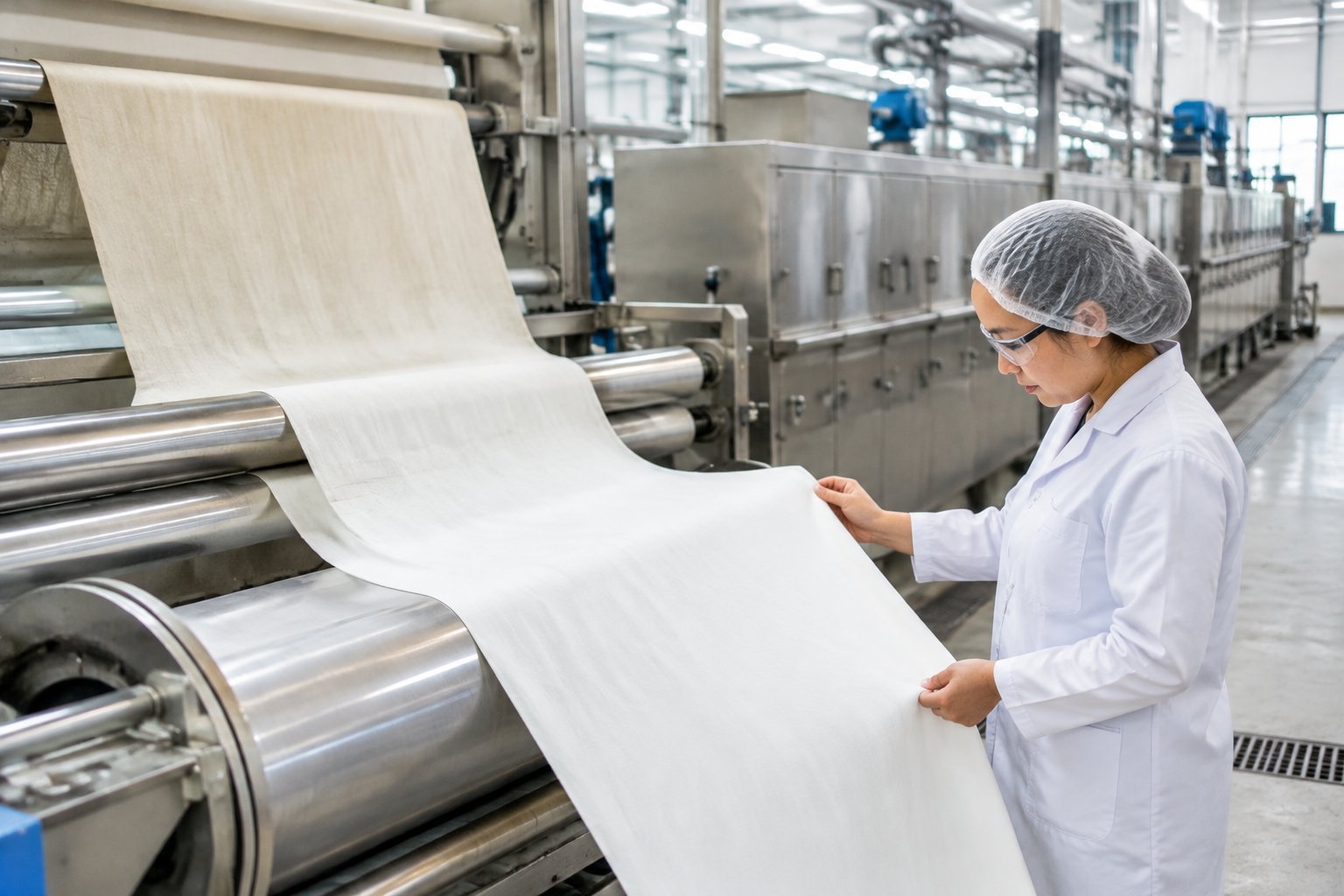
Sized cotton woven fabric commonly follows desizing, scouring, and bleaching, with washing between or within the operations. Construction, size chemistry, and the intended color determine which textile pretreatment processes the mill includes or combines.
The Typical Route for Cotton Woven Fabric
A conventional route starts with greige inspection, followed by singeing where a lower-fuzz surface is required. Desizing then removes warp size before scouring develops absorbency; bleaching follows when the whiteness target requires it.
Each stage prepares the material for the next. Removing size improves access to the yarn surface, while scouring helps the bleaching liquor penetrate evenly.
Mercerizing is a separate treatment used when specified changes in cotton’s dye affinity, luster, or dimensional behavior are required. Mercerization has its own process controls and does not replace cleaning. The complete route also needs tension and relaxation control because wet processing influences fabric shrinkage.
Choosing Desizing Methods for Starch and Synthetic Sizes
Enzymatic desizing with amylase is an established choice for starch-based size. The enzyme breaks starch into smaller, washable fragments under conditions selected for the particular enzyme system.
Water-soluble synthetic sizes require washing conditions matched to their chemistry and solubility. Mixed sizes need a route that addresses every major component; treating the starch portion alone leaves the remaining polymer load unresolved.
Oxidative desizing uses controlled oxidation to break down suitable sizes. Acid desizing, including acid steeping, requires careful control to limit cotton damage. Rot steeping relies on microbial action and has slower, less predictable performance, making it a poor fit for tightly controlled industrial schedules.
When Knitted Fabrics, Blends, and Dark Shades Need Different Routes
Weft-knitted fabric normally enters preparation without woven warp size, so its route focuses on knitting oils and fiber impurities. Construction records remain important because some knitted structures or yarn preparations introduce additional processing aids.
Cotton/nylon and cotton-rich cotton/polyester blends require conditions compatible with both fiber components. Heat setting also enters some blend-processing routes to control thermoplastic-fiber stability, with its position selected around contamination removal and subsequent treatments.
Dark shades sometimes permit reduced bleaching when the incoming base color is consistent. For custom dyeing and printing on FR fabric, the approved shade target should establish how much base whiteness is necessary before the production route is finalized.
How Does Pretreatment Affect Color and Protective Finishing?
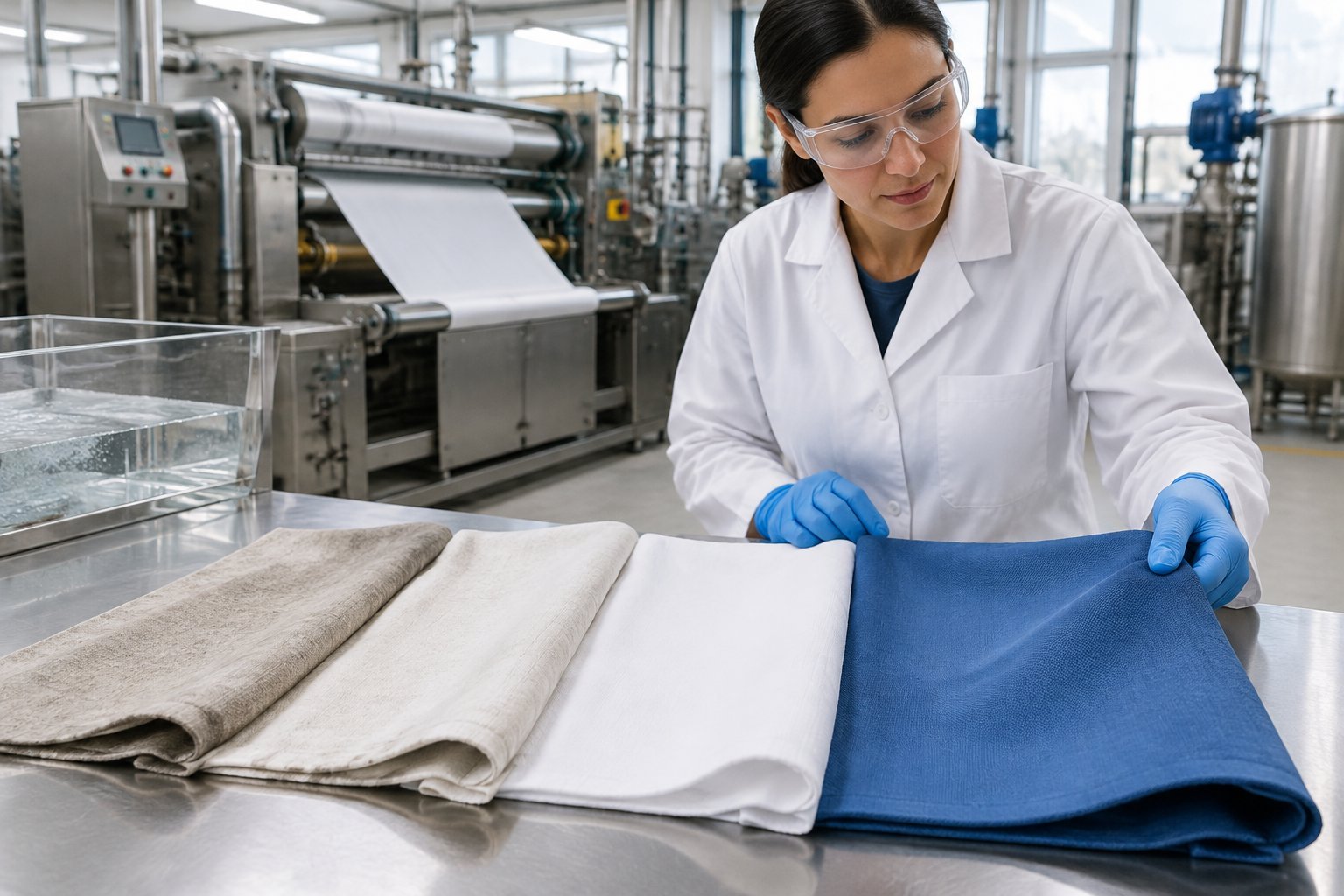
Uniform pretreatment supports even dye uptake and consistent application of protective finishes. Across the textile industry, defects introduced during preparation carry forward through wet processing and complicate correction after dyeing.
Residual Size and Poor Absorbency Cause Uneven Coloration
Residual size creates localized barriers to liquid penetration. Waxes or oily deposits also produce differences in wetting, leaving streaks, spots, or uneven coloration after dyeing.
A practical assessment checks both residual size and absorbency across the fabric width and along the roll. An iodine-based check helps identify starch residues, but synthetic-size assessment requires a method suited to the polymer.
Finished shade uniformity and color fastness to washing answer different questions. A visually even shade still needs the specified fastness assessment, including the effects of dye selection, fixation, and washing-off.
Inadequate Washing and Excessive Treatment Create Downstream Defects
Poor washing leaves dissolved size, dispersed oils, or processing chemicals in the cloth. Those residues affect later baths through contamination or unintended changes in processing conditions.
Residual peroxide requires particular attention before oxidation-sensitive dye systems. Uneven residual alkalinity also changes the conditions experienced by different areas of the fabric.
Excessive treatment creates a separate risk: harsh oxidation or prolonged exposure damages fibers and reduces usable strength. For multi-functional FR fabric finishing, compatibility assessment must cover the prepared substrate and the full finishing route. Preparation alone establishes no protective-performance claim.
What Buyers Should Confirm With Levitex Before Dyeing and FR Finishing
Buyers should establish the substrate and required finished result before approving production. Levitex’s base-fabric families include 100% cotton, cotton/nylon (C/N), and cotton-rich cotton/polyester (CVC), with woven and knitted constructions available.
A focused production discussion should cover:
- Fiber composition, construction, and the size chemistry when applicable.
- Approved color reference and any whiteness requirement.
- Required FR finishing and any additional functional finish.
- Acceptance checks for shade, dimensions, and retained strength.
- Product-specific reports relevant to the intended application.
Levitex manufactures textiles for protective-workwear applications; garment design and assembly remain outside its offering. Its FR fabric quality control discussion should therefore separate fabric acceptance from external garment-level requirements.
For a project discussion, buyers can send their fabric specification and color reference to Sales Manager Charlie Luo at Charlie@levitex.com. The inquiry should identify the intended industrial application so preparation and finishing requirements are considered together.
Match Preparation to the Fabric and Finish
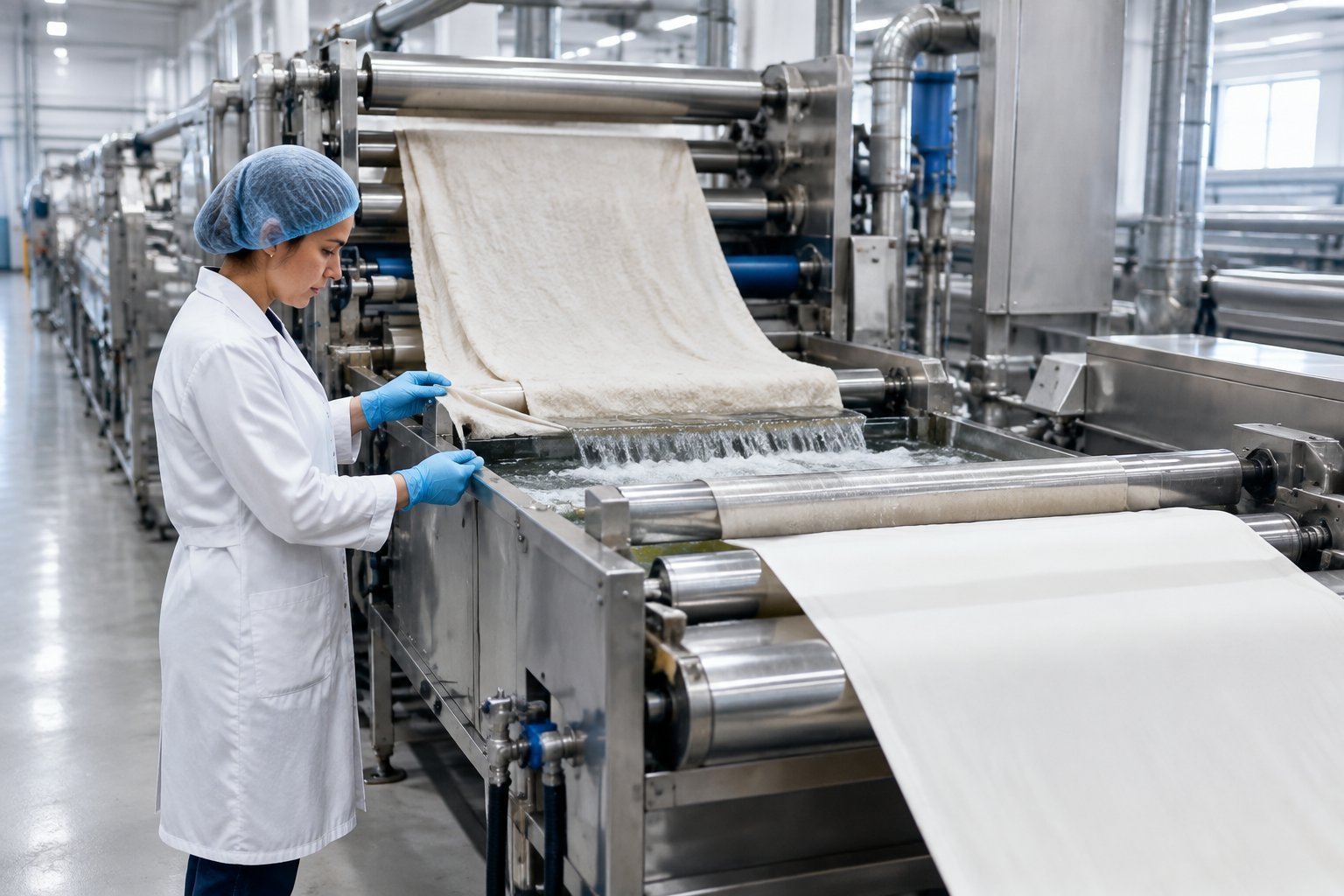
Effective textile pretreatment removes the specific obstacles between incoming cloth and the required finished fabric. Desizing addresses applied size, scouring establishes cleanliness and absorbency, and bleaching supplies the whiteness needed for the selected shade.
For cotton fabric procurement, the specification should connect those objectives to measurable acceptance checks. Residual size, wetting uniformity, and base whiteness belong alongside shade approval and retained-strength requirements.
The production route should be agreed before bulk dyeing, with protective-performance claims supported by the relevant product-specific reports. This keeps preparation decisions tied to the actual construction and intended industrial finish.
Frequently Asked Questions
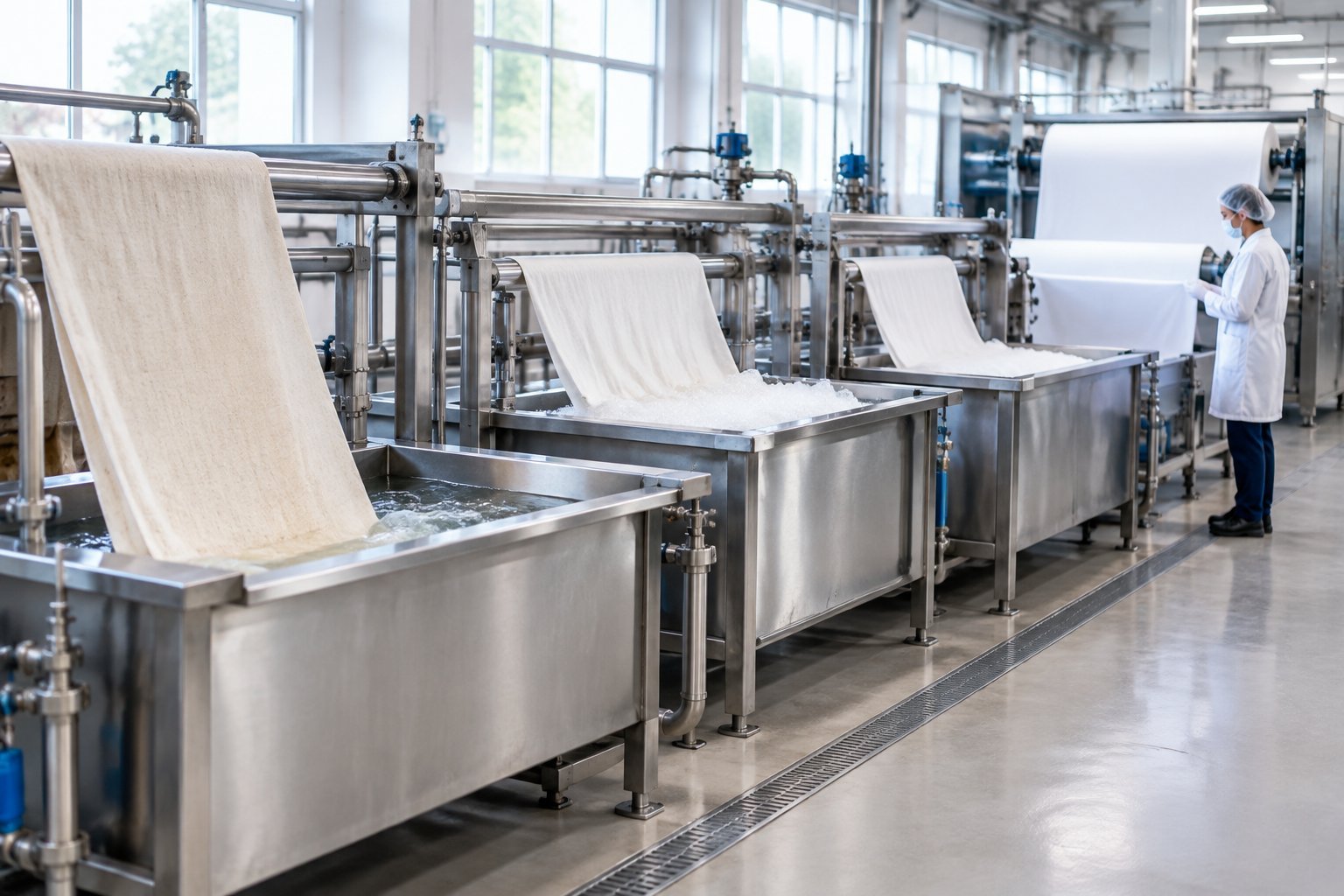
Desizing, scouring, and bleaching have separate objectives even when a mill integrates them into one production route. The following distinctions help clarify common processing decisions.
What is the difference between desizing and scouring?
Desizing removes sizing materials applied to yarns for weaving, while scouring removes waxes, oils, and other impurities. A fabric containing both warp size and natural cotton impurities requires treatment for both loads.
Why is scouring usually done before bleaching?
Scouring improves wetting and removes contamination that interferes with uniform bleaching. The cleaner, absorbent substrate allows the bleaching bath to reach the fabric more evenly.
Does every cotton fabric need bleaching before dyeing?
Cotton fabric requires bleaching when its natural color would interfere with the target shade or whiteness specification. Some dark shades permit a reduced-bleach or unbleached route after adequate cleaning and shade validation.
Can desizing, scouring, and bleaching be combined?
Compatible desizing, scouring, and bleaching operations can be integrated into a validated process. The combined route requires chemistry suited to the size and fibers, plus confirmation of size removal, absorbency, and retained strength.
Is there one formula for desizing, scouring, and bleaching?
Each fabric requires a process selected for its fiber composition, size chemistry, contamination, and intended finish. Equipment and washing efficiency also affect treatment selection, so production conditions require mill-level validation.