
For woven workwear buyers, ASTM D4970 is a practical fabric pilling test because its Martindale mechanism applies controlled multidirectional rubbing; grade 4 provides a useful starting acceptance target when the exposure stage and specimen preparation are specified. An existing buyer specification takes priority, including any requirement for an ISO method or a different acceptance grade.
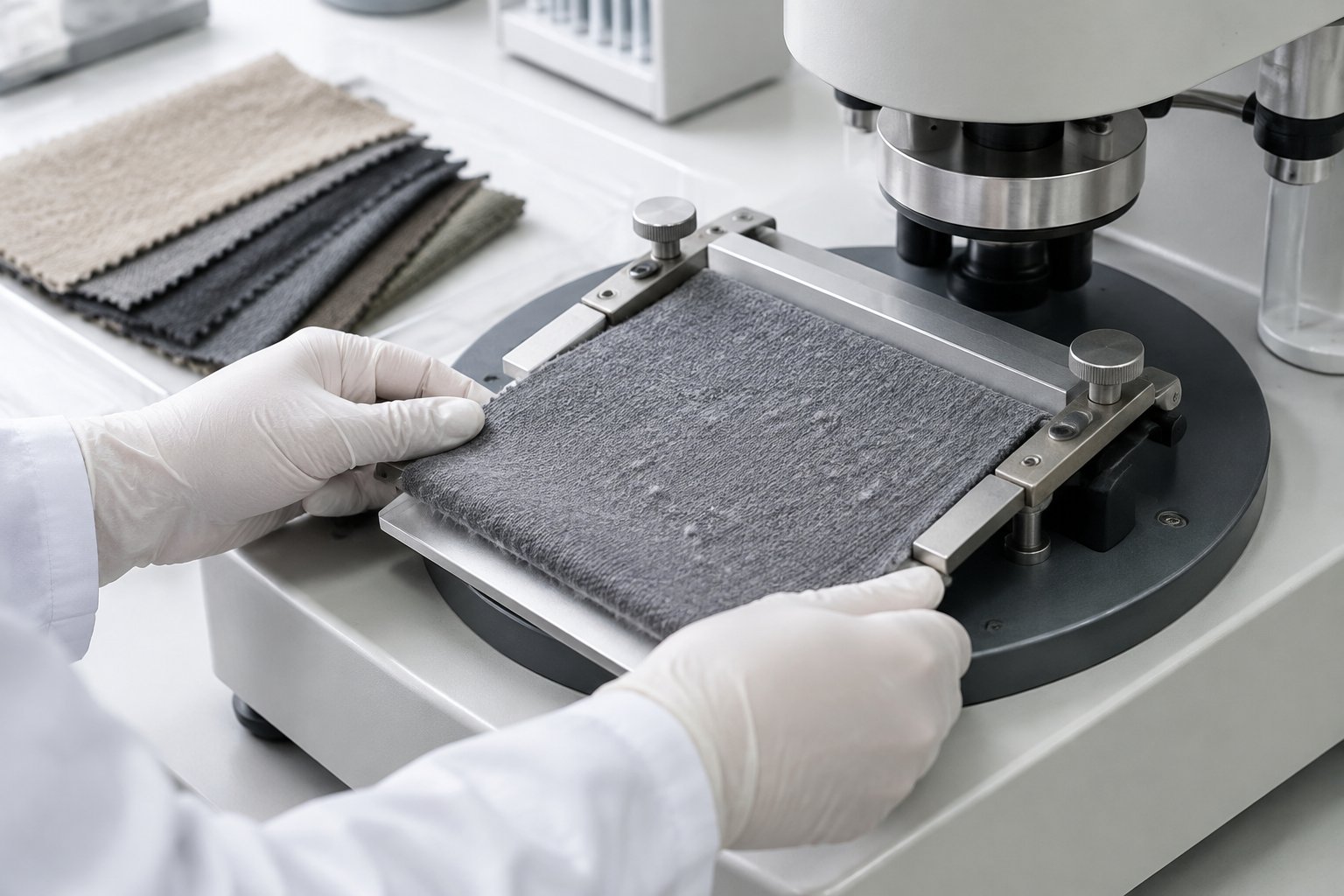
Pilling resistance describes how well a fabric maintains its surface appearance during a defined laboratory exposure. A grade becomes useful for purchasing only when it accompanies the method, test conditions, and assessed stage. Different methods produce different friction, so their grades require separate interpretation.
Levitex manufactures industrial protective-workwear textiles in 100% cotton, cotton/nylon (C/N), and cotton-rich cotton/polyester (CVC). For these fabrics, an agreed appearance requirement supports FR fabric quality control alongside the separate tests required for protective performance.
Which Pilling Test Method Should You Specify?
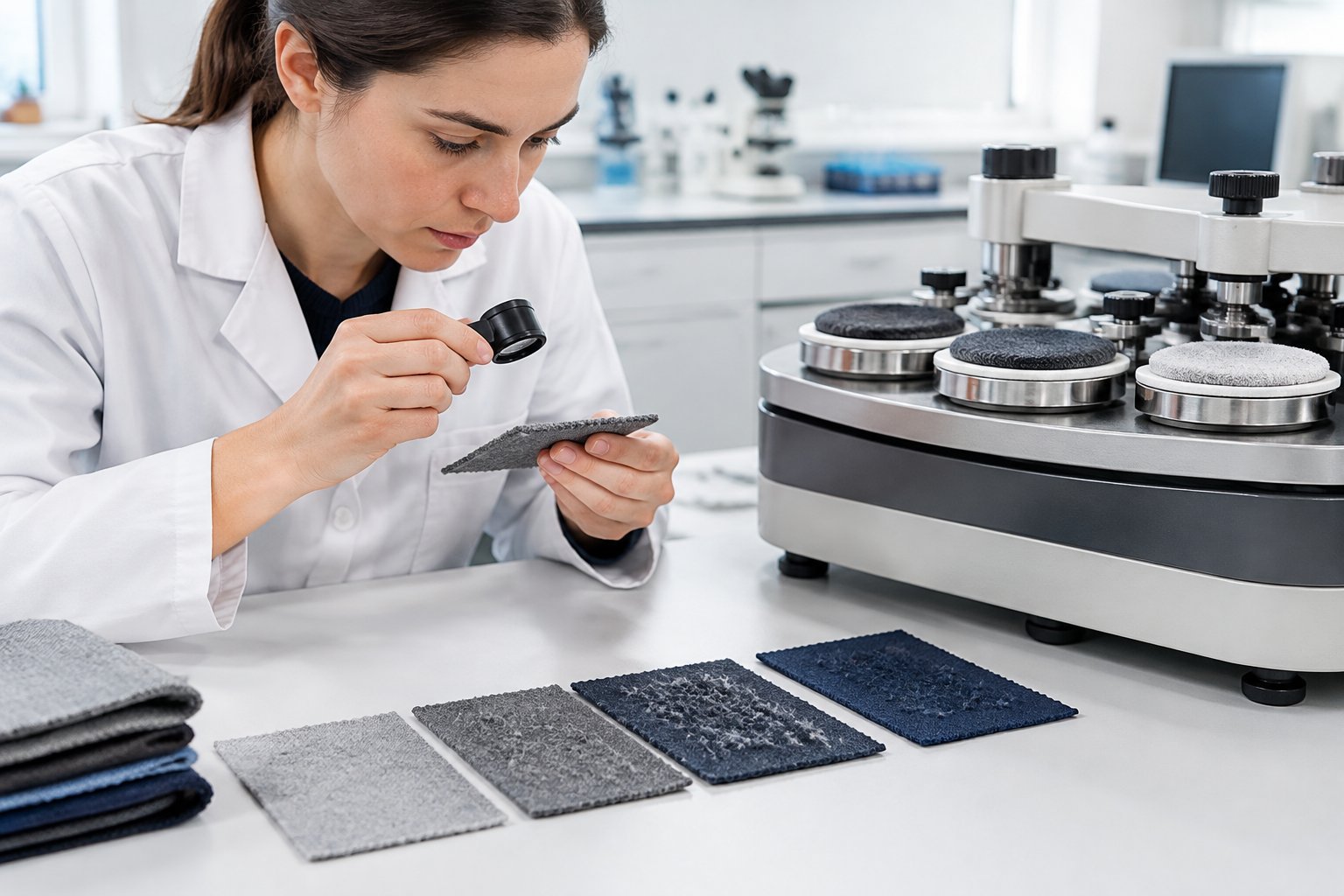
The buyer’s named standard should determine the method; where no requirement exists, modified Martindale provides a controlled starting point for woven workwear development. The ISO 12945 series also includes pilling box and random tumble procedures, each with a distinct rubbing mechanism.
| Comparison point | Modified Martindale | Pilling Box | Random Tumble |
|---|---|---|---|
| ISO reference | ISO 12945-2 | ISO 12945-1 | ISO 12945-3 |
| ASTM reference discussed here | ASTM D4970 | Separate box specification | ASTM D3512 |
| Specimen arrangement | Mounted flat | Mounted on tubes | Free specimens |
| Main action | Multidirectional rubbing | Rotating-box tumbling | Impeller-driven tumbling |
| Exposure reported | Rubbing stages | Revolutions or duration | Exposure time |
Modified Martindale: Controlled Multidirectional Rubbing
The modified Martindale method moves a mounted specimen against a specified opposing surface in a controlled Lissajous pattern. A Martindale tester applies the prescribed setup while the specimen experiences rubbing in changing directions.
ISO 12945-2 and ASTM D4970 cover this method family. Their procedural requirements require individual attention: a report issued under one standard does not establish compliance with the other.
For woven fabrics used in industrial workwear, the controlled contact makes this a useful development comparison. The laboratory must identify the loading arrangement and opposing surface, together with the exposure stages used for assessment.
Pilling Box: Mounted Specimens in a Rotating Chamber
The pilling box method places fabric specimens mounted on tubes inside a rotating, lined box. Contact with the lining and other mounted specimens generates surface disturbance as the box turns.
ISO 12945-1 defines this approach, which is associated with the ICI pilling tester. Its mounted tubes distinguish it from an impeller-driven random tumble apparatus.
The method is widely associated with knitted fabrics, although applicability follows the standard’s scope and the buyer’s requirement. Tube preparation, mounting tension, and exposure affect the result, so a grade requires those procedural details.
Random Tumble: Free Specimens in an Impeller-Driven Chamber
The random tumble pilling method uses an impeller to move free specimens through a lined chamber. Repeated contact with the chamber lining and other specimens produces fuzzing and pill formation.
ISO 12945-3 and ASTM D3512 address this method family. The random tumble pilling test has its own requirements for specimen preparation, chamber conditions, and exposure.
A random tumble pilling tester creates different stresses from either mounted method. A laboratory report should identify any method-specified additions and record abnormal specimen movement that affects test validity.
Matching the Method to the Fabric and Buyer Specification
Method selection should begin with the purchase specification and the intended comparison. When a customer has historical approval data under ASTM D3512, continuing that method preserves a useful basis for judging subsequent production.
Construction provides supporting context. Dense woven surfaces and open knitted structures respond differently to contact, but the labels “woven” and “knitted” alone do not establish the correct test.
A workwear fabric selection should therefore carry an explicit method requirement. Any proposed substitution needs buyer approval and, where necessary, side-by-side testing of the same production fabric.
How Should You Interpret Grades and Test Reports?
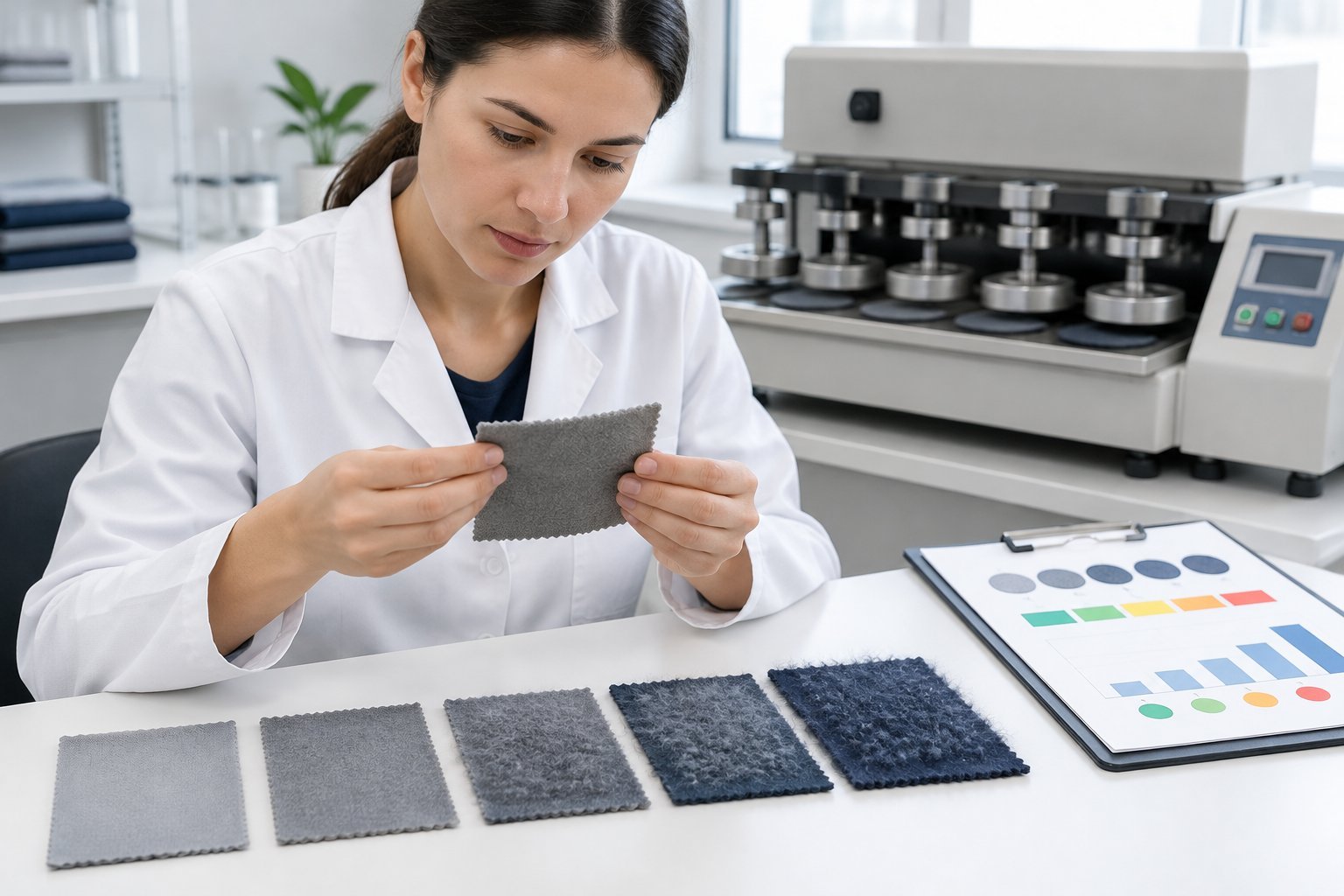
A pilling grade expresses surface appearance after a specified laboratory exposure. Reliable interpretation requires the assessment procedure and specimen condition, plus the stage at which the rating was assigned.
Distinguishing Fuzzing, Pills and Matting
Fuzzing occurs when fiber ends or loops project from the fabric surface. Fabric pills are compact entanglements that remain attached through anchoring fibers.
Matting describes surface fibers becoming tangled or compressed into a broader, denser area. A raised surface might show substantial matting with relatively few distinct pills.
These changes require separate attention during visual assessment. A reviewer should check which appearance characteristics the laboratory assessed, particularly when the tested fabric has an intentionally textured or raised face.
What Grades 1 to 5 Mean Under Visual Assessment
The scale runs from grade 5 for the least surface change to grade 1 for the most severe change. The following descriptions provide a practical orientation; the named method and its prescribed references govern the final assessment.
- Grade 5: No visible change.
- Grade 4: Slight surface change, with limited fuzzing or pilling.
- Grade 3: Moderate surface change, with clearly visible fuzzing or pills.
- Grade 2: Pronounced surface deterioration and substantial pilling.
- Grade 1: Severe surface deterioration with extensive fuzzing or pilling.
ISO 12945-4 addresses visual assessment of pilling, fuzzing, and matting within the ISO framework. Controlled lighting and suitable reference standards help assessors judge surface appearance consistently.
Intermediate ratings require the reporting convention permitted by the applicable procedure. Buyers should check individual specimen results when an average conceals a noticeably poorer specimen.
Why Method, Exposure Stage and Specimen Preparation Matter
A report should identify the standard and edition, fabric face tested, sampling details, pretreatment, conditioning, exposure stages, and individual results. Any departure from the standard also belongs in the report.
Pill formation is dynamic. Surface fibers first emerge and entangle; continued rubbing then enlarges some pills while breaking others away. A later stage with fewer attached pills therefore requires interpretation alongside the earlier observations.
Laundering changes the starting surface and sometimes the finish. For FR workwear, pretreatment should follow the agreed flame-resistant fabric care procedure, with the preparation recorded separately from the pilling exposure.
Pilling vs. Abrasion: Different Results From Similar Equipment
Pilling testing evaluates appearance change, while abrasion testing evaluates resistance to wear under its specified endpoint. ASTM D4966 describes abrasion resistance using a Martindale abrasion tester.
The Martindale abrasion test and Martindale pilling testing share an equipment family, but their setups and reported results serve different purposes. An abrasion cycle result supplies no direct conversion to a pilling grade.
The same separation applies to protection claims. Surface appearance data provide no substitute for flame-retardant property testing on the relevant fabric.
How Can Workwear Buyers Control Pilling Risk?
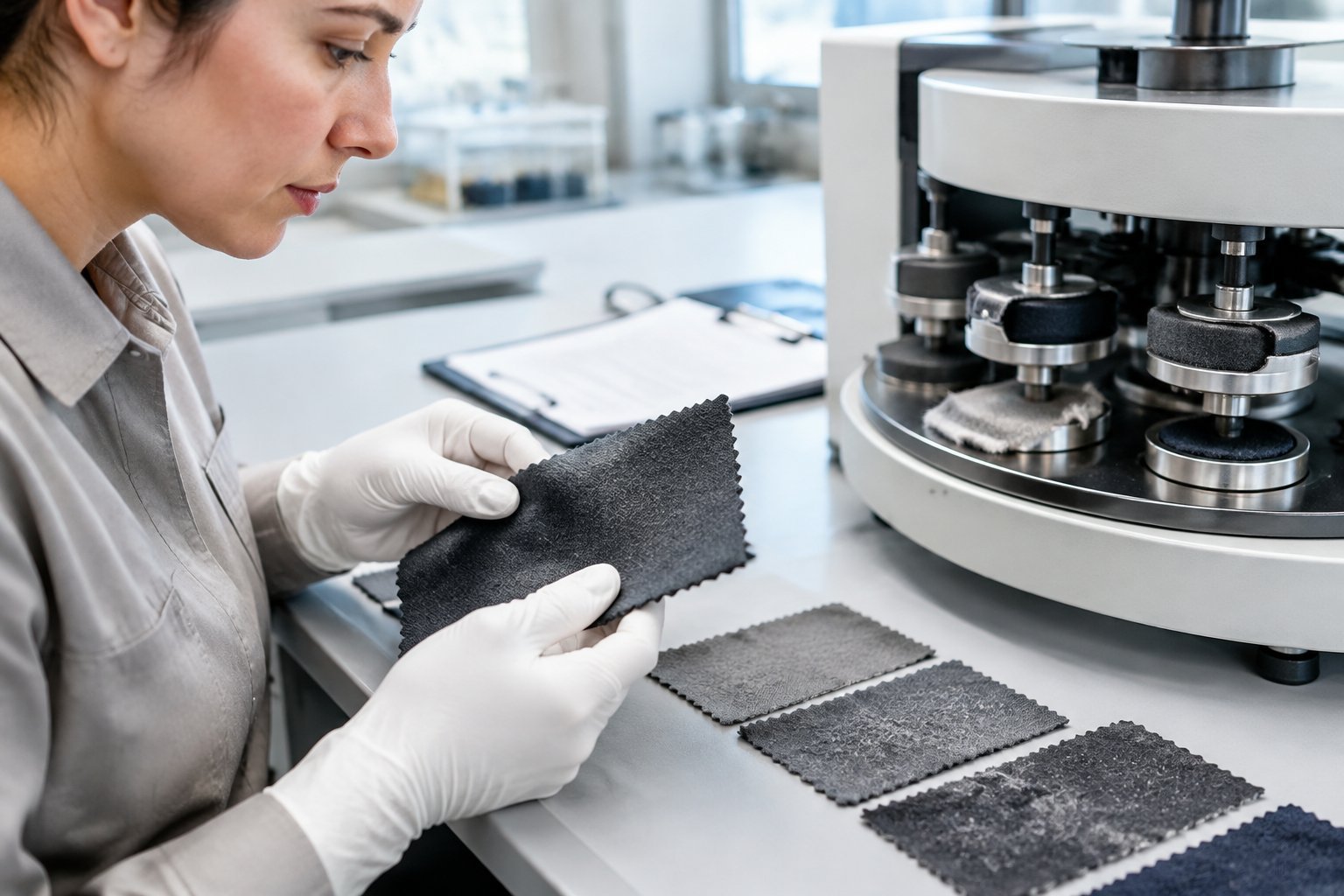
Workwear buyers should control pilling through construction specifications and production-fabric testing under agreed conditions. Approval samples need to represent the finished material supplied in bulk.
How Fibre, Yarn and Fabric Construction Affect Pill Formation
The causes of pilling begin with the supply of loose surface fibers and the strength of the fibers anchoring each pill. Fiber type influences both processes: short fibers provide more exposed ends, while strong anchoring fibers help established pills remain attached.
Yarn construction affects fiber mobility. Higher yarn twist restrains fibers, although changes in twist also alter handle and processing behavior.
Yarn hairiness supplies material for initial fuzz formation. Air jet spinning uses a yarn structure with wrapping fibers that helps constrain protruding ends; its benefit still requires verification on the finished fabric.
Fabric structure determines how readily fibers move and encounter friction. Dense binding points restrict movement, while exposed loops or raised surfaces increase contact opportunities. Composition alone supplies too little information to assign a grade.
What Surface Finishing Can Change—and What Needs Rechecking
Singeing removes protruding surface fibers through controlled heat exposure. Shearing cuts projecting fibers to a more uniform surface height, while bio-polishing uses enzymes to remove susceptible cellulosic surface fibers.
These fabric finishes change the amount of loose material available for entanglement. Their effectiveness requires checking after the full production route, including any agreed laundering pretreatment.
Finishing adjustments also require checks on other specified properties. Excessive cellulose removal or aggressive processing threatens fabric tear strength, making a smoother surface only one part of the approval decision.
For protective textiles, changes to the finishing route require a review of the affected performance requirements. An improved pilling result establishes only the measured appearance outcome.
Comparing Levitex Production Fabrics Under Agreed Conditions
Levitex produces woven fabrics across its 100% cotton, C/N, and CVC families and also manufactures flame-resistant knitted fabrics. Comparisons should identify the exact construction and finishing route for each candidate.
A useful comparison holds the test method and preparation constant. Production-representative samples should include the ordered color and finish, with traceable batch identification.
Levitex provides product-specific test reports; a pilling requirement should be requested explicitly with its agreed test conditions. General report availability carries no assurance that a particular pilling procedure has been performed.
Buyers evaluating a fabric order can contact Sales Manager Charlie Luo at Charlie@levitex.com to discuss the construction and documentation required for a method-specific assessment.
Writing a Method-Specific Pilling Acceptance Requirement
A purchasing requirement should define how the laboratory will test the fabric and how the buyer will accept the result. The following fields provide a usable specification framework:
- Exact standard designation and edition.
- Fabric face, sampling plan, and specimen quantity.
- Conditioning and any laundering pretreatment.
- Required setup and exposure stages.
- Minimum grade at each acceptance stage.
- Assessment references and treatment of individual results.
- Retest procedure and approval responsibility.
An illustrative requirement could read: “ASTM D4970, agreed edition; face side tested after the specified preparation; minimum grade 4 at each contractually defined acceptance stage; individual specimen ratings reported.”
The contract still needs the exposure stages and preparation details before that wording becomes complete. A material, yarn, or finish change should trigger the agreed reapproval process, including any relevant multi-functional FR finishing compatibility checks.
Specify the Method Before Accepting the Grade
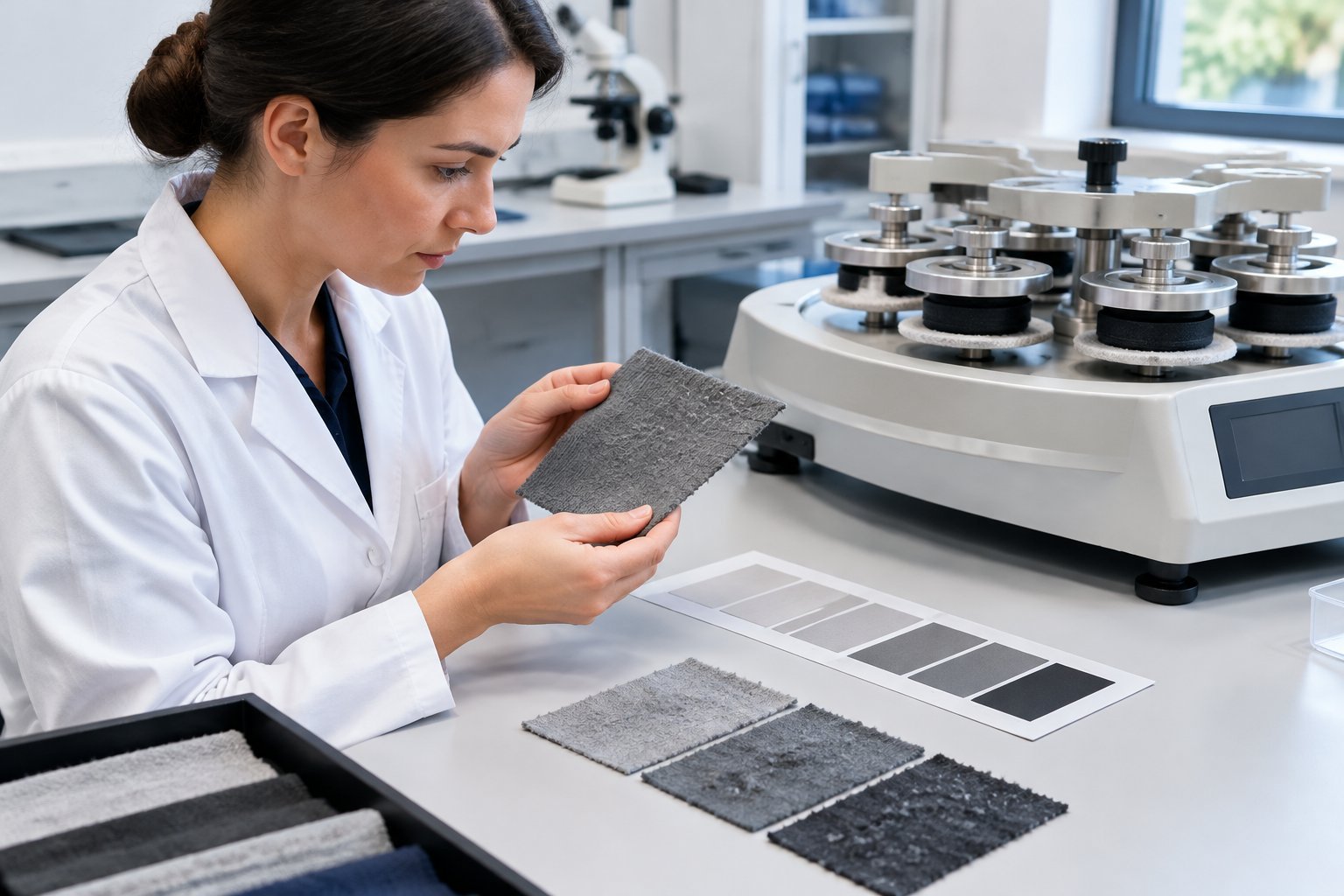
A usable pilling resistance requirement connects the grade to a named method and defined specimen condition. Modified Martindale offers a controlled option for woven workwear comparisons, while box and random tumble methods answer their respective specifications.
Before approving bulk fabric, the buyer should confirm the exposure stages, minimum pilling grade, and reporting rules. The retained approval sample and test report should identify the same production construction and finish. Laboratory results support controlled comparisons; field service life requires separate evidence from the intended use.
Frequently Asked Questions
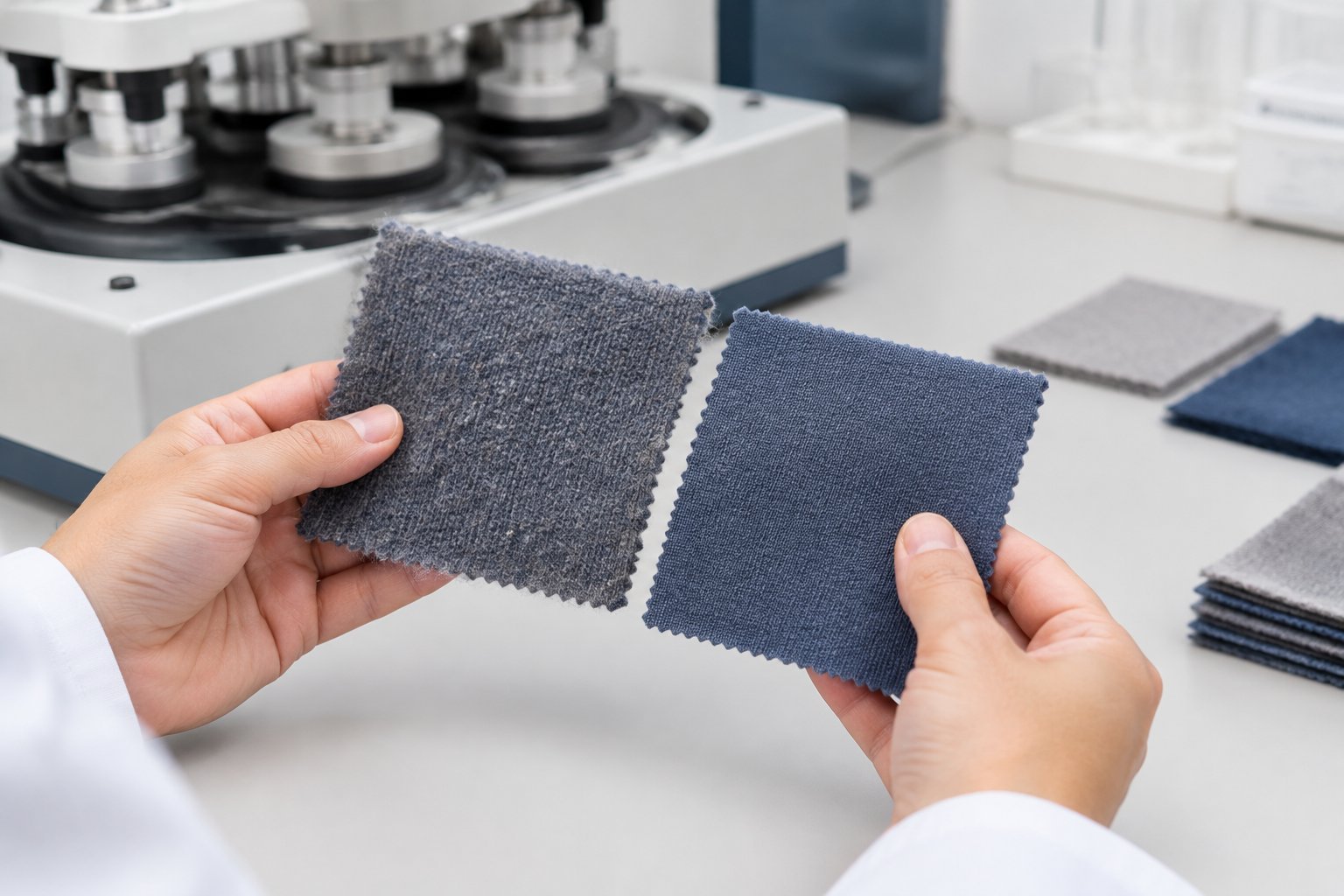
Standardized laboratory testing provides the basis for purchasing decisions, while home observations offer informal screening.
Can you reliably test fabric pilling at home?
Home rubbing or washing provides an informal indication of fabric pilling. Uncontrolled friction and lighting prevent a dependable standardized grade, so contractual acceptance requires the agreed laboratory procedure.
Is pilling resistance grade 4 a good result?
Grade 4 indicates slight surface change and provides a useful acceptance target for many workwear specifications. Its suitability still requires the named method, preparation, and exposure stage.
Does pilling mean a fabric is low quality?
Pilling alone provides insufficient evidence of low quality. It reflects surface behavior under friction, while strength and protective performance require their own assessments.
Can you tell whether fabric will pill from its composition?
Composition provides clues about pill formation and retention, but it cannot establish a pilling grade. Yarn hairiness, construction, and finishing also influence the tested result.
Can a fabric shaver restore pilling resistance?
A fabric shaver removes existing pills without restoring the underlying pilling resistance. On protective workwear, blade contact also risks damaging the textile, so maintenance should follow the applicable care instructions.