
In the twill vs plain weave comparison, plain weave provides frequent yarn bindings and a stable, flatter surface, while twill uses offset bindings and longer floats that support more flexible drape. For industrial workwear, plain weave suits applications that prioritize surface stability; twill is a strong candidate where ease of movement and a diagonal texture are desirable.
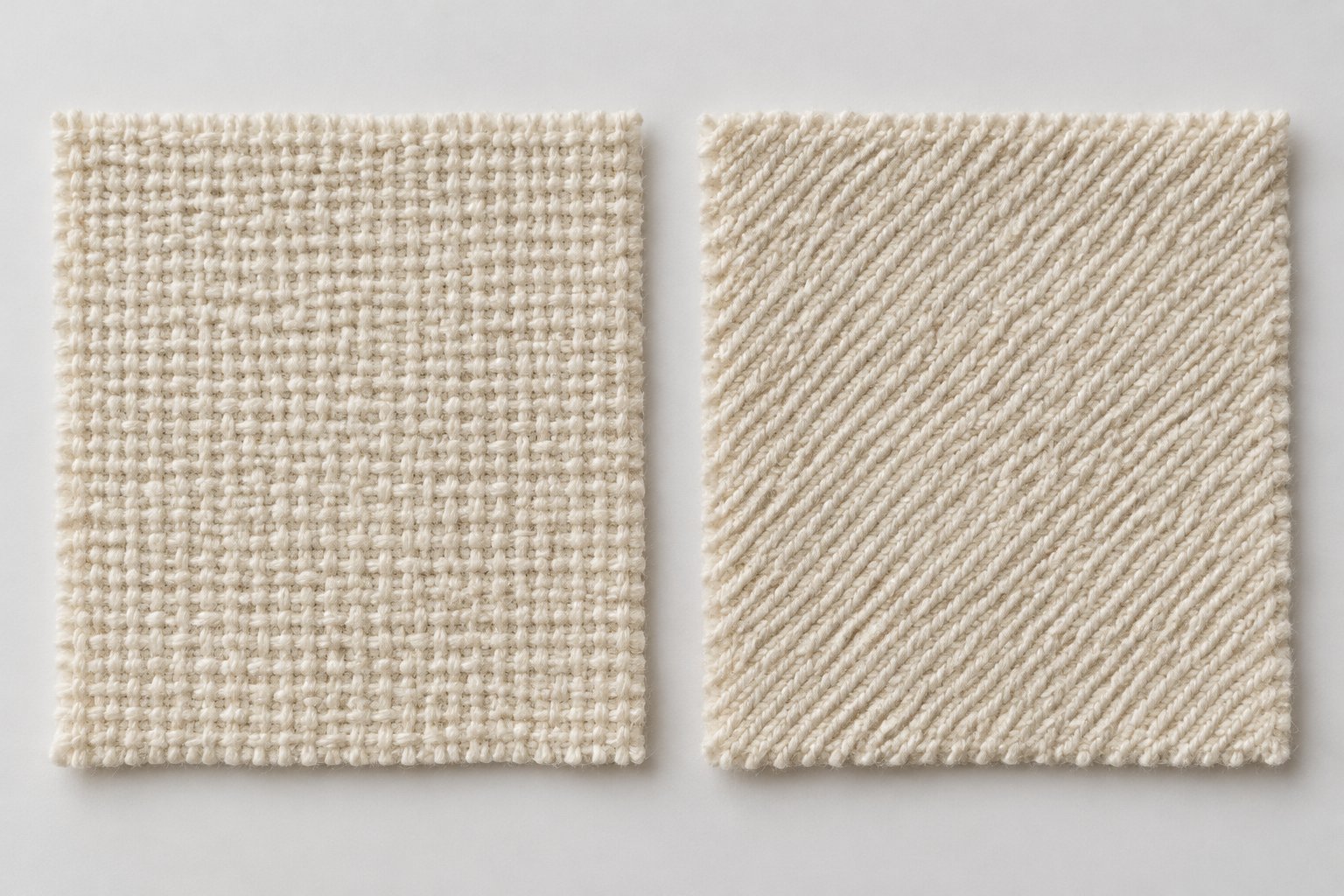
A woven fabric’s durability also reflects its yarn strength, density and finishing. Two cloths with identical fiber composition and fabric weight still require separate evaluation because their construction changes how the yarns respond to pulling or repeated rubbing.
Levitex manufactures industrial workwear textiles using 100% cotton, cotton/nylon (C/N), and cotton-rich cotton/polyester (CVC) base fabrics. Its manufacturing focus places weave within the broader process of selecting workwear materials: buyers need a construction that handles the job comfortably and product-specific evidence for every required protective property.
How Do the Interlacing Patterns Change the Fabric?
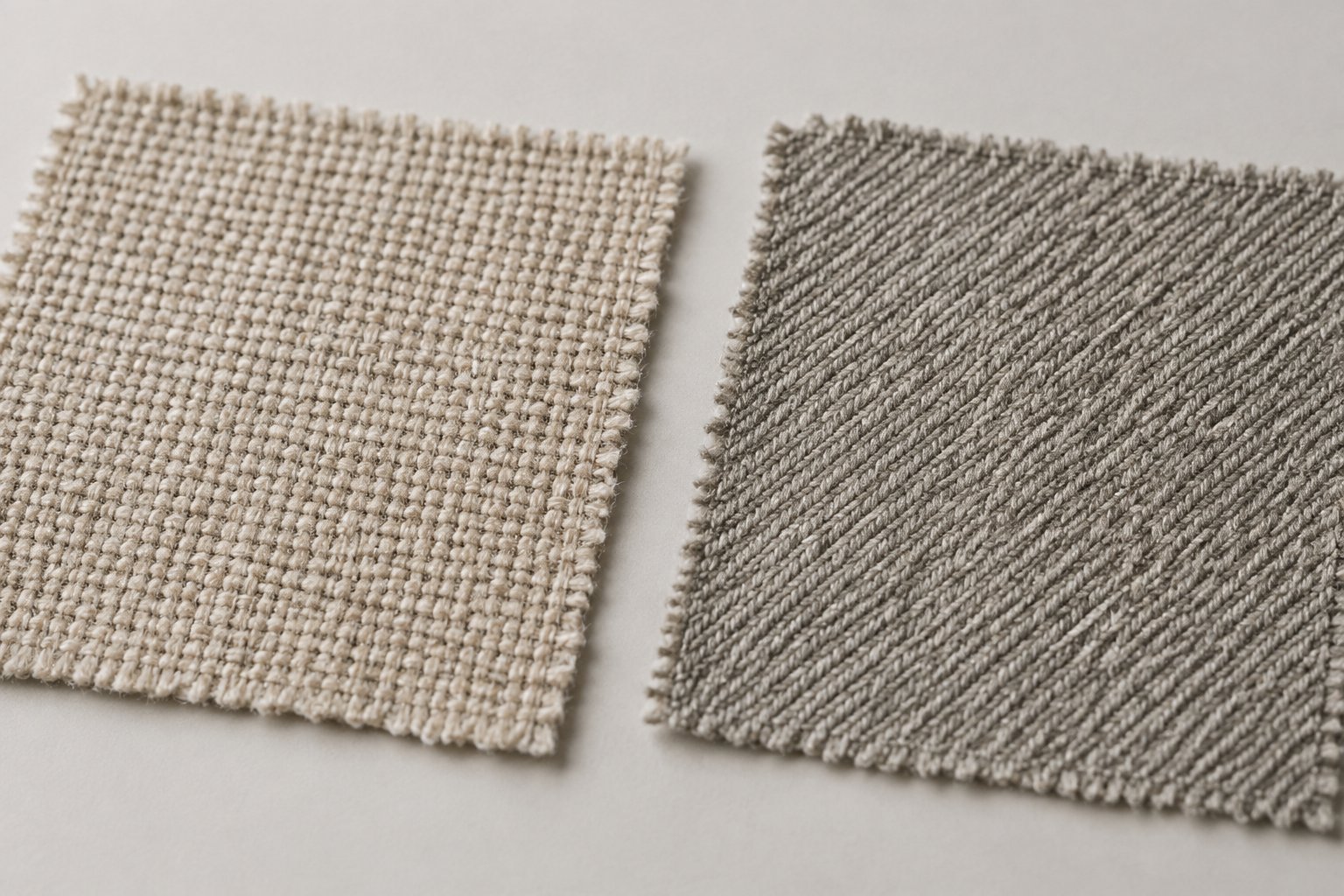
Interlacing frequency controls how firmly the yarns are held, while float length influences surface exposure and freedom of movement. Plain weave binds at every successive yarn; twill spaces those bindings into a diagonal repeat.
Plain Weave: Alternating Over One and Under One
The plain weave structure follows a repeating over-one, under-one sequence. Each weft yarn crosses successive warp yarns in alternation, and the next weft reverses that sequence.
These frequent changes between the two fabric faces hold warp and weft closely in position. Compared with longer-float weave structures using similar yarns and density, plain weave generally offers greater resistance to yarn displacement.
Plain weave fabric has a small checkerboard structure under magnification. Its two faces have the same basic interlacing pattern, although printing, colored yarns or surface finishing create visible differences between them.
Frequent interlacing also introduces yarn crimp, the waviness created as yarns bend around one another. A stable structure therefore does not automatically establish equal strength in both directions; warp and weft specifications still need examination.
Twill Weave: Offset Bindings and Longer Floats
Twill weave shifts the binding points progressively across successive yarns. That offset forms the characteristic twill line visible across the cloth.
Common constructions include 2/1, 2/2 and 3/1 twill. In a warp-faced 3/1 construction, for example, a warp yarn passes over three weft yarns before passing beneath one.
The exposed segments between bindings are yarn floats. Longer floats reduce the frequency of yarn restraint, supporting a more flexible fabric structure when other variables are comparable.
Twill fabrics also accommodate close yarn packing because the yarn path has fewer binding changes. A dense workwear twill therefore needs its own assessment of stiffness and airflow, even when a lighter twill feels supple.
How to Recognize the Surface and Common Variations
A fabric inspection begins with a magnifier and a visible yarn path. A printed diagonal pattern alone provides insufficient evidence of twill construction.
An S-twill has a diagonal aligned with the middle stroke of the letter S; a Z-twill follows the middle stroke of Z. Herringbone reverses the twill direction at intervals, producing a broken zigzag effect.
Common cotton plain weave fabrics include cotton poplin, broadcloth, chambray and muslin. Canvas belongs to a heavier construction family, while cotton twill examples include denim and gabardine; these names identify textile types without establishing industrial suitability.
Surface appearance also reflects yarn count and fabric weight. Fine-yarn poplin and coarse-yarn canvas share a basic weave family while presenting very different textures.
Which Performance Differences Matter in Industrial Workwear?
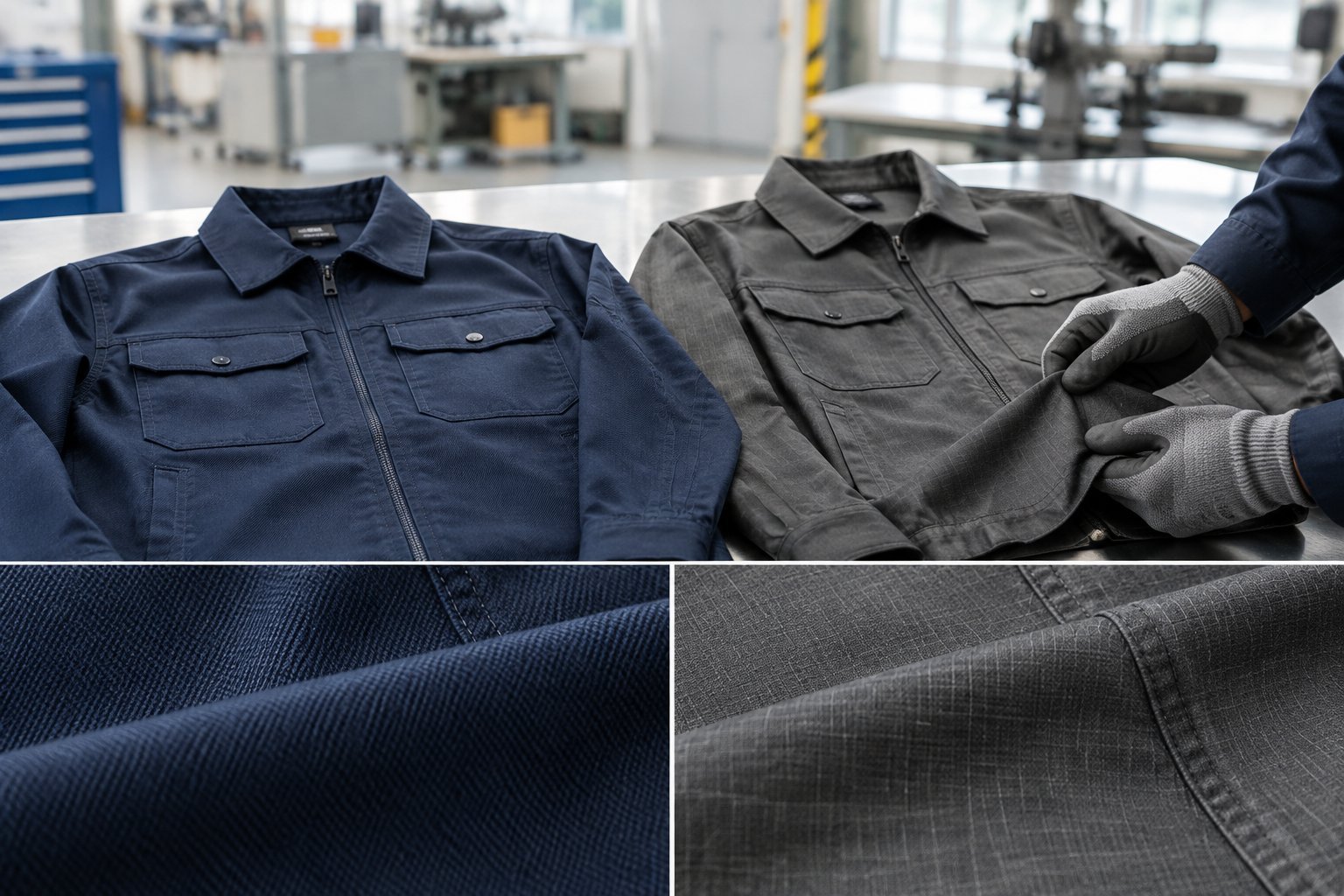
Useful performance comparisons distinguish structural tendencies from measured results. Fabric construction influences wear behavior, but yarn specifications and finishing determine whether those tendencies survive in the finished textile.
Compare Like for Like: Yarn, Density, Weight and Finish
A meaningful plain weave vs twill comparison starts with equivalent fiber composition and yarn quality. Buyers also need the warp and weft yarn counts, construction density, finished fabric weight and finish description.
Thread count alone leaves substantial gaps. The same number of coarse and fine yarns produces different coverage, and a combined count conceals differences between lengthwise and crosswise density.
Matching every variable perfectly is difficult because changing the fabric weave also changes crimp and achievable packing. Commercial comparisons should document the remaining differences alongside the test results.
| Comparison criterion | Plain weave | Twill |
|---|---|---|
| Basic interlacing | Alternating 1/1 | Offset repeat |
| Surface | Fine grid | Diagonal ribs |
| Yarn floats | Single-yarn spans | Longer spans |
| Drape with comparable construction | Firmer | More flexible |
| Yarn displacement | More restrained | Greater mobility |
| Snag exposure with comparable yarns | Short exposed spans | Longer exposed spans |
These are construction tendencies. They provide a starting point for sample evaluation without assigning a universal durability winner.
Tensile Strength, Tear Resistance and Abrasion Are Different Measures
Tensile strength measures resistance to a pulling load across a specimen. Yarn strength, crimp and the number of load-bearing yarns influence the result, so neither weave earns an automatic advantage.
Fabric tear strength concerns the force needed to propagate a tear. Under suitable construction conditions, twill’s greater yarn mobility allows adjacent yarns to gather and share the load near a tear.
Abrasion resistance measures behavior under repeated rubbing. Float exposure and surface treatment influence the outcome, alongside the fiber and yarn construction.
A Martindale abrasion test provides controlled rubbing conditions. Buyers should compare results using the same method and endpoint, then assess how closely those conditions reflect the intended workplace exposure.
Drape, Wrinkling, Snagging and Fabric Stability
Twill’s reduced binding frequency generally supports softer drape. This makes it a useful candidate for workwear panels subjected to frequent bending, provided the finished cloth has sufficient strength.
Plain weave’s frequent bindings restrain yarn movement and help maintain a regular surface. This behavior supports applications requiring controlled handling during cutting and sewing.
Longer exposed floats give hooks and rough edges more opportunity to catch a yarn. A tightly constructed short-float twill deserves a different snagging assessment from a loose, long-float fabric.
Wrinkle resistance also requires qualification. Twill texture helps disguise creasing, while fiber recovery and finishing govern how readily the fabric returns to shape. Laundered samples reveal skew or other dimensional changes that a new swatch conceals.
Why Breathability Depends on More Than Weave
Air permeability follows the size and connectivity of spaces within the finished cloth. Yarn packing and finish add-on directly affect those spaces.
A lightweight plain weave with open pores supports airflow. A tightly packed plain weave restricts it, while a suitably constructed twill remains an option for warmer working conditions.
A fabric air permeability test allows comparison at a specified pressure difference. Reports should identify matching test conditions, because airflow values from different setups require careful interpretation.
Thermal comfort also includes moisture transport and garment ventilation. Air permeability provides one useful measurement within that broader assessment.
How Should Buyers Choose Between Plain and Twill?
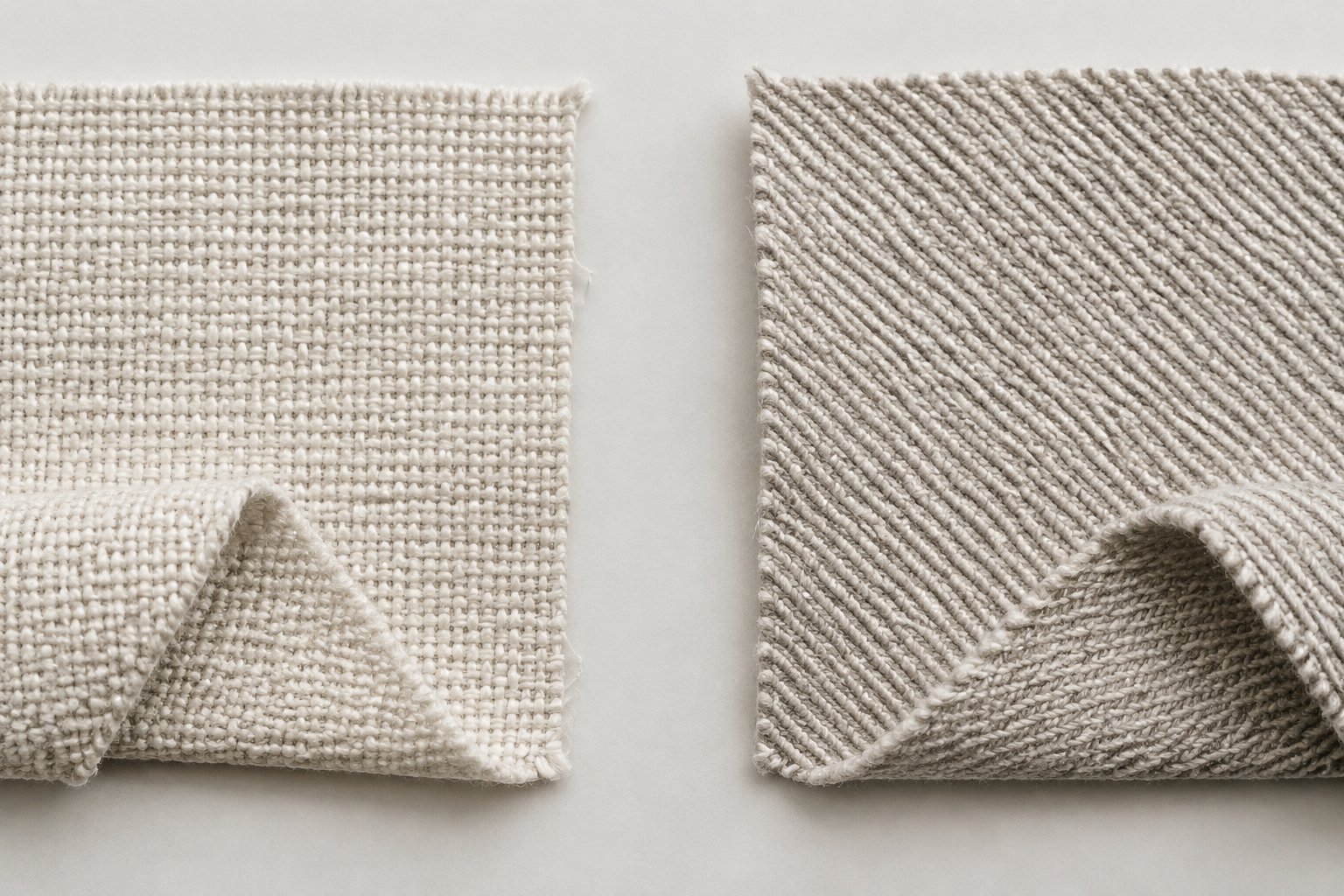
Buyers should shortlist plain weave for controlled surface stability and twill for flexible drape, then compare finished samples against the actual wear conditions. The purchasing specification should connect each requirement to a measurable property.
Match the Construction to Movement, Wear and Surface Requirements
For industrial trousers and coverall fabrics, movement at the knees and hips makes drape a useful screening criterion. Twill deserves consideration where repeated flexing accompanies substantial wear.
Plain weave is a practical candidate where a regular surface and restrained yarn movement receive priority. Fabric weight and yarn size determine whether that construction feels crisp, soft or rigid.
The work environment should shape sample evaluation. Rough edges call for snag assessment; repeated rubbing calls for abrasion data; stress around existing damage calls for tear resistance evidence.
Surface texture also affects the appearance of contamination. A twill rib that disguises soil still requires the same cleaning discipline as any other workwear textile.
Where Canvas and Ripstop Fit into the Comparison
Canvas describes a substantial fabric construction, commonly made using plain or basket-weave arrangements. Its coarse yarns and fabric weight give it a different handling profile from lightweight plain-weave shirting.
Ripstop fabric incorporates reinforcement yarns at intervals, forming a visible grid. Its underlying construction requires identification because reinforcement grids occur in different weave arrangements.
Neither name establishes a measured service life. Buyers should compare reinforcement spacing and yarn specifications, then examine relevant tear results.
Levitex supplies canvas base cloth that can be customized to customer-specified base-fabric requirements. Such customization concerns the textile specification; the finished application still requires its own validation.
Separate Weave Selection From Verified Protective Performance
Protective performance requires evidence for the specific finished fabric. Plain weave and twill describe yarn arrangements, and each requires suitable materials and processing for the intended hazard.
Fabric finishes change the behavior of the finished textile. Levitex offers FR plus water-repellent and FR plus oil-repellent finishing on its 100% cotton, C/N and CVC base-fabric families.
Those capabilities require product-specific verification against the buyer’s requirements. Composition or fabric weight alone establishes no flame, arc or molten-metal protection level.
External EN standards for FR workwear also distinguish material requirements from finished-garment requirements. Levitex supplies textiles; garment construction and assembly remain responsibilities of the downstream manufacturer.
Compare Levitex Samples and Product-Specific Reports Before Ordering
A useful sample request identifies the intended application, preferred composition, finished weight and construction. Color and finishing requirements should accompany that information.
Levitex states that each product has a test report. Buyers should request the report corresponding to the proposed fabric and check the sample identification, test methods and conditioning details.
Where ongoing cleaning forms part of the specification, industrial laundering and repellency require particular attention. The agreed care procedure and any performance checks after laundering belong in the purchasing requirements.
Buyers comparing plain and twill options can contact Sales Manager Charlie Luo at Charlie@levitex.com to discuss textile specifications and request relevant samples and product-specific reports.
Choose the Construction, Then Verify the Performance
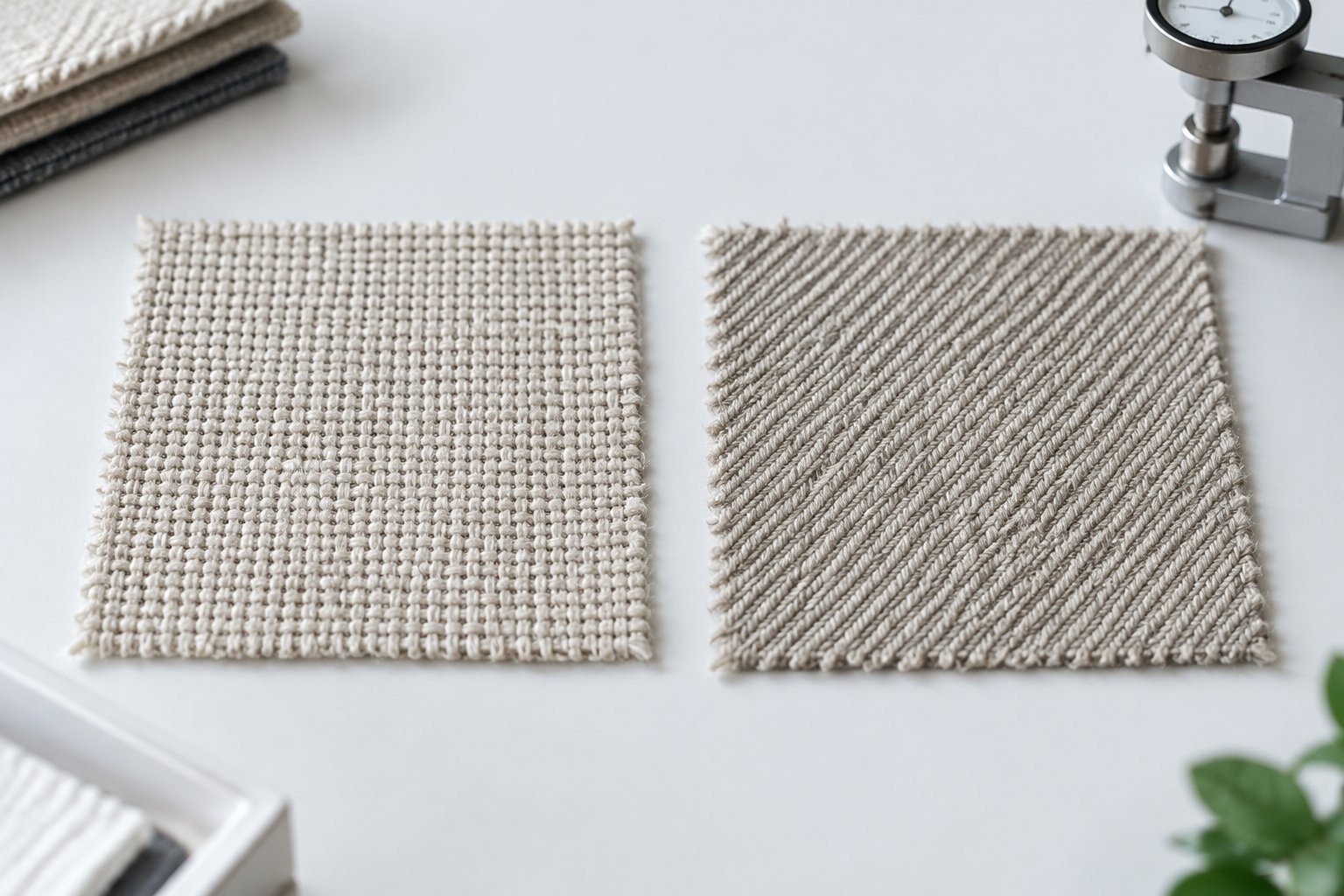
Plain weave favors frequent bindings and structural stability; twill favors diagonal construction and greater freedom for yarn movement. Both have valid roles in industrial fabric selection.
The final comparison should use documented yarn specifications and finished samples. Buyers should record construction density, fabric weight and finishing alongside the relevant performance results.
A purchase order should identify the approved weave structure and fabric reference, with agreed acceptance criteria for the required properties. Protective claims should remain tied to the specific material and applicable reports.
Frequently Asked Questions
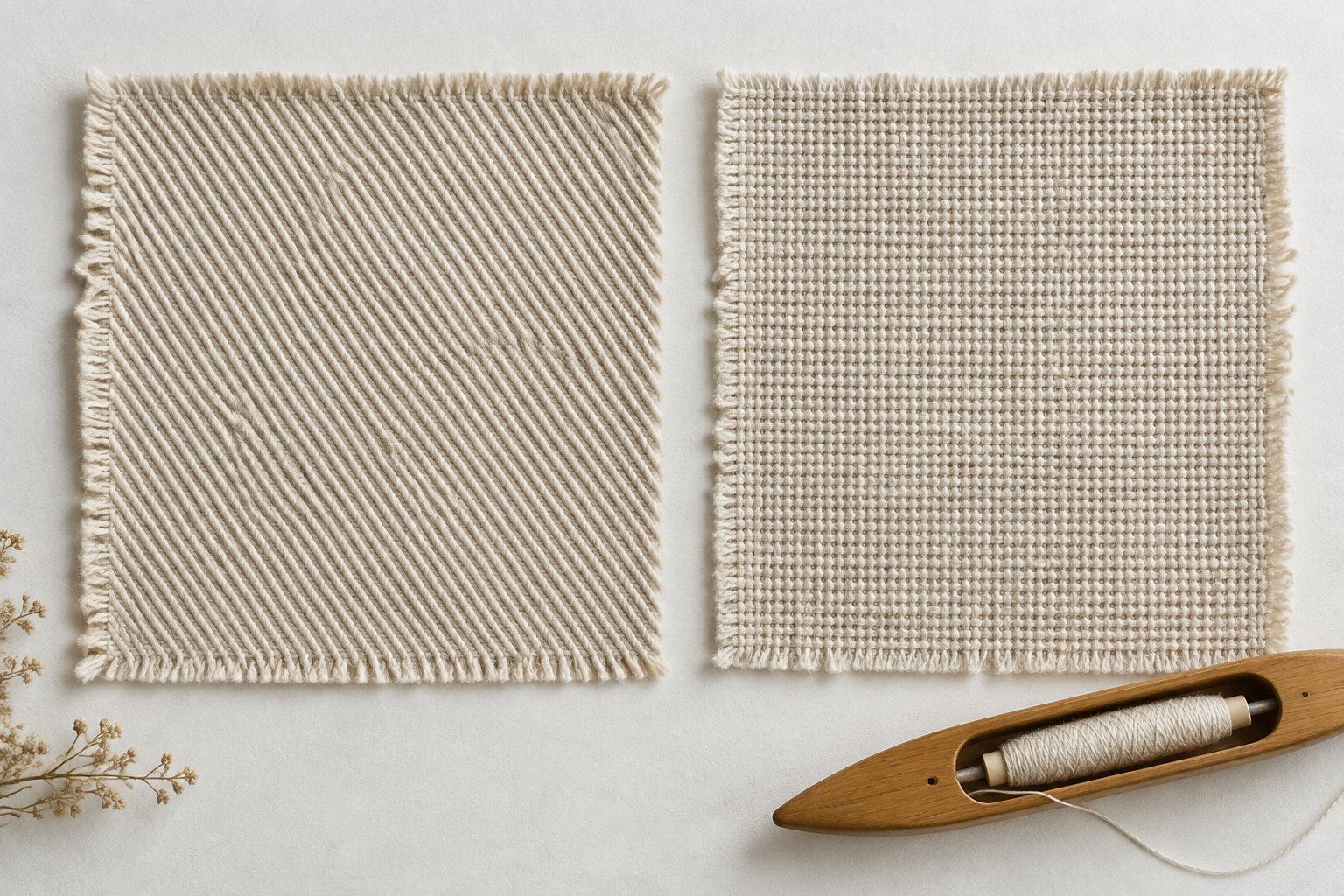
Plain weave and twill offer different structural advantages, with final suitability established through the finished fabric’s specifications and test results.
Is plain weave stronger than twill?
Neither weave guarantees higher fabric strength. Comparable tensile and tear tests are necessary because each measures a different response to loading.
What are the disadvantages of twill weave fabric?
Twill’s longer floats increase exposed yarn length and associated snagging risk. Some constructions also require closer control of skew and yarn movement during processing.
How can you tell if a fabric is twill?
Twill has a diagonal line formed by progressively offset yarn bindings. Magnification reveals the repeated interlacing sequence beneath any print or surface finish.
Is twill suitable for summer industrial workwear?
Lightweight twill with suitable air permeability is a candidate for summer industrial workwear. Buyers should assess finished weight and airflow together with the required protective performance.
Does either weave make a fabric flame-resistant?
Flame resistance comes from suitable fiber chemistry or flame-retardant treatment. Both weave types require product-specific testing before a flame-resistant performance claim is established.