Electricians wear long-sleeve work shirts, durable work pants, and jobsite-appropriate safety footwear, with hazard-rated personal protective equipment (PPE) added for electric shock, arc flash, and other assessed exposures. A well-specified electrician uniform supports movement and abrasion resistance while providing the coverage required for the task.
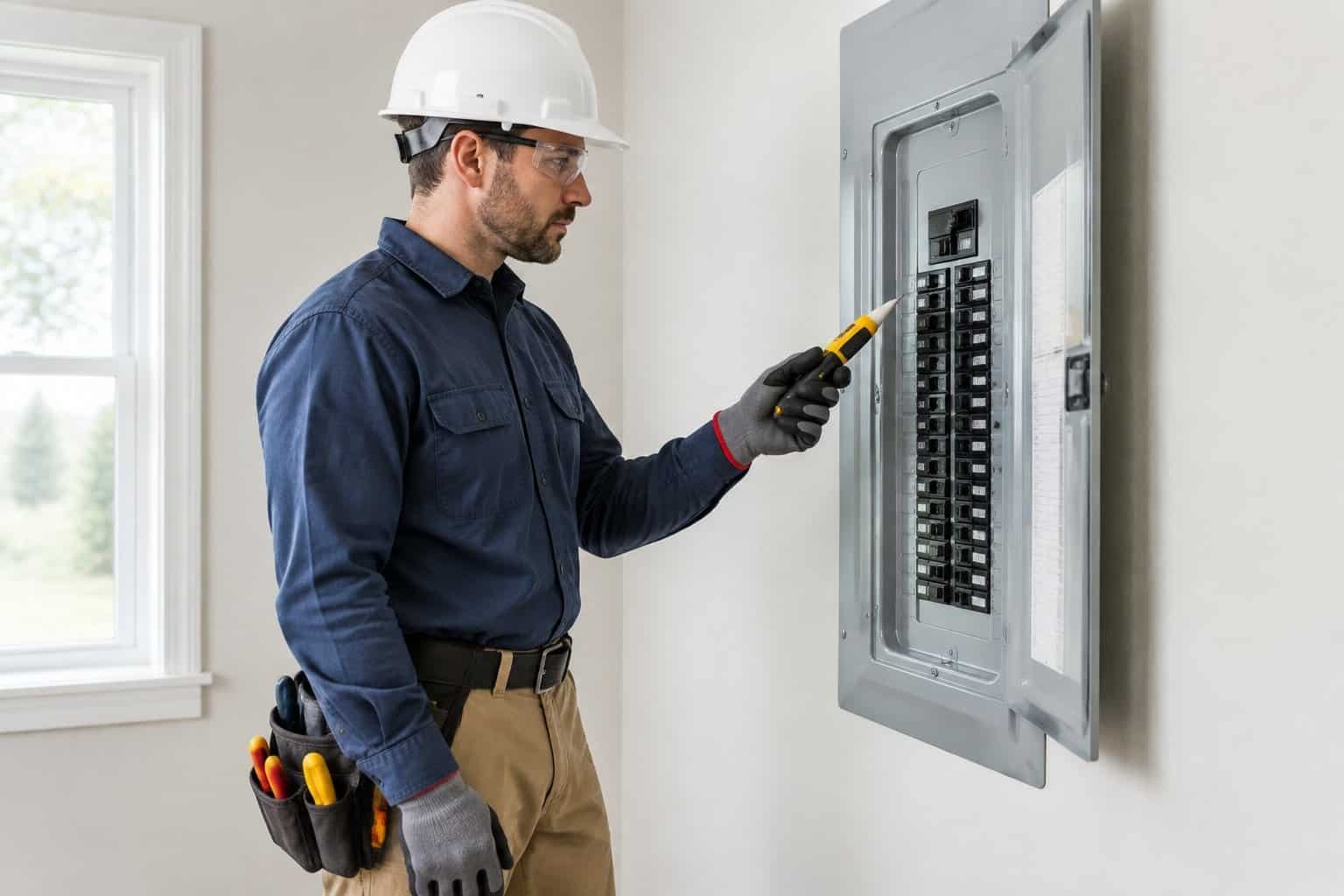
For employers selecting electrician uniforms, the central challenge is matching everyday comfort with documented protective performance. Electrical safety requires separate decisions about shock insulation and thermal protection, since each addresses a different injury mechanism.
The Everyday Electrician Uniform: A Task-Dependent Checklist
An everyday electrician uniform starts with full-length work clothing and footwear suited to the site. The employer’s assessment determines which protective equipment accompanies that clothing.
Long-Sleeve Shirts
Long sleeves provide coverage against minor scrapes and contact with rough surfaces during installation work. Shirts should allow overhead reach without exposing the waist or leaving loose cuffs near moving equipment.
For ordinary installation tasks, cotton protective clothing with long sleeves offers practical coverage. Cotton fabric alone provides neither verified shock insulation nor an arc rating.
Durable Pants and Coveralls
Durable work pants should accommodate kneeling, climbing, and crouching without pulling tightly across the knees. Reinforced wear areas and secure pockets help during cable installation and conduit work.
Features used in work pants for construction workers also suit electrical installation, provided the material meets the task’s thermal requirements. Coveralls provide continuous torso coverage, with enough room through the shoulders and seat to maintain mobility.
Safety Footwear and Task-Specific Protective Equipment
Safety footwear should address the site’s impact and underfoot hazards, with electrical-hazard protection specified where appropriate. Toe protection and an electrical rating are separate features that require separate checks.
Task-specific personal protective equipment (PPE) includes eye protection for drilling and suitable gloves for handling sharp materials. Work at height or exposure to airborne contaminants requires additional assessment and the corresponding protective systems.
High-Visibility Layers and Practical Tool Storage
High-visibility clothing improves worker recognition around vehicles and mobile equipment. Where arc exposure exists, the vest or jacket must also satisfy the applicable thermal-protection requirements.
A tool belt should hold essential tools securely without obstructing a harness or pulling clothing out of position. Overfilled pouches create snag points and interfere with movement through tight spaces.
When Is Ordinary Workwear Not Enough?
Ordinary workwear becomes insufficient when the task exposes an electrician to hazards requiring tested protective performance. The employer must identify those exposures before selecting PPE for electricians.
Start with De-Energization and a Qualified Hazard Assessment
Establishing an electrically safe work condition takes priority over clothing selection. The procedure includes identifying energy sources, isolating equipment, applying the required lockout/tagout controls, and verifying absence of voltage with suitable test equipment.
A qualified person evaluates the electrical hazards associated with the work. Protective measures remain necessary during isolation and verification until the safe condition has been established.
Separate Electric Shock, Flame and Arc-Flash Hazards
Electric shock involves current passing through the body and requires suitable insulating protection where exposure remains. Flame-resistant clothing limits sustained burning under its specified test conditions.
Arc-rated clothing addresses the thermal effects of an electrical arc. Whether electricians have to wear FR clothing follows the assessed exposure and applicable requirements; ordinary fabric composition does not establish electrical protection.
Understand Which OSHA Requirements Apply
OSHA requirements follow the industry and work activity. General-industry electrical work involves 29 CFR 1910 Subpart S, while construction involves 29 CFR 1926 Subpart K and applicable PPE provisions.
The requirements for electric utility workers’ clothing also involve power-sector rules. OSHA’s 1910.269 Appendix E addresses protection from flames and electric arcs within the electric power generation, transmission, and distribution framework.
NFPA 70E is a workplace electrical-safety consensus standard. Employers use its risk-assessment and PPE-selection framework alongside the OSHA requirements applicable to their operations.
How Do You Choose Arc-Rated Clothing?
Arc-rated clothing should have documented performance sufficient for the assessed arc-flash exposure. Selection also requires suitable garment coverage and compatibility with the rest of the protective ensemble.
Flame-Resistant Does Not Automatically Mean Arc-Rated
Flame resistance describes a material’s response to ignition and continued burning under specified conditions. An arc rating adds measured performance against electrical arc exposure.
The difference between AR and FR clothing determines which documentation a purchasing team needs. Every arc-rated garment is flame-resistant, while an FR designation alone leaves its arc-flash performance unestablished.
Match Protection Using Incident Energy or Applicable PPE Categories
An incident-energy analysis identifies the thermal exposure at the specified working distance. The selected clothing or tested clothing system needs an arc rating that meets or exceeds that exposure.
The NFPA 70E PPE-category method applies only when the equipment and task satisfy the relevant table conditions. Those limits must be checked before a safety team chooses arc-flash PPE; a category cannot be assigned from equipment voltage alone.
The two selection methods follow their respective rules. Category numbers should never be treated as interchangeable incident-energy ranges.
Read Arc Ratings, ATPV or EBT, and ASTM F1506 Documentation
The garment label and supporting documentation should identify its arc rating and applicable performance specification. ASTM F1506 addresses flame-resistant and arc-rated clothing requirements; the arc rating comes from the applicable arc-testing method.
Arc thermal performance value (ATPV) relates to heat transfer associated with a predicted burn threshold. Energy breakopen threshold (EBT) relates to fabric opening during arc exposure, and the applicable result determines the reported arc rating.
The rating is expressed in calories per square centimeter. It describes tested thermal performance and provides no guarantee against every injury associated with an arc event.
Compare Treated Cotton, Tested Blends and Inherently FR Fabrics
Treated cotton, engineered blends, and inherently flame-resistant fibers such as Nomex are established material options. Each finished fabric requires its own performance documentation.
Comparing arc-flash clothing materials involves fabric weight, abrasion resistance, laundering requirements, and documented arc performance. Fiber names alone establish neither a garment rating nor the performance of a layered system.
Levitex manufactures flame-retardant fabrics and supports custom dyeing and printing for workwear applications. Fabric manufacturing capability remains separate from verification of a complete electrician PPE ensemble.
Which Gloves Protect Against Electric Shock?
Voltage-rated rubber insulating gloves provide hand insulation for the electrical exposure covered by their class. Ordinary work gloves serve mechanical-handling tasks and carry no assumed shock-protection rating.
Choose Rubber Insulating Gloves Rated for the Voltage Exposure
The glove class must cover the maximum electrical exposure identified for the task, including the applicable AC or DC rating. Class 00 gloves have a maximum use voltage of 500V AC, while Class 0 gloves have a maximum use voltage of 1,000V AC.
Labels and current test records should identify the voltage-rated gloves selected for the work. A product described as “insulated” or “dielectric” still requires verification of its electrical class and applicable standard.
Use Appropriate Outer Protectors Where Required
Appropriate outer protectors shield rubber insulating gloves against mechanical damage. Leather protector gloves are a common part of this system and must fit without stretching or damaging the insulating glove.
OSHA rules include limited exceptions to protector use, with specific conditions. Any exception requires confirmation through the employer’s electrical-safety program, including applicable testing requirements before reuse.
Inspect, Store and Electrically Retest Insulating Gloves
Rubber insulating gloves require visual inspection and an air test before each day’s use, plus inspection after any incident reasonably suspected of causing damage. Cuts, embedded objects, cracking, or other defects require removal from service.
For U.S. work governed by OSHA’s electrical protective-equipment requirements, rubber insulating gloves require electrical testing before first issue and every six months thereafter, subject to the rule’s storage and issue provisions. Additional testing is required after specified events, including repair or suspected loss of insulating value.
Storage should protect the gloves from sunlight, excessive heat, ozone, and deformation. The cuffs should remain uncreased in a suitable storage bag or container.
What Can Electrical-Hazard Footwear Actually Protect Against?
Electrical-hazard footwear provides supplemental insulation against certain accidental electrical exposures under specified conditions. Its selection must account for the environment and the other protective measures required for the work.
Check Footwear Markings, Toe Protection and Jobsite Requirements
Footwear selection starts with permanent markings and manufacturer specifications. The employer should verify the applicable ASTM designation and the EH marking when electrical-hazard footwear is required.
Steel-toe and composite-toe boots both require verification of their finished-footwear rating. An enclosed steel toe does not automatically disqualify a boot from EH classification, and a composite toe does not establish electrical protection.
Understand Why EH Footwear Provides Only Secondary Protection
EH footwear supplements the electrical-safety controls specified for the task. Its protective function concerns the current path through the feet under the conditions for which the footwear was evaluated.
An electrician touching an energized conductor and a grounded object creates an exposure that footwear alone cannot resolve. Tasks requiring specialized dielectric footwear need the equipment specified by the electrical-safety program.
Recognize the Limits of Rubber Soles, Wet Conditions and Wear
Rubber soles alone provide no verified electrical-protection classification. The finished footwear’s construction and condition determine whether it retains its claimed performance.
Moisture, embedded metal, and sole damage compromise insulation. Waterproof construction also provides no assurance of electrical protection in wet working conditions, so the assessment must address the actual environment.
Protecting the Head, Eyes, Face and Hearing
Head, eye, face, and hearing protection must address both the electrical exposure and the surrounding jobsite hazards. Each item needs to fit correctly with the other equipment worn.
Select Class E Head Protection for Applicable Electrical Hazards
Class E hard hats provide the electrical classification selected for applicable contact hazards, together with their specified impact protection. The required impact type also needs to match the assessed exposure.
A Class E hard hat should retain its approved shell and suspension configuration. Drilled holes or unapproved accessories risk compromising performance, and dielectric test classifications never establish a safe working voltage.
Wear Safety Glasses Beneath Required Arc-Rated Face Protection
Safety glasses with suitable side protection remain necessary beneath required arc-rated face protection. The shield or hood must provide the coverage and thermal performance specified for the task.
An arc-rated face shield, balaclava, or hood is selected as part of the complete ensemble. Higher-exposure arc-flash suit applications require coordinated head and body protection.
Welding helmets have a different intended function. Their suitability for welding establishes no arc-flash rating for electrical work.
Choose Hearing Protection for Noise and Arc-Flash Requirements
Hearing protection selection must account for measured noise exposure and applicable arc-flash requirements. Insert-type earplugs are specified for arc-flash protection under relevant NFPA 70E provisions.
Earmuffs require a separate compatibility check with the hard hat and face-protection assembly. Additional noise protection should preserve the correct fit and coverage of the electrical PPE.
How Should Electrician Workwear Fit and Be Maintained?
Electrician workwear should maintain required coverage throughout movement and retain its documented protective condition. Inspection and manufacturer-directed care are essential parts of an FR clothing program.
Balance Coverage, Mobility and Snag Prevention
Arc-rated clothing needs sufficient room for movement without excessive loose material. Tight fabric restricts motion and reduces the insulating air space between the garment and skin.
Cuffs and closures should remain secured as instructed. A fit check should include reaching overhead and crouching, with attention to gaps at the wrists and waist.
Keep Base Layers, Jackets and Rainwear Compatible with Arc Protection
Every layer exposed to an arc must meet the applicable clothing-system requirements. Ordinary meltable polyester base layers create a thermal injury concern and should be excluded from arc-exposure ensembles.
FR jackets also require documented arc performance when used for arc protection. Rainwear and high-visibility layers need compatible ratings, and individual garment ratings must never be added together to calculate an ensemble rating.
Inspect for Damage and Contamination Before Use
Inspection should cover closures, seams, and high-wear areas before the garment is worn. Tears or holes leave skin exposed, while oil and other combustible contamination create additional thermal hazards.
Damage to a protective ensemble requires removal from service until an approved repair or replacement decision is made. Decisions to replace an arc-flash suit should follow its manufacturer’s criteria and the employer’s inspection program.
Follow Manufacturer Instructions for Laundering, Repairs and Branding
The care label controls how each garment is cleaned and dried. Instructions for washing flame-resistant clothing include restrictions on products or processes that affect protective performance.
Persistent contamination requires further cleaning or removal from service. Repairs must use approved materials and methods, while embroidered logos and patches require manufacturer acceptance for the garment’s intended protective use.
Match Every Layer to the Assessed Hazard
Electrician clothing should combine practical workwear with the hazard-rated protection required for each task. De-energization and verified safe work procedures remain the starting point for electrical safety.
A complete assessment connects the clothing specification with gloves, footwear, and head protection. Before work begins, the employer’s program should confirm required ratings, compatible layers, current glove test status, and serviceable equipment.
Frequently Asked Questions
Electrician dress requirements follow the employer’s safety program and the work being performed. The distinctions below apply to common clothing choices.
What is the dress code for electricians?
An electrician uniform commonly includes a long-sleeve work shirt, full-length durable work pants, and jobsite-approved footwear. The employer adds arc-rated clothing and task-specific PPE where the assessment requires them.
Can electricians wear ordinary cotton shirts and jeans?
Ordinary cotton shirts and jeans are suitable for tasks where the assessment permits general workwear. Untreated cotton burns, and denim weight alone establishes no arc rating or shock protection.
Can electricians wear polyester under arc-rated clothing?
Ordinary meltable polyester should be excluded from layers worn during arc exposure. A specifically engineered flame-resistant blend requires documentation showing that it meets the applicable requirements for its intended use.
Is all FR clothing suitable for arc-flash protection?
FR clothing requires an appropriate documented arc rating before it is selected for arc-flash protection. The garment or tested clothing system must also meet the assessed exposure and coverage requirements.
What are the best pants for electricians?
The best pants for electricians provide durable construction and unrestricted movement while meeting the task’s protective requirements. Where arc exposure exists, selection requires a documented arc rating, secure closures, and compatible pocket or reinforcement materials.