
Fabric thread count is measured by adding the warp ends per inch (EPI) and weft picks per inch (PPI); reliable comparisons also require matching yarn size, weave, and finishing condition. For example, a woven fabric with 100 EPI and 80 PPI has a total thread count of 180.
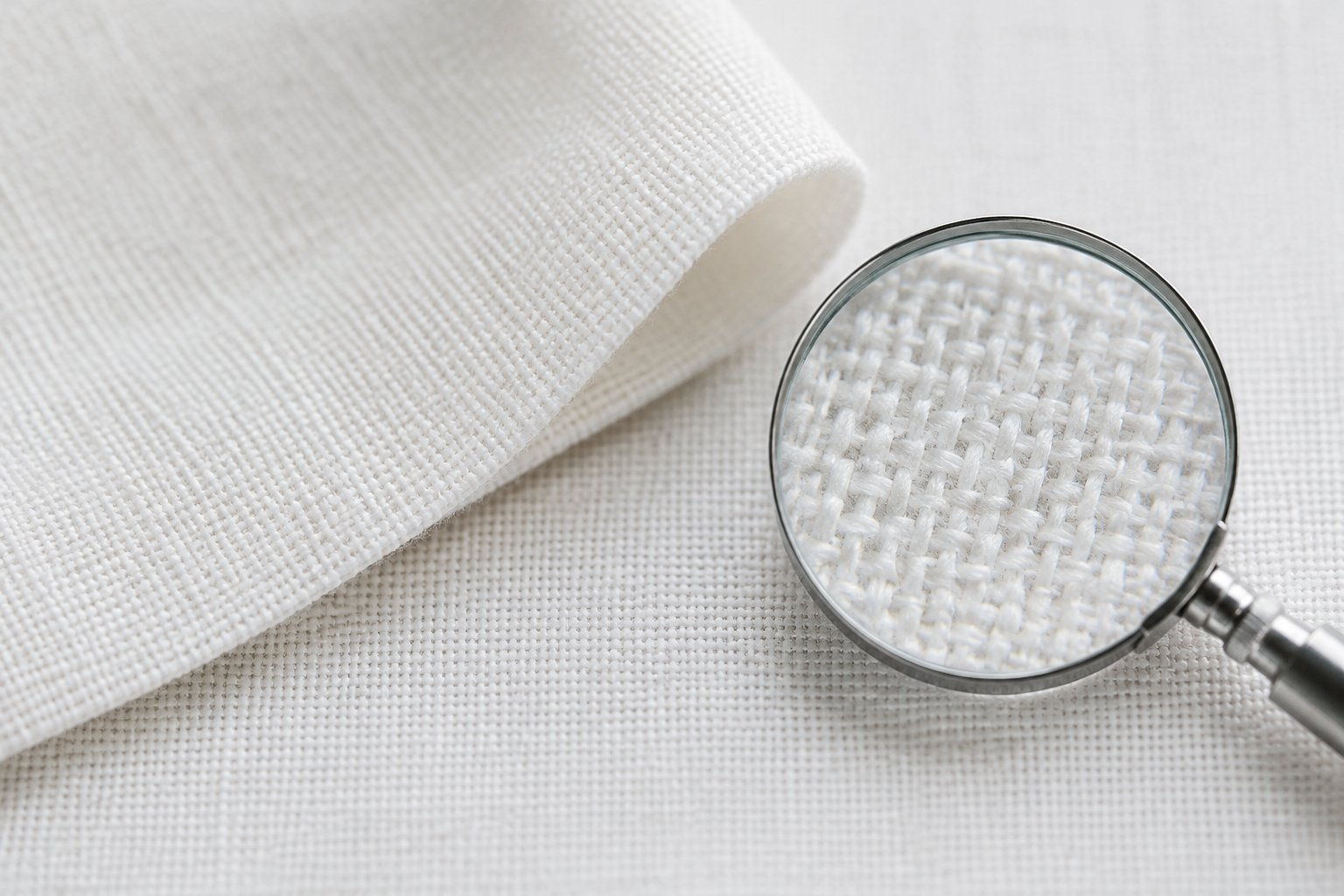
For industrial buyers, those separate directional counts help identify construction differences that a combined number conceals. Levitex manufactures flame-resistant textiles for protective-workwear applications, where density belongs alongside fabric weight and product-specific performance evidence in a purchasing specification.
How Do You Count Ends and Picks Accurately?
Accurate counting requires separate measurements of warp and weft across a known length of relaxed fabric. A counting glass or pick counter helps distinguish individual yarns, while repeated measurements reveal local variation.
Understanding EPI, PPI, and Reporting Units
Warp threads run lengthwise, parallel to the selvage. Weft threads run across the fabric width; each inserted weft is called a pick.
- EPI: Ends per inch, counted across the width to measure warp density.
- PPI: Picks per inch, counted along the length to measure weft density.
- Ends/cm and picks/cm: The corresponding metric measurements.
The familiar phrase “threads per square inch” describes the combined count across a one-inch-square window. Each directional measurement is a count per unit length.
International specifications need explicit units. Converting ends/cm to EPI requires multiplication by 2.54; the same conversion applies to picks/cm and PPI. A specification stating only “100 × 80” leaves the measurement basis incomplete.
Calculating Total Count: Add Warp and Weft, Don’t Multiply
The calculation is:
Total thread count = EPI + PPI
For an illustrative construction of 100 EPI × 80 PPI, the total is 180. Multiplying those figures produces 8,000, which is unsuitable for reporting conventional thread count.
The directional breakdown remains useful after calculation. A 120 × 60 construction also totals 180, yet its yarn distribution differs substantially from 100 × 80. Buyers comparing strength or dimensional behavior need both figures.
Checking a Sample with a Counting Glass or Pick Counter
A practical inspection follows a repeatable procedure:
- The technician lays a conditioned sample flat without stretching it and identifies the warp direction from the selvage or supplier marking.
- A calibrated counting glass is aligned with the yarns over a known distance.
- Individual warp ends and weft picks are counted separately, using the same boundary convention for each reading.
- Measurements are repeated at several locations away from the selvage, creases, and visible defects.
- The report records each directional average, units, sample condition, and measurement method.
A half-inch measurement requires doubling each directional result to obtain per-inch values. Longer counting distances reduce the effect of a single counting error.
Twill diagonals and sateen floats require particular care: visible ridges represent weave features, so the operator must trace individual yarns. For dense or obscured constructions, controlled unraveling or laboratory examination provides a clearer count.
What Does Thread Density Actually Tell You About Quality?
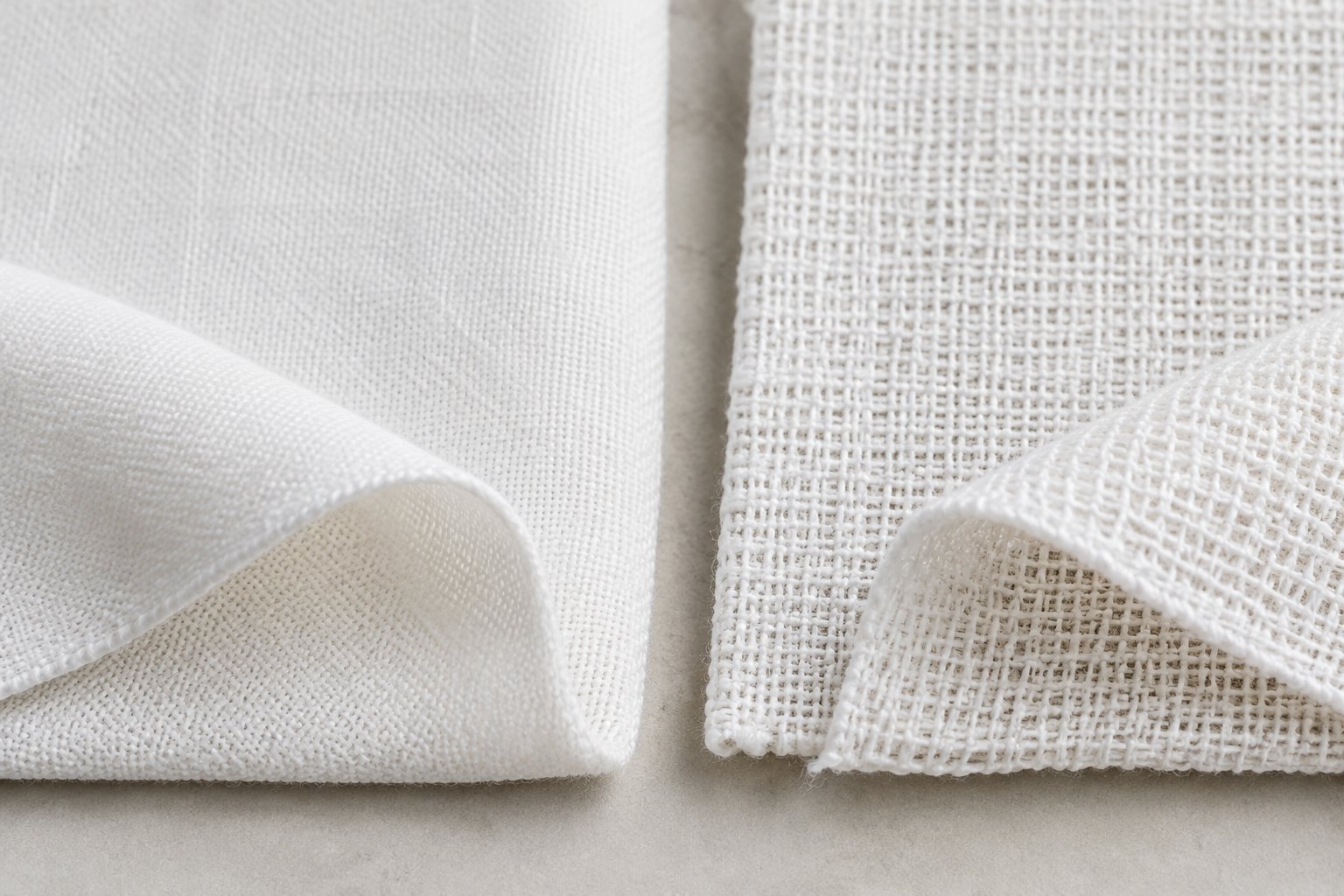
Thread density describes yarn spacing and supports fabric-quality comparisons when other construction variables match. Its relationship with coverage, handle, and durability changes with yarn size and fiber type.
How Yarn Size and GSM Relate to Thread Density
Fabric weight in GSM expresses grams per square meter. Density describes how many yarns occupy a specified distance, while yarn size describes the mass or fineness of those yarns.
Fine yarns permit a dense construction with relatively low mass. Coarse yarns produce heavier cloth at a lower count. Consequently, matching thread counts alone gives no assurance of matching fabric weight.
The relationship between yarn count and fabric weight also includes yarn crimp, the extra length consumed as yarns bend through the weave. Finishing adds another variable through deposited material or dimensional changes.
For US purchasing documents, 1 oz/yd² equals approximately 33.9 GSM. A fabric weight chart supports weight comparisons, while density and yarn specifications explain how that mass is distributed.
Why Fiber Quality and Weave Change the Comparison
Yarn quality includes fiber length, evenness, twist, and spinning quality. Long-staple cotton supports smoother yarns with fewer protruding fiber ends; Egyptian cotton and Pima cotton descriptions still require verification of the stated fiber characteristics.
Weave changes the placement of interlacings:
- Plain weave alternates over and under adjacent yarns.
- Twill weave uses offset interlacings that form diagonal lines.
- Sateen weave places longer floats on the fabric surface.
These structures produce different surface effects and resistance to snagging. Quilting cotton, for example, is a different purchasing category from industrial workwear cloth even when both use plain weave.
Airflow also requires direct evaluation. A fabric air permeability test measures flow through the finished structure, accounting for effects that a total count leaves unresolved.
What Bedding Counts Mean, and Why They Are Not Industrial Benchmarks
Bedding labels use combined thread count as a familiar shorthand for construction. Retail cotton sheets frequently carry figures in the hundreds, with differing expectations for percale and sateen weave.
A high thread count deserves a check of the counting convention. Counting each component strand of multi-ply yarn separately inflates the advertised figure relative to counting each assembled yarn.
Industrial buyers need application-specific acceptance criteria. Neither a bedding range nor a “luxury” label establishes workwear suitability. Directional fabric tensile strength measurements provide evidence of resistance to pulling loads, which a bedding-style total count cannot establish.
How Should Industrial Buyers Specify and Compare Density?
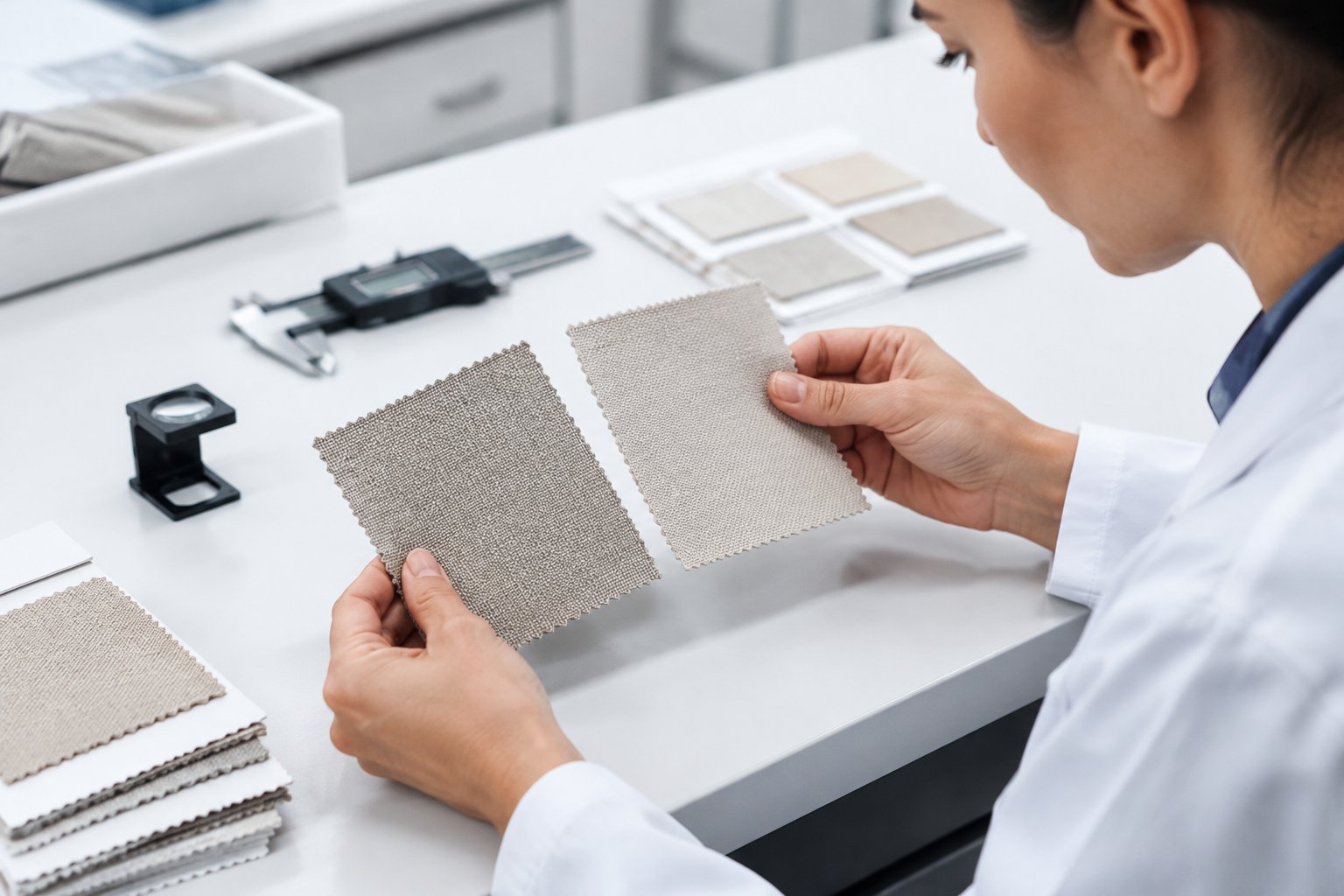
Industrial buyers should specify warp and weft density separately, identify the measurement stage, and evaluate equivalent samples. A complete construction record connects thread count with yarn quality and finished fabric weight.
Reading Construction Specifications Without Confusing Density and Yarn Count
A construction line such as 20s × 16s / 128 × 60 contains two different measurements. If the supplier defines “s” as English cotton count (Ne), the first pair describes warp and weft yarn fineness; the second pair describes density when explicitly stated as EPI × PPI.
That example totals 188 threads under the conventional combined calculation. It is an illustrative notation, not a Levitex product specification.
A purchasing document should identify:
| Specification field | Required detail |
|---|---|
| Composition | Fiber percentages |
| Yarn size | Warp and weft values, count system, and ply |
| Weave | Structure and relevant repeat |
| Density | EPI × PPI or ends/cm × picks/cm |
| Fabric weight | Finished GSM or oz/yd² |
| Measurement condition | Greige, finished, or specified laundered condition |
| Acceptance basis | Test method, sampling plan, and agreed tolerances |
Separate performance requirements remain necessary. For example, fabric tear strength assesses resistance to the propagation of an existing tear and requires its own acceptance criteria.
Comparing Equivalent Samples Before and After Finishing
A greige sample and a finished sample represent different production stages. Dyeing, mechanical treatment, and chemical finishing change dimensions, mass, and surface character.
Fabric shrinkage directly affects measured density. If width decreases while the number of warp ends stays constant, EPI rises; a length decrease similarly raises PPI.
Density checks therefore need matched conditioning and finishing status. Buyers comparing laundering results should also align the wash procedure and drying method.
Fabric finishes add another reason to retain reference samples. Two samples with matching construction figures can differ in handle or surface behavior after different treatments.
Confirming Levitex Fabric Specifications and Separate Protective-Performance Evidence
Levitex produces three main base-fabric families: 100% cotton, cotton/nylon (C/N), and cotton-rich cotton/polyester (CVC). Its services include customized flame-retardant fabric production, custom dyeing, and custom printing.
For a density inquiry, a useful request identifies the composition, weave, directional yarn sizes, finished density, and target weight. Levitex supplies textiles; garment design and assembly remain outside its offering.
Each Levitex product has a test report. Buyers should request the relevant product-specific report and verify its sample identification, methods, conditioning, and reported results against the intended application. Construction figures alone establish no flame, arc, or molten-metal protection level.
Batch traceability also supports FR fabric quality control. Prospective buyers with a reference swatch or construction sheet can contact Sales Manager Charlie Luo at Charlie@levitex.com to discuss matching fabric specifications and the relevant product documentation.
Choose Fabric by Construction and Verified Performance
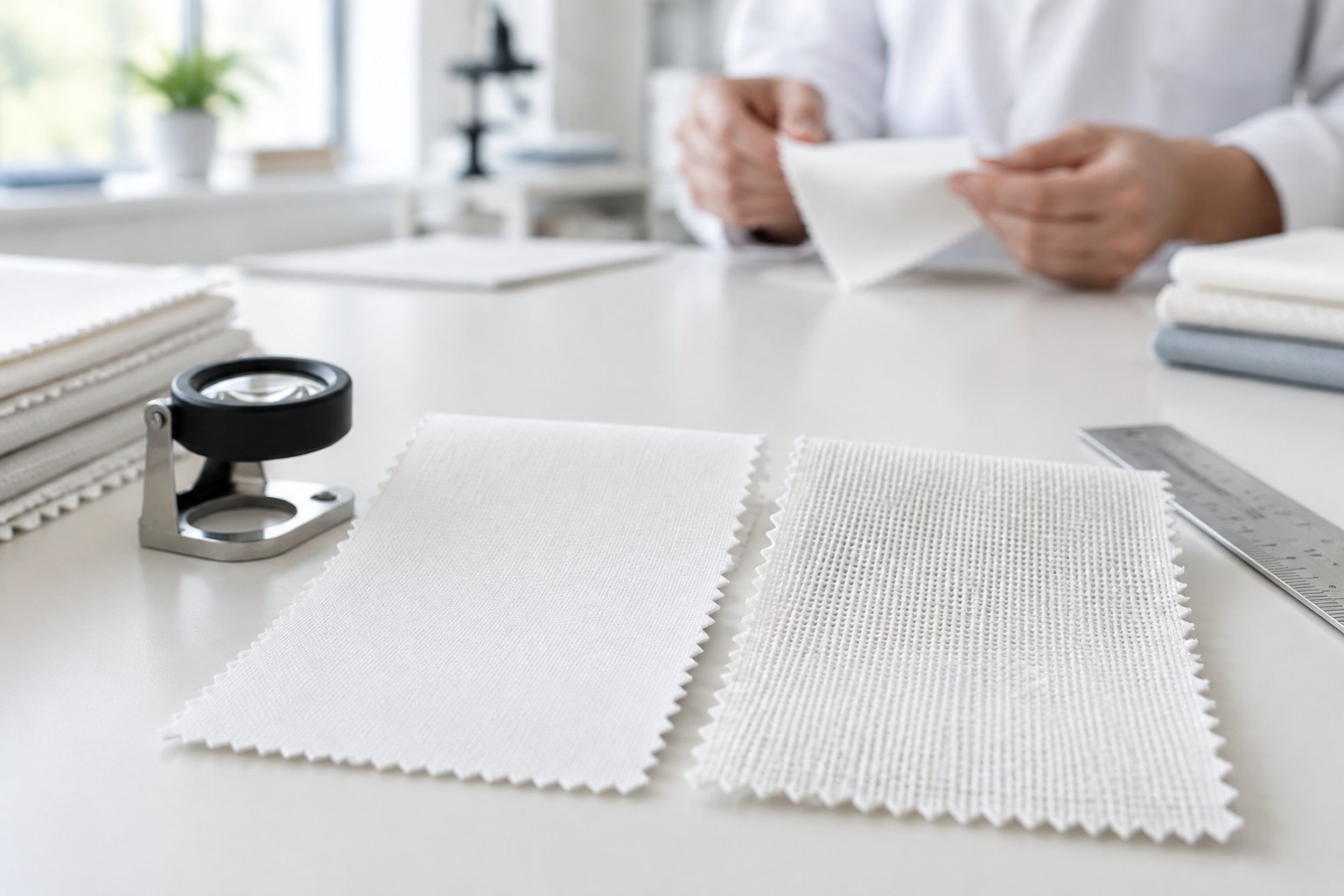
Fabric quality is best assessed through a complete construction specification supported by relevant performance results. Thread count contributes a measurable density value within that record.
A useful comparison retains EPI and PPI separately and aligns yarn size, weave, and finished condition. Before order approval, the buyer should agree on measurement units, tolerances, and the reference sample, then connect the selected fabric to its product-specific reports.
Frequently Asked Questions
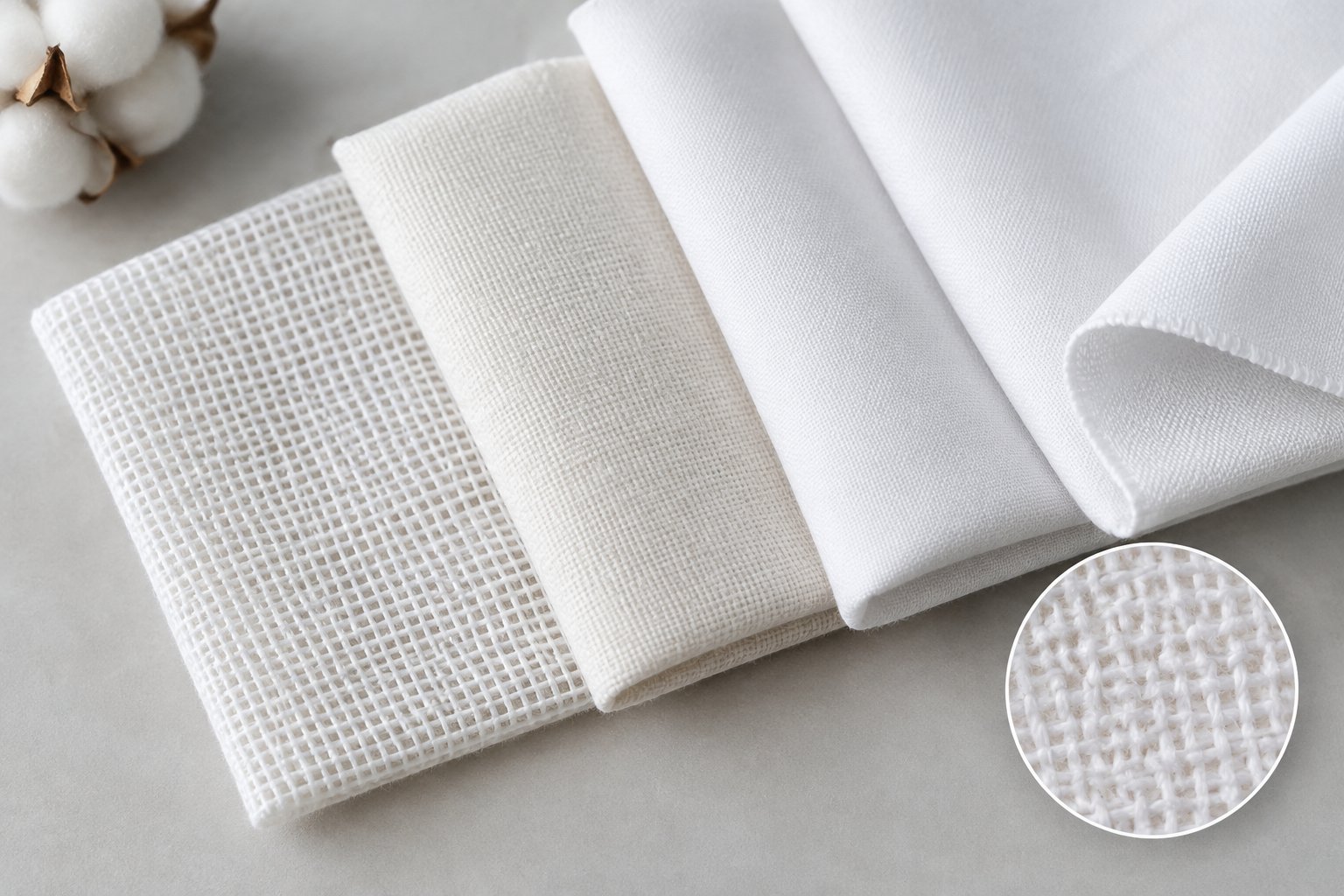
Fabric thread count questions become clearer when reporting conventions and end-use requirements are explicit.
Is there a universal fabric thread count chart?
Thread count charts are useful within a defined fabric category and counting convention. A single quality scale across canvas, fine cotton, and protective-workwear textiles would conceal differences in yarn thickness and construction.
Can thread count be converted directly to GSM?
Calculating GSM requires additional information about yarn linear density and yarn consumption, including crimp. Finished-fabric weighing provides the direct mass-per-area measurement, while construction-based calculations provide estimates.
Does a two-ply yarn count as one thread or two?
A two-ply yarn counts as one thread when measuring conventional woven-fabric density. Its two component strands should be reported separately as yarn construction; counting both plies doubles that yarn’s contribution to an advertised total.
Is 600 thread count better than 800?
Either figure requires verification of the counting basis and intended use before a quality ranking is justified. An honestly reported 600-count construction with suitable yarn quality offers a stronger purchasing basis than an undocumented 800-count claim.
Does a higher thread count mean better flame resistance?
Flame resistance requires evidence from testing the specific finished fabric under the relevant method. A high thread count, fiber description, or fabric weight supplies construction information without establishing protective performance.